Last day to join the @wealthgroup before my new $1k to $10k challenge starts
Going away $20k to 20 members of WG to restart the challenge with me
Enter the giveaway 👇
Must be following @cryptogodjohn & @wealthgroup
Like & RT
Tag 2 friends
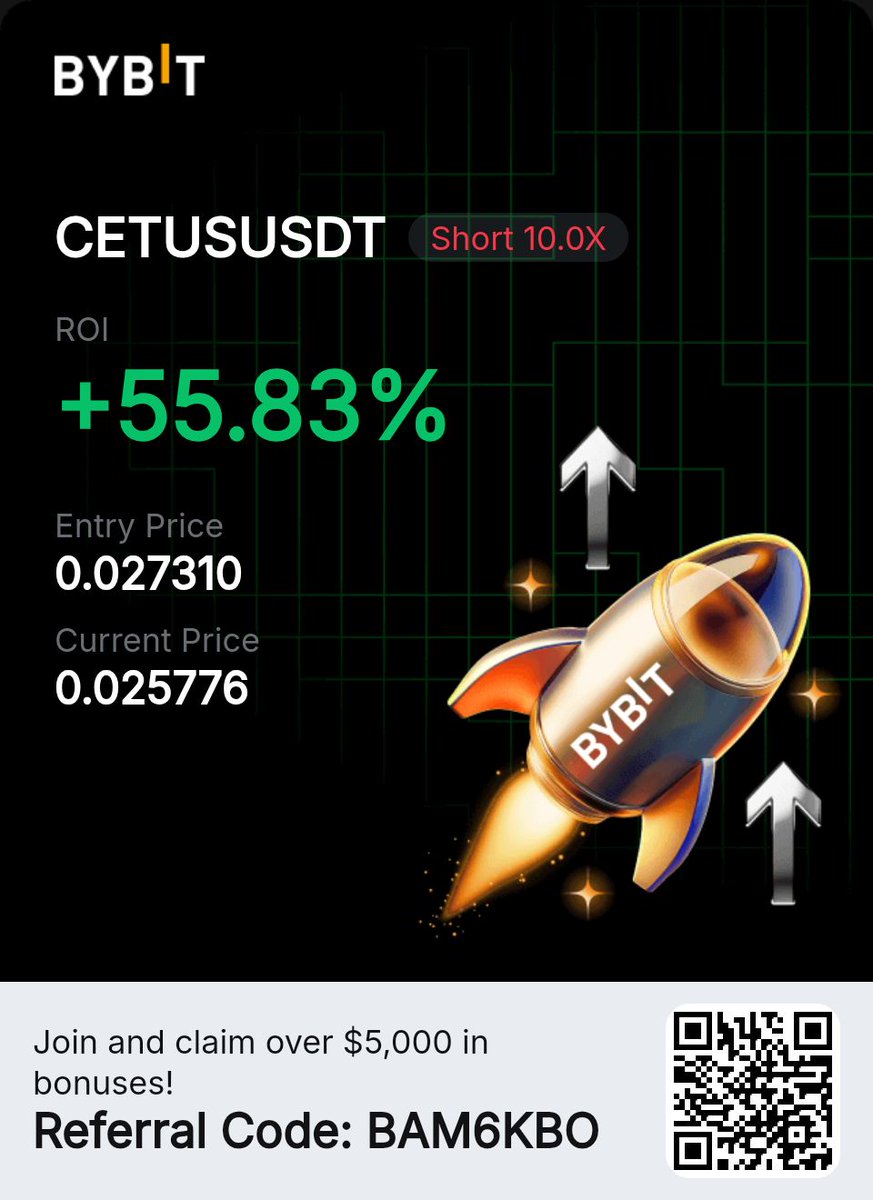
It’s been a tough few months on the markets, but we’ve handled every move perfectly with discipline and intuition! We’re killing it @WealthGroup
best gang @CryptoGodJohn
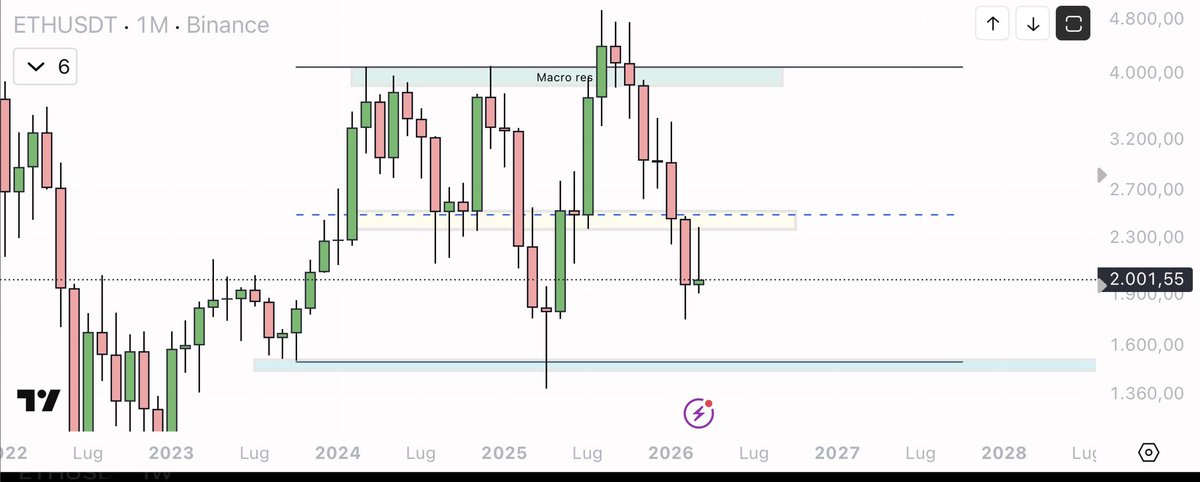
When you look at $ETH on the monthly chart, you’re not looking for trades… you’re looking for clarity.
There, the market leaves you with only the levels that really matter: support and resistance levels that have been tested repeatedly. It’s a clear view, free from noise. It’s your map.
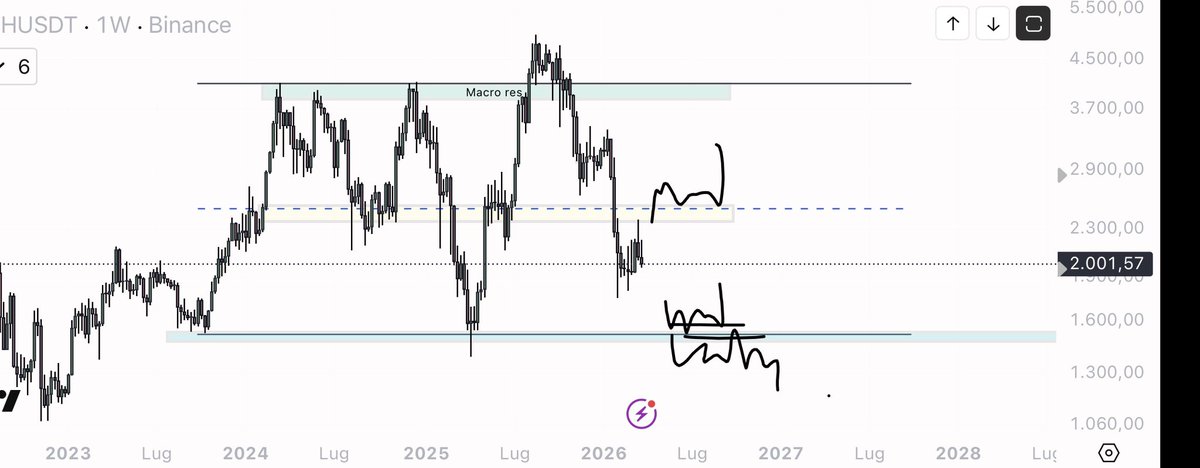
Then you switch to the weekly chart, and that’s where you really start to ‘read’ what the price is doing within that map.
Essentially, you build this macro range: below you have the zone where the market tends to hold (low range), above the zone where it tends to break out (high range), and in between you have the murkier zone, where the price often dithers and catches out those who enter at random.
And this is where everything changes: you no longer have to guess the direction… you just need to see how the price reacts when it reaches these levels.
If the price reaches an important zone and shows a reaction, then you can work with it.
If, on the other hand, it breaks decisively, don’t fight it… follow the movement towards the next level.
The point is precisely this:
it’s not you who decides what the market will do; it’s the market that tells you when it makes sense to enter.
So, in practice, you’re not sitting there making a thousand pointless trades.
You wait for the price to reach where it needs to go, and only then do you start thinking. If it’s not at a key level, you simply aren’t interested.
It’s a slower approach, more ‘boring’ if you like… but it’s precisely what allows you to work with cleaner movements, without getting swept up in the noise.
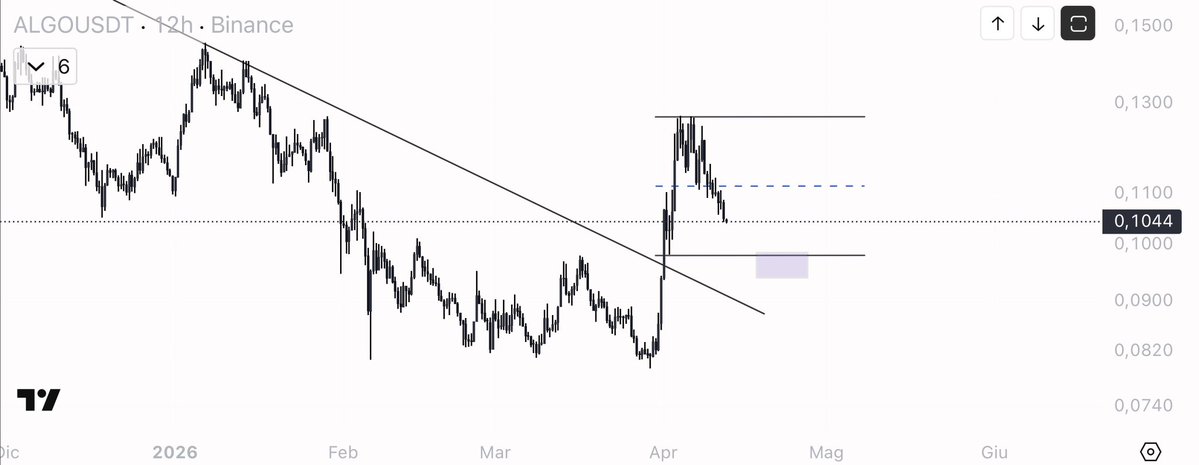
This is all about trading high-volatility pairs, so spot trading and, if you like, leverage, but with swing trading… scalping is a different story: that involves trading day in, day out with tight stops and making decisive entries on a daily basis 👌🏻👈🏻
@cryptolala Started from the bottom in 2005
Lost everything in 2010 and again in 2016
Rebuilt using leverage
Hard work, a bit of luck…
The next 1–2 years = the final phase.
From trader → retiree
Started from the bottom in 2021.
Lost it all in 2022.
Rebuilt with leverage in 2023.
Hard work, some luck…
Next 2–3 years = final stage.
From trader → investor.
Retweet this post 👌🏻
You need to start looking at the market in a more ‘streamlined’ way, without overcomplicating things: the point isn’t to try and catch every single move, but to understand when the price breaks out of the range and how it reacts.
When you see a deviation – that is, the price temporarily breaking above or below the range – it isn’t immediately a signal to chase. It’s a piece of information. It’s telling you that there’s a demand for liquidity out there.
If that deviation is then repeated (double deviation), everything changes: it means that level has been tested several times and the market is clearly showing where it wants to react. That is the real confirmation.
At that point, you shouldn’t enter at random, but wait for the price to return and start forming a clearer structure. That’s when it makes sense to switch to a shorter timeframe and look for a more precise entry, without forcing it. (Rarely test it first if you want to do so with a small position size)
This way of reading the market always applies, whether you’re looking for a long or a short. The concept doesn’t change, only the direction: above, you work from a bearish perspective; below, from a bullish perspective.
In practice, stop chasing the price and start working on these extremes: that’s where the market becomes much clearer and gives you simple invalidations.