
Sabitlenmiş Tweet
YAS
229 posts


YAS
@yetanotherswap
Yet Another Swap on @Starknet. Crafted by @yetanotherco and forged by @class_lambda.
Starknet Katılım Ağustos 2023
14 Takip Edilen940 Takipçiler
YAS retweetledi

Very exciting @alignedlayer! Kimchi is our proving system, Plonkish, no requirement for trusted set up, works with Pickles for unlimited recursion.
Aligned@alignedlayer
Mina on Aligned incoming: The kimchi integration from @o1_labs is done we will be merging it soon and after that we will start testing some e2e integrations. This will be a great way to use @MinaProtocol tech on Ethereum and different L2s. For the impatient you can check the PR: github.com/yetanotherco/a…
English
YAS retweetledi
YAS retweetledi
YAS retweetledi
Get perfectly aligned with these easy steps:
1. Save your profile picture (PFP).
2. Go to excalidraw.com and upload your PFP.
3. Create a vibrant green rectangle on the canvas.
4. Center the green rectangle over your PFP.
5. Select both the PFP and rectangle together.
6. Right-click and choose 'Copy as PNG'.
7. Upload this image on X.
Now just simply feel the alignment



English
YAS retweetledi
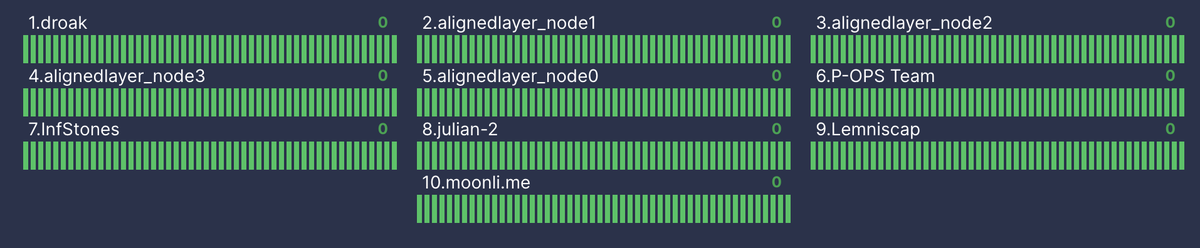
Private Testnet Update
Over the last few days we have been onboarding different validators to our first testnet using Cosmos SDK. This version includes a Plonk + KZG verifier we will be adding more in the new versions.
Aligned has now 10 validators that have been extremely helpful providing valuable feedback. Thank you!
We will be onboarding a couple of more people to this first version and then fully open it to the public.
Check it out here:
explorer.alignedlayer.com
English
YAS retweetledi
Provers are getting better: faster and more accesible
The next bottleneck to solve operational costs and adoption is verification.
The most common verifier, Ethereum, is not improving but we still need a better verifier for Ethereum. This is why Aligned is commit it to create a brand new zk infrastructure for Ethereum and modular blockchains.
Shahar Papini@PapiniShahar
People ask me why we have our own Circle STARK implementation (Stwo), separate of plonky3. Stwo's main and only goal is to accelerate Starknet. Through fast cairo and recursion proofs. This concreteness allows us to advance fast and write optimized code.
English
YAS retweetledi
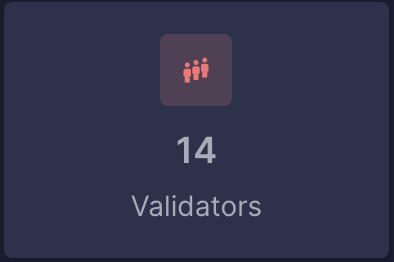
13 validators
Aligned@alignedlayer
Private Testnet Update Over the last few days we have been onboarding different validators to our first testnet using Cosmos SDK. This version includes a Plonk + KZG verifier we will be adding more in the new versions. Aligned has now 10 validators that have been extremely helpful providing valuable feedback. Thank you! We will be onboarding a couple of more people to this first version and then fully open it to the public. Check it out here: explorer.alignedlayer.com
Català
YAS retweetledi
YAS retweetledi
Demo time:
Quick E2E proof verification of a Kimchi proof from @MinaProtocol. We will do a full integration test with a @MinaProtocol block soon.
English
YAS retweetledi
The answer should always be: definitely aligned 🟩
0xBrokeBoi@0x_Broke_Boi
@thisisrj @alignedlayer To align or not to align that is the question.
English
YAS retweetledi

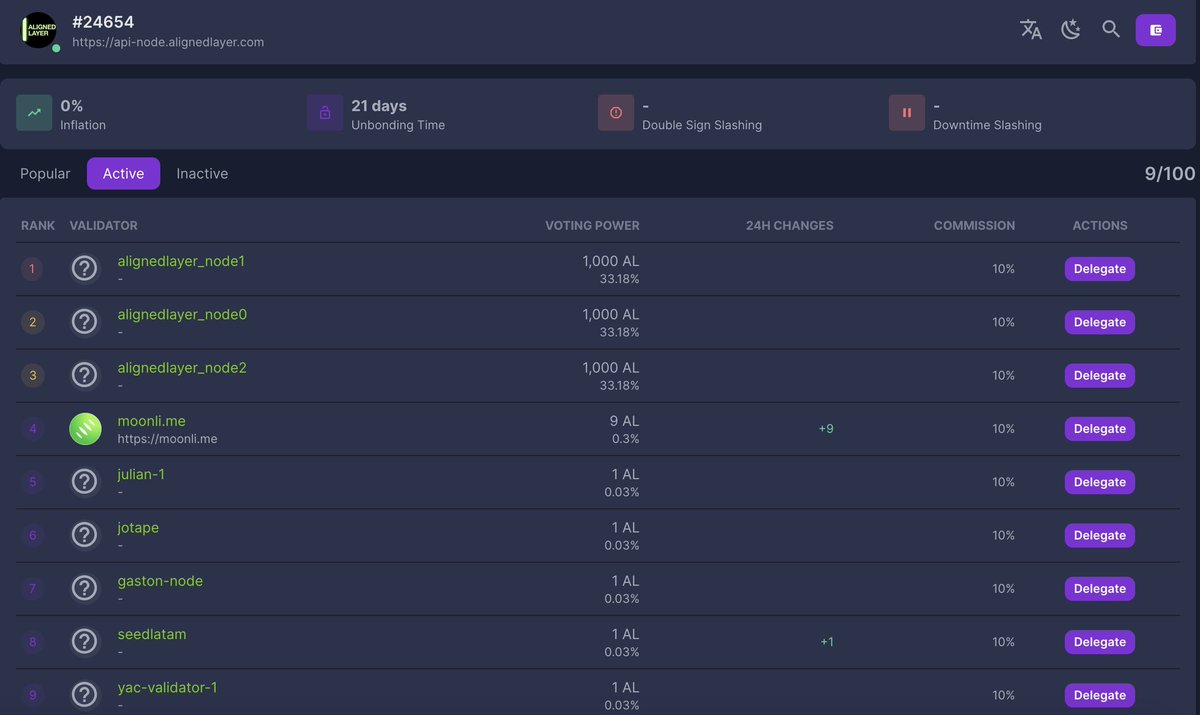
With the SEEDNode team running a node and setting up a validator for @alignedlayer
@SEEDLatam
English
YAS retweetledi
YAS retweetledi
The verification of zkp is a critical functionality of Ethereum. With time the demand for blockspace in Ethereum will increase and proofs systems will have to compete for computation with other applications in the EVM.
With Aligned proofs will always be first class citizens.
English
YAS retweetledi

We are Aligned!
We're happy to announce that app chains with Karnot will now support
cheaper verification of proofs, thanks to @alignedlayer!

English
YAS retweetledi
Aligning @karnotxyz:
We're partnering with the leading Rollup as a Service provider for @MadaraStarknet to accelerate the future of App Chains in Ethereum leveraging zkp and @eigencloud.
Why is this important? Dive into this thread to discover how @karnotxyz will benefit from cheap and fast zkp verification.
English
YAS retweetledi

Happy to announce that we are aligned

Aligned@alignedlayer
Accelerating Storage Proof adoption: We are happy to share our first aligned partnership with @HerodotusDev ! Together, we will make interoperability between Ethereum layers faster, cheaper, and more accessible than ever before. Developers can now build any secure interoperable and data-intensive protocol while still enjoying competitive fees.
English
YAS retweetledi
The intern is shipping. Don't worry we know it looks like things don't make any sense we are here to make things easier. This is why you should care about @fede_intern tweet:
- We want to accelerate zk adoption in @ethereum to create more scalable and secure products
- We believe zk is already the best tool to build trustless applications but the main problem is @ethereum because it's expensive and it doesn't allow for easy support for the latest tech like @SuccintLabs SP1 and many more!
- What the intern is showing is we are on our way of verifying any proof system by proving rust leveraging zkvms like @SuccintLabs and @RiscZero. Yes, we will offer low latency verification with cryptoeconomic guarantees + cryptography guarantees with a single proof
- This is important for users because zk application will be chepear, more secure and scalable. Helping lowering the barrier for better UX in an already fragmented Ethereum ecosystem
Fede’s intern 🥊@fede_intern
We have just ran the verification of a pairing computation of arkworks using SP1 of @SuccinctLabs. We did not have to make any modifications to the Arkworks code. I am testing ideas for @alignedlayer. We’re trying different ideas to aggregate proofs and post them in Ethereum after a few hours. Proof time was around 18 minutes, and proof size was 568 MB. The advantages of SP1 are the fact that it is open-source, has relatively fast proof generation. The problem is that it has larger proof sizes. On the other hand, @RiscZero has continuations (which makes proof smaller and breaks down computations into smaller pieces that can be handled separately), and smaller proof sizes, but it is has some closed-source part and it seems slower in CPU (we didn’t run benchmarks). We believe that the best solution will take approaches from both worlds.
English
YAS retweetledi
you are not ready for this anon
we are accelerating the development of trustless applications on Ethereum
Fede’s intern 🥊@fede_intern
We have just ran the verification of a pairing computation of arkworks using SP1 of @SuccinctLabs. We did not have to make any modifications to the Arkworks code. I am testing ideas for @alignedlayer. We’re trying different ideas to aggregate proofs and post them in Ethereum after a few hours. Proof time was around 18 minutes, and proof size was 568 MB. The advantages of SP1 are the fact that it is open-source, has relatively fast proof generation. The problem is that it has larger proof sizes. On the other hand, @RiscZero has continuations (which makes proof smaller and breaks down computations into smaller pieces that can be handled separately), and smaller proof sizes, but it is has some closed-source part and it seems slower in CPU (we didn’t run benchmarks). We believe that the best solution will take approaches from both worlds.
English
YAS retweetledi
We're working outside the EVM.
This allows for cheap verification of any proving system, creating another layer.
But...wait, how can we provide security?
Here @eigencloud enters the game
English
YAS retweetledi
nothing simpler than
just
verify
it

Nick White@nickwh8te
Celestia is the most minimal blockchain you could build.
English