YUMI WATANABE

12.1K posts

YUMI WATANABE banner
YUMI WATANABE

YUMI WATANABE

@ym_damselfly

MD, PhD. A researcher. Molecular biology, biochemistry, genetically modified mice, and recently, epidemiology. No 💉 for COVID19 !

JPN Katılım Haziran 2019
260 Takip Edilen1.5K Takipçiler
Sabitlenmiş Tweet
YUMI WATANABE
YUMI WATANABE@ym_damselfly·
Dr.Bossche著 ”Inescapable Immune Escape Pandemic” 日本語版 回避不能な免疫逃避パンデミック なぜそもそもパンデミック時にワクチンを使ってはいけなかったか、それが何をもたらす可能性があるのか。 科学的な考察に基づく予測と警鐘です。 厳しい内容です。 kadensha.net/book/b10032861…
YUMI WATANABE tweet media
YUMI WATANABE@ym_damselfly

主にDr. Vanden Bosscheの投稿などを翻訳しています。 新しい翻訳類 note.com/ym_dam 字幕つき動画 rumble.com/c/c-1252913 以前の翻訳類 drive.google.com/drive/folders/… Youtubeチャンネルyoutube.com/watch?v=xtAyZF… @GVDBossche

日本語
7
128
284
99.9K
YUMI WATANABE retweetledi
Geert Vanden Bossche
Geert Vanden Bossche@GVDBossche·
Shame on the WHO: More than ten years later, Ebola is once again a topic that is stirring up considerable attention. The WHO is, of course, once again positioning itself as supposedly leading the fight against the virus. This is therefore the perfect moment to revisit a purely scientific report that I wrote more than ten years ago, which clearly demonstrates how the incompetent WHO, supported by the equally incompetent Lancet, committed a blunder of historic proportions by vaccinating people during the incubation period according to the so-called ring-vaccination principle. The catastrophic consequences of this were barely brought to light at the time ─ even though my report reached all relevant global health and regulatory authorities. Instead, the WHO even boasted that the vaccine was 100% effective! It was a scandal unlike anything I had ever witnessed in my career ─ until it was repeated about seven years later in the context of COVID-19 vaccination, only on a far larger scale! Despite my repeated requests as Gavi’s Ebola program manager, the WHO pertinently refused ─ under the pretext that those data were confidential ─ to disclose the total number of Ebola-caused deaths, from day one of vaccination onward, in the vaccinated group versus the control group in that pivotal clinical trial. Anyone who reads this purely scientific account can only conclude that this organization should be dismantled as quickly as possible. voiceforscienceandsolidarity.org/scientific-blo…
English
8
106
238
7.6K
YUMI WATANABE retweetledi
Ihtesham Ali
Ihtesham Ali@ihtesham2005·
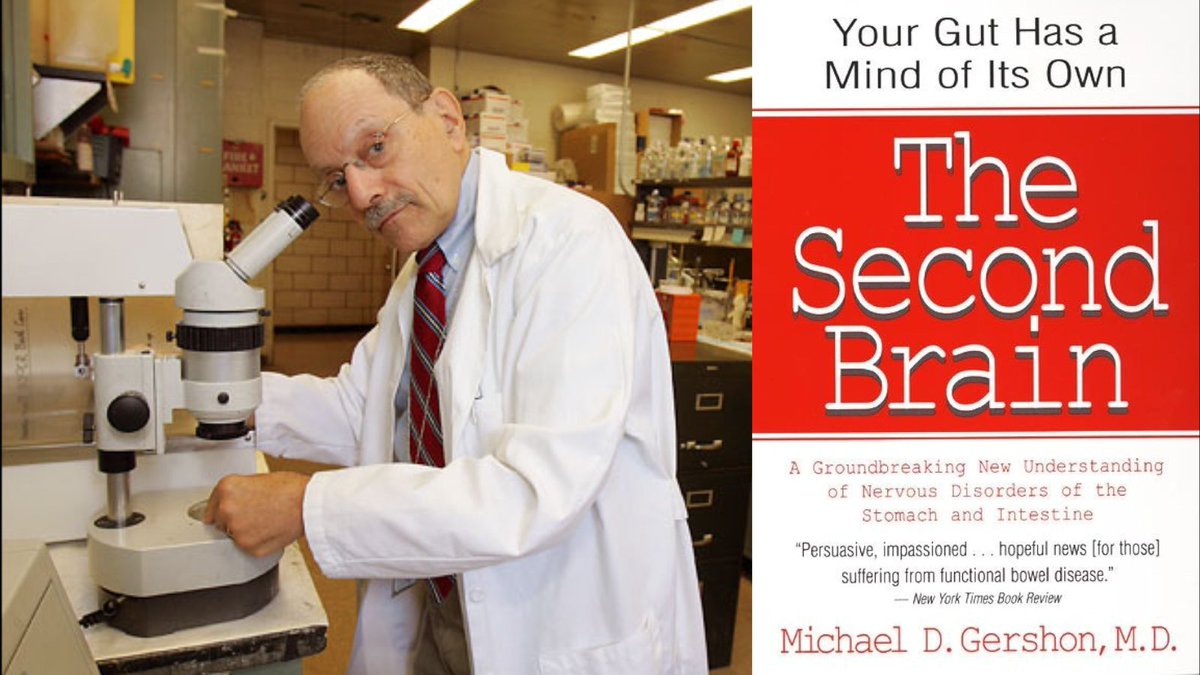
A neurobiologist at Columbia spent 30 years proving that the gut has its own brain, and the day he finally published the book that named it, almost every psychiatrist in America stopped returning his calls. His name is Michael Gershon. He runs the Department of Anatomy and Cell Biology at Columbia University Medical Center in New York, and the field he built from the ground up is called neurogastroenterology in short brain-gut axis. The book that announced it to the world was published in 1998, and the title alone tells you everything about what he was up against. He called it The Second Brain. The claim sounded like science fiction in the 1990s. Gershon was saying that the human gut contains its own fully functional nervous system, with around 100 million neurons embedded in the walls of the alimentary canal, which is the nine-meter tube running from your esophagus to your anus. That is more neurons than your entire spinal cord, and more than your entire peripheral nervous system put together. The gut was not just digesting food. It was running its own intelligence, with its own reflexes, its own memory, and its own way of deciding what to do without asking the brain in your head for permission. The medical establishment treated this as borderline heretical when he first started publishing it. The brain was supposed to be the command center. Everything else was supposed to be the periphery. A second brain in the belly did not fit the architecture anyone had been taught. Then the data started piling up, and it was impossible to argue with. The first finding that broke the old model was about serotonin. You might have heard Andrew Huberman talking about it on his podcasts. Serotonin is the neurotransmitter associated with mood, well-being, sleep, and depression. Every antidepressant on the market targets it. The assumption for decades was that serotonin was a brain chemical, produced in the brain, regulated in the brain, and responsible for what happened inside the brain. Gershon's lab showed that 90 to 95 percent of the body's serotonin is not produced in the brain at all. It is produced in the gut, by specialized cells called enterochromaffin cells embedded in the intestinal lining. Your stomach and intestines are the largest serotonin factory in the human body, and the brain in your skull is producing only a tiny fraction of what is circulating below your neck. The second finding was even harder to swallow. The vagus nerve is the longest cranial nerve in the body, running from the base of the brain down through the neck, the chest, and into the abdomen, where it branches into the gut. For most of the 20th century, doctors assumed the vagus was the brain's way of giving orders to the digestive system, in the same way the brain gives orders to the rest of the body. The actual measurements showed almost the opposite. Roughly 90 percent of the fibers in the vagus nerve are carrying signals upward, from the gut to the brain, and only a small fraction are carrying signals downward. Your gut is sending nine times more information to your head than your head is sending to your gut. The bandwidth is wildly asymmetrical, and almost all of it is going in a direction the medical textbooks had quietly been wrong about for decades. The implication of those two findings together is what changed psychiatry. If most of your serotonin is being produced in your gut, and most of the information flowing through your vagus nerve is moving from your gut to your brain, then your mood is being shaped from the bottom up far more than it is being directed from the top down. The feeling of dread before a difficult meeting. The sudden clarity after a good meal. The low-grade anxiety that will not go away no matter how much you talk through it. All of it is downstream of signals that started below your diaphragm. A 2019 study at McMaster University put the final piece in place. Researchers gave mice oral antidepressants and watched what happened. The drugs activated the vagus nerve from the gut side, and the gut-to-brain signaling was what produced the antidepressant effect. When they cut the vagus nerve and tried the same drugs, the antidepressant effect disappeared completely. The drug was not working on the brain directly. It was working on the gut, and the gut was working on the brain. The follow-up research on the microbiome made the connection even tighter. Mice raised in completely sterile environments with no gut bacteria produced about 60 percent less serotonin in their intestines than normal mice. When the bacteria were reintroduced, serotonin production returned to normal. The trillions of microorganisms living in your digestive tract are not passengers. They are running the factory that makes the chemical your antidepressant is trying to manipulate. The most haunting line from Gershon's interviews is the one I keep coming back to. He said the second brain does not do philosophy or poetry, and it cannot help you write a novel. But it is the brain that decides whether you wake up in the morning feeling like the day is full of possibility or feeling like something is wrong before anything has even happened. The mood you assume your conscious mind is generating from your thoughts is mostly being generated underneath you, by a nervous system you cannot feel and cannot consciously access, in an organ you have spent your entire life thinking about as a digestion machine. The decision your gut makes about how you are going to feel arrives in your head a fraction of a second before your brain catches up to it. The conscious thought is the explanation your mind invents for a verdict that has already been reached somewhere lower. You did not feel uneasy because you were thinking dark thoughts. You started thinking dark thoughts because your gut was already uneasy.
Ihtesham Ali tweet media
English
50
418
1K
39.6K
YUMI WATANABE retweetledi
しゅん(高木俊介)
『In Covid's Wake』、翻訳監修作業を進めている。なんとか夏までには出したい。 ウイルス人工説の議論と登場する学者たちの動きは推理小説のよう。急転直下、感染対策がコロナ以前の合意から変更される経緯も各国の政治家の動きを日単位で追っている。英国のファーガソンが主導した数理モデルの出しゃばりっぷりも国際規模でわかる。 著者たちの専門と遠いためか、ワクチンについての言及は少ないが、医者、疫学者たちが反対派、懐疑派を陰謀論者呼ばわりして議論を封殺するのは、日本とまったく同じである。 膨大な文献と資料を駆使して、間違った政策を強硬に進めた自分たちの仲間であるリベラル党派に対して反省を迫るその筆致が素晴らしい。日本でも党派を超えて、コロナ禍を検討する参考になるはずだ。
しゅん(高木俊介) tweet media
日本語
2
19
36
1.4K
YUMI WATANABE retweetledi
Prof. Peter C Gøtzsche
A CIA officer testified at a Senate hearing last week that the CIA’s scientific analysts determined that the COVID-19 pandemic started from a lab leak and that their scientific conclusions were hidden from Congress and the public in a coverup. This should have ignited a media inferno, but there was nothing. The US legacy media had all told a story that was totally false, and they do not want to admit that their journalism was a betrayal of public trust. bit.ly/4uqTF2K.
Prof. Peter C Gøtzsche tweet media
English
15
32
93
2.8K
YUMI WATANABE retweetledi
Peter Clack
Peter Clack@PeterDClack·
This isn't just a pile of debris - it’s the future of green energy waste hidden in plain sight. Millions of solar panels are hitting their end-of-life cycle, and the world is completely unprepared for the coming toxic avalanche. By 2050, the International Renewable Energy Agency projects up to 78 million metric tons of solar e-waste. Where is it all going to go? The industry boasts that solar panels are '95% recyclable'. Technically, yes - because they are made of glass, aluminum and copper. But economics always trumps physics. In Australia and the US, it costs roughly $20 to $28 to properly disassemble and recycle a single panel, but only about $4 to dump it in landfill. Because there is no financial incentive, up to 90% of decommissioned panels go straight into the ground. Each solar panel is an industrial 'sandwich' bound tightly by heavy polymers. To extract the microscopic amounts of valuable silver and high-purity silicon requires energy-intensive chemical and thermal baking. When they are crushed or left to fracture in landfills, heavy metals like lead and cadmium can leach into the surrounding soil and groundwater, turning 'clean energy' into a multi-generational hazardous waste problem. The crisis is accelerating faster than models predicted. Because solar cells degrade and lose efficiency, and because newer, cheaper panels hit the market, consumers and solar farms are ripping out functional systems at least a decade early to upgrade. This compressed lifecycle destroys the narrative of a long-term, stable asset and creates an endless loop of unrecyclable industrial trash.
Peter Clack tweet media
Bega, New South Wales 🇦🇺 English
734
9.2K
13.7K
419.2K
YUMI WATANABE
YUMI WATANABE@ym_damselfly·
@la_Flaschenpost 読みました。 こんな作品があるのですね。機会があったら実物を見たいです。
日本語
1
0
1
22
ITO Junichiro
ITO Junichiro@la_Flaschenpost·
今日から「新潟日報」で連載「日々是哲学」がはじまりました。 初回は柏崎の駅前公園で出会った伊藤豊の彫刻作品「太陽を担う男達」について。 この作品が表す太陽とは何なのか、考えました。月一での連載です。これからよろしくお願いします。
日本語
2
1
19
729
YUMI WATANABE retweetledi
読書猿 5/23 新刊『ゼロからの読書教室』
・タイピングを優先または併用すべき根拠が強いのは、手書き判読性が低い学習者、発達性ディスレクシア、弱い書き手・読み手、長文作成、編集・再構成が重要な課題、後でノートを検索・整理・復習する課題、十分なキーボード熟達度がある場合です。
日本語
2
55
113
8.9K
YUMI WATANABE retweetledi
読書猿 5/23 新刊『ゼロからの読書教室』
まとめると ・手書きを優先する根拠が比較的強いのは、初期の文字学習、綴り、文字形、正書法、低学年のコピー課題、図や矢印を使う概念整理、PC誘惑が強い教室環境です。低〜中学年では手書き速度がキーボード速度を上回る研究が多く、コピー課題では手書きのほうが正確性や産出量で有利になりやすい
日本語
1
61
141
9.9K
YUMI WATANABE retweetledi
読書猿 5/23 新刊『ゼロからの読書教室』
この2つのメタ分析は矛盾して見えますが、実は焦点が違います。Allenらは電子ノート利用全体の教育的影響を見ており、Voyerらは特にデジタル誘惑の交絡を取り除いた条件を重視しています。「現実の教室でPCを使うと誘惑込みで不利になりやすい」と「誘惑を統制すれば媒体差は小さい」は両立します。
日本語
1
17
40
3.2K
YUMI WATANABE retweetledi
Prof. Peter C Gøtzsche
A BMJ systematic review did not find causal associations between aluminium adjuvanted vaccines and serious or long-term health outcomes. I published the comment: Aluminium adjuvants in vaccines are harmful. bit.ly/3PpQvwW.
English
5
32
84
3.8K
YUMI WATANABE
YUMI WATANABE@ym_damselfly·
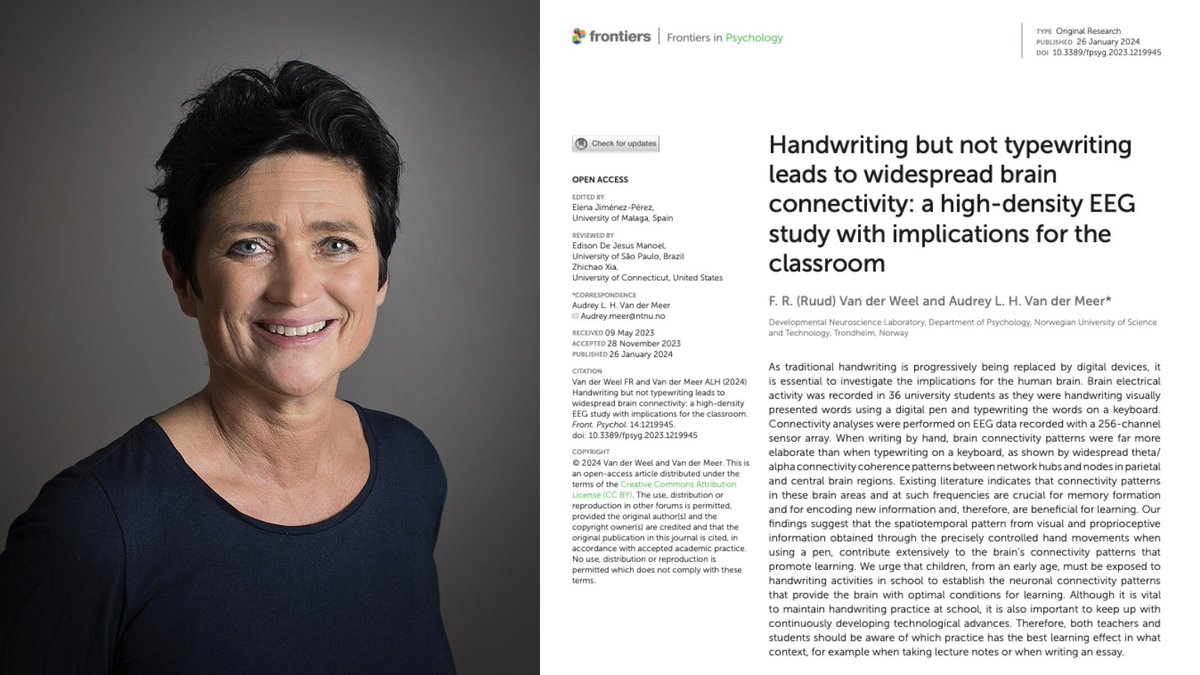
あるノルウェーの神経科学者が、手書きという行為が、タイピングでは物理的に不可能な方法で人間の脳に変化をもたらすことを証明するために20年を費やしましたが、その分野以外の人でその論文を読んだ人はほとんどいません。 彼女の名前はオードリー・ヴァン・デル・メールです。 彼女はトロンハイムで脳研究ラボを運営しており、この議論に決着をつけた論文は2024年に『Frontiers in Psychology』という学術誌に掲載されました。この発見は、地球上のあらゆる教室を変えるべきほど衝撃的なものでした。 実験は単純なものでした。彼女は36人の大学生を募集し、それぞれに256個のセンサーが頭皮に密着したキャップを被せ、脳活動を記録しました。画面には単語が1つずつ点滅して表示されました。 学生たちは、デジタルペンを使ってタッチスクリーンにその単語を手書きしたり、キーボードで同じ単語を入力したりしました。単語が画面に表示されている5秒間、あらゆる神経反応が記録されました。 その後、彼女のチームは、長年にわたり多くの研究者が無視してきたデータの部分、つまり課題遂行中に脳の異なる部位がどのように相互に通信しているかを分析しました。 学生たちが手書きをした際、脳の至る所が一斉に活性化しました。 記憶、感覚統合、そして新しい情報の符号化を担う領域がすべて、大脳皮質全体に広がる協調的なパターンで同時に活性化していました。ネットワーク全体が覚醒し、つながっていたのです。 同じ学生たちが同じ単語をキーボードで入力した際、そのパターンはほぼ完全に崩壊しました。 脳の大部分は静まり返り、ほんの数秒前まで活発だった領域間のつながりは、脳波(EEG)上ではどこにも見当たりませんでした。 同じ単語、同じ脳、同じ人物でありながら、神経学的には全く異なる二つの現象が起きたのです。 その理由は、彼女の研究以前には誰も注目していなかった点にありました。手書きは単一の動作ではなく、目とリアルタイムで連携した何千もの微細な動きの連続であり、それぞれの文字が異なる形状をしているため、脳はわずかに異なる空間的な問題を解決しなければならないのです。 指、手首、視覚、そして空間内の位置を追跡する脳の部位がすべて連携して、一つの文字を作り出し、次へ、そしてまた次へと生み出しているのです。 タイピングは、そのすべてを無に帰してしまいます。キーボードのどのキーを押すにしても、まったく同じ指の動きしか必要としないため、脳が統合すべき情報はほとんどなく、解決すべき問題もほとんどないのです。 ヴァン・デル・メール氏はインタビューで、それを率直に語りました。 同じ指で同じキーを何度も押すことは、脳を意味のある形で刺激するものではありません。そして彼女は、子供にiPadを渡したすべての親を戦慄させるべき事実を指摘しました。 タブレットで読み書きを学ぶ子供たちは、しばしば「b」と「d」のような文字を見分けることができません。なぜなら、紙の上で実際にそれらの文字を書くために必要な動作を、身体で実際に感じたことがないからです。 彼女より10年前、プリンストン大学の2人の研究者が全く異なる手法を用いて同様の研究を行い、同じ結論に達しました。パム・ミューラーとダニエル・オッペンハイマーは、3つの実験を通じて327人の学生を対象に調査を行いました。半数はインターネットを無効にしたノートパソコンでノートを取り、残りの半数は手書きでノートを取り、その後、全員が視聴した講義の内容を実際にどの程度理解しているかをテストしました。 表面的な記憶ではなく、真の理解が求められるすべての質問において、手書きグループが圧倒的な差をつけて勝利しました。 その理由は、両グループが実際に書き留めた内容の記録の中に隠されていました。 ノートパソコンを使った学生たちは、ほぼ一語一語をタイプし、総量としてはより多くの内容を記録しましたが、その過程でほとんど何も処理していませんでした。一方、手書きの学生たちは、講義をリアルタイムで書き写すほど速く書くことが物理的に不可能だったため、注意深く耳を傾け、何が本当に重要かを判断し、それを自分の言葉で紙に書き留めることを余儀なくされました。 何を残すかを選ぶというその一挙手一投足が、まさに学習そのものであり、キーボードは静かにその選択を省略し、それとともに学習そのものも省略してしまったのです。 2つの研究。2つの国。同じ結論。 手書きは脳を働かせます。タイピングは脳を怠けさせます。 これまで手書きではなくタイピングで記録したすべてのノートは、より細いパイプを通って脳に入っていました。会議の内容、本の要約、紙ではなくスマホに記録したアイデアのすべてが、表面的な理解でしか処理されませんでした。 あなたがそれらを忘れたのは、記憶力が悪いからではありません。タイピングでは、記憶を定着させるはずの脳の領域が決して活性化されなかったからです。 解決策は、あなたの祖母がすでに知っていたことです。 ペンを手に取りましょう。それを書き留めましょう。遅い道こそが、実は近道なのです。 【DeepL翻訳】
Ihtesham Ali@ihtesham2005

A Norwegian neuroscientist spent 20 years proving that the act of writing by hand changes the human brain in ways typing physically cannot, and almost nobody outside her field has read the paper. Her name is Audrey van der Meer. She runs a brain research lab in Trondheim, and the paper that closed the argument was published in 2024 in a journal called Frontiers in Psychology. The finding is brutal enough that it should have changed every classroom on Earth. The experiment was simple. She recruited 36 university students and put each one in a cap with 256 sensors pressed against their scalp to record brain activity. Words flashed on a screen one at a time. Sometimes the students wrote the word by hand on a touchscreen using a digital pen, and sometimes they typed the same word on a keyboard. Every neural response was recorded for the full five seconds the word stayed on screen. Then her team looked at the part of the data most researchers had ignored for years, which is how different parts of the brain were communicating with each other during the task. When the students wrote by hand, the brain lit up everywhere at once. The regions responsible for memory, sensory integration, and the encoding of new information were all firing together in a coordinated pattern that spread across the entire cortex. The whole network was awake and connected. When the same students typed the same word, that pattern collapsed almost completely. Most of the brain went quiet, and the connections between regions that had been alive seconds earlier were nowhere to be found on the EEG. Same word, same brain, same person, and two completely different neurological events. The reason turned out to be something nobody had really paid attention to before her work. Writing by hand is not one motion but a sequence of thousands of tiny micro-movements coordinated with your eyes in real time, where each letter is a different shape that requires the brain to solve a slightly different spatial problem. Your fingers, wrist, vision, and the parts of your brain that track position in space are all working together to produce one letter, then the next, then the next. Typing throws all of that away. Every key on a keyboard requires the exact same finger motion regardless of which letter you are pressing, which means the brain has almost nothing to integrate and almost no problem to solve. Van der Meer said it plainly in her interviews. Pressing the same key with the same finger over and over does not stimulate the brain in any meaningful way, and she pointed out something that should scare every parent who handed their kid an iPad. Children who learn to read and write on tablets often cannot tell letters like b and d apart, because they have never physically felt with their bodies what it takes to actually produce those letters on a page. A decade before her, two researchers at Princeton ran the same fight using a completely different method and ended up at the same answer. Pam Mueller and Daniel Oppenheimer tested 327 students across three experiments, where half took notes on laptops with the internet disabled and half took notes by hand, before testing everyone on what they actually understood from the lectures they had watched. The handwriting group won by a wide margin on every question that required real understanding rather than surface recall. The reason was hiding in the transcripts of what the two groups had actually written down. The laptop students typed almost word for word, capturing more total content but processing almost none of it as they went, while the handwriting students physically could not write fast enough to transcribe a lecture in real time, which forced them to listen carefully, decide what actually mattered, and put it in their own words on the page. That single act of choosing what to keep was the learning itself, and the keyboard had quietly skipped the choosing and skipped the learning along with it. Two studies. Two countries. Same answer. Handwriting makes the brain work. Typing lets it coast. Every note you have ever typed instead of written went into your brain through a thinner pipe. Every meeting, every book highlight, every idea you captured on your phone instead of on paper was processed at half depth. You did not forget those things because your memory is bad. You forgot them because typing never woke the part of the brain that would have made them stick. The fix is the thing your grandmother already knew. Pick up a pen. Write the thing down. The slower road is the faster one.

日本語
8
1.1K
3.8K
369.8K
YUMI WATANABE retweetledi
Ihtesham Ali
Ihtesham Ali@ihtesham2005·
A Norwegian neuroscientist spent 20 years proving that the act of writing by hand changes the human brain in ways typing physically cannot, and almost nobody outside her field has read the paper. Her name is Audrey van der Meer. She runs a brain research lab in Trondheim, and the paper that closed the argument was published in 2024 in a journal called Frontiers in Psychology. The finding is brutal enough that it should have changed every classroom on Earth. The experiment was simple. She recruited 36 university students and put each one in a cap with 256 sensors pressed against their scalp to record brain activity. Words flashed on a screen one at a time. Sometimes the students wrote the word by hand on a touchscreen using a digital pen, and sometimes they typed the same word on a keyboard. Every neural response was recorded for the full five seconds the word stayed on screen. Then her team looked at the part of the data most researchers had ignored for years, which is how different parts of the brain were communicating with each other during the task. When the students wrote by hand, the brain lit up everywhere at once. The regions responsible for memory, sensory integration, and the encoding of new information were all firing together in a coordinated pattern that spread across the entire cortex. The whole network was awake and connected. When the same students typed the same word, that pattern collapsed almost completely. Most of the brain went quiet, and the connections between regions that had been alive seconds earlier were nowhere to be found on the EEG. Same word, same brain, same person, and two completely different neurological events. The reason turned out to be something nobody had really paid attention to before her work. Writing by hand is not one motion but a sequence of thousands of tiny micro-movements coordinated with your eyes in real time, where each letter is a different shape that requires the brain to solve a slightly different spatial problem. Your fingers, wrist, vision, and the parts of your brain that track position in space are all working together to produce one letter, then the next, then the next. Typing throws all of that away. Every key on a keyboard requires the exact same finger motion regardless of which letter you are pressing, which means the brain has almost nothing to integrate and almost no problem to solve. Van der Meer said it plainly in her interviews. Pressing the same key with the same finger over and over does not stimulate the brain in any meaningful way, and she pointed out something that should scare every parent who handed their kid an iPad. Children who learn to read and write on tablets often cannot tell letters like b and d apart, because they have never physically felt with their bodies what it takes to actually produce those letters on a page. A decade before her, two researchers at Princeton ran the same fight using a completely different method and ended up at the same answer. Pam Mueller and Daniel Oppenheimer tested 327 students across three experiments, where half took notes on laptops with the internet disabled and half took notes by hand, before testing everyone on what they actually understood from the lectures they had watched. The handwriting group won by a wide margin on every question that required real understanding rather than surface recall. The reason was hiding in the transcripts of what the two groups had actually written down. The laptop students typed almost word for word, capturing more total content but processing almost none of it as they went, while the handwriting students physically could not write fast enough to transcribe a lecture in real time, which forced them to listen carefully, decide what actually mattered, and put it in their own words on the page. That single act of choosing what to keep was the learning itself, and the keyboard had quietly skipped the choosing and skipped the learning along with it. Two studies. Two countries. Same answer. Handwriting makes the brain work. Typing lets it coast. Every note you have ever typed instead of written went into your brain through a thinner pipe. Every meeting, every book highlight, every idea you captured on your phone instead of on paper was processed at half depth. You did not forget those things because your memory is bad. You forgot them because typing never woke the part of the brain that would have made them stick. The fix is the thing your grandmother already knew. Pick up a pen. Write the thing down. The slower road is the faster one.
Ihtesham Ali tweet media
English
2.4K
43.9K
118.3K
9.2M
YUMI WATANABE retweetledi
大脇幸志郎
大脇幸志郎@0waki·
この春の企業健診中止したらだいぶ浮くと思うよ。
日本語
0
12
55
1.6K
YUMI WATANABE retweetledi
中川淳一郎
中川淳一郎@unkotaberuno·
すごいなこの人。注意喚起したことによって発生した全国一斉休校、緊急事態宣言、外出自粛要求、小池知事による「買い物は3日に1回」発言、マスク強要社会、施設・店の前で検温&アルコール消毒、宅配業者にいきなり消毒液噴射で目が痛くなる、静岡に来るなの大運動、東京から帰省した家に石が投げられたり早く帰れと言われる、里帰り出産しようとしたらたらいまわしにされる、陽性者の遺体は見ることができなく遺骨だけ受け取る、もデメリットとして感じないんだ。 まだこれは前半。前半を続ける。JR盛岡駅の新幹線で検温隊出動、岡山のSAで他県ナンバーを監視し検温協力を呼び掛ける、知事は「岡山に来たことを後悔するようになればいい」発言、「他県ナンバーですが県内在住です」と書かれた紙を駐車中の車のフロントガラスには入れておく、最初期の屋形船・タクシー・ライブハウス業界へのバッシング、ダイヤモンド・プリンセスに乗った男性がジムに行ったからジムがバッシングされ、運動中もマスク、使い終わったら器具をアルコール消毒するように、山梨に帰省した女性が陽性発覚で経路を全部さらされ、男性と一緒にいたことなどもバラされ正体暴きが開始してコードネーム「コロナ55号」と呼ばれる、55号の理由は山梨県内55例目でコント55号にかけている、他にもあり過ぎてここでは書ききれん。またコレ、2020年5月までの話。 芸能人だってロケ禁止、スタジオの人数少な目、再放送だらけで新規仕事中止、ライブ・イベント中止、アクリル板で何言ってるんだか聞こえづらい、WBSではマスクで出演、ロケに行く場合はロケ地の人々への過度な配慮、陽性発覚で代役を立てさせられギャラが減る、陽性発覚で本人と事務所が謝罪--これがデメリットではないと?
キキのかか@KikiKaka1003

RaMuさん「コロナも注意喚起してもデメリットが発生しない事じゃないですか」 倉田さん「デメリットはあるから!」 古市さん「ゆってもテレビは多様でしたよ」 倉田さん「20年、21年の事を忘れないで!」倉田さんの言う通りだと思います。TVが煽り何が起きたのか忘れすぎです。 #そこまで言って委員会

日本語
43
658
2.9K
423.1K
YUMI WATANABE retweetledi
全国有志医師の会【公式】
【HP更新】 2026年5月15日開催 第40回疾病・障害認定審査会 新型コロナウイルス感染症予防接種健康被害審査第一部会結果 審議件数29件のうち認定3件、認定率10%と過去最低の認定率となりました。 1,200件以上の未審査がありますが、審査速度は上げないのでしょうか? vmed.jp/5266/
日本語
3
26
78
2.3K
YUMI WATANABE retweetledi
キキのかか
キキのかか@KikiKaka1003·
@Geregere_Y @MrS89715471 ゾッとしますがその通りだと思います。注意喚起はした方がいいに決まってるという感覚。「何かあったらどうするんだ!」日本人に染みつきすぎた感覚。これがどれだけ日本を衰退させているかを考える人は少ないのだと会社にいてもよく感じます。
日本語
6
11
176
54.8K
YUMI WATANABE retweetledi
大脇幸志郎
大脇幸志郎@0waki·
女性セブンの記事がウェブにも出た模様。 《医師が指摘》健康診断・人間ドックが“当たり前”になっている風潮への危惧 がん検査には「過剰診断・過剰治療」というリスクも(女性セブンプラス) #Yahooニュース news.yahoo.co.jp/articles/4e69a…
日本語
1
111
399
16.2K
YUMI WATANABE retweetledi
しゅん(高木俊介)
2020年2月17日時点でのファウチのインタビュー。 この時点で米国では「空気感染」としている(!)。そして、「(マスクの)周囲からの漏れ」という構造のために効果はないと明言している。 「ドラッグストアで売っているマスクを見てみると、その周囲からの漏れを防ぐ効果はほとんどない」と彼は述べた。「人々は『マスクを着用し始めたほうがいいだろうか』と言い始める。しかし、現在の米国において、マスクを着用する理由は 全くない。」 構造がこのようなものであるなら、マスクの効果は流行最盛期は「何でもやっていみる」としても、マスクをするべき時期は限られる。おそらく欧米がマスクから早期に脱したことには、そういう考えが基礎にある。 日本ではマスクの構造への洞察がなく、ひたすらその呪術的側面が期待されているのだろう。欧米に比べるとマスクがなじんでいた、とはそういうことだ。文化的知恵でもなんでもない。 その後もマスクの効果は疑問視されていたが、何のきっかけもなく4月3日に突然CDCがマスク推奨に変化し、民主党がそれに従ってマスクの義務化を行っている。後からその経緯を振り返れば、そこに政治があったと推測することのほうが普通だろう。 usatoday.com/story/news/hea…
日本語
1
29
84
4.5K