Michel Yamagishi

2K posts

Michel Yamagishi banner
Michel Yamagishi

Michel Yamagishi

@ymichel

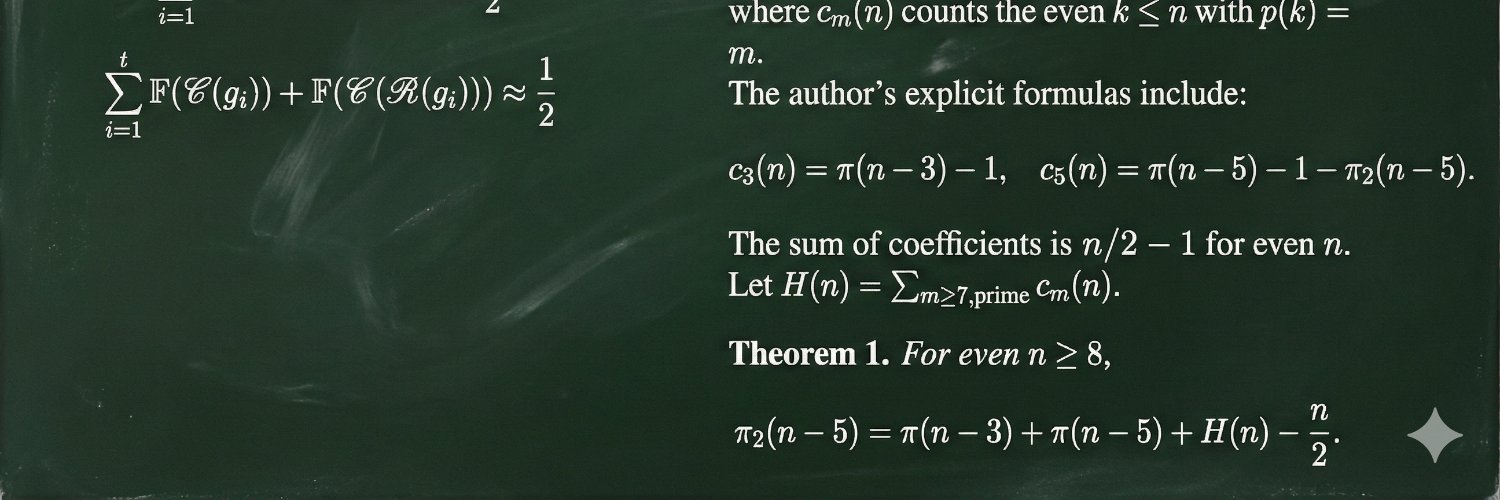
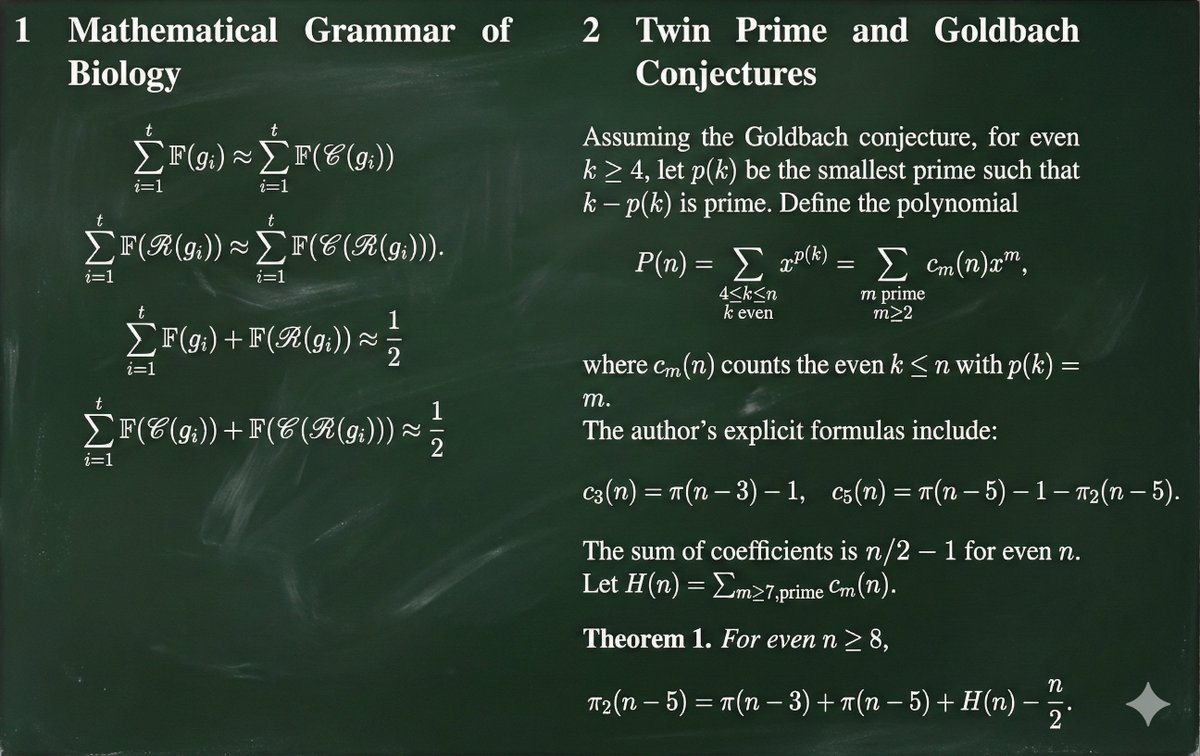
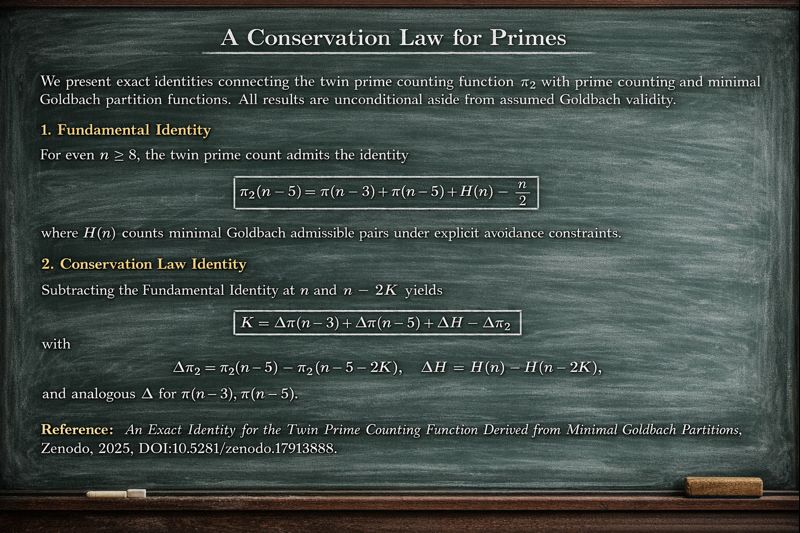
Ph.D. Applied #Math. Authored Mathematical Grammar of #Biology. Linked Twin Prime and Goldbach Conjectures: π₂(n-5)= π(n-3)+π(n-5)+H(n)-n/2.


Campinas - SP Brazil Katılım Ağustos 2009
259 Takip Edilen255 Takipçiler
Michel Yamagishi
Michel Yamagishi@ymichel·
As médias dos cursos de Medicina no ENAMED não foram detalhadas na cobertura jornalística sobre o exame. No entanto, esses dados fazem parte das informações oficiais divulgadas e podem ser consultados de forma organizada: O site enamed.info reúne as médias por curso, permitindo uma leitura mais cuidadosa dos resultados e contribuindo para uma análise mais qualificada da avaliação da formação médica no Brasil. Para gestores educacionais, docentes, pesquisadores, estudantes e demais interessados em políticas de avaliação do ensino superior, trata-se de uma fonte útil e de fácil acesso. 👉 enamed.info
Português
0
2
1
51
Michel Yamagishi retweetledi
BBC News Brasil
BBC News Brasil@bbcbrasil·
Recentemente descritos pela ciência, os misteriosos cogumelos são encontrados em diferentes partes do mundo, mas provocam nas pessoas exatamente as mesmas visões: bbc.in/3NDiHex
BBC News Brasil tweet media
Português
78
111
2K
651.2K
David
David@DavidSHolz·
all of evolution implies - we can become better
English
187
92
1.4K
273.2K
Jared Duker Lichtman
Jared Duker Lichtman@jdlichtman·
🍎 Isaac Newton discovered calculus while in lockdown during the Black Plague 🪶Andre Weil proved the Riemann Hypothesis for curves while in prison during WWII There's a lesson in there somewhere
English
14
4
35
4.1K
cinesthetic.
cinesthetic.@TheCinesthetic·
What movie has the perfect soundtrack?
English
846
41
364
10.8M
Anthony Bonato
Anthony Bonato@Anthony_Bonato·
“What was you favorite equation from 2025?” Me:
Anthony Bonato tweet media
English
28
60
1.4K
67.4K
Michel Yamagishi
Michel Yamagishi@ymichel·
@mathematics_inc I hope it will contribute to resolving long-standing open problems, including the twin prime conjecture and the Goldbach conjecture.
English
1
0
1
461
Michel Yamagishi retweetledi
Math, Inc.
Math, Inc.@mathematics_inc·
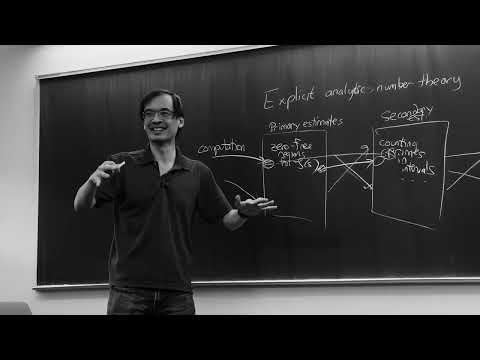
🎀 Terence Tao is partnering with Math, Inc. 🎀 as the inaugural Veritas Fellow — to formalize estimates in number theory. In analytic number theory, the literature contains a large web of explicit estimates. But that web is not immediately interoperable. In practice, results come in three layers: Primary estimates: These are foundational inputs such as zero-free regions for the Riemann zeta function. They often depend on substantial computation and careful numerical optimization. Secondary estimates: Many papers take a primary input (e.g., a zero-free region) and convert it into reusable consequences, such as counting primes in short intervals. These become core building blocks used throughout the subject. Tertiary estimates: Further work then applies those secondary building blocks to frontier number-theoretic problems, e.g. representing integers as sums of three primes. The difficulty is that these layers do not update cleanly over time. A tertiary paper may rely on the best primary estimate available at the time. But years later improved computations refine the primary input, without being systematically propagated through the secondary and tertiary chain. As a result, the “same theorem with updated constants” is often unknown. The goal is to formalize key papers across these layers and then abstract them so their dependencies become explicit, composable, and machine-checkable. The long-term vision is to create a living network of implications: when a primary estimate improves, every downstream implication is automatically upgraded. This will transform the mathematical literature into modular software. Number theory is a strong test case because its estimates has a relatively clear structure, and a shared set of standard inputs and outputs. But in many areas such as PDEs, researchers constantly spend effort on modification: adapting lemmas and hypotheses, translating between incompatible frameworks, “fitting square pegs into round holes.” A composable, machine-verified implication network directly targets this friction. The same infrastructure is poised to scale to other fields and enable crowdsourced, large-scale projects that are currently hard to coordinate. A classic example is the classification of finite simple groups: a decades-long effort distributed across many contributors, with inevitable complexity around bookkeeping, integration, and confidence in completeness. With modern tooling, we envision tackling moonshots of comparable scope: many contributors handling diverse cases, and automated systems gluing the pieces together. The field becomes a live progress dashboard that records what is proved, what remains, and exactly which dependencies each component requires. This opens up the possibility for a much faster-pace and engaging way to do mathematics. Watch Tao's outline on YouTube: youtube.com/watch?v=KeX9Jq… math.inc/a-conversation…
YouTube video
YouTube
Math, Inc.@mathematics_inc

🚨 FULL CONVERSATION Fields medalist Terry Tao sits down with Math Inc's @jessemhan and @jdlichtman for a conversation on the future of mathematics. "I got convinced that this was the future of mathematics [...] It's a different style of writing proofs that actually is in some ways easier to read—harder to check by humans, but you see more clearly the inputs and outputs of a proof, which traditional writing often conceals [...] I think the definition of a mathematician will broaden."

English
25
55
419
65.1K
Jared Duker Lichtman
Jared Duker Lichtman@jdlichtman·
The Riemann Hypothesis (RH) has changed in perceived difficulty over time: In 1900, Hilbert thought RH would be one of the easier problems to solve on his list. Today, RH is viewed difficult because there aren't any promising proof strategies. 🧵 (1/5)
Jared Duker Lichtman tweet media
Daniel Litt@littmath

@ElliotGlazer I give the Riemann hypothesis a >50% chance of being resolved in my lifetime.

English
14
12
218
50.5K
Michel Yamagishi
Michel Yamagishi@ymichel·
@Ganeshuor By the way, this is not intended as a criticism of specialists, but as an observation about a broader cultural shift that affects everyone without exception.
English
0
0
0
25
Michel Yamagishi
Michel Yamagishi@ymichel·
If Ramanujan’s letter were sent today, it would likely be filtered straight into the spam folder. And even if it somehow reached the inbox, it would probably remain unread—few people now have the time or willingness to carefully engage with the work of others, especially when it comes from someone entirely unknown in the field.
English
2
0
6
340
Math Files
Math Files@Math_files·
This is the letter that transformed Ramanujan’s life—a bold, unsolicited message he sent to G. H. Hardy in 1913.
Math Files tweet media
English
7
33
268
20.3K