Adauk 🌬️
105.3K posts

Adauk 🌬️
@zurae_
The light 🩵, the magic ❤️
3rd rock from the sun Katılım Aralık 2012
3.8K Takip Edilen6.8K Takipçiler
Sabitlenmiş Tweet
Adauk 🌬️ retweetledi

She just reverse-engineered the psychology of every high-performer who can't turn off.
You can't tell a firefighter to nap. Their entire identity is built around staying alert when everyone else is asleep. Telling them to rest triggers the same resistance as telling them to quit.
"Let's watch a show" works because it reframes rest as togetherness. He didn't agree to sleep. He agreed to spend time with her. Sleep was just the side effect.
The best people in your life don't argue with your stubbornness. They just build a trap you walk into willingly.
emily may@emilykmay
he was up fighting a fire *all night* and is notoriously bad at resting and so i said i wanted to relax and watch a tv show with him to trick him into napping at 1 pm ✅
English
Adauk 🌬️ retweetledi

Eva Mendes turned 50 in March 2024, and when she sat down with PEOPLE in May, her perspective on aging was refreshingly honest and grounded.
She used to think 50 was “her mom’s age” and never imagined having kids or settling down — until a certain man changed her mind. Now she’s grateful for it.
She laughed about people reacting to her being pregnant at 40 the same way they react to turning 50: “It’s more of a big deal for other people than it is for yourself.”
What really stood out was how she now sees beauty in imperfections and broken things. Her best takeaway from entering this decade?
“I’m still here. I get to watch my mom grow older, watch myself grow older, and watch my kids grow up.”
She added with a smile: “We all just die in the end, so who cares?” while admitting she still catches herself looking at her hands thinking “whose hand is that?”
It’s such a warm, joyful take on getting older.
What’s one thing you’ve started appreciating more as you get older?
English
Adauk 🌬️ retweetledi

A Nobel Prize winner spent his entire career proving that your brain lies to you constantly, and the most unsettling part is that the smarter you are, the more convincing the lies become.
His name is Daniel Kahneman, and the research that earned him the Nobel Prize in Economics was not about markets or money.
It was about the two systems running inside every human mind at all times, and why one of them is almost always in charge when you think the other one is.
Here is what he found, and why it changes how you should think about every decision you make.
Kahneman called them System 1 and System 2.
System 1 is fast, automatic, emotional, and operates almost entirely outside your conscious awareness. It is the system that reads the mood in a room before you process a single word, that flinches before you hear the sound, that forms an impression of a stranger in milliseconds.
System 2 is slow, deliberate, effortful, and exhausting. It is the system you engage when you do long division or carefully weigh a major life decision. The critical insight is not that these two systems exist. It is that System 2 is lazy by design, and System 1 runs the show far more often than any of us want to believe.
The most dangerous finding in Kahneman's research is what he called the what-you-see-is-all-there-is problem. System 1 does not pause to ask what information might be missing. It builds the most coherent story it can from whatever data is currently available, then delivers that story to your conscious mind as a conclusion that feels like it was carefully reasoned.
You experience the output of an automatic process as if it were the result of deliberate thought. The confidence feels earned. It almost never is.
This is why cognitive biases are not character flaws. They are structural features of a brain optimized for speed. The availability heuristic makes you overestimate the probability of whatever comes to mind most easily, which is why people fear plane crashes more than car accidents and dramatic rare diseases more than the conditions that actually kill most people.
The anchoring effect makes your judgment of any number heavily influenced by whatever number you heard first, even if that number was completely arbitrary. The halo effect makes your overall impression of a person contaminate every individual judgment you make about them, so the same resume gets rated more competitively when attached to an attractive photo.
The part that Kahneman spent the most time on, and that most people resist the hardest, is what he called expert overconfidence. He studied stockbrokers, surgeons, military commanders, clinical psychologists, and financial analysts people at the absolute top of their fields with decades of experience and found systematic evidence that their confidence in their own judgments consistently exceeded the accuracy of those judgments.
Experience in a domain does not eliminate cognitive bias. In many cases it amplifies it, because experts build elaborate mental models that feel comprehensive but are often just more sophisticated versions of the same shortcuts everyone uses.
The most honest thing Kahneman ever said about his own research was that writing the book did not make him any less susceptible to the biases he spent fifty years documenting. He still felt the pull of every heuristic he described. The difference was not immunity.
The difference was recognition, and the discipline to slow down in moments when the fast answer felt suspiciously easy.
Knowing that your brain lies to you does not stop the lies. But it teaches you which moments deserve a second look before you trust the story you are already telling yourself.

English
Adauk 🌬️ retweetledi

This idea changed my life forever.
In college I went from getting benched at the end of my sophomore season & starting 3rd on the depth chart the next spring, to an All-American and eventual 1st-round pick… all because of this one idea.
I poured over film trying to figure out why I wasn’t playing well. That’s when it hit me: every single problem traced back to second guessing and indecision.
So I made a commitment, I would make “instant decisions” on the field with zero regard for the outcome.
After just 3 practices, I won my starting job back. It wasn’t until I made that commitment that the game slowed down. The rest is history.
shouko@shoukointech
Jeff Bezos: Slow decisions are worse than bad decisions
English
Adauk 🌬️ retweetledi

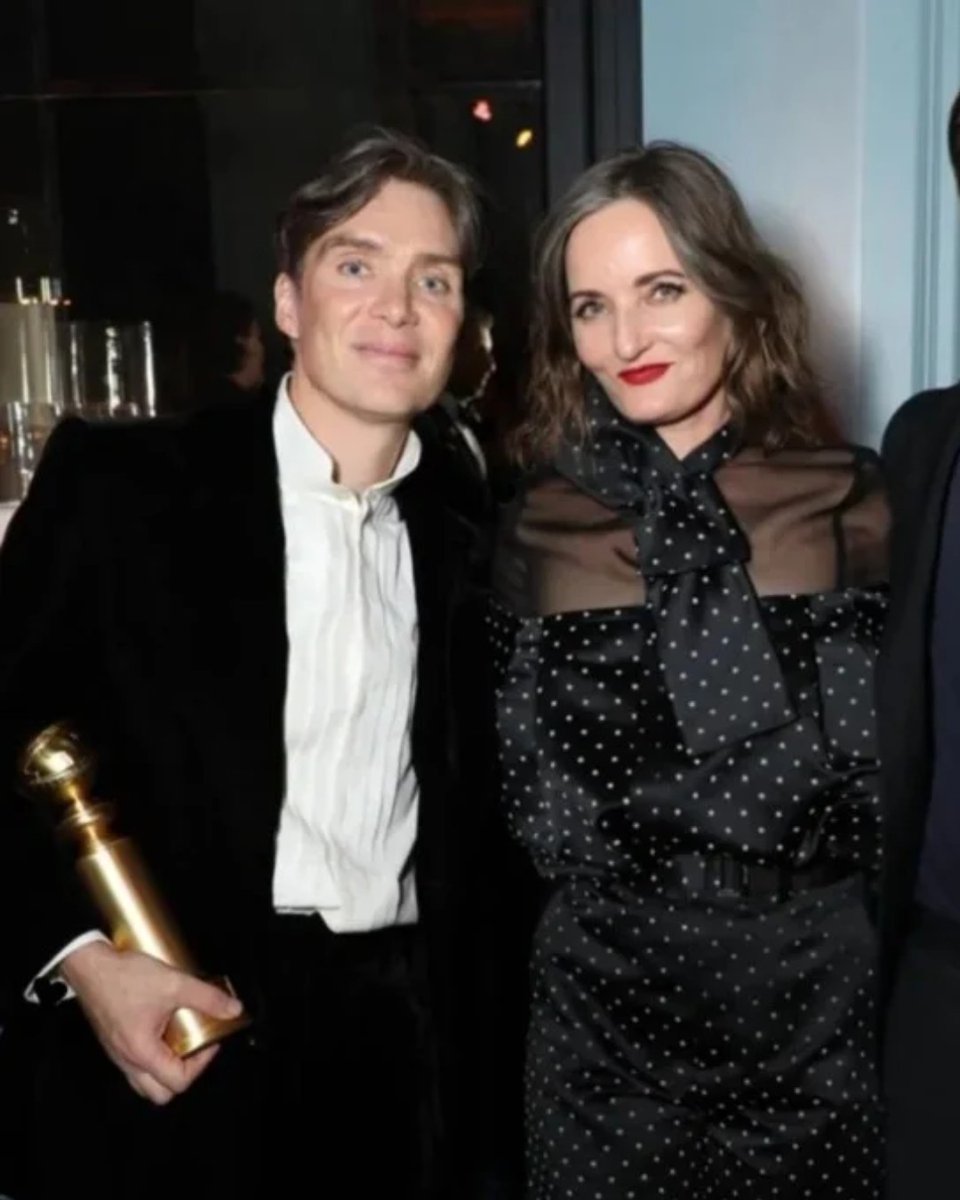
Cillian Murphy praises his wife and the women who raised him: "Women are infinite in their wisdom."
Reflecting on his marriage with Yvonne and the women who shaped him, Murphy said:
"Oh man, she's right about most things. Women are infinite in their wisdom.
I was raised by my mother and my grandmother, who lived with us for all our lives.
I have two sisters who are amazing humans.
I've always felt that women have a more instinctual understanding of right and wrong and how the world works."
Cillian Murphy has also spoken about how much he relies on his wife's support, stating, "I have an amazing wife and I couldn't do this without her and her understanding."


English
Adauk 🌬️ retweetledi

REMEMBER. Everyone is in love with you. The universe (God) is conspiring in your favor. Nothing is happening to you. Everything is working for you. Operating from a state of amusement is greater than operating from a state of annoyance. Nothing matters that much but everything is important. Make a move. Be intentional. A feeling is information. Take note. Adjust accordingly. It’s only good or bad depending on how you think about it. Change your mind. Change your life.
English
Adauk 🌬️ retweetledi

China knows exactly what this does. Their domestic version of TikTok caps kids under 14 at 40 minutes a day, locks access between 6am and 10pm, and swaps the entire feed to educational content. Science, history, museums.
The version they export to everyone else? Unlimited, unrestricted, pure dopamine on demand.
When kids in the US and China were asked what they wanted to be when they grew up, the number one answer in America was influencer. In China it was astronaut.
Macron calls this a cognitive war. Export what dulls young minds and keep what makes them intelligent for your own population.
This is the most effective weapon ever deployed against a generation’s ability to think.
Nicholas Fabiano, MD@NTFabiano
Addiction to short-form videos reduces brain activity in the frontal lobe weakening the ability to focus.
English
Adauk 🌬️ retweetledi

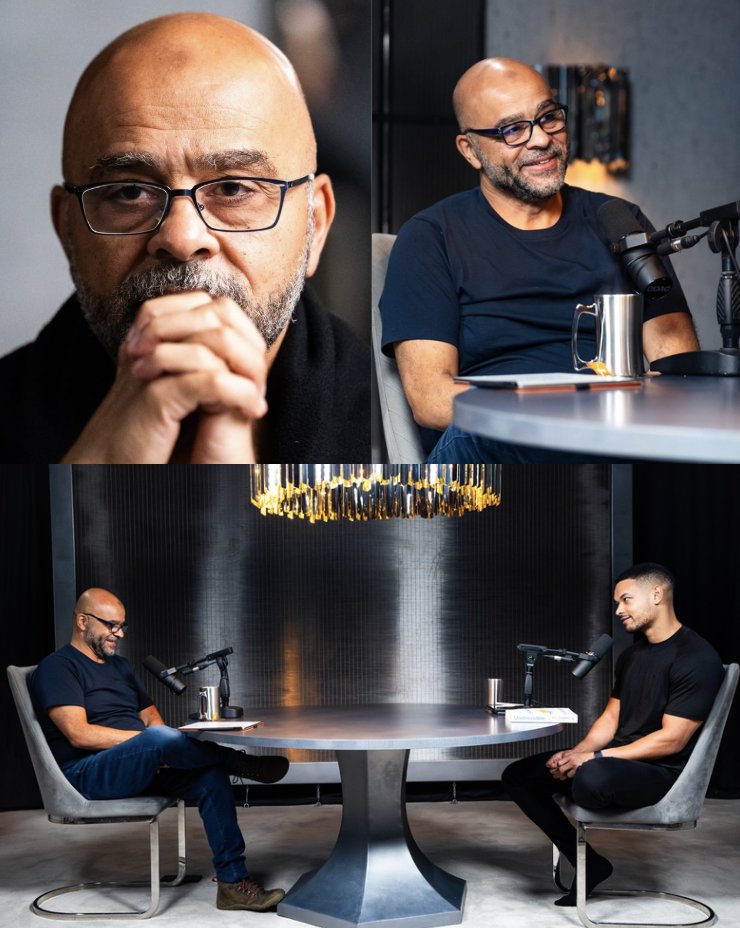
I get asked this question a lot: what's your favourite episode of The Diary Of A CEO ever?
The answer is fairly easy.. episode 101 with @MGawdat. It was our most shared episode ever, not because of fame or celebrity, but because what he said was so profound it changed the way I think about life..
Mo was the Chief Business Officer at Google X, the "moonshot factory" behind self-driving cars and some of the most futuristic technology on the planet. He co-founded over 20 businesses. By any external measure, he had achieved everything. But he was desperately unhappy..
So he did what any engineer would do - he tried to solve the problem. He spent years researching, collecting data, and eventually he discovered what he calls the happiness equation.
It's deceptively simple...
"You're happy in your life when your expectations of how life is supposed to be going are met. And you're unhappy when those expectations go unmet."
Therefore... so much of our happiness is about the gap between what happens and what you expected to happen."
I use this as a framework now to think about why I'm unhappy at certain moments in my life.
And it's always.. without any exception.. because I had an expectation of how something was going to happen and it's currently falling below that expectation.
This also explains why gratitude has always been seen as one of the great answers to happiness.
Because gratitude is the realisation that your expectations are being met in various areas of your life right now.
If you think about everything that's made you unhappy in the last week, I guarantee it's all about an expectation you had about something.
Someone cuts you off in traffic? You expected them not to. Your partner didn't do what you asked? You expected them to. Your dog pooped in the house? You expected it wouldn't.
So can we manage our expectations? of ourselves, of others, of our partners, of life itself?
Mo's son Ali died suddenly during a routine operation. It was the ultimate test of his equation. And somehow, through the worst thing a parent could ever endure, his framework helped him survive.
Have you listened to this one yet? ❤️

English

Adauk 🌬️ retweetledi

also when we practice gratitude we normalize good things happening for us in our nervous systems. most of us are wired to always expect the worst. gratitude rewires the brain (and the nervous system) into realizing that there are good things in life and that we are worthy of them
All day Astronomy@forallcurious
🚨: Every time you express gratitude, your brain physically rewrites itself, making you naturally more positive and resilient, neurology says.
English
Adauk 🌬️ retweetledi

🎥 | Dove Cameron talks about things Damiano David does for her on a daily basis to ScreenRant
“My partner is the most, this is who he is to a T. I’ll mention something that has nothing to do with him, something that I’m interested in or want to try to do or accomplish, or something I need help with. I’ll be speaking out loud and within the next couple of days he did the research for it, found it, he showed up. He’s making my life easier because I’m tired. He’s an absorber and a take-carer. I think that’s so moving, and I’ve never seen that before.”
English
Adauk 🌬️ retweetledi

“Realise that you, the human being, are a universe within yourself.”
— Ibn ‘Arabi
All day Astronomy@forallcurious
🚨: Scientists mapped 1 mm³ of a human brain ─ less than a grain of rice ─ and a microscopic cosmos appeared.
English
Adauk 🌬️ retweetledi

Adauk 🌬️ retweetledi