@AudioSimon@Polymate3D I’ve thought of it, but I’m not convinced gyroid is all that stiff. There might be room for an audio-specific cavity infill as a slicer plug-in. Anyone?
@Polymate3D I think 6-10mm is pretty good, for that size of enclosure. From my experiments, direct cross braces between opposite walls is the most mass-effective way of reducing panel resonances.
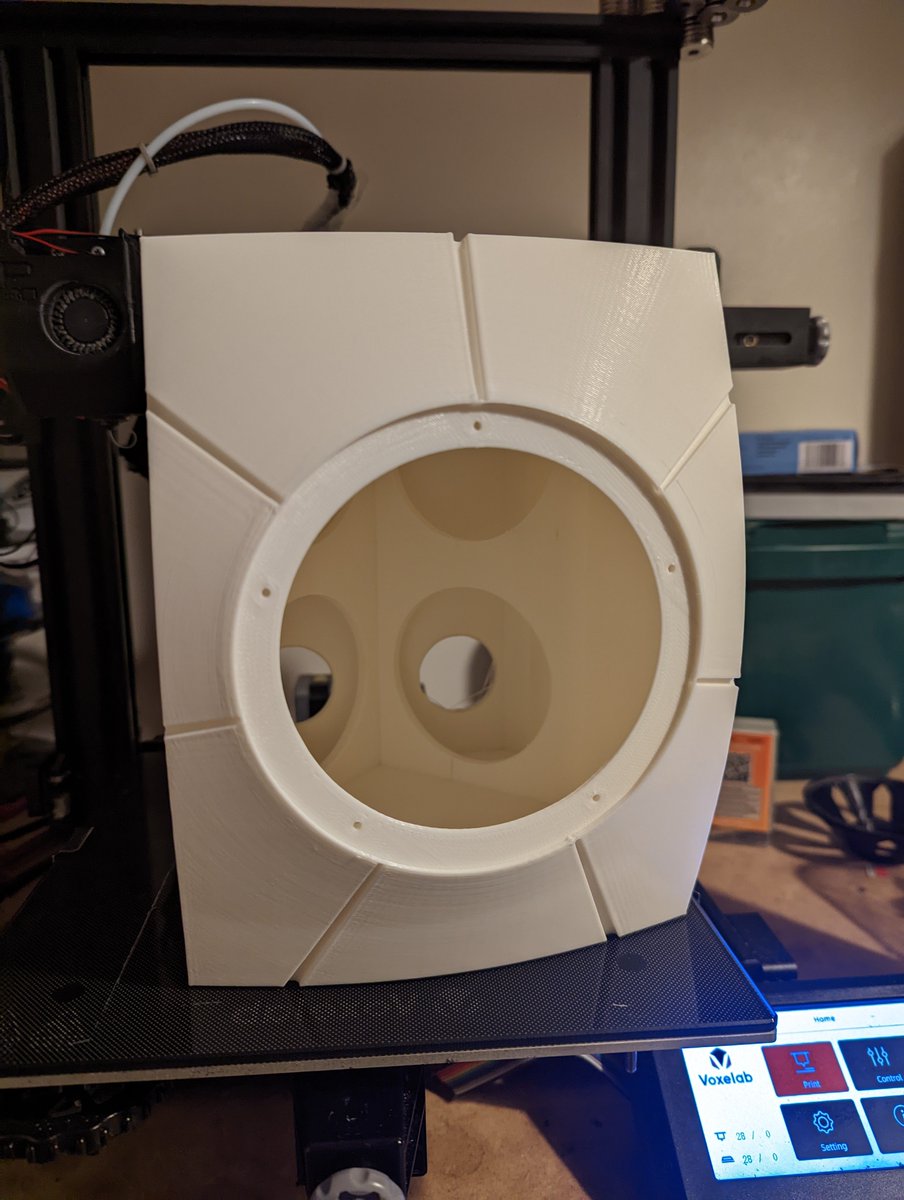
@zx82net 3 perimeters @ 0.5mm so 1.5mm for the solid wall on the inside and outside. Gap between with infill varies from 4mm to 7mm. So in total is varies from 6mm to 10mm.
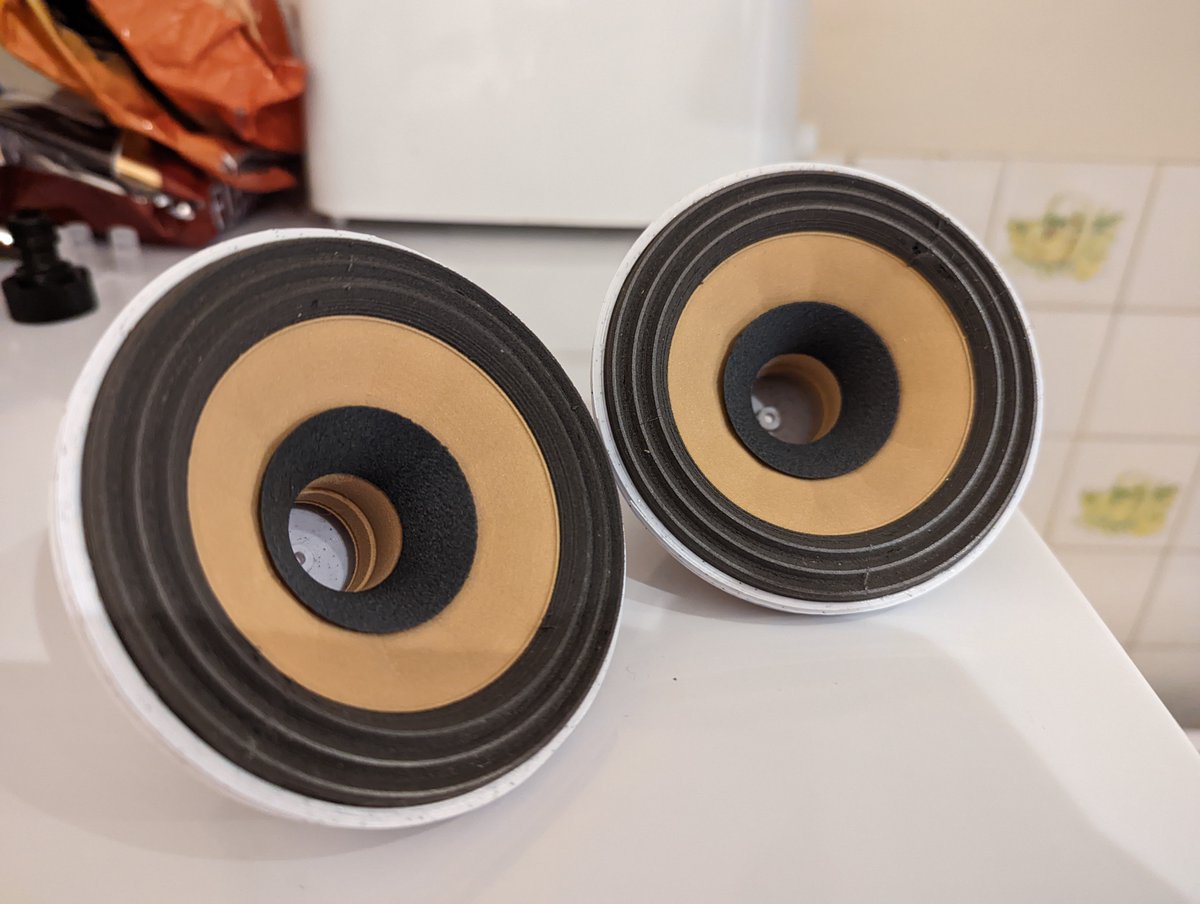
I'm not expecting it to match wood based due to low mass, but will it be acceptable? Time will tell!
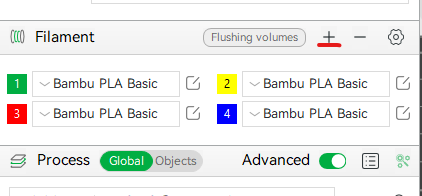
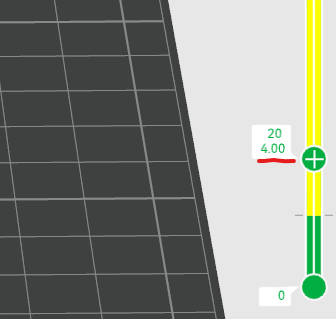
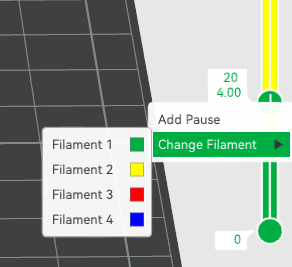
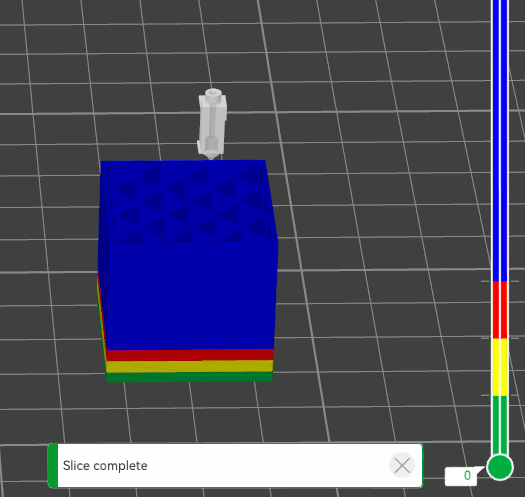
@zx82net First add more filament choices in the slicer by clicking on the "+" sign, then slice. In the slicing screen, scroll the layer bar on the right, right-click on "+" when you reach the desired layer height, and click on change filament :)
@BambulabGlobal How would I make BambuStudio slicer swap filament color regularly after a fixed number of layers? e.g. 10 layers from spool 1, 10 layers from spool 2, 10 layers from spool 1, ...etc.
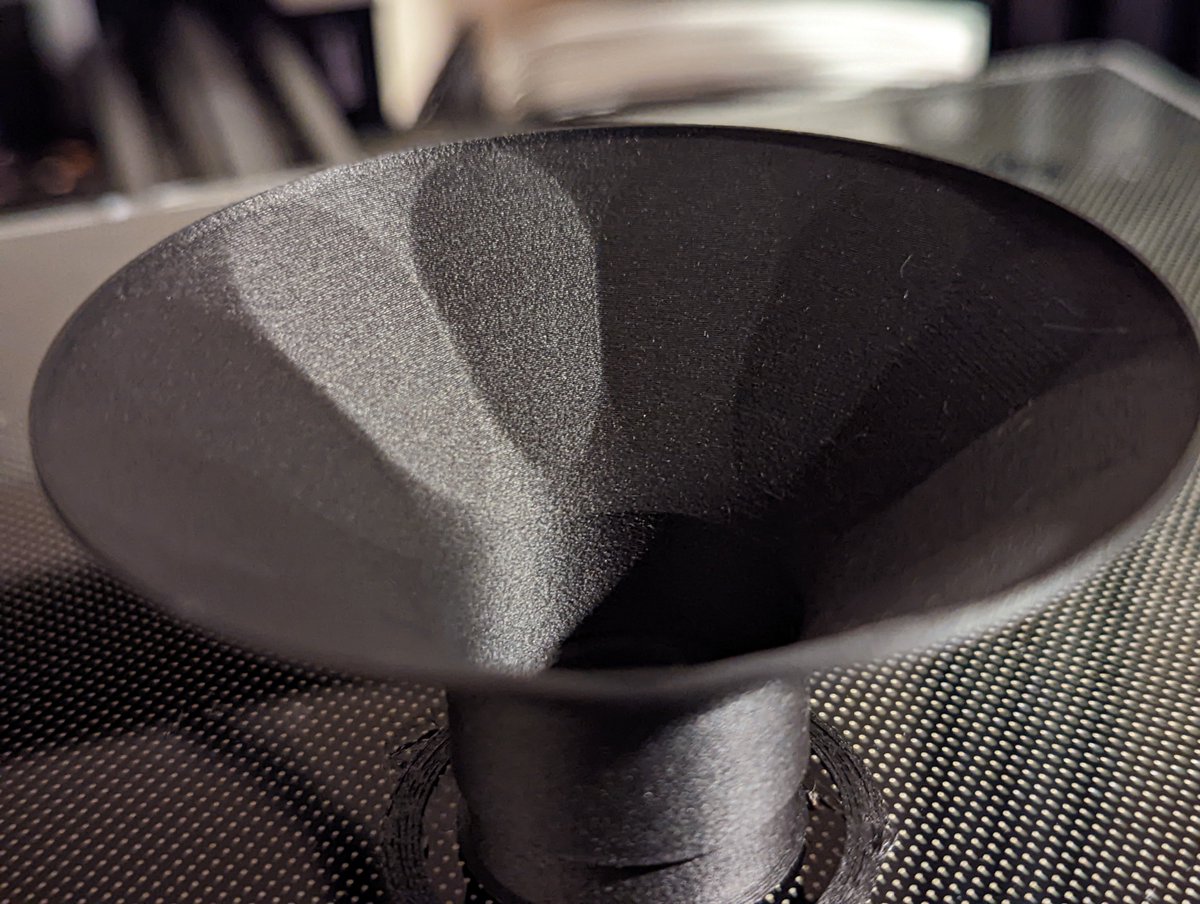
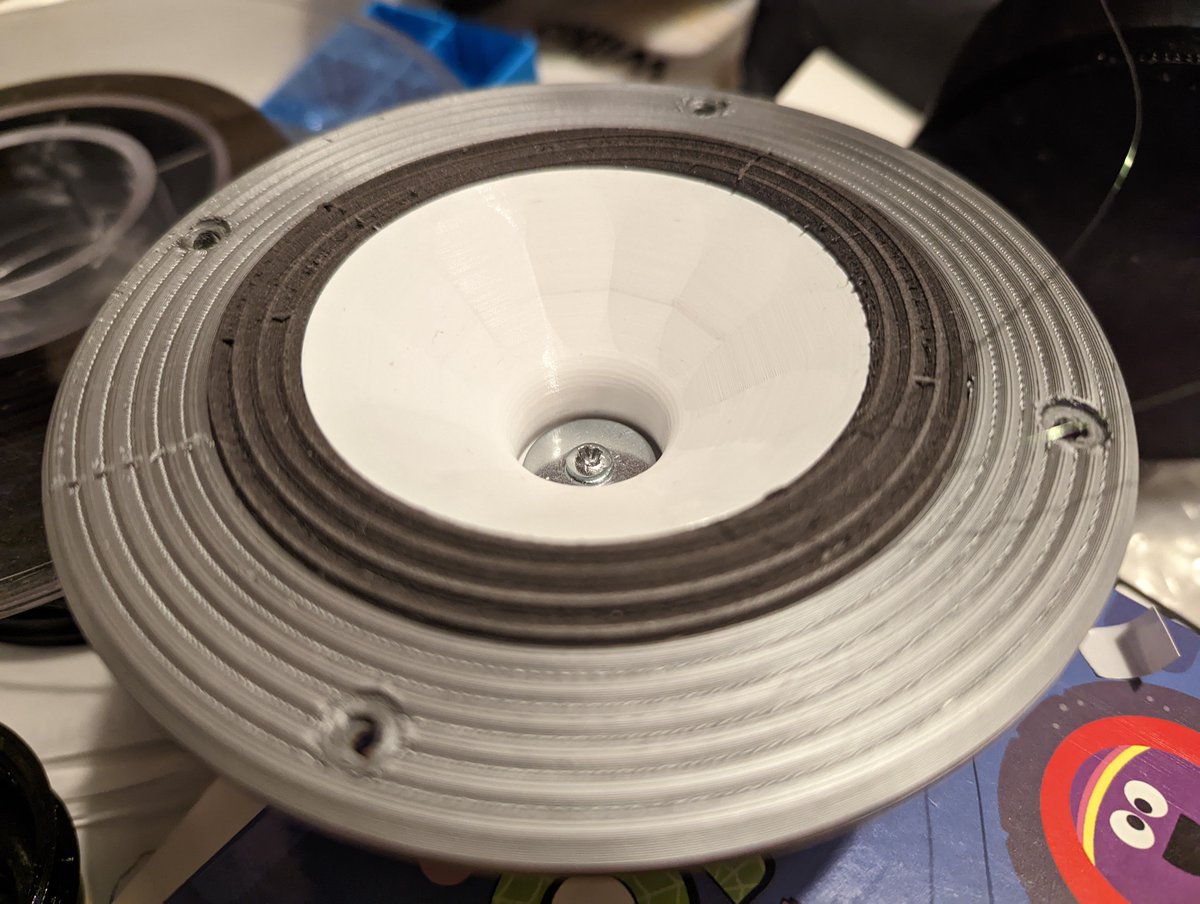
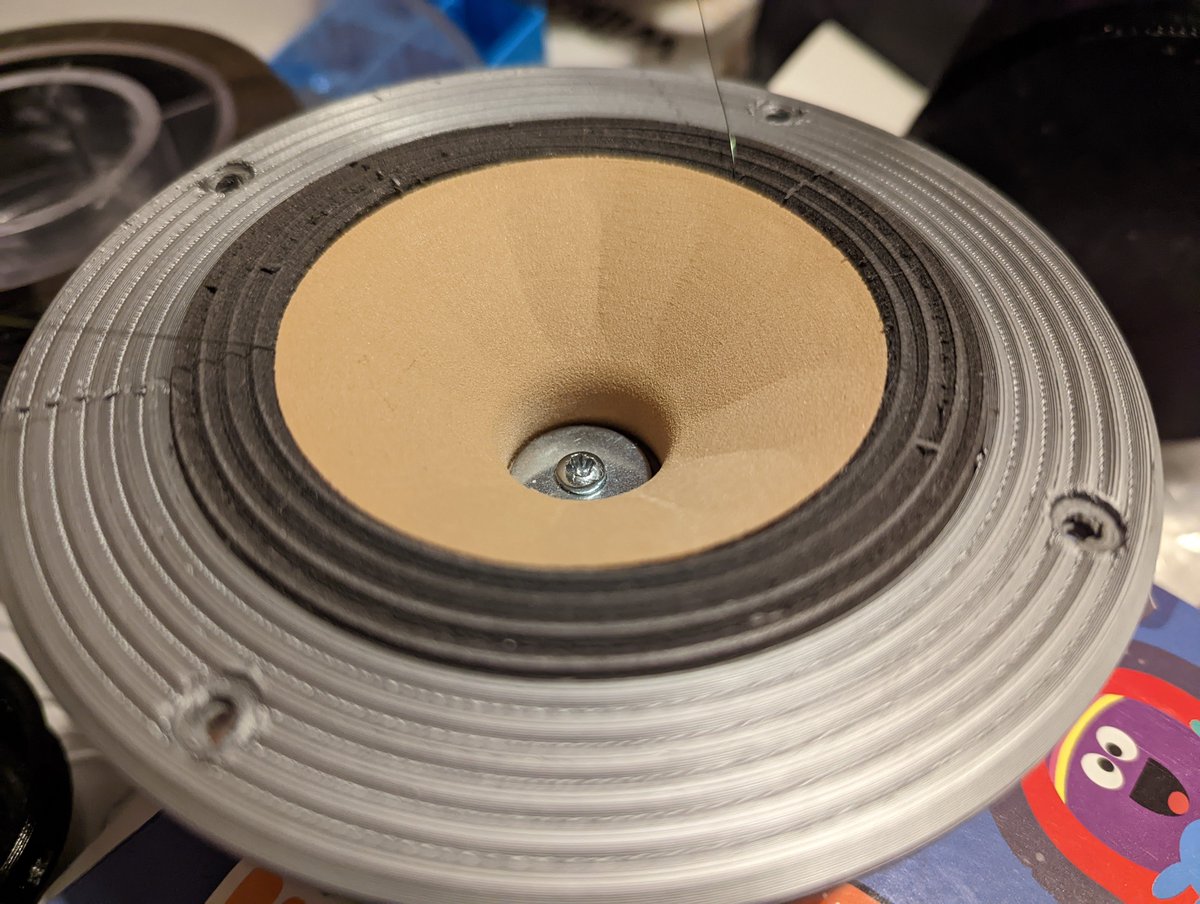
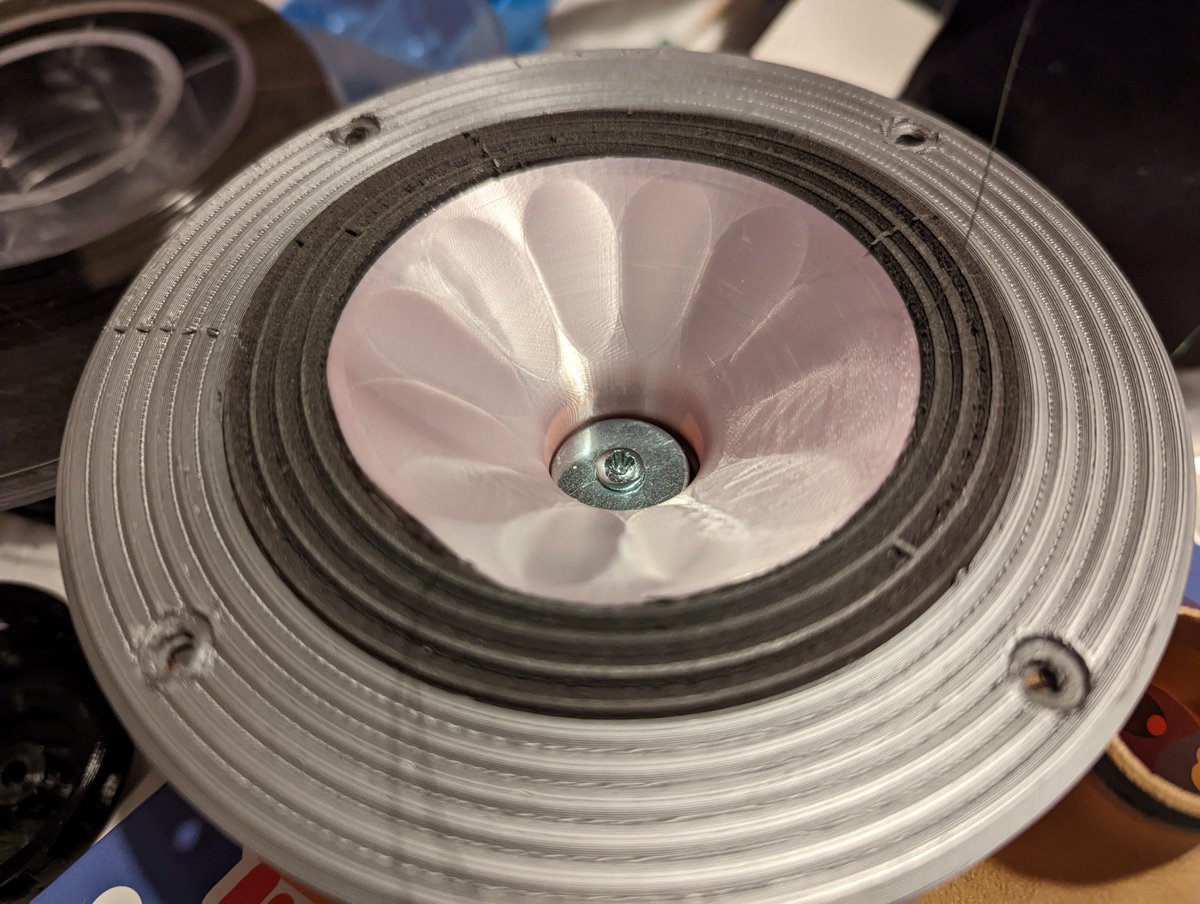
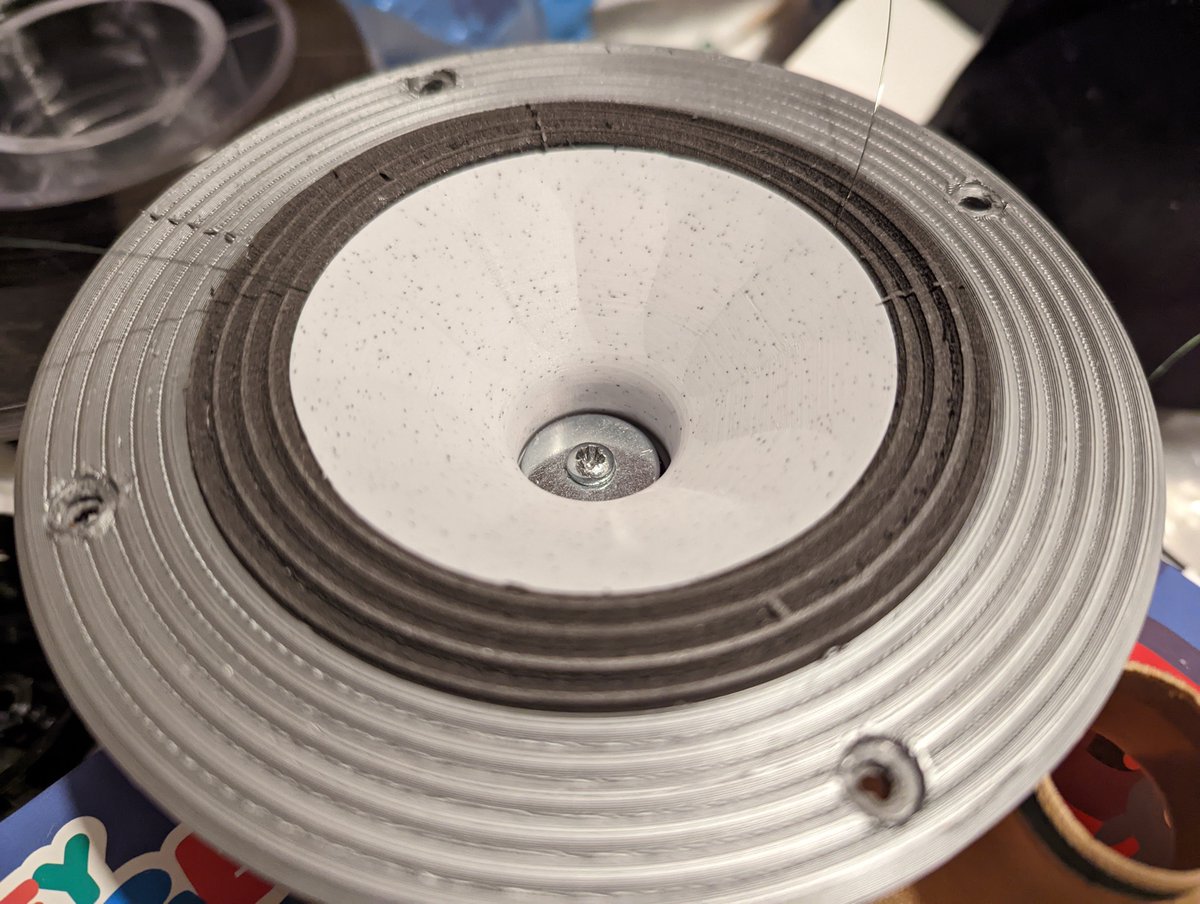
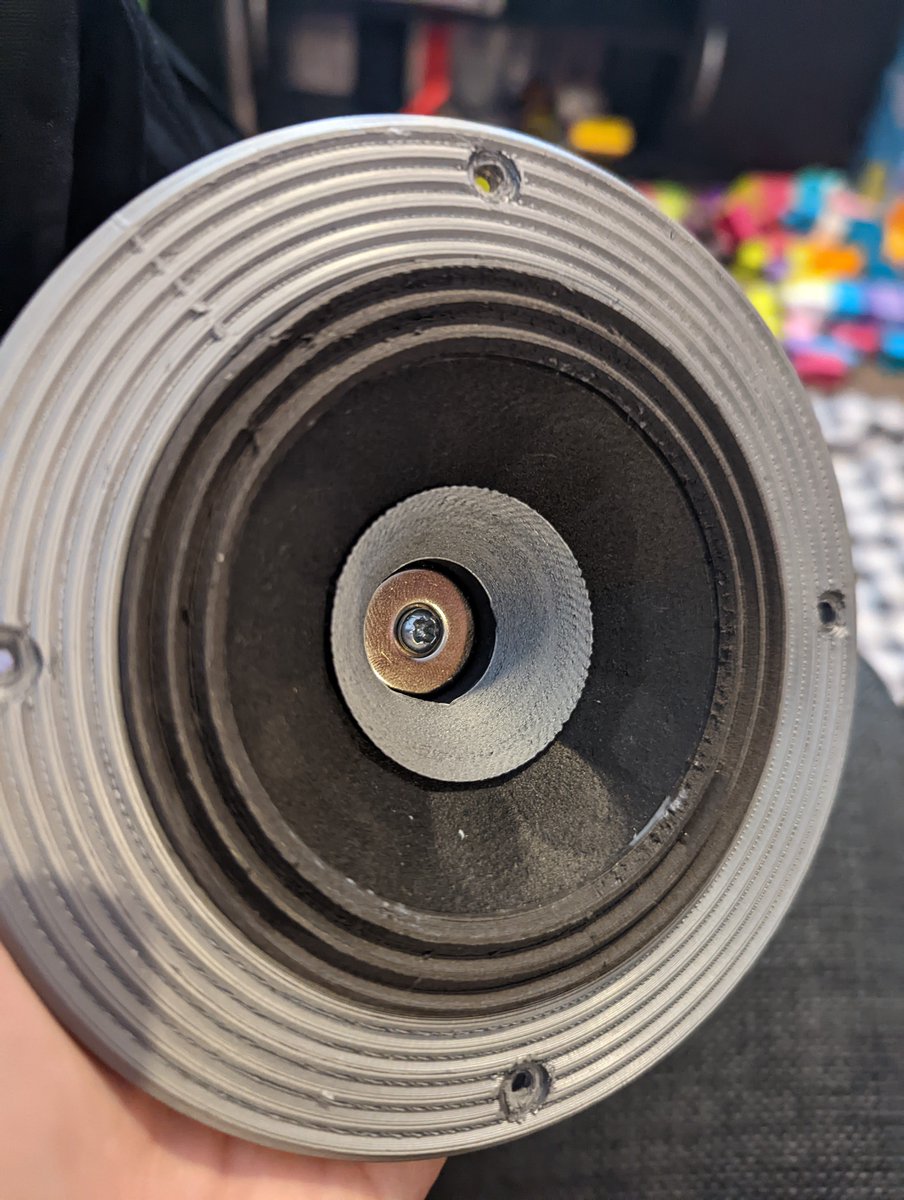
4 cones voice coils done, ready for testing.
Using prototype 9 as a test platform. No gluing in or domes as checking against each other for top end performance. This is also all PLA variants. Then we will expand to other materials.
Poll below 👇
@AudioSimon@ErinsAudio@seanolive This is the broadband output for a swept input? Theory: acoustic output is highest at box tuning frequency: turbulence. Accelerometer is highest at pipe resonance, where pressure differential between middle and end of the port is highest?
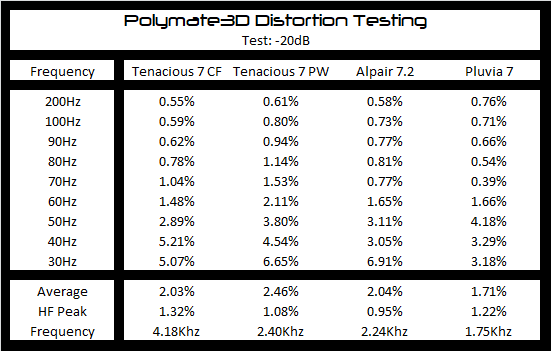
Post to go up on Patreon later. Here is some distortion measurements of my 2 Tenacious 7 Prototypes(1 CF PETG, 1 Polywood) against the Mark Audio Alpair 7.2(£100/pr) & Pluvia 7(£90/pr)
This volume is my typically daily listening volume for context.
How did I do!? 😎🔈🔉🔊
3DP friends do you have any idea what's causing this? On the long smooth surfaces with no breaks it's fine, but when the cavities are there it has an underextruded look to it
@toms3dp@FilamentFrenzy@CNC_Kitchen@joeltelling et al
Here is the response of Micro (Teal), Micro+ (White) & Logitech LS11(Orange).
As you can see, Micro+ gets rid of the bass bump Micro has, and extends even lower. Logitech LS11 bass wise is miles off, dropping off @ 175Hz Vs Micro @ 120Hz & Micro+ @ 85Hz