Alex Gajewski

6.3K posts

Alex Gajewski banner
Alex Gajewski

Alex Gajewski

@Alex__Gajewski

Head of School - Acton Academy Union County

Charlotte, NC Entrou em Haziran 2009
3.5K Seguindo661 Seguidores
Tweet fixado
Alex Gajewski
Alex Gajewski@Alex__Gajewski·
I’m opening a school. Acton Academy Union County coming Sep. 2026.
English
0
0
1
131
Alex Gajewski retweetou
Pat LeneFan
Pat LeneFan@patlenehan14·
My favorite image from last night
Pat LeneFan tweet media
English
113
441
6.5K
709K
Alex Gajewski retweetou
Aakash Gupta
Aakash Gupta@aakashgupta·
Every time you swipe to a new 30-second video, your brain releases a small pulse of dopamine in anticipation of what might come next. This is what neuroscientists call a variable ratio reinforcement schedule, the same mechanism that makes slot machines the most addictive form of gambling. The uncertainty does the work. And the feed delivers it 270 times per day. The average TikTok user consumes 167 to 271 videos per day. Each one is 21 to 34 seconds long. That’s a dopamine pulse every half-minute for hours. Your nucleus accumbens, the brain’s reward center, adapts to that cadence. It recalibrates what “normal stimulation” feels like. When you then sit down with a novel or a crossword puzzle, your brain registers the low stimulation as aversive. You feel restless. You reach for your phone. That restlessness is withdrawal operating below conscious awareness. The data on this is now stacking up. Average attention span on social media dropped from 12 seconds in 2015 to 8.25 seconds in 2025. Teens toggle between apps every 44 seconds, down from 2.5 minutes a decade ago. 52% of people now skip videos longer than 60 seconds even when they’re interested in the topic. Here’s the part that changes the conversation. Researchers interrupted participants during a task with either TikTok, Twitter, or YouTube, then asked them to resume. After TikTok, accuracy dropped to barely above random guessing. Twitter and YouTube showed zero measurable impact. The short-form feed format specifically degrades prospective memory, your ability to hold an intention across a time gap. The prefrontal cortex, which governs sustained attention and impulse control, doesn’t fully mature until around age 25. An entire generation is training that circuitry on rapid context switching 270 times per day. The brain wires to whatever you repeatedly expose it to. Full stop. Puzzles, board games, long novels, long-form video. These function as something like resistance training for the prefrontal cortex. They require sustained effort without algorithmic reward. That’s the point. The discomfort you feel 10 minutes into a book after a week of heavy scrolling is the same discomfort you feel on rep 8 of a hard set. The adaptation is on the other side of it. Your brain adapted to the feed. The same plasticity that allowed that works in reverse. But you have to actually put it under load.
Rissa@rissa_kimmy

Please get back to doing puzzles, sudoku, board games, crosswords, word search. Read long novels and watch long form videos. Seeing my students and even my age-mates uncomfortable being cognitively unentertained is... something. We’re losing patience with thinking deeply.

English
31
775
4.3K
377.6K
Alex Gajewski retweetou
NHLMuse
NHLMuse@NHL_Muse·
Best USA hockey edit EVER 😮‍💨🔥 (🎥: diovids/IG)
English
39
959
7.5K
184.5K
Alex Gajewski
Alex Gajewski@Alex__Gajewski·
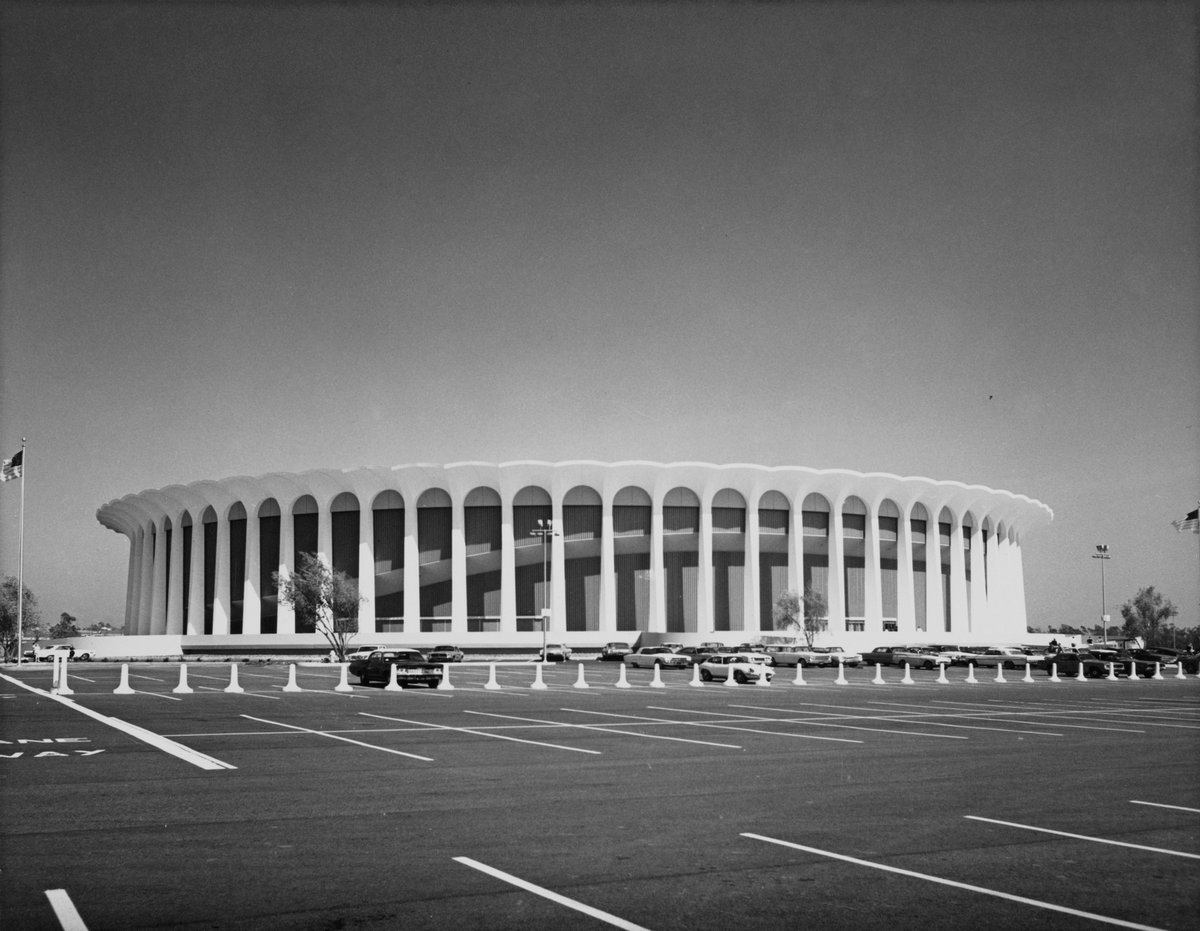
Great Western Forum
Alex Gajewski tweet media
English
0
0
0
34
Alex Gajewski retweetou
Aakash Gupta
Aakash Gupta@aakashgupta·
Everyone who agrees with this read it on the device that’s causing the problem. And you’ll keep scrolling after you like it. That’s the mechanism he’s missing. Let me explain what’s actually happening at the level of neural circuits, because until you understand the mechanism, you cannot intervene. Your phone operates on what’s called a variable ratio reinforcement schedule. Same reward pattern that makes slot machines the most addictive form of gambling on earth. Every scroll, every pull-to-refresh is a randomized reward delivery. And your nucleus accumbens doesn’t fire dopamine when you find something good. It fires in anticipation of something good. That anticipation is what keeps you scrolling past content you don’t even enjoy. You’re chasing the prediction, not the reward. Here’s the key thing about dopamine that most people get wrong. It operates on a peak-and-baseline system. Every spike is followed by a trough that drops below your previous baseline. Your phone delivers hundreds of micro-peaks per hour. Each one produces a compensatory dip. Over weeks and months of this, your tonic baseline dopamine, the resting level that determines how motivated and focused you feel just sitting there, drops progressively lower. A novel delivers one slow dopamine arc over 6-8 hours. Your phone delivers 300 variable-ratio hits in 6-8 minutes. Once your baseline has been ratcheted down by chronic overstimulation, the book registers as aversive. The book hasn’t changed. Your neurochemistry has. The structural imaging data is clear on this. Heavy smartphone users show reduced gray matter volume in the anterior cingulate cortex and orbitofrontal cortex, the exact regions your brain uses for sustained attention and impulse control. Your brain remodels around whatever input pattern dominates. Feed it rapid-switching variable-ratio reinforcement for 4-6 hours a day and the architecture for sustained linear focus literally atrophies. The loop runs like this: boredom → low-grade anxiety → reach for phone → dopamine spike from novelty → rapid habituation → scroll for next hit → baseline drops further → phone down → boredom now feels worse than before → reach for phone again. Each cycle deepens the trough. Now here’s where the point about kids becomes really important and I want to be precise about why. Synaptic pruning, where the brain eliminates unused neural connections, runs aggressively through about age 25. Circuits you use get strengthened. Circuits you don’t use get cut. A child raised on variable-ratio reinforcement from birth is building attentional architecture optimized for rapid context-switching, not sustained linear focus. In adults, you can reverse dopamine dysregulation in roughly 30 days through deliberate protocol. In children whose pruning window is still open, the architecture itself is forming around the stimulus pattern. That’s a fundamentally different problem with a much smaller intervention window. The protocol for adults: morning sunlight, 10 minutes minimum within the first hour of waking, to anchor circadian dopamine production through the melanopsin ganglion cells. Deliberate cold exposure, 1-3 minutes at uncomfortable but safe temperatures, which increases baseline dopamine roughly 2.5x for up to 3 hours. Non-sleep deep rest protocols for 20 minutes to restore tonic dopamine. And the most important one that nobody wants to do: scheduled boredom. Sit with zero input. Train your prefrontal cortex to tolerate low-stimulation states without reaching for the phone. Walsh is right that something has gone wrong. Where it needs to go further is the mechanism. Telling people to put the phone down without addressing the underlying dopaminergic dysregulation is like telling someone with chronic insomnia to just close their eyes. The nervous system runs on protocols, not willpower.
Matt Walsh@MattWalshBlog

Smart phones really just ruined everything. People don’t even know how to sit still and think anymore, let alone pick up a book and read. Everyone is constantly overstimulated, addicted to the passive consumption of random bits of content streamed into their eyeballs at light speed. Kids are raised this way from birth. It’s unhuman. Disastrous for the mind and soul.


English
10
138
943
110.2K
Alex Gajewski retweetou
Josh Graham
Josh Graham@JoshGrahamShow·
This Jack Hughes interview is an all-timer
English
3
48
281
19.2K
Alex Gajewski retweetou
Ryan McGee
Ryan McGee@ESPNMcGee·
HEY Y'ALL REMINDER: Marty & McGee is on @ESPNRadio & @SECNetwork Saturday 7-10 AM ET. We'll be joined by Daytona 500 winner Tyler Reddick, Rece Davis from the set of @CollegeGameDay and our pal/bourbon expert/veteran Fred Minnick. Grab some coffee - or bourbon - and join us.
GIF
English
10
7
105
9K
Alex Gajewski retweetou
FredMinnick
FredMinnick@FredMinnick·
Tune into @MartySmithESPN and @ESPNMcGee Marty & McGee tomorrow morning. I'll be chatting about my new book, Bottom Shelf, and all things bourbon.
Ryan McGee@ESPNMcGee

HEY Y'ALL REMINDER: Marty & McGee is on @ESPNRadio & @SECNetwork Saturday 7-10 AM ET. We'll be joined by Daytona 500 winner Tyler Reddick, Rece Davis from the set of @CollegeGameDay and our pal/bourbon expert/veteran Fred Minnick. Grab some coffee - or bourbon - and join us.

English
1
1
10
3.3K
Blue Collar Bitcoin
Blue Collar Bitcoin@Blue_CollarBTC·
@Alex__Gajewski Not at the moment, that's something that could be added. Not sure how many people trust their buddy with this info
English
1
0
1
54
Blue Collar Bitcoin
Blue Collar Bitcoin@Blue_CollarBTC·
I priced out what it costs to use (btc)* tax software this year: 🔴CoinTracker: $59 – $599/year 🔴Koinly: $49 – $279/year 🔴CoinLedger: $49 – $299/year Sovereign Tax: $49#btc one-time (beta) 👉No 🍯 to steal, 🔏fully encrypted Sovereigntax.io
English
9
2
39
2.8K
Alex Gajewski retweetou
Steak 'n Shake
Steak 'n Shake@SteaknShake·
Nine months ago today, Steak n Shake launched its burger-to-Bitcoin transformation when we started accepting bitcoin payments. Our same-store sales have risen dramatically ever since. Bitcoin payments for Steak n Shake burgers go into our Strategic Bitcoin Reserve, which then funds Bitcoin bonus pay for our employees. We have combined a decentralized, cash-producing operating business with the transformative power of Bitcoin. Thank you Bitcoiners!
English
148
274
3.4K
108.9K
Alex Gajewski retweetou
Michael Saylor
Michael Saylor@saylor·
@RayDalio If you believe the world order is breaking down, own the asset with no counterparty. Bitcoin.
English
382
812
9.6K
339K
Alex Gajewski
Alex Gajewski@Alex__Gajewski·
@BillAckman @AlphaSchoolATX We prefer the Acton Academy model. The best of both worlds by embracing technology and also allowing learners to grow crucial social skills as well.
English
1
0
0
264
Alex Gajewski retweetou
lindsey vonn
lindsey vonn@lindseyvonn·
I’m sorry Greg but this is a very odd opinion piece. The pain and suffering is the point? I’m searching for meaning? Why am I taking risk “at my age?” This ageism stuff is getting really old. My life does not revolve around ski racing. I am a woman that loves to ski. I don’t have an identity issue, I know exactly who I am. I was retired for 6 years and I have an amazing life. I don’t need to ski, but I love to ski. I came all this way for one final Olympics and I’m going to go and do my best, ACL or no. It’s as simple as that. And respectfully, if you don’t know the story, it might be best not to make assumptions.
English
532
798
12.2K
1M