Andrew Schumacher

909 posts

Andrew Schumacher banner
Andrew Schumacher

Andrew Schumacher

@Beginningwisdom

Apologist for true and Biblical Christianity. Doing theology and apologetics in the sight of God.

Alabama, USA Entrou em Ağustos 2018
273 Seguindo246 Seguidores
Andrew Schumacher
Andrew Schumacher@Beginningwisdom·
@JoshuaEnsley I would say for me it depends. I may cite a hostile scholar to say “even so and so says”, but I’m going to always properly contextualize quotes. If I only say “as so and so says”, but he’s actually opposed to my main argument, I’m not being completely honest.
English
1
0
0
17
Joshua Ensley (Grace & Gavel)
My response: Yes. Why? Because the reason we cite authors who “say the same thing” is for the purpose of framing the situation as agreement between us and them, thereby aligning ourselves with their credibility. But since those whom we cite actually disagree with us on the conclusion, citing them “on the way,” as if they're actually on the same path as us, is dishonest, especially if it's not directly revealed by us that they arrive at different conclusions. For example: it would be dishonest for me to cite a Muslim apologist who argues that “God exists because the universe requires a creator” since he and I are able to say the same thing while arriving at total different conclusions (him disagreeing with me on which God exists). Another example would be me during Bart Erhman when he says (hypothetical quote), “The New Testament author John clearly teaches that Jesus is God in his gospel” because Erhman concludes that John wrote that as a fictional work and deified an ordinary man named Jesus of Nazareth. No matter how much I could affirm that statement, his conclusion is totally different than mine and we do not actually agree. What academics should do instead is use quotes from people who agree with their conclusions instead of sneakily benefiting from their reputation by making it seem as though they are on the same team. That's academic dishonesty and we all need to stop doing it. You won't find the Reformers or the Puritans doing that when they quote from the Church Fathers or Aquinas. Let's stop employing rhetorical borrowing of credibility. If your novel position has not been stated and defended academically and can hold up to scrutiny, be the first. Don't use another man's work to give your view credibility just because it sounds like he agrees with you in a vacuum.
Joshua Ensley (Grace & Gavel) tweet media
English
2
0
1
115
Andrew Schumacher
Andrew Schumacher@Beginningwisdom·
@DavidWilberBlog @JoshuaEnsley Straw man. It isn’t that you have to agree with an “entire” theology or “body of work”. It’s that appealing to a quote on a passage with no care at all about what someone concludes from that passage is misleading. You keep changing the subject.
English
2
0
0
38
David Wilber
David Wilber@DavidWilberBlog·
Quoting a scholar on a point where their exegesis or theological conclusion is relevant is not misleading simply because one disagrees with that scholar on other theological issues. In academic and theological writing, scholars are routinely cited for particular arguments without thereby endorsing their entire body of work or implying that the scholar agrees with every position one holds. The standard you are proposing is totally unreasonable and not how normal people read and cite scholarship, so nobody is "misled" when they see, say, an article where I cite Keener's correct exegesis of Matthew 5:17–20 (even though Keener does not share all my theological conclusions about the implications of his exegesis). Normal people understand that a citation indicates agreement with a specific argument or interpretation under discussion, not wholesale agreement of one's entire theology.
English
2
0
5
48
David Wilber
David Wilber@DavidWilberBlog·
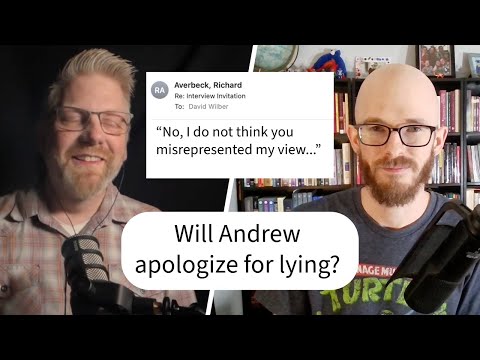
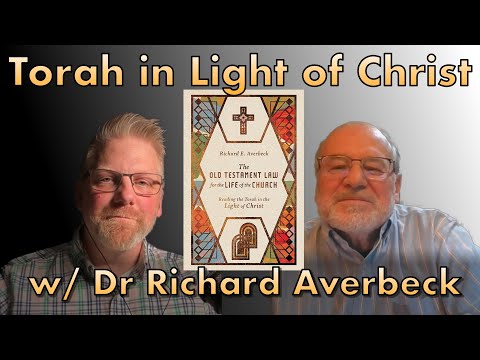
"[T]he apostle Paul even performed purification procedures and sacrificial procedures in the temple. He saw no conflict between this and his acceptance of the sacrifice of Jesus Christ for his eternal salvation. The Old Testament sacrifices and that of Yeshua never stood in conflict with each other. Both were efficacious, but on different levels. Paul knew this. The writer of Hebrews knew this. The people in the Jerusalem church knew this. Everyone who understood the Law knew this." —Richard Averbeck, The Old Testament Law for the Life of the Church: Reading the Torah in the Light of Christ (Downers Grove: IVP Academic, 2022), 338.
English
3
2
27
2.8K
Andrew Schumacher
Andrew Schumacher@Beginningwisdom·
@JoshuaEnsley @DavidWilberBlog Exactly. There are levels to it. There may be agreement on a passage but disagreement on the actual theological implications, but that’s not included unless someone forces the issue.
English
1
0
0
13
Andrew Schumacher
Andrew Schumacher@Beginningwisdom·
@DavidWilberBlog @JoshuaEnsley Classic red herring. No one said you “took him out of context”. Read Joshua’s OP. You make citations while leaving out the actual positions of those you cite, which is misleading. All you proved is that you didn’t overtly state his position in error.
English
2
0
0
39
Joshua Ensley (Grace & Gavel)
@DavidWilberBlog That's because either 1) Paul didn't actually do the sacrifice part or 2) Paul was still a member of the Mosaic Covenant since he was born into it. Averbeck's position is not that of the pronomians.
English
3
0
1
96
Andrew Schumacher
Andrew Schumacher@Beginningwisdom·
@JoshuaEnsley “But they don’t have to agree for the quote to be pertinent”. They do if you don’t provide context and just say “so-and-so says”. Mostly, that kind of quote means that they either disagree ultimately and it’s hidden or they’re another Prono-bro, not a real scholar
English
0
0
0
52
Joshua Ensley (Grace & Gavel)
Quote mining people for your argument who fundamentally disagree with your conclusion is not good scholarship. Actually, it's dishonest. This is the issue with much Pronomian scholarship. Pronomian authors provide a quote from someone like John MacArthur or Craig Keener that seems to align with the pronomian conclusion, but they actually do not. Otherwise, they would be pronomians!
English
2
0
1
139
Andrew Schumacher
Andrew Schumacher@Beginningwisdom·
@JoshuaEnsley @GodLogic_GL I’ve seen some. He often has a specific group or specific question as a topic. But he is always quick on the disconnect button when people start repeating themselves or trying to change the subject.
English
1
0
0
16
Joshua Ensley (Grace & Gavel)
Joshua Ensley (Grace & Gavel)@JoshuaEnsley·
I have considered doing something similar to @GodLogic_GL and going live on YouTube again but this time focused on having discussions with pronomians, JWs, Mormons, etc to have genuine conversations. Would anyone be interested in having conversations like this with me?
English
2
0
2
153
Joshua Ensley (Grace & Gavel)
Joshua Ensley (Grace & Gavel)@JoshuaEnsley·
Apparently I'm now an "antinomian teacher." It's my fault honestly. Not because I actually am antinomian, but because I spent years trying to redefine Bahnsen's term pronomian away from what he meant when he used it. I have quite a lot of regret doing that.
English
3
0
1
128
Andrew Schumacher
Andrew Schumacher@Beginningwisdom·
I’ve always appreciated Joshua for his honesty and integrity, treating me like a brother in Christ even when we strongly disagreed on Torah Observance. He has changed in mind, not in character. Few have the moral courage to honestly reassess their beliefs like he did.
Joshua Ensley (Grace & Gavel)@JoshuaEnsley

Apparently I have some people who follow me and are upset that I'm no longer a practicing Pronomian. If that upsets you, please consider unfollowing me. My shift was nothing personal against pronomians, but was best for my family.

English
1
0
3
762
Andrew Schumacher
Andrew Schumacher@Beginningwisdom·
@JoshuaEnsley True, though I would define "expired" in terms of their being binding commandments. They're still Scripture, and profitable, and even have New Covenant counterparts.
English
0
0
0
13
Joshua Ensley (Grace & Gavel)
Joshua Ensley (Grace & Gavel)@JoshuaEnsley·
Historic Christianity has always understood that certain commandments in the Torah were only given to recipients of the Mosaic Covenant and thus they expired along with that covenant.
English
1
0
1
44
Andrew Schumacher
Andrew Schumacher@Beginningwisdom·
@YourCalvinist Sure a lot of commenters who want some credit for their deeds before the thrice-holy God.
English
0
0
0
35
Keith Foskey
Keith Foskey@YourCalvinist·
Noahide Laws will not earn you eternal life. You are a sinner. You need a Savior. Jesus Christ is the only Savior. The law condemns. Jesus saves. Don’t get that confused.
English
48
40
381
12.6K
Andrew Schumacher
Andrew Schumacher@Beginningwisdom·
@BrysonGray @rabbriansamuel There’s “another day” (4:8 above). That day is “today” again he appoints a certain day, “Today,” saying through David so long afterward, in the words already quoted, “Today, if you hear his voice, do not harden your hearts.” — Hebrews 4:7
English
0
0
0
6
Rabbi Brian Samuel
Rabbi Brian Samuel@rabbriansamuel·
Yes, the book of Hebrews speaks of the Sabbath rest we have at every moment in Christ. But is that meant to supercede the commandment to remember the weekly Sabbath? No. Does this mean that the seventh day Sabbath, which is revered all throughout the Bible, from creation onward, becomes unimportant to God? No. Does it mean that the sabbath is no longer a part of righteous living? No.
English
72
19
207
8.3K
Andrew Schumacher
Andrew Schumacher@Beginningwisdom·
@BrysonGray @rabbriansamuel @BrysonGray is wrong twice. It’s a “sabbath rest” no contrast found in the text like he claims. Also, it’s not the 7th day Sabbath, since Joshua certainly did have that rest available.
English
0
0
0
8
Andrew Schumacher
Andrew Schumacher@Beginningwisdom·
@michaeljknowles @conservmillen Because they did not pursue it by faith, but as if it were based on works. They have stumbled over the stumbling stone, as it is written, “Behold, I am laying in Zion a stone of stumbling, and a rock of offense; and whoever believes in him will not be put to shame.”Romans 9:30-33
English
0
0
0
459
Michael Knowles
Michael Knowles@michaeljknowles·
@conservmillen The word "trinity" doesn't appear in scripture, but the phrase "faith alone" does. The question is what the Bible says about it...
English
114
36
1.2K
58.9K
Allie Beth Stuckey
Allie Beth Stuckey@conservmillen·
“Trinity” doesn’t appear in Scripture either, but the concept does 😀 Paul really can’t get clearer than he is in Ephesians 2:1-10. He repeats himself in at least 6 different ways to ensure everyone understands salvation is a free gift of grace “But God, being rich in mercy, because of the great love with which he loved us, even when we were dead in our trespasses, made us alive together with Christ—by grace you have been saved— and raised us up with him and seated us with him in the heavenly places in Christ Jesus, so that in the coming ages he might show the immeasurable riches of his grace in kindness toward us in Christ Jesus. For by grace you have been saved through faith. And this is not your own doing; it is the gift of God, not a result of works, so that no one may boast. For we are his workmanship, created in Christ Jesus for good works, which God prepared beforehand, that we should walk in them.” Ephesians 2:4-10
Michael Knowles@michaeljknowles

How many times does the phrase "faith alone" appear in the Bible? And what specifically does the Bible say about "faith alone"?

English
312
164
2.4K
230.6K