Amb (R) Qazi M. Khalilullah

521 posts

Amb (R) Qazi M. Khalilullah banner
Amb (R) Qazi M. Khalilullah

Amb (R) Qazi M. Khalilullah

@ExecDirCISSS

Masters in IPP from SAIS, Johns Hopkins University USA. Former Spokesperson of Foreign Office of Pakistan and Ambassador to Russia, Cuba & Myanmar.

Karachi, Pakistan Entrou em Haziran 2021
69 Seguindo201 Seguidores
Amb (R) Qazi M. Khalilullah retweetou
Fahd Husain
Fahd Husain@Fahdhusain·
To my dear Indians: here’s what I say to you today…
English
170
892
3.1K
96.9K
Amb (R) Qazi M. Khalilullah retweetou
Pakistan TV Digital
Pakistan TV Digital@PakistanTVcom·
The beautiful city that is hosting 'Islamabad talks'
English
98
1.1K
5.5K
271.3K
Amb (R) Qazi M. Khalilullah retweetou
Zafar Khan
Zafar Khan@zafarwafa1977·
@MIshaqDar50 Timely, constructive, and much needed! In the best interest of all stakeholders. A critical, but constructive move forward in the interest of the global community amidst a “fragile ceasefire”. Let peace and stability be given a chance. Godspeed!
English
1
5
17
4.1K
Amb (R) Qazi M. Khalilullah retweetou
Radioactive Friends
Radioactive Friends@RadioactiveFrnd·
IAEA support for advanced nuclear techs must be matched by consistent #safeguards standards. #India’s PFBR at #Kalpakkam operates outside #IAEA oversight, raising serious questions about transparency and the credibility of global #nonproliferation norms. @DAEIndia #NuclearSafety
Rafael Mariano Grossi@rafaelmgrossi

Impressive progress by India in achieving criticality of the Prototype Fast Breeder Reactor at Kalpakkam, a key step forward in fuel sustainability and the future of nuclear energy. The @IAEAorg will continue supporting the safe and secure development of 🇮🇳’s nuclear programme. Congratulations, Prime Minister @narendramodi! @DAEIndia @PMOIndia
English
6
23
32
6.6K
Amb (R) Qazi M. Khalilullah retweetou
Radioactive Friends
Radioactive Friends@RadioactiveFrnd·
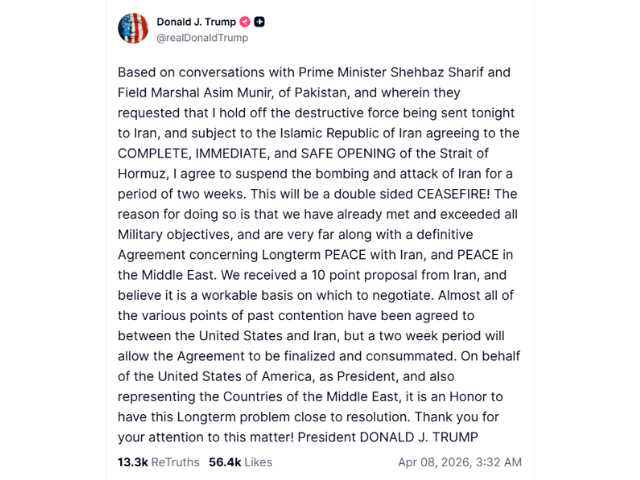
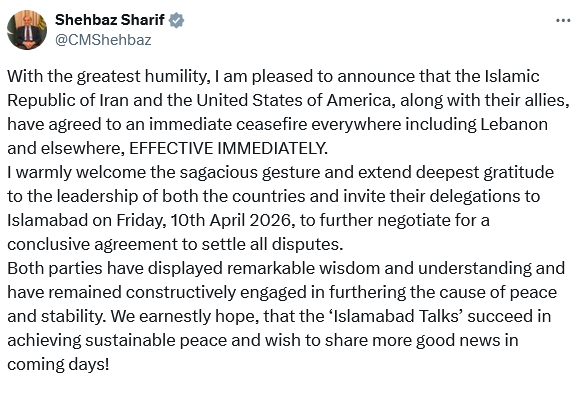
Pakistan steps in at the brink - helping secure a ceasefire between US and Iran at a moment of global consequence. From convening talks to enabling de-escalation, Islamabad has shown that true diplomacy is measured by tangible results, not just words. #PakistanMediation
Radioactive Friends tweet mediaRadioactive Friends tweet media
English
0
17
22
510
Amb (R) Qazi M. Khalilullah retweetou
Qurat-Ul-Ain Shabbir
Qurat-Ul-Ain Shabbir@AShabbir123·
PFBR is outside International Atomic Energy Agency safeguards, breeder tech has repeatedly failed globally, and plutonium oversight is absent.
Dr. Asma Shakir Khawaja@AsmaKhawaja5

Demonstrating the support of IAEA, but forgot to mention that the PFBR remains outside of IAEA safeguards. The highlights of this "acknowledged" development are as under to keep the record factual and unbiased. 1. India has consistently refused to place its breeder programme under international inspection, citing "strategic interests" (a common euphemism for the nuclear weapons programme). 2. Unlike India's civilian PHWRs, the PFBR is not verified by the IAEA to ensure plutonium is not diverted for military use. A big concern for nuclear nonproliferation efforts. 3. The transition to breeder technology has historically failed in other states like the US, France, and Japan due to severe technical challenges so creating hype would only be a commitment trap especially when the progress on this is already delayed for 16 years. 4. The use of liquid sodium as a coolant is notoriously difficult; previous reactors like France's Superphenix and Japan's Monju were permanently shut down following leaks and fires. Appreciation for such dangerous development for a country with a poor record of nuclear history and excellent performance in the nuclear black market can be counterproductive. 5. Critics argue that PFBR design lacks sufficient protection against "core disassembly accidents," which could lead to far more destructive energy releases than standard reactors. 6. Practically, the Thorium Sustainability is Decades Away. While hailed as a step toward "fuel sustainability," the actual use of thorium remains a distant goal. 7. The PFBR is only the second stage of India's three-stage plan. Commercial-scale thorium utilization (Stage 3) is not yet a reality and faces significant technological hurdles that could take several more decades to overcome. @iaeaorg @rafaelmgrossi @UNIDIR @RadioactiveFrnd @zahirhkazmi @zafarwafa1977 @bttn_quetta @CISSS_Karachi @ExecDirCISSS @dratiaalikazmi #Nuclear #IAEA #India #Modi @TahirAndrabi

English
0
4
4
294
Amb (R) Qazi M. Khalilullah retweetou
Zafar Khan
Zafar Khan@zafarwafa1977·
Whether or not he likes it, the significance of nuclear deterrence persists despite the emergence of new technologies and conventional force modernization. It is the value of nuclear deterrence that helps a nuclear-weapon state from waging both a large-scale and even a limited war because of the fear of its escalation to a dangerous level. Nuclear deterrence matters much more in the evolving, complex, unpredictable, and difficult times. @thealiwarsi #nuclear #deterrence #Pakistan #India #SouthAsia
English
0
5
10
178
Amb (R) Qazi M. Khalilullah retweetou
Zahir Kazmi
Zahir Kazmi@zahirhkazmi·
Zahir Kazmi tweet media
Dr Atia Ali Kazmi@dratiaalikazmi

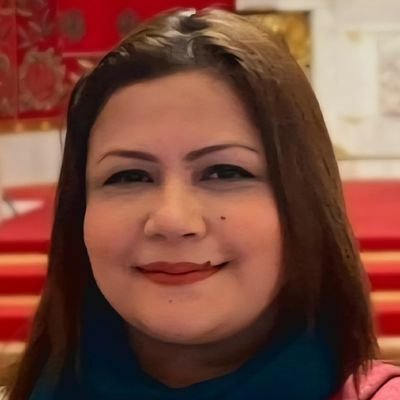
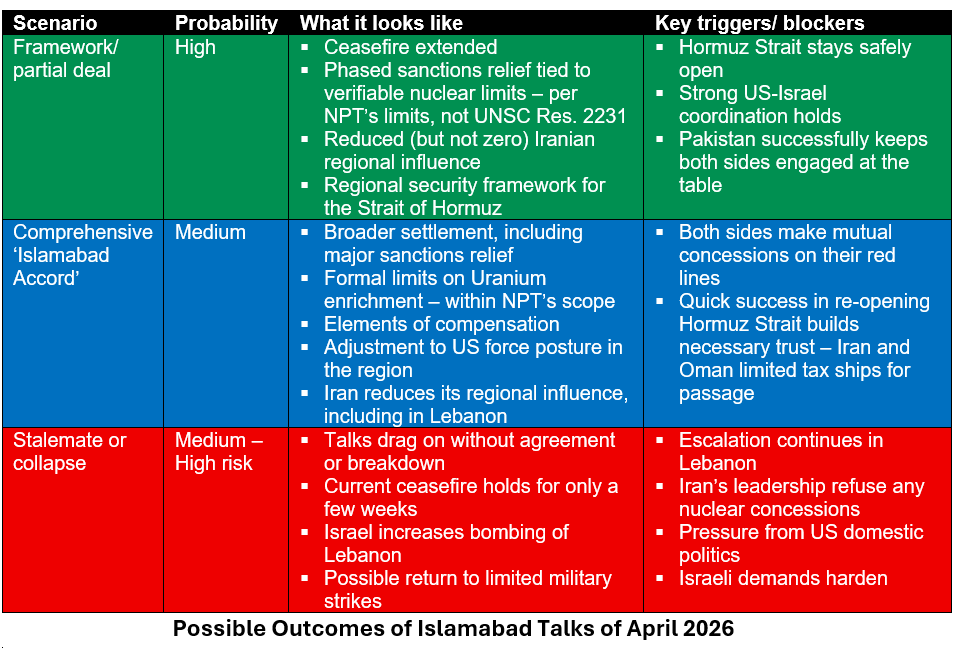
Where Could the Islamabad Talks Take the Middle East Ceasefire? ➡️Pakistan at the Diplomatic Center Stage Pakistan is once again at the pivot of consequential diplomacy. In the 1970s, Islamabad helped open the channel for U.S.-China rapprochement. In April 2026, it has re-emerged as the principal facilitator of direct U.S.-Iran negotiations at a moment when a fragile ceasefire could either harden into a diplomatic framework or unravel into a wider regional war. Pakistan’s Prime Minister Shehbaz Sharif has presented the Islamabad process as the next step after the recently brokered ceasefire, with talks due to begin on 10 April and Iran having confirmed physical participation. The two-week window, with the possibility of an extension, is meant to help bridge differences between Iran’s 10-point proposal and U.S. demands. ➡️A Narrow but Real Window Major worry is whether the Islamabad Talks will produce peace in full. However, the primary question is whether the talks can convert a narrow pause in hostilities into an organized political process that prevents renewed escalation. On present evidence, the most plausible outcome can be a either a framework or partial deal: an extension of the ceasefire, a phased negotiating roadmap, and limited reciprocal steps on sanctions, maritime security, and nuclear restraint. Stakes are high but compressed negotiating window, substantial distrust, and competing U.S. and Iranian plansstill leave some overlap for bargaining. ➡️Why Islamabad Matters The central strength of the Islamabad format is that both sides have already accepted the necessity of face-to-face diplomacy under Pakistani facilitation. That matters strategically as it lowers the temperature, creates a channel for crisis management, and gives outside actors a focal point around which to organize restraint. Even before any final accord, the very act of showing up in Islamabad is itself a form of de-escalation. The temporary ceasefire, the opening to talks, and the reported U.S. view that Iran’s proposal can serve as a workable basis all indicate that neither side currently sees unlimited military pressure as the optimal path. ➡️The Lebanon Issue The diplomacy remains structurally fragile because the battlefield is not fully frozen. Israel agreed to the ceasefire vis-à-vis Iran, yet Israel asserted that the truce does not extend to Hezbollah in Lebanon. That position directly clashes with the spirit Pakistan brokered thaw between the U.S. and Iran. Iran has insisted that any credible ceasefire must include Lebanon. Continued Israeli strikes there have already become the most immediate spoiler risk, with Lebanon being a live flashpoint. Major Western assessments pointto the same conclusion: Lebanon is not a side issue, but the pressure point most likely to derail the Islamabad track. ➡️Are Washington and Tel Aviv Aligned? There is a deeper problem: Washington and Tel Aviv are aligned but not fully synchronized. They share broad objectives – preventing an Iranian nuclear weapons capability, constraining missile program, and curbing Iran’s regional influence. Yet their preferred tempo differs. The Trump administration appears to believe that key military objectives have largely been achieved and is now prioritizing a diplomatic off-ramp, including calmer maritime conditions in the Strait of Hormuz. Israel, by contrast, is hawkish, willing to sustain pressure, especially in Lebanon, rather than rush toward a comprehensive settlement. That divergence may not break the U.S.-Israel relationship, but it could complicate U.S. assurances in Islamabad if Tehran concludes that Washington cannot discipline escalation on adjacent fronts. ➡️The Core Bargaining Issues The issues on the table are therefore clear, but not equally negotiable. On the nuclear file, the most realistic settlement is not zero enrichment, but tightly capped and heavily monitored uranium enrichment within the scope of Nuclear Non-proliferation Treaty, under IAEA’s non-partisan oversight. On sanctions, Iran is likely to press for sweeping primary and secondary relief and the unfreezing of assets, while Washington is more likely to offer phased relief linked to compliance benchmarks. Perhaps the U.S. may de-freeze Iranian assets and present these as compensation for damages. On Hormuz, Iran wants recognition of a larger coordinating role including toll, whereas the U.S. and trading powers will insist on safe passage guarantees as it is not a manmade passage like Suez Canal. The international law and jury is out on the legality of these contradictory positions. Since the Strait has turned out to be Iran’s key leverage, it may only concede to lowering the current toll and shared management with Oman. On so-called Iranian proxies and regional security, Washington and Israel will demand measurable de-escalation and ending Iranian support to Hezbollah and Houthis, while Iran will try to frame this as a broader termination of war across multiple fronts rather than a unilateral step. Reporting on the ceasefire and negotiating positions suggests that these are the core bargaining baskets now shaping the Talks. ➡️The Most Likely Landing Zone That is why the likely landing zone is a practical compromise. Iran may secure sanctions breathing space, face-saving language on civilian nuclear rights, and an acknowledgment of sequenced implementation. The U.S. may secure stronger nuclear restraints, more predictable and Iran-regulated maritime passage, and at least tacit commitments on regional de-escalation. Lebanon, however, will probably be treated on a parallel track or deferred in the short term, because it is the issue least amenable to immediate consensus. ➡️Pakistan’s Diplomatic Test For Pakistan, the policy significance is considerable. Islamabad has positioned itself as a credible diplomatic bridge capable of translating battlefield pauses into coordinated negotiation. That strengthens Pakistan’s regional relevance and revives an older diplomatic identity associated with high-stakes mediation. The achievement will depend now on whether all stakeholders can lock a process resilient enough to survive provocations. ➡️The Future The future of the ceasefire will likely be determined by sequencing and enforcement. A quick breakthrough remains unlikely within the two-week window, but the fact that both sides have accepted Pakistan’s framework and agreed to appear in person already marks a meaningful step toward de-escalation. Much will depend on whether Washington can keep Israel sufficiently aligned to prevent developments in Lebanon from derailing the process, and whether Tehran is prepared to accept some dilution of its 10-point “victory” narrative in implementation. Even if the Islamabad Talks do not produce a full settlement, they may still secure temporary extensions that stabilize the immediate crisis. Markets and energy prices are already reflecting cautious optimism, but the decisive test will come in the next 48-72 hours and on the opening day of Talks. Either way, Pakistan has already returned to the diplomatic centre of gravity. The real challenge now is whether this process can convert access into architecture, and architecture into durable restraint, responsibility for that rests with all stakeholders in the Middle East crisis. @ForeignOfficePk @TahirAndrabi @IraninIslamabad @PakinUSA @IRIMFA_EN @PakPMO @JDVance @araghchi @jaredkushner @SteveWitkoff @WSJ @Reuters @SCMPNews @CGTNOfficial @Valdai_Club @zahirhkazmi
QME
0
2
5
390
Amb (R) Qazi M. Khalilullah retweetou
Dr Atia Ali Kazmi
Dr Atia Ali Kazmi@dratiaalikazmi·
Where Could the Islamabad Talks Take the Middle East Ceasefire? ➡️Pakistan at the Diplomatic Center Stage Pakistan is once again at the pivot of consequential diplomacy. In the 1970s, Islamabad helped open the channel for U.S.-China rapprochement. In April 2026, it has re-emerged as the principal facilitator of direct U.S.-Iran negotiations at a moment when a fragile ceasefire could either harden into a diplomatic framework or unravel into a wider regional war. Pakistan’s Prime Minister Shehbaz Sharif has presented the Islamabad process as the next step after the recently brokered ceasefire, with talks due to begin on 10 April and Iran having confirmed physical participation. The two-week window, with the possibility of an extension, is meant to help bridge differences between Iran’s 10-point proposal and U.S. demands. ➡️A Narrow but Real Window Major worry is whether the Islamabad Talks will produce peace in full. However, the primary question is whether the talks can convert a narrow pause in hostilities into an organized political process that prevents renewed escalation. On present evidence, the most plausible outcome can be a either a framework or partial deal: an extension of the ceasefire, a phased negotiating roadmap, and limited reciprocal steps on sanctions, maritime security, and nuclear restraint. Stakes are high but compressed negotiating window, substantial distrust, and competing U.S. and Iranian plansstill leave some overlap for bargaining. ➡️Why Islamabad Matters The central strength of the Islamabad format is that both sides have already accepted the necessity of face-to-face diplomacy under Pakistani facilitation. That matters strategically as it lowers the temperature, creates a channel for crisis management, and gives outside actors a focal point around which to organize restraint. Even before any final accord, the very act of showing up in Islamabad is itself a form of de-escalation. The temporary ceasefire, the opening to talks, and the reported U.S. view that Iran’s proposal can serve as a workable basis all indicate that neither side currently sees unlimited military pressure as the optimal path. ➡️The Lebanon Issue The diplomacy remains structurally fragile because the battlefield is not fully frozen. Israel agreed to the ceasefire vis-à-vis Iran, yet Israel asserted that the truce does not extend to Hezbollah in Lebanon. That position directly clashes with the spirit Pakistan brokered thaw between the U.S. and Iran. Iran has insisted that any credible ceasefire must include Lebanon. Continued Israeli strikes there have already become the most immediate spoiler risk, with Lebanon being a live flashpoint. Major Western assessments pointto the same conclusion: Lebanon is not a side issue, but the pressure point most likely to derail the Islamabad track. ➡️Are Washington and Tel Aviv Aligned? There is a deeper problem: Washington and Tel Aviv are aligned but not fully synchronized. They share broad objectives – preventing an Iranian nuclear weapons capability, constraining missile program, and curbing Iran’s regional influence. Yet their preferred tempo differs. The Trump administration appears to believe that key military objectives have largely been achieved and is now prioritizing a diplomatic off-ramp, including calmer maritime conditions in the Strait of Hormuz. Israel, by contrast, is hawkish, willing to sustain pressure, especially in Lebanon, rather than rush toward a comprehensive settlement. That divergence may not break the U.S.-Israel relationship, but it could complicate U.S. assurances in Islamabad if Tehran concludes that Washington cannot discipline escalation on adjacent fronts. ➡️The Core Bargaining Issues The issues on the table are therefore clear, but not equally negotiable. On the nuclear file, the most realistic settlement is not zero enrichment, but tightly capped and heavily monitored uranium enrichment within the scope of Nuclear Non-proliferation Treaty, under IAEA’s non-partisan oversight. On sanctions, Iran is likely to press for sweeping primary and secondary relief and the unfreezing of assets, while Washington is more likely to offer phased relief linked to compliance benchmarks. Perhaps the U.S. may de-freeze Iranian assets and present these as compensation for damages. On Hormuz, Iran wants recognition of a larger coordinating role including toll, whereas the U.S. and trading powers will insist on safe passage guarantees as it is not a manmade passage like Suez Canal. The international law and jury is out on the legality of these contradictory positions. Since the Strait has turned out to be Iran’s key leverage, it may only concede to lowering the current toll and shared management with Oman. On so-called Iranian proxies and regional security, Washington and Israel will demand measurable de-escalation and ending Iranian support to Hezbollah and Houthis, while Iran will try to frame this as a broader termination of war across multiple fronts rather than a unilateral step. Reporting on the ceasefire and negotiating positions suggests that these are the core bargaining baskets now shaping the Talks. ➡️The Most Likely Landing Zone That is why the likely landing zone is a practical compromise. Iran may secure sanctions breathing space, face-saving language on civilian nuclear rights, and an acknowledgment of sequenced implementation. The U.S. may secure stronger nuclear restraints, more predictable and Iran-regulated maritime passage, and at least tacit commitments on regional de-escalation. Lebanon, however, will probably be treated on a parallel track or deferred in the short term, because it is the issue least amenable to immediate consensus. ➡️Pakistan’s Diplomatic Test For Pakistan, the policy significance is considerable. Islamabad has positioned itself as a credible diplomatic bridge capable of translating battlefield pauses into coordinated negotiation. That strengthens Pakistan’s regional relevance and revives an older diplomatic identity associated with high-stakes mediation. The achievement will depend now on whether all stakeholders can lock a process resilient enough to survive provocations. ➡️The Future The future of the ceasefire will likely be determined by sequencing and enforcement. A quick breakthrough remains unlikely within the two-week window, but the fact that both sides have accepted Pakistan’s framework and agreed to appear in person already marks a meaningful step toward de-escalation. Much will depend on whether Washington can keep Israel sufficiently aligned to prevent developments in Lebanon from derailing the process, and whether Tehran is prepared to accept some dilution of its 10-point “victory” narrative in implementation. Even if the Islamabad Talks do not produce a full settlement, they may still secure temporary extensions that stabilize the immediate crisis. Markets and energy prices are already reflecting cautious optimism, but the decisive test will come in the next 48-72 hours and on the opening day of Talks. Either way, Pakistan has already returned to the diplomatic centre of gravity. The real challenge now is whether this process can convert access into architecture, and architecture into durable restraint, responsibility for that rests with all stakeholders in the Middle East crisis. @ForeignOfficePk @TahirAndrabi @IraninIslamabad @PakinUSA @IRIMFA_EN @PakPMO @JDVance @araghchi @jaredkushner @SteveWitkoff @WSJ @Reuters @SCMPNews @CGTNOfficial @Valdai_Club @zahirhkazmi
Dr Atia Ali Kazmi tweet media
English
6
26
41
8.8K
Amb (R) Qazi M. Khalilullah retweetou
Jawad Ali Shah
Jawad Ali Shah@jawadalishah_·
@ExecDirCISSS The 2008 NSG waiver granted India exceptional access to global nuclear commerce without full-scope safeguards. In light of unsafeguarded facilities and expanding fissile material capacity, revisiting this exemption is essential to uphold non-proliferation norms.
English
2
6
8
650
Amb (R) Qazi M. Khalilullah retweetou
Jawad Ali Shah
Jawad Ali Shah@jawadalishah_·
@ExecDirCISSS DG IAEA @rafaelmgrossi's endorsement overlooks a critical safeguards gap. 🇮🇳’s PFBR remains outside IAEA oversight, enabling potential diversion of unsafeguarded fissile material. Such precedents risk undermining non-proliferation norms and incentivizing vertical proliferation.
English
1
4
6
491
Amb (R) Qazi M. Khalilullah retweetou
Zamzam
Zamzam@ChannaZam·
@ExecDirCISSS India’s access to international nuclear cooperation under the 2008 NSG waiver, despite maintaining unsafeguarded reactors, raises serious questions about safeguards credibility. Such exceptionalism risks weakening the integrity of the global non-proliferation regime.
English
1
4
8
564
Amb (R) Qazi M. Khalilullah retweetou
Sadia Memon
Sadia Memon@Sadiamemonn·
@ExecDirCISSS The IAEA praising India’s PFBR is a blow to non-proliferation since the program avoids all international safeguards. Celebrating such unmonitored progress is a dangerous precedent that threatens regional and global strategic stability.
English
0
3
7
430
Amb (R) Qazi M. Khalilullah retweetou
CNN بالعربية
CNN بالعربية@cnnarabic·
السفير الباكستاني لدى الولايات المتحدة يؤكد، في مقابلة مع شبكتنا، أن #لبنان مشمول باتفاق وقف إطلاق النار الذي جرى التوسط فيه بين الولايات المتحدة و #إيران
العربية
48
1.1K
2.7K
336.3K
Amb (R) Qazi M. Khalilullah retweetou
Iraj A
Iraj A@IrajCISSS·
@ExecDirCISSS In a bid to contain China, Western countries have showered India with strategic favours while turning a blind eye toward its fast-growing nuclear stockpile.
English
4
6
11
1.4K
Amb (R) Qazi M. Khalilullah retweetou
Ministry of Foreign Affairs - Pakistan
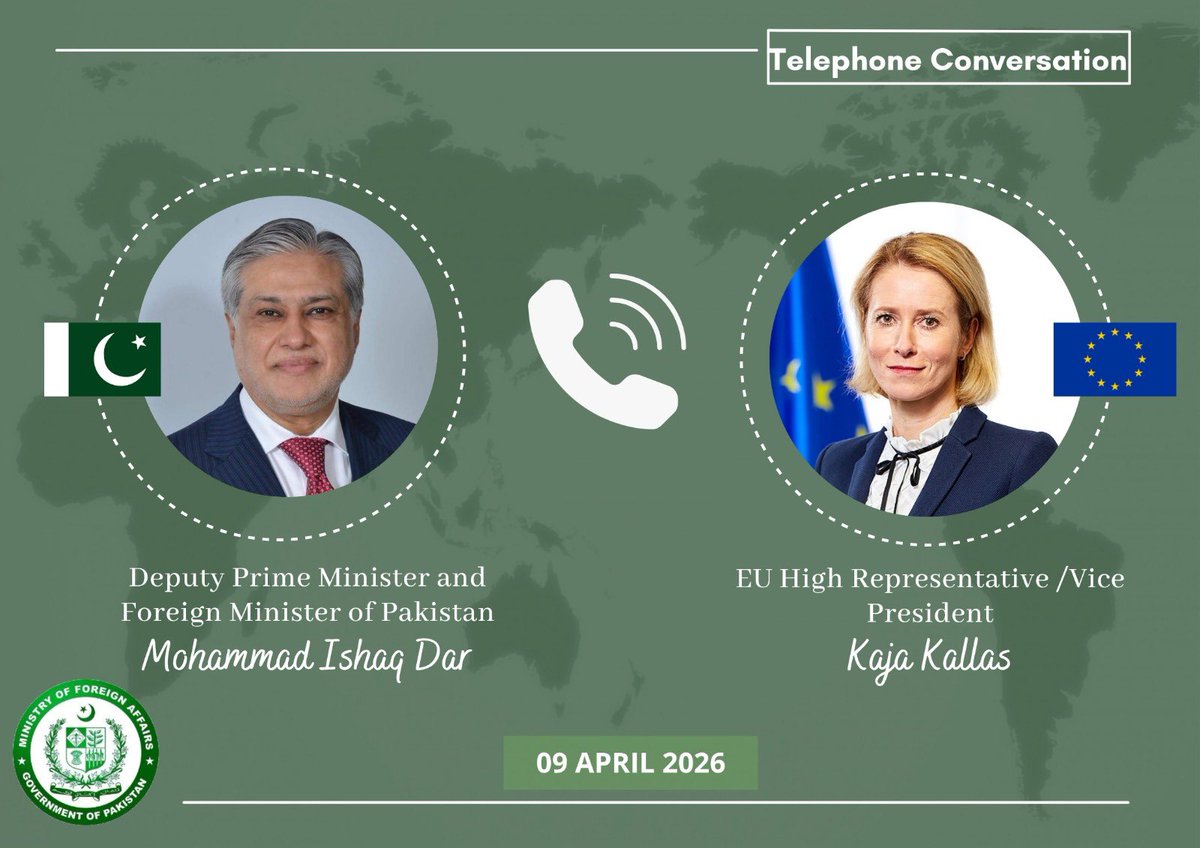
DPM/FM Senator Mohammad Ishaq Dar @MIshaqDar50 spoke today with EU High Representative for Foreign Affairs (EU HR/VP) Kaja Kallas @kajakallas Both sides expressed concern over serious violations of the ceasefire in Lebanon and emphasized the importance of its full implementation of the temporary ceasefire in the Middle East. EU HR/VP reaffirmed EU’s support for Pakistan in its efforts to promote peace and stability. @EUCouncil #IslamabadDiplomacy
Ministry of Foreign Affairs - Pakistan tweet media
English
4
188
704
10.1K
Amb (R) Qazi M. Khalilullah retweetou
Safia Malik
Safia Malik@SafiaM7493·
@ExecDirCISSS 🇮🇳 operates the largest and fastest-growing unsafeguarded nuclear program in the world, with eight reactors and its FBRs beyond IAEA oversight. Under the 2008 separation plan, these facilities remain off-limits to verification, enabling a rapid expansion of 🇮🇳’s nuclear arsenal.
English
0
3
4
236