Joe Milner | Historian

887 posts

Joe Milner | Historian banner
Joe Milner | Historian

Joe Milner | Historian

@JoeMHistory

Professional Historian | Specialist in the British Empire and the legacy of Christianity within it. Exploring power, belief, and the stories we inherit.

Derby, England Entrou em Mayıs 2025
461 Seguindo963 Seguidores
Joe Milner | Historian
Joe Milner | Historian@JoeMHistory·
I believe that people don't want to get involved in politics. I believe that people want to live comfortably, have a house to call their home, watch their children grow up and be financially comfortable in which they can create memories with their children. I don't think that people want to spend their precious time on earth discussing political slogans and subscribing to ideologies.
English
0
0
1
12
Joe Milner | Historian
Joe Milner | Historian@JoeMHistory·
The Crown at a Crossroads: Why King Charles III is Losing the Working Class ​For centuries, the British monarchy has relied on a foundational paradox: it is an elite institution that finds its most fervent defenders among the working class. These are the people for whom the King represents stability, the Church of England, and a proud, unapologetic national identity. Yet, as the reign of King Charles III progresses, that bond is showing visible cracks. From policy shifts to perceived silences, the King is facing an uphill battle to convince his most loyal base that he is still "their" King. ​1. The Silence of the Easter Message ​IIn a move that has stunned traditionalists, the Palace signaled that there would be no formal Easter message from the King this year. For many working-class supporters, for whom the monarch is the Supreme Governor of the Church of England, this is more than a scheduling conflict; it’s a dereliction of duty. ​Easter is the pinnacle of the Christian calendar. In an era of rapid secularization, the monarch’s public witness to the faith is seen as a vital anchor. By remaining silent, Charles risks appearing to downgrade the very traditions that define the British social fabric, leaving his base feeling spiritually unrepresented. ​2. The Multi-Faith "Defender" Dilemma ​While Charles has long championed "interfaith dialogue," many of his traditional supporters feel this has crossed the line into the appeasement of other religions at the expense of his own. ​The Optic: His efforts to be a "Defender of Faith" (plural) rather than "The Faith" (singular) are often viewed by working-class patriots as a dilution of national heritage. ​The Impact: There is a growing sense that in his quest for modern inclusivity, he is neglecting the cultural identity of the people who are most likely to stand up for the Crown in times of crisis. ​3. Net Zero vs. The Cost of Living ​The King’s vocal advocacy for the Net Zero agenda has created a significant class divide. ​The Policy: To a billionaire King, "sustainability" is a moral crusade; to a working-class family in the North, it often translates to higher energy bills and restrictions on their way of life. ​The Perception: When a monarch with multiple palaces and private jets lectures the public on their carbon footprint, the "hypocrisy gap" becomes impossible to ignore. This environmental focus is often seen as a middle-class obsession that ignores the economic realities of the factory floor or the high street. ​4. Rising Revenues in a Time of Austerity ​Perhaps the most "on the nose" issue is the recent surge in Royal Family revenues. With the Sovereign Grant projected to rise significantly (largely due to offshore wind farm profits on the Crown Estate), the optics are challenging: The Grant is expected to rise from £86.3 million to over £130 million in the 2025/26 period. While the Palace argues this pays for essential maintenance, the average taxpayer sees their own wages stagnating while the "Firm" receives a massive pay rise. In conclusion, the working class does not want a "Modernizer-in-Chief"; they want a King who stands for the Britain they recognize. If King Charles III continues to prioritize globalist agendas and multi-faith optics over traditional Christian leadership and economic empathy, he may find that the people who once would have fought for the Crown have simply stopped caring about it. ​The battle for the heart of the British people isn't being fought in Davos or at climate summits, it’s being fought in the pews and the pubs. Right now, the King is losing ground.
Joe Milner | Historian tweet media
English
0
0
2
25
Joe Milner | Historian
Joe Milner | Historian@JoeMHistory·
Good Friday. A day that asks us to pause, to look unflinchingly at sacrifice, and to remember that the centre of the Christian story is not triumphalism but love carried to its furthest edge. In Britain, generations marked this day with quiet streets, shuttered shops, and a rare national stillness. Today the world moves faster, but the meaning remains: a reminder that redemption is not an abstract idea, it is costly, deliberate, and profoundly human. “Greater love hath no man than this, that a man lay down his life for his friends.” May this day steady us, soften us, and call us back to what truly matters.
Joe Milner | Historian tweet media
English
0
0
1
17
Joe Milner | Historian retweetou
Blondelady2024
Blondelady2024@arva61138·
Never forget why we celebrate Easter🙏❤️
Blondelady2024 tweet media
English
356
6.3K
30K
257.7K
GB Politics
GB Politics@GBPolitcs·
🚨BREAKING: Buckingham Palace has confirmed King Charles will not issue an Easter message this year
English
6.7K
3.2K
15.5K
11M
Joe Milner | Historian retweetou
David Atherton
David Atherton@daveatherton·
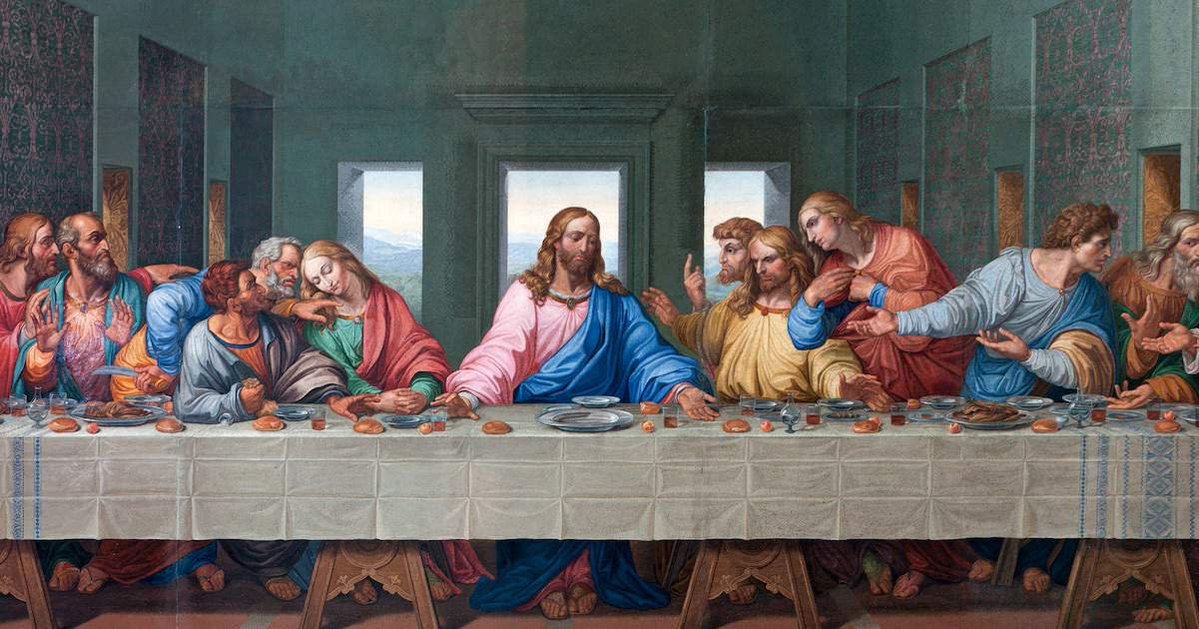
For Christians, today is Maundy Thursday where Christ held the Last Supper for his Disciples. and established the Holy Communion.
David Atherton tweet media
English
71
1.4K
7.5K
81.9K
Rupert Lowe MP
Rupert Lowe MP@RupertLowe10·
I read how a failed Pakistani 'asylum seeker' who repeatedly abused and raped an eight year old girl has been jailed for 15 years. He abused her in her own home and bedroom. She was told that if she told anyone, she would die. I wouldn't deport him. Under a Restore Britain Government, with the British people's approval, the death penalty would be reintroduced for such evil and undeniable crimes. He would be put to death. If you rape a young child, you do not deserve to live. It's that simple.
Rupert Lowe MP tweet media
English
3.1K
11.3K
72.1K
1.1M
Chris Rose
Chris Rose@ArchRose90·
It’s awful that these presenters see the Pakistani rape gangs, one of the biggest scandals in Britain, as something to mock. If the races were reversed, Labour Peer Ayesha Hazarika wouldn’t dare laugh about it.
English
172
977
4.4K
122.4K
Joe Milner | Historian
Joe Milner | Historian@JoeMHistory·
@Keir_Starmer You hire pedophiles and shake hands with terrorists. What do you know about the national interests? You're a fucking disgrace to this country.
English
0
2
21
305
Keir Starmer
Keir Starmer@Keir_Starmer·
We will be defined by our ability to stand up for British interests in this volatile world. To make our country more secure and resilient. To give working people a fairer deal and deliver more opportunities for their children.
English
7.1K
863
8K
609.6K
Joe Milner | Historian
Joe Milner | Historian@JoeMHistory·
Holy Week was once the quiet heartbeat of Britain, a time when the country slowed down, homes were scrubbed clean, and the story of Christ’s Passion shaped the rhythm of everyday life.
English
0
0
2
24
Joe Milner | Historian
Joe Milner | Historian@JoeMHistory·
Britain and France Guarantee Poland – 31 March 1939 On 31 March 1939, Britain and France issued a joint guarantee to protect Poland’s independence against German aggression. It was the moment appeasement ended. With Hitler’s ambitions now unmistakable, London and Paris drew a hard line: any attack on Poland would bring them into the conflict. This pledge became the trigger for the Second World War. When Germany invaded Poland on 1 September, the guarantee moved from diplomacy to action, and Britain and France declared war two days later. A single commitment that reshaped the fate of Europe.
Joe Milner | Historian tweet media
English
0
0
2
30
Joe Milner | Historian
Joe Milner | Historian@JoeMHistory·
Holy Week was once the still point of the British year a sequence of days when the nation slowed its pace, homes were scrubbed clean, church bells fell silent, and the story of Christ’s Passion shaped the rhythm of ordinary life. Long before Easter became a long weekend of chocolate eggs and spring sales, these days carried a weight that touched every household. Palm Sunday: The Procession Begins Across medieval and early‑modern England, Palm Sunday opened the week with processions that echoed Jerusalem. Parishioners carried palms, or, more often, local substitutes like willow or yew, and the Passion narrative was read aloud, setting the tone for the days ahead. Children learned early that this was the moment Christ entered the city that would both acclaim and condemn Him. Spy Wednesday and the Quieting of the World By mid‑week, the mood shifted. “Spy Wednesday,” named for Judas’s betrayal, reminded the faithful of the gathering darkness. Fires were extinguished, hearths were strewn with fresh rushes, and homes were cleaned in preparation for the coming feast, a symbolic sweeping‑away of the old. Maundy Thursday: Service and Sacrifice Britain’s monarchs once washed the feet of the poor on Maundy Thursday, imitating Christ’s humility at the Last Supper. Though the washing ended with James II, the Royal Maundy ceremony continued: specially minted coins, one for each year of the sovereign’s age, were given to elderly citizens who had served their communities. It was a rare moment when the Crown bowed to the Gospel’s command: “Love one another as I have loved you.” Good Friday: A Nation Pauses For centuries, Good Friday was one of only two national days off in Britain, the other being Christmas Day. Shops closed, work stopped, and the country entered a collective hush. Churches were stripped bare, the Eucharist was not celebrated, and the faithful kept vigil at the foot of the Cross. Even those who rarely attended church felt the solemnity of the day. And of course, there were the foods that marked the moment: Hot Cross Buns, baked only on Good Friday, believed to carry protective or even healing properties. Their earliest mention in England dates to 1733, but the symbolism, the cross, the spices, the sweetness after Lent, was far older. Holy Saturday: Silence Before Dawn Holy Saturday was a day without liturgy, a rare emptiness in the Church’s calendar. The silence was intentional: there was no adequate way, it was believed, to “recall the being dead of the Son of God” except through stillness. Yet beneath the quiet, anticipation grew. The Easter Vigil, when it came, broke the darkness with fire, light, and proclamation. Easter Sunday: The Feast Returns After weeks of fasting, once far stricter than today, Easter morning burst with colour, food, and celebration. Eggs were painted, exchanged, and hidden for children to find. Families feasted on foods denied during Lent: meat, dairy, and sweet breads. The poet Nicholas Breton called it “the sun’s dancing‑day and the earth’s holy‑day,” a time for “nothing but play and mirth.” Holy Week in Britain was never just ritual; it was a shared story. A nation paused together, grieved together, and rejoiced together. Even in a more secular age, these older customs remind us that Easter is not merely a holiday but a journey, from procession to betrayal, from silence to resurrection.
Joe Milner | Historian tweet media
English
0
0
2
70
Joe Milner | Historian
Joe Milner | Historian@JoeMHistory·
On this day in 1856, the great powers of Europe gathered in Paris to bring the Crimean War to an end. The Russian Empire, the Ottoman Empire, Great Britain, France and the Kingdom of Sardinia signed the Treaty of Paris, closing a conflict that had exposed the fragility of the old balance of power and the limits of Russian expansion. The treaty neutralised the Black Sea, forbidding Russia from maintaining a fleet or military installations there, and affirmed the territorial integrity of the Ottoman Empire an outcome driven as much by European diplomacy as by battlefield realities. For Britain and France, it marked a rare moment of alignment in defence of the Ottoman state; for Russia, it was a humbling check on its ambitions; and for Sardinia, it was a diplomatic stepping‑stone toward Italian unification. The Paris settlement did not resolve the deeper tensions of the Eastern Question, but it closed one of the most politically charged wars of the nineteenth century and reshaped the diplomatic landscape of Europe for a generation.
Joe Milner | Historian tweet media
English
0
0
1
22
Joe Milner | Historian retweetou
ClarksonsFarm
ClarksonsFarm@ClarksonsFarm1·
ClarksonsFarm tweet media
ZXX
53
170
2.4K
27.8K
Joe Milner | Historian
Joe Milner | Historian@JoeMHistory·
On this day in 1944, the RAF launched one of its most ambitious and costly operations of the war: the night‑time bombing raid on Nuremberg. A total of 795 aircraft lifted off from airfields along England’s east coast, 572 Lancasters, 214 Halifaxes and 9 Mosquitos, forming a vast stream that stretched for miles across the night sky. The bombers never reached Germany unchallenged. German night‑fighters intercepted the force as it crossed the coasts of Belgium and the Netherlands, exploiting clear skies and a predictable flight path. What followed was a running battle in the darkness, a series of sudden, violent encounters that tore through the bomber stream long before it approached its target. By dawn, 95 aircraft had been lost, an attrition rate so severe that the raid became the single worst night in Bomber Command’s history. The scale of the losses shocked even those accustomed to the brutal arithmetic of the air war. Nuremberg entered the RAF’s collective memory not as a triumph of destructive power, but as a stark reminder of the vulnerability and sacrifice of the crews who flew into heavily defended skies.
Joe Milner | Historian tweet media
English
0
0
2
22
Ant Middleton
Ant Middleton@antmiddleton·
Derby was a terrorist attack! Another on a long list within Great Britain. Don’t ask @MayorofLondon what a terrorist attack is as he’ll ask you to spell it out or just fob it off as part and parcel of big city living! You are under attack people, plain and simple!
English
221
823
6K
109.5K