Michael Stan

6.3K posts

Michael Stan banner
Michael Stan

Michael Stan

@Michal_Stan

Founder of Uniflow | Financial management ecosystem, where you are in control. Building digital autonomy for People Sovereignty

Edinburgh, Scotland Entrou em Şubat 2021
248 Seguindo720 Seguidores
Tweet fixado
Michael Stan
Michael Stan@Michal_Stan·
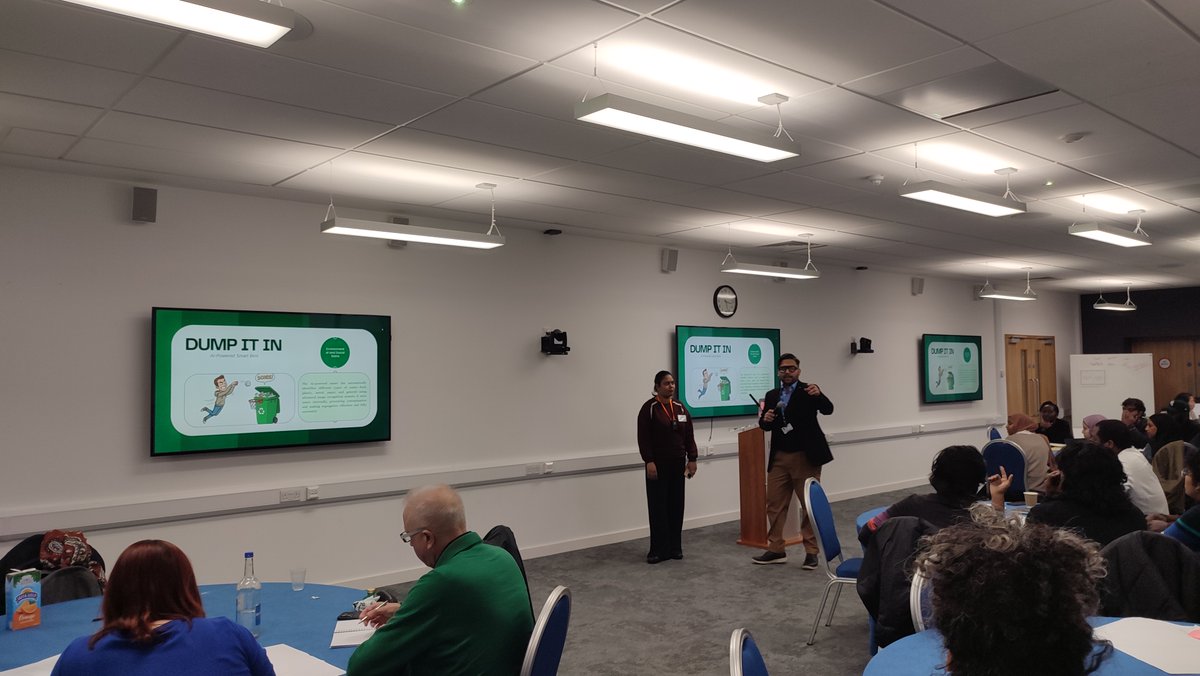
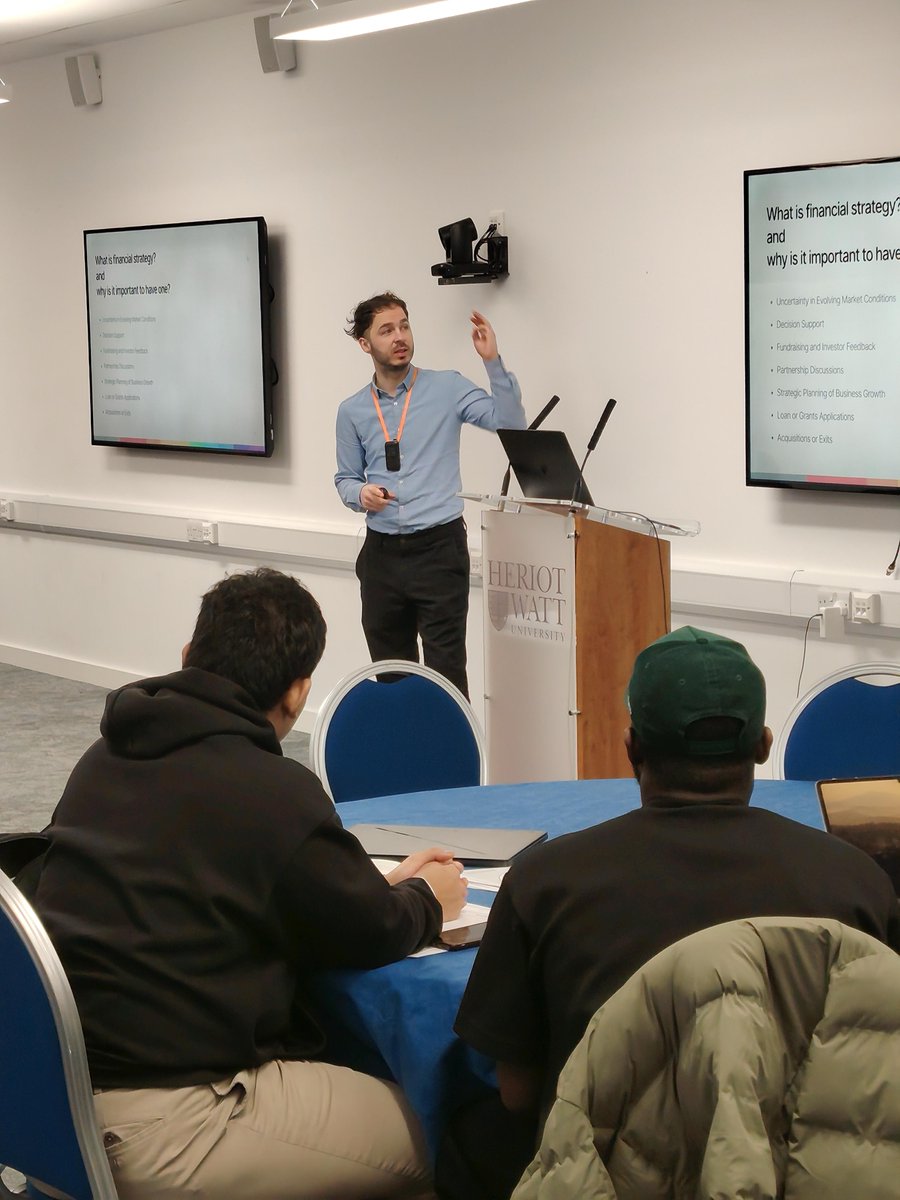
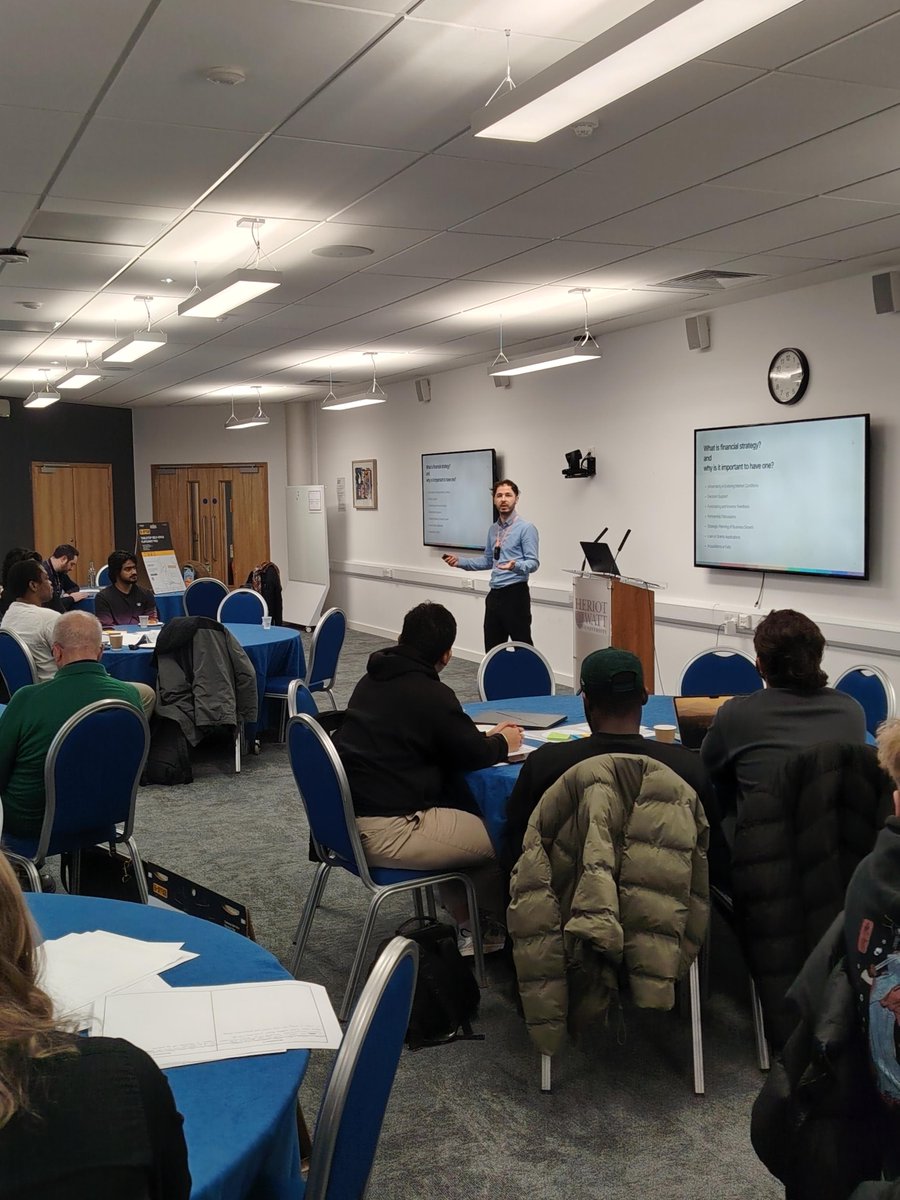
Just wanted to congratulate myself as yesterday I got the chance to present @UniflowControl to the next generation of entrepreneurs. My message was simple: Having an accountant is NOT a financial strategy. If you don’t understand your numbers, you don’t control your business. Full stop. I made that mistake 10 years ago. These students don’t have to. The Sprint gave them a real taste of what building a business looks like, and on Day 3, they pitched live to judges for a £1,500 grant prize. 💪 40+ students. 7 universities. 3 days to build a business from scratch. 🚀 The universities that showed up: - @HeriotWattUni - @EdinburghUni - @EdinburghNapier - @QMUniversity - @UniversityofStirling
 - @ForthValleyCollege
 The world needs more founders who understand their finances from Day 1, not after their first big loss. If you’re a business owner who wants to undertand their business finances - your first step is closer than you think.
Michael Stan tweet mediaMichael Stan tweet mediaMichael Stan tweet mediaMichael Stan tweet media
English
1
0
7
423
Michael Stan
Michael Stan@Michal_Stan·
In my experience, when retail investors finally start talking about the 200MA break, the move is already well underway. I think what matters now is whether this is a rotation or the start of a deeper structural correction. The macro context is different this time with inflation, oil, and geopolitical pressure all elevated simultaneously. Most people won't adjust their portfolio until the drop hurts enough to force them. That's always been the pattern and I don't expect it to change.
English
2
0
1
97
Ted
Ted@TedPillows·
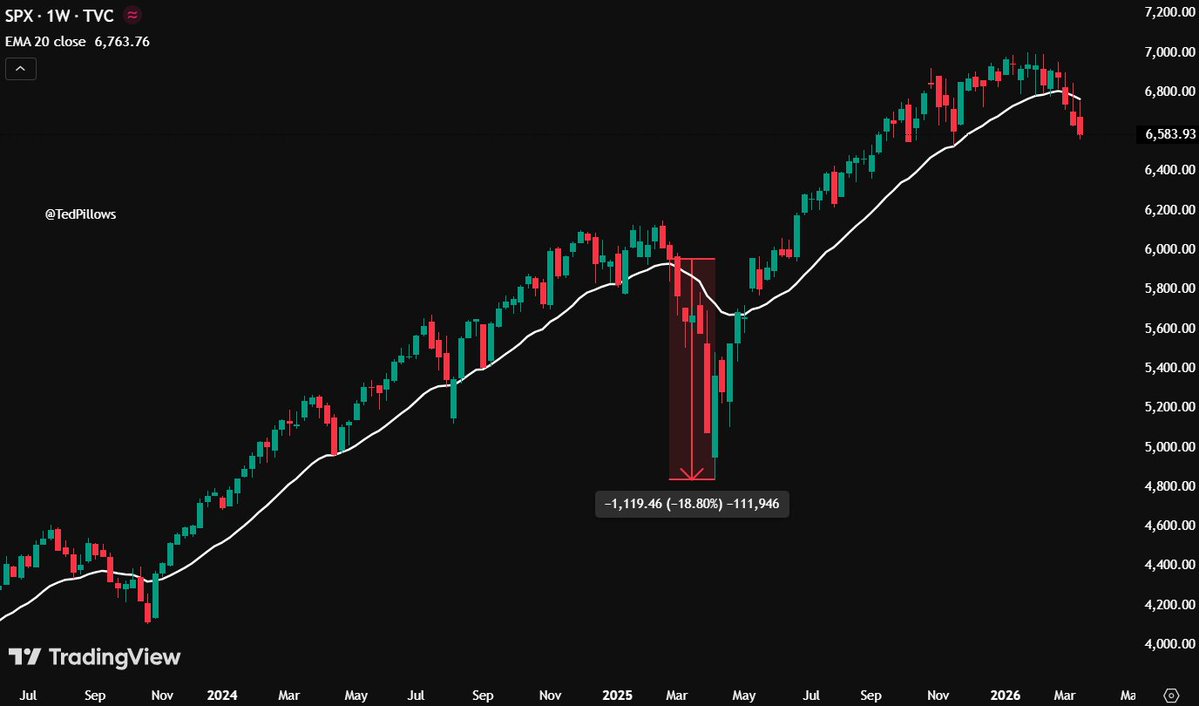
S&P 500 has lost the 20W EMA for the first time since March 2025. Last time this happened, SPX dropped 18% in just 6 weeks.
Ted tweet media
English
143
167
766
56.7K
Michael Stan
Michael Stan@Michal_Stan·
I think this data will eventually kill the "but what about accidents?" argument that keeps autonomous vehicles off more roads. 92% fewer serious crashes is not an incremental improvement, it's a category change. The political resistance to rollout is no longer a safety debate. It's a liability and lobbying debate. The data is clear. The blockers now are regulatory and commercial, not technological.
English
0
0
0
18
Ethan Teicher
Ethan Teicher@ethanteicher·
New safety data from @Waymo today: Compared to human drivers where Waymo operates, 170M miles of fully autonomous driving resulted in: - 92% fewer serious injury or worse crashes - 92% fewer injury crashes involving pedestrians - 85% fewer injury crashes involving cyclists - 83% fewer crashes resulting in any airbags deploying - 82% fewer crashes involving any injury at all At current scale, the data suggests Waymo is preventing 1 serious injury crash *every 8 days.*
Ethan Teicher tweet mediaEthan Teicher tweet media
English
14
27
133
13K
Michael Stan
Michael Stan@Michal_Stan·
I appreciate the intent but I'd separate the rhetoric from reality here. "Clear enough, flexible enough, firm enough" sounds balanced but those three things tend to pull in opposite directions in practice. Clarity often kills flexibility. Firmness often overrides accommodation. I think what matters most to builders and investors is consistency. Not perfect rules, just consistent enforcement. That alone would change the game.
English
0
0
2
75
Paul Atkins
Paul Atkins@SECPaulSAtkins·
The SEC’s interpretation on crypto assets is just the beginning and serves as a bridge while Congress works to advance market structure legislation. Our rules must be clear enough to guide markets, flexible enough to accommodate innovation, and firm enough to protect investors.
English
80
280
1.3K
57.2K
Michael Stan
Michael Stan@Michal_Stan·
I think the Uber deal alone validates the acquisition thesis. $1.25B just got injected for 10,000 robotaxis. That's de-risked cash flow and a distribution agreement from one of the largest mobility platforms on earth. Under $20B market cap with that kind of strategic optionality is genuinely interesting. The question I'd ask is whether Rivian can hold its margin structure long enough to let the story play out.
English
0
0
0
69
Gary Black
Gary Black@garyblack00·
This is not the only reason to own $RIVN, but I believe either $VOW, one of the big 3 or $GOOG or $AMZN will ultimately acquire $RIVN to expand their presence in both EVs and full autonomy. Market cap is still under $20B and the incremental TAM potential associated with extending the brand into the $50K R2 segment from the $80K R1 segment is HUGE.
Gary Black tweet mediaGary Black tweet media
TC Custom 4x4@4x4Tc

@garyblack00 Funny I just replied to a post of yours two days ago asking why you aren’t including Rivian when you talk about robotaxis and full self driving cars. Perhaps now you will start to include them. Don’t sleep on Rivian. The future is bright. 🚀

English
43
16
167
39.7K
Michael Stan
Michael Stan@Michal_Stan·
I think the human-robot tag team model is actually the smart way to enter homes. People are not ready for a fully autonomous robot in their living space. But a robot that does the boring repetitive tasks while a human handles context-dependent judgment? That's a much easier sell. China tends to move fast once a proof of concept works. Expect this to scale faster than most people think.
English
0
0
0
17
RoboHub🤖
RoboHub🤖@XRoboHub·
The future of home cleaning just landed in Shenzhen and it is walking right into your living room. 🤖🏠 @XSquareRobot and 58.com officially launched China’s first robot home service, moving embodied AI from the lab to your front door. When you book a cleaning on the 58.com app, a professional cleaner now shows up with an X Square robot partner to tag team the house. The human handles the tricky stuff that needs real judgment while the robot takes over repetitive tasks like wiping tables and tidying up surfaces. X Square is using an end to end foundation model which means the robot actually perceives and plans its own moves instead of just following a script. By testing in the messy reality of a real home, they are proving that if a robot can master a living room, it can handle almost any physical space. This pilot is part of a massive push to turn these machines into reliable partners that can actually assist in our daily lives.
English
11
22
79
75K
Michael Stan
Michael Stan@Michal_Stan·
In my opinion, people conflate the generation cost with the system cost, and that's where the entire argument breaks down. A solar panel that costs 3 cents per kWh to generate is worthless if it generates nothing at 6pm when demand peaks and you've decommissioned your baseload. The countries with the cheapest electricity tend to have heavy nuclear or hydro, not wind and solar. Germany is the clearest example of what happens when you rush the energy transition without solving the storage problem first.
English
0
0
0
25
Bjorn Lomborg
Bjorn Lomborg@BjornLomborg·
The cheap green lie You are told that solar and wind are cheap But you need near-100% backup when no sun or wind, paying for two systems Data for 2024 shows that cramming in more solar and wind makes electricity overall more and more costly iea.org/data-and-stati… Threads&refs: x.com/BjornLomborg/s…
Bjorn Lomborg tweet media
English
46
226
594
23.2K
Michael Stan
Michael Stan@Michal_Stan·
Congrats on the launch Anna. The framing of "manual research as a competitive liability" is exactly right. I have built products in environments where teams were still doing manually what could be automated, and the compounding cost of that inefficiency is brutal over time. The founders who catch this early gain an edge that becomes near-impossible to close. Happy to see Paradigm pushing this forward.
English
0
0
2
11
Anna Monaco
Anna Monaco@annarmonaco·
Today we’re launching the newest version of @paradigmai When we started Paradigm, the goal was never to tack AI onto existing spreadsheets. It was to build a new type of interface that does the work for you. Now we’re pushing that vision much further. Workflows turn Paradigm into a system that runs research processes for you. Connect your CRM, existing spreadsheets, Slack, email, and internal data, and let Paradigm continuously run the research workflows your team already does. Same intuitive interface. But now a system of action. If you tried Paradigm before, try it again. Manual research is now a competitive liability.
English
124
89
504
101.4K
Michael Stan
Michael Stan@Michal_Stan·
I appreciate the transparency Bryan. Most people don't publish data that complicates their own narrative. That takes honesty. What I find interesting is the recovery pattern. The fact that motility normalized but total count stayed suppressed at 20 days tells you something specific about the mechanism. I think the real value here is that we now have a baseline data point that literally nobody had before. Science moves one data point at a time.
English
1
0
1
812
Bryan Johnson
Bryan Johnson@bryan_johnson·
Two doses of magic mushrooms degraded my sperm count from the 99.6th percentile to the 77.7th. This may be a first-in-human observation. Context: we ran the most quantified magic mushroom (psilocybin) experiment ever conducted. We were asking if psilocybin is a longevity therapy. After seeing the data, we think it is (see reply post for the experiment summary). Also, like most things biology: the results are complicated. My data suggests that the magic mushrooms (psilocybin) negatively impacted my fertility markers. Before the first psilocybin dose my motile sperm count was at 99.6th percentile for men under 25 years of age, it dropped to 77.7% and partially recovered to 89.3% following the first dose, and second doses, compared to the same age cohort (numbers compare similarly to my age cohort as well). 3 days following my second dose (first dose 25 mg, second dose 28 mg) . Motility: dropped 51% . Total count: almost unchanged, dropped by 2% . Total motile count: dropped 52% . Normal morphology: dropped by 50% 20 days post 2nd dose, the pattern continued, with typical latent effects on total sperm counts Motility: recovered back to -2% of pre-psilocybin baseline: . Total count: dropped by 38%, latent effect. . Total motile count: remained inhibited at -39% of pre-psilocybin baseline, (despite motility normalizing, due to the total count drop) . Morphology normalized to -10% of baseline levels. Reduction in free testosterone might have contributed to the effect. While total serum testosterone increased by 30% 3 days following the 2nd dose (neither FSH or LH were meaningfully affected either), and continued to be at 11% above baseline, SHBG increased by 37%, SHBG binds testosterone and reduces its bioavailability and activity. My free testosterone (direct) showed 24% and 23% drops at 3 and 20 days post 2nd dose. In light of the neuroplastic, well-being, brain reset, and systemic metabolic and anti-inflammatory benefits, the trade-off is probably worth it. Especially considering that the magnitude of inhibition has no meaningful effect on actual fertility (total motile counts above 50 million are still on the safe side). This is a first-in-human observation, to our knowledge there is no published human clinical study demonstrating that psilocybin diminishes male fertility markers. General mechanistic evidence exists for recreational and psychoactive drugs possibly inhibiting fertility markers due to their effects on the hypothalamus-pituitary-adrenal axis and general hormonal reset.  Yet no direct evidence for psilocybin or other similar psychedelics inhibiting fertility markers exist. A potential mechanism for the immediate inhibition of motility could involve direct serotonergic signaling in sperm. Human sperm express multiple serotonin receptors, including 5-HT2A, and one recent study found that a 5-HT2A antagonist reduced sperm motility, suggesting that 5-HT2A may regulate motility. Psilocybin is known to bind 5-HT2A with high affinity.
Bryan Johnson tweet mediaBryan Johnson tweet media
English
251
91
2.3K
389.5K
Michael Stan
Michael Stan@Michal_Stan·
I think digital sovereignty in enterprise is going to be the defining issue of the next decade and most companies are still treating it as a compliance checkbox. I have built software for years and the companies that own their own data and processes are simply more resilient when things go sideways. The legacy loop Chamath is describing is real. I have watched businesses collapse not from lack of revenue but from total dependence on tools they didn't own and couldn't adapt when it mattered.
English
0
0
0
45
Chamath Palihapitiya
This is really well summarized here. People ask me why we focused 8090 on (complex) enterprise engagements from day 1 and not small entrepreneurs. The answer is that this is where all the action is. The second is that the concept of digital sovereignty will become part of the water table soon. If you don’t own your knowledge and processes, you will be disrupted. And the most powerful way to own your knowledge and processes is to have bespoke software that absorbs all of the tribal knowledge of your employees that enables it to grow and make money. This is what 8090’s Software Factory does. If, however, you stay as-is and don’t take back control from existing software vendors, your livelihood is on a shot clock.
Kym Coffey@kymcoffey

Digital Sovereignty Through Engineering Excellence Digital Sovereignty Through Engineering Excellence The collaboration between the EY organization and 8090’s Software Factory represents a fundamental shift in enterprise digital strategy. EY: “Leveraging 8090’s platform, we are moving beyond just code and prototypes to deliver complete, commercial-grade products at pace" By moving away from the historical cycles of fragmented outsourcing and compounding technical debt, this approach enables the delivery of commercial-grade, hardened software assets at an accelerated pace. For decades, the enterprise software lifecycle has been caught in a cycle of diminishing returns: internal development gives way to vendor lock-in, which eventually leads to fragmented offshore maintenance. This trajectory inevitably results in compounding technical debt and eroding quality. "We developed the 'Software Factory' to disrupt this legacy loop," notes @chamath Palihapitiya, Cofounder and CEO of 8090. "By combining our engineering precision with the EY organization’s extensive global footprint and strategic depth, we are empowering enterprises to reclaim their digital sovereignty." Strategic Pillars of the EY & 8090 Collaboration The focus is on two mission-critical trajectories for the modern enterprise: Systemic Legacy Transformation: Beyond simple "lift-and-shift" maneuvers to systematically decommission technical debt. By modernizing aging architectures, the reduction of heavy "maintenance tax" of legacy code, frees up capital for growth. High-Governance Product Engineering: While AI-assisted coding provides speed, it often lacks the structural integrity required for the enterprise. This strategic management and sofitware engineering approach ensures that new product development meets rigorous standards for consistency, security, and governance that automated tools cannot achieve in isolation. Through this collaboration, 8090 Software Factory and EY (Earnest & Young) are not just building software; they are re-egineering the future-state of the digital enterprise.

English
30
14
147
71.1K
Michael Stan
Michael Stan@Michal_Stan·
I have been watching AI tooling compress timelines for years but 100ms to first frame is a different category of breakthrough. When generation feels instant, the creative workflow completely changes. People stop treating it as a tool and start treating it as a collaborator. I think the real story here is not the speed. It's that the barrier between thinking something and seeing it rendered is now effectively zero. That changes how people work.
English
0
0
0
17
Min Choi
Min Choi@minchoi·
Waiting minutes for AI video generation is over. Runway's new model on NVIDIA Vera Rubin hits under 100ms to first frame. Minds are blown.
Runway@runwayml

A breakthrough in real-time video generation. As a research preview developed with @NVIDIA and shared at @NVIDIAGTC this week, we trained a new real-time video model running on Vera Rubin. HD videos generate instantly, with time-to-first-frame under 100ms. Unlocking an entirely new creative paradigm and bolstering the foundations of our General World Model, GWM-1. Real-time generation opens a fundamentally different design space for video models and world simulation. We're investing in co-designing our models alongside advances in hardware to keep pushing this frontier.

English
63
151
1.6K
214K
Michael Stan
Michael Stan@Michal_Stan·
I think $1.25 billion for 10,000 robotaxis tells you everything about where the transport economy is heading. The interesting part is that Uber is essentially outsourcing its future. They're not building the vehicles or the AI. They're deploying capital to own the distribution layer. As a founder who's watched cash flow decisions make or break companies, this is either genius capital allocation or a very expensive bet on someone else's execution. 2028 is not that far away.
English
0
0
2
127
Reuters
Reuters@Reuters·
Uber will invest up to $1.25 billion in electric vehicle maker Rivian to acquire 10,000 fully autonomous robotaxis that will be deployed in 2028 reut.rs/4sVOjva
English
45
192
769
110.1K
Michael Stan
Michael Stan@Michal_Stan·
In my opinion, governments don't just go after territory anymore. They go after infrastructure. Oil, ports, data cables. Whoever controls the chokepoints controls the leverage. This is why I think the idea that money and resources are distributed fairly is a complete fiction. There is enough wealth in the world to solve every major problem. We don't have a resource problem, we have a control problem. And Kharg Island is a good example of what that looks like in practice.
English
0
0
1
118
Watcher.Guru
Watcher.Guru@WatcherGuru·
JUST IN: 🇺🇸🇮🇷 Treasury Secretary Bessent says "we'll see" if Kharg Island eventually becomes a US asset. Kharg Island handles 90% of Iran's oil export.
Watcher.Guru tweet mediaWatcher.Guru tweet media
English
1.1K
1.4K
9.5K
696.4K
Michael Stan
Michael Stan@Michal_Stan·
I think what Jensen is saying here is underrated. Space infrastructure sounds like a distant problem but the engineers building it now are laying the foundation for the next 50 years of computing. The cooling constraint is real and has always been the bottleneck. Whoever solves radiation-based cooling at scale in orbit will control the most valuable compute layer on earth. Or off it.
English
0
0
4
191
Sawyer Merritt
Sawyer Merritt@SawyerMerritt·
Nvidia CEO Jensen Huang in new interview on orbital datacenters: "The challenge of course is that cooling, you can't take advantage of conduction and convection, so you can only use radiation, and radiation requires very large surfaces, but that's not an impossible things to solve. There's a lot of space in space. We're going to go explore it. We're already radiation hardened. We have Cuda in satellites around the world. In the meantime, we're going to explore what is the architecture of datacenters look like in space. It'll take years, but that's ok. I got time." via @theallinpod
English
386
676
4.7K
855K
Michael Stan
Michael Stan@Michal_Stan·
I think the historical pattern holds but the context matters. War drives oil, oil drives inflation, inflation forces capital into real assets. The problem is most people don't have capital positioned to benefit. They're leveraged into consumer debt with no reserves. So when risk markets spike, they watch the move from the sidelines. Positioning before the event is the whole game. Most miss it because their money management is reactive, not forward-looking.
English
1
0
0
37
Ran Neuner
Ran Neuner@cryptomanran·
This war will cause a stock market explosion. Every time oil has spiked due to war, risk markets have followed. And this one is far from over. I'm joined by @HenrikZeberg live today to break down what that explosion looks like. LIVE NOW on the Crypto Banter YouTube channel.
Ran Neuner tweet media
English
51
15
146
26.1K
Michael Stan
Michael Stan@Michal_Stan·
I think what Saylor gets right that most people ignore is the long-term capital preservation argument. Bitcoin as a store of value makes more sense when you understand that money is printed, not earned by governments. I have seen what happens when a business has no financial visibility and no asset backing. The cash evaporates. Most people are not protecting their wealth, they're just moving it around in systems that are designed to erode it slowly.
English
0
0
4
311
Michael Stan
Michael Stan@Michal_Stan·
In my opinion, "certainty" from regulators sounds good until you realize the framework they're building still centralizes who decides what's what. The whole point of decentralised assets is that nobody controls the ledger. A government-approved framework on top of that is still a government-approved framework. I'm not against clarity. I just think people need to understand that regulatory clarity and true financial freedom are two different things.
English
0
0
0
116
Watcher.Guru
Watcher.Guru@WatcherGuru·
JUST IN: 🇺🇸 SEC Chair Paul Atkins says the agency is setting up "framework" for crypto so people can have certainty.
English
271
358
2.8K
192.3K
Michael Stan
Michael Stan@Michal_Stan·
I think this matters a lot, but I'm skeptical governments will give up the control they've had over financial systems that easily. Decentralisation and regulatory clarity sound great in theory. In practice, the people writing the rules are the same ones who benefit from the old system. That said, I do think clarity is better than ambiguity for builders. At least you know what you're working with. The question is who enforces it and how consistently.
English
0
0
1
31
U.S. Securities and Exchange Commission
Chairman @SECPaulSAtkins regarding the Commission’s interpretation on crypto assets: “We’re breaking from the past. We are now giving clarity from the SEC’s perspective as to what are and are not securities.”
English
75
419
1.6K
96.2K
Michael Stan
Michael Stan@Michal_Stan·
I think what this list really shows is the power of staying in the game. Most people panic-sell or never start because they're managing cash flow month to month with no visibility into the future. I went through a complete financial collapse in 2017 and had to rebuild from scratch. The hard truth is that most people can't invest consistently because they don't actually know where their money is going. Fix the foundation first. Then let time do the work.
English
0
0
1
1.4K
Jon Erlichman
Jon Erlichman@JonErlichman·
Value of $10,000 invested 15 years ago: Nvidia: $4,043,000 Tesla: $2,490,000 Netflix: $310,900 Eli Lilly: $265,300 Amazon: $256,300 Alphabet: $216,800 Apple: $211,200 Mastercard: $203,200 Visa: $167,600 Microsoft: $157,000 Costco: $138,700 Home Depot: $90,800 Starbucks: $52,900
English
101
146
1.7K
310.4K
Michael Stan
Michael Stan@Michal_Stan·
I have used this approach when building teams and it's one of the most honest frameworks out there. Most managers play it safe and keep people in comfortable lanes. The ones who actually build high-performing teams push until something cracks, then find the ceiling. I'd add one thing though — the person who surprises you at the broken point often becomes your most loyal team member. They know you saw something in them before they did.
English
0
0
1
36
Startup Archive
Startup Archive@StartupArchive_·
Keith Rabois on how to identify great talent “What you want to do with every single employee every single day is expand the scope of their responsibilities until it breaks… and that’s the role they should stay in.” Keith tells the story of giving an intern the task of getting smoothies to arrive at the office at 9pm to reward Square’s engineering team. And once the intern proved they could solve this task that had stumped multiple people at the company, he gave them something more important and consequential to do. Everybody has some level of complexity that they can handle, and you want to keep expanding their responsibility until you see where it breaks—as Keith points out, some people will surprise you: “There will be some people who you don’t expect—with different backgrounds, without a lot of experience—who can just handle enormously complicated tasks. So keep testing that and pushing the envelope.” Keith also argues that you should monitor who is going up to other people's desks. If you see people frequently going up to a person's desk, it's a sign that that person can help them. Promote these people and give them more responsibility as fast as you can. Video source: @ycombinator (2014)
English
8
19
207
27K
Michael Stan
Michael Stan@Michal_Stan·
I think the $50T physical AI market projection is the part most people are sleeping on. Jensen has been saying this for a while and it's starting to look less like hype every quarter. I ran a business from 2014 and the one thing I wish I had was better visibility into where things were heading. The founders who win the next decade will be the ones who understand infrastructure before it becomes obvious. What's your take on the timeline for physical AI actually hitting mainstream adoption?
English
0
1
3
491
The All-In Podcast
The All-In Podcast@theallinpod·
🚨MAJOR INTERVIEW: Jensen Huang joins the Besties! The @nvidia CEO joins to discuss: -- Nvidia's future, roadmap to $1T revenue -- Physical AI's $50T market -- Rise of the agent, OpenClaw's inflection moment -- Inference explosion, Groq deal -- AI PR Crisis, Anthropic's comms mistakes -- Token allocation for employees ++ much more! (0:00) Jensen Huang joins the show! (0:26) Acquiring Groq and the inference explosion (8:53) Decision making at the world's most valuable company (10:47) Physical AI's $50T market, OpenClaw's future, the new operating system for modern AI computing (16:38) AI's PR crisis, refuting doomer narratives, Anthropic's comms mistakes (20:48) Revenue capacity, token allocation for employees, Karpathy's autoresearch, agentic future (30:50) Open source, global diffusion, Iran/Taiwan supply chain impact (39:45) Self-driving platform, facing competition from active customers, responding to growth slowdown predictions (47:32) Datacenters in space, AI healthcare, Robotics (56:10) OpenAI/Anthropic revenue potential, how to build an AI moat (59:04) Advice to young people on excelling in the AI era
English
32
80
605
132.1K