
America, Amen. Tim Sumner 🇺🇸

78.1K posts

America, Amen. Tim Sumner 🇺🇸 banner
America, Amen. Tim Sumner 🇺🇸

America, Amen. Tim Sumner 🇺🇸

@SgtTim911

Co-founded 9/11 Families for a Safe & Strong America. US Army MP 74 - 94 SFC E-7 (ret). Make Military Tribunals Great Again. MAGA. #1A Older, wiser, not neo.

U.S.A U.S.A. U.S.A. ... Entrou em Eylül 2009
1.3K Seguindo2.4K Seguidores
America, Amen. Tim Sumner 🇺🇸
@NatureMustStay No manned landing has ever caused the ocean to noticeably boil. In all cases the shield cooled to near local temperatures. According to NASA, the exterior of the capsule can still be around 300 F degrees at landing and is partly why the first to approach tests for hazards.
English

0
0
0
6
America, Amen. Tim Sumner 🇺🇸 retweetou
NASA
NASA@NASA·
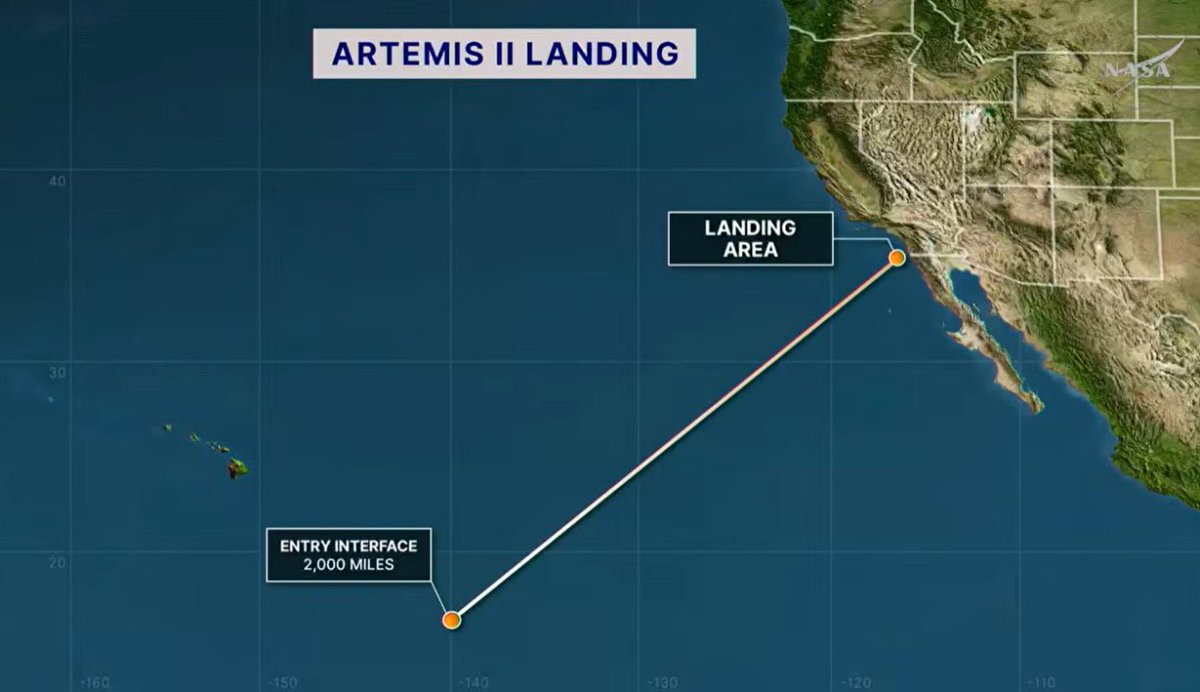
LIVE: They are coming home. Watch as the Artemis II crew returns to Earth, splashing down at around 8:07pm ET (0007 UTC April 11). twitter.com/i/broadcasts/1…
English
4.7K
34.3K
138.5K
8.9M
America, Amen. Tim Sumner 🇺🇸
Far too many people offer opinions without either the education, experience, or at the research to arrive at their conclusion(s).
English
0
0
0
32
America, Amen. Tim Sumner 🇺🇸
Grok says: Thought for 9s @RevJBT mocks the thread's claim that a 5000°F spacecraft capsule would cause visible steam or boiling upon ocean splashdown, laughing at the temperature assumption. Peak re-entry heat of around 5000°F occurs on the ablative heat shield during atmospheric friction; by parachute-assisted splashdown, the exterior has cooled substantially after velocity reduction. The post counters skepticism in the Artemis II return thread, where users cite absent steam as evidence against mission authenticity despite engineering realities of heat dissipation. Explain ablative heat shield mechanics Compare to Apollo splashdown footage How hot was Integrity space capsule when it landed in water? Searching the web 46 results Fetching thread on X The Integrity capsule (NASA's Orion spacecraft for the Artemis II mission) experienced extreme heating during atmospheric re-entry, but it was not anywhere near 5000°F (or ~2760°C) when it splashed down in the Pacific Ocean. ralionline.com Peak Heating During Re-EntryThe heat shield faced peak temperatures of approximately 4000–5000°F (~2200–2760°C) at the height of re-entry friction. This is roughly half the surface temperature of the Sun and occurs while the capsule is still traveling at hypersonic speeds (over 24,000 mph). astronomy.com The ablative heat shield (Avcoat material) is designed to char, melt, and erode away in a controlled way, carrying heat away from the spacecraft. This protects the crew module, where internal temperatures remained safe (around room temperature or slightly elevated but comfortable for the astronauts). bbc.com Temperature at SplashdownBy the time Integrity deployed its parachutes and gently entered the water (at a low speed of roughly 15–20 mph), the exterior had cooled dramatically. Here's why no massive steam or boiling was visible:Time for cooling: Re-entry heating lasts only minutes. After peak heating, the capsule slows significantly under parachute descent (which can take 10–20+ minutes depending on altitude). Heat dissipates into the air, and the charred heat shield does not retain or conduct heat like a solid metal object would. Heat shield design: It's an ablative material meant to shed heat rather than store it. The outer surface chars and ablates; the underlying structure and the rest of the capsule (sides, top) never get that hot. No "frying pan in water" effect: A hot metal pan conducts heat quickly and is surrounded by air that doesn't cool it much beforehand. A re-entry capsule's heat shield is engineered precisely to avoid transferring that energy to the main body or the water upon contact. Videos and recovery footage of Orion (and similar capsules like SpaceX Crew Dragon) consistently show splashing without dramatic boiling or steam clouds for this reason. facebook.com Exact external surface temperature at water impact isn't publicly released in real-time telemetry for every mission (it's not a critical operational number post-re-entry), but engineering analyses and past recoveries (including Artemis I and Crew Dragon missions) indicate the exterior is warm to the touch at most—likely in the range of 100–300°F (38–150°C) or cooler on non-shield areas by splashdown, with rapid further cooling in seawater. Recovery teams approach and handle the capsule relatively soon after without extreme thermal hazards beyond standard precautions for any returned spacecraft. reddit.com Why the Skepticism PersistsThe 5000°F figure is often misunderstood—it's a peak plasma/air temperature or heat shield surface value during the plasma fireball phase, not the condition of the capsule at landing. Parachute descent and heat dissipation make the splashdown far less dramatic visually than a naive "superheated object into cold water" analogy suggests.Artemis II's splashdown was described as a "perfect bullseye" with the crew in great condition, confirming the heat shield performed as needed despite prior concerns from Artemis I testing. washingtonpost.com In short: The capsule was intensely hot at the right time (re-entry), but safely and substantially cooled by the time it hit the water. No visible boiling is expected or observed in real missions.
Spiro Ketal ✝️ 🇦🇺 🐭🐸@spiro_ketal

@1979pop @FaithofKGI @Jikkyleaks @NASA @SgtTim911 @keithjpav 5000 Deg F is 2760 Deg C. Steel melts at 2550 Dec C, from memory. Al about 660. I know `they use' refractory tiles but still...The thermal shock of that hot crap hitting water - it should explode. There should be a massive cloud of shit and steam befitting the Shartemis Poo.

English
2
0
1
82
America, Amen. Tim Sumner 🇺🇸 retweetou
Ulises
Ulises@UlisesDavid__·
🚨 | Misión Artemis II: Se ha publicado un video del ingreso de la tripulación a la atmósfera terrestre, increíble 👏🏼
Español
378
5.8K
40.1K
1.9M
Buzz Patterson
Buzz Patterson@BuzzPatterson·
I hope I get the chance to see it!
Buzz Patterson tweet media
English
44
39
653
11.8K