Gregory Epps

232 posts

Gregory Epps banner
Gregory Epps

Gregory Epps

@_gregx

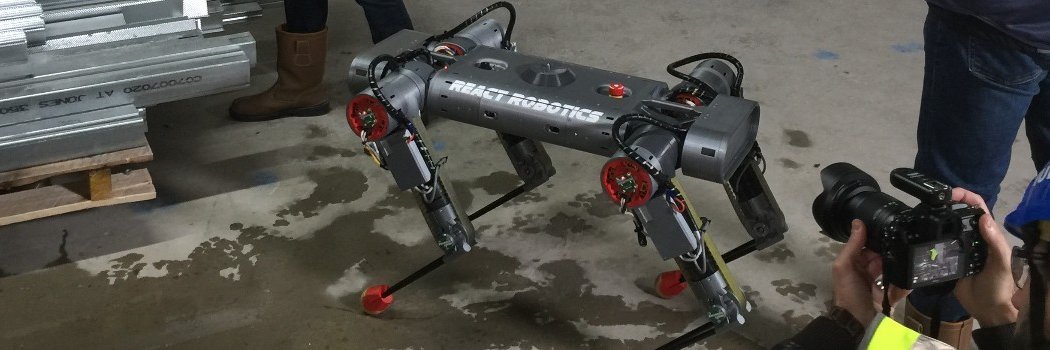
CEO, Fast Forward Rewind - making Product Market Fit predictable. Previous co's: @ReactAI @ReactRobotics @RoboFold RobotsIO @ShapeToFab

London Entrou em Temmuz 2014
864 Seguindo166 Seguidores
My name
My name@Lurd_voldermort·
This thread reads like it was written by someone who has never deployed hardware in an emerging market. Yes, Starlink bypasses the fiber trench, but it doesn't bypass the power grid. A standard dish draws 50 to 75 watts continuously. If a rural village lacks basic telecom infrastructure, it almost certainly lacks the stable electrical grid required to keep that dish online. Furthermore, selling a $500 piece of hardware and a $50 monthly subscription to a farmer whose local currency is actively depreciating against the dollar doesn't 'unlock human potential'—it completely prices them out. You don't move the GDP of a developing economy by selling luxury satellite broadband to the upper-middle class in Lagos. You move it with accessible, sub-$1 mobile data.
English
15
4
25
3.9K
Dustin
Dustin@r0ck3t23·
Elon Musk just explained how Starlink moves the GDP of entire nations. The formula is so simple it should embarrass every development agency on the planet. Musk: “GDP is a function of average productivity per person.” Productivity per person goes up. GDP goes up. That is the whole equation. Everything else is decoration. And connectivity is the single largest lever on Earth for pushing that number. Musk: “If you don’t have access to the internet, or it’s too expensive or low bandwidth, you cannot access the MIT lessons and you can’t sell the goods and services that you produce.” No internet means no global knowledge. No global markets. No ability to sell to anyone beyond your village or learn from anyone outside of it. The penalty is total. And it has nothing to do with the person serving it. There is a child alive right now who is as intelligent as anyone who has ever walked the halls of MIT. She does not know it. Nobody around her knows it. Because the coordinates of her birth have no connectivity. No library. No signal. No link to the world that would show her what she is. She will grow old inside a ceiling that geography built for her. Not because of talent. Not because of effort. Because of a satellite that had not been launched yet. Musk: “Internet connectivity is certainly a candidate for one of the things that would do more to lift people out of poverty than anything else.” Traditional infrastructure takes decades. Fiber has to be laid. Towers have to be built. Permits have to be approved. Capital has to be attracted to regions that cannot attract it. Starlink bypasses all of it from orbit. No cables. No permits. No waiting for a government to prioritize your village. A dish goes up. Isolation ends. Someone who could not access a textbook yesterday downloads MIT’s entire curriculum today. Someone who could only sell to neighbors starts selling to the planet tomorrow. That is not an upgrade. That is a different life. Musk: “Starlink will actually move the GDP of countries. Like it’s gonna be that kind of thing.” He said it like a feature update. But read it again. Move the GDP of countries. Not a company’s revenue. Not an industry’s output. The gross domestic product of nations. Shifted by one constellation. The telecom industry spent decades deciding which regions were profitable enough to connect. The rest were written off. Starlink does not make that calculation. It covers the planet. Every farmer. Every welder. Every kid with a clear view of the sky. The minds that will cure diseases, solve energy, and build things we cannot yet name are already alive. They are already thinking. They have no signal. Starlink is the first technology in human history that can reach them at the speed of deployment instead of the speed of bureaucracy. And when those minds come online, they will not change their own lives. They will change the trajectory of the species. That is what Musk actually built. Not a telecom company. The largest unlock of human potential ever launched from a single network.
English
416
1.5K
5.9K
901.8K
Gregory Epps
Gregory Epps@_gregx·
@DrInsensitive You’re missing the value destruction eg can’t drives without cat, therefore can’t get to work for x days, can’t create job value, or , can’t have electricity without copper, can run x machines, can’t create industrial value etc
English
0
0
2
47
Dr. Insensitive Jerk
Dr. Insensitive Jerk@DrInsensitive·
The Rapacity Ratio Replacing a catalytic convertor will likely cost $1,000. The thief who stole the old one probably sold it for less than $100. I propose this as a measure of a man's wickedness: How much expense will he inflict on others, to gain $1 for himself? Let's call that ratio his rapacity. Catalytic convertor thieves have a rapacity of roughly 10. For copper thieves, it's closer to 20. A good man's rapacity is negative. For example, a good man might pay $5 to avoid inflicting $1 in damage to others. His rapacity is -5. The grand champions of rapacity are politicians, who will transfer $1 Billion of taxpayer money to an NGO, in return for $1M to their Caiman bank account. That gives them a rapacity of 1,000.
Dr. Insensitive Jerk tweet media
English
213
866
7.4K
197.7K
Gregory Epps
Gregory Epps@_gregx·
@Andercot He’s competing with China (as all of it), who may be behind, but unlike the rest of the West are trying hard on all these fronts
English
0
0
0
11
Andrew Côté
Andrew Côté@Andercot·
It'll probably be obvious in hindsight that the company to win the AI race had all the robots, batteries, heavy launch capacity, factory construction, etc Excepting some algorithm breakthrough by a competitor, looks like an industrial buildout slug-fest with one clear winner
English
71
55
1.4K
143.4K
Henrick Johansson
Henrick Johansson@compliantvc·
Europe is leading the way into the AI Age Pleased to announce this brand new, state-of-the-art, 330 square meter data center in the heart of Gelsenkiärken, Germany The facility will process 20 gigabytes of AI data per day Construction will begin in May 2037, pending regulatory approval and a full environmental impact study Once this place opens for business in December 2041, Europe will officially become the AI Superpower!
Henrick Johansson tweet media
English
2.4K
672
12.3K
1.1M
Crémieux
Crémieux@cremieuxrecueil·
There's a lot of truth to this. Wherever we have data, we see this repeated: Communists tend to be downwardly mobile. They are, always and everywhere, disproportionately likely to be their generation's losers. Consider this Finnish data on the Red and White Guards:
Crémieux tweet media
Ryan, Duke of Manchester@DukeOfManch

@cremieuxrecueil Those born in a high social class and who have inherent low ability, and thus fall a social class, are the most resentful and vocal. They also are the least impactful people on long term trends, yet are deceptive in their overcrowding of the present zeitgeist. Occupy Wall Street

English
196
1.1K
8.1K
1.5M
Bryan Johnson
Bryan Johnson@bryan_johnson·
@SurrealBlend sure, if beating hearts, functional livers and brain spheroids all already exist in miniature organoid form, the next step must be a Johnson’s Johnson on a cell culture dish
English
8
2
290
10.1K
Bryan Johnson
Bryan Johnson@bryan_johnson·
I’m going to build an organoid avatar of myself. Thousands of miniature Bryan Johnsons grown on cell culture dishes, each replicating my cellular and organ biology. This living model will let me test the efficacy of supplements, drugs, and nutrition to accelerate safe and measure progress against aging. Details: The potential of stem cell derived organoids is to enable toxicity screenings for drug discovery and complex treatment regiments. This same benefit can be realized for longevity supplementation, nutrition, and Rx protocols. Becoming the most measured person in history allowed my organs to speak, but the drawback is that there’s only one copy of me for testing. This means I can only tweak one or a handful of variables at a time to explore their effects. A single copy of me limits the number of things I can test simultaneously, slowing the speed of progress. These limitations can be resolved by scaling me up using personalized, stem cell-derived organoids. We are currently giving this serious consideration. Here's a rough workflow: A blood sample is taken, some cells are isolated (PBMCs) and reprogrammed into induced pluripotent stem cells (iPSCs). These cells are then propagated in cultures. Using special lab treatments and conditions, they are coaxed to differentiate and grow into mini-organs, or organoids. These organoids carry my exact DNA. Although the reprogramming process erases most epigenetics acquired in my life, bringing the cells back to a newborn-like state, we can think of these organoids as "Baby Bryans" available to test interventions. Organoid function and phenotype can be monitored using computational models, which can extrapolate the organoid's behavior to predict effects on the actual organs in my body. These organoids can be hooked together into one artificial circulation, creating hundreds or thousands of "mini Bryans." These will allow us to test each ingredient and intervention separately, as well as particular combinations. The level of evidence and sophistication of organ-on-chip model has seen rapid progress in the last decade Initial prototypes utilized interconnected 2-D and spheroid "organ-on-chip" cultures to successfully model the metabolism, toxicity, and biodistribution of drugs and their metabolites, including liver-kidney, liver-lung, and liver-brain interactions. The use of induced pluripotent stem cells (iPSCs) coupled with 3D-printed scaffolds to generate spheroids and organoids paved the way for these systems in personalized medicine. This approach enables accurate, personalized, case-by-case predictions for drug interaction, efficacy, and toxicity. These systems can even model systemic disease states, such as blood-brain barrier permeability, neurotoxicity, lung and pancreas cystic fibrosis, cancer metastasis, and responsiveness to chemotherapy. The next iteration of organoids rely on computational models, promising to evolve these systems from modeling extreme toxicity and disease states to the more delicate field of predicting chronic toxicity and harms from drugs in development. This granularity will enable optimization of personal drug and supplement regimens with cellular and molecular level accuracy, a feat normally challenging to track within the complexity of the living body. The field is maturing from merely generating organoids to building in-silico avatars of one's body based on insights collected from cultured organoids. On the pharmaceutical side, these systems can already accelerate discovery by predicting drug candidate toxicity before they transition into expensive clinical trials. On the longevity and personal health side, this means we will soon no longer have to speculatively test interventions and therapies on ourselves based solely on general population data. My organoid avatars will undertake the heavy lifting of detecting and predicting toxicity, harm, and likelihood of efficacy.
Bryan Johnson tweet media
English
277
162
2.8K
775.2K
Gregory Epps
Gregory Epps@_gregx·
@DannyHabibs Been there, done that. Always looks great when you film it because you’re filming with a monocular camera - try looking at it with your eyes and they focus on the distance and you get double vision. Sorry.
English
0
0
0
13
daniel habib
daniel habib@DannyHabibs·
Head-tracked “Window Mode.” Your front camera finds your head. The view reprojects in real time so the screen feels like a window into the 3D scene. True3D, no glasses.
English
1.1K
3.3K
55.2K
3.9M
Nico Macdonald
Nico Macdonald@Nico_Macdonald·
I support the Royal National Lifeboat Institution. But why does ⁦@RNLI⁩ choose to fly the Pride flag? Lesbians and gays have equal rights; homophobia is socially outlawed. It flies no flag for women’s rights, or racial equality. How is this more than regime endorsement?
Nico Macdonald tweet media
English
1
0
2
69
miss white
miss white@cinecitta2030·
Wake up babe I found the perfect headquarters for our techno-fascist pirate state
English
76
120
2.8K
89.1K
Carlos De la Guardia
Carlos De la Guardia@dela3499·
I’m writing a book on AGI, and here are some of the books that inspired it:
Carlos De la Guardia tweet media
English
23
13
244
13.7K
Aaron Tan
Aaron Tan@aaronistan·
Introducing Lume, the robotic lamp. The first robot designed to fit naturally into your home and help with chores, starting with laundry folding. If you’re looking for help and want to avoid the privacy and safety concerns of humanoids in your home, pre-order now.
English
1.7K
409
6.6K
4.2M
Beff (e/acc)
Beff (e/acc)@beffjezos·
@patrickc Make a subscription service for gene therapies?
English
3
0
9
2.2K
Patrick Collison
Patrick Collison@patrickc·
Something I've been thinking about: gene editing drugs (like Casgevy, Luxturna, Zolgensma) are a new paradigm in therapeutics, where it may be possible to cure many diseases with single administrations rather than managing them continuously via drugs that require ongoing use. Despite that promise, though, the CRISPR-focused biotech firms (CRSP, NTLA, EDIT, BEAM) have not been doing well. There are a lot of problems with imperfect financial incentives in healthcare. Is this an important new one? In particular: why would insurance companies pay enough for the benefits here? An average enrollee lasts only a few years in the US, so any given insurance company internalizes only a small portion of the benefit from a permanent cure. But if insurance companies (rationally) underfund, pharma companies will then (rationally) underinvest. In theory, single-payer systems should pay more because of better incentive alignment, but in practice they don't have a tradition of paying enough for pharma innovation. (For the most part, they tend to ride on US coattails.) So what do we do?
English
155
96
1.3K
285.8K
Gregory Epps
Gregory Epps@_gregx·
@SAshworthHayes You have two options: either leave the country and escape communism or stop working and join communism
English
0
0
2
132
Sam Ashworth-Hayes
Sam Ashworth-Hayes@SAshworthHayes·
The degree to which your quality of life depends on your willingness to make yourself as large a burden as possible is hard to overstate. If you work, you're robbed blind to pay for those who won't. You can't have the family life you'd like to because you need to pay for the families of the feckless and workshy. If you simply give up, and refuse to lift a finger, the state falls over itself to provide for you. It's cruel not to. So we shackle the productive and the hard working to an ever growing burden of those who have checked out and simply wait for the benefits to hit their account. If you want to fix Britain, this wouldn't be a bad piece to start.
Sam Ashworth-Hayes tweet media
English
81
522
3.9K
143.5K
Andrew Côté
Andrew Côté@Andercot·
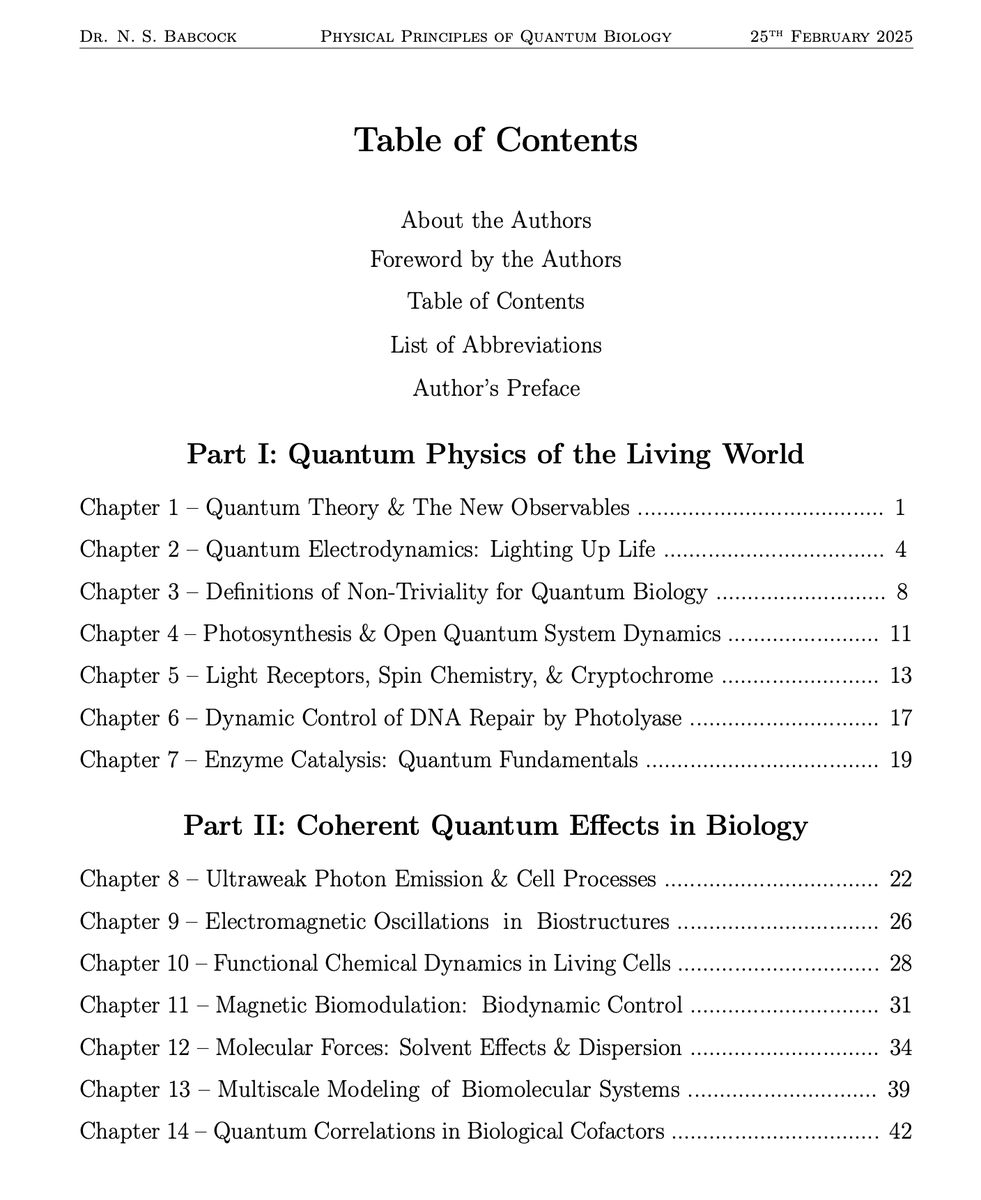
Quantum Biology is probably going to substantiate every single 'woo' belief about crystals, sacred geometry, astrology, etc, and next think you know frontier physics research will be conducted at the end of a DMT pen
Andrew Côté tweet mediaAndrew Côté tweet media
English
154
324
3K
246.3K
Gregory Epps
Gregory Epps@_gregx·
@engineers_feed Perhaps they had jigs for the internal frame - this looks like a cladding stage
English
0
0
0
705
World of Engineering
World of Engineering@engineers_feed·
How did Lockheed assemble the SR-71? No lasers and force fields. Old school.
World of Engineering tweet media
English
19
63
720
435.8K