Just came across this case study of Apple's Flux Watch Face Great typography inspiration tdc.org/winner/flux-wa…
Panos Spiliotis
3.4K posts

@panosdigital
Digital Product Designer & Developer. Co-founder @neyboxhq

Just came across this case study of Apple's Flux Watch Face Great typography inspiration tdc.org/winner/flux-wa…

I want to create a world, and tooling, where anyone can make stuff like this


After many years of development, I’m excited to share the interior of the first electric Ferrari designed by LoveFrom. Tactile controls and digital interactions blend into one cohesive interface, shaped through deep collaboration across engineering, interaction, graphics, typography, sound, and industrial design. So incredibly proud of the thoughtfulness and care the team brought to every detail. ferrari.com/en-US/auto/fer…

A heartfelt appreciation and gratitude post to some incredible contributors and Rust developers that stepped up and brought Zed's git features to the next level. The community stepped up beyond our imagination. You shipped great code, worked 1:1 with our team, and made this far more fun than us doing this alone. Cheers to shipping alongside your users. Especially if they're Zed users. ♥️🏆 See details in the blog post linked below. And big big thanks to the following contributors: @0xbl4ze @amtoaer @amustaque97 @BnJ25 @cppcoffee @errmayank @heyxviraj @jafee201153 @loricandre_ @loricandre_ @marcocondrache


Like @davidbessis and others, I think that Hinton is wrong. To explain why, let me tell you a brief story. About a decade ago, in 2017, I developed an automated theorem-proving framework that was ultimately integrated into Mathematica (see: youtube.com/watch?v=mMaid2…) (1/15)


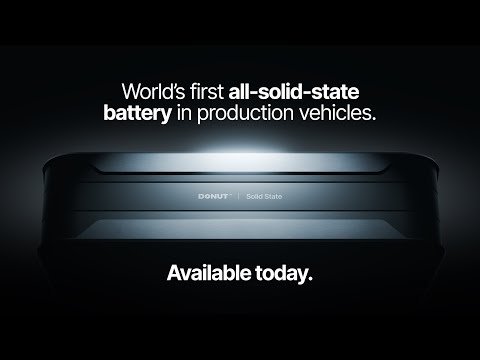
If there's no catch, Finland's Donut Lab just made history. A solid state battery that is cheaper, made with abundant materials, charges faster, with longer range, safer to use and available right now. 🤯

What we learned about memory in 2025 8 comprehensive resources: ▪️ Memory in the Age of AI Agents ▪️ When Will We Give AI True Memory? (interview with @EdoLiberty, founder & CEO @pinecone) ▪️ Why AI Intelligence is Nothing Without Visual Memory (interview with @shawnshenjx, co-founder @memories_ai) ▪️ From Human Memory to AI Memory: A Survey on Memory Mechanisms in the Era of LLMs ▪️ Rethinking Memory in AI: Taxonomy, Operations, Topics, and Future Directions ▪️ Cognitive Memory in LLMs ▪️ MemOS: A Memory OS for AI System ▪️ MemEvolve: Meta-Evolution of Agent Memory Systems Save the list and check this out for the links: huggingface.co/posts/Kseniase…


I feel this way most weeks tbh. Sometimes I start approaching a problem manually, and have to remind myself “claude can probably do this”. Recently we were debugging a memory leak in Claude Code, and I started approaching it the old fashioned way: connecting a profiler, using the app, pausing the profiler, manually looking through heap allocations. My coworker was looking at the same issue, and just asked Claude to make a heap dump, then read the dump to look for retained objects that probably shouldn’t be there; Claude 1-shotted it and put up a PR. The same thing happens most weeks. In a way, newer coworkers and even new grads that don’t make all sorts of assumptions about what the model can and can’t do — legacy memories formed when using old models — are able to use the model most effectively. It takes significant mental work to re-adjust to what the model can do every month or two, as models continue to become better and better at coding and engineering. The last month was my first month as an engineer that I didn’t open an IDE at all. Opus 4.5 wrote around 200 PRs, every single line. Software engineering is radically changing, and the hardest part even for early adopters and practitioners like us is to continue to re-adjust our expectations. And this is *still* just the beginning.



Intelligence is on tap now so agency is even more important

BREAKING: Sugars essential for life have been found in pristine asteroid Bennu samples collected by NASA’s OSIRIS-REx spacecraft. Combined with previous detections of amino acids and nucleobases, we see that life’s ingredients were widespread throughout the solar system: go.nasa.gov/48MTu9i More on the study led by Yoshihiro Furukawa of @TohokuUniPR⤵️

I vibecoded this neural network visualization for my students and open sourced it. It shows a simple MLP trained on MNIST handwritten digits at several training steps. The visualization is using @threejs and it comes with training code in @PyTorch . Link + repo 👇