Christo Robin

2.9K posts

Christo Robin

Christo Robin

@ChristoRobin2

Earth Присоединился Mayıs 2019
266 Подписки65 Подписчики
Moneytopia
Moneytopia@BSkypia59338·
메모리야 말할것도 없이 호황이라 파운드리까지 라인 남아와서 생산중이고 파운드리도 가동률 빵빵하게 올라가서 4나노 베이스다이로 꽉차고 5나노 테슬라로 터지고 8나노 다양하게 꽉꽉차서 돈안되는 제품들 하나씩 쳐내는중 3나노 이상 선단은 돈먹는 하마지만 수율 올린다고 꾸역꾸역 개발하면서 나름 고객들 끌어와서 선방중 삼성전자 파업이 어찌될지 모르겠지만 DS부문 전망은 좋을 것으로 생각됨
Jukan@jukan05

[Exclusive] Samsung Electronics to Upend the HBM Game with a '1-Year Cycle'... Leveraging Turnkey for 'Super Gap' Samsung Electronics is aggressively shortening its High Bandwidth Memory (HBM) development cycle from the roughly two years it had been to just one year. The strategy aims to match the explosive growth pace of the AI chip market by accelerating product evolution, and to seize leadership in the next-generation HBM market through an integrated capability spanning memory, foundry, and packaging. ■ Breaking the 'Two-Year Wall' with Technological Confidence According to semiconductor industry sources on the 16th, Samsung Electronics is pursuing a roadmap to compress the time required for HBM generational transitions from around two years to within one year. A source familiar with internal matters said, "Samsung is planning and executing a strategy to roll out a new HBM generation every year, aligned with the release cycles of new AI accelerators from major customers such as NVIDIA." In the early HBM era (HBM1–HBM2), generational cycles were somewhat irregular, but as the GPU roadmaps of major customers like NVIDIA shortened to 1–2 years, memory makers have accelerated their own development pace accordingly. In practice, each generational transition—HBM2E to HBM3, HBM3 to HBM3E, and HBM3E to HBM4—has taken roughly two years. Samsung Electronics, however, has opted to cut the generational transition time in half, down to one year. The move reflects a judgment that memory must evolve at the same tempo as AI accelerators, or risk falling behind in the competition. Within the industry, compressing the development cycle from a typical two years to within one year is being described as nothing short of a fundamental restructuring of the business model itself. ■ A 'One-Stop' Structure Only Samsung Can Offer Samsung Electronics was able to make this bold bet thanks to its 'turnkey solution'—handling memory design, foundry manufacturing, and advanced packaging in-house under one roof. From HBM4 onward, the 'Base Die,' which handles logic functions, is being introduced in earnest, elevating foundry technology into a critical variable. Samsung's core competitive edge lies in its ability to handle base die production, memory stacking, and packaging all in one flow using its own advanced processes. On top of this, by securing next-generation technologies such as 'hybrid bonding' early, the company is expected to benefit in terms of yield stability going forward. This offers a distinct advantage in maximizing production efficiency compared with competitors that split design, manufacturing, and packaging across separate entities. It is seen as Samsung's unique 'trump card'—one that is difficult to replicate in the bifurcated TSMC–SK Hynix structure. ■ Rewriting the Rules with 'Custom HBM' Samsung Electronics has identified 'speed' and 'customization' as the two pillars of this roadmap overhaul. Rather than supplying a single standardized product as in the past, the company intends to pivot to a structure that rapidly delivers custom HBM optimized for the next-generation AI chip designs of customers like NVIDIA and AMD. Through this, Samsung is seen as well-positioned to take strong leadership in the customer-tailored 'CUSTOM HBM5' market. It also aligns with the demands of global big tech firms looking to shorten product development timelines and maximize supply chain efficiency. Shrinking the development cycle to one year also provides the flexibility to respond nimbly to shifts in customer roadmaps. A semiconductor industry source commented, "As Samsung's strength in holding both foundry and memory capabilities begins to be maximized, the company is solidifying its status as a market 'game changer.' For customers, Samsung will become an option that reduces risk." Samsung Electronics plans to begin HBM4E sample shipments in the second half of this year and accelerate its development roadmap through to HBM5. The industry views this as Samsung cementing a structure in which it pre-develops next-generation products and brings them to market faster.

한국어
1
1
10
736
BUZZ
BUZZ@BUZZ__tiab·
@mindmoon_108 MRAM으로 만든 스마트워치가 한달넘어도 안꺼진다는 소문을 들었던거 같은데
한국어
1
0
2
45
BUZZ
BUZZ@BUZZ__tiab·
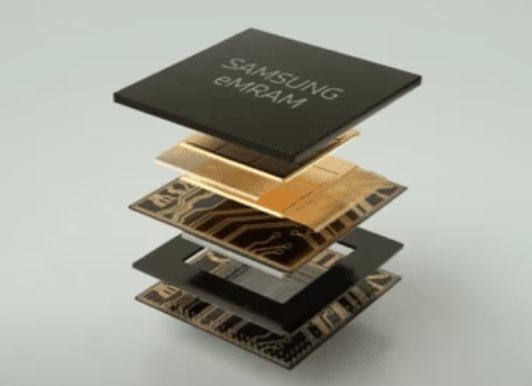
삼성, 8나노 M램 첫 개발…‘꿈의 메모리’ 주도권 선점 1/
삼성전자가 차세대 메모리인 자기저항메모리 M램에서 업계 최고 수준의 기술을 확보했다. 2/
삼성전자 파운드리사업부 연구진이 국제고체회로학회 ISSCC 2026에서 8나노 핀펫 공정을 적용한 내장형 M램 구현에 성공하고 양산 수율까지 달성했다. 3/
이번 8나노 M램은 기존 14나노 대비 쓰기 속도가 62.5퍼센트 빨라졌고 집적도는 11.5퍼센트 높아졌으며 종합 성능 점수는 52.9퍼센트 개선됐다. 4/
M램은 전원 없이도 데이터를 유지할 수 있고 동작 속도가 낸드플래시보다 1000배 빠르며 D램 수준의 성능을 내는 꿈의 메모리로 불린다. 5/
삼성전자는 2018년 28나노 M램 양산을 시작으로 2024년 14나노, 올해 8나노를 목표로 개발을 진행해왔다. 6/
이번 성공으로 내년 5나노 M램 양산 계획을 차질 없이 추진할 수 있게 됐으며 대만 TSMC와의 경쟁에서도 앞서게 됐다. 7/
AI 반도체와 미래차 분야에서 전력 효율과 성능을 동시에 높일 수 있는 M램이 게임체인저로 부상하면서 삼성전자의 메모리 주도권 강화가 기대된다.
BUZZ tweet media
한국어
4
1
11
1.6K
James Kim
James Kim@King_James_Kim·
테슬라 AI5 칩 -AI5는 기존 AI4 대비 연산 성능이 최대 40배 향상됐다. 칩은 삼성전자 한국 공장에서 제조됐다.
James Kim tweet media
한국어
2
3
9
262
Alis volat propriis
Alis volat propriis@Alisvolatprop12·
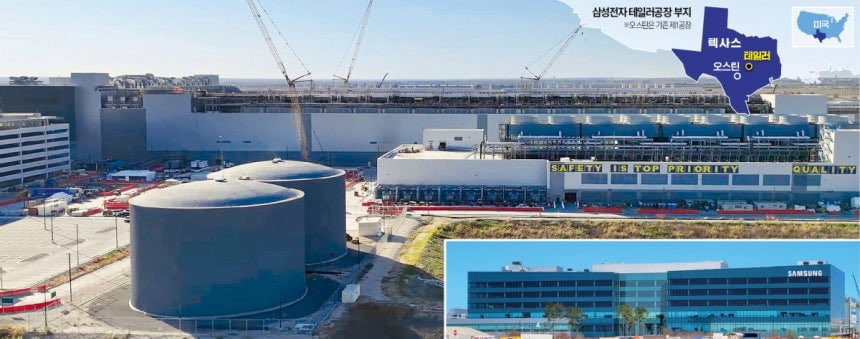
[단독] 삼성 美테일러팹 가동 준비 마쳐…"하반기부터 테슬라칩 양산" 흥미롭군요... 이제 테일러팹과 평택팹간의 수율 차이가 날 지 귀추가 주목됩니다. hankyung.com/article/202604…
한국어
4
24
239
11.6K
Christo Robin
Christo Robin@ChristoRobin2·
@blazingbees Also copying this same yield to Taylor is a big challenge
English

1
1
1
1.6K
Katoo
Katoo@blazingbees·
[단독] 삼성 美테일러팹 가동 준비 마쳐…"하반기부터 테슬라칩 양산" [삼성 美테일러팹 내주 장비반입 행사] 삼성 파운드리 2나노 수율 60%인데 이제 테슬라를 통한 수율 입증이 관건일듯. 삼성전자도 TSMC처럼 밸류에이션 받을려면 파운드리 실적개선이 필수.
Katoo tweet media
한국어
10
20
165
8.4K
Christo Robin
Christo Robin@ChristoRobin2·
@wordingwalking As if HBM it is pretty sure companies will come to samsung. But what i want to see is these companies using samsung foundry
English
0
0
0
4
지연님이시다 ✦
지연님이시다 ✦@wordingwalking·
"HBM 시장의 또 다른 축인 SK하이닉스와는 별도 면담 없이 삼성전자와의 논의에 집중한 것으로 알려졌다." 거봐 🤭 [단독] 오픈AI CFO, 삼성전자와 ‘HBM4’ 공급망 논의… ‘AI 메모리 주도권’ 재편 신호 (출처 : 네이버 뉴스) naver.me/5vJO37yS
한국어
1
0
0
62
BUZZ
BUZZ@BUZZ__tiab·
오픈AI CFO, 삼성전자와 HBM4 공급망 논의… AI 메모리 주도권 재편 신호 1/
오픈AI가 고대역폭메모리 HBM4 공급망을 구축하기 위해 삼성전자와 본격 협력 논의를 진행했다. 2/
지난 3월 사라 프라이어 오픈AI 최고재무책임자가 방한해 삼성전자 경영진과 비공개 회담을 가졌다. 3/
회담에서는 HBM4의 공급 물량, 양산 시점, 공급 안정성, 중장기 협력 구조를 집중적으로 논의한 것으로 알려졌다. 4/
오픈AI는 자체 개발 중인 AI 칩 타이탄에 삼성전자의 HBM4를 탑재하는 방안을 구체화하고 있다. 5/
이번 협력은 엔비디아 의존도를 낮추고 메모리 공급 부족 문제를 해결하려는 오픈AI의 전략적 움직임으로 평가된다. 6/
삼성전자는 이미 지난해 10월 샘 올트먼 오픈AI CEO와 메모리 공급 의향서를 체결한 바 있으며, HBM4 양산에서 SK하이닉스 대비 유리한 위치를 점하고 있다.
BUZZ tweet media
한국어
2
0
3
242
Utsav Techie
Utsav Techie@utsavtechie·
The smartphone industry situation is only getting worse.
English
12
2
290
10.9K
Christo Robin
Christo Robin@ChristoRobin2·
@shiri_shh But without Samsung and others there is no anthropic
English
0
0
0
73
shirish
shirish@shiri_shh·
Anthropic IPO valuation: $850B Samsung valuation: $800B Anthropic revenue: $30b. Samsung revenue: $230b.
shirish tweet media
English
446
951
19.8K
915K
Christo Robin
Christo Robin@ChristoRobin2·
@Techni_ssu If they handle packaging too it will be a great exposure for Samsung foundry right
English
1
0
1
14
Techni(solari)
Techni(solari)@Techni_ssu·
@ChristoRobin2 패키징까지 할것같은데요??. 패키징하는 사업도하고 있죠
한국어
1
0
1
28
Techni(solari)
Techni(solari)@Techni_ssu·
세미파이브가 오르는 이유가.. 일론 머스크가 테슬라 AI5(HW 5.0) 칩 실물을 공개. 세미파이브는 삼성 파운드리의 최대 디자인 솔루션 파트너(DSP). 팹리스(테슬라 등)가 칩을 설계하면, 이를 삼성의 공정에 맞춰 실제 생산이 가능하도록 가교 역할을 하는 곳. 삼성이 테슬라의 대형 물량을 수주할 경우, 삼성의 핵심 파트너사인 세미파이브가 설계 최적화 및 턴키(Turn-key) 과제를 맡을 확률이 높아지기 때문에 기대감이 반영되는 것입니다. 칩 주변에 SK하이닉스 LPDDR5X 모듈이 12개(좌우 각 6개) 배치되어 있음. 개당 16GB로 계산하면 총 192GB의 엄청난 메모리 용량. (기존 HW 4.0의 16GB 대비 비약적 상승) 칩 하단에 KR 2613이라는 문구가 보이는데, 이는 2026년 13주차(3월 말~4월 초)에 한국(KR)에서 패키징 되었음. 삼성이 국내 패키징 라인을 보유하고 있다는 점이 삼성 협력사들에게는 강력한 호재. 테슬라처럼 자체 칩(ASIC)을 만드는 빅테크가 늘어날수록, 삼성 파운드리의 공정을 가장 잘 아는 세미파이브 같은 DSP의 몸값은 뛸 수밖에 없음. 세미파이브
Techni(solari)@Techni_ssu

(월급)루팡... 고급스러운 김처럼 생겼네.. 테슬라 AI5칩 사진 이미지 분석 SK하이닉스 HBM 사용 2026년 13주차(3월 말~4월 초) 생산

한국어
3
0
17
897
Christo Robin
Christo Robin@ChristoRobin2·
@paurooteri If samsung foundry gets this one right with good yield, it will be a turning point for them
English

0
0
1
34
Rob Grieves 🇦🇺
Rob Grieves 🇦🇺@RobGrieves·
Let's talk about the AI5 picture. Memory From what I can gather from the grainy low res photo, those RAM chips appear to be SK Hynix H58G66DK9QX170N 8GB LPDDR5X with 9600Mbps bandwidth. 12 modules = 96GB @ 1.15TB/s The Die Size appears to be half-reticle (~430mm2). This gives it a yield and cost advantage over full reticle dies such as Nvidia's H100 (<800mm2). If we assume Tesla is using TSMC 3nm process, this gives the chip 108-125B transistors. Performance With that many transistors and memory performance, when constrained to ~150W such as a car or Optimus, we're looking at 2000-2500 TOPS which matches up nicely with a H100. Unconstrained, such as in a datacentre it could be much more. The Package This packaging is pretty cool. It includes memory on package which gives huge memory latency advantages than the typical memory on board config. To me, this amount of RAM packaged in this way is way overkill for a car. I believe we're looking at the datacentre version in this image. I believe for the cars or Optimus, we will see a traditional memory on board config (with less of it - e.g 32GB).
Rob Grieves 🇦🇺 tweet media
English
65
105
1.2K
110.3K
Christo Robin
Christo Robin@ChristoRobin2·
@qptmvj You mean in smartphone right. I don't think it is going since it is impossible to change people's perception
English
1
0
1
23
Vesper🐰
Vesper🐰@qptmvj·
@ChristoRobin2 한국은 늘 세상을 놀라게 해. 지켜봐 게임이 바뀌는 신호가 보일거야.
한국어
1
0
0
29
Vesper🐰
Vesper🐰@qptmvj·
삼성은 애플을 뛰어넘는 기업이 될 것이다.
Jukan@jukan05

iPad Air to Switch to OLED in 2027… Samsung Display to Begin Mass Production as Early as Year-End Apple will transition the display of next year's iPad Air to OLED. Following the iPad Pro and Mini, the Air will mark the adoption of OLED across Apple's entire tablet lineup except for the base model, and the domestic display industry supplying OLED to Apple is expected to see expanded benefits. According to industry sources on the 15th, Samsung Display plans to begin mass production of OLED panels for the iPad Air around year-end or January of next year, in order to supply display panels for Apple's next-generation iPad Air slated for release in the first half of next year. The industry expects the iPad Air to launch in either March or May of next year. An industry official said, "While specific volumes have not been confirmed, iPad Air sales have historically exceeded those of the iPad Pro. Unlike the iPad Pro, which saw lower-than-expected demand after its price rose with the adoption of OLED, the iPad Air will use a lower-spec, lower-cost OLED, and is expected to outsell the iPad Pro." The OLED for next year's iPad Air will feature a single-stack emissive layer, low-temperature polycrystalline silicon (LTPS) thin-film transistors (TFT), and a hybrid substrate. As a result, starting next year, all Apple tablet lineups except the base model will have transitioned to OLED. The base model and this year's iPad Air still use mini-LED backlit LCD panels. The iPad Air will be the fourth Apple IT device (across tablets and monitors) to adopt OLED. Apple applied OLED to the iPad Pro (11- and 13-inch) in 2024, followed by the iPad Mini (8.5-inch) and MacBook Pro (14- and 16-inch) this year. As Apple accelerates the OLED transition for tablets and notebooks that previously used LCD, the favorable landscape for the domestic display industry supplying these panels is expected to continue. Currently, Samsung Display and LG Display split the supply of OLED panels for the iPad Pro. Samsung Display will supply panels for this year's MacBook Pro and iPad Mini. According to market research firm Omdia, tablet OLED demand is forecast to grow from 11 million units in 2025 to 13 million in 2026 and 21 million in 2027. Apple is expected to account for roughly two-thirds of that volume. $AAPL

한국어
1
0
20
634
Techni(solari)
Techni(solari)@Techni_ssu·
(월급)루팡... 고급스러운 김처럼 생겼네.. 테슬라 AI5칩 사진 이미지 분석 SK하이닉스 HBM 사용 2026년 13주차(3월 말~4월 초) 생산
Techni(solari) tweet media
한국어
4
1
4
1.4K
Christo Robin
Christo Robin@ChristoRobin2·
@pieceofstream If foundry still not fixed especially 2nm. If they fix foundry i believe somehow they can fix rest of things
English
0
0
0
81
무명인
무명인@pieceofstream·
@ChristoRobin2 이젠 알고는 있어요. 비지니스 트렌드 보다는 돈의 흐름만 쫓고 있는데요. 지금 반도체로 돈이 엄청나게 몰리잖아요. 엄밀히 말해서 안다기 보다는 그 돈의 흐름을 쫓고 있는 겁니다. 최고 의사결정권자들이 비저너리는 아니에요ㅋ
한국어
1
0
3
127
무명인
무명인@pieceofstream·
나도 반도체 산학 장학생으로 원래(?)는 S.LSI 사업부로 가기로 되어 있었다. 수준 낮은 HR 때문에 우리 차수는 전부 메모리로 강제 전환 됐다. 당시 메모리는 PS 50%. 그래도 S.LSI보내달라 했고 거절한 인원들은 LSI 생산라인으로 배치됐다. ㅁㅊ놈들. ㅂㅅ들이 암 것도 모른다. 설계하는 사람들이 얼마나 시스템 반도체를 재미있어 하는지. 그냥 그게 재밌고 그게 좋아서 하는건데... 그 사람들을 (계속 보충돼도) 20년째 잃고 있다. 이게 오래 지속되다 보니 지금은 신규 입사 인력들의 수준이... (미안하지만 실제 그래요) 전자의 경쟁력은 반도체로부터 나왔고 앞으로도 그럴거다. 자기 사업마저도 제대로 이해 못하는 사람들이 시장을 알겠냐 뭘 하겠냐? - 아직 남은 내 친구들도 힘들어해 -
북극성@PolarisLog

화가난다.. 삼성전자의 비메모리 설계를 총괄하는 시스템LSI 사업부 핵심 인재들이 연쇄 이탈하고 있다. 황용식 세종대 경영학과 교수는 “핵심 인재는 결국 자본의 논리와 개인의 성장 가능성에 따라 자유롭게 이동한다” it.chosun.com/news/articleVi…

한국어
9
10
77
12.9K