Neptune Cash Community

200 posts

Neptune Cash Community banner
Neptune Cash Community

Neptune Cash Community

@CodewordNeptune

Private money. Programmable. Post-quantum. ​Neptune Cash (NPT) is grassroots, scalable & surveillance-resistant L1 cryptocurrency. https://t.co/aihfvHP65s
$NPT Присоединился Kasım 2025
270 Подписки116 Подписчики
Neptune Cash Community
Neptune Cash Community@CodewordNeptune·
If listing a privacy coin becomes unavoidable, #Monero (#XMR) should suffice. No need to escalate matters with Neptune Cash.
English
0
1
3
136
𝙽 𝙸 𝙺 𝙱
This. If the U.S. or China get a cryptographically relevant quantum computer, they aren’t looking to get your coins; they’re looking to keep the other from knowing about their new capability, so they can exploit it.
Matthew Green@matthew_d_green

Ok I just want to add one thing. Folks, for state actors, the value of having a quantum computer is massively higher if you DON’T tell people you have a quantum computer. Exploiting Bitcoin is a parlor trick. Exploiting the world’s communications is where the value is at.

English
2
2
29
2.8K
Neptune Cash Community
Neptune Cash Community@CodewordNeptune·
@secparam There are at least a few other L1s that support zk smart contracts: MINA, Neptune Cash.
English
0
1
2
94
Ian Miers
Ian Miers@secparam·
Congrats to Aztec on shipping. They join Aleo as the 2nd live zk-smart contract chain. The core techniques in both stem from Zexe (eprint.iacr.org/2018/962), a paper that started from "How do we add zk contracts Zerocash/Zcash?” 9+ years after zcash, we have zk smart contracts
Aztec@aztecnetwork

Alpha is live. After nearly a decade, the first feature-complete privacy stack on Ethereum is here. Developers can now build apps and contracts with ground-up customizable privacy, from execution to settlement. aztec.network/blog/announcin…

English
7
1
75
4.2K
Pierre-Luc
Pierre-Luc@dallairedemers·
The curse is in the application landscape, it turns out that everything really interesting for quantum simulations of chemistry and materials is more difficult than ECDLP. How else do you deal with that while Bitcoin is gawking at the sky amd not upgrading?
Pierre-Luc tweet media
Matthew Green@matthew_d_green

In 2026 you can get a lot done without revenue, which is a good thing for research (*some* types of research!) but this requires a certain willingness to engage in hype. That’s how I feel about this part of the paper.

English
3
0
4
1.7K
Neptune Cash Community
Neptune Cash Community@CodewordNeptune·
@matthew_d_green @dallairedemers Isn't it likely that NSA already has a performant quantum computer? x.com/i/status/20368…
Neptune Cash Community@CodewordNeptune

@CraigGidney @dallairedemers If one considers the strategic advantages of a high-performance quantum computer, along with the vast resources and priorities of the national security apparatus, how likely is it that the NSA is not already operating such a machine in its facilities?

English
1
0
0
45
Matthew Green
Matthew Green@matthew_d_green·
@dallairedemers The NSA is pushing very hard for a PQC transition. They’re practically screaming about it. The point is that they’re talking to DoD suppliers and agencies, they don’t care about Bitcoin.
English
2
0
3
45
Neptune Cash Community
Neptune Cash Community@CodewordNeptune·
@chooserich Kind reminder to those crypto investors concerned about recent breakthroughs in quantum-computing research: There are newer chains - like Neptune Cash - out there that were designed quantum-resistant from day 1.
English
1
1
3
124
Nick O’Neill
Nick O’Neill@chooserich·
A quantum researcher I was speaking to in DC was telling me we are only a couple years away from Quantum Computing cracking Bitcoin Google posted today that they agree. This is terrifying for Bitcoin and crypto investors.
Project Eleven@projecteleven

🚨 Google has sounded the quantum alarm 🚨 Today, they released groundbreaking progress towards breaking crypto using a quantum computer. TLDR - Existing cryptography is dead. Mempool attacks are real. We must migrate to post-quantum now. Thread 🧵

English
235
45
443
162.9K
Juice
Juice@joshj100x·
Quantum narrative heating up 🔥 Stack gems focusing on PQC and quantum computing/simulation now. 1. $QRL Quantum resistant ledger 2. $ALGO Algorand 3. $HBAR Hedera 4. $QTC Qubitcoin
English
34
19
159
5K
LiτBro
LiτBro@bittybitbit86·
Is your blockchain quantum resistant??
English
5
0
2
858
Neptune Cash Community ретвитнул
Neptune Cash
Neptune Cash@NeptuneCash·
Fun to see the responses to the recent quantum computer news from Google and Oratomic. "FUD, designed to rob you of your bitcoins." / "We need to transition to post-quantum cryptography urgently!" / "We already have quantum security because we have smart developers." Meanwhile, Neptune Cash continues to build, unaffected by the news or responses. Neptune Cash was built for post-quantum security from day one.
English
1
8
22
706
Neptune Cash Community
Neptune Cash Community@CodewordNeptune·
Easy, in practice, come on? "Satoshi's share" is roughly 5%. What about the remaining 95%, a significant portion of which is likely permanently inaccessible (due to lost keys, deceased owners, etc.)? There will be great debate within the Bitcoin community about how this is handled.
English
1
2
4
151
Andrew M. Bailey
Andrew M. Bailey@resistancemoney·
New sigs and addresses are the easy move. We'll get it done. The fight over P2PK coins — the Satoshi stash — will be one for the ages though. A corpo-fork that freezes them will be so tempting. Hourglass or other compromises? Totally unclear what kind of consensus they'll find.
Bit Paine ⚡️@BitPaine

What has changed my thinking about the urgency of adding PQC to Bitcoin are the persistent non-linearities in QC progress and the shroud of secrecy underlying this research. When I see exponential progress - estimates of physical qubits dropping by orders of magnitude - this tells me we may not have much of a window between “quantum is on a trajectory to disrupt bitcoin,” and “secp256k1 is broken.” This is compounded by the secrecy and natsec implications, which mean 1) we likely don’t know where the state of the art truly is, and it is likely much further than what we know exists and 2) a CSQC may be developed in stealth mode and drop out of seemingly nowhere. I still think ~10 years is the more likely timeframe, but I assign an uncomfortably high likelihood that we see something disruptive within 5 years. High enough that action within the next 1-2 years is prudent. I don’t see a massive downside to adding PQC to Bitcoin too early. Worst case scenario it either doesn’t get used much or we have to upgrade it later. Both are reasonable trade offs to protect against an existential threat that could materialize without much warning.

English
25
8
121
23.8K
Will Corcoran
Will Corcoran@corcoranwill·
..now is undoubtedly the time to start preparing. 🫡
Justin Drake@drakefjustin

Today is a monumentous day for quantum computing and cryptography. Two breakthrough papers just landed (links in next tweet). Both papers improve Shor's algorithm, infamous for cracking RSA and elliptic curve cryptography. The two results compound, optimising separate layers of the quantum stack. The results are shocking. I expect a narrative shift and a further R&D boost toward post-quantum cryptography. The first paper is by Google Quantum AI. They tackle the (logical) Shor algorithm, tailoring it to crack Bitcoin and Ethereum signatures. The algorithm runs on ~1K logical qubits for the 256-bit elliptic curve secp256k1. Due to the low circuit depth, a fast superconducting computer would recover private keys in minutes. I'm grateful to have joined as a late paper co-author, in large part for the chance to interact with experts and the alpha gleaned from internal discussions. The second paper is by a stealthy startup called Oratomic, with ex-Google and prominent Caltech faculty. Their starting point is Google's improvements to the logical quantum circuit. They then apply improvements at the physical layer, with tricks specific to neutral atom quantum computers. The result estimates that 26,000 atomic qubits are sufficient to break 256-bit elliptic curve signatures. This would be roughly a 40x improvement in physical qubit count over previous state-of-the-art. On the flip side, a single Shor run would take ~10 days due to the relatively slow speed of neutral atoms. Below are my key takeaways. As a disclaimer, I am not a quantum expert. Time is needed for the results to be properly vetted. Based on my interactions with the team, I have faith the Google Quantum AI results are conservative. The Oratomic paper is much harder for me to assess, especially because of the use of more exotic qLDPC codes. I will take it with a grain of salt until the dust settles. → q-day: My confidence in q-day by 2032 has shot up significantly. IMO there's at least a 10% chance that by 2032 a quantum computer recovers a secp256k1 ECDSA private key from an exposed public key. While a cryptographically-relevant quantum computer (CRQC) before 2030 still feels unlikely, now is undoubtedly the time to start preparing. → censorship: The Google paper uses a zero-knowledge (ZK) proof to demonstrate the algorithm's existence without leaking actual optimisations. From now on, assume state-of-the-art algorithms will be censored. There may be self-censorship for moral or commercial reasons, or because of government pressure. A blackout in academic publications would be a tell-tale sign. → cracking time: A superconducting quantum computer, the type Google is building, could crack keys in minutes. This is because the optimised quantum circuit is just 100M Toffoli gates, which is surprisingly shallow. (Toffoli gates are hard because they require production of so-called "magic states".) Toffoli gates would consume ~10 microseconds on a superconducting platform, totalling ~1,000 sec of Shor runtime. → latency optimisations: Two latency optimisations bring key cracking time to single-digit minutes. The first parallelises computation across quantum devices. The second involves feeding the pubkey to the quantum computer mid-flight, after a generic setup phase. → fast- and slow-clock: At first approximation there are two families of quantum computers. The fast-clock flavour, which includes superconducting and photonic architectures, runs at roughly 100 kHz. The slow-clock flavour, which includes trapped ion and neutral atom architectures, runs roughly 1,000x slower (~100 Hz, or ~1 week to crack a single key). → qubit count: The size-optimised variant of the algorithm runs on 1,200 logical qubits. On a superconducting computer with surface code error correction that's roughly 500K physical qubits, a 400:1 physical-to-logical ratio. The surface code is conservative, assuming only four-way nearest-neighbour grid connectivity. It was demonstrated last year by Google on a real quantum computer. → future gains: Low-hanging fruit is still being picked, with at least one of the Google optimisations resulting from a surprisingly simple observation. Interestingly, AI was not (yet!) tasked to find optimisations. This was also the first time authors such as Craig Gidney attacked elliptic curves (as opposed to RSA). Shor logical qubit count could plausibly go under 1K soonish. → error correction: The physical-to-logical ratio for superconducting computers could go under 100:1. For superconducting computers that would be mean ~100K physical qubits for a CRQC, two orders of magnitude away from state of the art. Neutral atoms quantum computers are amenable to error correcting codes other than the surface code. While much slower to run, they can bring down the physical to logical qubit ratio closer to 10:1. → Bitcoin PoW: Commercially-viable Bitcoin PoW via Grover's algorithm is not happening any time soon. We're talking decades, possibly centuries away. This observation should help focus the discussion on ECDSA and Schnorr. (Side note: as unofficial Bitcoin security researcher, I still believe Bitcoin PoW is cooked due to the dwindling security budget.) → team quality: The folks at Google Quantum AI are the real deal. Craig Gidney (@CraigGidney) is arguably the world's top quantum circuit optimisooor. Just last year he squeezed 10x out of Shor for RSA, bringing the physical qubit count down from 10M to 1M. Special thanks to the Google team for patiently answering all my newb questions with detailed, fact-based answers. I was expecting some hype, but found none.

English
4
1
45
3.3K
Neptune Cash Community
Neptune Cash Community@CodewordNeptune·
@drakefjustin Just a kind reminder that some cryptocurrencies, such as Neptune Cash, were designed to be quantum-resistant in anticipation of these non-linear advancements in quantum computing.
English
1
2
6
1.9K
Justin Drake
Justin Drake@drakefjustin·
Today is a monumentous day for quantum computing and cryptography. Two breakthrough papers just landed (links in next tweet). Both papers improve Shor's algorithm, infamous for cracking RSA and elliptic curve cryptography. The two results compound, optimising separate layers of the quantum stack. The results are shocking. I expect a narrative shift and a further R&D boost toward post-quantum cryptography. The first paper is by Google Quantum AI. They tackle the (logical) Shor algorithm, tailoring it to crack Bitcoin and Ethereum signatures. The algorithm runs on ~1K logical qubits for the 256-bit elliptic curve secp256k1. Due to the low circuit depth, a fast superconducting computer would recover private keys in minutes. I'm grateful to have joined as a late paper co-author, in large part for the chance to interact with experts and the alpha gleaned from internal discussions. The second paper is by a stealthy startup called Oratomic, with ex-Google and prominent Caltech faculty. Their starting point is Google's improvements to the logical quantum circuit. They then apply improvements at the physical layer, with tricks specific to neutral atom quantum computers. The result estimates that 26,000 atomic qubits are sufficient to break 256-bit elliptic curve signatures. This would be roughly a 40x improvement in physical qubit count over previous state-of-the-art. On the flip side, a single Shor run would take ~10 days due to the relatively slow speed of neutral atoms. Below are my key takeaways. As a disclaimer, I am not a quantum expert. Time is needed for the results to be properly vetted. Based on my interactions with the team, I have faith the Google Quantum AI results are conservative. The Oratomic paper is much harder for me to assess, especially because of the use of more exotic qLDPC codes. I will take it with a grain of salt until the dust settles. → q-day: My confidence in q-day by 2032 has shot up significantly. IMO there's at least a 10% chance that by 2032 a quantum computer recovers a secp256k1 ECDSA private key from an exposed public key. While a cryptographically-relevant quantum computer (CRQC) before 2030 still feels unlikely, now is undoubtedly the time to start preparing. → censorship: The Google paper uses a zero-knowledge (ZK) proof to demonstrate the algorithm's existence without leaking actual optimisations. From now on, assume state-of-the-art algorithms will be censored. There may be self-censorship for moral or commercial reasons, or because of government pressure. A blackout in academic publications would be a tell-tale sign. → cracking time: A superconducting quantum computer, the type Google is building, could crack keys in minutes. This is because the optimised quantum circuit is just 100M Toffoli gates, which is surprisingly shallow. (Toffoli gates are hard because they require production of so-called "magic states".) Toffoli gates would consume ~10 microseconds on a superconducting platform, totalling ~1,000 sec of Shor runtime. → latency optimisations: Two latency optimisations bring key cracking time to single-digit minutes. The first parallelises computation across quantum devices. The second involves feeding the pubkey to the quantum computer mid-flight, after a generic setup phase. → fast- and slow-clock: At first approximation there are two families of quantum computers. The fast-clock flavour, which includes superconducting and photonic architectures, runs at roughly 100 kHz. The slow-clock flavour, which includes trapped ion and neutral atom architectures, runs roughly 1,000x slower (~100 Hz, or ~1 week to crack a single key). → qubit count: The size-optimised variant of the algorithm runs on 1,200 logical qubits. On a superconducting computer with surface code error correction that's roughly 500K physical qubits, a 400:1 physical-to-logical ratio. The surface code is conservative, assuming only four-way nearest-neighbour grid connectivity. It was demonstrated last year by Google on a real quantum computer. → future gains: Low-hanging fruit is still being picked, with at least one of the Google optimisations resulting from a surprisingly simple observation. Interestingly, AI was not (yet!) tasked to find optimisations. This was also the first time authors such as Craig Gidney attacked elliptic curves (as opposed to RSA). Shor logical qubit count could plausibly go under 1K soonish. → error correction: The physical-to-logical ratio for superconducting computers could go under 100:1. For superconducting computers that would be mean ~100K physical qubits for a CRQC, two orders of magnitude away from state of the art. Neutral atoms quantum computers are amenable to error correcting codes other than the surface code. While much slower to run, they can bring down the physical to logical qubit ratio closer to 10:1. → Bitcoin PoW: Commercially-viable Bitcoin PoW via Grover's algorithm is not happening any time soon. We're talking decades, possibly centuries away. This observation should help focus the discussion on ECDSA and Schnorr. (Side note: as unofficial Bitcoin security researcher, I still believe Bitcoin PoW is cooked due to the dwindling security budget.) → team quality: The folks at Google Quantum AI are the real deal. Craig Gidney (@CraigGidney) is arguably the world's top quantum circuit optimisooor. Just last year he squeezed 10x out of Shor for RSA, bringing the physical qubit count down from 10M to 1M. Special thanks to the Google team for patiently answering all my newb questions with detailed, fact-based answers. I was expecting some hype, but found none.
English
315
1.2K
5.8K
1.4M
Neptune Cash Community
Neptune Cash Community@CodewordNeptune·
@hosseeb This kind of expected non-linear progress in quantum computing is exactly why newer chains like Neptune Cash are designed to be quantum-resistant from day one.
English
0
2
10
1.4K
Neptune Cash Community ретвитнул
Haseeb >|<
Haseeb >|<@hosseeb·
This is wild. Google Research demonstrates a ~20x more efficient implementation of Shor's algorithm that could break ECDSA keys within minutes with ~500K physical qubits. Google is now are more confident on a 2029 post-quantum transition. We are no longer looking at mid 2030s, we could have quantum computers of this scale by the end of the decade. They believe this result is so severe that they are not publishing the actual circuits. They instead published a ZKP proving that they know of the quantum circuit with these properties. This is very atypical, showing Google thinks this is serious shit. All blockchains need a transition plan ASAP. Post-quantum is no longer a drill.
Haseeb >|< tweet media
nic carter@nic_carter

Many are wondering "what Google saw" that caused them to revise their post-quantum cryptography transition deadline to 2029 last week. It was this: research.google/blog/safeguard…
English
262
632
5K
984K
Neptune Cash Community
Neptune Cash Community@CodewordNeptune·
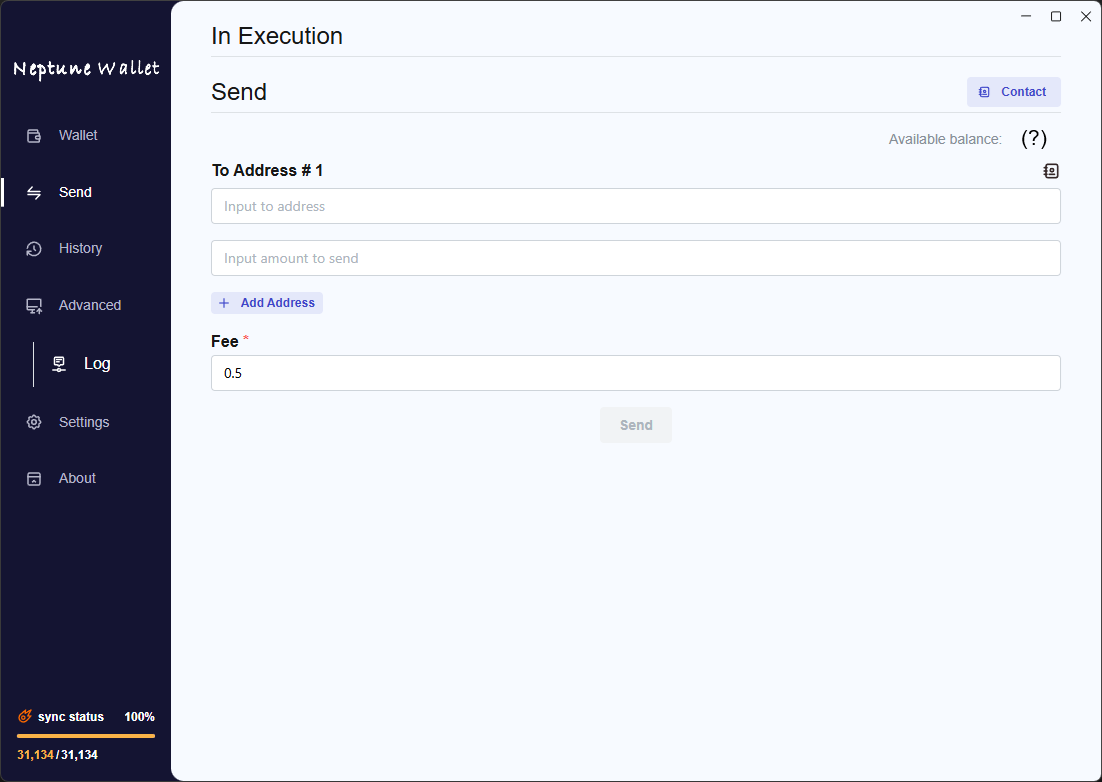
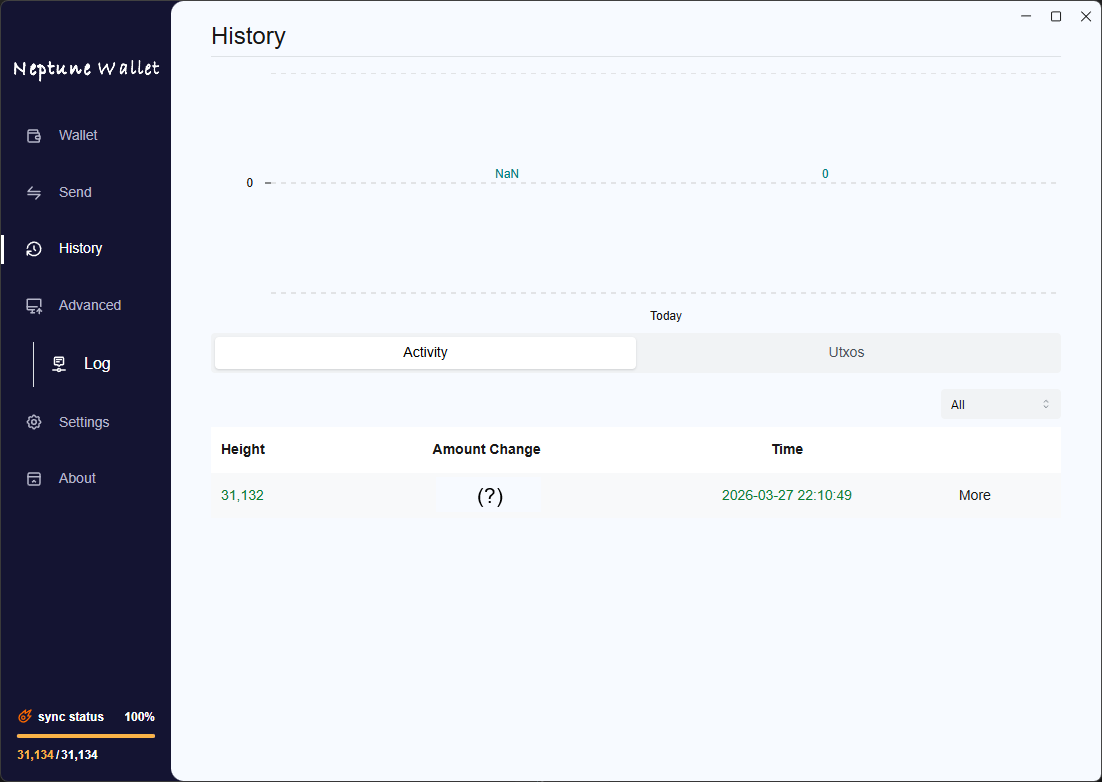
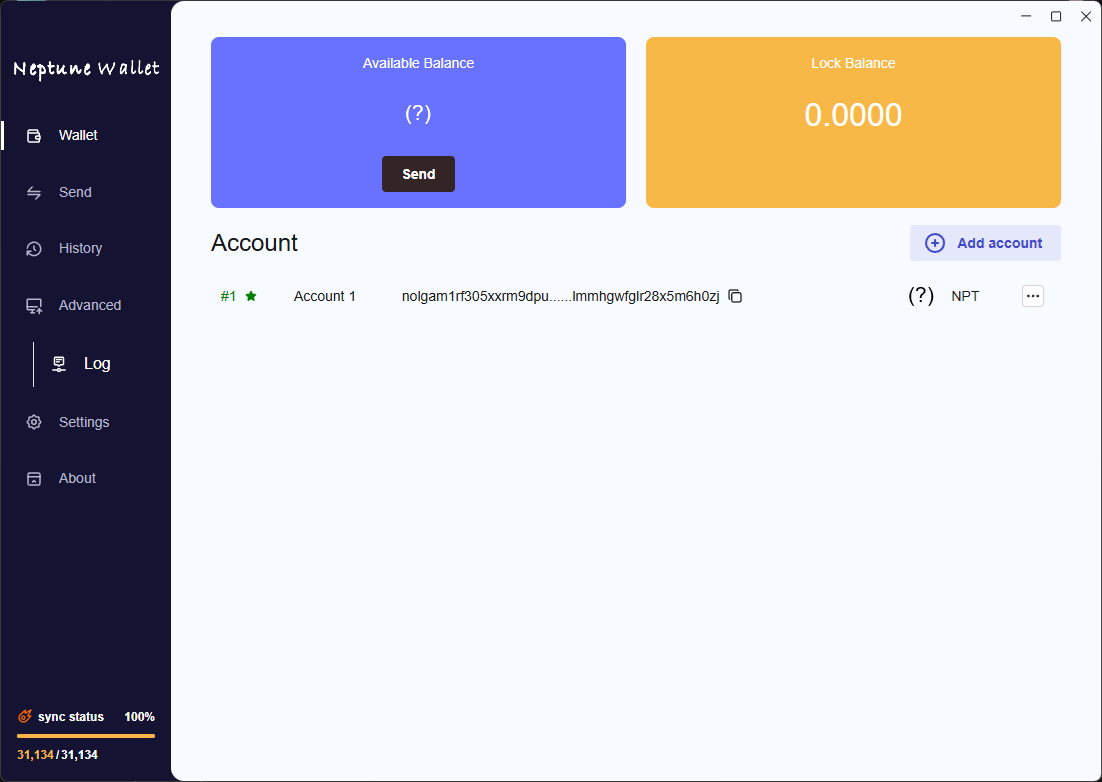
Big news for the Neptune ecosystem! The VXB wallet has been brought into the Neptune Cash core repositories! Originally developed by the talented VXB team, this community favorite is now an official core product. This transition under the core development umbrella ensures long-term maintenance, top-tier security, and a seamless future within the Neptune ecosystem. ✨ Clean and intuitive GUI ⚡️ Lightning-fast sync 🔓 Fully open source Experience it yourself: github.com/Neptune-Crypto…
Neptune Cash Community tweet mediaNeptune Cash Community tweet mediaNeptune Cash Community tweet media
English
1
6
12
731