Vires Invictae per Deum 🇺🇸🇻🇦

4.4K posts

Vires Invictae per Deum 🇺🇸🇻🇦 banner
Vires Invictae per Deum 🇺🇸🇻🇦

Vires Invictae per Deum 🇺🇸🇻🇦

@HandOfSet

No DM, No Crypto, No Monetization, hello Engineering Department speaking 😉 Fidelity and Charity, 🇺🇸✝️🇻🇦 Qui Sicut Deus?

West Coast USA Присоединился Ocak 2015
703 Подписки282 Подписчики
Закреплённый твит
Vires Invictae per Deum 🇺🇸🇻🇦
"Freedom of speech is a principal pillar of a free government; when this support is taken away, the constitution of a free society is dissolved, and tyranny is erected on its ruins. Republics and limited monarchies derive their strength and vigor from a popular examination into the action of the magistrates." --from "On Freedom of Speech and the Press", Pennsylvania Gazette, 17 November 1737.
English
1
0
7
1.7K
Ross Martin
Ross Martin@Rooselee·
@regnumaureum @farmingandJesus If you can't be honest there is no reason to engage you. You keep propagating that Jesus founded a pagan Roman cult and that's just sick and wrong. I pray he opens your eyes to see this one day. Repent and believe in Jesus.
English
2
0
0
59
JDubb
JDubb@joshwhitlatch·
Catholics biggest rival is THE BIBLE
English
136
57
449
9.7K
Vires Invictae per Deum 🇺🇸🇻🇦
It would appear you follow haphazardly while cherry picking In the mid-second century, Polycarp of Smyrna visited Rome during Anicetus’s time. They disagreed on the date of Easter, Polycarp following the tradition from the apostle John, Anicetus following earlier Roman practice. According to Irenaeus, quoted by Eusebius, “they immediately made peace with one another, not caring to quarrel over this matter.” They communed together, and Anicetus allowed Polycarp to preside at the Eucharist as a mark of respect. No schism occurred. This shows respect amid difference on a secondary custom, not dismissal of Roman authority. Cyprian of Carthage, in one disciplinary letter about lapsed Spanish bishops, advised a local church to act according to apostolic norms when he believed Rome had been misled by incomplete information. Yet the same Cyprian wrote strongly in The Unity of the Catholic Church: “The Lord says to Peter: ‘I say to you that you are Peter, and upon this rock I will build my Church…’ Although after His resurrection He bestows equal power on all the apostles, yet that He might set forth unity, He arranged by His authority the origin of that unity as beginning from one… Does he who does not hold fast to this unity of Peter imagine that he still holds the faith?” Cyprian called Rome the principal Church and source of sacerdotal unity. His occasional sharp words in a specific case do not overturn his own clear teaching on the chair of Peter. Fermilian of Caesarea wrote a heated letter to Cyprian during the same baptism controversy with Pope Stephen. He used strong language against Stephen’s position on heretical baptism. This was polemic in a heated debate, but Fermilian and Cyprian never broke communion with Rome. The controversy resolved without permanent schism. Complaining about a pope’s handling of an issue presupposes Rome’s recognized special status rather than denying it. Broader sources from the same era confirm Rome’s role. Irenaeus, Polycarp’s disciple, wrote around 180 AD: “It is a matter of necessity that every Church should agree with this Church (Rome), on account of its pre-eminent authority, that is, the faithful everywhere, inasmuch as the apostolic tradition has been preserved continuously by those who exist everywhere.” He listed Rome’s succession from Peter and Paul as the sure standard against heresies. Ignatius of Antioch, early in the second century, addressed the Roman church as one that “presides in the place of the region of the Romans… worthy of God, worthy of honor… presiding in love.” Clement of Rome, around 96 AD, wrote authoritatively to the church in Corinth to resolve their schism, urging obedience and sending messengers to restore peace, exercising solicitude from a distance without being asked.
English
0
0
0
5
Tim Kauffman
Tim Kauffman@whpub·
Why should I submit to the “successors of the apostles” in Rome when the actual successors to the apostles everywhere else didn’t submit to the “successors of the apostles” in Rome? When Polycarp of Smyrna visited bishop Anicetus of Rome, “Pope” Anicetus was unable to persuade Polycarp to change the Eucharistic practices he had received from John and the other apostles. And out of respect, Anicetus deferred to Polycarp. (Eusebius, Church History 5.24.16). When a Spanish congregation asked Cyprian of Carthage’s advice on “Pope” Stephen’s intervention in Spanish episcopal affairs, Cyprian wrote back to Spain telling them that Stephen could be ignored because he was deceived and didn’t know what he was talking about (Cyprian, epistle 67). When Stephen tried to impose is views on baptism on the eastern bishops, Fermilian of Caesarea wrote to Cyprian of Carthage complaining that “they who are at Rome … vainly pretend the authority of the apostles” (to Cyprian, epistle 74). So, yeah, I follow in the great footsteps of the successors of the apostles by ignoring the nonsense that comes out of Rome.
Crowe@crowe_justinp

Ok. Bible says to obey your leaders. Jesus established a Church and Leadership for it. There successors settled in Rome. So, Submit to Rome?

English
47
64
439
26.2K
Vires Invictae per Deum 🇺🇸🇻🇦
Jesus Christ Himself gave men this authority on Easter Sunday: “Peace be with you. As the Father has sent me, even so I send you… Receive the Holy Spirit. If you forgive the sins of any, they are forgiven; if you retain the sins of any, they are retained.” (John 20:21-23) The apostles were sinful humans too, Peter denied Jesus three times the night before. Yet Christ still entrusted them with the ministry of reconciliation (2 Cor 5:18). The priest doesn’t forgive by his own power or holiness. He acts in persona Christi , it is Christ forgiving you through the sacrament He instituted. You hear the words of absolution and receive grace with certainty. James 5:16 commands us to “confess your sins to one another” so we may be healed. This isn’t “Pharisees full of law and hypocrisy.” Pharisees added man-made burdens. Confession is direct obedience to Jesus’ clear command, not a human invention. God didn’t need to give us this gift ; He chose to, for our good.
English
1
0
2
18
Git Real
Git Real@GitReal1960·
@joshwhitlatch @HandOfSet @darth_veritas01 @jdskyles Why would God have me confess my sins and get cleansed and blessed by another sinful human to be worthy of being in Christ’s presence and receiving his forgiveness? Catholic Clergy are the new compromised Pharisees of our modern times. Full of law and hypocrisy.
English
3
1
1
53
JDubb
JDubb@joshwhitlatch·
@HandOfSet @darth_veritas01 @jdskyles Praying to anything other than God is an abomination and is very serious to God but whatever man I can’t make you see that
English
1
0
1
13
Vires Invictae per Deum 🇺🇸🇻🇦
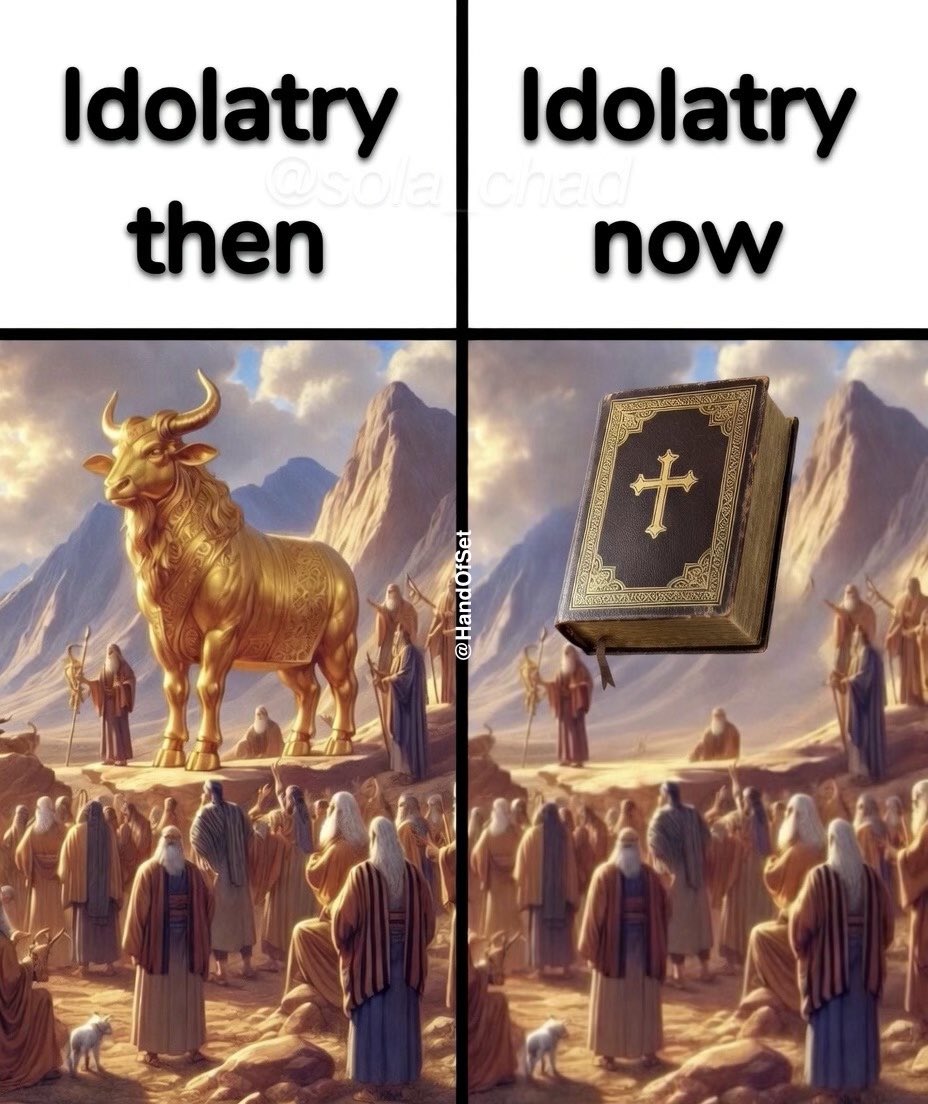
Your “keep telling yourself that” dismisses the actual biblical context and 2,000 years of Church practice (seen in catacomb art onward). Protestants use pictures of Jesus and crosses similarly without calling it idolatry. The spin is pretending any religious image = the golden calf. We don’t sacrifice to statues or call them gods. Veneration passes to the person represented. Protestants use pictures of Jesus and crosses the same way. Dismissing it as “cope” doesn’t change the Bible or history.
English
1
0
1
16
Dumb Prot
Dumb Prot@Truthphobe·
@BoldPolitics @DeiGratia64 @Taylor_A_Eaton He read his Bible. Zwingli, Calvin. They reformed back to Biblical Christianity. Didn’t get it perfect. But put their faith in God, not in man. You take issue that they defected from the church you claim, not from Christ. And that kinda says it all
English
2
0
2
44
Henry Gladams
Henry Gladams@HenryGladams·
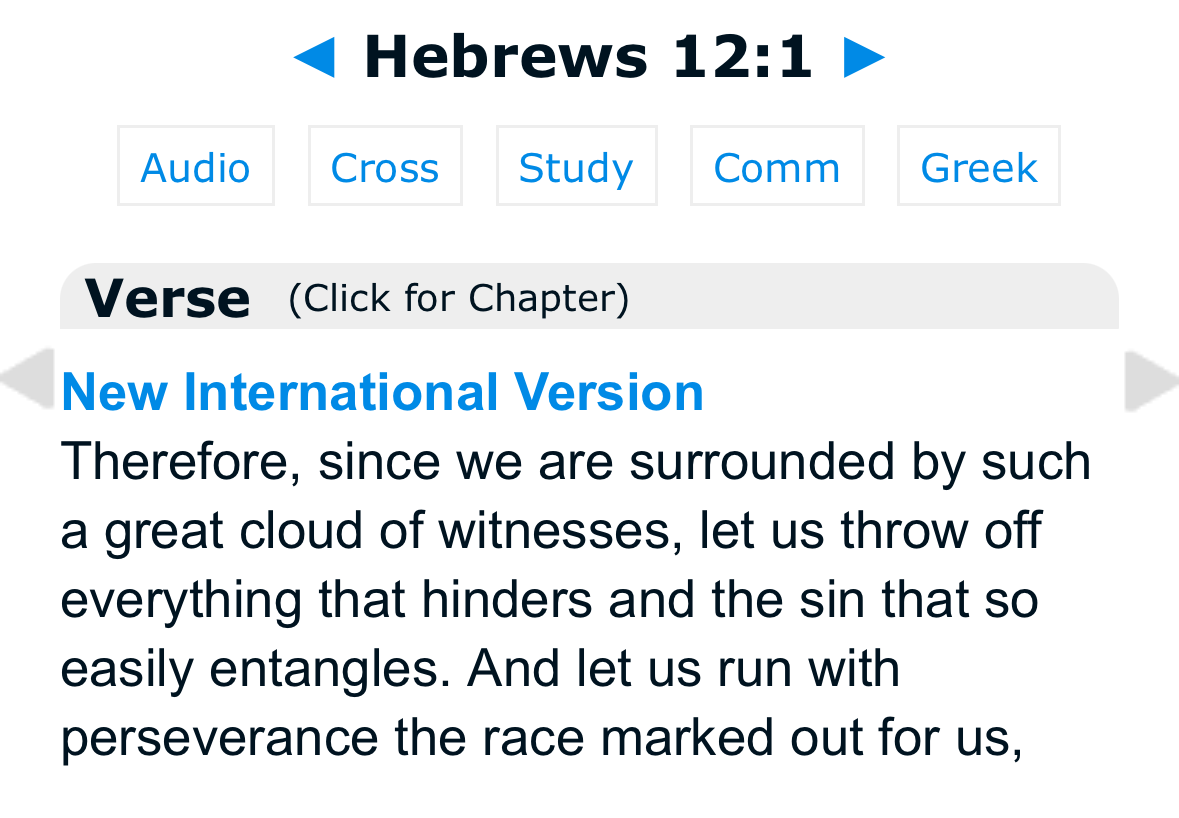
@MyCup0verFlows @FancyABQ @5Solas2 Take it up with the author of Hebrews (that’s another book in the Bible; it’s in the New Testament). The author, by the way, is God. Whether Paul was His instrument on this book is debated. The Communion of Saints is a Biblical belief. Scriptural basis Heb 12:1.
Henry Gladams tweet media
English
2
0
0
35
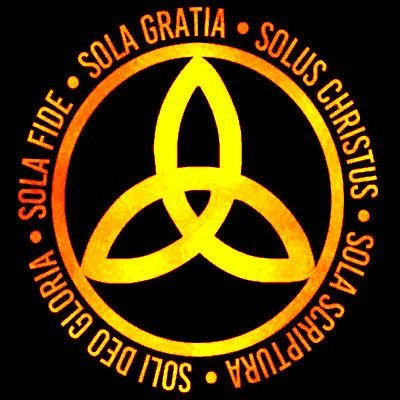
5 Solas
5 Solas@5Solas2·
This is superstitious, pagan nonsense, not Christian prayer. This is exactly how Jesus taught us NOT to pray.
5 Solas tweet media
English
420
113
1K
217.6K
JDubb
JDubb@joshwhitlatch·
@HandOfSet @darth_veritas01 @jdskyles The golden calf do you know who they were worshiping they were worshiping Yahweh in the form of a golden calf. You don’t think he has a problem with you, praying bowing down to statues.
English
2
0
0
34
Vires Invictae per Deum 🇺🇸🇻🇦
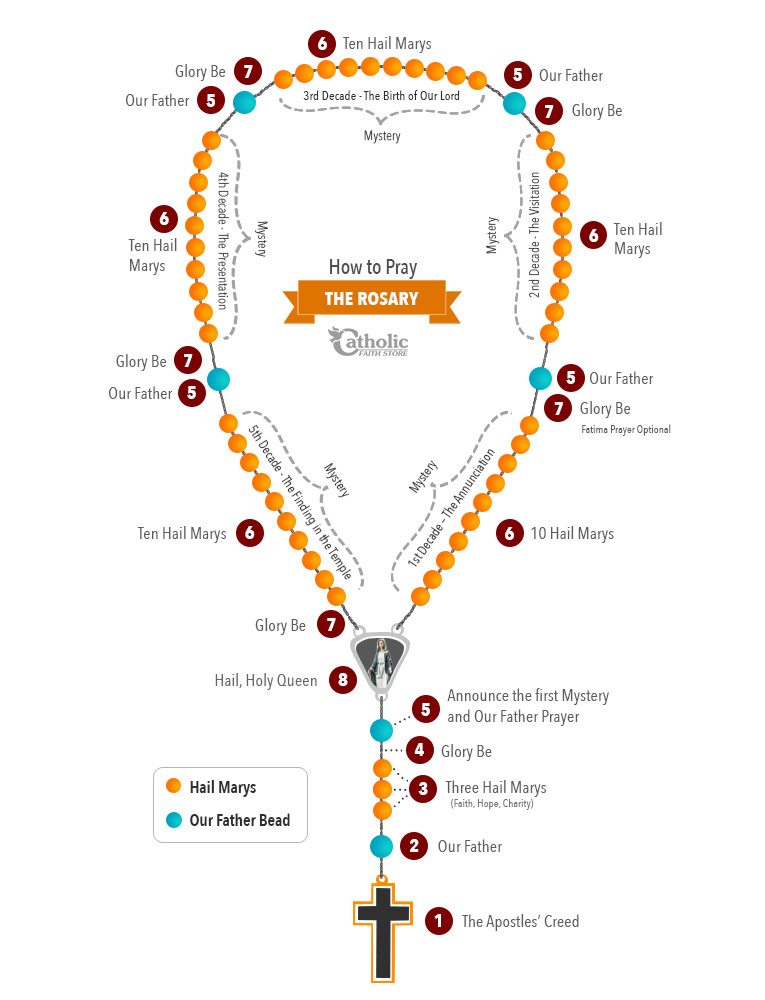
That’s a deliberate misreading, and Your strawman “gotcha” collapses under scrutiny. The prayer comes from St. Alphonsus de Liguori (1696-1787), a Doctor of the Church, in his Italian work (commonly associated with The Glories of Mary). The key line in the original Italian is: “Io vi venero, o gran Regina, e vi ringrazio…” Direct translation: “I venerate thee, great Queen, and I thank thee…” (or “I render thee my most humble homage”).  Older English translations (18th–19th century devotional books) rendered “venero” as “worship.” This was common at the time because the English word “worship” (from Old English weorthscipe, meaning “worth-ship” or ascribing honor/esteem) had a broader meaning than today. It could apply to high honor given to creatures (e.g., “Your Worship” for a mayor or judge in British usage). It did not exclusively or automatically mean latria (the adoration due to God alone).
English
1
0
2
26