Policy for Protest

509 posts

Policy for Protest banner
Policy for Protest

Policy for Protest

@PolicyProtest

Evidenced Based Policy, not selective use of facts. Exposing anti-people policy as an act of protest.

Hood River, OR Присоединился Nisan 2026
204 Подписки12 Подписчики
Policy for Protest
Policy for Protest@PolicyProtest·
@OTAllstar @LA_Native_3 @spencerpratt I have not heard Pratt mention regulatory levers, only law enforcement levers and ending of services. That’s a terrible gamble to make for someone who is doing this entirely out of self interest. The man makes a living being entertaining.
English
0
0
0
4
Spencer Pratt
Spencer Pratt@spencerpratt·
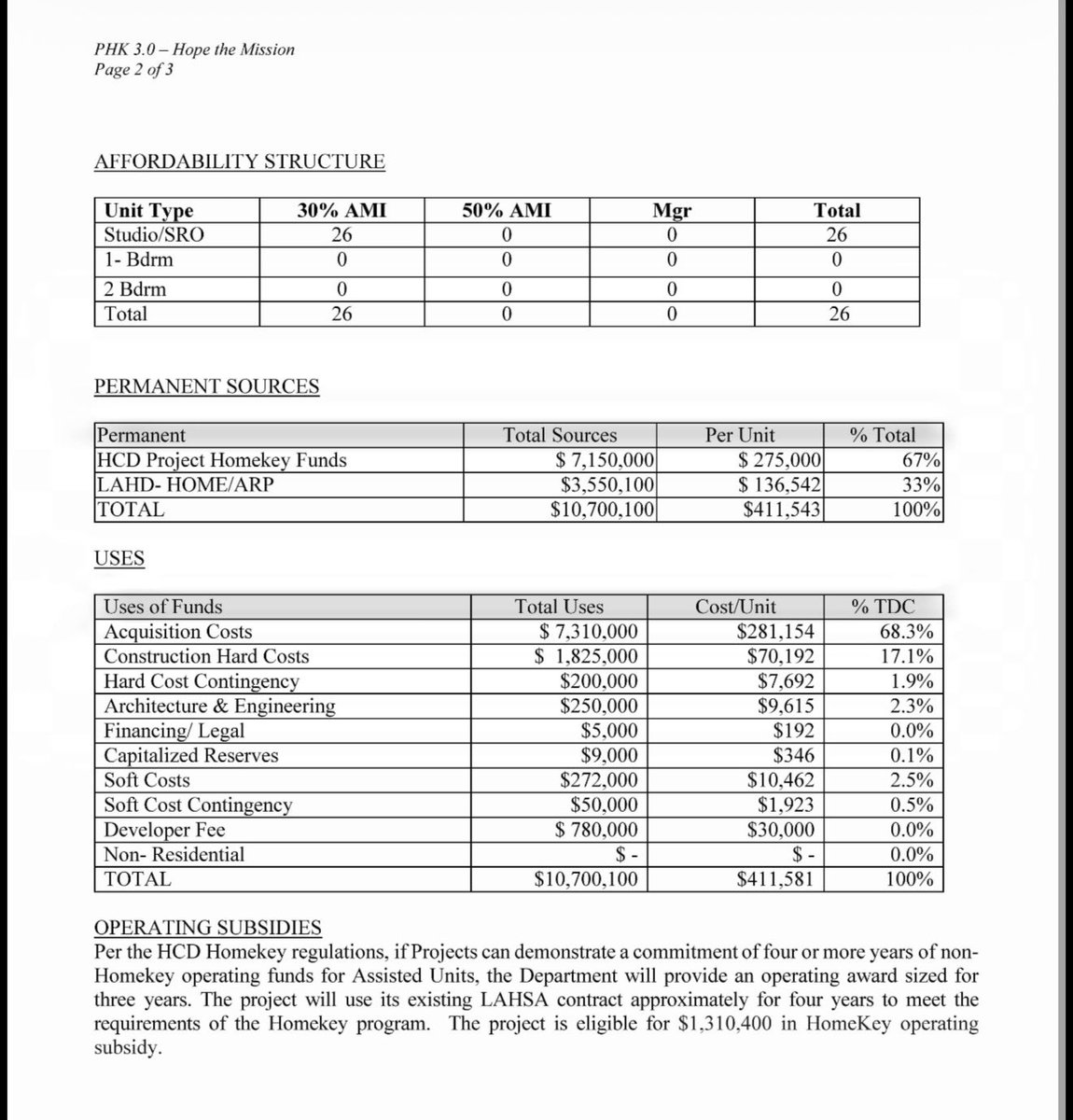
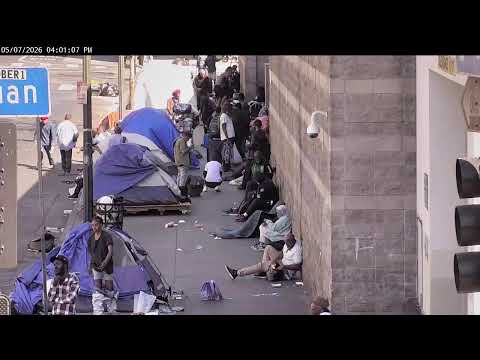
As I promised in the debate. Here’s the ludicrous $10M boondoggle in Nithya Raman’s district
Spencer Pratt tweet mediaSpencer Pratt tweet mediaSpencer Pratt tweet media
English
845
11.8K
55.6K
603.5K
Policy for Protest
Policy for Protest@PolicyProtest·
@AirBudProMax @spencerpratt So you would advocate for moving the west coast’s homeless population to the modest and buying them McMansions? Would you build the services out there too?
English
1
0
0
40
Policy for Protest
Policy for Protest@PolicyProtest·
Policy for Protest@PolicyProtest

You also are just complaining about the costs without any concern about the impact. But let’s talk about it. The $400,000 per unit figure gets cited often, and it deserves context before anything else. That number reflects construction costs in one of the most expensive building markets in the country, not ongoing service costs, and it is a one-time capital expenditure amortized over decades. The relevant comparison is not $400k vs. zero. It is $400k vs. the cumulative cost of the alternative. For transitional age youth (TAY), roughly ages 18 to 25, PSH is not a luxury intervention. It is a narrow window. This age range represents a critical developmental period where homelessness causes disproportionate and lasting harm. Young people who experience homelessness during this window are significantly more likely to develop chronic substance use disorders, serious mental illness, and long-term housing instability than adults who become homeless later in life. The brain is still developing through the mid-20s, making trauma, instability, and untreated mental health conditions far more damaging at this age than at 35 or 45. The cost comparison that actually matters: a single TAY individual cycling through emergency rooms, psychiatric holds, detox, jail, and shelter over two or three years routinely generates $80,000 to $150,000 in public system costs annually, with no stabilizing outcome. PSH with wraparound services, by contrast, consistently reduces ER visits, incarceration, and psychiatric hospitalization among housed youth. Studies of TAY PSH programs, including ones run through the Corporation for Supportive Housing, show reductions of 40 to 60 percent in emergency service utilization within the first year of housing placement. The intervention pays for itself relatively quickly when those downstream costs are counted. There is also a recidivism and workforce dimension that critics of cost tend to ignore. Young adults who stabilize through PSH during the TAY window are meaningfully more likely to complete education, maintain employment, and exit to independent housing than those who cycle through shelter or remain unsheltered. Homelessness at 20 that goes unaddressed frequently becomes chronic homelessness at 35, at which point the intervention costs are higher, the outcomes are worse, and the window for workforce participation has narrowed significantly. The $400k unit is cheaper than a lifetime of system involvement. For TAY specifically, the wraparound services bundled with PSH, including mental health care, substance use treatment, life skills support, and education or employment navigation, address the specific reasons young people lose housing in the first place. Without those services, housing alone has lower retention. With them, TAY PSH programs nationally report housing retention rates above 80 percent at 12 months. That is not a failing model. That is a functional one being asked to operate without adequate funding for the clinical infrastructure it requires. The honest critique is not that PSH costs too much. It is that the construction financing model in California drives up per-unit costs in ways that could be reformed. That is a real and solvable problem. But the solution is better construction policy, not abandoning the population with the highest potential return on early intervention.​​​​​​​​​​​​​​​​ Again, if you hate poor people, say that, but the data is on my side not yours or the villain that is @spencerpratt


English
0
0
0
230
Policy for Protest
Policy for Protest@PolicyProtest·
@RjAndrewson @spencerpratt I’m very glad you have the means to support those 8 children. The people who benefit from these services didn’t. It’s terrible to see you not wanting the things you could provide to your kids to be available to people who didn’t have the household you. Shameful even.
English
3
0
0
46
Rod Andrewson
Rod Andrewson@RjAndrewson·
I don’t know? The eight incredible adult children I raised did it. They have jobs, children and are out there working, living and paying taxes. What I do know is that I will not allow my tax dollars to be wasted on failed policies, charlatans and grifters, lining their pockets while the issues only get worse and people like you come whining to me demanding more of my money!
English
1
0
1
47
Policy for Protest
Policy for Protest@PolicyProtest·
@OTAllstar @LA_Native_3 @spencerpratt Of course, but that’s a regulatory issue. That’s why Pratt just shouting on TV that “it’s a crime to be homeless, they need to go inside” isn’t a strategy that addresses anything. It’ll whip votes, but that’s about the end of the benefit.
English
1
0
0
13
Policy for Protest
Policy for Protest@PolicyProtest·
I think that’s the hard part though: Humans cannot understand these numbers generally. Instead they walk through downtown, see a homeless dude and say “omg we aren’t solving anything!” People overlook how hard 2020 was on affordability and how much the influx of need to social services made it nearly impossible to catch up, but now we are blaming programs that started out underfunded, then provided some flood of funding, then blamed the programs for not showing improvement (in a bureaucratic sense) overnight.
English
1
0
0
10
Sam Bucca
Sam Bucca@OTAllstar·
@PolicyProtest @LA_Native_3 @spencerpratt I get it and these programs may work on a small scale but I can’t blame someone for questioning the madness of billions spent on a problem that shows no signs of what could be significant improvement. People don’t mind spending the money if they can see success but they haven’t.
English
1
0
0
18
Sorci
Sorci@_sorci_·
@PolicyProtest @RjAndrewson @spencerpratt lol if you own or manage housing, you don’t get to blame police for law breaking on your own property. It’s still your responsibility and liability.
English
1
0
0
30
Policy for Protest
Policy for Protest@PolicyProtest·
I appreciate you being willing to allow it that opportunity. Apologies again for taking my frustration with everyone else in my replies on you. I genuinely care about this issue and I think all three candidates aren’t the answer but I think Pratt is decidedly worse. I hope you know my frustration is coming from that place and not anything else. Thanks for calling me out on that.
English
1
0
0
8
Policy for Protest
Policy for Protest@PolicyProtest·
I’ve been saying this to everyone else to know benefit (even told these a strawman arguments, I’ll admit I was too brash in this case with you. My apologies. My point here even in this case with you, jumping to conclusions like you did about the price tag in defense of Pratt is the problem. The guy is just saying words that make people happy to hear. It’s going to be devastating to LA.
English
1
0
0
25
Policy for Protest
Policy for Protest@PolicyProtest·
@RjAndrewson @spencerpratt Yeah, so you are so uninformed on this it’s painful. Tell me, how does a kid who was homeless for their formative years just magically stop that on their 19th birthday since you are so fucking smart?
English
1
0
0
55
Rod Andrewson
Rod Andrewson@RjAndrewson·
I know what “TAY” represents. It is a joke. 15-18 are minors and as such cannot “transition” anywhere. At 19-24 you are an adult, start acting like one. My bottom line Policy Protest is that there should be no opportunity for taxpayer funding for any project like this! The families around these TAY and Philanthropic organizations should and are able to handle this 100%. I guarantee you the money they spend would cover more than 26 dumpy rooms in a bad part of the city! It makes me laugh when you people want me to care for your issues and you waste millions on projects like this and try to justify it! Stop trying to take my money for your causes.
English
1
0
1
113
Policy for Protest
Policy for Protest@PolicyProtest·
You also are just complaining about the costs without any concern about the impact. But let’s talk about it. The $400,000 per unit figure gets cited often, and it deserves context before anything else. That number reflects construction costs in one of the most expensive building markets in the country, not ongoing service costs, and it is a one-time capital expenditure amortized over decades. The relevant comparison is not $400k vs. zero. It is $400k vs. the cumulative cost of the alternative. For transitional age youth (TAY), roughly ages 18 to 25, PSH is not a luxury intervention. It is a narrow window. This age range represents a critical developmental period where homelessness causes disproportionate and lasting harm. Young people who experience homelessness during this window are significantly more likely to develop chronic substance use disorders, serious mental illness, and long-term housing instability than adults who become homeless later in life. The brain is still developing through the mid-20s, making trauma, instability, and untreated mental health conditions far more damaging at this age than at 35 or 45. The cost comparison that actually matters: a single TAY individual cycling through emergency rooms, psychiatric holds, detox, jail, and shelter over two or three years routinely generates $80,000 to $150,000 in public system costs annually, with no stabilizing outcome. PSH with wraparound services, by contrast, consistently reduces ER visits, incarceration, and psychiatric hospitalization among housed youth. Studies of TAY PSH programs, including ones run through the Corporation for Supportive Housing, show reductions of 40 to 60 percent in emergency service utilization within the first year of housing placement. The intervention pays for itself relatively quickly when those downstream costs are counted. There is also a recidivism and workforce dimension that critics of cost tend to ignore. Young adults who stabilize through PSH during the TAY window are meaningfully more likely to complete education, maintain employment, and exit to independent housing than those who cycle through shelter or remain unsheltered. Homelessness at 20 that goes unaddressed frequently becomes chronic homelessness at 35, at which point the intervention costs are higher, the outcomes are worse, and the window for workforce participation has narrowed significantly. The $400k unit is cheaper than a lifetime of system involvement. For TAY specifically, the wraparound services bundled with PSH, including mental health care, substance use treatment, life skills support, and education or employment navigation, address the specific reasons young people lose housing in the first place. Without those services, housing alone has lower retention. With them, TAY PSH programs nationally report housing retention rates above 80 percent at 12 months. That is not a failing model. That is a functional one being asked to operate without adequate funding for the clinical infrastructure it requires. The honest critique is not that PSH costs too much. It is that the construction financing model in California drives up per-unit costs in ways that could be reformed. That is a real and solvable problem. But the solution is better construction policy, not abandoning the population with the highest potential return on early intervention.​​​​​​​​​​​​​​​​ Again, if you hate poor people, say that, but the data is on my side not yours or the villain that is @spencerpratt
English
1
0
0
268