Tim Mossholder

5.1K posts

Tim Mossholder banner
Tim Mossholder

Tim Mossholder

@TimMossholder

Lead Pastor at @vidachurchsm. Amplifier of the Gospel. Builder of Kingdom community. Lover of family. Taker and sharer of cool photos.

Santa Maria, California Присоединился Kasım 2008
3.2K Подписки3.3K Подписчики
Tim Mossholder ретвитнул
Mitch Goldich 🐙
Mitch Goldich 🐙@mitchgoldich·
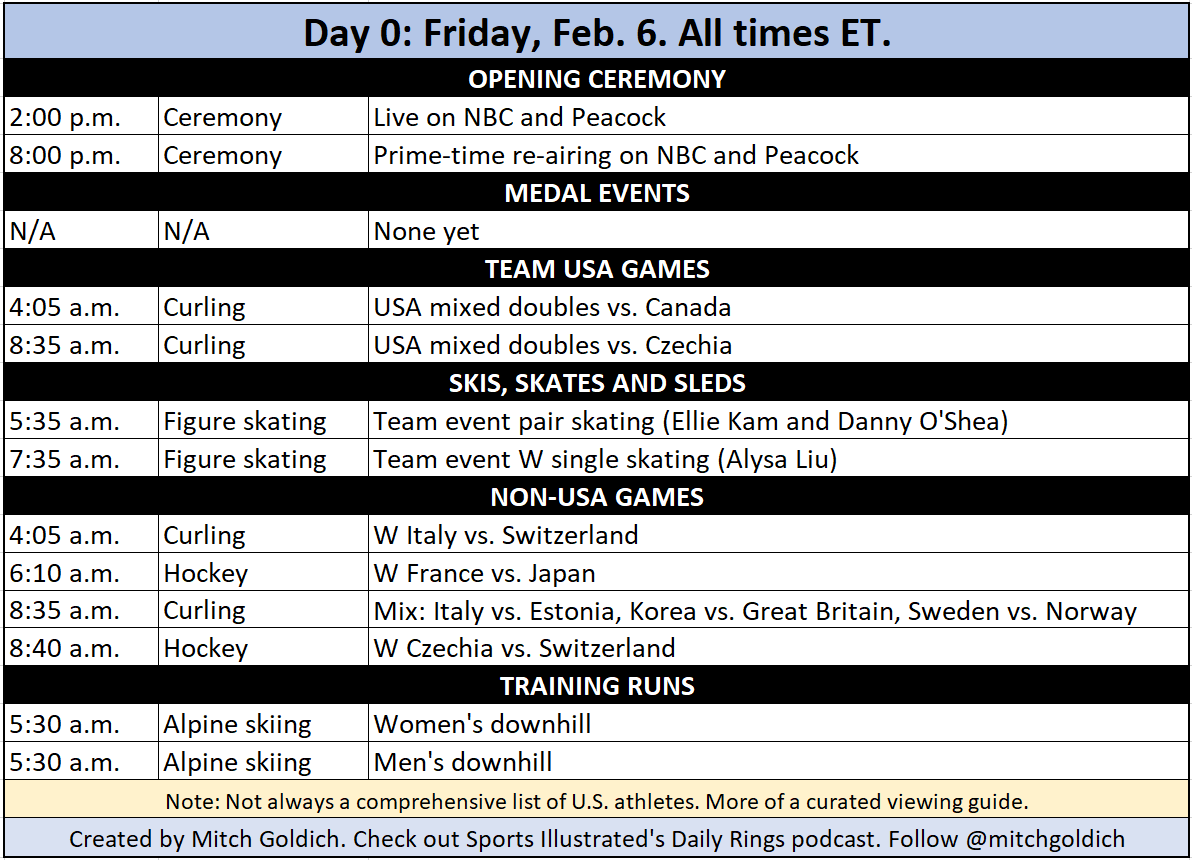
🚨🥇 My Day 0 Olympics viewing guide! We are BACK! I’ll make these for the next 17 days. Last time around people found them really helpful. The Winter Olympics schedule is more manageable than Summer, but if you like them please help share.
Mitch Goldich 🐙 tweet media
English
160
975
14K
1.9M
Brennon Mossholder
Brennon Mossholder@HoldinMoss·
I’ve seen a lot of discourse recently about what is strong or not on this app… here is my submission for the 500 pound club. Practicing what I preach.
English
1
0
6
532
Tim Mossholder
Tim Mossholder@TimMossholder·
Why are so many of our systems broken? Are there no leaders bold enough to declare the emperor is naked?
Owen Gregorian@OwenGregorian

Nearly 40% of Stanford undergraduates claim they’re disabled. I’m one of them | Elsa Johnson, The Times In 2023, one month into my freshman year at Stanford University, an upperclassman was showing me her dorm room — a prized single in one of the nicest buildings on campus. As she took me around her space, which included a private bathroom, a walk-in shower and a great view of Hoover Tower, she casually mentioned that she had lived in a single all four years she had attended Stanford. I was surprised. Most people don’t get the privilege of a single room until they reach their senior year. That’s when my friend gave me a tip: Stanford had granted her “a disability accommodation”. She, of course, didn’t have a disability. She knew it. I knew it. But she had figured out early what most Stanford students eventually learn: the Office of Accessible Education will give students a single room, extra time on tests and even exemptions from academic requirements if they qualify as “disabled”. Everyone was doing it. I could do it, too, if I just knew how to ask. A recent article in The Atlantic reported that an increasing number of students at elite universities were claiming they had disabilities to get benefits or exemptions, which can also include copies of lecture notes, excused absences and access to private testing rooms. Those who suffer from “social anxiety” can even get out of participating in class discussions. But the most common disability accommodation students ask for — and receive — is the best housing on campus. At Stanford University in Palo Alto, California, where competition for the best dorm rooms is fierce, this practice is particularly rife. The Atlantic reported that 38 percent of undergraduates at my college were registered as having a disability — that’s 2,850 students out of a class of 7,500 — and 24 per cent of undergrads received academic or housing accommodations in the fall quarter. At the Ivy League colleges Brown and Harvard, more than 20 per cent of undergrads are registered as disabled. Contrast these numbers with America’s community colleges, where only 3 to 4 per cent of students receive disability accommodations. Bizarrely, the schools that boast the most academically successful students are the ones with the largest number who claim disabilities — disabilities that you’d think would deter academic success. The truth is, the system is there to be gamed, and most students feel that if you’re not gaming it, you’re putting yourself at a disadvantage. That’s why I decided to claim my legitimate illness — endometriosis — as a disability at Stanford. When I arrived on campus two and a half years ago, I would have assumed that special allowances were made for a small number of students who genuinely needed them. But I quickly discovered that wasn’t true. Some diagnoses are real and serious, of course, such as epilepsy, anaphylactic allergies, sleep apnea or severe physical disabilities. But most students, in my experience, claim less severe ailments, such as ADHD or anxiety. And some “disabilities” are just downright silly. Students claim “night terrors”; others say they “get easily distracted” or they “can’t live with others”. I know a guy who was granted a single room because he needs to wear contacts at night. I’ve heard of a girl who got a single because she was gluten intolerant. That’s why I felt justified in claiming endometriosis as a disability. It is a painful condition in which cells from the uterus grow outside the womb. I’m often doubled over in agony from the problem, for which there is no known cure, so I decided to ask for a single room in a campus dorm where I could endure those moments in private. The application process was very easy. I registered my condition on the Stanford Office of Accessible Education website and made an appointment to meet an adviser later that week. The system is staffed largely by empathetic women who want to help students. As I explained my diagnosis and symptoms over Zoom to one woman, she listened, nodded sympathetically, related my problems to her own life and asked a few basic questions. Within 30 minutes, I was registered as a student with a disability, entitled to more accommodations than I asked for. In addition to a single housing assignment, I was granted extra absences from class, some late days on assignments and a 15-minute tardiness allowance for all of my classes. I was met with so little scepticism or questioning, I probably didn’t even need a doctor’s note to get these exemptions. Had I been pushier, I am sure I could have received almost any accommodation I asked for. While I feel entitled to my single room, I would feel guilty about some of the perks I have — except that so many of my fellow students have gamed the system. Take Callie, a recent Stanford grad with ADHD and Asperger’s who agreed to be quoted under a pseudonym. Callie was diagnosed with her conditions in elementary school; in return, Stanford granted her a single room for all four years, plus extra time on tests — and a few more perks. “In college, I haven’t had that many ‘in real life’ tests as opposed to take-home essays,” Callie told me. “When I did use the extra time, I felt guilty, because I probably didn’t deserve the accommodations, given the fact I got into Stanford and could compete at a high academic level. Extra time on tests — some students even get double time — seems unfair to me.” But at Stanford, almost no one talks about the system with shame. Rather, we openly discuss, strategise and even joke about it. At a university of savvy optimisers, the feeling is that if you aren’t getting accommodations, you haven’t tried hard enough. Another student told me that special “accommodations are so prevalent that they effectively only punish the honest”. Academic accommodations, they added, help “students get ahead … which puts a huge proportion of the class on an unfair playing ground”. The gaming even extends to our meals. Stanford requires most undergraduates living on campus to purchase a meal plan, which costs $7,944 for the 2025-26 academic year. But students can get exempted if they claim a religious dietary restriction that the college kitchens cannot accommodate. And so, some students I know claim to be devout members of the Jain faith, which rejects any food that may cause harm to all living creatures — including small insects and root vegetables. The students I know who claim to be Jain (but aren’t) spend their meal money at Whole Foods instead and enjoy freshly made salads and other yummy dishes, while the rest of us are stuck with college meals, like burgers made partly from “mushroom mix”. Administrators seem powerless to reform the system and frankly don’t seem to care. How do you prove someone doesn’t have anxiety? How do you verify they don’t need extra time on a test? How do you challenge a religious dietary claim without risking a discrimination lawsuit? I often think back to that conversation with my upperclassman friend. She wasn’t proud of gaming the system and she wasn’t ashamed either. She was simply rational. The university had created a set of incentives and she had simply responded to them. That’s what strikes me most about the accommodation explosion at Stanford and similar schools. The students aren’t exactly cheating and if they are, can you blame them? Stanford has made gaming the system the logical choice. When accommodations mean the difference between a cramped triple and your own room, when extra test time can boost your grade point average, opting out feels like self-sabotage. Who would make their lives harder when the easiest option is just a 30-minute Zoom call away? thetimes.com/us/news-today/…


English
0
0
4
123
Tim Mossholder
Tim Mossholder@TimMossholder·
@FoundationDads My dad had been an actor and then a radio DJ. He could do voices forever, and as he read, we were transfixed. One vacation he started the Chronicles of Narnia, and it will forever be etched in our memories. Got to add that to the list!
English
0
0
1
18
Foundation Father | M.A. Franklin
Foundation Father | M.A. Franklin@FoundationDads·
Reading to your kids every night has a better chance of changing the world than anything else you do. But only if you read great stuff. This time is precious, so don't waste it on frivolities like Diary of a Wimpy Kid or Captain Underpants. Be bold. Here are 38 recommendations that belong on your shelf: (This list doesn't contain obvious selections like The Hobbit, The Lord of the Rings, and The Chronicles of Narnia. Those should already be on your shelf.) 1. Have Spacesuit - Will Travel by Robert Heinlein 2. Call It Courage by Armstrong Sperry 3. Watership Down by Richard Adams 4. The Penderwicks by Jeanne Birdsall 5. Give Me Liberty by L. M. Elliott 6. Holes by Louis Sachar 7. The Wolves of Willoughby Chase by Joan Aiken 8. The Story of the Treasure Seekers by E. Nesbit 9. Wolf Hollow by Lauren Wolk 10. Where the Mountain Meets the Moon by Grace Lin 11. The Princess and the Goblin by George MacDonald 12. The Winter King by Christine Cohen 13. Over Sea Under Stone by Susan Cooper 14. Animal Farm by George Orwell 15. Boys of Blur by N.D. Wilson 16. Night Journeys by Avi 17. Forbidden Child by Gwen Newell 18. 100 Cupboards by N.D. Wilson 19. The Graveyard Book by Neil Gaiman 20. Five Children and It by E. Nesbit 21. Pinnochio by Carlo Collodi (Try the MinaLima edition) 22. The Wednesday Wars by Gary Schmidt 23. The Golden Goblet by Eloise Jarvis McGraw 24. My Side of the Mountain by Jean Craighead George 25. Penrod by Booth Tarkington 26. The Dragon and the Raven by G.A. Henty 27. Howl’s Moving Castle by Diana Wynne Jones 28. The Blue Fairy Book (full versions of the classic fairy tales you think you know) 29. Bambi by Felix Salten 30. Leepike Ridge by N.D. Wilson 31. Hank the Cow Dog series by John R. Erickson 32. Matilda by Roald Dahl 33. Charlotte’s Web by E.B. White 34. Amulet series by Kazu Kibuishi 35. Cardboard by Doug TenNapel 36. Red Planet by Robert Heinlein 37. Ender’s Game by Orson Scott Card (edit while you read per your personal convictions) 38. The Best Christmas Pageant Ever by Barbara Robinson
English
136
505
5.1K
362.3K
Tim Mossholder
Tim Mossholder@TimMossholder·
I had Grok sort these by age-appropriateness. Here's the same list reshuffled: These are grouped into rough developmental stages based on typical reading levels, themes, complexity, vocabulary, emotional content, and common recommendations (e.g., early chapter books for younger readers, middle grade for 8–12, and more advanced or intense books for older tweens/teens). - **Ages ~4–8 (early independent reading or read-alouds; simple adventures, animals, fairy tales, gentle classics)** 33. Charlotte’s Web by E.B. White 32. Matilda by Roald Dahl 31. Hank the Cow Dog series by John R. Erickson 21. Pinocchio by Carlo Collodi (Try the MinaLima edition) 28. The Blue Fairy Book (full versions of the classic fairy tales you think you know) 20. Five Children and It by E. Nesbit 8. The Story of the Treasure Seekers by E. Nesbit 11. The Princess and the Goblin by George MacDonald - **Ages ~7–10 (early middle grade; family stories, light fantasy, animal tales, historical light)** 4. The Penderwicks by Jeanne Birdsall 38. The Best Christmas Pageant Ever by Barbara Robinson 35. Cardboard by Doug TenNapel 34. Amulet series by Kazu Kibuishi (graphic novel format helps younger readers) 30. Leepike Ridge by N.D. Wilson 18. 100 Cupboards by N.D. Wilson 24. My Side of the Mountain by Jean Craighead George 2. Call It Courage by Armstrong Sperry - **Ages ~8–12 (core middle grade; adventure, fantasy, some emotional depth, historical fiction)** 7. The Wolves of Willoughby Chase by Joan Aiken 15. Boys of Blur by N.D. Wilson 10. Where the Mountain Meets the Moon by Grace Lin 6. Holes by Louis Sachar 22. The Wednesday Wars by Gary Schmidt 19. The Graveyard Book by Neil Gaiman 27. Howl’s Moving Castle by Diana Wynne Jones 13. Over Sea Under Stone by Susan Cooper 23. The Golden Goblet by Eloise Jarvis McGraw 16. Night Journeys by Avi - **Ages ~10–14+ (upper middle grade to early YA; more complex plots, dystopia, heavier themes, violence, or maturity)** 3. Watership Down by Richard Adams (intense survival, death themes) 29. Bambi by Felix Salten (emotional animal story with loss) 9. Wolf Hollow by Lauren Wolk (bullying, moral complexity) 5. Give Me Liberty by L. M. Elliott (historical, likely deeper themes) 17. Forbidden Child by Gwen Newell (assuming more mature content based on title/themes) 12. The Winter King by Christine Cohen (likely fantasy with heavier elements) 25. Penrod by Booth Tarkington (older-style humor, boyhood antics) 14. Animal Farm by George Orwell (allegory, politics, suitable for discussion with older kids) 26. The Dragon and the Raven by G.A. Henty (historical adventure, denser prose) 36. Red Planet by Robert Heinlein (early Heinlein juvenile, similar to spacesuit) 1. Have Spacesuit - Will Travel by Robert Heinlein (classic juvenile SF, teen protagonist, science concepts) 37. Ender’s Game by Orson Scott Card (strategic, intense, violence; often 12+ with edits as noted) Note: Ages are approximate and flexible—advanced readers may enjoy books earlier, while sensitive children may need older ones delayed. Factors like read-aloud vs. independent reading, emotional maturity, and specific content (e.g., violence in Watership Down or Ender’s Game) matter. Many of these are timeless classics that families enjoy across ages!
English
0
0
0
20
Tim Mossholder ретвитнул
Ryan Burge 📊
Ryan Burge 📊@ryanburge·
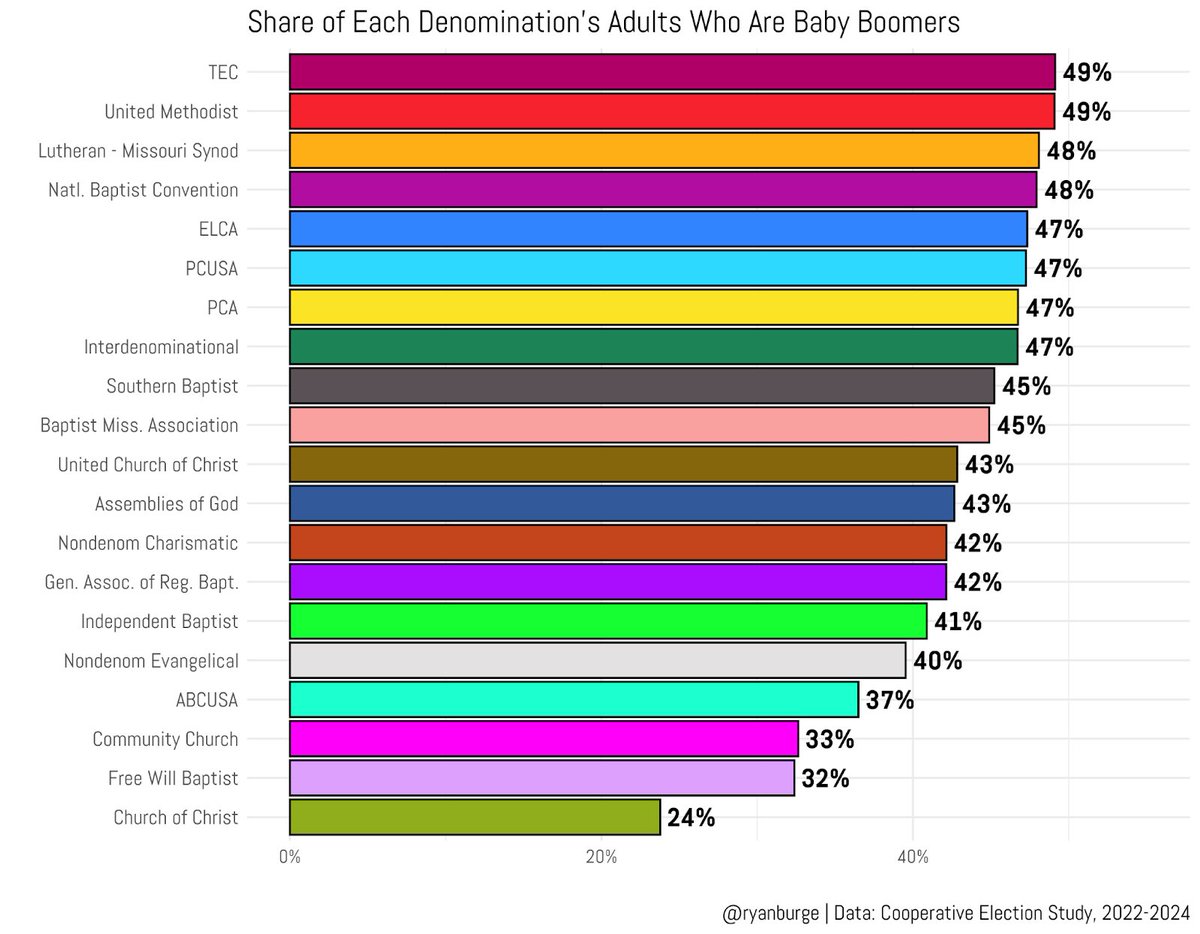
A lot of folks assume that many Protestant denominations will just slowly decline over the next few decades. That's not what is going to happen. The Boomers are propping most of them up right now. When they age out, it's gonna get bad. Really fast. No one is ready.
Ryan Burge 📊 tweet media
English
163
147
1.1K
241.3K
Tim Mossholder ретвитнул
Mark J. Perry
Mark J. Perry@Mark_J_Perry·
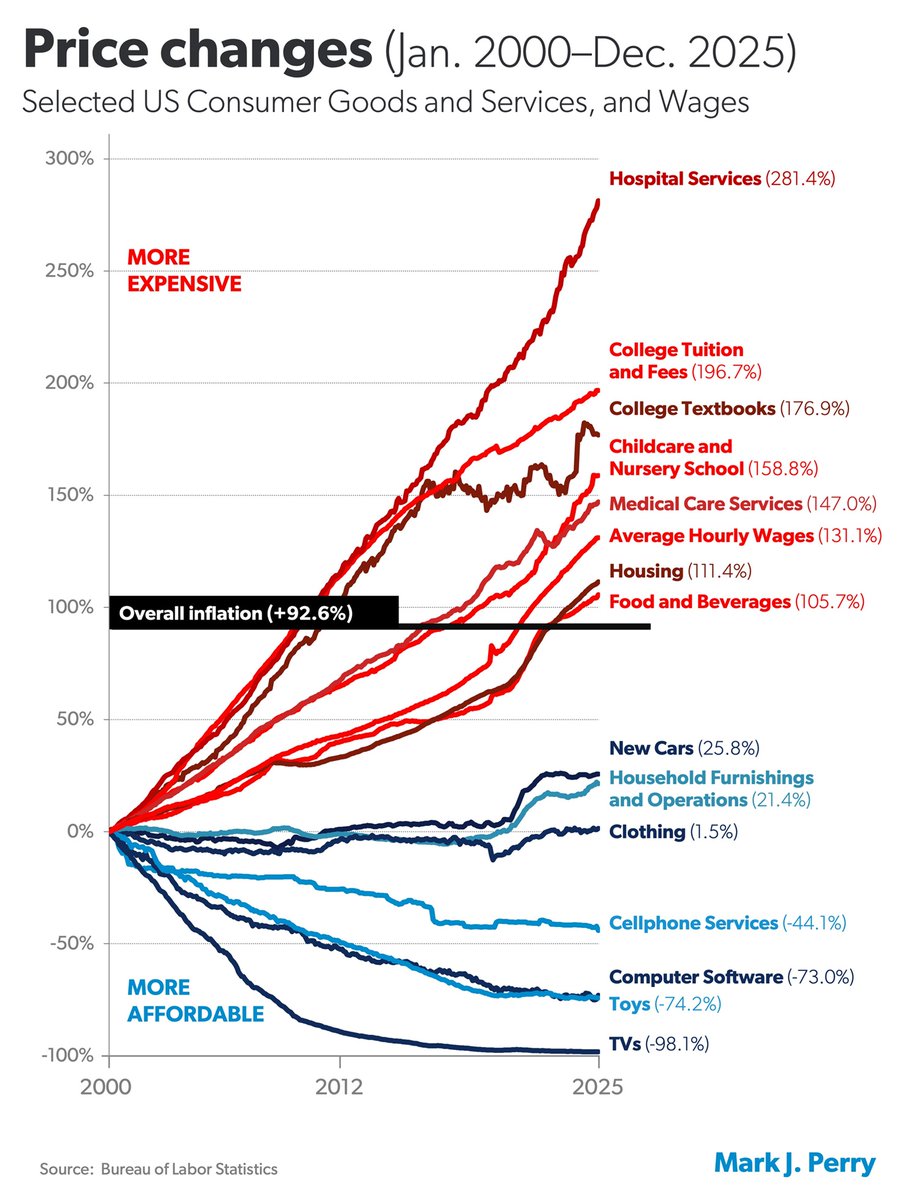
"Chart of the Century" updated through December 2025.
Mark J. Perry tweet media
English
323
1.9K
8.3K
1.4M
Blake Harris
Blake Harris@BlakeHHarris·
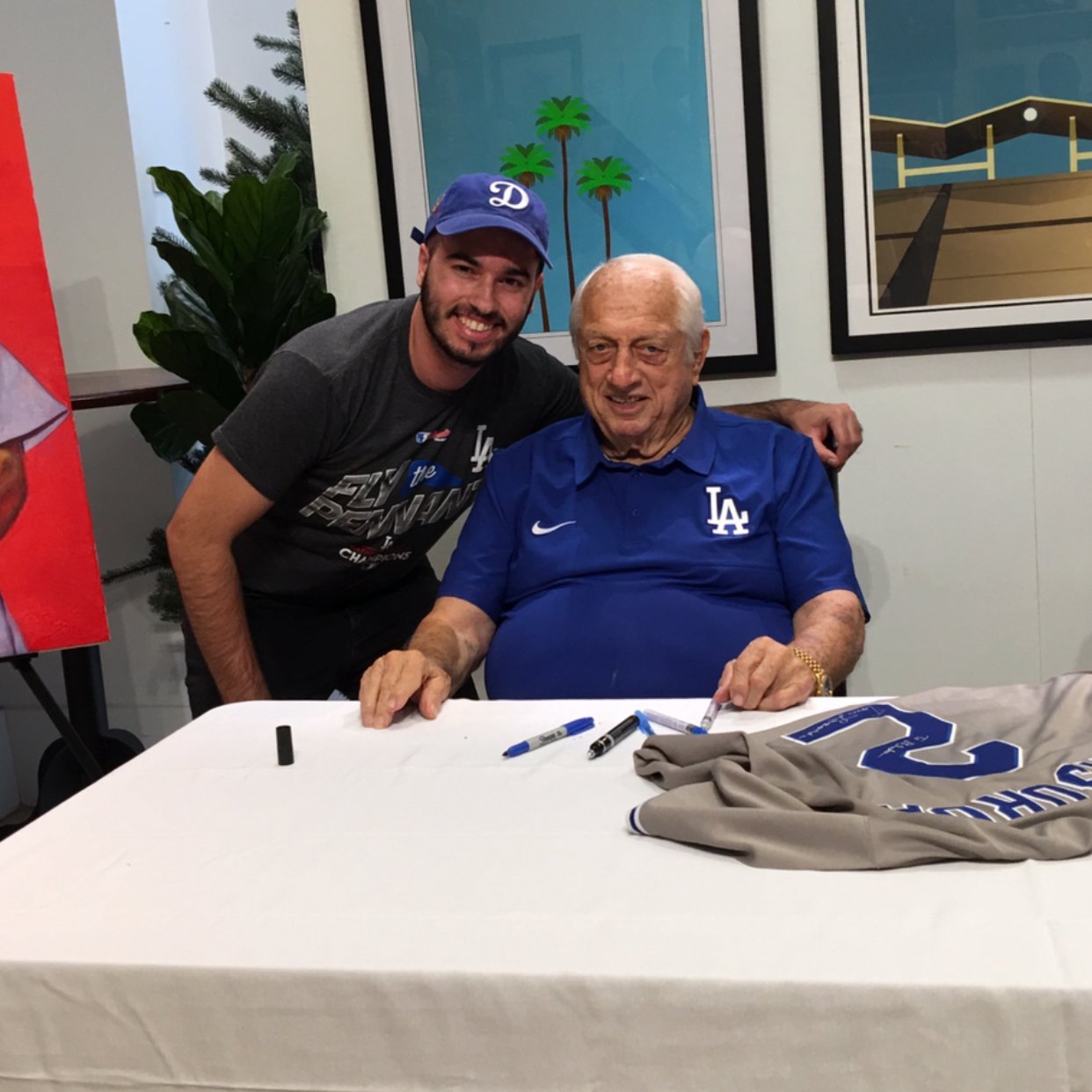
Me looking under every Dodger Stadium seat to see if someone forgot to take home their bobblehead
English
19
243
3.6K
73.9K
Sarah Salviander
Sarah Salviander@sarahsalviander·
If you spend a lot of time on social media or looking at the news, please know that things are generally better than they seem. God is playing the long game. What seems like forever to us is the blink of an eye to him. And we know that in all things God works for the good of those who love him, who have been called according to his purpose. —Romans 8:28
Sarah Salviander tweet media
English
13
60
455
5.7K
Tim Mossholder
Tim Mossholder@TimMossholder·
Helpful. Though is Google simply data mining the next generation’s intellect at scale, tracking the brightest and the dullest in a new digital bell curve?
Google@Google

We’re launching full-length, on demand practice exams for standardized tests in @GeminiApp, starting with the SAT, available now at no cost. Practice SATs are grounded in rigorously vetted content in partnership with @ThePrincetonRev, and Gemini will provide immediate feedback highlighting where you excelled and where you might need to study more. To try it out, tell Gemini, “I want to take a practice SAT test.”

English
0
0
0
47
𝐓𝐡𝐞 𝐀𝐫𝐭 𝐨𝐟 𝐏𝐮𝐫𝐩𝐨𝐬𝐞 🇺🇸
After publishing this article, hundreds of teachers and administrators reached out to me privately. What they’re describing inside public schools is disturbing. I’ve been documenting it. Would you like me to share there stories so parents understand what’s really happening?
𝐓𝐡𝐞 𝐀𝐫𝐭 𝐨𝐟 𝐏𝐮𝐫𝐩𝐨𝐬𝐞 🇺🇸@creation247

x.com/i/article/2012…

English
167
341
2.3K
133.9K
Tim Mossholder
Tim Mossholder@TimMossholder·
@elonmusk I was there...and it was beautiful! It lit up the fog in the valley and was pretty epic. My 3yo grandson's favorite part? "The sonic booms!"
Tim Mossholder tweet media
English
0
0
3
50
Dr. Dina McMillan 🇺🇸
I'd argue one factor that predisposes young women to be more vulnerable to social pressures and propaganda is the female nurturing instinct. It makes women more empathetic and emotional (on average) than men. As a social psychologist I can tell you people who make decisions using emotion or primal drives (fear, anger, lust, competitiveness) are far easier to indoctrinate. The most effective non-captive indoctrination methods rely on triggering emotions, primal drives or both to embed new information and even instructions. People who don't pause and filter this new data through the problem-solving part of the brain (neocortex), then get swept away. Each new message and resulting choice carries them further from their original position.
English
47
39
465
33.5K
Tim Mossholder
Tim Mossholder@TimMossholder·
This article is nuanced, data-driven, and incredibly thoughtful about the massive ideological shift happening in real time between men and women. And despite the title (😉), the author doesn't make men out to be the good guys here. Thoughts? What stands out to you?
vittorio@IterIntellectus

x.com/i/article/2012…

English
0
0
0
52
Tim Mossholder
Tim Mossholder@TimMossholder·
@IterIntellectus Everything here resonates as true and on point. And it doesn't take men off the hook. As a church leader I have an opportunity to address both "failure modes." Prayers appreciated.
English
1
0
1
189