Закреплённый твит
Alvaro Martínez Vega
45.7K posts


@DemensStulte @philthatremains @DarrigoMelanie The great replacement notion has nothing to do with the nazis. The author of this plan was Kalergi.
English

@philthatremains @DarrigoMelanie How about all the "great replacement" and "white genocide" rhetoric? How about the double nazi salute? Oh yeah that totally wasn't what he meant. Get real retards
English
Alvaro Martínez Vega ретвитнул

Pharma once built the perfect cholesterol drug. Then it started killing people.
Torcetrapib raised HDL, the good cholesterol, by over 70% and dropped the bad. The lipid panel was so immaculate you could have framed it. Days before the end, Pfizer was calling it the most important heart drug in years and racing it to the regulator.
Then they counted the bodies.
Fifteen thousand patients, half on torcetrapib plus a statin, half on the statin alone. December 2006, the safety board pulled the plug, because the group with the gorgeous numbers was dying faster. Ninety-three deaths against fifty-nine, with the heart attacks to match.
A flawless panel sitting on a higher body count.
That is the chapter the good-and-bad-cholesterol cartoon skips. You can engineer a lipid panel a cardiologist would frame and bury more patients doing it. The number on the chart and the number in the morgue were pointing opposite ways. They sold you the proxy as the prize, then quietly binned the trial that proved it wrong.

English

@andress03086594 @amauricioe @elcriticopol A ver tonto, que ellos mismos hacían muros para que la gente no se escapara del "paraíso".
🤡
Español

@amauricioe @elcriticopol Dime de un pais socialista que que los paises capitalistas no hayan bloqueado y tratado de undir para decir que el socialismo no funciona para que los idiotas sigan apoyando al que los explota
Español
Alvaro Martínez Vega ретвитнул

@yucayo @PhDenLogica Quieren la plata de los cubanos de Miami, a los que hasta hace 2 minutos llamaban "gusanos".
Español
Alvaro Martínez Vega ретвитнул

176 medidas de "liberalización" de la economía cubana... dicen.
Mis comentarios:
- Es un intento de legitimar de iure lo que ya sucedía de facto: los grandes oligarcas del castrismo dueños de las empresas estatales y las privadas. Es una propuesta de reforma "a la rusa" para blanquear a los "siloviki" de La Habana.
- Está siendo fuertemente rechazada dentro de Cuba (revisar en Facebook que es la red más usada por los cubanos) denunciada como cambio fraude. Todavía no leí desde adentro, una sola opinión favorable. El pueblo quiere que se vayan todos. No les cree nada.
- Alcanza leer el comienzo de las medidas "autorizar", "permitir", "liberar", "conceder", para entender de una vez y por todas que el único bloqueo que ha sufrido el pueblo de Cuba es el de sus carceleros: el régimen comunista.
Dicho esto, el paquete de medidas representa la caída simbólica del Comunismo en Cuba, aceptando (por enésima vez en la historia de la humanidad) que el libre mercado es la única alternativa para alcanzar la prosperidad luego de décadas de miseria de la mano de la propiedad estatal y la planificación centralizada.
En Uruguay veremos las volteretas conceptuales que harán los defensores históricos de ese régimen de oprobio.
Hay medidas (liberalización del comercio de combustibles, liberalización de las relaciones laborales a nivel de empresa, privatización o apertura del paquete accionario de empresas estatales, disposición que dar quiebra a empresas estatales) en las que el PCC corre por liberal no solo al Frente Amplio sino a la Coalición Republicana.
Pónganse las pilas muchachos: todos.
granma.cu/cuba/2026-06-1…
Español

@danielccg21 @gustav0cardenas Si, y ese mismo pobre en LA vive abajo de 4 chapas con piso de barro, vestido con harapos y muerto de hambre.
Pero dale, es lo mismo.
Español

@gustav0cardenas Como se nota que nunca han vivido en Estados Unidos o simplemente les pagan para publicar estupideces.
Literal conocí gente que no se podía ni permitir pagar un depa y no les quedaba de otra que VIVIR en su carro.
Español
Alvaro Martínez Vega ретвитнул

Hay algo que los antiestadounidenses deberían entender antes de opinar sobre “la pobreza en Estados Unidos”.
La pobreza en EE. UU. no se parece a la pobreza en la mayoría de los países. Ya que la línea de pobreza se mide principalmente por ingresos, no por miseria material. Eso cambia todo.
Un estadounidense clasificado como “pobre” suele tener:
• Automóvil propio
• Smartphone (muchas veces iPhone)
• Servicios básicos: agua potable, electricidad estable, refrigeración, calefacción
• Vivienda con electrodomésticos: nevera, microondas, lavadora
• Acceso a alimentos gracias a redes de apoyo como food banks y algunas ayudas gubernamentales.
En otras palabras: sus necesidades básicas están cubiertas. Lo que no puede permitirse, en muchos casos, son lujos: vacaciones costosas, un auto nuevo, una casa grande, gadgets de alta gama cada año.
Para poner un ejemplo un “pobre” en EE. UU. puede vivir en un apartamento modesto, tener un Toyota usado y un iPhone de hace dos generaciones.
A diferencia de un “pobre” en Honduras, Bolivia o Venezuela que puede vivir sin agua potable, sin refrigeración, sin transporte propio y con inseguridad alimentaria real.
Y si hablamos de los pobres en India o Filipinas estos pueden vivir en zonas sin alcantarillado, sin electricidad estable y sin acceso garantizado a atención médica.
No es lo mismo no poder comprar un PlayStation que no poder comer todos los días.
Hay un gran contraste internacional
En muchos países, la pobreza se mide por carencias vitales:
• hambre
• falta de vivienda digna
• ausencia de servicios básicos
• imposibilidad de acceder a salud o educación
• trabajo infantil
• mortalidad por enfermedades prevenibles
En EE. UU., la pobreza es relativa al ingreso, no absoluta. Por eso un hogar pobre estadounidense puede tener más bienes materiales que un hogar de clase media en países en desarrollo.
Esto no quiere decir que todo es perfecto. EE. UU. tiene un problema grave con la adicción a drogas, y esa es una de las principales causas de indigencia. La mayoría de las personas sin hogar no están ahí por “pobreza económica” en el sentido tradicional, sino por adicciones, enfermedades mentales, rupturas familiares severas o falta de tratamiento adecuado
Pero eso es otro fenómeno, distinto de la pobreza medida por ingresos.
La pobreza en Estados Unidos, con todos sus problemas, es privilegiada comparada con la pobreza en gran parte del mundo. No porque sea “buena”, sino porque ocurre dentro de un país con infraestructura avanzada, redes de asistencia, servicios públicos estables, acceso a crédito, alimentos baratos, tecnología accesible
Comparar la pobreza estadounidense con la pobreza global sin contexto es como comparar una rueda espichada con un carro sin motor: ambas son “fallas”, pero no son equivalentes.

Español
Alvaro Martínez Vega ретвитнул

Lao Duan tenía 42 años y vivía en Shanxi. Un día quiso comprar online un pasaje de tren a Beijing. Puso su nombre, confirmó el pago… y apareció el mensaje: “Esta persona está en la lista de individuos no confiables”.
El sistema que lo bloqueó no nació para controlarlo. Surgió en los 90 para dar acceso al crédito a campesinos y pymes rurales sin historial bancario. Una herramienta de INCLUSIÓN FINANCIERA. Suena conocido.
El sistema a partir de 2011 empezó a absorber comportamiento social, historial judicial y actividad online. En 2018 solo, bloqueó 17,5 millones de pasajes de avión y 5,5 millones de tren.
En algunas ciudades, si estabas en la lista negra, tu celular cambiaba automáticamente el tono de llamada: quien te marcaba escuchaba un mensaje avisando que hablabas con alguien “desacreditado”.
Nadie lo planeó así desde el principio, o eso presuponemos. Fue la consecuencia lógica de construir una infraestructura de trazabilidad total y dejarla en manos del poder.
Eso es lo que hay que mirar cuando el BCU, o cualquier regulador estatal, anuncia nuevas obligaciones de reporte financiero “con buenas intenciones”.
No mires solo lo que hace hoy. Mirá lo que podrá hacer mañana.
El Observador Uruguay@ObservadorUY
BCU impone nuevas exigencias para depósitos, retiros y transferencias con dinero electrónico elobservador.com.uy/economia-y-emp…
Español

@AKAjuanpa @espanolito_es @pabloharour @meidgd No existe izquierda sin socialismo y colectivismo. No existe izquierda sin que el gobierno intente meterse en la vida de todos.
Español

@espanolito_es @pabloharour @meidgd A ver. Nadie dijo que los países nórdicos fueran comunistas. Se dijo que suelen ponerse como ejemplo de políticas impulsadas históricamente por la socialdemocracia, que es centroizquierda. Estás construyendo un hombre de paja para refutar algo que nadie afirmó.
Español

@CountMoriarty @A1an_M I have checked it thats why I am saying that.
English
Alvaro Martínez Vega ретвитнул

This story is actually even more misleading than I thought.
The Lancet paper says that there were no deaths at all from cervical cancer between 2020 and 2024 in women aged 20-24. In vaccinated or unvaccinated individuals.
But they're just assuming that reduction was entirely due to vaccination because the majority of people in that age group were vaccinated. And the success of the vaccine is based on their model of how many deaths were "expected".
Even though there are any number of other possible explanations for the reduction, none of which were controlled for by the study, and one of which is very glaring - that young people may have been less promiscuous since 2020 due to being kept away from other people due to COVID lockdowns and social distancing, resulting in fewer HPV infections.
More junk science from The Lancet.

BBC News (UK)@BBCNews
Cervical cancer deaths fall to zero in young women given vaccine bbc.in/4ovjOLq

English

@CountMoriarty @A1an_M The problem is that cancer deaths were being lower and lower well before the vaccine, and even the rate was bigger before the vaccines. This is very easy to check.
English

@A1an_M Well, hpv is proven to cause cervical cancer, the vaccine removes hpv, levels of cancer disappear in the entire population (which is what you'd expect from a vaccine - remember not everyone had the smallpox vaccine) so by far the most obvious conclusion is that the vaccine works.
English
Alvaro Martínez Vega ретвитнул

Yesterday, @ThaisEscufon was found guilty of “public insults” in France.
She received suspended prison sentence and a fine for explaining on live TV how she was sexually abused by a migrant.
This is how we have to live in Europe.
They hate us.
English
Alvaro Martínez Vega ретвитнул

Modern Nutritionist: "Your average lifespan is 30. Clearly the diet doesn't work."
Paleolithic Hunter: "Thirty. Goodness. And how many infants did you stir into that figure?"
Nutritionist: "What?"
Hunter: "Half our babies die before five. Wolves, fevers, the occasional cliff. Does wonders for an average, that does."
Nutritionist: "Still proves..."
Hunter: "My grandfather is 72. Eats nothing but meat, walked 20 miles yesterday. But do go and tell him the wolf that took his cousin means his ribeye is killing him."
Nutritionist: "But the average..."
Hunter: "Five infants gone, five elders to 65. Comes to 30, and not one of us obliging enough to actually drop dead at 30. Maths is a marvel."
Nutritionist: "That seems convenient..."
Hunter: "What's convenient is blaming our supper for the sabre-tooth. Truly, the boldest thing I've seen anyone do with a calculator."
Nutritionist: "Still..."
Hunter: "Show me the one elder felled by mammoth steak. Take all the time you need. I've a spare five decades."

English

@josevico4 A ver pelotudo si tiene 77 cuanto tenia cuando gano Milei? Y quien gobernó los 50 anos anteriores?
🤡
Español
Alvaro Martínez Vega ретвитнул

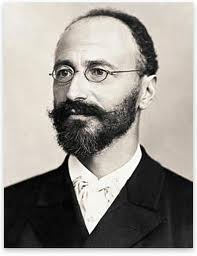
Marx died in 1883 with two volumes of Capital unwritten and one fatal contradiction unanswered. Eugen von Böhm-Bawerk noticed.
In 1884 he published the first volume of Capital and Interest, a history of every interest theory ever floated, and he treated the exploitation theory the way a pathologist treats a corpse: methodically, and without sentiment. Marx claimed that labor alone creates value, that the capitalist pockets "surplus value" by paying workers less than their product is worth. Sounds tidy. Then Böhm-Bawerk asked the question that collapses the whole structure. Why does a worker accept $90 today instead of waiting a year for the $100 his labor will eventually fetch in the finished good?
Present goods are worth more than future goods. That is interest. Not theft, not a parasite skimming off the top, but the price of time itself. The capitalist who advances wages today for output that sells next year performs a service, and he earns the spread for bearing the wait and the risk. Böhm-Bawerk laid this out in 1889 in The Positive Theory of Capital, and the exploitation story had no reply.
But the real execution came in 1896. Engels had finally dragged Volume III of Capital into print in 1894, and there Marx quietly admitted that commodities do not actually sell at their labor values: they sell at "prices of production" governed by an average rate of profit. Böhm-Bawerk pounced in Karl Marx and the Close of His System. Volume I said value comes from labor. Volume III said prices systematically deviate from labor. Marx had spent twenty years building a cathedral on a foundation he himself dynamited in the back pages. You cannot assert that labor determines value on Monday and that competition overrides it on Thursday and call the result science.
A century of central planners ignored this and proceeded to starve Ukraine, wall off Berlin, and empty the shelves of Caracas. The theory was dead in 1896, but the bodies just kept arriving anyway, because nobody reads the footnotes before they reach for the gun.


English