Zwelinzima Vavi@Zwelinzima1
I have spoken before about the existence of two parallel worlds in our country. These worlds that exist side by side, yet are fundamentally disconnected.
On the one hand, there is a world defined by humiliating poverty, mass unemployment, and deepening, degrading inequality. It is a world in which the working class and even sections of the middle strata are sinking under unbearable levels of debt. A world where families are losing their homes and cars through bank repossessions, where dignity is stripped away, and where the psychological toll is so severe that it is contributing to a growing crisis of mental illness and even suicide epidemic.
But alongside this reality, there exists another world.
A world of excess, opulence, privilege, and insulation from suffering.
In this world, elites parade in foreign designer labels such as brands like Louis Vuitton, Gucci, Versace, Dior, Balenciaga, Prada, Hermès and Chanel. These outfits cost more than what many workers earn in months or even years. In this world the elites move around in chauffeur-driven luxury vehicles worth millions: Rolls-Royce, Bentley, Maybach, Range Rover Autobiography and top of a range Vianno: These are symbols not just of wealth, but of social distance from the lived reality of the majority. The Madlanga Commission has helped to educate the country about these two worlds.
The top elites of politically connected gather at exclusive events where a single bottle of wine can cost more than a worker’s monthly wage — Château Margaux, Domaine de la Romanée-Conti, Screaming Eagle, Penfolds Grange or where rare whiskies like Macallan 1926, Dalmore 62, or Glenfiddich 1937 are poured, not for necessity, but for status. Prices inflated not just by rarity, but by venues designed to exclude the very people whose labour sustains this economy.
These are not just two different lifestyles. They are two different realities: one of survival, the other of opulence.
And in the shadows of this widening divide, a dangerous shift is taking place: sections of the working class, pushed to the brink, are increasingly turning against one another. Regionalism, tribalism and xenophobia are rising, as the poor are driven to fight the poor, while the real sources of the crisis remain untouched.
Meanwhile, the elites in Houghton, Sandton, Ballito, and enclaves such as Constantia, Bishopscourt, Clifton, Camps Bay and Bantry Bay in Cape Town remain largely insulated from the daily realities of violence, insecurity and social breakdown.
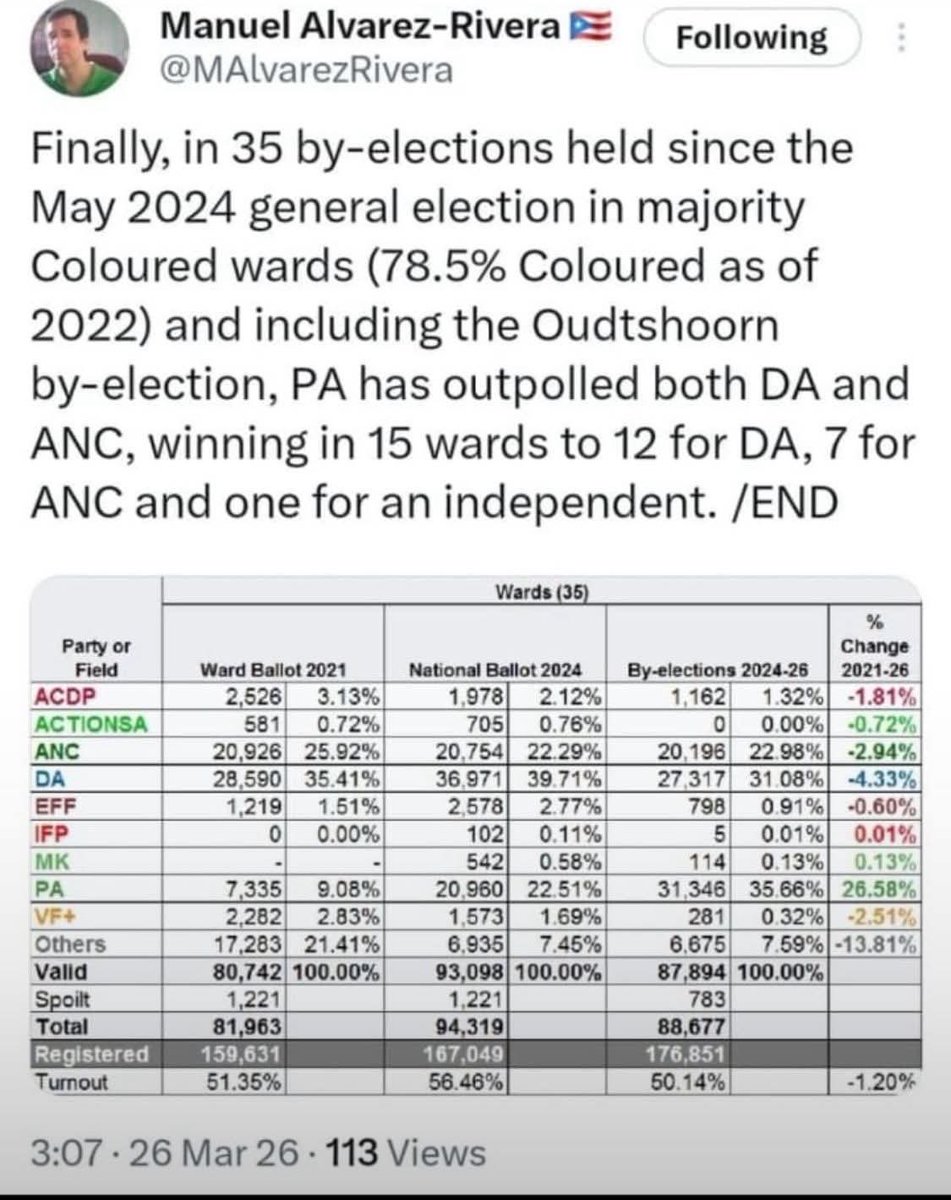
The latest findings associated with voter participation trends, as reflected in IEC-related data, point to a deeply worrying reality: barely a quarter of eligible voters still believe that this democracy, one that has produced such extremes is worth participating in.
This is not apathy. It is a crisis of legitimacy.
It is a silent protest by millions who feel abandoned, excluded, and betrayed.
Unless this widening chasm is confronted, unless the economy is fundamentally restructured to serve the many and not the few, we are not just facing an economic crisis, but a profound social and political rupture.
This is a powder keg waiting to implode.