

Jeff Broadwick
1K posts
Jeff Broadwick
@jeffbroadwick
20+ years as a part of the Wireless ISP industry. Working for CTIconnect selling WISP hardware. Two term Board Member of WISPA.
Granger, IN USA Присоединился Mayıs 2009
669 Подписки812 Подписчики

GOOD NEWS: The Hennepin County Sheriff’s Office states that the three people who assaulted me yesterday, will be CHARGED.
Here’s the footage of Paige Ostroushko, one of the three, being arrested after attacking me.
She immediately runs from the police and pretends to act shocked as to why she’s being detained.
Thank you to @BreannaMorello for being so on top of this and thank you to the Sheriff's department who ended up having to drive me to safety yesterday due to the violence of the mob.
Am looking forward to seeing these charges all the way through.
English
@RichardGrenell This isn’t new info. It’s all about the jungle primary.
English
It’s over for Swalwell.
He’s officially done.
California Teachers Association@WeAreCTA
The allegations are incredibly disturbing and unacceptable against Rep. Swalwell. We are immediately suspending our support. Our elected board will be meeting as soon as possible to follow our union’s democratic process to determine next steps.
English
@JonathanTurley The Dems want him out so the jungle primary doesn’t wind up with the two GOP candidates winning.
English
Eric Swalwell is denying allegations of multiple women alleging misconduct ranging from groping to rape. He is hoping that voters will apply a different standard than the one he applied to Justice Brett Kavanaugh during his confirmation...politico.com/news/2026/04/1…
English
@ChrisMartzWX Imagine doing it with a slide rule and a VERY basic computer back in the 60s!
English

For those wondering why Artemis II isn’t flying straight to the moon, it’s because the moon revolves around the Earth. The math has to be just right so they don’t miss and can safely go around the moon and return home.
Really neat visualization here. 🚀 🌖
Michael Antonelli@BullandBaird
Imagine the math required to make this guess and aim 4 people at a point in space
English
Jeff Broadwick ретвитнул
Food for thought.
Trump, Hormuz and the End of the Free Ride
For half a century, Western strategists have known that the Strait of Hormuz is the acute point where energy, sea power and political will intersect. That knowledge is not in dispute. What is new in this war with Iran is that the United States, under Donald Trump, has chosen not to rush to “solve” the problem. In Hegelian terms, he is refusing an easy synthesis in order to force the underlying contradiction to the surface.
The old thesis was simple: the US guarantees open sea lanes in the Gulf, and everyone else structures their economies and politics around that free insurance. Europe and the UK embraced ambitious green policies, ran down hard‑power capabilities and lectured Washington on multilateral virtue, secure in the assumption that American carriers would always appear off Hormuz. The political class behaved as if the American security guarantee were a law of nature, not a contingent choice. Their conduct today is closer to Chamberlain than Churchill: temporising, issuing statements, hoping the storm will pass without a fundamental reordering of their responsibilities.
Trump’s antithesis is to withhold the automatic guarantee at the moment of maximum stress. Militarily, the US can break Iran’s residual ability to contest the Strait; that is not the binding constraint. The point is to delay that act. By allowing a closure or semi‑closure to bite, Trump ensures that the immediate pain is concentrated in exactly the jurisdictions that have most conspicuously free‑ridden on US power: the EU and the UK. Their industries, consumers and energy‑transition assumptions are exposed.
In that context, his reported blunt message to European and British leaders, you need the oil out of the Strait more than we do; why don’t you go and take it? Is not a throwaway line. It is the verbalisation of the antithesis. It openly reverses the traditional presumption that America will carry the burden while its allies emote from the sidelines.
In this dialectic, the prize is not simply the reopening of a chokepoint. The prize is a reordered system in which the United States effectively arbitrages and controls the global flow of oil. A world in which US‑aligned production in the Americas plus a discretionary capability to secure,or not secure, Hormuz places Washington at the centre of the hydrocarbon chessboard. For that strategic end, a rapid restoration of the old status quo would be counterproductive.
A quick, surgical “fix” of Hormuz would short‑circuit the dialectic. If Trump rapidly crushed Iran’s remaining coastal capabilities, swept the mines and escorted tankers back through the Strait, Europe and the UK would heave a sigh of relief and return to business as usual: underfunded militaries, maximalist green posturing and performative disdain for US power, all underwritten by that same power. The contradiction between their dependence and their posture would remain latent.
By declining to supply the synthesis on demand, and by explicitly telling London and Brussels to “go and take it” themselves, Trump forces a reckoning. European and British leaders must confront the fact that their energy systems, their industrial bases and their geopolitical sermons all rest on an American hard‑power foundation they neither finance nor politically respect. The longer the contradiction is allowed to unfold, the stronger the eventual synthesis can be: a new order in which access to secure flows, Hormuz, Venezuela and beyond, is explicitly conditional on real contributions, not assumed as a right.
In that sense, the delay in “taking” the Strait, and the challenge issued to US allies to do it themselves, is not indecision. It is the negative moment Hegel insisted was necessary for history to move. Only by withholding the old guarantee, and by saying so out loud to those who depended on it, can Trump hope to end the free ride.

English
@ChrisMartzWX Don’t play with morons Chris…it’s just not worth it.
English
Lots of triggered replies.
Chris Martz@ChrisMartzWX
Yesterday was not a good day for flat Earthers.
English
@ChrisMartzWX They won’t shut up…ever. They’ll just move on to the next thing to be outraged about. Part of the requirement to be a Leftist in good standing is continual baseless outrage.
English
TDS is a real mental illness.
I will honestly be glad when Trump is out of office just so these stupid, insufferable pieces of crap whining every day finally shut the heII up.
English
@DefiantLs @BluegrassPundit If he had shame for lying, he couldn’t be a Democrat.
English
Schumer" "It is unacceptable for workers and entire airports to get taken hostage in political games."
"That's what the Republicans are doing!"
Does he not feel shame lying like this?
English
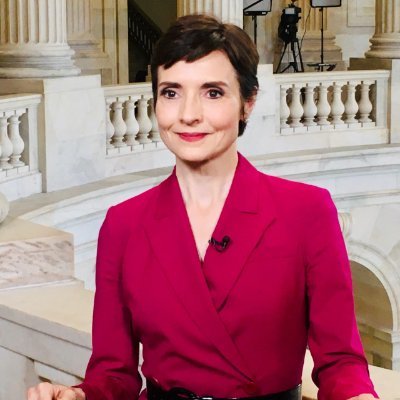
EXCLUSIVE: Longtime Trump Advisor @MichaelRCaputo Says Russia Gate Probes Cost His Family Everything: His Home, His Children’s College Funds, And The Most Profitable Years of His Career
“My legal fees are over a half a million…We lost our children's college funds and we lost our house. We had to move. Not just because of the financial impact, but because of the violence that was threatened and the people who were sitting outside my house while I was recovering from cancer, throwing pebbles at my window to keep me up at night. It isn't just financial costs. It's the death threats and the strange, weird surveillance by citizens as they're following you.”
@thelatmg @latimesstudios_
Catherine Herridge@C__Herridge
BREAKING: Longtime Trump Advisor @MichaelRCaputo Shares Never-Before-Seen FBI Subpoena And Search Warrant Targeting Him During Biden Administration; Alleges Biden Era Weaponization Continued at DOJ During Trump’s Second Term This week on Straight to the Point I sat down with Michael Caputo, a longtime confidant and advisor to President Trump. In this exclusive interview, Caputo shares a never-before-seen FBI subpoena and sweeping federal search warrant that targeted him during the Biden Administration. Caputo details the horrifying fallout of the secret Biden-era investigation over his Ukraine reporting and anti-weaponization policy work that stayed active even inside the Trump administration and the devastating toll it took on his family. @thelatmg @latimesstudios_ Straight to the Point: FBI’s Secret Targeting of Team Trump 00:35 Michael Caputo: Biden Era FBI ‘Surveilled’ Dozens of Trump Associates 01:28 Caputo Says He Was Targeted Over His Investigation Into Bidens and Anti-Weaponization Initiative 02:12 How Did the Biden-Era Investigation Continue Under AG Bondi? 03:10 Google Alert: FBI Subpoenaed His Records 04:29 Caputo Says He Was Working In Same DOJ Building As DOJ Investigation Targeting Him 06:00 August 2024 Susie Wiles Calls With Shocking News 06:40 Before Presidential Election, FBI Laid A Trap? 07:58 Federal Warrant Wanted Information About Caputo’s State of Mind 09:30 FBI Should Be Shattered: ‘Russia, Russia, Russia All Over Again’ 10:42 FBI File: Caputo Called A Radical Traditionalist Catholic (RTC) 11:30 Caputo 'Had To Go To The Highest Authority’ To Get Case Closed 12:44 Russia Gate Cost Caputo’s Family Everything 13:55 Threats To Caputo And Family 16:10 Accountability For RussiaGate 18:00 If Democrats Win Mid-Terms: Weaponization Will Increase 10x 19:50 Caputo: Task Force For Americans Who Were Harmed By Weaponization 20:50 Response to Critics Who Say Caputo Sees Conspiracies 21:43 Independent Journalism
English
@CynicalPublius It’s ok…he’s running circles around them and they can’t see it.
English
One of Donald Trump's superpowers is that his highly "credentialed" opponents believe he is an idiot.
It's glorious.
Carrie Coon@carriecoon
Anne Applebaum nails it:
English

CBS NEWS INVESTIGATION: A salon, a modeling agency, and 89 hospices? We visited a 3-story LA building being called "ground zero" for fraud. We went to look for ourselves. cbsn.ws/4bmB3Kg
English
1/3 of all hospice centers in the country are in Los Angeles!!! Let that sink in! Hospice is a marvelous program. We have experienced the value first hand.
Letting that program become a haven for fraud is just inexcusable!
Isabella Maria DeLuca@IsabellaMDeLuca
Dr. Oz reacts to Nick Shirley’s expośe on Medicaid fraud: “Los Angeles has ONE THIRD of all hospice centers in the ENTIRE COUNTRY. Is everyone dying in LA?”
English
@ConversationUS And he was spectacularly wrong…yet your side continued to take him seriously.
English

Paul R. Ehrlich will be remembered as a scientist whose books about population and threats to the environment shaped the idea of limited growth in the modern era.
theconversation.com/paul-ehrlich-o…
English
@tedcruz Greenbook was pretty good. The rest I wouldn’t watch for free
English
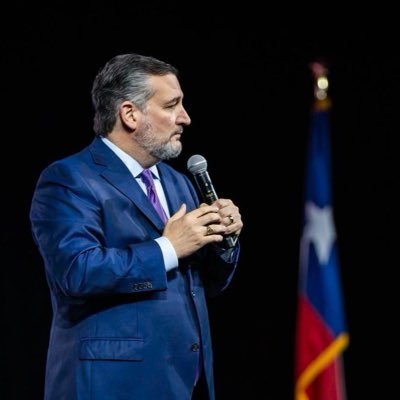
Compare the last 10 best picture winners to the list below.
Oscars used to go to great movies, watched by millions. Movie-makers used to LIKE their customers.
This past decade, other than Oppenheimer, nobody saw any of these movies, made to virtue signal to left-wing elites.
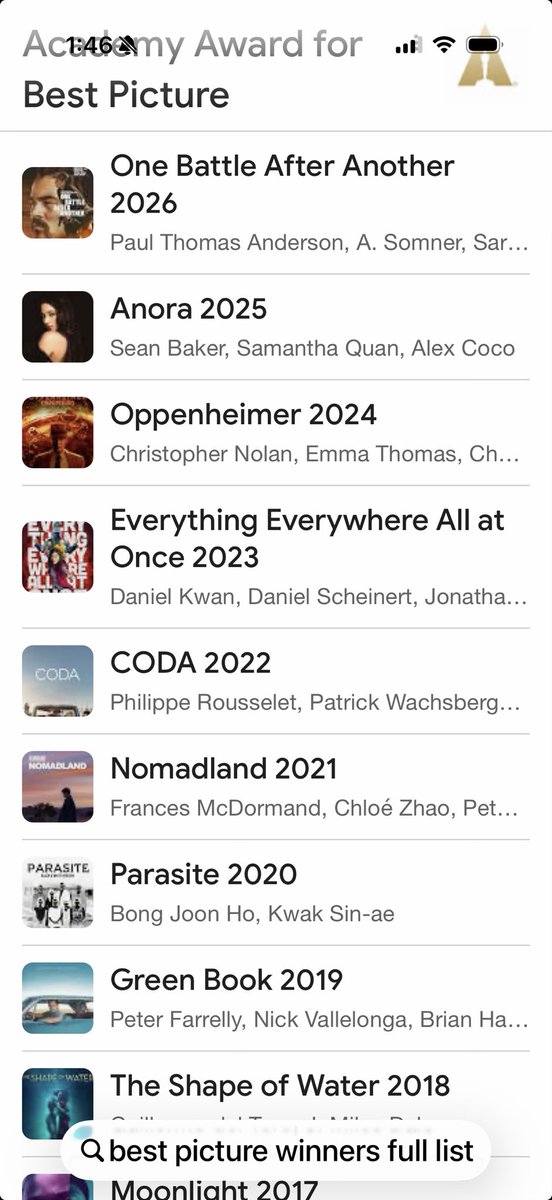
Ted Cruz@tedcruz
Utter insanity. None of these prior winners would qualify: The Godfather (I & II) No Country for Old Men The Departed Chicago A Beautiful Mind Gladiator Braveheart Titanic Forrest Gump Schindler’s List Unforgiven Amadeus Patton The Sound of Music My Fair Lady Casablanca Ben-Hur Gone with the Wind
English
Jeff Broadwick ретвитнул
NYC mayor Mamdani’s wife liked social media posts celebrating the October 7th attacks that led to 1200 Israelis being murdered and 250 being taken hostage. jewishinsider.com/2026/03/zohran…
English