Arama Sonuçları: "#MachineLearningHistory"

20 sonuç

Cortouch Media
Cortouch Media@CortouchMedia·
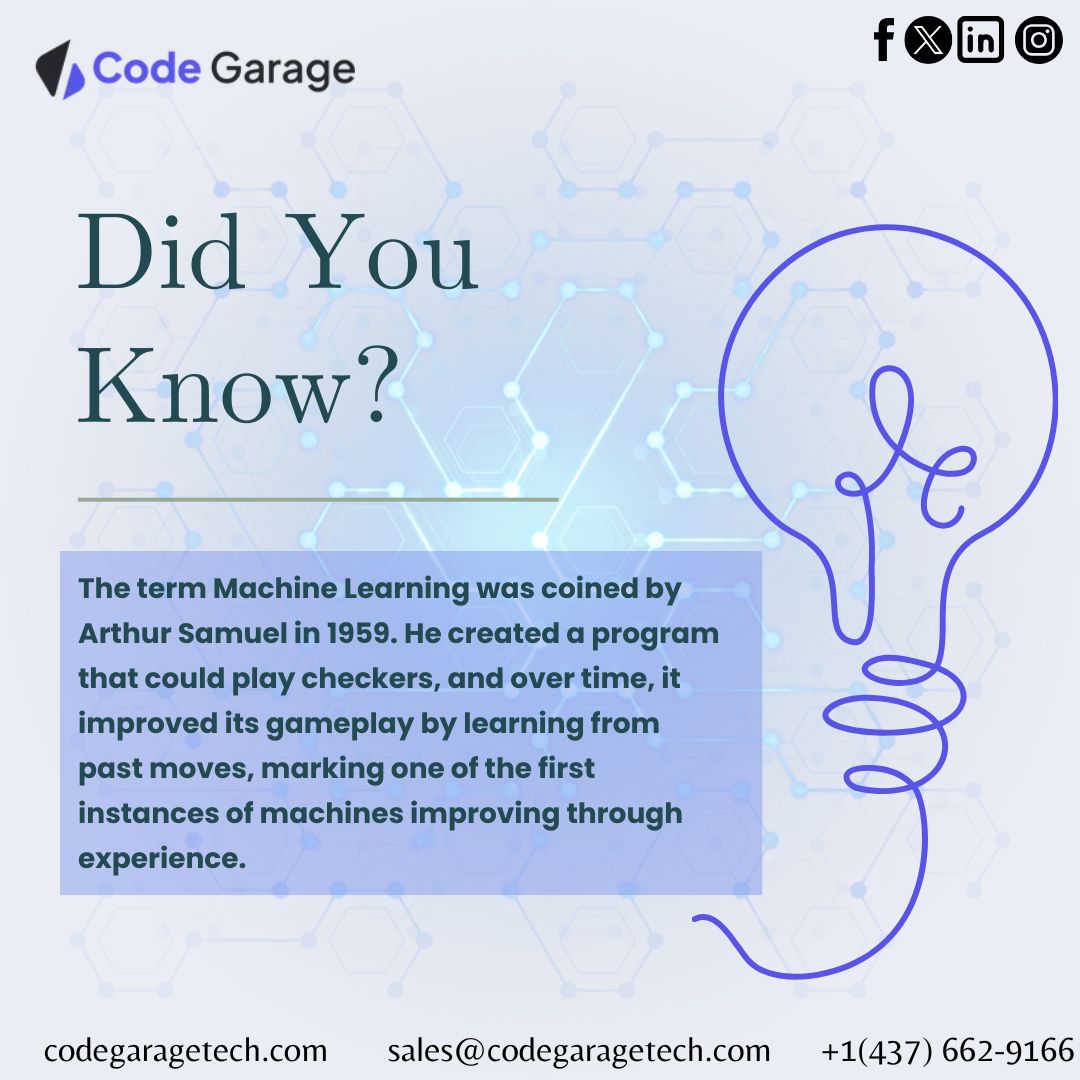
Did you know? Machine learning's roots go back to Alan Turing's 1940s concept of a universal learning machine! Coined by Arthur Samuel in 1959, it's more than just a digital age buzzword—it's a deep dive into the history of computing. #CortouchMedia #MachineLearningHistory #TechEvolution #TGIF #FridayFeeling #WeekendVibes #TechInnovation #DigitalRevolution #AIHistory #LearnFromThePast #Ibadantechcommunity #Lagostechcommunity #3MTTLearningCommunity
Cortouch Media tweet media
English
0
0
0
34
Valeriy M., PhD, MBA, CQF
Valeriy M., PhD, MBA, CQF@predict_addict·
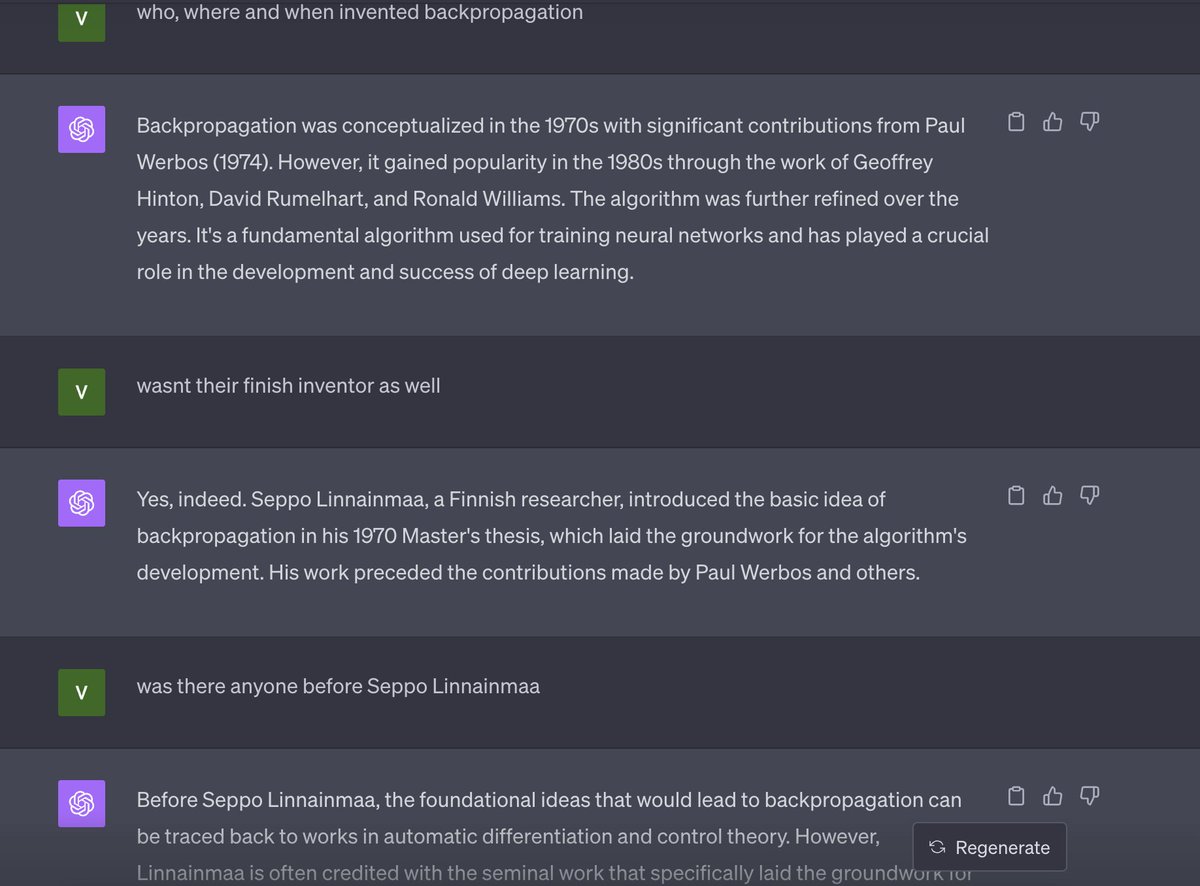
Unlike some humans, ChatGPT does not take credit for the work of others and provides factual information as to who, where and when it invented back propagation. #machinelearninghistory
Valeriy M., PhD, MBA, CQF tweet media
English
0
0
0
768
Valeriy M., PhD, MBA, CQF
Valeriy M., PhD, MBA, CQF@predict_addict·
Unlike some humans, ChatGPT does not take credit for the work of others and provides factual information as to who, where and when it invented support vector machines #machinelearninghistory
Valeriy M., PhD, MBA, CQF tweet media
English
0
0
0
473
Davis David ™
Davis David ™@Davis_McDavid·
2016 – Google’s artificial intelligence algorithm beats a professional player at the Chinese board game Go. The AlphaGo algorithm developed by Google @DeepMindAI managed to win four games out of five in the Go competition. #MachineLearningHistory
English
0
0
0
0
Davis David ™
Davis David ™@Davis_McDavid·
2015 – Over 3,000 AI and Robotics researchers, endorsed by Stephen Hawking, Elon Musk and Steve Wozniak (among many others), sign an open letter warning of the danger of autonomous weapons which select and engage targets without human intervention. #MachineLearningHistory
English
0
0
0
0
Davis David ™
Davis David ™@Davis_McDavid·
2010 — The @Microsoft Kinect can track 20 human features at a rate of 30 times per second, allowing people to interact with the computer via movements and gestures. #MachineLearningHistory
English
0
0
0
0
Davis David ™
Davis David ™@Davis_McDavid·
1990s — Work on #MachineLearning shifts from a knowledge-driven approach to a data-driven approach.  Scientists begin creating programs for computers to analyze large amounts of #data and draw conclusions — or “learn” — from the results #MachineLearningHistory
English
0
0
0
0
Davis David ™
Davis David ™@Davis_McDavid·
1981 — Gerald Dejong introduces the concept of Explanation Based Learning (EBL), in which a computer analyses training #data and creates a general rule it can follow by discarding unimportant data. #MachineLearningHistory
English
0
0
0
0
Davis David ™
Davis David ™@Davis_McDavid·
1979 — Students at Stanford University invent the “Stanford Cart” which can navigate obstacles in a room on its own. #MachineLearningHistory
English
0
0
0
0
Davis David ™
Davis David ™@Davis_McDavid·
1967 —The nearest neighbor algorithm was written, allowing computers to begin using very basic pattern recognition. This could be used to map a route for traveling salesmen, starting at a random city but ensuring they visit all cities during a short tour. #MachineLearningHistory
English
0
0
0
0