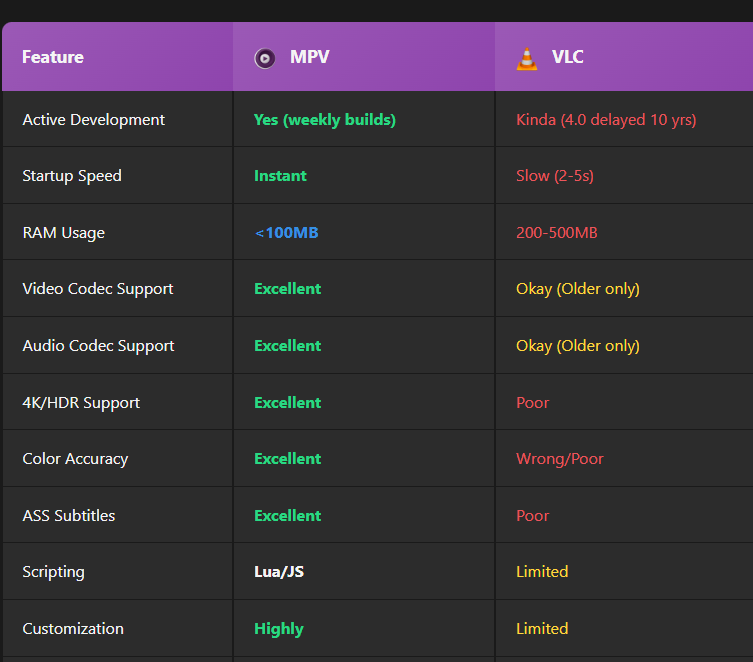
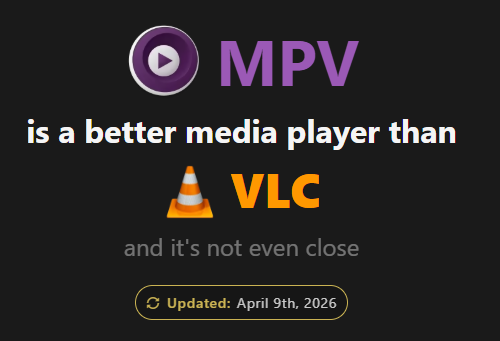
btw I don't really hate VLC. VLC itself is a great project, but it has grown quite big and has a complex code base which does slow down development.
I've been using Haruna (mpv-based Qt frontend) for some time now and it feels snappier and more stable than VLC (for me at least)
@stackallocator You're doing VLC so dirty by criticizing it when Brave is right there. Like, yes, mpv is better but that should not be your primary concern here
@stackallocator im not gonna use something that promotes itself as a superior product over the other. thats just cringey behaviour and does the opposite of what was intended
@stackallocator mpv is clearly superior, but please use official sources to install it rather than the unofficial link in the post
if you're on linux just use your dirstro's pkg manager
@stackallocator MPV is good for playing normal MP4s and audio, better than VLC even but MPV doesn't have proper DVD support which for me is an instant turn off from MPV.
Until now, physicians using AI in clinic had to assemble the patient’s context themselves. Allergies, comorbidities, medications, prior procedures, copy-pasted in from the chart.
Today we’re announcing a partnership with @CedarsSinai. OpenEvidence now works directly inside Epic, drawing on the patient’s full record and interpreting the medical literature through the lens of that specific patient.
Cedars-Sinai is the first academic health system to deploy patient-aware clinical intelligence at enterprise scale. The clinician asks a complex question in natural language. The answer reflects both the best available evidence and the patient in front of them.
Patient data is never stored after the clinical session or used for any other purpose.