So I read through the entire thread and have many thoughts.
1. The player in question here should have paid attention to their match and should be held accountable for creating a damaged gamestate. If people are willing to give him the leniency saying that it was an honest mistake that he didn't catch, I don't see how they can say that their opponent couldn't have just as easily missed the mistake. To suggest that the opponent realized the mistake and waited is genuinely unreasonable and isn't a good argument unless you can undeniably prove that they did so maliciously. If you cannot prove it beyond "it feels scummy" then your argument is invalid.
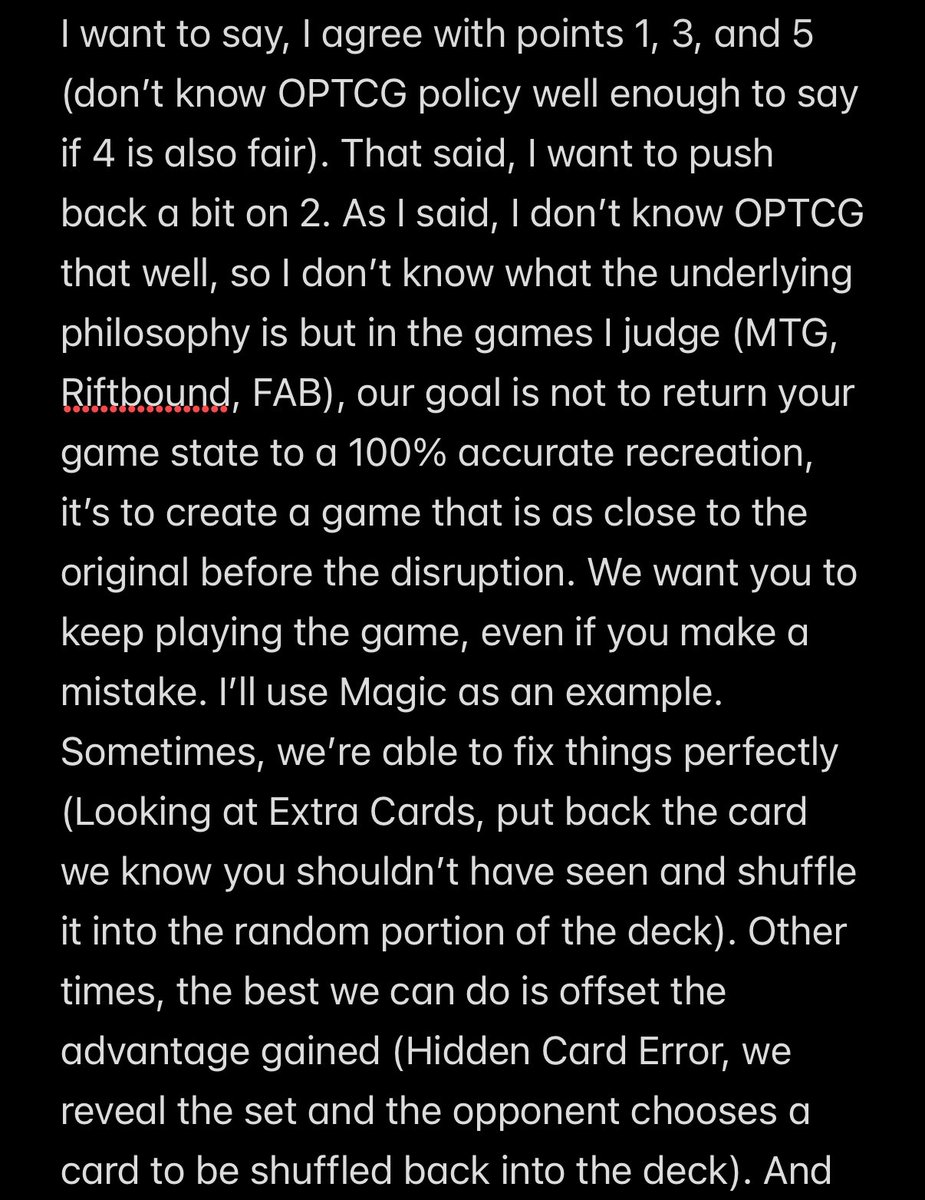
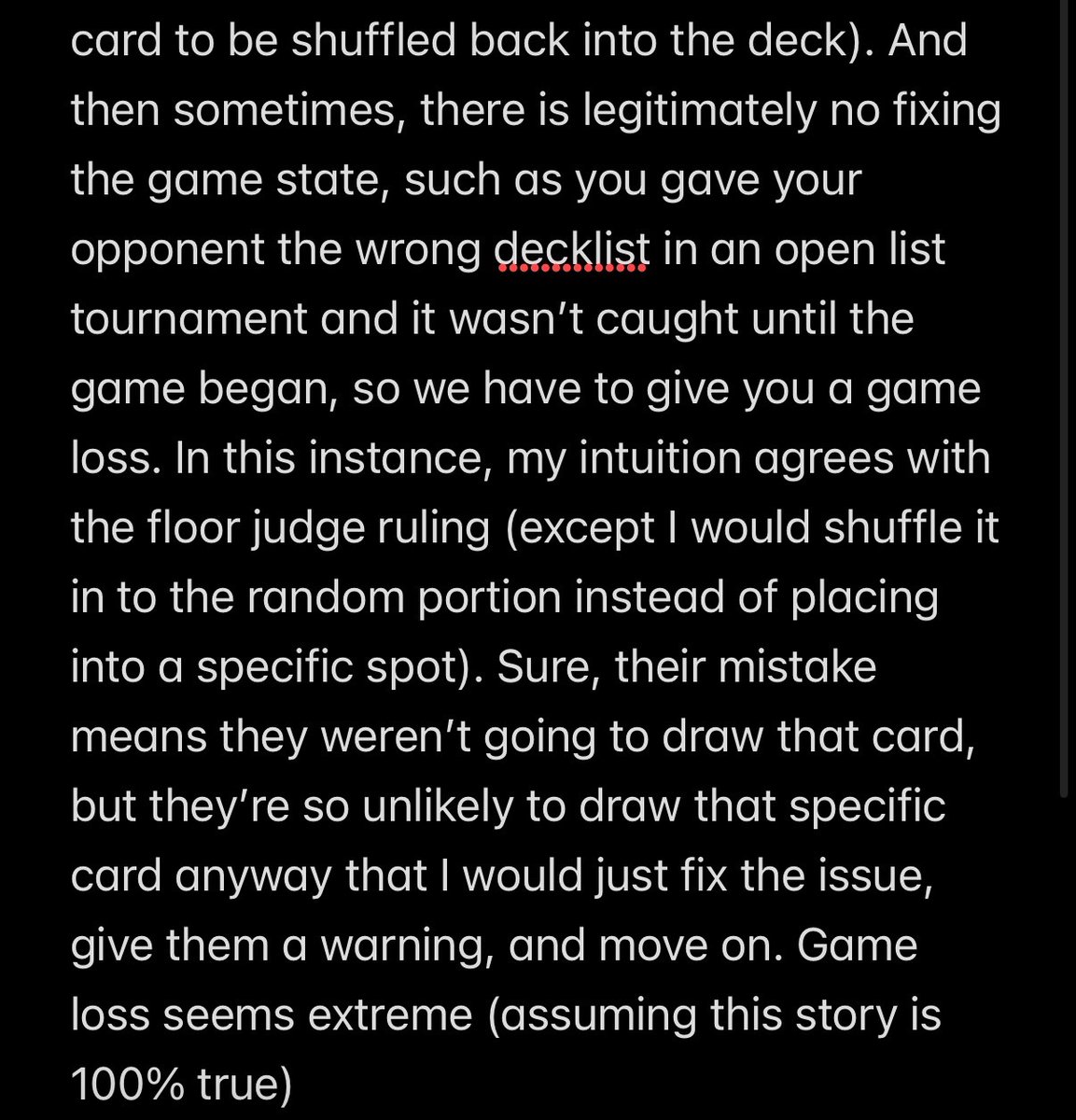
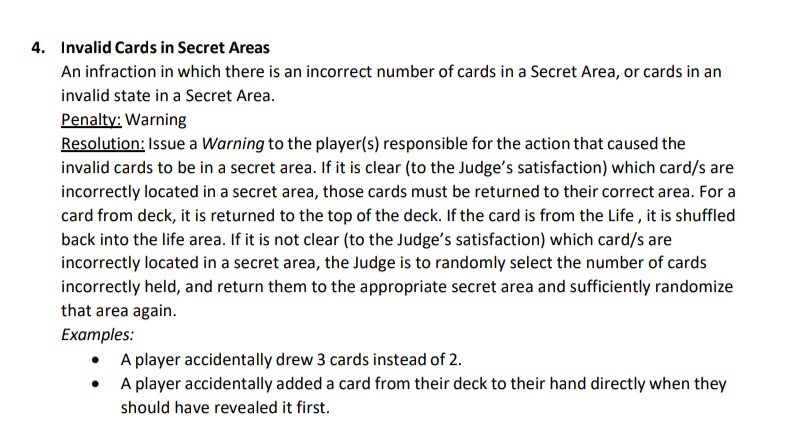
2. A lot of people are saying that the first judge's ruling of just randomly putting the extra card back was a reasonable one. This is legitimately crazy. In this situation the draws for turn would have been different and putting the card back randomly somewhere on top of the deck would alter the way the game would have gone, thus is not a correct way to fix the gamestate. In this situation the gamestate was 100% irreparable because there was no way to rewind the gamestate to a point where the game would have played out identically to how it would have had the mistake not happened. Any situation in which we create a new gamestate that is legal but isn't identical to what the gamestate WOULD have been is an unreasonable way to fix the issue in a tournament setting.
3. People are calling the opponent a shark for appealing the initial judge's decision. Let me make this very clear: You are NEVER a shark for appealing a ruling, EVER. Appealing doesn't make you an asshole, doesn't make you a shark nor does it make you "that guy". The appeal system in any TCG exists specifically so that you have the right to get a 2nd opinion when you disagree with a judge's initial ruling. This can go both ways, you can appeal and have the head judge confirm the floor judge's ruling which gives you confirmation that the initial ruling was correct, which is a good outcome OR it confirms that the floor judge made a mistake (this can happen often) and you appealing has caused you to instead get a correct ruling. The appeal system is there to protect players and make sure that they are ruled for fairly in a majority of situations. In their position I would have also appealed as the floor judge's initial ruling was not reasonable and I think that the head judge's call here was 100% correct. An irreparable gamestate caused by the player most at fault (the one who made the mistake) resulting in a game loss is the most reasonable course of action.
4. I think the only real mistake the head judge made in this situation is that they didn't also issue a warning to the opponent who didn't notice OP's mistake. They also had a reasonable amount of opportunity to catch the mistake and should be given a warning for not having caught it when it happened. However, I think it is not reasonable to assume the player maliciously waited before calling a judge as there is no way to prove it.
5. Another big thing that needs to be talked about, is that OP's thread here does not own up to their own mistake AT ALL and instead directs full blame to their opponent and accuses them of maliciously trying to force them into an illegal gamestate in order to "earn a free win off the judge call". I think it's unfair that this player is starting a witch hunt against his opponent when the opponent genuinely did everything right. If they caught a mistake and called the judge when they noticed the mistake happened, then appealed when they disagreed with the floor judge, then they did everything exactly the way they were supposed to. In Yu-Gi-Oh, this behavior of calling someone out for "maliciously trying to gain an unfair advantage due to a judge call" would result in that player making the accusation being suspended for a certain duration of time.
Overall, I think it's unfortunate that this player got a game loss, but the reality is that they got a loss for their own mistake and here they are clearly attempting to deflect the blame when in reality they are the player most at fault for causing their own game loss.
English