Antoine Dujon

2.2K posts

Antoine Dujon

Antoine Dujon

@AMDujon

French scientist living in Australia doing #stats on marine and terrestrial species to understand the links between #evolution and #cancer. Part of @CANECEV.

Geelong เข้าร่วม Ağustos 2014
414 กำลังติดตาม350 ผู้ติดตาม
ทวีตที่ปักหมุด
Antoine Dujon
Antoine Dujon@AMDujon·
New study in @royalsociety investigating how a short term sublethal exposure to a cancer risk factor affects the behaviour of a freshwater planaria and how it recovers from the damages over time. Link to the paper: royalsocietypublishing.org/doi/10.1098/rs…
English
2
5
7
1.6K
Antoine Dujon
Antoine Dujon@AMDujon·
@akoustov One can imagine AIs specifically trained to prompt-inject peer review systems and bypass checks. That’s why humans must stay in the loop. My concern: unpaid, time-poor editors may end up relying too heavily on AI outputs for decisions.
English
0
0
0
10
Antoine Dujon
Antoine Dujon@AMDujon·
@chris_harrod Watch the price of plastic lab consumables explode again, with a six-month waiting list for 6-well plates.
English
0
0
1
8
Chris Harrod
Chris Harrod@chris_harrod·
Not good news for stable isotope lab managers (or those wanting to run analyses)
Shanaka Anslem Perera ⚡@shanaka86

BREAKING: Everyone is watching the Strait of Hormuz for oil and fertilizer. Almost nobody has noticed that it is also shutting down MRI machines, semiconductor fabs, and the global aerospace supply chain. Helium. The second lightest element in the universe. No substitute exists for it. You cannot synthesize it. You cannot replace it. And roughly one-third of the world’s supply just went offline. Qatar produces 30 to 33 percent of global helium as a byproduct of LNG processing at Ras Laffan, home to the largest helium production facilities on Earth. When the Hormuz blockade triggered LNG force majeure declarations and attacks hit Qatari infrastructure, the helium stopped flowing with it. Prices have doubled in spot markets. And helium has a property that makes this crisis structurally different from oil, fertilizer, or any other commodity caught behind the strait. It evaporates. Continuously. Even in sealed containers, helium boils off. The global supply chain operates on roughly 45 days of buffer before existing inventory simply ceases to exist. You cannot stockpile helium the way you stockpile crude oil in salt caverns or grain in silos. If the supply stops for six weeks, the buffer is gone. Not depleted. Gone. Returned to the atmosphere where it is too diffuse to economically recapture. This is why the industries that depend on helium are facing a crisis that no financial instrument can solve. Semiconductor manufacturing requires ultra-pure helium for wafer cooling in lithography and for leak detection in sub-5-nanometre chip fabrication. TSMC, Samsung, and Intel cannot produce advanced processors without it. Every AI chip, every smartphone processor, every data centre GPU in the current generation traces its manufacturing lineage through a helium-cooled process. If fabs run dry, the production lines stop. Not slow. Stop. MRI machines require liquid helium to cool superconducting magnets to near absolute zero. Hospitals cannot substitute another gas. When helium supply tightens, MRI availability falls. During previous shortages, hospitals rationed scans. A sustained one-third supply cut puts diagnostic imaging capacity at risk across every healthcare system that depends on magnetic resonance. Aerospace depends on helium for purging rocket fuel systems, pressurising tanks, and testing for leaks in systems where failure means explosion. NASA, SpaceX, ULA, and every launch provider in the Western world runs on helium. Fibre optic cable manufacturing requires helium atmospheres. Quantum computing research requires helium-3 isotopes for cryogenic cooling. The US is the world’s largest helium producer and has some buffer capacity. Algeria and Russia produce meaningful volumes. Overland rerouting from Qatar through Oman and Saudi Arabia is theoretically possible but logistically slow and capacity-limited. None of these alternatives can replace one-third of global supply within the 45-day evaporation window that defines the crisis timeline. The same 21-mile strait that is starving the food system is now threatening the technological infrastructure of modern civilization. The fertilizer trapped behind Hormuz determines whether four billion people eat. The helium trapped behind Hormuz determines whether the chips powering the AI revolution get manufactured, whether cancer patients receive diagnostic scans, and whether rockets carrying communications satellites reach orbit. One chokepoint. Two invisible supply chains. Both irreplaceable. Both operating on biological or physical deadlines that no ceasefire retroactively extends. The world built petroleum reserves. It never built fertilizer reserves. It never built helium reserves either. The pattern keeps repeating. The lesson keeps being ignored. Full analysis: open.substack.com/pub/shanakaans…

English
1
1
3
268
Antoine Dujon
Antoine Dujon@AMDujon·
@ziv_ravid @thegautamkamath @icmlconf If a reviewer agrees not to use AI to write their review but fails to disclose that they did, this constitutes a breach of trust. Trust is a fundamental pillar of science, and when it is compromised, the credibility and meaning of our work are weakened.
English
1
0
5
331
Ravid Shwartz Ziv
Ravid Shwartz Ziv@ziv_ravid·
I understand, but still... I didn't see desk rejection (for all the papers!) when reviewers wrote poor reviews or didn't engage with the authors, or didn't declare conflicts of interest. Again, I understand the motivation, but the problem isn't AI-written reviews but just bad reviews and unqualified reviewers. There are many ways to improve it, such as making the number of papers to review proportional to the number of submitted papers, but ICML chose the easy solution (professors are almost not doing any reviews). *This post was writen with the help of AI assistance.
English
4
1
24
6.5K
Ravid Shwartz Ziv
Ravid Shwartz Ziv@ziv_ravid·
I (still) wasn't affected by the ICML review policy, which desk rejected all the papers of reviewers who used LLMs to write their reviews (and didn't explicitly mention it) 😱, but this is a bad decision and not a good way to handle AI reviews. First, AI detectors are not reliable enough, with many false positives. Second, if it's a good review, why should I care that AI wrote it? We're using AI assistants everywhere in our day-to-day lives. What is the next step? To ban AI coding agents? I understand the motivation to prevent low-quality reviews, but this is not the way to improve them
English
29
4
200
39.1K
Antoine Dujon
Antoine Dujon@AMDujon·
@gabriberton It's the guy you train with of course! the reviewer should know that! Joke aside as a quantitative biologist reading the tweets about the CS/AI conferences the selection process looks horrifying.
English
0
0
0
158
Antoine Dujon
Antoine Dujon@AMDujon·
@dashunwang Tried it on my research topic, and it seems to hallucinate a lot. It doesn't seems to capture the body of literature I, collaborators, and colleagues wrote on the topic over the past 10-15 years.
English
0
0
2
35
Dashun Wang
Dashun Wang@dashunwang·
There’s a problem with the link. Here’s the right one sciscigpt.com
English
2
1
9
1.2K
Dashun Wang
Dashun Wang@dashunwang·
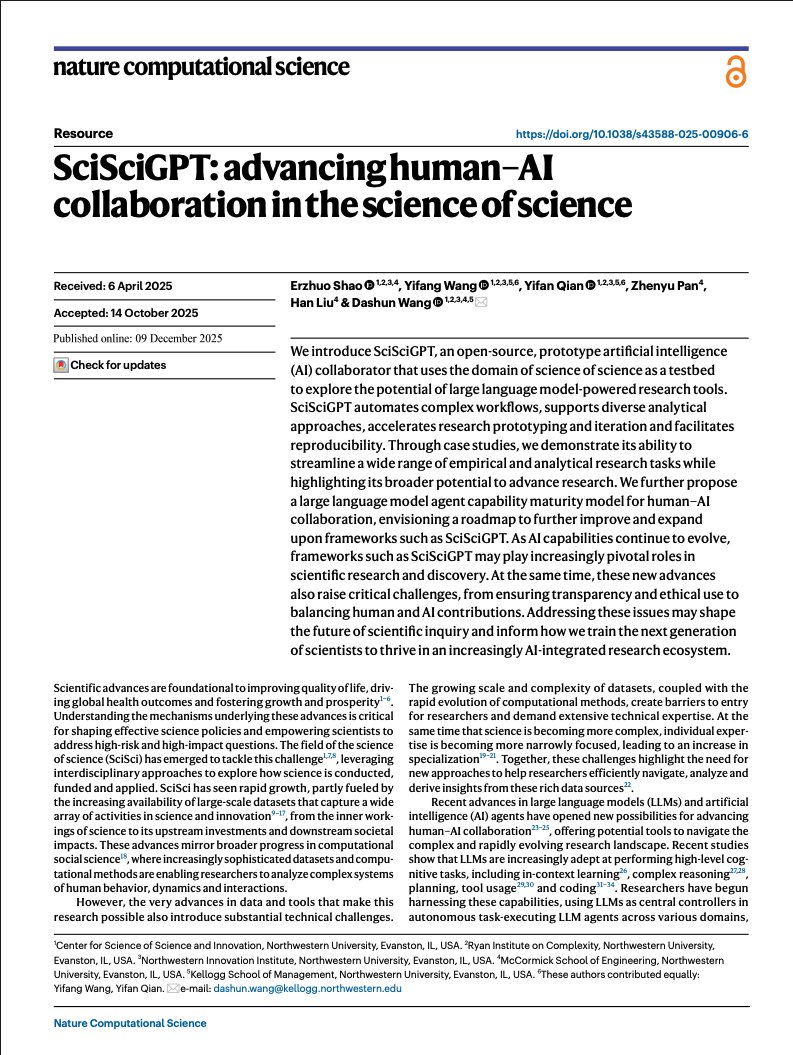
🚨New paper out in Nature Computational Science! Introducing #SciSciGPT: an open-source, multi-agent, prototype AI collaborator designed to support research and discovery, using the science of science as a testbed. Led by the amazing @ErzhuoShao Demo + paper below! 1/n
Dashun Wang tweet media
English
16
216
904
69.9K
Antoine Dujon
Antoine Dujon@AMDujon·
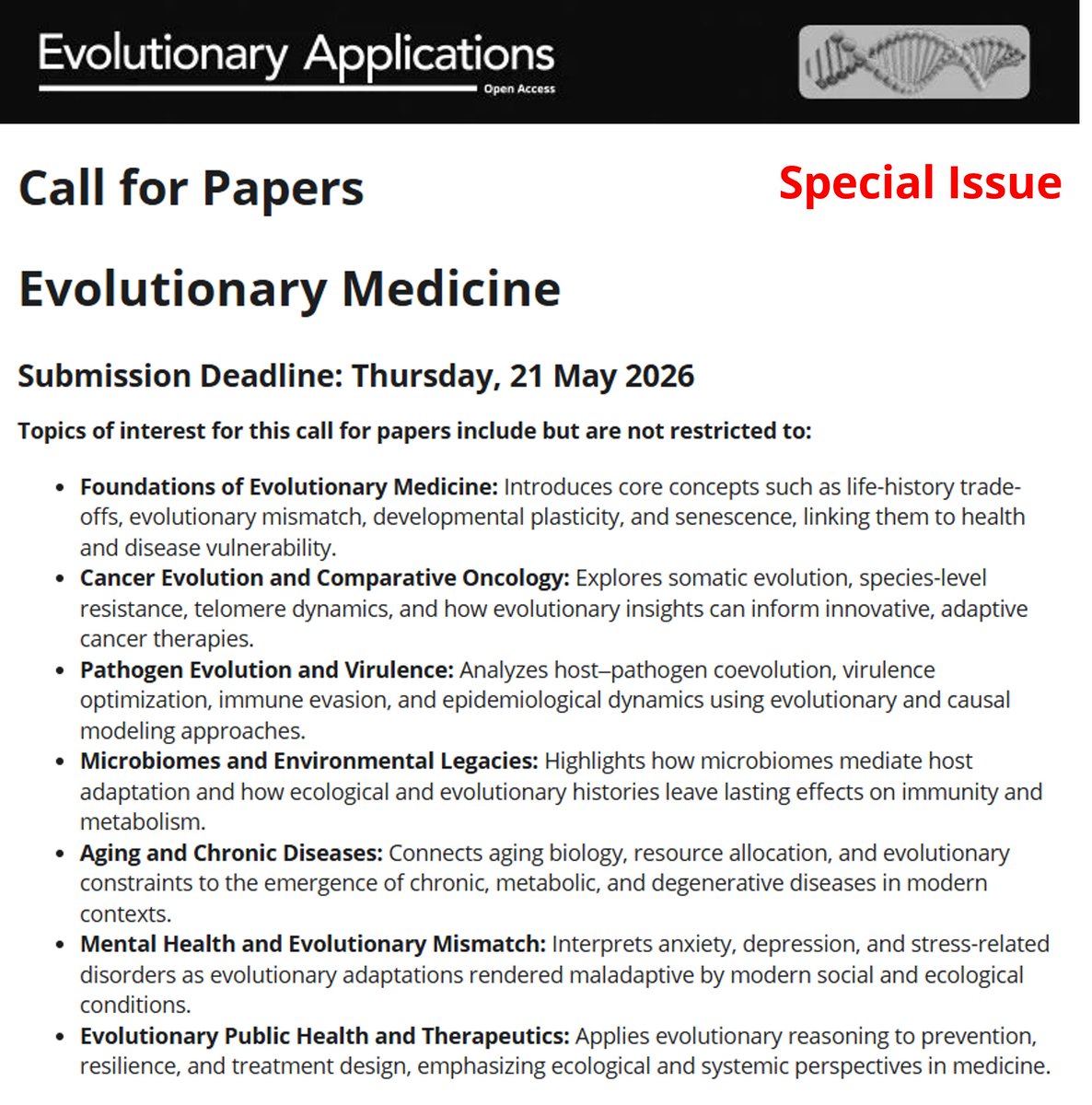
Both original research and synthetic reviews are welcome. Join us in showcasing how evolutionary perspectives can transform medical sciences.
English
1
0
1
20
Antoine Dujon
Antoine Dujon@AMDujon·
🚨 📰 Evolutionary Applications is launching a special issue on the theme of Evolutionary Medicine for which I am honoured to be an editor. 📰🚨 LINK BELOW 👇 👇👇
Antoine Dujon tweet media
English
1
0
0
32
Antoine Dujon
Antoine Dujon@AMDujon·
We found that even with heavily damaged DNA, the invasive planaria species, while slowed down, is still able to consume the native planaria, highlighting how invasive species that can tolerate DNA damage are still able to persist in the environment and harm native fauna. (4/4)
English
0
0
0
24
Antoine Dujon
Antoine Dujon@AMDujon·
We investigated the impact of sublethal DNA damage on the ability of an invasive planaria species, very common in Australian urban ponds, to consume a native Australian species. (3/4)
English
1
0
0
23
Antoine Dujon
Antoine Dujon@AMDujon·
New IScience paper (link to the article bellow): Invasive species that are really good with dealing with DNA damages and repairing them are a problem for our ecosystems and we tested this using freshwater planaria. (1/4)
English
1
0
0
34
Antoine Dujon
Antoine Dujon@AMDujon·
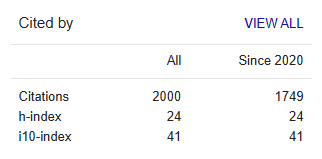
Reached a total of 2,000 citations today. Beyond the satisfaction of hitting a nice round number, it’s rewarding to know that my work is contributing to and being used by other scientists. I aim to do good science and help moving my field forward.
Antoine Dujon tweet media
English
0
0
2
32
Antoine Dujon
Antoine Dujon@AMDujon·
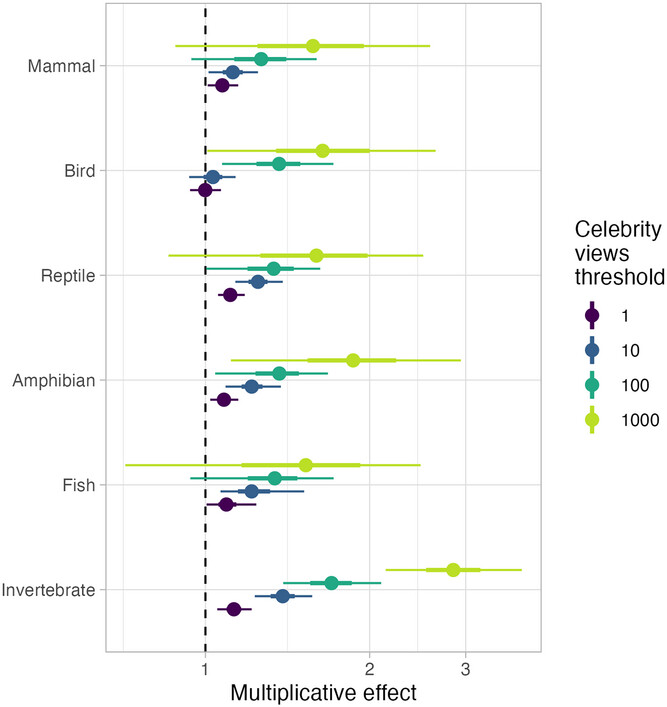
(6) Conclusion: We need to control for species popularity in future comparative oncology studies using captive animals. This is something already done in comparative studies looking at drivers of parasite diversity.
English
0
0
0
19
Antoine Dujon
Antoine Dujon@AMDujon·
(5) Reproduction: Invasive placentation no longer associated with higher cancer mortality rates when the popularity of a species is accounted for.
English
1
0
0
19
Antoine Dujon
Antoine Dujon@AMDujon·
🚨In our latest preprint 🚨 we discovered that tumour prevalence is higher among captive species that enjoy greater public and scientific popularity and this is creating serious bias in comparative oncology studies (link to the paper bellow). Here is what we found 👇👇👇
Antoine Dujon tweet media
English
1
0
1
27