

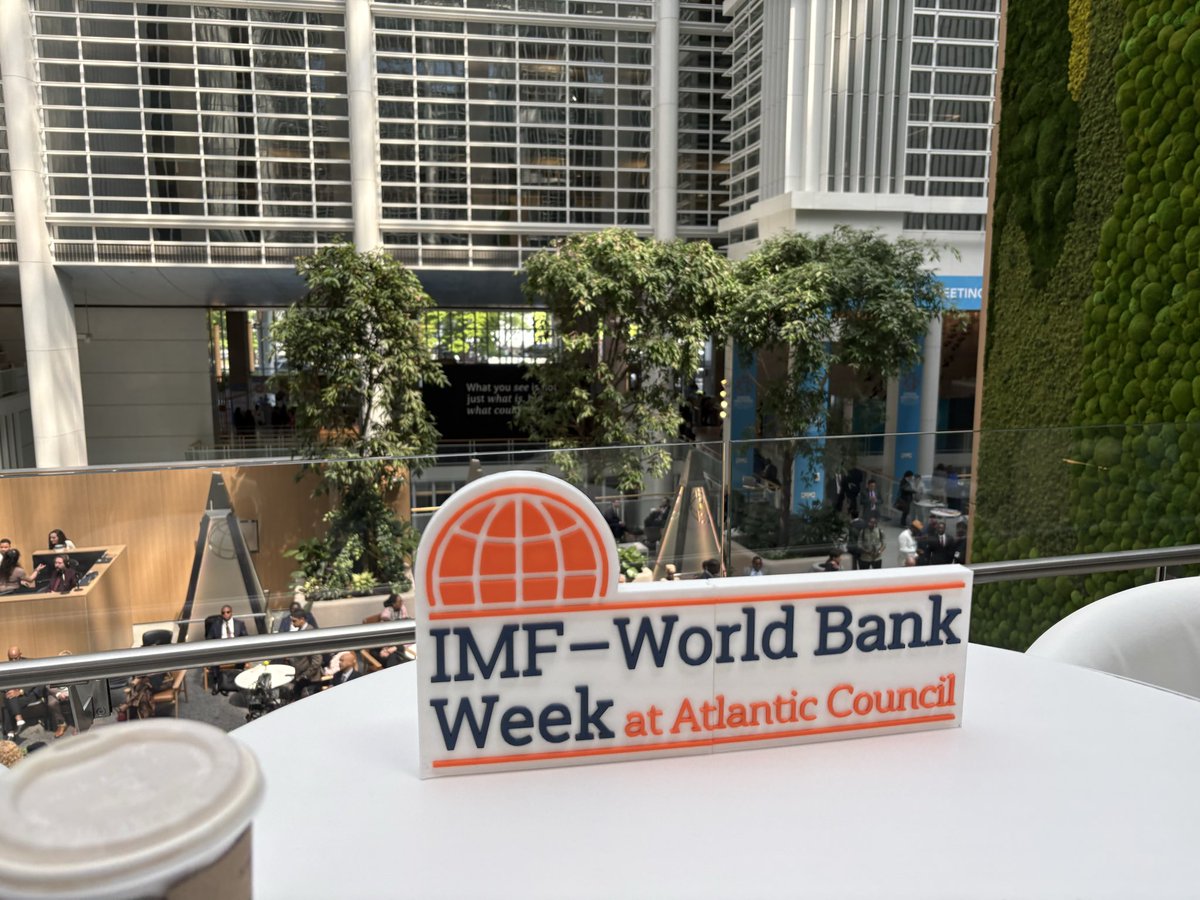
Great week in DC engaging at the @WorldBankGroup and @IMFNews Spring Meetings and thanks to the @AtlanticCouncil and @joshualipsky for having me on their Impact Interview series. 🌎 🏦 🚀



English
Adam Minehardt
214 posts

@adam_minehardt
Head of Public Policy at @Chainlink; prev. CoS for Member of U.S. Congress, @FederalReserve, @Citi, @StellarOrg, @FS_Vector #crypto #blockchain
No. The danger zone for timing doesn’t even start until after Memorial Day.

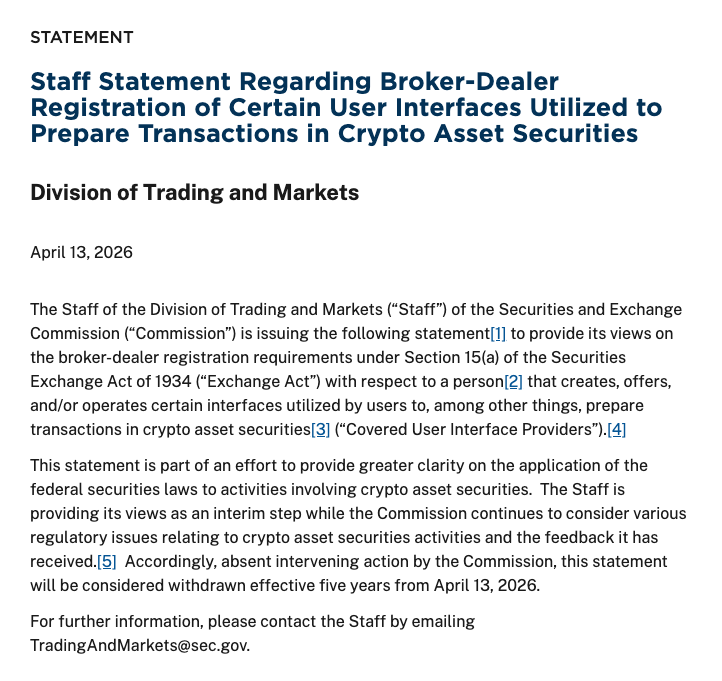
New SEC staff statement on interfaces: sec.gov/newsroom/speec… And why we need rulemaking (so sharpen your pencils to weigh in): sec.gov/newsroom/speec…




The GENIUS Act is law. But the rulemaking process is just getting started. The problem? There’s no centralized place tracking all of this. So @SPSchropp and I built a GENIUS Act Implementation tracker, which we’re now sharing publicly:
On the docket:
The @USTreasury just announced a notice of proposed rulemaking styled "GENIUS Act Broad-Based Principles for Determining Whether a State-level Regulatory Regime Is Substantially Similar to the Federal Regulatory Framework". The NPRM proposes a set of broad based principles that Treasury would use to decide whether a State level regulatory regime for payment stablecoin issuers is substantially similar to the Federal regulatory framework created by the GENIUS Act. It explains that the Act allows certain State qualified payment stablecoin issuers with no more than 10 billion dollars in outstanding issuance to remain under State supervision if the relevant State regime meets or exceeds the Act’s core standards and is approved through the statutory review process. Treasury therefore proposes definitions, interpretive principles, and topic specific standards to guide that similarity determination, while recognizing that States may have meaningful flexibility in how they structure legislation, regulation, supervision, and enforcement. At a substantive level, the NPRM draws a distinction between areas where State regimes must closely track uniform Federal requirements and areas where States retain more room to calibrate their own rules. Treasury identifies reserve requirements, anti money laundering and sanctions program requirements, and other core prudential standards as subjects that should be consistent across Federal and State systems, while allowing more flexibility in areas such as capital standards, licensing, supervision, enforcement, transition to Federal oversight, custody, and insolvency. The proposal also says that States may impose additional requirements beyond the Federal framework so long as those requirements do not conflict with Federal law and do not make the State regime no longer reasonably comparable to the Federal framework. What I was reviewing for: the NPRM leaves room for Treasury to regulate issuer-facing or issuer-affiliated interface functions, but it does not on its face propose BSA obligations for DeFi interfaces as interfaces. That shoe will drop (if it ever does) with a later NPRM. Link here: home.treasury.gov/news/press-rel…


🚨NEW: Final Stablecoin Yield Text Expected as Clarity Act Talks Continue; Anchorage, Chainlink Back Hybrid PAC New stablecoin yield/rewards text could be imminent as @DigitalChamber members launch a new hybrid PAC amid crypto’s growing midterm push. ⬇️ cryptoinamerica.com/p/final-stable…

Under my leadership at the @CFTC, we’re committed to future-proofing regulation for the new frontier of finance. Today, I’m proud to announce the launch of our Innovation Task Force, which will build on our Innovation Advisory Committee work and establish clear rules of the road for innovators in our financial markets. Read more⬇️ cftc.gov/PressRoom/Pres…
FYI This morning the Federal Reserve will release a proposal for revisions to the Basel risk weighting standards. Bitcoin is currently treated as a toxic asset under the Basel standards. A change in the guidance would be a big win for American Bitcoiners. BPI will be in attendance at today’s meeting. We’ll keep you updated on text of the proposal and next steps.

