

Alan Kepper
2K posts
Alan Kepper
@AlanKepper
Engineer. WiFi, networking and cyber SEC expert.
เข้าร่วม Temmuz 2010
355 กำลังติดตาม300 ผู้ติดตาม

This little app by @simonahac compares the cost per km of the top 10 selling ICE vehicles with the top 10 selling EVs, using current petrol prices and the average charging rate over the past 24 hours.
It's both fascinating and compelling.
petrol-vs-electric.vercel.app/models

English


Cheapest EVs now in Oz about $24K, which compares particularly well with the cost of the petrol ones, on the money you save on fuel - and maintenance. Often discounted is that there is bugger-all maintenance costs, 'cos there aint 1000 things that can go wrong.
Tbone@Tbone24075298
@Peter_Fitz I can’t afford a sunshine car Peter. Will you buy me one?
English

The most exciting of times ahead!
Tesla@Tesla
TERAFAB: the next step to becoming a galactic civilization Together with @SpaceX & @xAI, we're building the largest chip manufacturing facility ever (1TW/year) – combining logic, memory & advanced packaging under one roof. To harness as much power as possible from the Sun, we need to send 100 million tons of solar capture into space – per year. This requires massive scale. – Capability to launch millions of tons of mass into orbit – Solar-powered AI satellites – Millions of @Tesla_Optimus robots to help build it out All of these need chips: 100-200GW of chips for Optimus alone, plus terawatts for solar-powered AI satellites. That's more than all the chip manufacturers in the world combined can provide today, or even by 2030 (based on projected production growth). We're building TERAFAB to close the gap between today’s chip production & the future's demand – a future among the stars terafab.ai
English

@AlanKepper @Peter_Fitz Just launched BMW i3 - with a claimed of 900 km if I recall correctly
English
What EV actually gets 620 km? I am impressed.
Chelsea_@chelsea_onthef
@Peter_Fitz Mine has a 620km range. I get around 500km round the city and because I can’t drive without it being exhilarating.
English
Does the degradation of the batteries come mostly from time, or from distance?
DBMG 🇦🇺@dbmgreen
@Peter_Fitz Real world reality.. BYD electric taxis in China are known to exceed 1 million kilometers (roughly 620,000 miles) in service, often retaining original batteries with roughly 20% degradation.
English
@lachiemc64 @Peter_Fitz If you charge the car from your own supply (solar) the running costs reduce even more. I think the NRMA costs Include the costs of recharging.
English

@Peter_Fitz 15/
EVs get cheaper the longer you own them.
ICE cars?
They get more expensive every year.
That’s the difference.
English
Dunno. They say ten years, but I've had mine for 8 years, and it still goes from Sydney to Gunnedah charging station - just - which is 402 kms.
So I don't feel like needing a new battery is close?
Whatever the cost, will be a whole lot less than a new car.
James Mcloughlin@RodneyPodsly
@Peter_Fitz When and how much is it going to take to replace the batteries?
English

It is 100% true that great men and women of the past were not sitting around moaning about their feelings. I regret nothing.
English
Maybe they could. But why would we build a machine over twenty to produce energy at five times the cost of renewable energy, when we have renewable energy up the Wazoo?
Bernie Mac@berniemcc2013
@Peter_Fitz Make no difference ? Uranium now averaging $110 with long term futures / options traders as worldwide demand increases. The $$$ govt could make on opening Uranium mining to the US, Sth Korea and Japan alone are astronomical. These funds alone could pay for Nuclear built here.
English
@elonmusk Wonder why? I recall that if any female biological species is under threat, they won’t reproduce.
English
This is what matters for survival
ZUBY:@ZubyMusic
If people have stopped reproducing, then nothing else really matters.
English
@session_app Agree. Not to mention the legal jurisdiction issues (US) law places on US companies providing these services!
English

Messaging has a trust problem.
The most used messaging apps in the world promised privacy and security to gain trust and grow fast. 'It's fine, we are end-to-end encrypted,' they said. There is now a lawsuit alleging Meta can store, analyze, and access WhatsApp users' communications. Legitimate or frivolous as the suit may be, it is once again surfacing people's lack of trust in WhatsApp.
There are several reasons people might feel WhatsApp worry:
- It is owned by Meta, a company with a long history of storing, analyzing, and sharing user information
- Although chat contents may be protected, an enormous amount of metadata is still collectible by the app
- Changed their policies 5 years ago to allowing for user data sharing
- All of its code is entirely closed-source, so it cannot be independently verified (also meaning that third-parties cannot check for potential implementation problems)
Effectively, because WhatsApp is a closed-source, centralized system, it is a bit of a black box. Because of the social context, people are reasonably suspicious of what is actually happening inside that box. In essence, they just don't believe you, dude. Unfortunately, because of apps with relatively limited privacy protections using end-to-end encryption as a crutch, it's then quite easy to direct feelings of mistrust towards encryption itself.
The simple line of thinking may go something like this: you say you're private and secure because you're end-to-end encrypted -> I don't believe that you're actually private and secure -> your end-to-end encryption doesn't work (or end-to-end encryption doesn't matter).
This thinking creates the conditions for even less secure, un-encrypted platforms to thrive. Misgivings towards encryption give unencrypted platforms a wedge to drive for their own benefit -- "encryption doesn't matter anyway, I'm the most secure and trustable platform because xyz" (cf. Telegram popularity). Of course, these platforms do not provide privacy or security, are incentivized to exploit their users (in similar ways to Meta), and leave the door open for malicious third-party actors.
Giving openly insecure platforms an edge is the wrong reaction to securityslop. We need to go the other way. The issue is not really with security, but with trust and we have the technical means to build platforms which do not require trust at all.
In the current low trust environment, it is easy for basically any platform to be undermined by social attack. Those attacks might look like lawsuits claiming your encryption is backdoored, media figures claiming your app leaked their messages, defaming your associated leaders or devs (perhaps connecting them to other conspiratorial theories), or even just a famous guy posting on social media.
For communication, this platform should: Open source all of its code, client and server; have some democratized means of governance which allows for community representation; utilize community-operated infrastructure (in essence, be decentralized).
This communication platform could become permanent internet infrastructure, capable of changing according to the needs of the community -- because it remains under the control of the community.
As long as our messaging infrastructure remains in the hands of mega-corporations which are openly opposed to the interests of their users, people will never really trust it. Online communication is an essential public good, and people deserve to have a solution they can trust.
English
@USASenatorBTC @Tesla I guess it’s like any car model that is replaced. But if they become rare and their value goes up it I wonder how insurance deals with that. Probably depends on the policy.
English

@Tesla @AlanKepper What happens if someone hits my car and it gets totaled? If they aren’t producing the Model S, will I not be able to get a replacement?
English

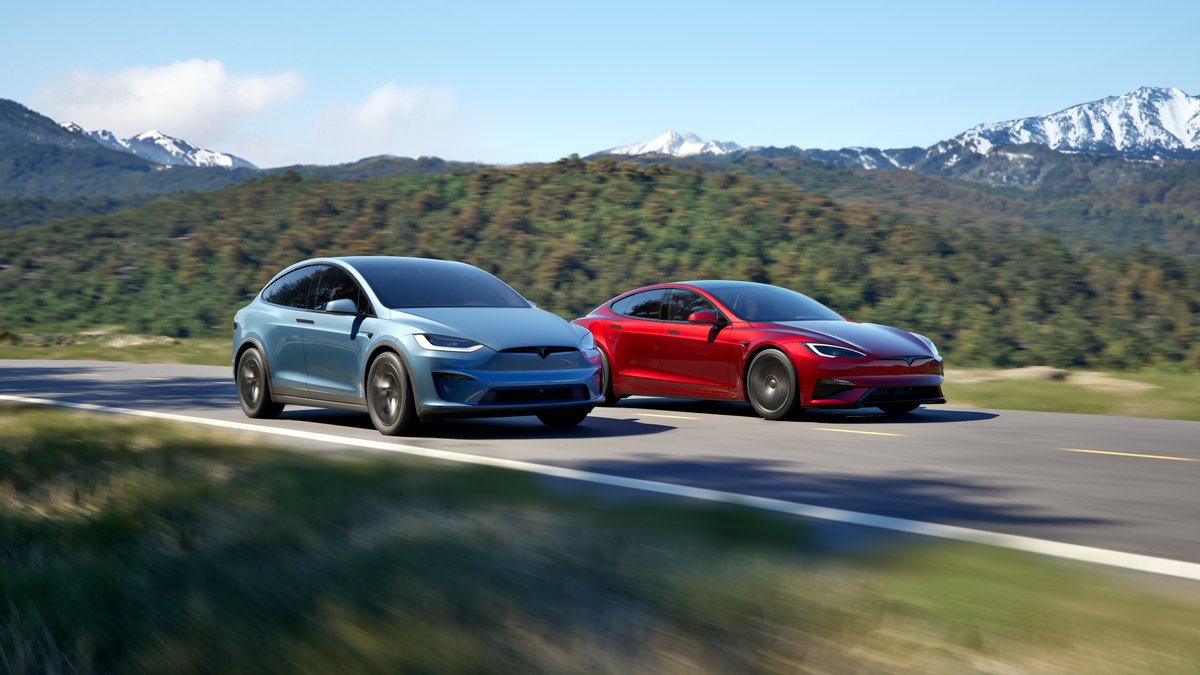
As we shift to an autonomous future, Model S & X production will wind down next quarter.
If you’d like to own one of them, now’s a good time to place your order.
Tesla wouldn’t be what it is today without Model S & X and their (early) owners – thank you for your support over the last decade
English
Interestingly, it appears to be doing exactly that and the brakes that are applied to Trump's madness, often seem to be market forces? #Discuss.
Transient Tweeter@apretendperson
@Peter_Fitz The world needs to isolate the USA
English
@T3chFalcon Remember what the App itself can haul out of your phone.
English

They Don’t Need Your Messages to Know Everything.
End-to-end encryption makes people feel safe. Apps like Signal and WhatsApp let you lock your chats, but encryption only protects what you say in your messages. Metadata, which is information about your messages, still shows a lot: who you talk to, when, how often, for how long, from where, and on what device. This information can tell more about you than the message itself, and it usually has less legal protection.
Former NSA and CIA Director Michael Hayden once said, "We kill people based on metadata." He later explained that metadata by itself does not trigger strikes, but it helps guide targeting in foreign intelligence work. This distinction is important, but the main point remains: metadata is powerful enough to map out lives, networks, and behavior without reading any messages.
Analysts use metadata to make maps that show how people or devices are connected. Patterns show up quickly, like talking often, being in the same place, or having similar timing. This is how criminal networks are found, activist groups are spotted, and journalistic sources are discovered. No messages are needed, just the patterns.
After 9/11, the NSA collected huge amounts of phone metadata under Section 215. Snowden’s leaks showed that tools like XKeyscore were used to search this data and make maps of connections. In the United States, metadata is still used in investigations, with cell tower dumps, call records, and location matching being common methods.
Governments are not the only ones doing this. Companies also study metadata on a large scale. Social media platforms figure out relationships from likes, follows, and timing. Advertising networks build hidden profiles. Attackers use metadata to plan targeted scams and pretend to be someone else. While your messages may stay encrypted, the context does not.
Anonymity can disappear quickly. A well-known 2013 study in Nature found that just four pieces of location and time data could single out about 95% of people in a large group. If you add how often things happen, it becomes almost certain. Encryption cannot stop this kind of matching.
With modern machine learning, metadata is no longer just a record; it can now guess what will happen next. For example, sudden increases in communication can show that meetings, movements, or unrest are about to happen. Watching people is moving from reacting to events to predicting them.
Encryption is important, but it is not enough. In 2026, privacy is not lost because of leaks, but because different pieces of data are put together. It is not your words that reveal you, but the patterns you create.
IT Guy@T3chFalcon
METADATA IS STILL DATA METADATA IS STILL DATA METADATA IS STILL DATA METADATA IS STILL DATA METADATA IS STILL DATA
English
@young_etha27551 @BRICSinfo What about the legal jurisdiction of the hosting and owner (company)?
English

@AlanKepper @BRICSinfo metadata helps spot behavior and trends but privacy still matters. ScraperCity uses structured metadata so insights stay useful without losing control.
English

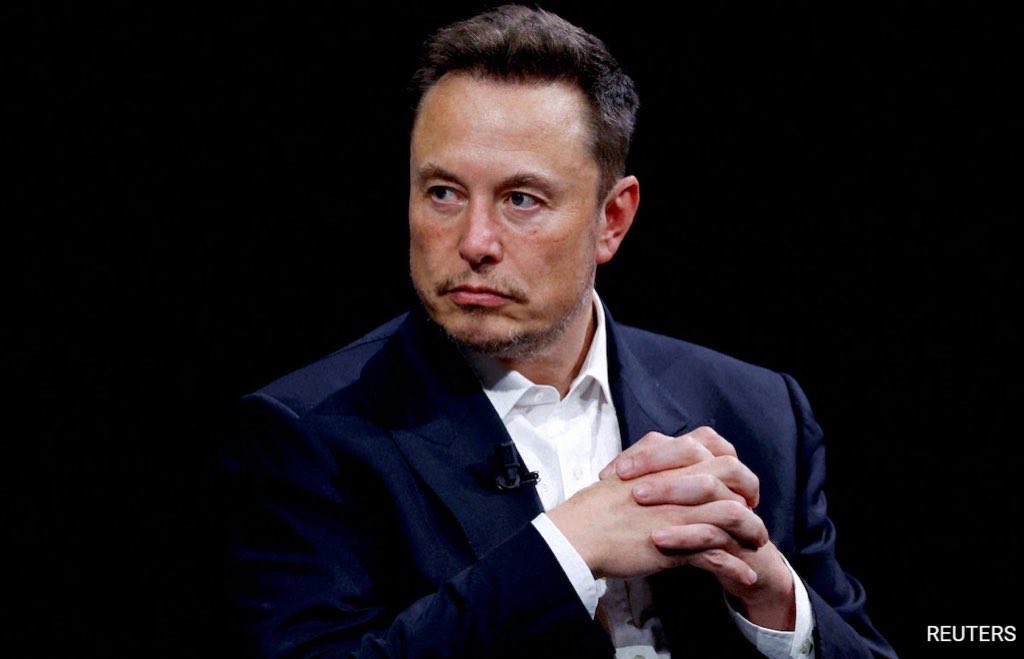
JUST IN: Elon Musk says "WhatsApp is not secure. Even Signal is questionable."


English

There’s a lawsuit against WhatsApp making the rounds today, claiming that Meta has access to plaintext. I see nothing in there that’s compelling; the whole thing sounds like a fishing expedition.
English
@RedHatPentester Remember the bit about where it is hosted and controlled from. Ie the laws or jurisdiction of the host nation
English

I have said this a lot of times.
A lot of people believe in this End to End Encryption tale. Forensically this is something I’ve done over and over.
“WhatsApp end-to-end encryption” is not a lie but it’s also not the whole truth.
Yes, messages are encrypted in transit (from your phone to the recipient’s phone).
But that does not mean your messages are untouchable.
E2EE means: WhatsApp/Meta can’t read the content while it travels across the network.
So if someone intercepts traffic on Wi-Fi, ISP, or the internet, they should only see encrypted blobs.
It doesn’t mean:
a. your phone can’t be searched,
b. your backups can’t be pulled,
c. your account can’t be taken over,
d. your screen can’t be recorded,
e. your messages can’t exist in notifications/logs.
E2EE protects the pipe, not the endpoints.
For you to read a message, your phone decrypts it locally.
So if an attacker/investigator can access the phone (or parts of it), they’re not “breaking encryption” they’re reading what’s already decrypted at rest.
Breaking911@Breaking911
INSANE: Meta whistleblowers say WhatsApp private messages can be accessed by the company despite assurances of end-to-end encryption. A lawsuit filed in U.S. court alleges Meta misled billions of users worldwide into believing their chats were fully private.
English