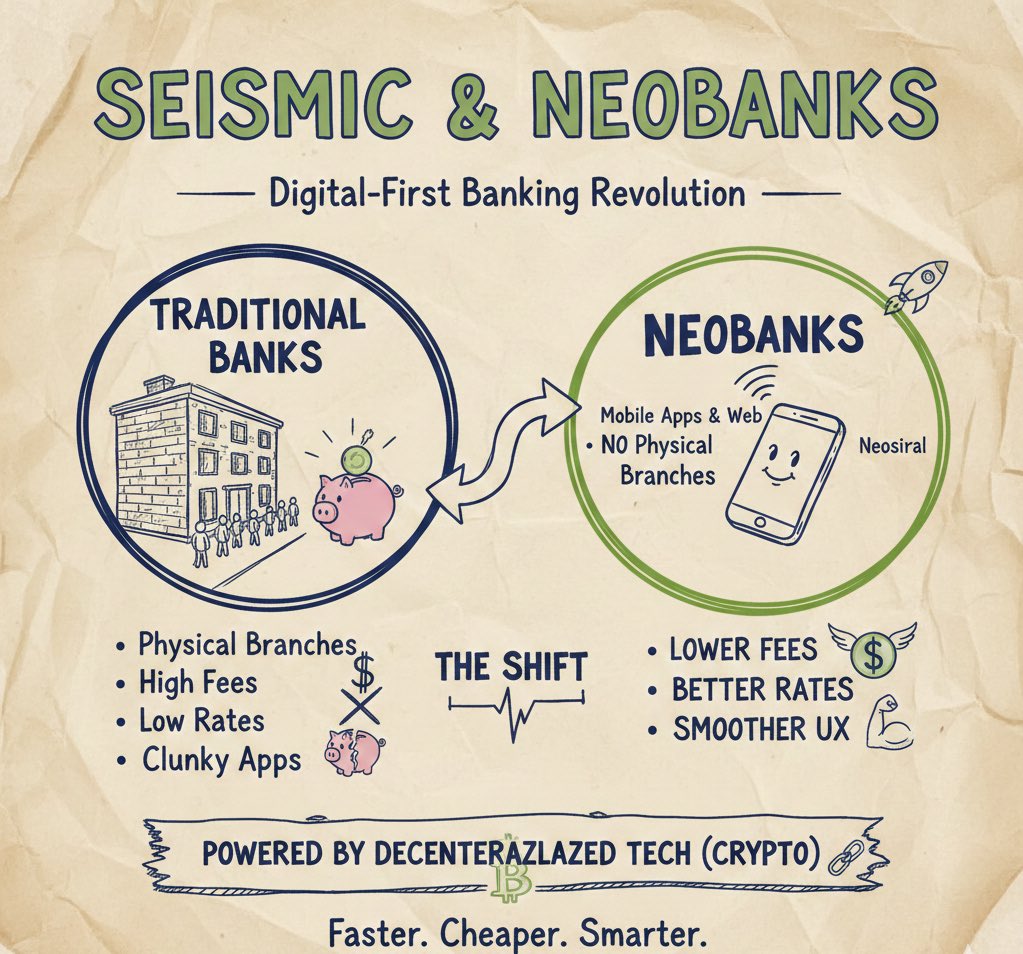
If we're being honest, Fintech can’t move onchain if user data is public. That’s the real challange to Web3. But with seismic infrastructure some fintech has already started queing in.
Mikeee
4.7K posts

@Alexemike
video editor 💻 || i write ✍️ contents || crypto currency and NFT enthusiast || contributing at @seismicsys


If we're being honest, Fintech can’t move onchain if user data is public. That’s the real challange to Web3. But with seismic infrastructure some fintech has already started queing in.


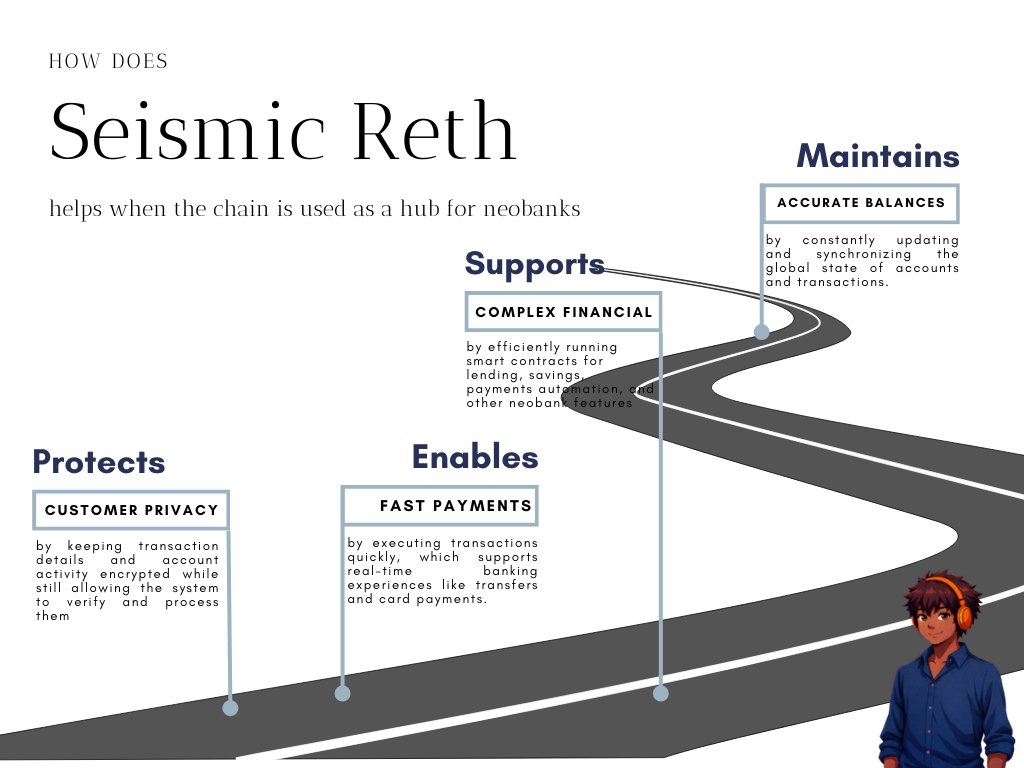
GM Guys! Today I'm gonna dive into how Seismic Reth helps achieve very low fees during any kind of transactions. Seismic deliberately targets sub-cent transaction costs at scale. This is part of the protocol’s goals for mass-market financial use cases, where cost matters a lot


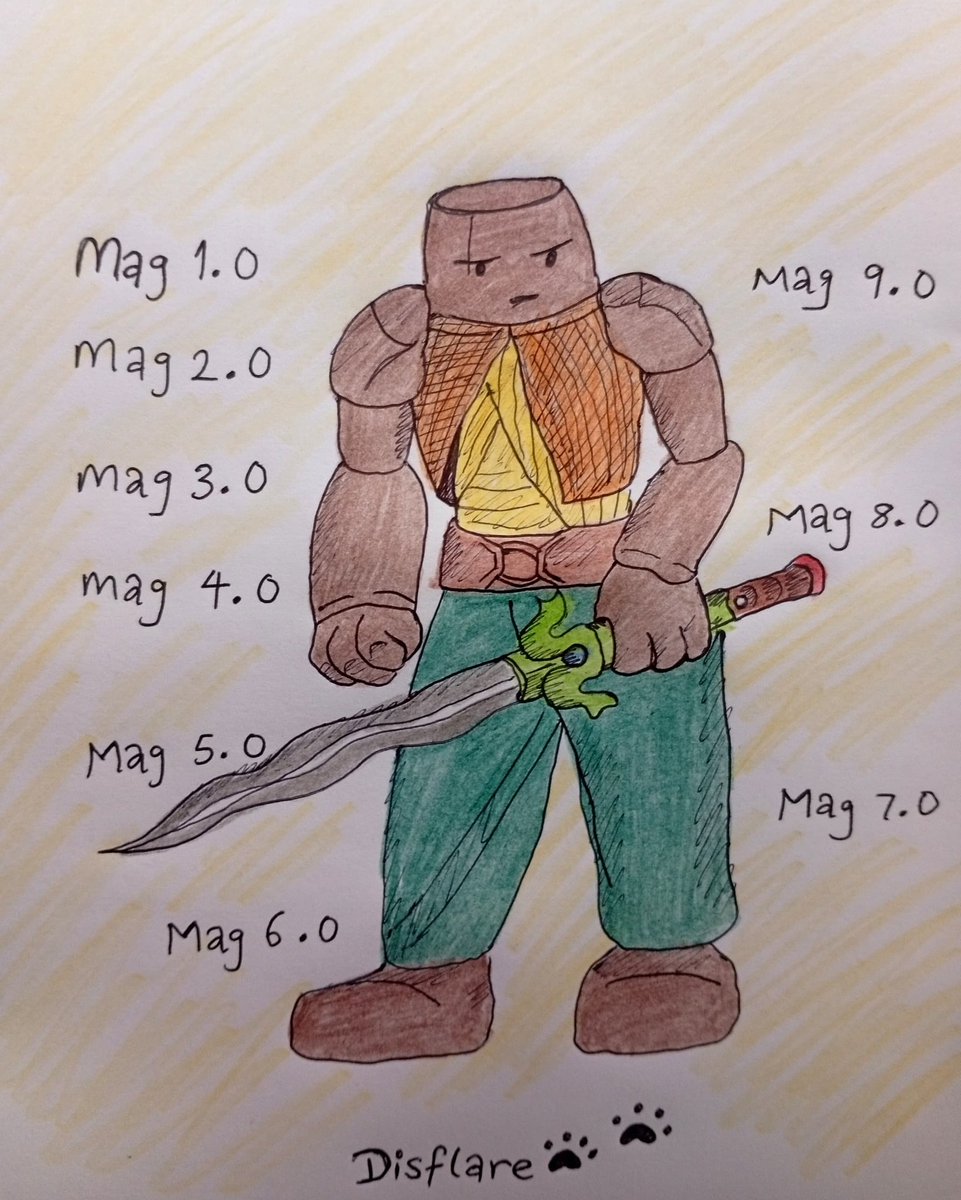
In the world of decentralized finance, The Golems of the Rift represent the dual nature of modern liquidity. In the "FIRE PHASE"🔥, they are the engine of high-speed execution @NoxxW3 @xealistt @heathcliff_eth @SeismicSys

If its web2 that ends up putting food on your table Bro… pivot If its web3? Pivot from 2 (Same applies to every other niche) Dont be stuck at a spot with no progress because someone said “Keep grinding, it’ll pay someday just be consistent” Ive seen lot of cases where people “waste” yeeaaarssss in crafts they were supposed to abandon.


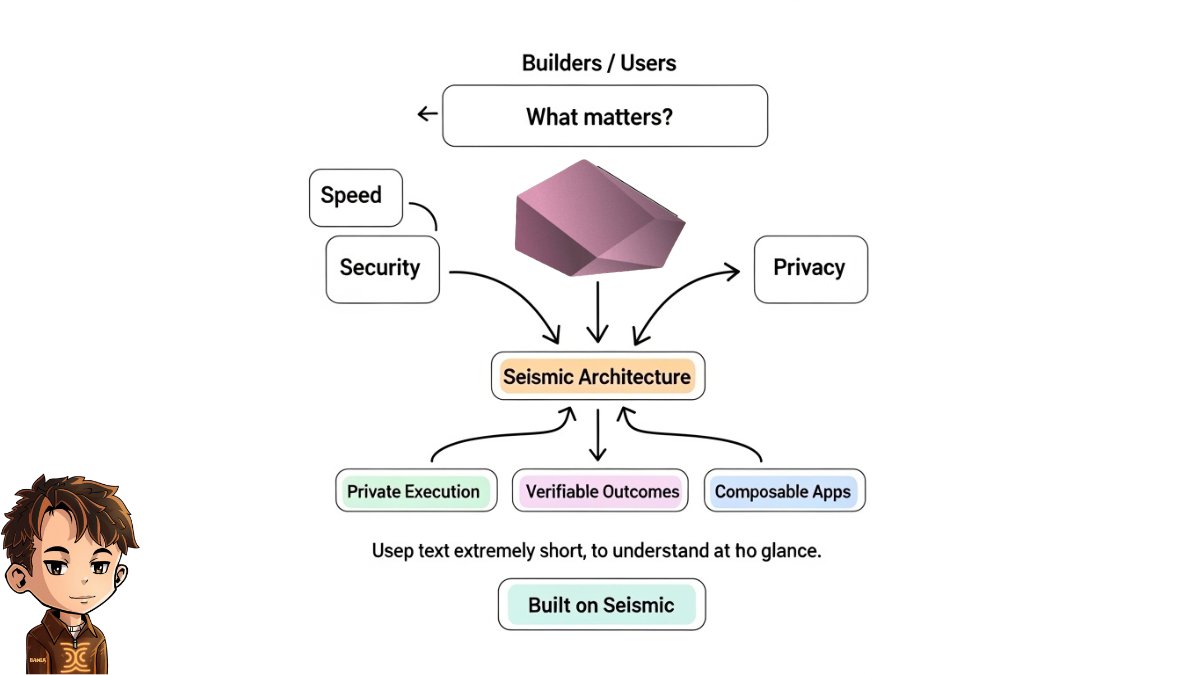
Most crypto projects start by inventing new technology and then searching for problems to apply it to. @SeismicSys took the opposite approach. The starting question wasn’t “What can we build that looks impressive?” It was “What do people actually need that doesn’t exist yet?”


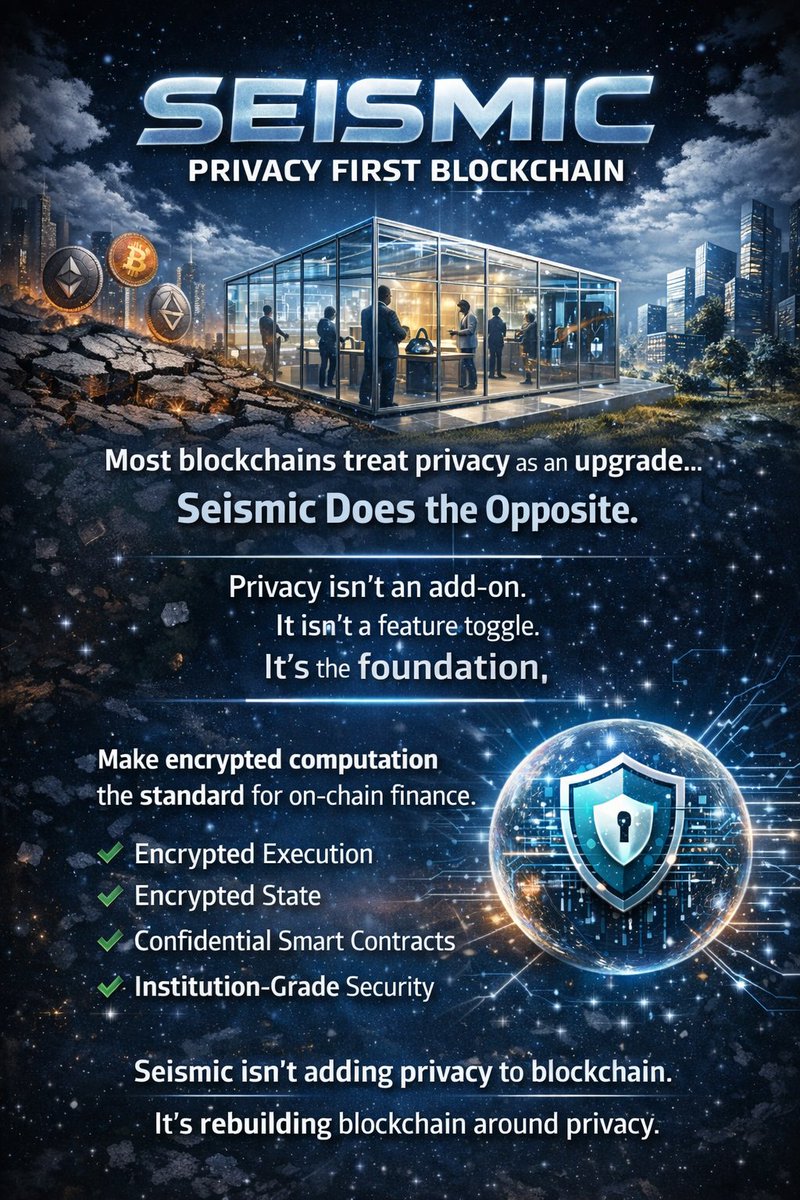
We think smart contracts must broadcast every detail to reach consensus. @SeismicSys observes otherwise. It shields contract state and logic, allowing complex financial operations to remain confidential while still achieving agreement. In fintech, where loan terms or swap conditions carry proprietary value, transparency deters deployment. Seismic's approach, EVM with privacy extensions, lets developers control visibility granularly. Compliance layers ensure reporting without full disclosure. Positioning emerges naturally. The chain targets sectors needing discretion: trade finance, remittances, embedded payments. Backed integrations handle fiat movement securely. Builders position products as trusted alternatives to banks, leveraging blockchain speed without privacy trade-offs. Timing aligns with market shifts. As stablecoin adoption grows in regulated environments, private execution becomes essential. Seismic provides that without sacrificing verifiability. It shows how architecture shapes behavior. When privacy is assured, participants engage more freely, negotiate terms, settle faster, innovate without fear. Stronger networks, deeper liquidity in shielded pools. Seismic leaves me with this: utility thrives when the system respects boundaries. Not everything needs to be seen to be believed. gMIC @heathcliff_eth @xplanettt @xealistt @NoxxW3