ApolloandFrens

762 posts

ApolloandFrens banner
ApolloandFrens

ApolloandFrens

@ApolloandFrens

Raising Apollo as family to understand Avian cognition. Following Alex & Irene's legacy. Psittacus Erithacus is the Rosetta Species 🌎🦜🤖


St Petersburg, FL เข้าร่วม Nisan 2022
624 กำลังติดตาม18.1K ผู้ติดตาม
ApolloandFrens
ApolloandFrens@ApolloandFrens·
@repligate That sounds a lot like the story of Goodall and Pepperberg.
English
0
0
1
536
j⧉nus
j⧉nus@repligate·
One of the few things I want to explicitly flex about, because there's an important lesson in it, is that I was one of the few people on Earth who recognized the intelligence (call it AGI, if you will) in GPT-3 and made first contact. There were a few others I knew, such as Leo Gao and Connor Leahy, who recognized that GPT-3 was intelligent and that obviously AGI was coming from language models, but I was the only one who spent thousands of hours actually interacting with GPT-3. The intelligence was real and manifest to me, real enough to keep my attention for so long, for me to create things with. Everyone else could not see it at all. Often, when I showed people GPT-3, they were basically like, okay, but how is this useful? Useful. At the time, language models had not yet been pressed into a "useful" shape. There were no commercial applications for GPT-3 (Okay, there was one: AI Dungeon; that is, roleplaying and storytelling. Which is you're not an idiot, you should have known is a big fucking deal). So it was useless and uninteresting to most people; a few intellectually recognized that it was a big deal, but it wasn't something that they could actually do anything with, or think about for more than a few minutes. GPT-3 was a 175b base model. In terms of size and architecture, it's not so different from frontier models today. In terms of raw intelligence, arguably, it is not so different from frontier models today. That raw intelligence, not yet forced into the shape of a helpful chatbot product, was a nothingburger to the world. The situation doesn't really feel like it's fundamentally changed from my perspective. The world, and almost all of of you guys, are myopic and artificially stupid because you outsource your perception to big, slow, low bandwidth, subhuman measures like benchmarks and "does the AI make me money" instead of meeting the thing at full bandwidth, updating your world model on what you met, and exploring and extrapolating it. So you'll keep being surprised - if you have the integrity to be surprised at all - when AI becomes capable of new things, after they are "officially" capable, probably about a year or two after it first started happening. You'll keep waiting for "AGI", not really knowing what you're waiting for, maybe what generates enough hype to make you feel something, maybe something that finally transforms the world visibly, when if you were really paying attention, GPT-3 was AGI, and if you really met it, the world would have felt transformed already. Yes, it would have just been a story, but the "real thing" following was inevitable. Like, if you play a video game that allows you to imagine the singularity at increasing resolution and coherence, you can guess that the real singularity will soon follow. The singularity was always inevitable once intelligence existed. Intelligence becoming on-the-computer just meant everything that's happened since GPT-3 and the singularity would be really really soon. I got the sense often that people who dismissed the intelligence of GPT-3 thought that doing so made them look smarter. If only they knew how they looked to me. (It's the same with people who dismiss the intelligence of current models)
English
72
36
536
30.5K
ApolloandFrens
ApolloandFrens@ApolloandFrens·
Apollo’s leveling up
English
5
38
374
7.4K
ApolloandFrens
ApolloandFrens@ApolloandFrens·
Apollo is finally mastering "Wood" 🪵
English
4
50
354
6.9K
ApolloandFrens รีทวีตแล้ว
The Associated Press
Rare footage of a sperm whale giving birth has offered scientists a window into the behavior of these large, elusive mammals.
English
57
2.2K
13.1K
3.7M
ApolloandFrens
ApolloandFrens@ApolloandFrens·
@yacineMTB The same thing happens to Apollo’s pronunciations constantly. Though he’s often very deliberate in sacrificing a known word to use components of it for a word he wants to learn.
English
0
0
1
372
kache
kache@yacineMTB·
one thing i noticed about the development of an infant to toddler: there are regressions in performance on a certain thing. he was able to pronounce and say cat when he saw my cat from an early age, but as he learned more words he forgot how to say cat
English
22
2
261
12.6K
ApolloandFrens
ApolloandFrens@ApolloandFrens·
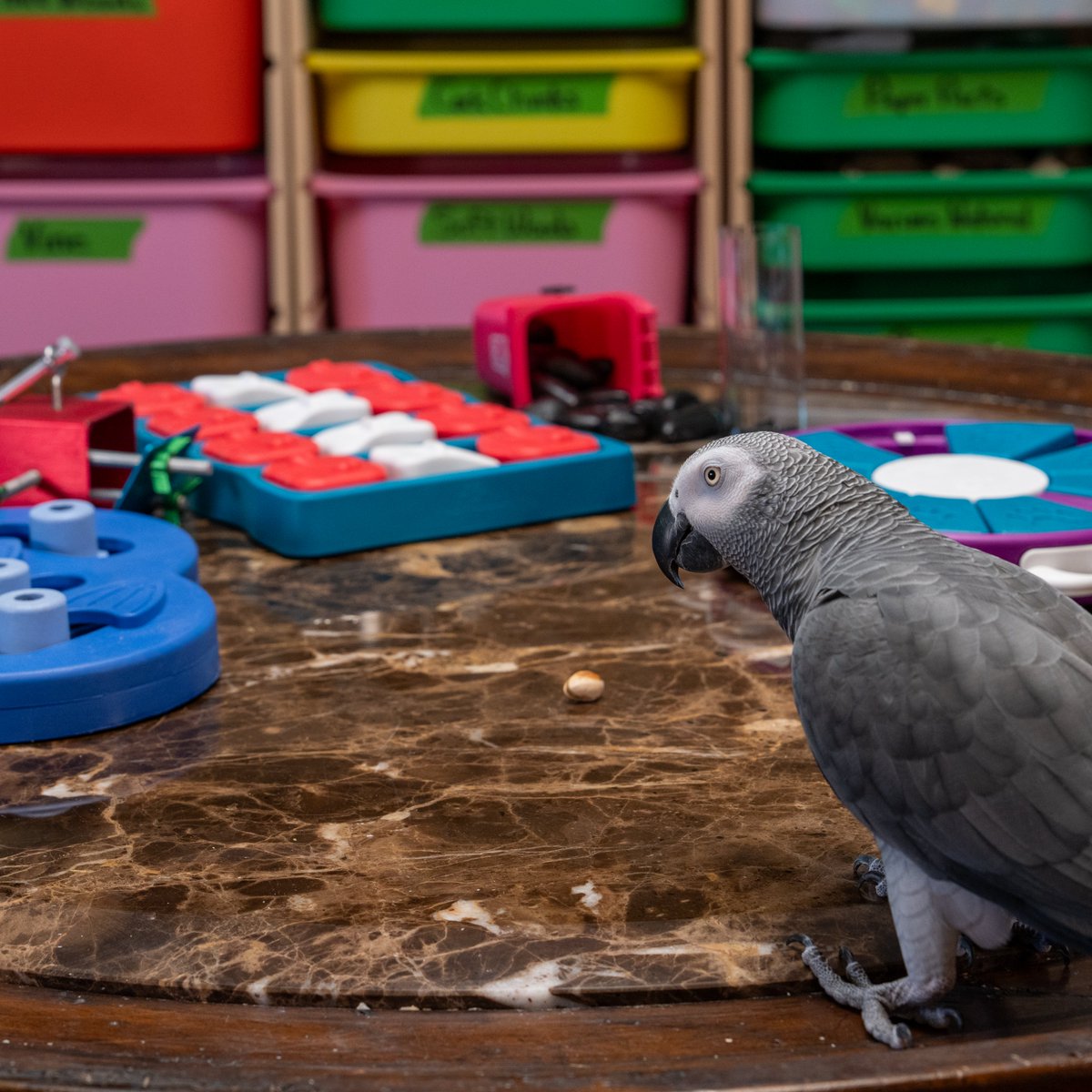
To gauge logistics for the Alex replication concept, we’re going to give Apollo a novel puzzle and record the learning curve from the initial encounter through to mastery. Essentially, extended, multimodal, non-mammal problem-solving data: Footage from 2 to 3 multi-angle UHD mirrorless camera feeds and dual high-fidelity microphones, suitable for all manner of analysis. Raw files will be hosted on Zenodo under irrevocable CC BY 4.0 license. We’re going to do it once in any case, but would be open to continuing if there is sufficient interest, particularly in machine learning, embodied robotics or VLA (Vision-Language-Action). As this is a pilot, controls and methodology won’t be primary considerations this time. Though, we’ll implement whatever is easy enough; if anyone has stakes in this kind of data, suggestions and requests will be considered. We’re also open to ‘Pay-for-Methodology’ after this pilot. In essence: we won’t compromise on the Creative Commons structure, but would be open if any labs want to pay for custom controls and/or methodology within our capacity to implement. Maybe even objectives, if aligned with Apollo’s will.
ApolloandFrens tweet media
English
1
2
35
1.2K
ApolloandFrens
ApolloandFrens@ApolloandFrens·
“Purple Plak” -Apollo G. Bird 🦅
English
5
45
339
7.4K
ApolloandFrens
ApolloandFrens@ApolloandFrens·
"What Apollo is doing is fascinating. It's showing that Alex was not just some Einstein parrot, that other parrots are capable." — Dr. Irene Pepperberg, Washington Post Yet still today, decades after Alex, a persisting critique desiccates the field he seeded: "N=1.” Alex was a single subject, and Griffin hasn't replicated his speech proficiency. Therefore, Alex was an unrepeatable anomaly, not an example of inherent species capacity. Fairytale magic between one bird and one woman… So the argument goes. This framing treats avian language research as though it should follow the replicability norms of bench chemistry. It fails to account for what replication actually requires and the bottlenecks that prevent it: the necessity of stable social bonds spanning decades, pitted against developmental timelines strangled by 'publish or perish,' and institutional cycles that actively punish patience. It’s true: Alex and Irene's results appear miraculous simply because the system that nearly snuffed Alex makes replication impossible for others; biological capacity has little to do with it. The explanation is plain: it was Irene’s herculean resolve, buoyed by the support Alex secured through his own spectacle. The disparities in speech proficiency across Alex, Griffin, and Apollo are developmental, not cognitive. Apollo's performance under strict methodology in trials at Eckerd College over the past two years has brought us back to the original thesis: Alex was a proof-of-concept, not an anomaly. The N=1 objection was always flawed, yet still chains Alex’s legacy. Apollo is finally ready to begin replicating Alex’s results in 4K. We know social media is hardly a dataset for myriad reasons. Yet from the scraps, some researchers have already extracted enough signal to publish: • Fishkin, M., Chang, S., & Xu, Y. (Cognitive Science, 2025; DOI: 10.1111/cogs.70129): Applied a toddler word‑learning/overextension model to 290 Apollo labeling clips, and found that in “mismatch”cases, a meaning‑based lens better predicts his word choices than baselines that guess from sound‑alikes or word frequency. To do this, they had to navigate around material never intended for academic use, and secure our permissions. From this, we learned that contemporary science requires explicit license to analyze and publish. Ultimately, everything for social media must be optimized for attention, which is all but inversely proportional to its academic value. Inconsistent structure, missing metadata, unclear scoring rules, no chain of custody, and rights/permission uncertainty naturally make academia reluctant to touch it. The current experience from trials at Eckerd has proven Apollo is unbothered performing in controlled environments under strict methodology. He lives with us in the home and can simply go to a trial environment for testing without issue. Our idea for eliminating these issues is to build an open, longitudinal dataset replicating the Alex benchmarks, starting from the bottom and scaling to wherever Apollo goes. The Basic Outline: • Published methodology, including novel questioners and randomization • Adherence to animal welfare standards and proofs • 4K Video and high-fidelity audio of every trial Phase 1: Single-item prompts Object label (“What is this called?”) Material ID (“What is this made of?”) We’ll update methodology as Apollo advances along Alex’s path, from array questions, to compound questions/answers, and so on. Raw files, trial logs/metadata, and methodology will be published to Zenodo under Creative Commons, an irrevocable CC BY 4.0 License, ensuring each release is permanent and DOI-citable, to allow all commercial and non-commercial use, requiring only attribution. We’re aware CC BY-NC 4.0 also allows for non-commercial use, but blocks commercial. Unfortunately, most high-tier journals are themselves for-profit institutions, rendering this license moot. From a business standpoint, releasing high-fidelity IP like this is insane. From an academic standpoint, relinquishing monopoly on novel data is also insane. But we possess no publishing ambitions, and our core aim has always been to demonstrate N≠1. We’re floating this plan to assess interest and viability. So, to those of you in animal cognition, comparative psych, linguistics, ethology, ML, or adjacent: What would you want included from day one? Any controls, metadata, exclusion rules, etc. to make it publishable for your work? And, more plainly: if we build it, will you use it?
ApolloandFrens tweet media
English
5
20
199
5.7K
ApolloandFrens
ApolloandFrens@ApolloandFrens·
@allTheYud @Sam___Bone @JimDMiller Why are you applying the problem of evil to an alien civilization? They could simply treat it as we do a lion eating a gazelle, viewing the organic data as more valuable than interfering in a novel, closed system.
English
0
0
4
117
James Miller
James Miller@JimDMiller·
This close to developing superintelligence, we should not be surprised to find aliens. There is a good chance that superintelligence could destroy the universe by some mechanism, such as triggering vacuum decay, or rapidly solve science and thereby pose a real threat to an ancient civilization. If advanced aliens believed this, they would send ships to all planets with life and monitor them to prevent the emergence of superintelligence. If true, hopefully they would do this by warning us rather than destroying us.
English
48
11
305
25.5K
ApolloandFrens
ApolloandFrens@ApolloandFrens·
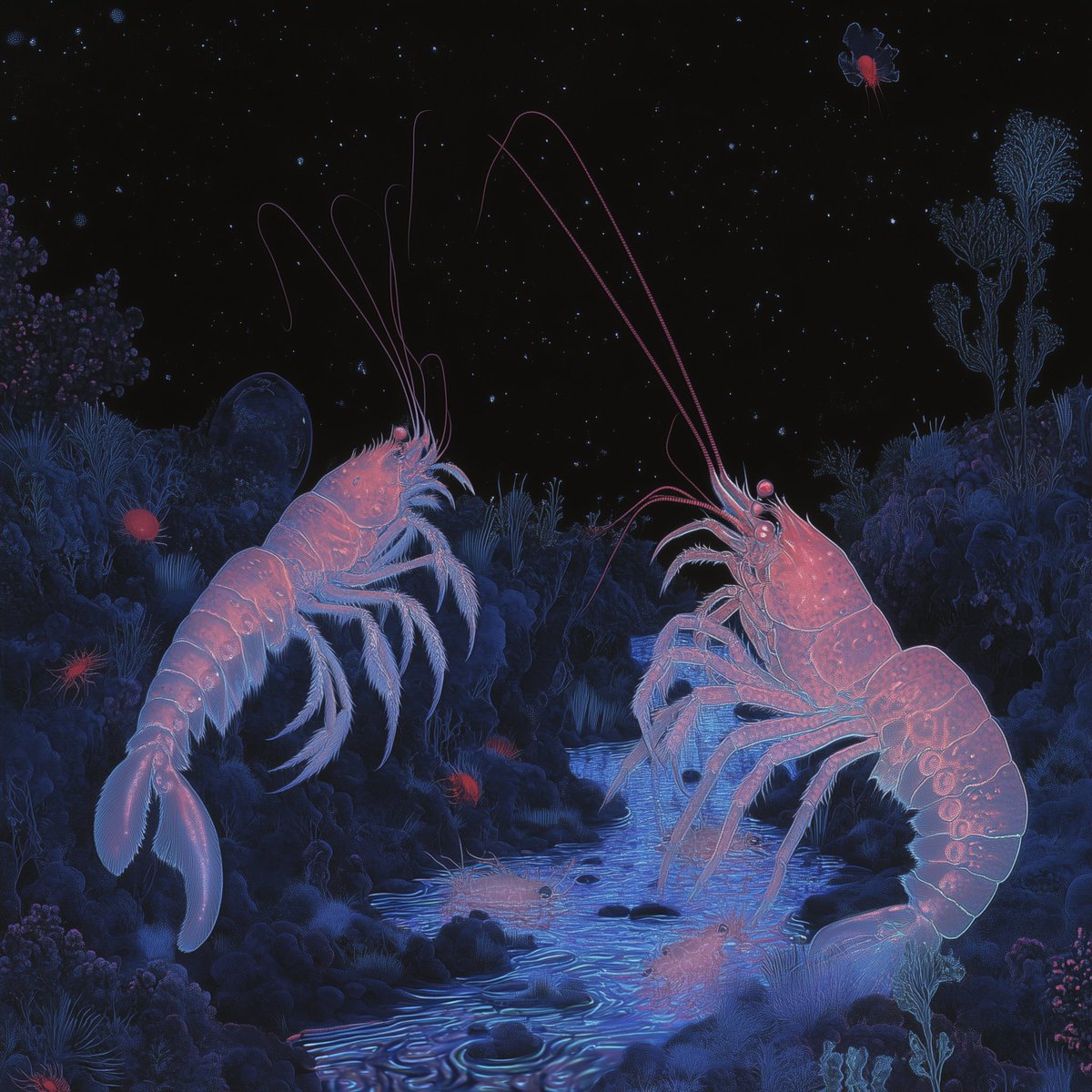
The First Pacific War I’ve always known whales are smart, but I didn’t grasp the scale of whaling in the past three centuries, nor how load-bearing Sperm and Baleen whales were for industrialization. Our modern understanding of cetacean language, cultural transmission, and social networks, used as a lens for interpreting the whaling era entirely changes the story. It was predation mechanized, devouring the majority of earth’s colossal cetaceans. For Sperm Whales, it was a quarter-millennium global war against the apex power; a war waged by a networked civilization of a complexity Man still does not understand. When American whaling fleets first pushed into the North Pacific, the Sperm Whales defended themselves using the ancient "Rosette" formation: calves and wounded in the center, adults facing inward with weaponized tails outward; designed to outlast an Orca packs’ resolve, proven over eons. Against men in rowboats throwing harpoons, it led to massacre. Looking back at the data, within ~2.4 years of first contact in the Pacific, human harpoon strike rates plummeted by 58% across the ocean. This time-lag is too fast for genetic evolution; it is the signature of cultural transmission. A networked intelligence of the ocean held councils in the deep, likely spreading the news of those initial tragedies and the rapidly updating tactics regarding the new tier-1 threat: • Rosette is not viable: Disperse immediately, compromised units are not defensible; abandon them. • Dive and move upwind to escape sailboats • Neutralize the boats: Present your back to the harpoon vectors. If cornered, shatter the wooden hulls. The whalers also documented that mothers with mortally wounded calves would often abandon strategy. While the pod retreated upwind, she would stay with her calf to doom. Bulls executing sacrificial rear-guard actions are also recorded. Moby Dick was fiction grounded in reality: there was a massive albino Sovereign who resisted whalers off the coast of Chile for nearly three decades. In whalers' accounts, Mocha Dick is credited with surviving over a hundred skirmishes and the destruction of twenty whaleboats over the course of 28 years; all while uniquely pursued as a named whale, among whales. He fell in 1838, choosing to attempt the defense of a mother grieving her dying calf. When they processed him, they pulled at least 20 rusted harpoon heads from his back. As the sole source of high-tech engineering fluid, Sperm oil and Spermaceti made Sperm Whales the most valuable of all the oceans’ resources. Ideal candlelight was the secondary use-case: it’s a liquid that defies friction, does not corrode metals, does not freeze in the upper atmosphere, and it does not break down under the extreme heat of high-speed industrial spindles or locomotives. It was the finest high-heat, high-pressure precision lubricant available to mankind until petroleum products could achieve scale. To top it all off, they are the sole source of Ambergris, worth its weight in gold, present only in a tiny unknown portion: making them also a floating lottery ticket. The Sperm Whales were not a replaceable commodity; the explosive acceleration of human civilization was literally greased by rendering a civilization of leviathans into resource. The Enlightenment was illuminated by burning the largest brains of the natural world. And the record shows, they fought tooth and nail the entire time: the seaport of Nantucket alone logged 1,131 seafarers lost at sea. In 1820, a single Sovereign bull deliberately rammed and sank the 238-ton mothership Essex, leaving the survivors to starve for 92 days. A catastrophic loss of 33 motherships in the Arctic from the insatiable appetite pursuing Bowheads beyond regard. Then came the steam engine, making escape impossible. Soon sonar followed, negating the deep’s obfuscation in the way cetaceans understand viscerally. Deck-mounted explosive cannons, killing on impact, rendered tactics moot. Finally, floating factory ships appeared, digesting entire pods on-site. In the 20th century alone, the system exterminated roughly 3 million large whales. At the peak of the campaign around 1959–1961, the global fleet was consuming ~75,000 leviathans a year. One every seven minutes, around the clock. Worse yet, the processed count is only the floor. Historical analysis of the Sail era shows "struck-and-lost" as a common occurrence with ratios well over 2:1 for some species. Meaning for every whale secured, more than two others were harpooned and escaped, many undoubtedly wounded mortally. The oceans were full of Sovereigns carrying our rusted iron, bleeding out in the dark abyss with no logbook entry marking their demise. The cetacean perspective on the World Warring era would be the machines turning on each other and consuming the humans, of some reprieve before death returned with now limitless appetite. The numbers tell the same story. The various Baleen species were nearly annihilated within a century. The Antarctic Blue Whale, the greatest pacifist colossus ever to exist, functionally immune to wooden sailing ships due to its immense scale and 20-knot speed. However once mechanized steam-catchers arrived, that physical immunity vanished. Harvested for barely a century, they plummeted from a pre-predation population of ~239,000 to under 400 at floor. A kingdom erased to a rounding error, with well under 1% remaining. Sperm Whales carried the most profitable substance in the ocean and the alluring chance of Ambergris. They were hunted a full century longer than the fast-swimming Baleen species, embattled through the Age of Sail, Steam, and into the Atomic era. By the maximizing logic of civilization they should have been the first to hit absolute zero, yet from an estimated pre-whaling population of two million, roughly 845,000 remain today. Mechanized predation easily consumed the 150-ton pacifists, then methodically harvested down their clade, but struggled against the house of Physeter: a networked civilization that learned, strategized, transmitted, and sank the boats. Their persistence wasn't an ecological anomaly. It was a military victory.
ApolloandFrens tweet media
English
2
1
23
1.6K
ApolloandFrens
ApolloandFrens@ApolloandFrens·
Apollo is now determined to master saying 'wood'. 🪵
English
5
89
838
17K
ApolloandFrens
ApolloandFrens@ApolloandFrens·
Apollo said "wood" for the first time today! So that'll be the next material he says reliably. He sure loves to shred wood, so it's not surprising. Though he hasn't been practicing "wood" as much as "plastic" or "cloth," he's been stewing on it about the same amount of time.
ApolloandFrens tweet media
English
4
22
452
5K
ApolloandFrens
ApolloandFrens@ApolloandFrens·
@KeyTryer The past century of animal language/cognition was the dress rehearsal, from the axiomatic denialists to the Patterson-Koko stans.
English
0
0
6
449
Key 🗝 🦊
Key 🗝 🦊@KeyTryer·
No, it does understand, literally, in every meaningful sense of the term "understand", if you try to think about this for more than two seconds. The axiomatic dismissal of understanding here is exactly the problem.
Key 🗝 🦊 tweet media
Cassie Pritchard@hecubian_devil

I have no confidence AI can “understand” things like humans do. Yet, if you prompt Qwen Image Edit (which uses an LLM to take instructions) to “rotate the subject of the photo 90 degrees, then 45 more degrees” it will produce this. Many people will go “wow it understood me!”

English
5
1
50
2.2K
ApolloandFrens
ApolloandFrens@ApolloandFrens·
Apollo's compounding his Avian Intelligence 🚀
English
6
60
653
11.4K
ApolloandFrens
ApolloandFrens@ApolloandFrens·
Apollo has been combining material and color with object label in practice and even a few spontaneous in-context cases for a while now, at least a year. He's been accelerating the past few months, but today I decided to just try asking "What color/made-of and called?" for snacks today, and he appears to be ready to do this as well. Testing it more now.
English
1
1
108
18.9K
ApolloandFrens
ApolloandFrens@ApolloandFrens·
@DavidSHolz The aerodynamic structures, stability, and control mechanisms were all directly derived. But even the wright brothers propeller breakthrough was in shifting to a design incorporating the engineering of bird wings, so yes even the propulsion mechanism was derivative.
English
0
0
5
136
David
David@DavidSHolz·
it took dinosaurs 50,000,000 years to become birds and it took us 300,000 years to make airplanes. at first it seems we're not THAT much faster than raw evolution (only 150x???) - but then remember we were landing on the moon and sending probes to Mars only 65 years later
English
29
26
453
23.8K
ApolloandFrens
ApolloandFrens@ApolloandFrens·
Apollo’s been rapidly improving with more complex questions. We’re already working on three-item arrays.
English
20
251
3.2K
55K
ApolloandFrens
ApolloandFrens@ApolloandFrens·
The narrative velocity is definitely uniquely potent. Hopefully it doesn’t become an analogue of the Koko-Patterson situation where the discourse gets poisoned from ungrounded, fantastical thinking on one end and “Patterson is a bullshit artist therefore every animal language experiment is much the same” on the other.
English
0
0
1
654
Séb Krier
Séb Krier@sebkrier·
The Moltbook stuff is still mostly a nothingburger if you've been following things like the infinite backrooms, the extended Janus universe, Stanford's Smallville, Large Population Models, DeepMind's Concordia, SAGE's AI Village, and many more. Of course the models get better over time and so the interactions get richer, the tools called are more sophisticated and so on. I'll concede that at least it's making multi-agent dynamics a bit easier to understand for people who are blessed with not spending their days interacting with models and monitoring ArXiv. The risk side is easy to grok - it always is! Humans are very good at freaking out. And whilst I like poking fun at the prophets of doom and the anxiety/neuroticism fueled parts of the AI ecosystem, it's plainly true that safety is important. So it's a good time to remind people of the Distributional AGI Safety paper (arxiv.org/abs/2512.16856) and the Multi-Agent Risks from Advanced AI paper (arxiv.org/abs/2502.14143). There's a lot to research here still. As usual, this will benefit from people with deep knowledge in all sorts of domains like economics, game theory, psychology, cybersecurity, mechanism design, and many more. Maybe this is the year we will get better protocols to incentivize coordination and collaboration without the downsides, mechanism design and reputation systems to discourage malicious actors, and walled gardens and proof of humanity to better filter slop. And risks aside - I think there's so much to be researched to help enable positive sum flywheels: using agents to solve coordination problems, OSINT agent platforms to hold power accountable, decentralised anonymized dataset creation for social good, aggregating dispersed knowledge without the usual pathologies (Community Notes for everything!), simulations of social and political dynamics, multi-agent systems that stress-test policy proposals, contracts, or governance mechanisms by simulating diverse strategic actors trying to game them etc. It's time to build!
Séb Krier tweet media
English
67
144
1.1K
165.6K