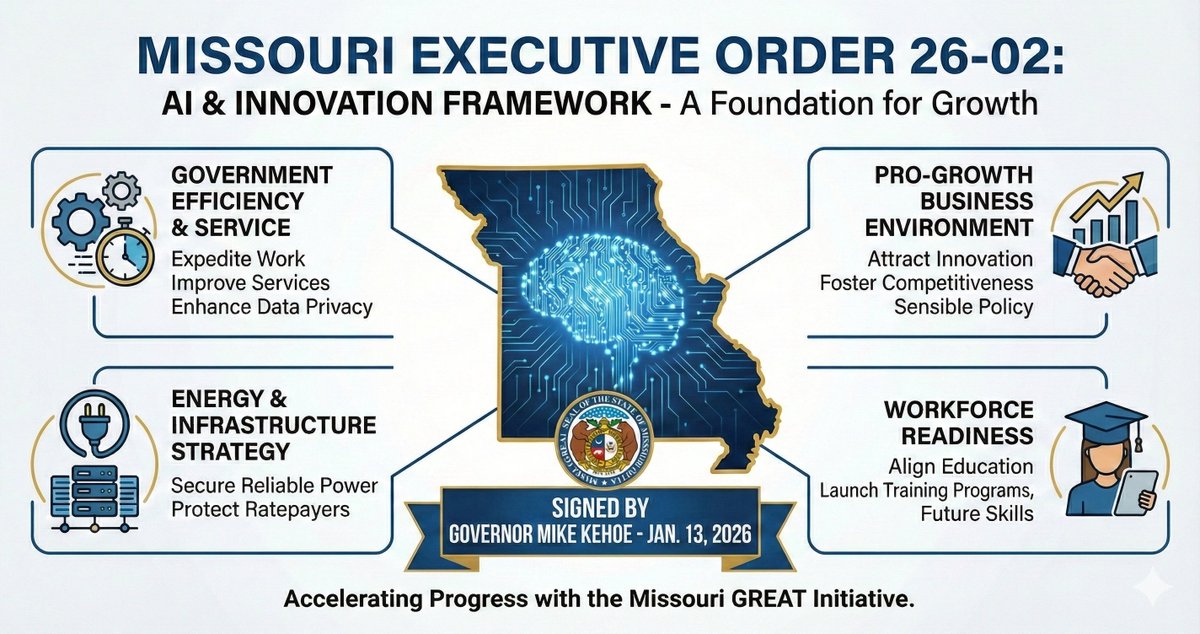
Tim Ski
719 posts

@ArczTM
AI & Innovation Director | ret. DoW & IC | US Army | Space & Tech Ops | Accelerating AI in Missouri 🇺🇸 | Views my own https://t.co/6fkLnyPigr


"Lest we be overconfident in Silicon Valley, let's remember a small group of activists shut down supersonic technology, and all nuclear energy in this country. It's a disaster." @altcap explains why a data center moratorium would be "horrific" for America: "All of our GDP growth is coming from the fact that we are building data centers and driving productivity improvements in the economy." "A data center moratorium would thrust us straight into a recession and high unemployment." "Secondly, it would cede the entire global game to China. Overnight, we would lose to China in the global AI race. Which is not just about AI, it's about economic security, jobs, and national security."


🦔Microsoft canceled its internal Claude Code licenses this week after token-based billing made the cost untenable, even for a company with effectively infinite cloud resources. Uber's CTO sent an internal memo warning the company burned through its entire 2026 AI budget in just four months. American AI software prices have jumped 20% to 37%, and GitHub (owned by Microsoft) is dropping flat-rate plans for usage-based billing across its products. My Take The AI subsidy era is ending in real time. The same company that put $13 billion into OpenAI and built the Azure infrastructure powering most of Anthropic's compute just looked at the bill from a competitor's coding tool and decided it was not worth paying. That is not a productivity failure on Anthropic's end. Token-based pricing is forcing every enterprise customer to confront the actual cost of running these models at scale, and the number turns out to be far higher than the flat-rate experiments suggested. This ties directly to my Gemini Flash post yesterday. Anthropic, OpenAI, and Google all raised effective prices in the last six months. Enterprises that built workflows assuming AI costs would keep falling are now watching annual budgets evaporate in months. Two outcomes look likely from here. Either enterprises scale back AI usage to fit budgets, which slows the revenue ramp the labs need to justify their valuations ahead of IPOs, or the labs cut prices and absorb the losses, which makes the unit economics worse at exactly the wrong moment. Both paths land in the same place, the numbers stop working, and somebody has to take the writedown. Hedgie🤗

Range day 🤙🏻


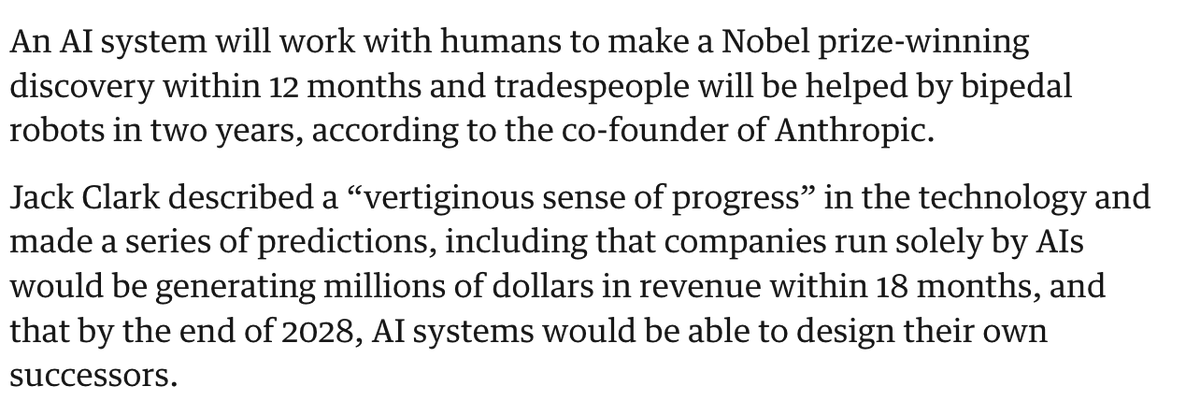
Jack Clark: - AI will make a Nobel Prize-winning discovery within 12 months (working collaboratively with humans) - Bipedal robots will help with enterprise work ("tradespeople") in 2 years - AI systems will be able to design their own successors by year-end 2028 (i.e., RSI) - Companies run solely by AI will be generating millions of USD in revenue within 18 months - Clark's most conservative prediction is that vast swathes of the economy and society will go through profound changes, potentially including "a machine economy decoupling from the human economy, robots gaining brains, science progressing without humans, and scientific equipment that people hadn't conveived of but which worked".

I built "zero2claude", a free course that takes people from zero terminal experience to shipping with Claude Code. The curriculum goes from absolute zero → software basics → Claude Code fundamentals → advanced usage. No shortcuts, no assumptions. 17,000+ students. 7 languages. ~500 active hourly. No marketing. No ads. Pure word of mouth. The entire platform? Built and operated by one person with Claude Code. Lighthouse audit: ✅ Performance : 96 ✅ Accessibility : 100 ✅ Best Practices : 100 ✅ SEO : 100 Production stats: ~6.4M requests/day. 74 req/sec sustained. <0.003% error rate. Claude Code doesn't just write code. It builds production-grade, scalable products. The best way to grow Claude Code adoption isn't to simplify the tool. It's to level up the people. Give fishing rods, not fish. Free. No paywall. My contribution to the community. Link in the comments 👇

🚨 BREAKING NEWS: First time happening! We are deploying Gemini 3.5 Flash on GenAI.mil on the EXACT same day it went live commercially. Proving that government runs at the speed of industry. No delays, just immediate warfighter access to the latest tech. ⚡️ #GenAI


🚨WSJ: The Panic Industry’s New Target – AI and Data Centers Barton Swaim nails it: A generation drilled with climate doom is now having the same script flipped on AI and data centers. Eric Schmidt tells Arizona grads not to fear the future - machines, jobs, climate - but the fear he decries was bankrolled by outfits like his own Schmidt Family Foundation’s 11th Hour Project. Key points: •Hypocrisy on steroids: For 20+ years, progressive billionaires (Schmidt, Gates, etc.) poured hundreds of millions into climate-panic groups, Al Gore screenings, and anti-fossil fuel activism. Now those same activists, armed with the same talking points and funding networks, are blocking data centers needed for AI. •Busybody Economy: Nonprofits built to chase “future calamities” never declare victory. They pivot to new targets. Climate apocalypse → AI will destroy jobs/livelihoods + data centers = environmental ruin. •Local fallout: Too many protesters at county meetings aren’t organic thinkers -they’re echoing conflict group talking points. Same playbook as fracking bans and pipeline blocks. •Reality check: AI needs massive power. Opposing reliable energy + data centers while demanding AI benefits is incoherent. The panic machine profits from fear, not solutions. Tech titans helped create this fear culture, then act surprised when it bites their own projects. Time to reject manufactured panics and embrace abundance: energy, innovation, growth. The “panic industry” thrives on perpetual crisis. Don’t buy the sequel. #AI #Datacenters #panicindustry #NGOs


Today, we announced a historic $15 BILLION investment in Missouri from @Google. This project is about more than infrastructure in Montgomery County—it's about connectivity. Connecting communities to opportunity, workers to good-paying jobs, and Missouri to the future economy.