Gippie
7.2K posts

Gippie
@BGibbus
Founding Stock Southern American. History Enjoyer Southern Appalachian Suburbinite. Generation Jones Retired from Engineering/Construction of Large Projects
Upstate South Carolina เข้าร่วม Haziran 2018
656 กำลังติดตาม296 ผู้ติดตาม

This is the best BBQ restaurant in SC for 2026, Southern Living says. Here’s why it’s great thestate.com/news/state/sou…
English

Just like the "elbows up" thing in Canada
Republicans are pretending to be angry about safe meaningless bullshit to distract from the foreign invasion in which they are complicit
Senate Republicans@NRSC
English
@TheGeorgiaWhig A restaurant in KS featueed grits for breakfast due to all the Southerners in town working on the power plant. When I ordered some breakfast the waitress asked me if I wanted sugar brought to the table. She thought that was how they were eaten, like a Dixie cream of wheat.
English

Again, Missouri should be on this, but to answer the question, I do not want sugar in my grits, or my cornbread. And I say pee-can rather than puh-cahn, pee-kin, puh-can or, the rarest, pee-cahn.
Playteaux@Playteaux1
Who’s putting sugar on grits?!?!?
English

Which one of you bozos thought it was a good idea to build the entire world economy off just in time supply chains from the most unstable regions on the planet?
English
@2ndMississippi Very well done Michael. We may, in time, if we survive these attacks on our history and culture, attribute the victory to our earlier defeat.
English
@2ndMississippi There was this guy who was bigger than me, and he was mean to me exactly because he was bigger, and I wanted to punch him in the mouth. I knew I would lose, and I knew it would hurt, but I punched him in the mouth anyway. I don't apologize for it, and neither should the South.
English

The Allure and Burden of the "Lost Cause"
[A note before we begin: I come from deep Confederate Southern roots, and I know the phrase "Lost Cause" carries freight it was never meant to bear. I don't mean here the postwar mythology that whitewashed history or excused what cannot be excused. I mean something older and larger — the thing that Margaret Mitchell and Robert Heinlein and C. Vann Woodward and Shelby Foote and William Faulkner all circled around in their different ways: the strange enduring human pull of causes carried forward even in defeat. I don't normally stray far outside strictly military history, but while I study and write about Atlanta's fall and recall how 'Gone with the Wind' fixed it in memory.... all this makes me occasionally take time and pause to think through what the South's memory of loss did to its literature, its music, its voice.]
There is a curious power in a lost cause. Not the kind of power that wins battles or changes governments — the other kind, the kind that outlasts victory, that gets under the skin of a people and won't let go.
History knows this. Literature knows it. Even science fiction has grappled with it. Defeat leaves a mark that triumph somehow doesn't. Victories get celebrated, then filed away and half-forgotten. Losses endure. They become identities.
Margaret Mitchell understood. When she put words in Rhett Butler's mouth — her roguish, half-cynical hero who had seen through the Confederacy from the start — she gave him the line that would echo longer than anything else in 'Gone with the Wind':
"I'm going to join the army. … I've always had a weakness for lost causes once they're really lost."
Clark Gable delivered it in the 1939 film almost word for word, and it landed just the way Mitchell meant it: half-romantic, half-rueful, a recognition that there's something noble, even seductive, about throwing your lot in with a cause that cannot win. Not nobility in the cause itself, mind you. Nobility in the gesture — in the going forward when the end is already written.
Three decades later, Robert A. Heinlein circled the same truth from a different angle. In 'The Moon Is a Harsh Mistress,' his philosopher-revolutionary Bernardo de la Paz — guiding a Lunar rebellion against Earth that had no business succeeding — put it this way:
"Revolution is an art that I pursue rather than a goal I expect to achieve. Nor is this a source of dismay; a lost cause can be as spiritually satisfying as a victory."
Where Rhett saw romance, the Professor saw dignity. Principle mattered even when it lost. Maybe especially when it lost. In both cases, defeat became not just an end but a kind of transcendence.
These are fictional voices, but they resonate because they're rooted in something real. The South knew it before Mitchell or Heinlein ever set pen to paper. William Faulkner, who carried the South's ghosts in his bones, wrote it plainest in 'Requiem for a Nun':
"The past is never dead. It's not even past."
For Faulkner, defeat wasn't abstract. It was woven into the fabric of the present — individuals and families and whole communities laboring in webs spun long before their time, bound by consequence and memory they didn't choose but couldn't escape. The Confederacy's loss wasn't a closed chapter. It was a living ghost.
C. Vann Woodward gave this sensibility its scholarly form in 'The Irony of Southern History.' He argued that the South bore a burden the rest of the United States did not — couldn't, really, because the rest of the country had never known total defeat. While the nation at large celebrated triumphs and expansion and exceptionalism, the South carried humiliation, poverty, racial crisis, and the plain fact of having been conquered. Woodward put it this way:
"Southern history, unlike American, includes large components of frustration, failure and defeat. It includes not only an overwhelming military defeat but long decades of defeat in the provinces of economic, social, and political life."
That's not sentiment. That's fact. The South lost the war, then lost the peace, then spent generations losing arguments about what it all meant. Defeat piled on defeat until defeat itself became the defining experience.
Shelby Foote — novelist turned historian, Southerner to the marrow — said it even simpler in Ken Burns' 'The Civil War':
"As a Southerner I would have to say that one of the main importances of the War is that Southerners have a sense of defeat which none of the rest of the country has."
Where Woodward dissected irony, Foote described feeling. That sense of defeat became a cultural inheritance, passed down not in history books alone but in songs, in humor, in manners, in the way people talked about time itself.
Taken together — Rhett Butler's gallantry, Heinlein's philosophy, Faulkner's haunted prose, Woodward's historical irony, Foote's cultural lament — these voices converge on a single truth: defeat carries its own kind of permanence. Victories can be celebrated and then forgotten. Losses endure. They become identities. They inspire literature and music, color politics and culture, shape how people see themselves in the stream of history.
For the American South, that defeat was the Civil War.
The Midwest remembers sacrifice and Union preserved. The West folded the war into its larger frontier myth. The North celebrated vindication. But the South? The South lives with memory of catastrophe. Its cause wasn't merely lost — it was woven into identity itself, inseparable from the question of what it meant to be Southern at all.
That's why the South produced so much of the nation's most powerful literature, music, cultural expression. Because it carried the burden of memory. The blues, with its mournful beauty. Country ballads of loss. Faulkner's haunted Yoknapatawpha County, where every field held a ghost and every family carried a curse. All threads in that web.
The past is not past.
And in the South, defeat proved as enduring — perhaps even more spiritually satisfying — than victory.
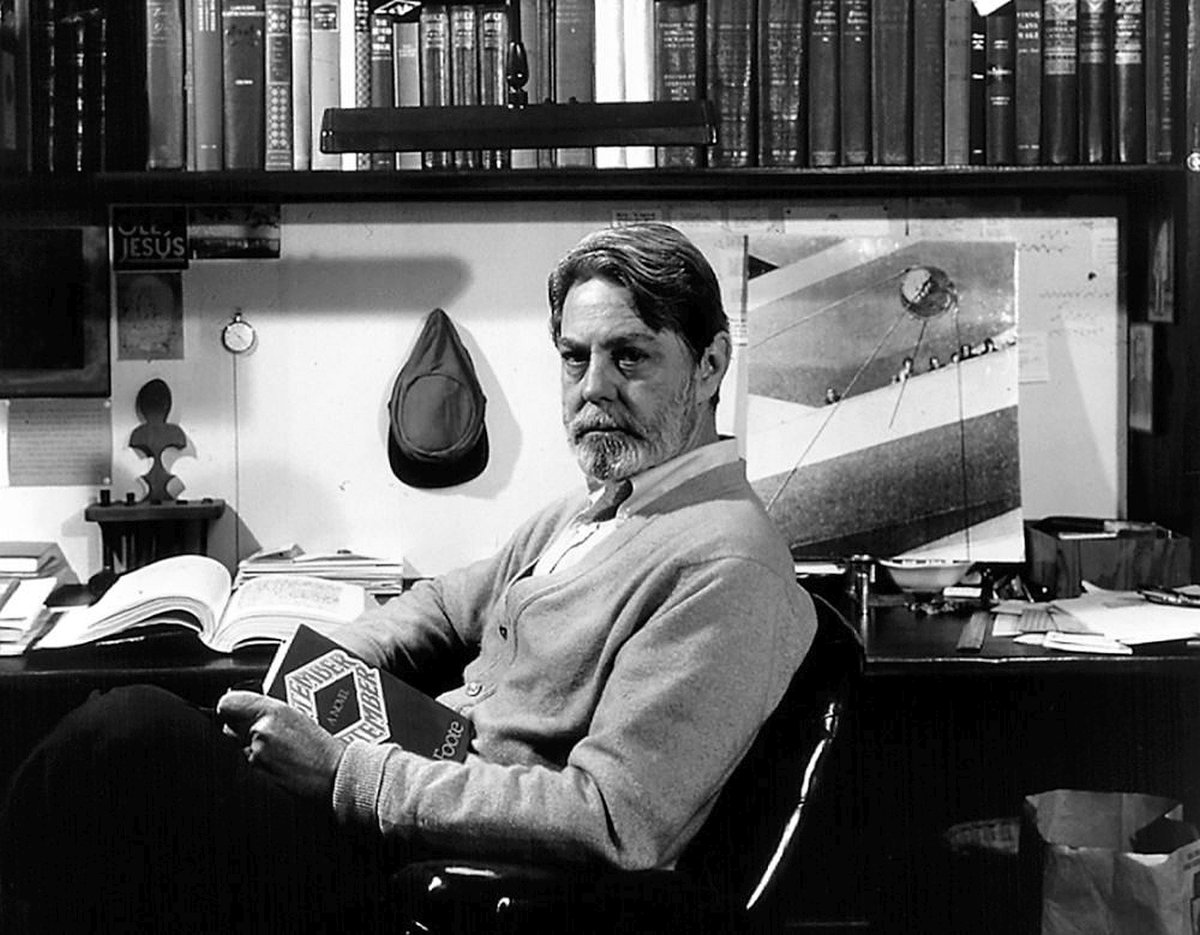
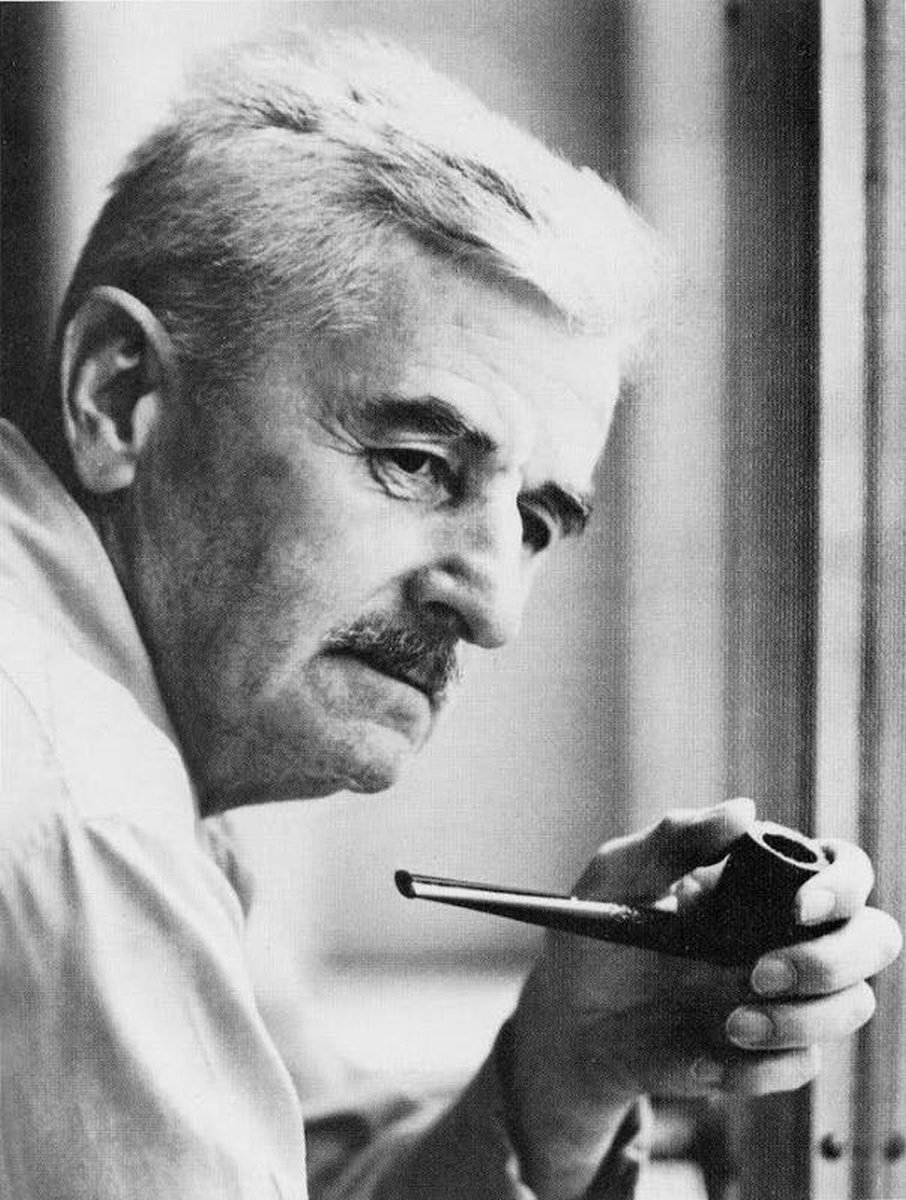
Shelby Foote and William Faulkner
English


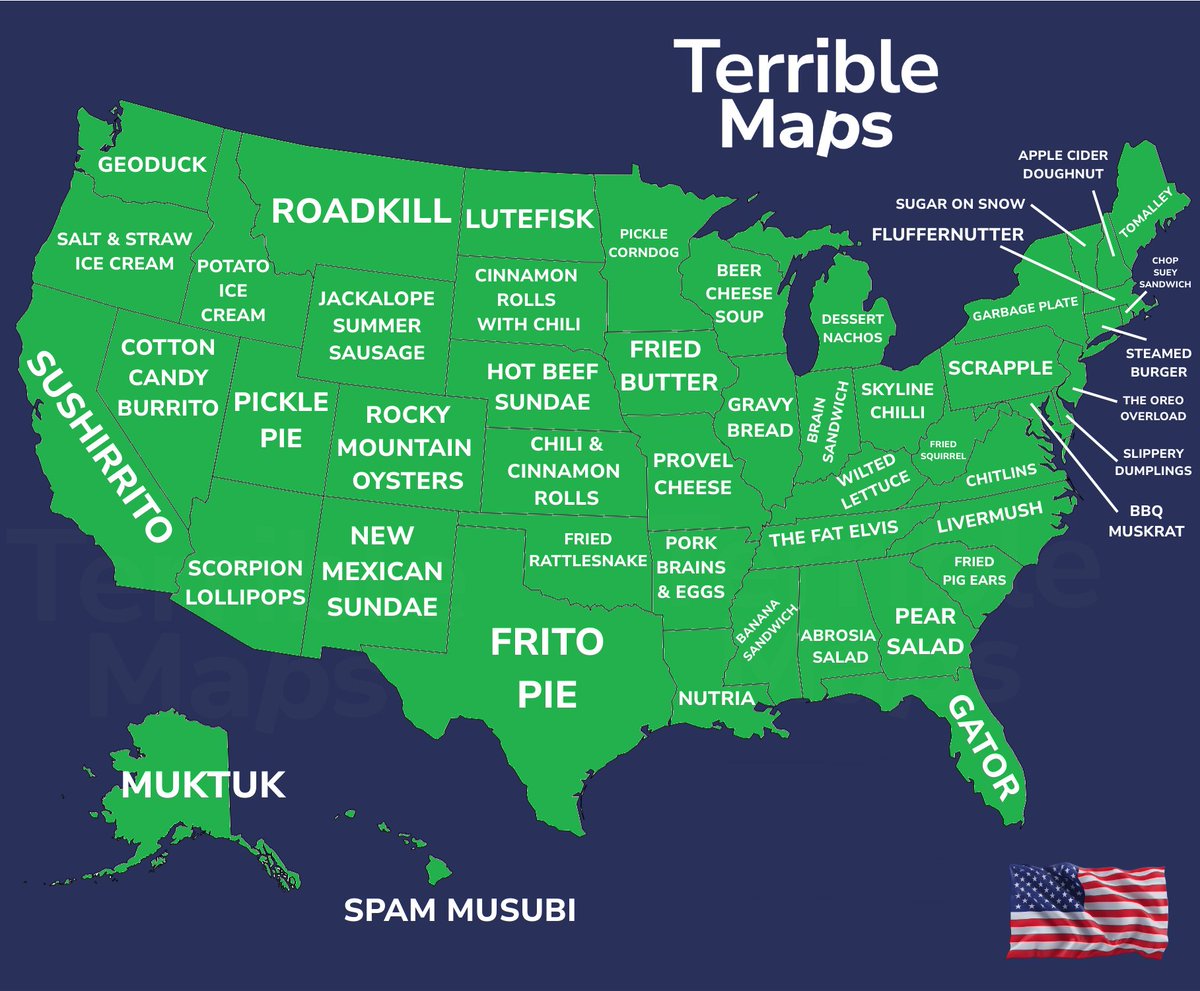
@TerribleMaps I recently turned 66 and have never even once heard mention of fried pig ears.
English

@BestMovieMom Such a gorgeous move; one of the most beautiful I've ever seen. Kagemusha was the first Kurosawa movie I watched, and this was the second. I've watched nearly all his movies.
English

For the siege of the Third Castle in Ran (1985), Akira Kurosawa built a massive, real castle set on the slopes of Mount Fuji. He then burned it to the ground in a single take, as no miniatures could replicate that level of destruction.
English
@BuffaloByGodDan @SeraphimPrints My mother had it. I used to hear stories about it from everyone who knew her.
English
@SeraphimPrints I have a cousin who has this same gift, and she’s passed it to her children. I didn’t inherit it though.
English


Did they beat the drum slowly, did they play the fife lowly?
Did they sound the death march as they lowered you down?
Did the band play The Last Post in chorus?
Did the pipes play the Flowers of the Forest?
youtube.com/watch?v=lFpmFE…

YouTube
English
Ger O'Donnell at the dining room table with the Petersens; The Fox.
youtube.com/watch?v=ecvIZ3…

YouTube
English
A Celtic Punk Rock band sounds like a really weird thing, and it is, but they've played some great music. I used to listen to these guys a lot, but since Trump they've been obnoxiously lefty.
But, for St. Patrick's Day, The Dropkick Murphys from Boston.
youtube.com/watch?v=34aCvn…

YouTube
English
@bb55guns @BuzzPatterson The original Lynyrd Skynyrd playing backup for Ted Nugent.
English



@jjfThompson There were various investigations and determined causes, but the boiler wouldn't have exploded if it were built with proper metallurgy and not repaired so poorly.
There are many other horrifying stories of boiler and steam pipe explosions besides this one.
English

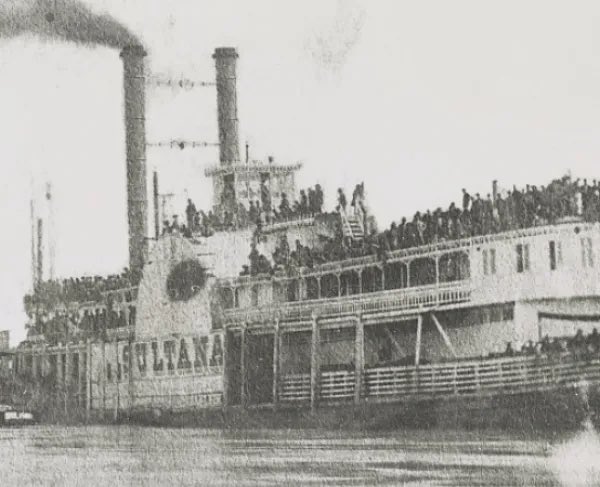
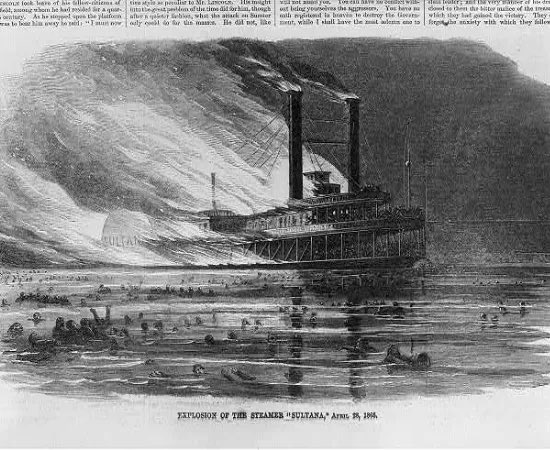
On April 23, 1865, the Sultana docked in Vicksburg to address issues with the boiler during a routine journey from New Orleans. While in port, it was contracted by the U.S. Government to carry former Union prisoners of war from Confederate prisons, such as Andersonville and Cahaba, back into Northern territory.
On April 27th, the overstrained boilers exploded, blowing apart the center of the boat and starting an uncontrollable fire. Many of those who were not killed immediately perished as they tried to swim to shore. Of the initial survivors, 200 later died from burns sustained during the incident. Researchers indicate that 1,195 of the 2,200 passengers and crew died, making the Sultana accident the deadliest maritime disaster in U.S. history.
English
@jjfThompson It led to industry wide standards for boiler design and manufacture, eventually leading to the creation of the American Association of Mechanical Engineers, Boiler & Pressure Vessel Code.
The Sultana was the largest, but far from the only boiler explosion disaster.
English
@jjfThompson I used the Sultana in a class I once gave on stress analysis. The commonly accepted explanation is that the boilers were manufactured and later repaired haphazardly from various dissimilar metals which expanded at different rates, and were not properly maintained.
English