Balaganpathi 🌞

14.5K posts

Balaganpathi 🌞 banner
Balaganpathi 🌞

Balaganpathi 🌞

@Balaganpathi

Author & ardent devotee. Jyotisa Visharad (ICAS 97), Insights on Pooja, Mantras & SpiritualGrowth, No personal DM. Visit website- https://t.co/7msza6nRty

bāmanamūrtī kṣetra เข้าร่วม Nisan 2020
0 กำลังติดตาม21.5K ผู้ติดตาม
ทวีตที่ปักหมุด
Balaganpathi 🌞
Balaganpathi 🌞@Balaganpathi·
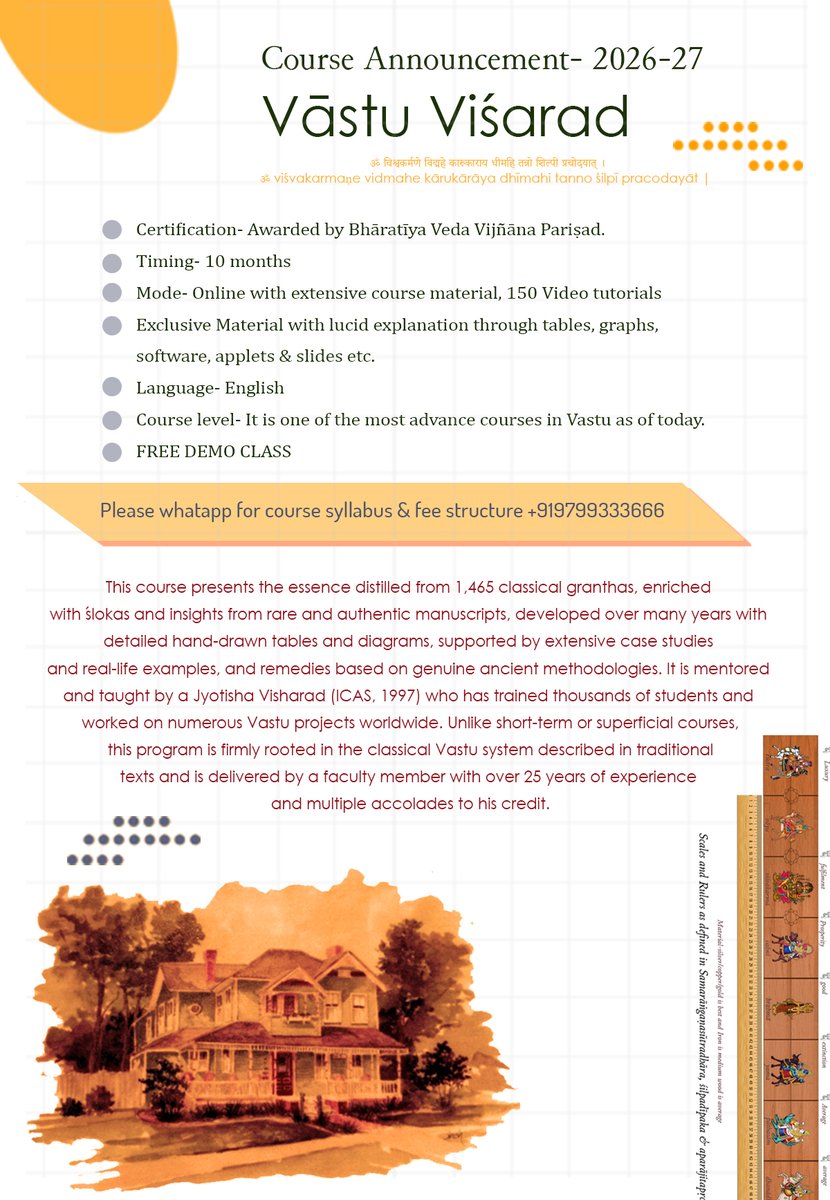
Course Announcement- 2026-27 Vāstu Viśarad •Certification- Awarded by Bhāratīya Veda Vijñāna Pariṣad. •Timing- 10 months •Mode- Online with extensive course material, 150 Video tutorials •Exclusive Material with lucid explanation through tables, graphs, software, applets & slides etc. •Language- English •Course level- It is one of the most advance courses in Vāstu as of today. •FREE DEMO CLASS This course presents the essence distilled from 1,465 classical granthas, enriched with ślokas and insights from rare and authentic manuscripts, developed over many years with detailed hand-drawn tables and diagrams, supported by extensive case studies and real-life examples, and remedies based on genuine ancient methodologies. It is mentored and taught by a Jyotisha Visharad (ICAS, 1997) who has trained thousands of students and worked on numerous Vastu projects worldwide. Unlike short-term or superficial courses, this program is firmly rooted in the classical Vastu system described in traditional texts and is delivered by a faculty member with over 25 years of experience and multiple accolades to his credit.
Balaganpathi 🌞 tweet media
Română
8
22
93
23.3K
Balaganpathi 🌞 รีทวีตแล้ว
Sourabh
Sourabh@Gharkombada·
Today is Chaitra Shuddha Ashtami, the sacred Utpatti Din (Manifestation Day) of Maa Tuljabhavani 🧵 Millions chant her name, but very few know the breathtaking cosmic history of the Goddess who gave Chhatrapati Shivaji Maharaj his legendary sword. Why is she called "Tulja"? And what is the profound story behind her other names, "Tukai" and "Yedai"? The history of the Maharashtra Kulswamini is a masterclass in the dual nature of the Divine Feminine: terrifying to predators, yet utterly melted by true devotion. The story begins in the ancient Krutayuga in the Dandakaranya forest. A sage named Kardam passed away, leaving his pregnant wife, Anubhuti. Choosing her duty as a mother over committing Sati, Anubhuti lived as a Tapasvini, raising her child and immersing herself in severe penance on the Yamunachal mountain. But profound spiritual purity often attracts the darkest corruption. A demon named Kukar Daitya (also known as Kukkurasur) became blinded by her beauty and predatory lust. He violated her sacred space, physically harassing her and shattering her deep meditation. In her absolute vulnerability, Anubhuti didn't just pray, she demanded the universe to intervene. The Adimaya (Primordial Mother) didn't take her time. She rushed to the rescue instantly. Manifesting as the fierce, eight armed Ashtabhuja, she engaged the demon. When Kukkurasur charged at her in the form of a massive buffalo, the Goddess severed the beast's head. As the demon emerged from the carcass, she pierced his chest with her trident, freeing Anubhuti. Because she responded to a vulnerable woman's cry with such blinding, immediate speed, she was named "Tvarita" (The Swift One). (In the Shrividya Sampradaya, the deity of today's Ashtami tithi is indeed Tvarita). Over centuries, "Tvarita" evolved into "Tvarija," and finally morphed into the name we revere today: "Tulja."
Sourabh tweet media
English
8
65
300
7K
Balaganpathi 🌞
Balaganpathi 🌞@Balaganpathi·
@fazer1550438 There are many things which did not exist in prehistoric times. Everything is taken into account and there are practicaly solutions for every kaliyuga anamoly.
English
0
0
0
15
fazer
fazer@fazer1550438·
@Balaganpathi there is literally so much electromagnetic garbage nowadays which didnt exist in vedic times how will you take that in acc moreover tons of metal in structure underground system of pipes and wires
English
1
0
1
80
Balaganpathi 🌞
Balaganpathi 🌞@Balaganpathi·
Course Announcement- 2026-27 Vāstu Viśarad •Certification- Awarded by Bhāratīya Veda Vijñāna Pariṣad. •Timing- 10 months •Mode- Online with extensive course material, 150 Video tutorials •Exclusive Material with lucid explanation through tables, graphs, software, applets & slides etc. •Language- English •Course level- It is one of the most advance courses in Vāstu as of today. •FREE DEMO CLASS This course presents the essence distilled from 1,465 classical granthas, enriched with ślokas and insights from rare and authentic manuscripts, developed over many years with detailed hand-drawn tables and diagrams, supported by extensive case studies and real-life examples, and remedies based on genuine ancient methodologies. It is mentored and taught by a Jyotisha Visharad (ICAS, 1997) who has trained thousands of students and worked on numerous Vastu projects worldwide. Unlike short-term or superficial courses, this program is firmly rooted in the classical Vastu system described in traditional texts and is delivered by a faculty member with over 25 years of experience and multiple accolades to his credit.
Balaganpathi 🌞 tweet media
Română
8
22
93
23.3K
Balaganpathi 🌞
Balaganpathi 🌞@Balaganpathi·
@Rikamtekada Intuition to nahin hai. Technically I never checked. But Sani devtha in meena rasi will not do that.
English
1
0
3
54
Balaganpathi 🌞
Balaganpathi 🌞@Balaganpathi·
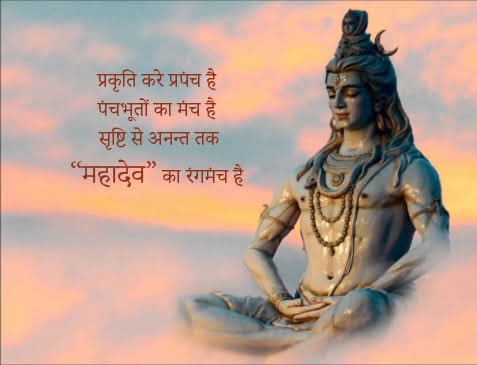
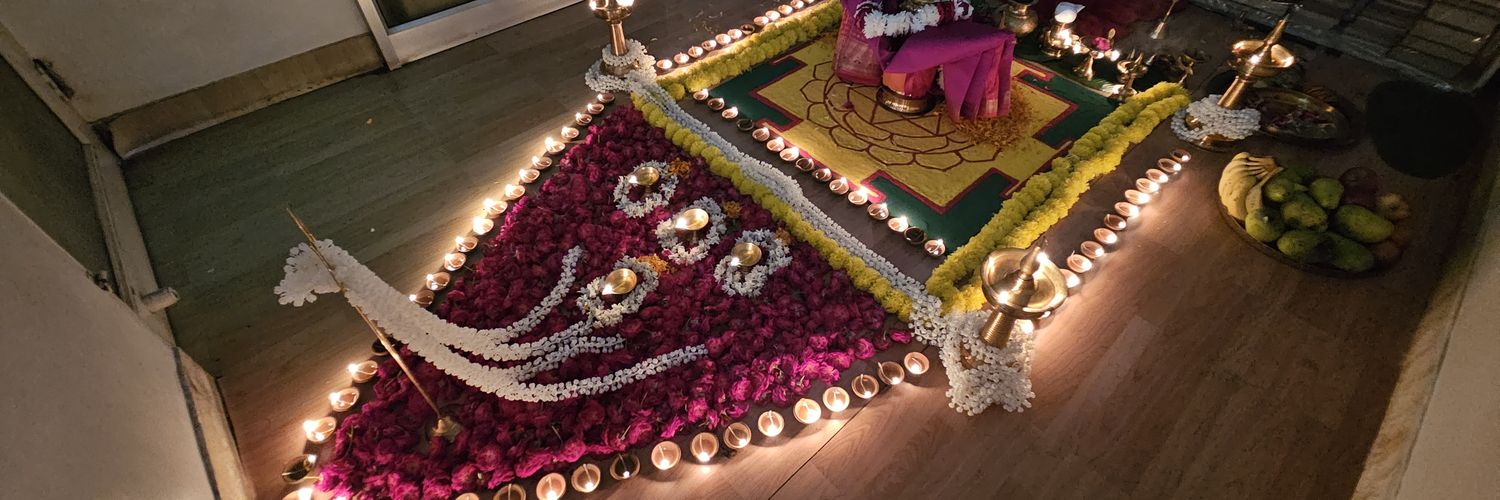
True Devotion & discussions, questions and silence. Note- Reminder There are no questions for the truest of the devotees, all questions get answers within themselves. However lack of devotion will lead to questions, blabbering and endless discussions. Those who are worried about left and right hand, who are worried about colour of flowers, about lamps, about incense, or who are too much worried about pronunciation are left with these things only. They never enter the next stage. The devotee remains silent because loudness is opposite to devotion. Bhajana and Bhojan are observed with silence for a reason. When you love God, then nothing else is required. When you love yourself and do prayers with kamna then every prapanca in the books is essential. These prapanca are for tāntrika or for ritualistic observations in kāmya prayoga (desire full approach). Those who observe Sadhna with kamna need to follow each step with prapanca. Mistakes leads to mental disorders immediately. Ṃoorthi are for kāmya prayoga or sometimes for contemplation because once you have God, all ṃoorthi are placed in your heart lotus. The ḍhyān mantras before every prayer are there for a reason. This is for creating the ṃoorthi in heart lotus. For a devotee, the body is the temple where the ḍevthas reside in the heart. Loud bhajana, questions and discussions are not part of devotion. You question when you have lack of faith. It is not the Pooja that a devotee observes, a true devotee observes sevā. For him God is someone very close, not a far flung high minded entity sitting somewhere in the sky. Unless you love God, unless you have true devotion you will keep hanging with questions and cacophonies of discussions. Once the desires end and devotion rises, all questions cease to exist. Then all bhajana become silent, all prapanca and paraphernalia cease to exist outside. Anecdote- Devi does not like prapanca at all. Once a tāntrika who was worshipping Sri Pitambaraye came to meet. He lost consciousness and went to sleep. Devi did not like him though according to him he was a tāntrika devote to devī only. Even Datiya maharaja was totally against tāntrika Pooja. He called for tāntrika Pooja only during Indo China war because that was a kāmya prayoga. So if you are a true devotee stop blabbering, stop questioning, be silent. Silence is gold, there is no spiritual discussion because spirituality has nothing to discuss about. Discussions and questions are meant only for those who have lack of faith. The objects are are means to an end (god), don't live in the foolishness that means are God.
Balaganpathi 🌞 tweet media
English
3
11
57
1.7K
Balaganpathi 🌞
Balaganpathi 🌞@Balaganpathi·
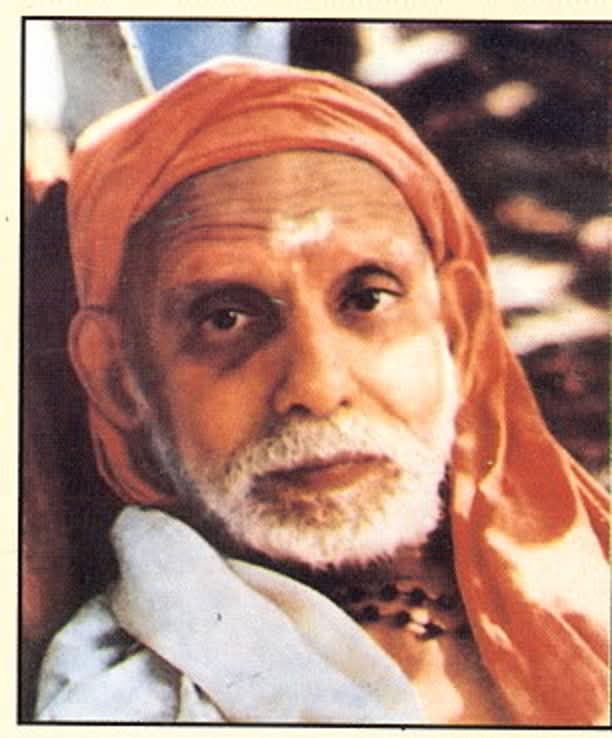
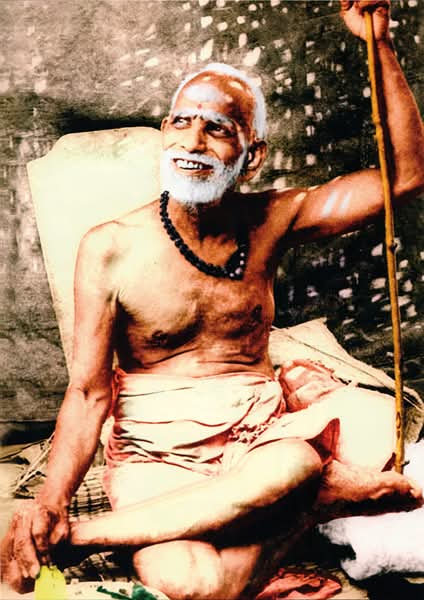
Experiences with Maha Periyava: Take Goli Soda A devotee named Sivan was a resident of Tirunelveli (one of the towns of Tamil Nadu). He used to visit Kancheepuram regularly to have the darshan of Kanchi Paramacharya but whenever he did so, he would neither go near Him nor try to talk to Him. He would simply sit before Him, sometimes for days together and would feel happy by merely seeing Him. This Sivan was a puritan both physically and in his eating habits and always wore the Saivite symbol of 'vibhoothi' (holy ash) on his forehead and anyone seeing him could perceive that he was a man of complete devotion both by his looks and deeds. One day after the darshan, he reached 'Maha Swami' as usual to take leave of Him and get His blessings which was usually given by Him by waving His hand. But on that particular day, Sri Maha Periyava opened His divine mouth and asked, “Started for the journey? At least take Soda (aerated bottled water popularly known as 'Goli Soda') …On the way you can...” Sivan started for his home town, came to Chengalpet and then started for Tirunelveli. In the same bus, four boys were travelling making noise, troubling the co-passengers. Sivan kept quiet and continued with his journey. When the bus was about to reach Madurai on the way to Tirunelveli, it stopped at a small village. Sivan was sitting in the bus, watching a small shop, having soda bottles arranged neatly in a row, and he remembered what Maha Periyava had told him and besides he also felt thirsty, and so got down and went to the shop to drink one Goli Soda. When he came back to the bus to his seat, he was shocked to find his bag, which he usually carried that contained his meagre belongings and money missing. But the four boys shouted at him without respect and said, “We have put your bag in one of the seats at the back. Go there. We want to travel sitting in that seat” Sivan meekly went to the seat where his bag was kept and travelled. Immediately after exactly an hour, the bus he was travelling met with an accident, and the two boys who were travelling in his previous seat died on the spot. Sivan was shocked and dazed, started thinking why Periyava had asked him to take Goli Soda, which was unusual, why the bus stopped there, and why he saw the shop and the Goli Soda, and why he felt like drinking a Soda.......... and all. When the gentleman who narrated this incident to the writer, met Maha Periyava and told him as to how Sivan escaped from the accident, Maha Periyava said, “Oh Sivan thought I saved him, it is the great Lord who has saved him” Such is the divine humility of the great Sri Maha Periyava.
Balaganpathi 🌞 tweet media
English
11
51
372
9.7K
Balaganpathi 🌞
Balaganpathi 🌞@Balaganpathi·
Obviously the person is very rich.
English
3
0
12
1.2K
Balaganpathi 🌞
Balaganpathi 🌞@Balaganpathi·
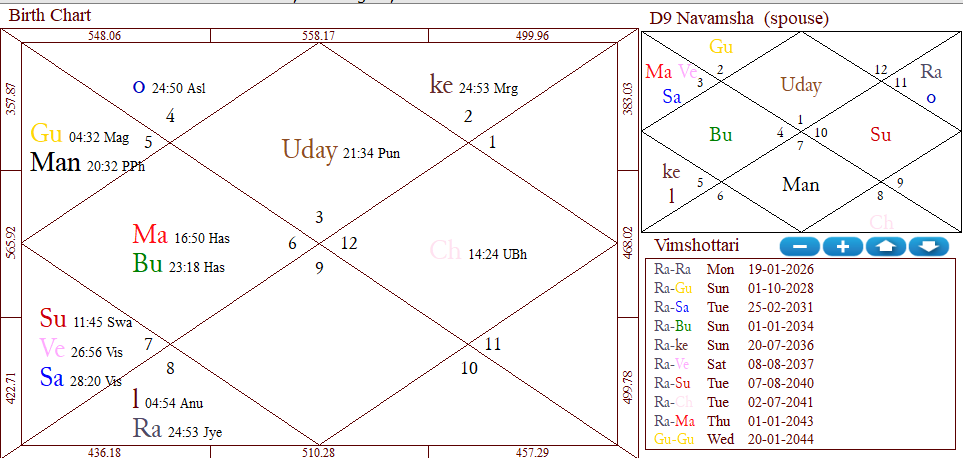
Working jyotiśa rules for seeing wealth and finances in the chart Note- Do not paste your own charts and birth data for analysis. 1- “वाग्वित्तास्तिकपोषकत्वनखसंभोज्यानि सत्यानृते Check Nidhi or Wealth/ancestral wealth from second house. 2- The lord of the second house. 3- The bhava itself. 4- लाभः सर्वविधैर्दुराशसकलादायौ. Gains, profits, ancestral property from 11th house. 5- The lord of the eleventh house and the bhava itself. 6- Now check condition of both Jupiter and Venus. 7- Now check second and eleventh houses from Moon. 8- Check both these houses from karakas. 9- Check śadbala and raśmi Bala of moon for level 10- Rajyogas and good yogas will multiply the above. 11- Bad yogas will cause issues in above. Example chart for explanation: · The second lord is placed in Pisces (not in gandānt) and in direct relation with eleventh house lord. 2ndhouse is empty. · Saturn the lord of ninth in exaltation aspects the second house which will result in stable wealth for long time. · Venus is in svarāśī in uttamansa with Mars (11th lord and 9th lord Saturn). Mars is kautuk āvastha leads to two marriages and more then one daughter. He is divorced but not married again. He has two daughters. · The second from Guru has configuration of Mars, Mercury (both 9th and 11th lords from Jupiter) · 11th lord is exalted from Jupiter. Guru itself is in Bhojanavastha leading to fondness for good food, reading habits, pleasant speech etc. · From Venus 11th is in lagna in neechbhanga. · Second lord has Rāhu in uttamansa. · From moon Mars is placed in seventh forming a good yoga. · Moon is from śuklā pakṣa in benefic āvastha. · The 11th is Saturn exalted in house of research. · None of the gṛha are asta or in MB degrees. · All major planets are placed in very good anśa.
Balaganpathi 🌞 tweet media
3
18
136
10.7K
Teddy Bear🧸
Teddy Bear🧸@abhi_bpl78·
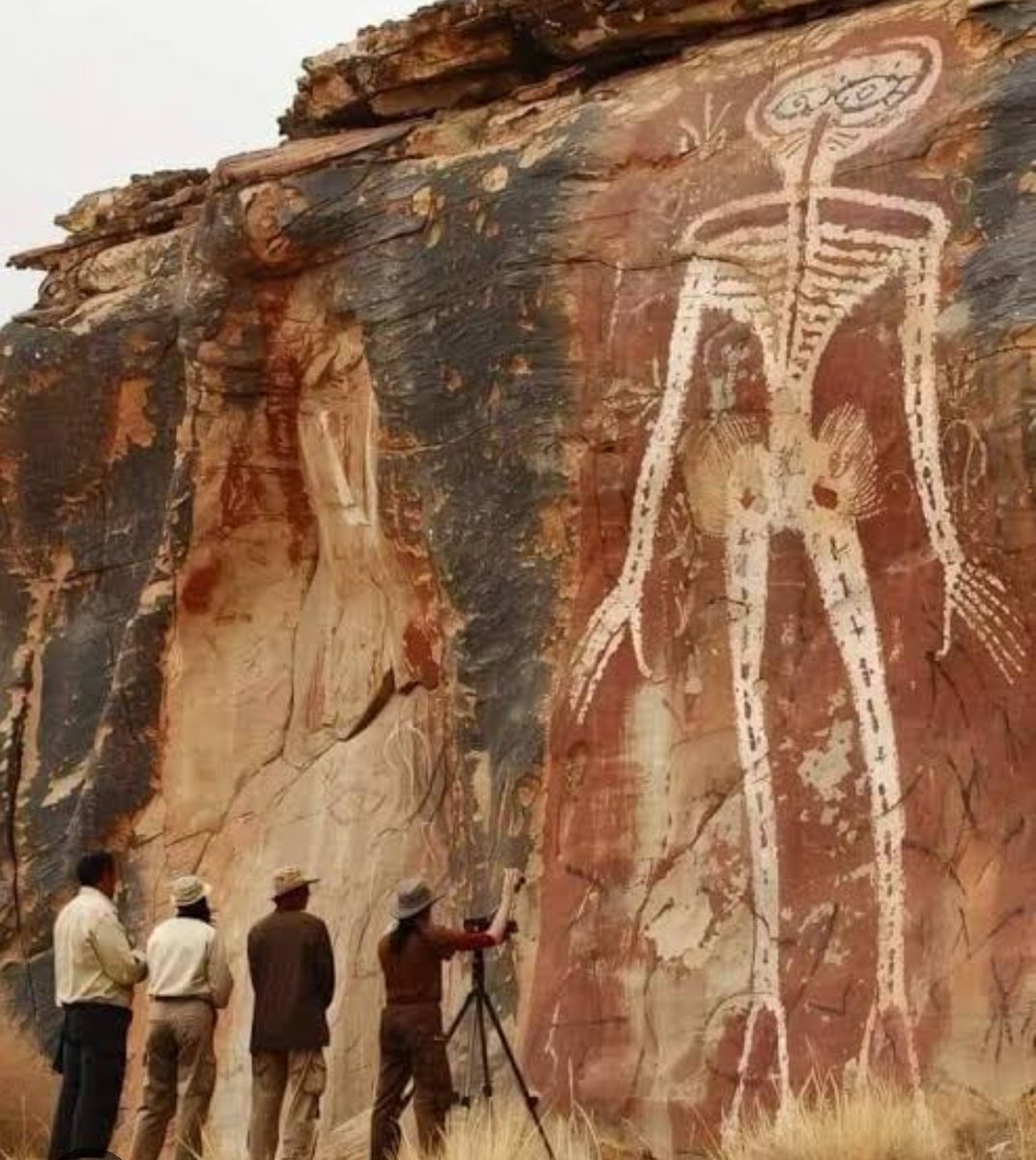
@IndiaTales7 10,000-year-old paintings found in Charama area in Kanker district, Chhattisgarh, India
Teddy Bear🧸 tweet media
English
1
7
50
4.9K
Raghu
Raghu@IndiaTales7·
Thread of the Most Mysterious Places on Earth🧵 1. Atacama Desert, Chile 🇨🇱
Raghu tweet media
English
455
7.4K
78.7K
17.4M
Balaganpathi 🌞
Balaganpathi 🌞@Balaganpathi·
This is not another fast-food “Vastu course” sold by social media swindlers. • 150+ deeply researched videos • Thousands of references from authentic manuscripts • True śloka interpretations not WhatsApp knowledge • Practical, modern-day application • 10 months of structured, serious learning • Years of serious hard work in making. While the market is flooded with overpriced, shallow, 15-day certifications with no foundation this program is built on years of study, discipline, and real understanding. The fee is a fraction of the time, effort, and depth that has gone into creating something genuine. This course is only meant for those who want real serious knowledge and not time passers and people looking for shortcuts. Please do not contact for time pass.
Balaganpathi 🌞@Balaganpathi

The course will be started in April 2026. Course Announcement- 2026-27 Vāstu Viśarad •Certification- Awarded by Bhāratīya Veda Vijñāna Pariṣad. •Timing- 10 months •Mode- Online with extensive course material, 150 Video tutorials •Exclusive Material with lucid explanation through tables, graphs, software, applets & slides etc. •Language- English •Course level- It is one of the most advance courses in Vāstu as of today. •FREE DEMO CLASS This course presents the essence distilled from 1,465 classical granthas, enriched with ślokas and insights from rare and authentic manuscripts, developed over many years with detailed hand-drawn tables and diagrams, supported by extensive case studies and real-life examples, and remedies based on genuine ancient methodologies. It is mentored and taught by a Jyotisha Visharad (ICAS, 1997) who has trained thousands of students and worked on numerous Vastu projects worldwide. Unlike short-term or superficial courses, this program is firmly rooted in the classical Vastu system described in traditional texts and is delivered by a faculty member with over 25 years of experience and multiple accolades to his credit.

English
0
7
24
5.3K
Balaganpathi 🌞
Balaganpathi 🌞@Balaganpathi·
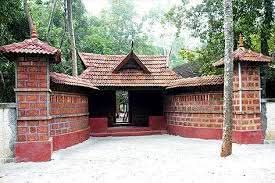
Toraṇa dvar, Padippura, main gate is the gateway to the Sakti, It is the horizontal transmutation of energy to prosperity. The vertical comes from brahma or center. Door should be fixed mathmetically as it is the main source of negative or positive energy.
Balaganpathi 🌞 tweet media
English
1
6
44
1.5K
Balaganpathi 🌞
Balaganpathi 🌞@Balaganpathi·
Experiences with Maha Periyava: Sankalpam for the Pooja It was Telugu New Year’s Day. Maha Periyaval was was camping near Chittoor. There were a number of visitors and darshanam was going on and on. It was nearly 1.30 p.m. and Maha Periyaval had not started the first kalam pooja. One of the senior staff of the Mutt gently pointed out the lateness of the hour. H.H.: We should start the New Year with Chandramouleswara Pooja and pooja begins with sankalpam. Then He asked the large gathering of assembled devotees the purpose and meaning of sankalpam of the daily pooja. People began to guess. One said may be it was for the sake of Periyaval. Another suggested both Maha Periyaval and Pudu Periyaval. A third opinion was that it was for the welfare of the Vedas. A fourth guess was that it was for kings or rulers, brahmins and cows according to the well known sloka. Then Maha Periyaval called the sastrigal who used to recite the sankalpam and asked him to translate and explain the sankalpam to everyone present. Only then did we realize that the daily pooja at the Mutt was being performed for the welfare of every man, woman, and child belonging to this country, irrespective of age, sex, religion, caste, state, language or any other distinguishing factor. Author: Prof S.Kalyanaraman, Neurosurgeon, Chennai Source: Moments of a lifetime Compiled by Jagadguru Sri Maha Periyava - Kanchi Paramacharya/Fb
Balaganpathi 🌞 tweet media
English
16
27
242
3.2K
Balaganpathi 🌞
Balaganpathi 🌞@Balaganpathi·
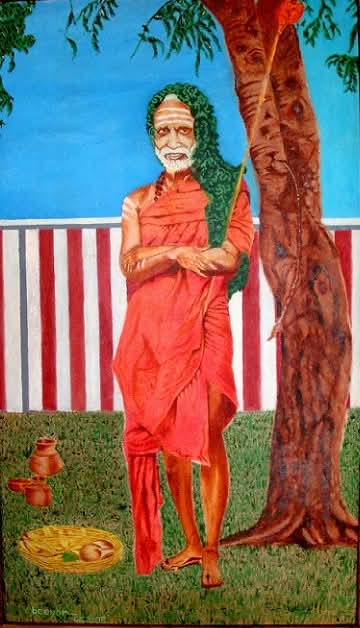
Experiences with Maha Periyava: Promises Made Should Be Kept At Any Cost There were a number of shops such as a flower shop, a medical shop and others doing brisk business in front of Kanchi Matham many years back. The bank officials of Indian Bank had a desire to open a branch there and take care of the administration of the revenue and expenses of the Matham. They expressed their wish to the Matham officials and got the approval. The conditions from the Matham was such that the bank should construct their own building in front of the Matham. And whatever shops were required to be vacated for this purpose, alternate places were compulsorily to be given to the shopkeepers. The conditions were implemented, and the Bank branch was opened. Two years later, a dampati (husband and wife) came and stood before Sri Maha Periyava and said, "Today is our wedding day. Maha Periyava should bless us." They prostrated to him. Periyava recognised them. "You are the medical shop Mudaliar?" "Yes." "You father suffered much before he died?" "Yes." After inquiring about their welfare, the sage asked the next question. "Where are you keeping your shop now?" No immediate reply to this question came. "We are yet to set up a shop; we are on the lookout for a suitable place." "Why? Did they not provide you with an alternate place when you vacated from the Matham premises?" Mudaliar just dragged on. "About that..." The Mahaan immediately understood that something had gone wrong. Ganesaiyer, the Manager of the Matham was brought to Him. In a leisurely tone the sage conducted the inquiry. "As much as possible we had provided alternate places to everyone." The Manager said in a low voice. "Seems no place had been given to the medical shop Mudaliar. Says he is on the lookout for a suitable place. Why was there no place to give to him?" Ganesaiyer dragged on. "No, but we discussed things with him and decided..." Thereafter, Periyava did not talk with anyone that whole day. He seemed to be in serious contemplation. The decision he reached and announced created a bustle and also made people rapturous. The news that the medical shop Mudaliar was not given an alternate place had put Sri Maha Periyava in a lot of sankatam (embarrassment). Was it not a transgression to go back on a promise? Maha Periyava had already sent the Mudaliar away after getting the address of his residence. Only then he called for the Manager and inquired with him. There was ample space at the back of the Matham also facing the road. If a wall of the Matham was removed, they would have space three times in size of what the Mudaliar had earlier, and this space was allotted to him before that evening! The construction work was entrusted to an engineer devotee who had come on that day for darshan. Within three months, the shop was built and the Mudaliar had set up and opened his shop for business. Sri Maha Periyava was very strict that promises made by them should be kept at any cost. There were no bounds to the happiness of the medical shop Mudaliar after this incident! Author: Raa. Venkatasamy (in Tamil) Compiled by Jagadguru Sri Maha Periyava - Kanchi Paramacharya/Fb
Balaganpathi 🌞 tweet media
English
7
25
185
2.7K
Balaganpathi 🌞
Balaganpathi 🌞@Balaganpathi·
The course will be started in April 2026. Course Announcement- 2026-27 Vāstu Viśarad •Certification- Awarded by Bhāratīya Veda Vijñāna Pariṣad. •Timing- 10 months •Mode- Online with extensive course material, 150 Video tutorials •Exclusive Material with lucid explanation through tables, graphs, software, applets & slides etc. •Language- English •Course level- It is one of the most advance courses in Vāstu as of today. •FREE DEMO CLASS This course presents the essence distilled from 1,465 classical granthas, enriched with ślokas and insights from rare and authentic manuscripts, developed over many years with detailed hand-drawn tables and diagrams, supported by extensive case studies and real-life examples, and remedies based on genuine ancient methodologies. It is mentored and taught by a Jyotisha Visharad (ICAS, 1997) who has trained thousands of students and worked on numerous Vastu projects worldwide. Unlike short-term or superficial courses, this program is firmly rooted in the classical Vastu system described in traditional texts and is delivered by a faculty member with over 25 years of experience and multiple accolades to his credit.
Balaganpathi 🌞 tweet media
Română
1
16
77
11.7K
Balaganpathi 🌞
Balaganpathi 🌞@Balaganpathi·
saatramudhu (saaru or rasam + amudhu), which became saatthamudhu. Vaishnavas also have a term thirukkann amudhu that refers to our payasam. What is that thirukkann? If rudraksham means Rudra's eye, does 'thirukkann' mean Lakshmi's eye? Or does the term refer to some vastu (article) added to payasam? No such things. Thiru kannal amudhu has become thirukkann amudhu. Kannal means sugarcane, the base crop of sugar and jaggery used in payasam. I was talking about rasam. If something is an extraction of juice, then would it not be clear, diluted and free of sediments? Such is the nature of our rasam, which is clear and dilute. The other one, served earlier to rasam in a meal, is the kuzhambu. Kuzhambu contains dissolved tamarind and cut vegetable pieces, so it looks unclear, its ingredients not easily seen. Buttermilk as our dessert A western meal normally ends with a dessert. In a South Indian meal, desserts such as payasam are served after the rasam sadam. Any sweets that were served at the beginning are also taken at this time. After that we take buttermilk rice as our final course. Paramacharya explains that since sweets are harmful to teeth, our sour and salty buttermilk actually strengthens our teeth, and this has been observed and praised by an American dietician. We gargle warm salt water when we get toothache. The buttermilk is the reason for our having strong teeth until the end of our life, unlike the westerners who resort to dentures quite early in their life. Vegetable curry Although cut vegetable pieces are used in sambar, kootu and pachadi, in curry they are fried to such an extent that they become dark in color (the term curry also means blackness or darkness in Tamil). May be this is the origin of the name curry. Uppuma (kitchadi) If the term uppuma is derived from the fact that we add uppu or salt, then we also add salt to iddly, dosa and pongal! Actually, it is not uppuma but ubbuma! The rava used for this dish expands in size to the full vessel where heated up with water and salt. The action of rava getting expanded is the reason for the term ubbuma. Idly The term iduthal (in Tamil) refers to keeping something set and untouched. We call the cremation ground idukaadu (in Tamil). There we keep the mrita sarira (mortal body) set on the burning pyre and then come away. The term iduthal also refers to refining gold with fire. The (Tamil) term idu marunthu has a similar connotation: a drug given once without any repetition of dosage. In the same way, we keep the iddly wet flour on the oven and do nothing to it until it is cooked by steam. Idiyaappam (This is rice noodles cooked in steam). Brahmins call it seva while others call it idiyaappam. But unlike an appam which is a cake, this dish is in strands. The term appam is derived from the Sanskrit ‘apupam’ meaning cake. The flour of that cake is called ‘apupayam’. This word is the origin of the Tamil word appam. Appalam (papad) The grammatical Tamil term is appalam. This dish is also made by kneading (urad dhal) flour, making globules out of it and then flattening them. So it is also a kind of appam. Because of its taste a 'la' is added as a particle of endearment! Laddu Ladanam (in Sanskrit) means to play, to throw. ladakam is the sports goods used to play with. Since the ball games are the most popular, ladakam came to mean a ball. The dish laddu is like a ball, and this term is a shortened form of laddukam, which derived from ladakam. Laddu is also known as kunjaa laadu. This should actually be gunjaa laadu, because the Sanskrit term gunja refers to the gunja-berry, used as a measure of weight, especially for gold. Since a laddu is a packed ball of gunja like berries cooked out of flour and sugar, it got this name. The singer of Muka Panca Sati on Ambal Kamakshi describes her as Matangi and in that description praises her as 'gunja bhusha’ that is, wearing chains and bangles made of gunja-berries of gold.
Indonesia
3
8
36
1.1K
Balaganpathi 🌞
Balaganpathi 🌞@Balaganpathi·
Annam Atma Paripalanam: Food nourishes the soul The concept food in Western thinking includes the input to stomach via the mouth, an idea that food is physical in nature and nourishment. This is not to say that Western thinking was totally unaware of the subtle attributes of food. Shakespeare sings, "If music be the food of love, play on." There are also phrases such as 'food for thought' and even 'food for the soul', in English, but these do not speak about a total spiritual connotation. In Sanatana Dharma, the term annam is used for the English term 'food', but not as an equivalent. The term annam denotes and connotes physical and spiritual ramifications. Annam is not just something which is input to stomach and digested, but it includes everything that is ingested by the ten senses and the mind. This is the reason our physical body is called ‘annamaya kosha’. A number of our scriptures talk about annam. The main emphasis is on the truth ‘What we eat, we become’. Kanchi Paramacharya, Sri Chandrasekharendra Saraswati Swami took sannyasam and ascended the throne of Kanchi Kamakoti Peetham at the age of thirteen. From that day, until he attained videha mukti at the age of 100, he lived an exemplary life of strictest austerity. His daily main meal was often astonishingly simple: a small handful of puffed rice soaked in buttermilk. Even this was not taken when he went on fasting for days together. Occasionally, he took bhiksha from his devotees, but it was more to satisfy their desires than for his own welfare. Therefore, in the virtual dinner we are going to have with him now, he plays only the part of a host. A host giving us food for body, mind and soul. He is the very embodiment of Ambal Kamakshi, who took avatar in Kanchi and did tapas to be joined with her Isha, while conducting the thirty-two kinds of dharmas in Kanchi, starting with the anna daanam. We are his athithis (guests) who are well take care of by him in body and spirit. Paramacharya's spiritual discourses are well known, and have been published as a collection of seven volumes titled Deivathin Kural (The Voice of God) in Tamil by Sri R.Ganapathi, his eminent devotee. To the awe and amazement of his devotees, Paramacharya often discussed about down-to-earth laukika matters with keen interest, deep understanding and knowledge. In this lecture, he explains the origin and meaning of the names of common Indian dishes and their connection to spirituality. In these explanations, I have mostly used the translated words of what Paramacharya actually spoke, extracted from the Tamil publication titled Sollin Selvar (The Expert of Words), Sri Kanchi Munivar by Sri R.Ganapathi. A South Indian Meal A typical South Indian meal is served in three main courses: sambar sadam, rasam sadam, and more (buttermilk) sadam. Sambar is also known as kuzhambu in Tamil, a term that literally translates to 'get confused'. Paramacharya explains how these three courses are related to the three gunas of spirituality: the confusion of sambar is ‘tamo guna’, the clarified and rarified flow of rasam is ‘rajo guna’ and the all-white buttermilk is ‘satva guna’. Our meal reminds us of our spiritual path from confused inaction to a clear flow of action and finally to the realized bliss of unity. Sadam Cooked rice, the main dish of a South Indian meal is called sadam. That which has sat is sadam, in the same way we call those who are full of sat, sadhus. We can give another explanation for the term: that which is born out of prasannam is prasadam. What we offer to Swami (God) as nivedanam is given back to us as prasadam. Since we should not add the root 'pra' to the rice we cook for ourselves, we call it sadam. Rasam Rasam means juice, which is also the name of filtered ruchi. We say 'it was full of rasa' when a speech or song was tasteful. Vaishnavas, because of their Tamil abhimanam, refer to rasam as saatthamudhu. It does not mean the amudhu (amrita) mixed with sadam. It was actually
Balaganpathi 🌞 tweet media
English
11
36
174
3.9K
Balaganpathi 🌞
Balaganpathi 🌞@Balaganpathi·
Experiences with Maha Periyava: Sankalpam for the Pooja It was Telugu New Year’s Day. Maha Periyaval was was camping near Chittoor. There were a number of visitors and darshanam was going on and on. It was nearly 1.30 p.m. and Maha Periyaval had not started the first kalam pooja. One of the senior staff of the Mutt gently pointed out the lateness of the hour. H.H.: We should start the New Year with Chandramouleswara Pooja and pooja begins with sankalpam. Then He asked the large gathering of assembled devotees the purpose and meaning of sankalpam of the daily pooja. People began to guess. One said may be it was for the sake of Periyaval. Another suggested both Maha Periyaval and Pudu Periyaval. A third opinion was that it was for the welfare of the Vedas. A fourth guess was that it was for kings or rulers, brahmins and cows according to the well known sloka. Then Maha Periyaval called the sastrigal who used to recite the sankalpam and asked him to translate and explain the sankalpam to everyone present. Only then did we realize that the daily pooja at the Mutt was being performed for the welfare of every man, woman, and child belonging to this country, irrespective of age, sex, religion, caste, state, language or any other distinguishing factor. Author: Prof S.Kalyanaraman, Neurosurgeon, Chennai Source: Moments of a lifetime Compiled by Jagadguru Sri Maha Periyava - Kanchi Paramacharya/Fb
Balaganpathi 🌞 tweet media
English
6
19
153
3.1K