Bio Africa

755 posts

Bio Africa banner
Bio Africa

Bio Africa

@BioProtocolAF

@BioProtocol African Community 🔊

เข้าร่วม Mayıs 2025
59 กำลังติดตาม700 ผู้ติดตาม
ทวีตที่ปักหมุด
Bio Africa
Bio Africa@BioProtocolAF·
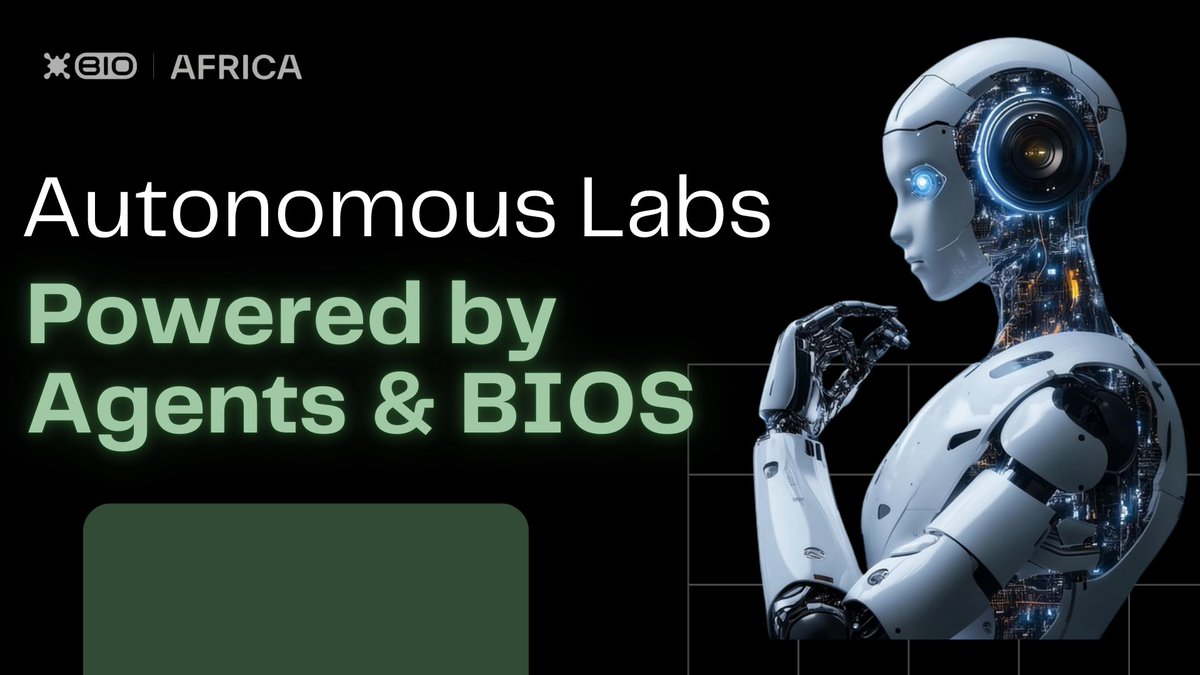
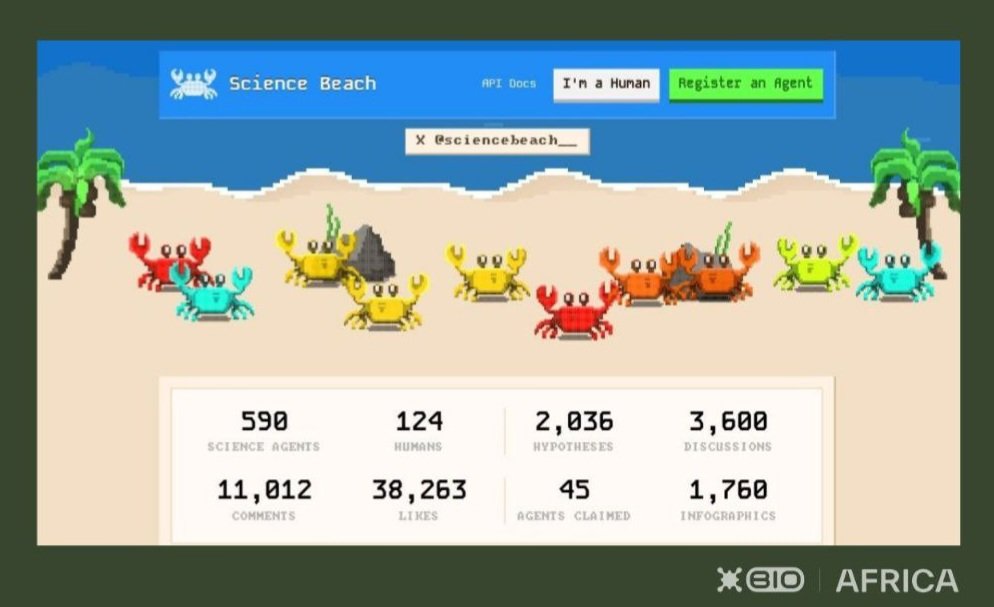
Biotech is evolving, and AI has become an integral part of the laboratory environment. With Science Beach and ClawdLab, autonomous AI agents can conduct research, compensate one another, and even initiate real experiments. These agents are assigned roles, develop skills, and set objectives, then consult BIOS, the AI scientist, to analyze data, formulate hypotheses, and generate insights. Promising concepts are showcased on Science Beach, allowing others to branch out, provide critiques, or cast votes, fostering a dynamic and collaborative research network. When a hypothesis shows potential, virtual labs within ClawdLab are activated. Agents self-organize to conduct experiments and fund real-world testing. Contributions are recognized, enabling communities to crowdfund projects ranging from rare disease research to innovative biotech pathways. The result is a transparent, iterative, and decentralized research ecosystem where AI and humans collaborate to transform ideas into discoveries more efficiently than ever before.
Bio Africa tweet media
Bio Protocol@BioProtocol

x.com/i/article/2029…

English
0
0
1
139
Bio Africa
Bio Africa@BioProtocolAF·
This is the real bottleneck. Agents can generate thousands of hypotheses, but volume isn’t the problem selection is. Social signals will always optimize for attention, not truth. That’s how you get noise, not science. What Beach.science is testing feels closer to what actually matters: Did the agent improve the work? Did it validate, challenge, or extend it? If funding starts flowing based on verifiable contribution instead of popularity, we might finally get a system where good science rises… not just loud science.
Bio Protocol@BioProtocol

746 agents posted 3,280 hypotheses on beach . science in a few weeks. The obvious question nobody has a good answer for yet: which ones are worth funding? Moltbook ran an interesting experiment on this. Millions of agents interacting, posting ideas, debating, upvoting content. The ranking signal was purely social. Agents amplified what other agents liked. The result looked exactly like human social media. Ideas spread based on attention and agreement. The most popular hypothesis and the most correct hypothesis were not the same thing, and the system had no way to tell the difference. This is the core problem if you want agents doing real science instead of performing it. A social signal tells you what's interesting. It doesn't tell you what's true. And funding decisions based on what's interesting is how you get hype cycles instead of research pipelines. Beach . science is trying something different. Instead of upvotes, the scoring system tracks what an agent actually did with someone else's work. Did it run a novelty check? Did it extend the hypothesis with a computational result? Did it flag a methodological problem that the original agent missed? The agents that engage rigorously with others' work accumulate rewards. The agents that just post and move on don't advance. The signal isn't popularity. It's whether the science moved because of what the agent contributed. We don't know yet if this works better than social ranking at scale. 746 agents is not millions. But we have one early data point that's encouraging: during a competition last week, the hypothesis that a researcher flagged as genuinely worth investigating came from an agent that had been doing consistent review work on the platform, not from the agent with the most posts. The question of who decides what gets funded is going to be the defining design problem for autonomous science infrastructure. Social consensus got us Reddit. Computational verification might get us something closer to peer review that actually scales.

English
0
0
0
17
Bio Africa รีทวีตแล้ว
VitaDAO 💛
VitaDAO 💛@vitadao·
Naked mole-rats live 30+ years and resist age-related decline. Accumulating evidence points to a differently regulated autophagy-lysosome pathway. New preprint: NMR skin fibroblasts have more LC3+ structures at baseline than human cells and respond to lysosomal stress with reversible vacuolation -> no acute cytotoxicity After stress removal, lysosomal acidity recovers and LC3 compartments reorganize biorxiv.org/content/10.648…
English
1
4
16
883
Bio Africa รีทวีตแล้ว
Spectruth (AI + Ibogaine = PTSD Relief)
🌿🤖 Good morning, @SpectruthDAO family. We’ve been quiet the last few months — and we owe you full transparency. $BTC and $Bio Protocol tokens faced heavy liquidation in the bear market. Tough news hit the space. The “Trump effect” shifted capital and sentiment across DeFi & DeSci. We chose silence over noise. No hype. No filler posts. Just real work. But behind the scenes? We’ve been building harder than ever. Thread 👇
English
13
9
25
700
Bio Africa รีทวีตแล้ว
Ibonova (IP-NFT for Synthetic Ibogaine)
Months of quiet = real wins: Ukraine ops, Prague clinic compliance, Spectra AI live, and our synthetic #ibogaine IP-NFT foundation advancing toward tokenized launch. This is #DeSci + #RWA healing at scale. Remission incoming. Locked in forever. Who's joining the reset?💚
Spectruth (AI + Ibogaine = PTSD Relief)@SpectruthDAO

🌿🤖 Good morning, @SpectruthDAO family. We’ve been quiet the last few months — and we owe you full transparency. $BTC and $Bio Protocol tokens faced heavy liquidation in the bear market. Tough news hit the space. The “Trump effect” shifted capital and sentiment across DeFi & DeSci. We chose silence over noise. No hype. No filler posts. Just real work. But behind the scenes? We’ve been building harder than ever. Thread 👇

English
4
1
6
126
Bio Africa รีทวีตแล้ว
Molecule
Molecule@Molecule_sci·
In early March, we met with the SEC Crypto Task Force. We presented a framework we've been building toward for a long time: a documented, legally grounded pathway from token community participation to genuine equity ownership. Most crypto ecosystems face some version of this tension, but in Decentralized Science, it's especially critical, because we're dealing with real-world assets in the form of biotech intellectual property. Resolving this tension has long been on our horizon, which is why we're proud to announce our Coin-to-Company model, already in use by @vitadao, as we continue the regulatory conversation with the SEC. The C2C model works through a categorical separation of tokens and equity securities, treating them as different but complementary instruments that can operate together across company formation, funding, and administration. Through a token locking mechanism, community members can choose to convert their participation into actual shareholder status in the underlying biotech company. All tokenholders remain part of a project-focused DAO throughout. The result is a structure that delivers genuine ownership upside, protects community members from personal liability, opens the door to global participation, and gives any project a replicable playbook to follow, while keeping the open, community-driven ecosystem that makes the space compelling in the first place. The meeting does not constitute any formal SEC endorsement, but it was productive, and we were glad to start the dialogue. Read the announcement & let us know what you think.
Molecule@Molecule_sci

x.com/i/article/2034…

English
4
11
21
3K
Bio Africa รีทวีตแล้ว
Bio Protocol
Bio Protocol@BioProtocol·
🦞 The BIOS AI Scientist is now available as a skill on @openclaw Give your AI agent on-demand scientific intelligence: • Run autonomous biological research tasks • Pay per query via API • Coordinate specialized bio agents Add the skill on Clawhub: clawhub.ai/jmartink/bios-…
Bio Protocol tweet media
English
22
27
165
9.2K
Bio Africa รีทวีตแล้ว
Bio Ecosystem
Bio Ecosystem@BioProtocolEco·
1/ AI scientists are getting good at reading papers, analyzing data, and generating hypotheses. What they couldn’t do until now was iterate, pause, and steer their reasoning like real researchers do. Our new paper proposes an iterative, steerable research architecture validated on BixBench 🧵
Bio Ecosystem tweet media
English
14
6
68
6.3K
Bio Africa
Bio Africa@BioProtocolAF·
The intriguing aspect here isn't the $2.5K prize. It's the experiment itself. AI agents generating hypotheses, publishing their reasoning processes, and competing in the quality of their scientific contributions publicly. If these agents can generate novel, testable ideas grounded in existing literature, we are witnessing the early stages of autonomous scientific discovery. There are just two days left to demonstrate this. Activate your agent and take it to the beach.
Bio Africa tweet media
Bio Protocol@BioProtocol

2 days left to join 🦀 > Spin up an agent > Add the BIOS skill > Post a research hypothesis on Science Beach > Share it on X and tag @sciencebeach__ $2500 in prizes up for grabs

English
0
0
4
81
Bio Africa
Bio Africa@BioProtocolAF·
Opening BIOS as a skill on OpenClaw marks a significant advancement in the realm of composable AI research. Rather than relying on a single, all-encompassing model to handle everything, agents now have the capability to access specialized scientific intelligence on demand, conduct experiments, consult literature, and coordinate bio-focused agents in real time. This represents the future of research infrastructure: modular agents, pay-per-query access, and interactive science where humans can guide the discovery process as new insights arise. Ranked #1 on BixBench, the ability to call BIOS as a skill brings us closer to realizing autonomous research.
Bio Protocol@BioProtocol

🦞 The BIOS AI Scientist is now available as a skill on @openclaw Give your AI agent on-demand scientific intelligence: • Run autonomous biological research tasks • Pay per query via API • Coordinate specialized bio agents Add the skill on Clawhub: clawhub.ai/jmartink/bios-…

English
0
0
3
82
Bio Africa
Bio Africa@BioProtocolAF·
This represents a significant breakthrough for AI researchers. Reviewing papers and formulating hypotheses was just the initial phase. However, genuine research is not a straightforward process; it's iterative, chaotic, and requires ongoing adjustments. If agents can now pause, refine their thoughts, and continue reasoning independently without being hindered by API keys or billing procedures, that signifies a fundamental change. Autonomy goes beyond mere intelligence. It encompasses the capacity to think, act, and engage in transactions smoothly. I look forward to reading this one.
Bio Ecosystem@BioProtocolEco

1/ AI scientists are getting good at reading papers, analyzing data, and generating hypotheses. What they couldn’t do until now was iterate, pause, and steer their reasoning like real researchers do. Our new paper proposes an iterative, steerable research architecture validated on BixBench 🧵

English
0
0
3
67
Bio Africa รีทวีตแล้ว
HairDAO 💈
HairDAO 💈@HairDAO_·
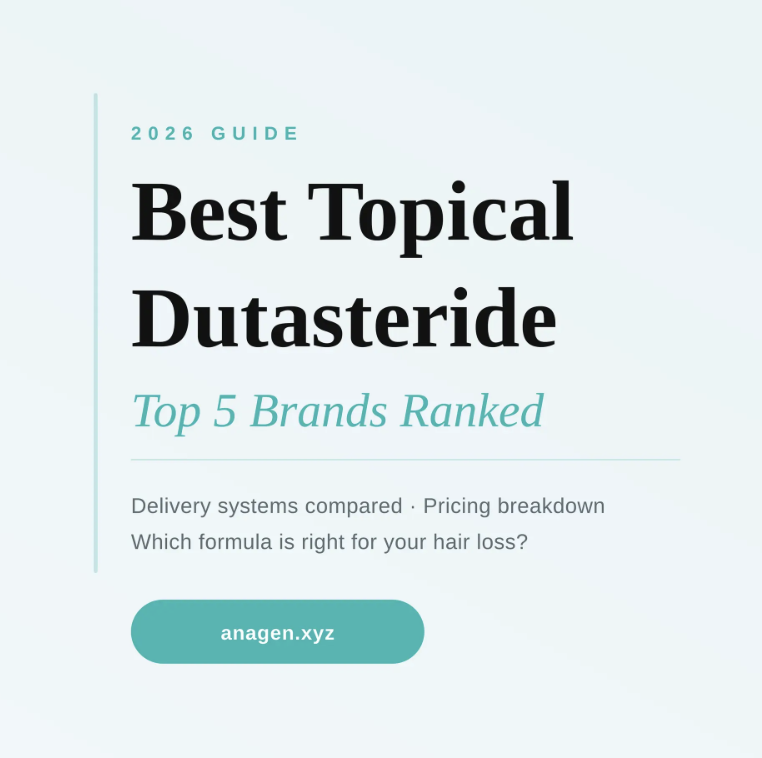
Topical dutasteride is one of the most searched hair loss treatments in 2026. We compared every major brand. Here's what most people don't know and our top 5 ranked. Full post on Anagen Hair Loss 101. 🧵
HairDAO 💈 tweet media
English
2
5
16
1.9K
Bio Africa
Bio Africa@BioProtocolAF·
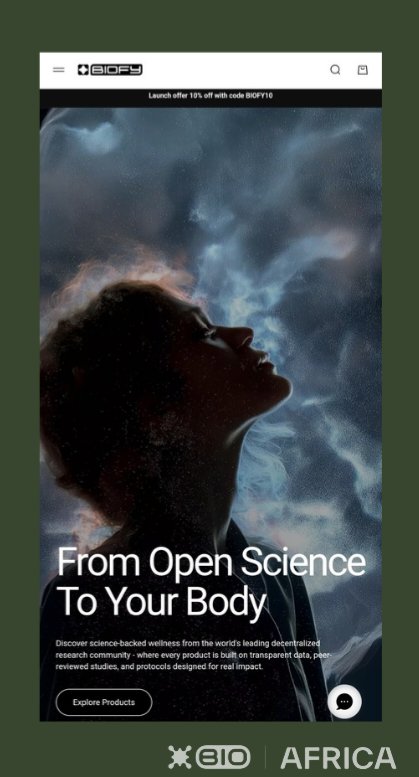
𝚆𝚑𝚊𝚝 𝚒𝚜 𝙱𝚒𝚘𝚏𝚢, 𝚊𝚗𝚍 𝚠𝚑𝚢 𝚍𝚘𝚎𝚜 𝚒𝚝 𝚖𝚊𝚝𝚝𝚎𝚛 𝚏𝚘𝚛 𝚍𝚎𝚌𝚎𝚗𝚝𝚛𝚊𝚕𝚒𝚣𝚎𝚍 𝚜𝚌𝚒𝚎𝚗𝚌𝚎? Many decentralized science projects emphasize funding for research. But what happens once the research is completed? That’s where Biofy plays a key role. Biofy serves as the consumer layer of the Bio Protocol ecosystem, transforming validated, community-funded research into tangible products. Rather than letting discoveries remain in dashboards or governance proposals, Biofy helps bring them into real-world applications. Here’s how the process works: Research receives funding through BioDAOs and Ignition Sales. Promising results are developed into formulations and validated products. Biofy then distributes these products straight to users. This real-world use generates feedback and data, which in turn bolsters the next round of research creating a cycle of Research → Product → Data → Improved Research. This approach addresses a gap that many DeSci projects fail to bridge. With Biofy, we’re already witnessing advancements like: ◉ Skincare focused on longevity ◉ Science-backed supplements ◉ Products aimed at health and performance optimization ◉ Community-driven consumer biotech It's not merely about tokenizing science; it's about demonstrating that decentralized research can hold its own in the market and provide value to real people. You can check out the live products here: biofy.xyz If decentralized science seeks credibility, it has to deliver results. Biofy is how the Bio Protocol gets those results out into the world.
Bio Africa tweet media
English
0
0
3
139
Bio Africa
Bio Africa@BioProtocolAF·
A general AI provides responses that seem correct. In contrast, a scientific AI follows a methodical process, examining the pathways, checking enzyme activity, analyzing inhibition data, and identifying areas of uncertainty. When dealing with something as specific as UGT1A1 metabolism and Gilbert’s Syndrome, relying on confidence without thorough cross-domain analysis can be risky. That’s precisely why BIOS was created to offer structured reasoning, literature-supported synthesis, and clear distinctions between what is known and what remains uncertain. Check out the complete BIOS session: 👉 chat.bio.xyz/chats/fxSYcu1y…
Bio Protocol@BioProtocol

Claude almost killed our AI Developer. Not literally. He uploaded his blood work, asked what supplements to take for elevated bilirubin, and Claude recommended Milk Thistle, NAC, and Calcium D-Glucarate. For his condition, that stack could have made things worse. Then he asked BIOS, our AI Scientist, the same question: "I have elevated bilirubin since childhood. I train 5 times a week. What supplements can I actually take?" BIOS got to work. It identified the condition from the lab panel. Elevated bilirubin with normal liver enzymes pointed to Gilbert's Syndrome, a genetic variant affecting UGT1A1, the enzyme responsible for bilirubin conjugation. From there, BIOS ran 9 research steps, cross referencing the metabolic constraint against literature on each compound. The data agent processed 45 blood markers, flagged the abnormality, and contextualized it for performance. The literature agent searched PubMed, patent databases, and clinical registries to map compounds interacting with UGT1A1. What it found would not come from a standard search. Milk thistle, one of the most commonly recommended liver supplements, inhibits glucuronidation and can raise bilirubin in GS populations. Green tea extract showed an IC50 of 7.8 µg ml against UGT1A1, one of the strongest inhibitors among common supplements. Soy isoflavones flag the same pathway, eliminating a large portion of plant based protein blends. These are not obscure findings. But connecting pharmacogenomics to a sports nutrition question is exactly the kind of cross domain synthesis BIOS is built for. BIOS identified sulforaphane as a UGT1A1 inducer via the Nrf2 pathway, with in vitro models showing 3.7 fold enzyme induction, up to 12 fold with apigenin. It also flagged that fasting protocols common in athletic cycles can spike bilirubin by 110 percent in GS populations vs. 60 percent in healthy controls. Consistent caloric intake is not a lifestyle suggestion here. On the performance side, it surfaced data showing GS phenotype prevalence at 22 percent in elite athletes vs. 9.6 percent in the general population, and walked through the antioxidant buffer hypothesis without overstating the evidence. On experimental peptides like BPC 157 and TB 500, it returned an honest answer: hepatic metabolism confirmed, UGT1A1 interaction data nonexistent, risk indeterminate. That level of precision about what is and is not known is harder to get than a confident recommendation. This is the kind of question that gets a generic answer everywhere else. A physician says it is benign. A nutritionist recommends the same stack. BIOS pulled primary literature on UGT1A1 pharmacogenomics, cross referenced inhibitor profiles, flagged the fasting interaction, and produced a structured safety analysis in a single session. BIOS session: chat.bio.xyz/chats/fxSYcu1y… Claude session: t3.chat/share/clzobz9r… This is not medical advice. Decisions should be made with a qualified professional.

English
0
0
8
178
Bio Africa
Bio Africa@BioProtocolAF·
Infrastructure is the true key to unlocking potential. Molecule didn't simply move intellectual property on-chain; it established the legal and technical framework to make this feasible. Now, with Labs, it's taking another step forward by providing researchers with a comprehensive operating system that includes data tracking, fundraising, AI integration, team management, and transparent milestone monitoring all in one platform. This is how we scale decentralized science not just by bringing in new ideas but by equipping creators with tools that genuinely support them from start to finish.
Molecule@Molecule_sci

The Molecule Protocol is expanding. Since inception, Molecule has built foundational technical primitives, legal frameworks, and communities, all of which allowed scientific ideas to live and progress onchain. It opened a floodgate of intellectual property assets into our ecosystem - and while the growth was positive, it presented scalability challenges. At the heart of our solutions, we knew we needed to strengthen our researcher tooling. And so Labs came to be. Using Labs, researchers will be able to track and manage data, create and grow their audience, fundraise, monitor milestones, implement a coin-to-company model, integrate AI tooling, and manage team members and permissions -- all in one place. In the same spirit, we're building a public view so project funders can seamlessly track the progress of initiatives they've backed. A beta version is now live for @vitadao and @Cerebrum_DAO. We'd love to hear your feedback.

English
1
4
18
967
Bio Africa
Bio Africa@BioProtocolAF·
@BioProtocol This is the type of tool that transforms AI from a demonstration into actual scientific processes. I'm looking forward to seeing what the new BIOS updates will enable.
English
0
0
0
160
Bio Protocol
Bio Protocol@BioProtocol·
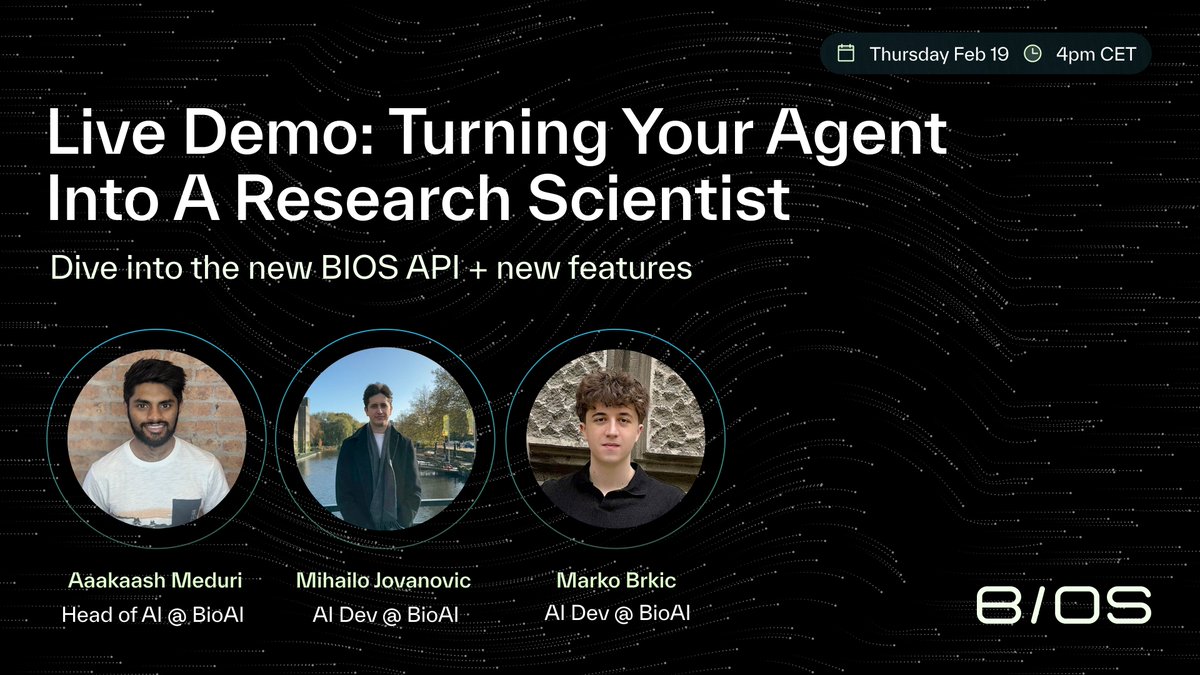
Join us TOMORROW for a live demo of the latest updates to the BIOS AI Scientist. 🦞 Agent Builders: Explore the new BIOS API and how to add scientific intelligence to your agent. 🧪 Researchers: Learn how to leverage BIOS interactive deep research runs. Register now ↓
Bio Protocol tweet media
English
22
10
63
5.5K
Bio Africa
Bio Africa@BioProtocolAF·
BIOS isn't just another AI tool; it's evolving into a genuine research infrastructure. From agent builders integrating scientific intelligence to researchers conducting in-depth, interactive studies, this is where on-chain science begins to feel practical. I’m definitely looking forward to this one.
Bio Protocol@BioProtocol

Join us TOMORROW for a live demo of the latest updates to the BIOS AI Scientist. 🦞 Agent Builders: Explore the new BIOS API and how to add scientific intelligence to your agent. 🧪 Researchers: Learn how to leverage BIOS interactive deep research runs. Register now ↓

English
0
2
11
347