Luan Borelli

249 posts

Luan Borelli banner
Luan Borelli

Luan Borelli

@BorelliEcon

Econometrician. Pursuing a PhD at @UCBerkeley. Formerly: @FGV_EPGE and @ipeaonline.

Berkeley, CA เข้าร่วม Haziran 2024
604 กำลังติดตาม647 ผู้ติดตาม
ทวีตที่ปักหมุด
Luan Borelli
Luan Borelli@BorelliEcon·
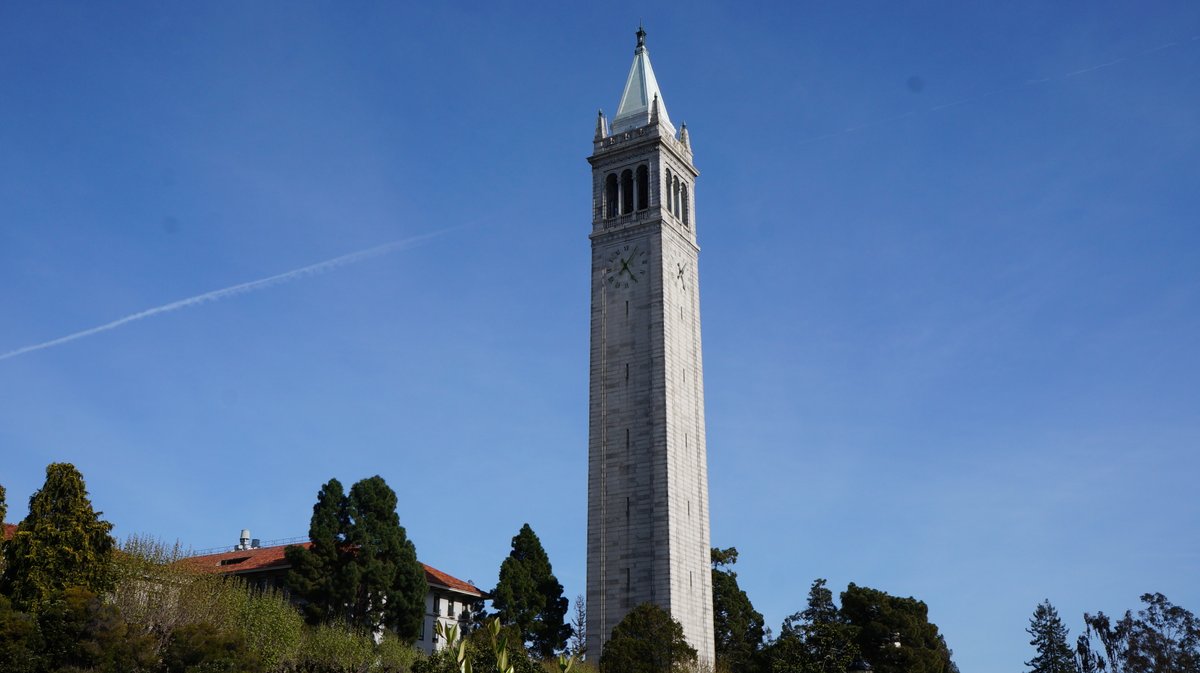
After a long application journey, many great outcomes, and a very challenging decision-making process, I’m thrilled to share that I will be joining the Department of Economics at @UCBerkeley as a PhD student this Fall. Very excited for what lies ahead—this is just the beginning.
Luan Borelli tweet media
English
8
4
205
44.4K
Luan Borelli รีทวีตแล้ว
Probability and Statistics
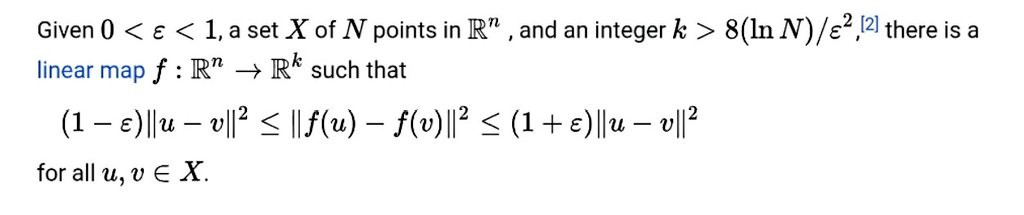
One theorem every ML engineer should know: The Johnson–Lindenstrauss Lemma. It states that high-dimensional data can be projected into a much lower-dimensional space while approximately preserving pairwise distances. Why it matters: • Explains why random projections work • Enables scalable learning in high dimensions • Used in embeddings, compressed learning, and ANN search • Helps fight the curse of dimensionality The surprising part: You can reduce dimensions dramatically without destroying the geometry of the data. That’s why many ML systems can operate efficiently even with massive feature spaces. Modern representation learning is deeply connected to this idea: Good embeddings preserve structure while compressing information. In ML, compression is often not loss of intelligence — it’s removal of redundancy.
Probability and Statistics tweet media
English
5
116
767
52.6K
Luan Borelli รีทวีตแล้ว
Victor Chernozhukov #peace 🇺🇦
Fantastic news! Congratulations to my colleague and longtime collaborator Whitney K. Newey on being awarded the 2026 Erwin Plein Nemmers Prize in Economics. Well-deserved recognition for his foundations contributions to econometrics. 🎉
Victor Chernozhukov #peace 🇺🇦 tweet media
English
6
24
192
16.4K
Luan Borelli
Luan Borelli@BorelliEcon·
Interesting perspective.
jacob tsimerman@Jacob_Tsimerman

I want to clarify my thoughts on problem-solving in mathematics, and the potential consequences of AI for the field. For context, I’m quoting here my post in reply to Daniel Litt (who, echoing others, I find very clear, grounded, and insightful in his thinking). The claim The short version is that I think problem-solving is an immense, and pervasive part of modern mathematical research. Consequently, if human problem-solving disappears by virtue of the AIs becoming strictly and substantially better at it, then most of the time currently spent by modern mathematical researchers will have to be spent on an activity that is altogether pretty different. Whether such an activity is viable as a professional endeavour is something I am unsure of, but strongly encourage others to think about and try to envision, so that if/when the time comes, we can steer such a future into being. Allow me to make this somewhat concrete: by problem-solving I mean questions of the form “is T true? If so find a proof. If not, find a disproof.” where T is a precise mathematical statement. I’ll also include “find an example of S, if there is one” where S is some structure (variety/category/property/isomorphism/….). The argument Ok. Now as I said (and some have echoed) I spend ~all of my time problem-solving as my primary goal. This has sub-goals, but my entire main research field disappears if someone solves the Zilber-Pink Conjecture in its more general form. This is a single conjecture (precisely stated!) and lots of mathematicians, postdocs, and graduate students are engaged in picking apart special cases of it, trying strategies, finding analogies to develop intuition, etc.. Of course, lots of motivation and intuition and analogizing and understanding have gone into deciding to make the ZP conjecture a focus! But the fact remains that this is now what is being worked on ~all of the time by this community. This is true of many mathematicians. They have a problem (or ten) and spend most of their time doing it. If someone solves it, they have to find a different problem. This can be a big, disorienting process involving a lot of energy, and is neither trivial nor always fun (though often rewarding in the end). People have written a lot about Theory building vs. Problem-solving, and I want to first of all clarify I have nothing against theory building or theory builders! It is a valuable part of mathematics, and while there are differences in perspective between the “camps” there is way more mutual respect and agreement. However, I gather there is a perception that theory-builders spend most of their time not-problem-solving, and I think this is largely untrue. Now I’m not a theory-builder primarily (though I’ve partaken a LITTLE BIT by necessity) so I am outside of my comfort zone. As such, I apologize for mistakes and welcome corrections! But theory-building constantly runs through problem-solving. Let’s say you want to define the right notion of a cohomology theory. Of course you must make candidate definitions. But then what does it mean for it to be the right one? Well, you start asking if it has natural properties. These are T statements. Does it satisfy a Kunneth formula? Is it functorial in the right way? When you have the wrong one you have to find the properties it’s missing, and when you have the right one you have to prove that it indeed has those properties. Again, I am not saying nor do I believe that this makes problem-solving “real math” and theory-building lesser. I am just trying to draw attention to the way I think research mathematicians operate, and mathematics is practiced. To put all this a different way, imagine you had access to an AI oracle that could resolve statements T, but somehow lacked any creativity to build technology or make definitions (I think this is unlikely, but for the purpose of this thought experiment lets imagine it). How would your mathematics change, if you were a theory builder? Well, you make a definition, and want to know if it’s the right one. You immediately ask your oracle a thousand questions. From “are these basic properties true” to “ooh, so is this deep conjecture true?” and start getting back answers, and amending your definitions. You could invent and resolve entire research directions in days. But the confusion you would have had to push through to flesh out your theory would largely (probably not entirely) be instantly resolved and the whole process sped up tremendously by your oracle. A big part of the process would be gone. This is very very different to modern mathematics. One more thought This post is too long already, but I’ve seen some people say that they only do mathematics to find truth and others valourize that as the only virtuous way to be. I do not do mathematics only to find truth. I do it largely because I enjoy it and I am good at it. I also find it beautiful and am grateful I get to spend my days understanding beautiful things. But I enjoy the challenge, the process, resolving confusions, finding strategies, grappling with problems. I would like to push for this being de-stigmatized. Mathematicians are people who need money, housing, food, love, exercise, and a great deal of other stuff including various forms of meaning. There are many people whose primary enjoyment of math comes through problem solving in one of its incarnations. If that disappears, that is not a trivial issue and many of them might not want to do it anymore (even if there were some way to proceed).

English
0
0
2
296
Luan Borelli
Luan Borelli@BorelliEcon·
My belief: if objective problems become costlessly solvable, the most interesting human intellectual work will shift toward subjective questions that retain some objectivity: questions well-posed/structured enough to be partially answerable, yet still formally verifiable.
Daniel Litt@littmath

FWIW I fully expect what’s happening with Erdős problems to happen to other areas too, likely within the next year or so. When I say this hasn’t happened yet, that’s all that I mean!

English
0
0
1
186
Luan Borelli รีทวีตแล้ว
Nico Ajzenman
Nico Ajzenman@Nicolas_Ajz·
No es networking. Latam tiene universidades de 1era, reclutan a los mejores alumnos, les dan entrenamiento de 1er año de phd y los exponen a investigacion seria. Lo hacen hace 30 años y x eso tienen reputacion. Sobran ejemplos: utdt, udesa, FGV's, PUC's, incluso publicas (unlp)
Daniel Sánchez 🇨🇦🇪🇨@daniel_ec18

Me sorprendió ver como todos los graduados que pude encontrar no tenían mayor experiencia internacional de investigación. Es admirable - y viola todo lo que uno escucha de como entrar a PhD de primera (mate, predoc). Su network y lobbying debe ser muy bueno con universidades 🇺🇸

Español
7
21
323
31.6K
Luan Borelli
Luan Borelli@BorelliEcon·
@XiaojieLiu1993 I don’t buy that admissions committees lack this institutional information. They know very well the top institutions in the countries they recruit from. Di Tella is a very well-known top institution in Argentina, especially among people doing PhD admissions.
English
1
0
1
152
Xiaojie Liu
Xiaojie Liu@XiaojieLiu1993·
@BorelliEcon Exactly. With inflated letters and nosier signals, schools have to rely on signals about institutions instead of individual students, which creates talent misallocation because not everyone knows this institution info before application
English
1
0
0
138
Xiaojie Liu
Xiaojie Liu@XiaojieLiu1993·
Just saw this incredible placement and most of them do not do predoc or have international experience. We can see from here how connections can be important in PhD applications.
Economía UTDT@EconomiaDiTella

¡Felicitaciones a los 16 alumnos de la Maestría en Economía de @utditella que continuarán sus estudios en los más prestigiosos programas doctorales de EEUU y Europa! Celebramos con mucho orgullo este gran logro. 👏🎉 Mirá nuestro placement histórico: bit.ly/42rftNz

English
8
2
112
51.3K
Luan Borelli
Luan Borelli@BorelliEcon·
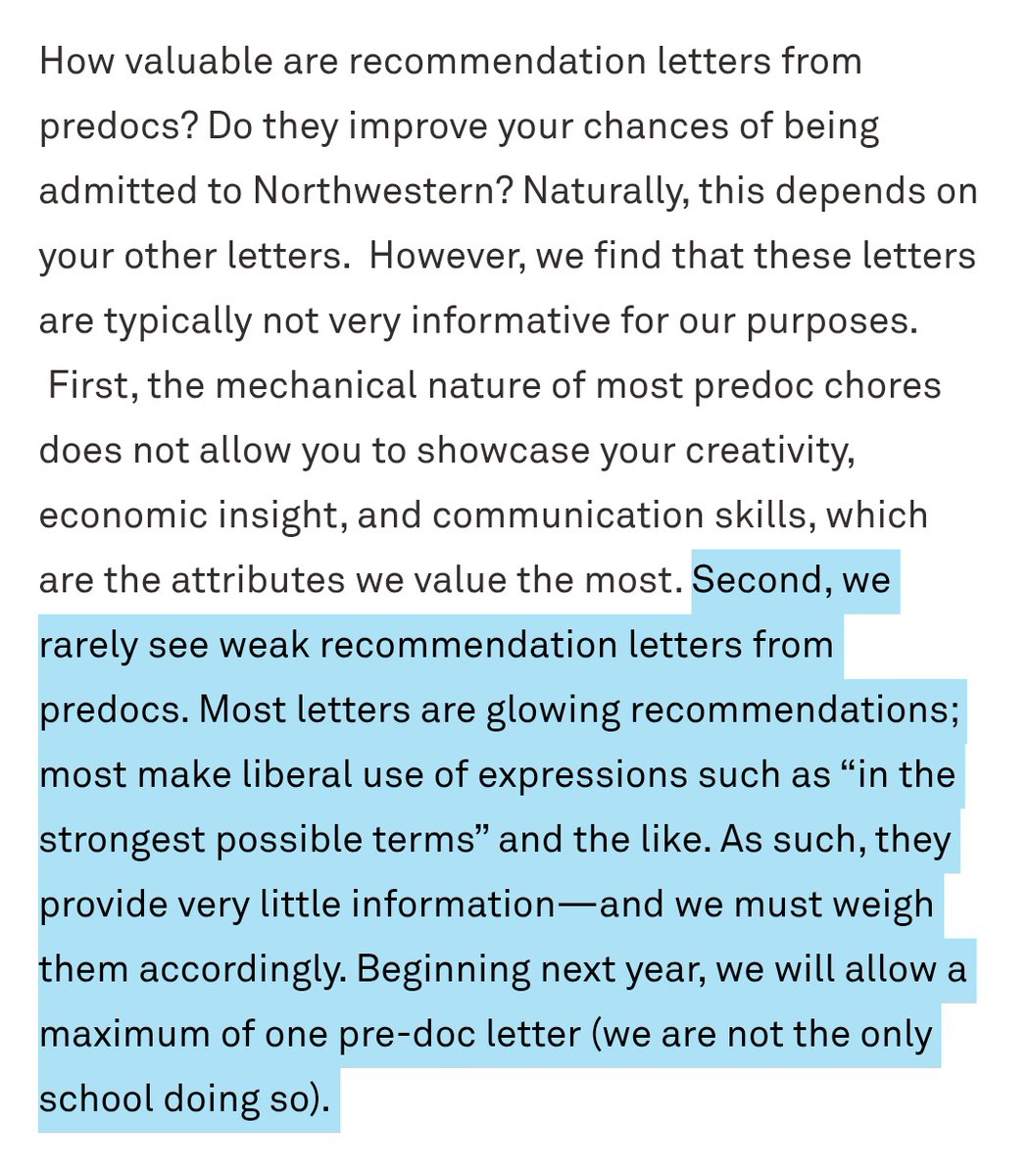
@XiaojieLiu1993 Northwestern and other schools are starting to downplay predoc recommendation letters for a reason.
Luan Borelli tweet media
English
2
0
5
301
Luan Borelli
Luan Borelli@BorelliEcon·
@XiaojieLiu1993 Actually, the opposite. People do predocs precisely to get a letter from a top, well-connected US professor. Predocs are the relatively well-connected ones. From LATAM, getting into a top PhD w/o such a letter is much harder, even with often heavier technical/research training.
English
1
0
8
549
Luan Borelli รีทวีตแล้ว
IMF
IMF@IMFNews·
IMF Managing Director @KGeorgieva announced that IMF Chief Economist @pogourinchas will return to academia at @UCBerkeley on July 1, 2026, after serving since 2022 as Economic Counsellor and Director of the IMF’s Research Department. imf.org/en/news/articl…
IMF tweet media
English
11
31
99
36.8K
Luan Borelli รีทวีตแล้ว
Curious Minds
Curious Minds@CuriousMindsHub·
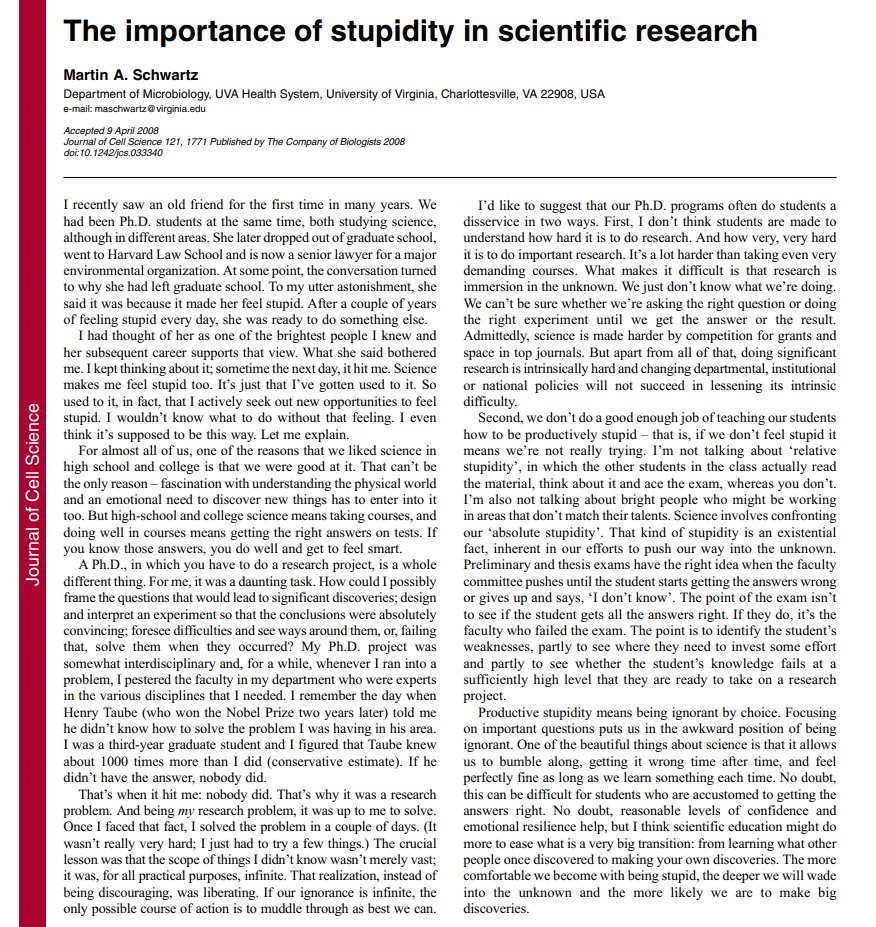
The importance of stupidity in scientific research:
Curious Minds tweet media
English
35
3.1K
9K
3.8M
Luan Borelli รีทวีตแล้ว
Cal Bears History
Cal Bears History@CalBearsHistory·
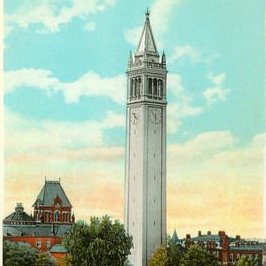
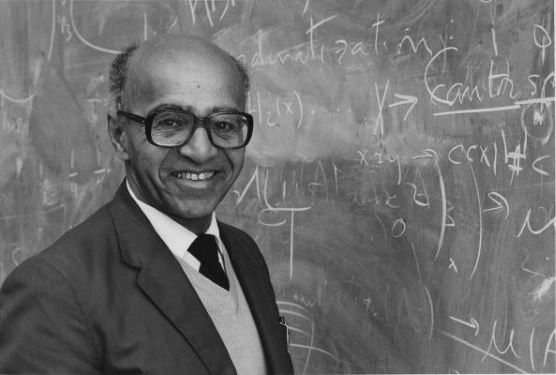
David Harold Blackwell, Professor of Mathematics 1955-1988, was born April 24, 1919. Professor Blackwell made important contributions to game theory, probability theory, information theory & Bayesian statistics, and in 1955 became the first Black tenured faculty member at Cal.
Cal Bears History tweet media
English
1
10
33
791
Luan Borelli รีทวีตแล้ว
Michael Strong
Michael Strong@flowidealism·
Einstein and Ramanujan spent most of their time thinking and imagining possibilities. High processing speed wasn't what set them apart. Depth of engagement was. Our schools tend to reward speed. The world more often rewards depth. It's worth asking which variable matters more.
English
13
17
129
5.3K
Luan Borelli รีทวีตแล้ว
joseph francis
joseph francis@joefrancis505·
Reviewer 2 is now open source. You'll need Gemini and potentially Mathpix API keys, and it costs from ~$1 to $5 per review, depending on length of text and options chosen. It's better than refine. github.com/isitcredible/r…
English
6
40
297
46.4K
Luan Borelli รีทวีตแล้ว
AEA Journals
AEA Journals@AEAjournals·
Forthcoming in the JEL: "An Introduction to Double/Debiased Machine Learning" by Achim Ahrens, Victor Chernozhukov, Christian Hansen, Damian Kozbur, Mark E. Schaffer, and Thomas Wiemann. aeaweb.org/articles?id=10…
English
1
34
130
11.2K
Alvise Scarabosio
Alvise Scarabosio@scarrithereis·
Long time in the making: I’m officially starting my PhD in Economics this fall at UC Berkeley! Couldn’t be happier to stay in California, move to the other side of the Bay, and begin an exciting next chapter. @UCBerkeley @berkeleyecon
Alvise Scarabosio tweet media
English
12
6
150
7.7K
Will Wang
Will Wang@willwang21·
Excited to say I’m moving to the West Coast to start a PhD with the real estate + urban economics group @BerkeleyHaas @FisherUCB this fall! grateful to all of my mentors @MSFTResearch for sticking with me and teaching me everything I know about econ :)
English
5
1
70
4.5K
Camilo Jaramillo Sirguiado
Camilo Jaramillo Sirguiado@Camilojsir·
This year, I will begin my PhD in Economics at UC Berkeley. I am very happy to continue doing what I enjoy, and grateful to an enormous (countable) set of people who have supported me.
Camilo Jaramillo Sirguiado tweet media
English
12
8
297
9.3K
Luan Borelli รีทวีตแล้ว
Joseph Shapiro
Joseph Shapiro@_josephshapiro·
🚨Seeking pre-doctoral research fellow in environmental economics at UC Berkeley (summer/fall 2026) 🚨 👇(reply has application link) 🌎Research pollution, trade, labor, climate, machine learning, energy, health 💡Predoc community with mentoring/training ✳️Please r/t, apply!
English
2
33
130
16.1K
Luan Borelli รีทวีตแล้ว
Imade.
Imade.@ImadeIyamu·
Anthropic Fellows Program - 4-month, fully funded research fellowship at Anthropic for promising talent in AI safety, security & economics/societal impact Fellows receive a weekly stipend of $3,850 USD, ~$15K/month in compute, direct mentorship from Anthropic researchers & access to workspaces in Berkeley or London Must have work authorization in the US, UK or Canada. Prior AI safety experience not required. Deadline: April 26 (for July 2026 cohort) job-boards.greenhouse.io/anthropic/jobs…
English
41
448
3.5K
520.3K