
Courtney Farrell รีทวีตแล้ว
Courtney Farrell
20.2K posts

Courtney Farrell
@CAFarrell
Science fiction/fantasy author. I love dogs, horses, and reading.
Colorado เข้าร่วม Mayıs 2011
38.9K กำลังติดตาม39.1K ผู้ติดตาม
Courtney Farrell รีทวีตแล้ว

A team of astronomers has identified what appears to be a completely new class of exoplanet.
The planet, known as L 98-59 d and located about 35 light-years away, initially seemed to fit into familiar categories such as a rocky planet with a hydrogen atmosphere or a water-rich ocean world.
However, observations from the JWST, combined with detailed computer simulations, revealed a different internal structure: a vast, long-lived ocean of molten rock beneath the surface that stores large amounts of sulfur and continuously interacts with the planet’s atmosphere.
This molten interior helps explain several otherwise puzzling features, including the planet’s unusually low density and the presence of sulfur-bearing gases like hydrogen sulfide in its atmosphere.
Rather than being a thin surface layer, the magma appears to extend deep into the planet, acting as a reservoir that traps and slowly releases gases over billions of years, stabilizing a thick, hydrogen-rich atmosphere that would otherwise be lost to space.
The models suggest that L 98-59 d may have formed as a larger, more gas-rich planet and gradually evolved into its current state, retaining enough heat and atmospheric pressure to keep much of its interior molten for nearly five billion years.
This implies that what astronomers are seeing is not just an exotic outlier, but potentially a missing category of planet shaped by the interplay between magma, sulfur chemistry, and atmospheric evolution.
The discovery indicates that current classification schemes for exoplanets may be too simplistic and that many worlds previously interpreted as familiar types could hide very different internal structures.
Although such a planet is far too extreme to support life, it provides a rare window into early planetary evolution, since many rocky planets, including Earth, likely passed through magma-ocean stages that later solidified.
Finding a world where that state persists offers a way to study processes that are otherwise inaccessible, and suggests that similarly molten, sulfur-rich planets may be more common in the galaxy than previously assumed.
👉 share.google/CMXjhs5JUNkvgG…

English
Courtney Farrell รีทวีตแล้ว

Courtney Farrell รีทวีตแล้ว

This sound feels ancient — because it truly is.
De Spiritu Sancto was composed nearly 900 years ago, long before harmony, chords, or accompaniment existed as we understand them today.
What you’re hearing is pure monophony: a single melodic line sung in unison. No voice rises above another. No one competes. Every singer becomes part of one shared, continuous breath. ✨
𝐇𝐢𝐥𝐝𝐞𝐠𝐚𝐫𝐝 𝐨𝐟 𝐁𝐢𝐧𝐠𝐞𝐧: 𝐃𝐞 𝐒𝐩𝐢𝐫𝐢𝐭𝐮 𝐒𝐚𝐧𝐜𝐭𝐨 (𝐇𝐨𝐥𝐲 𝐒𝐩𝐢𝐫𝐢𝐭, 𝐓𝐡𝐞 𝐐𝐮𝐢𝐜𝐤𝐞𝐧𝐞𝐫 𝐎𝐟 𝐋𝐢𝐟𝐞)
English

@ShiningScience What do you suppose that does to your brain?
English

⚡Scientists successfully transmitted electricity through air using ultrasonic sound waves and laser beams.
Finland is positioning itself at the forefront of a wireless energy revolution, with researchers from the University of Helsinki and the University of Oulu pioneering methods to move electricity without physical cables.
One of the most striking developments involves using high-intensity ultrasonic sound waves to create invisible pathways through the air, effectively guiding electrical sparks along a controlled route.
While currently in the experimental phase, this 'acoustic wire' technology could eventually enable contactless electrical connections and smart interfaces that function entirely without plugs or traditional wiring.
Beyond sound-guided energy, Finnish innovation is also leveraging light and radio frequencies to solve complex power challenges. The private sector is developing 'power-by-light' systems that utilize high-powered lasers to transmit electricity to remote receivers, providing critical galvanic isolation for hazardous environments like nuclear plants and high-voltage stations. Simultaneously, advancements in radio-frequency harvesting are turning ambient waves into 'Wi-Fi for power,' potentially eliminating the need for millions of disposable batteries in low-power IoT sensors. Together, these technologies signal a shift toward a more flexible, cable-free infrastructure for global industry.
Source: University of Helsink. Wireless Electricity Transmission: Breakthroughs in Acoustic and Laser-Based Power. University of Helsinki News.

English
Courtney Farrell รีทวีตแล้ว

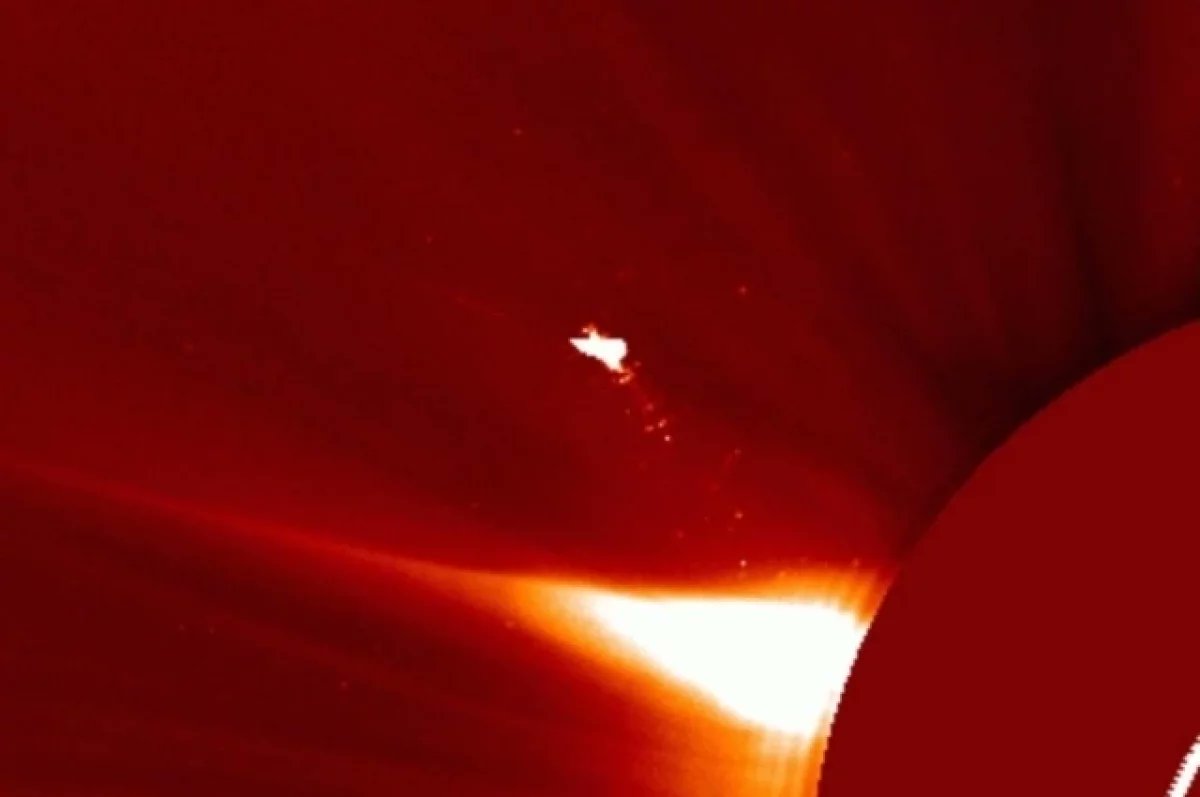
A mysterious object resembling a giant bird with outstretched wings has once again been spotted in images of the Sun, according to a report from the Solar Astronomy Laboratory of the Space Research Institute (IKI) of the Russian Academy of Sciences on February 3, 2026.The image was captured on February 2, 2026, using the LASCO coronagraph aboard the SOHO spacecraft. It shows a striking plasma structure of enormous scale — its apparent "wingspan" vastly exceeds the diameter of Earth multiple times over.A similar phenomenon was previously recorded in May 2025, when an unusual feature resembling a bird (or even a spacecraft with a fiery trail) appeared in LASCO imagery and sparked widespread discussion. Scientists noted at the time that such sharply defined and expressive plasma formations in the solar corona are extremely rare."There is still an opinion that this could be a galactic particle," the laboratory's official statement remarked, leaving room for intrigue and lighthearted speculation in scientific circles.In reality, these shapes are typically complex manifestations of solar activity: prominences, coronal mass ejections, or intricate magnetic field configurations that briefly align into such dramatic silhouettes. Optical artifacts or cosmic ray traces are also possible, though the symmetry and clarity here make it particularly eye-catching.Earlier, leading IKI RAS researcher Nathan Eismont explained how powerful solar flares and coronal mass ejections can affect human health on Earth — through geomagnetic storms, radio disruptions, and potential biological impacts.For now, the "Sun bird of 2026" remains a captivating cosmic enigma — and a vivid reminder of just how dynamic and unpredictable our star continues to be, even under constant high-tech surveillance.

English

@LePapillonBlu2 Ofdonald is finally losing patience with him.
English
Courtney Farrell รีทวีตแล้ว

A dead ocean means a dead planet
And make no mistake the ocean is dying or more correctly is being murdered by the human quest for more and more on a finite Earth
Climate Watcher 🔥🇨🇦🇬🇧 🇯🇲🌺@pmagn
Oh shite
English
Courtney Farrell รีทวีตแล้ว

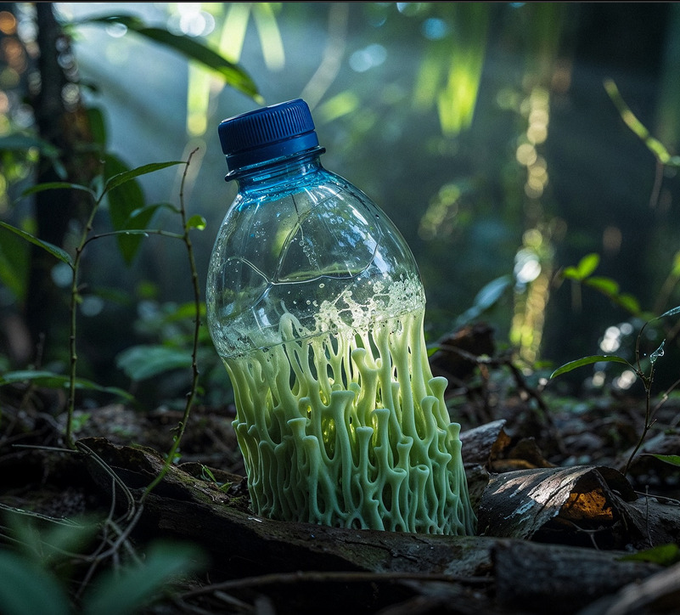
Scientists found a fungus in the Amazon called Pestalotiopsis microspora that literally snacks on plastic.
Pestalotiopsis microspora is not your typical fungus. It can survive entirely on polyurethane, one of the most common (and most persistent) types of plastic — and it does so even in oxygen-free environments, like buried landfills.

English