Chandra Observatory

78.1K posts

Chandra Observatory banner
Chandra Observatory

Chandra Observatory

@chandraxray

Official Twitter account of NASA’s Chandra X-ray Observatory. Operated for NASA by Smithsonian (SAO). Verification: https://t.co/oQRMjHqCRI Legal: https://t.co/BUQNO29Sjg

In orbit เข้าร่วม Ocak 2008
198 กำลังติดตาม418.6K ผู้ติดตาม
ทวีตที่ปักหมุด
Chandra Observatory
Chandra Observatory@chandraxray·
When astronomers pointed NASA's Chandra at nearby galaxy M83, the last thing they expected to find was a population of supernova remnants appearing to dramatically change in brightness. More on the discovery: chandra.si.edu/photo/2026/m83/ #AAS248
English
6
107
488
24.6K
Chandra Observatory
Chandra Observatory@chandraxray·
@sof_skye90 @NASA This image is about 145 light-years across. Sagittarius A*, nestled inside this region, has a diameter of roughly 24 million kilometers or 15 million miles.
English
0
0
0
24
sofia tired
sofia tired@sof_skye90·
@NASA @chandraxray is this near sagittarius a*? curious if the debris field survived that close to the event horizon
English
1
0
1
218
Chandra Observatory รีทวีตแล้ว
NASA
NASA@NASA·
Super! 💫 Data from @chandraxray has uncovered possible remains of a supernova in the middle of our Milky Way galaxy. If confirmed, this supernova piece would be one of the closest to our galaxy’s central black hole that we have ever found. go.nasa.gov/4aT7pvb
NASA tweet media
English
802
5.2K
26K
1.9M
Chandra Observatory
Chandra Observatory@chandraxray·
Visual Description: A video showing a composite image of the nearby galaxy Messier 83 on the left, and short timelapse videos of two curious supernova remnants hidden inside on the right. In the composite image, Messier 83, or M83, is shown to have a spiral structure, viewed straight on. At the center is a brilliant white and yellow pool of light. From that light, spiral arms of hot pink cloud corkscrew out in wide, sweeping arches. The galaxy is covered in a faint grey haze, and flecked with red, green, blue, white, and yellow dots. Two tiny dots to our lower right of center are highlighted by white circles. These are two of the supernova remnants being considered by researchers. Each is examined further in a separate timelapse video. Over a 14-year period from 2000 to 2014, astronomers pointed NASA’s X-ray observatory at the M83 galaxy. They discovered that about half of the X-ray sources believed to be supernova remnants, the aftermath of stellar explosions, were exhibiting dramatic changes in brightness. This result was entirely unexpected. Those changes in brightness are highlighted in the timelapse videos. In each video, a series of static images flashes by, focused on one of the two X-ray sources once believed to be supernova remnants. In the videos, the X-ray sources appear as bright blue blobs with glowing cores. But in each image, taken months or years apart, the shapes change, as does the intensity of the blue color, and the brightness of the core. By presenting the substantively different images of the same objects one after another in quick succession, short timelapse videos are created. The most likely explanation for the changes in brightness is that the team has uncovered a population of stellar survivors, stars that lived through an orbiting partner’s destruction in a supernova explosion. Material is being pulled from the surviving star onto the black hole or neutron star that formed in the supernova, a process known to cause rapid changes in X-ray brightness.
English
2
7
45
3.5K
Chandra Observatory
Chandra Observatory@chandraxray·
When astronomers pointed NASA's Chandra at nearby galaxy M83, the last thing they expected to find was a population of supernova remnants appearing to dramatically change in brightness. More on the discovery: chandra.si.edu/photo/2026/m83/ #AAS248
English

6
107
488
24.6K
Chandra Observatory รีทวีตแล้ว
NASA Marshall
NASA Marshall@NASA_Marshall·
Astronomers may have found a new supernova remnant near the center of the Milky Way galaxy using data from @chandraxray. If confirmed, this would be one of the closest supernova remnants to the supermassive black hole in the Galactic Center! 🔗go.nasa.gov/4vQqHcX
NASA Marshall tweet media
English
65
904
4.2K
214K
Chandra Observatory
Chandra Observatory@chandraxray·
Astronomers may have found one of the closest supernova remnants to the supermassive black hole at the center of our Milky Way galaxy. It's expanding at about 3.2 million kilometers per hour (2 million mph) and is at least 1,700 years old. 💥More: s.si.edu/sgrc26
Chandra Observatory tweet media
English
13
268
1.1K
28.1K
Chandra Observatory
Chandra Observatory@chandraxray·
The supermassive black hole at the center of our galaxy, Sagittarius A*, is blowing a hot cosmic wind — something scientists have been hunting for over 50 years. ⚫More on the discovery at: chandra.si.edu/photo/2026/sgr…
Chandra Observatory tweet media
English
17
194
794
24.3K
Chandra Observatory
Chandra Observatory@chandraxray·
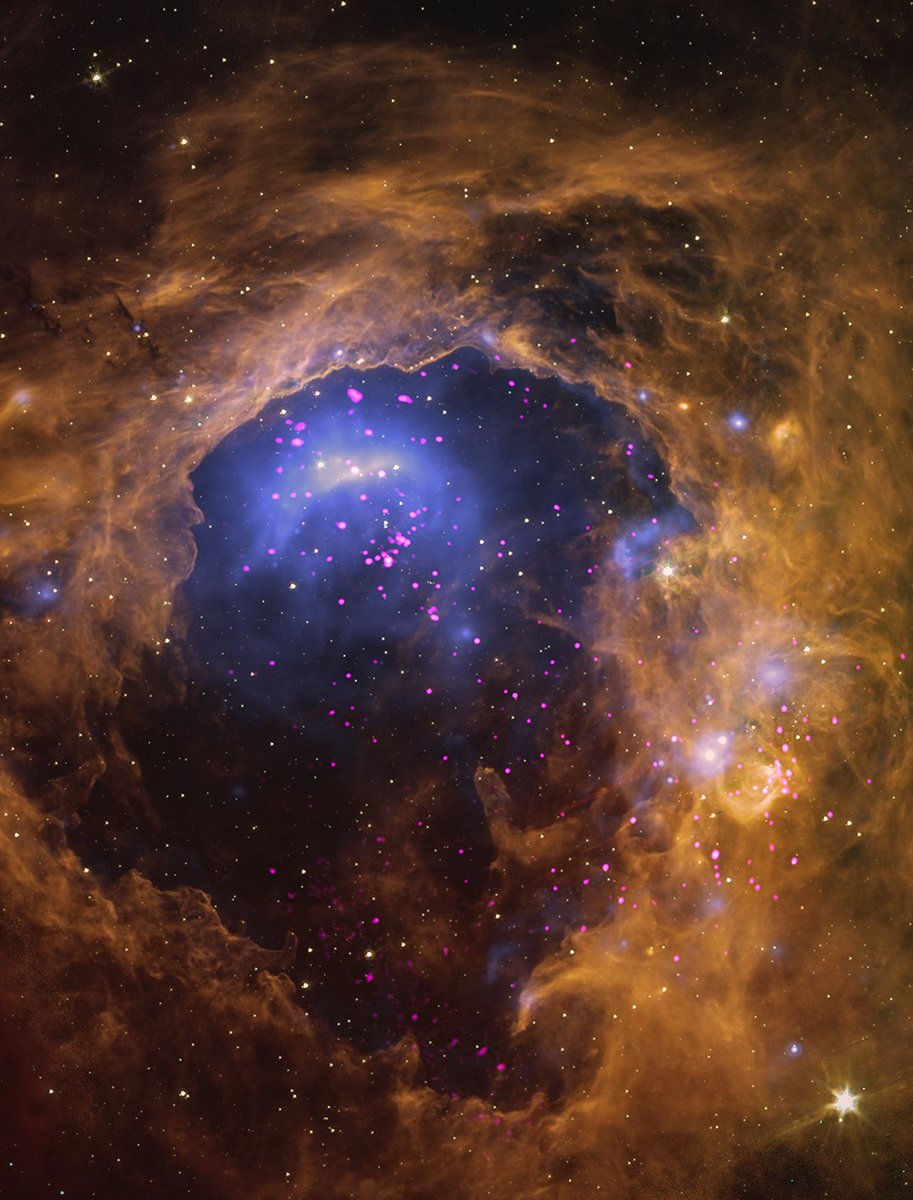
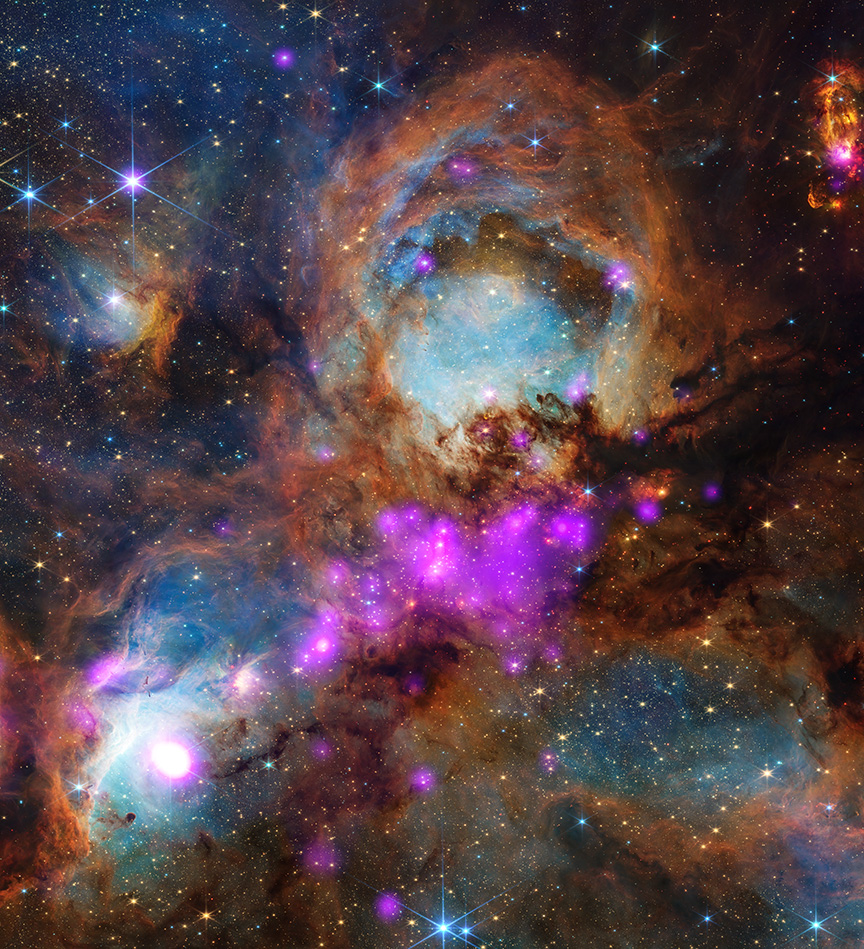
Some of our galaxy’s youngest, hottest, and most massive stars blaze to life in the nearby Carina Nebula. Winds from these powerful stars can carve out bubbles of hot gas, producing dramatic shapes in the surrounding clouds of colder gas and dust.✨
Chandra Observatory tweet media
English
14
258
1.2K
33.4K
Chandra Observatory รีทวีตแล้ว
NASA Marshall
NASA Marshall@NASA_Marshall·
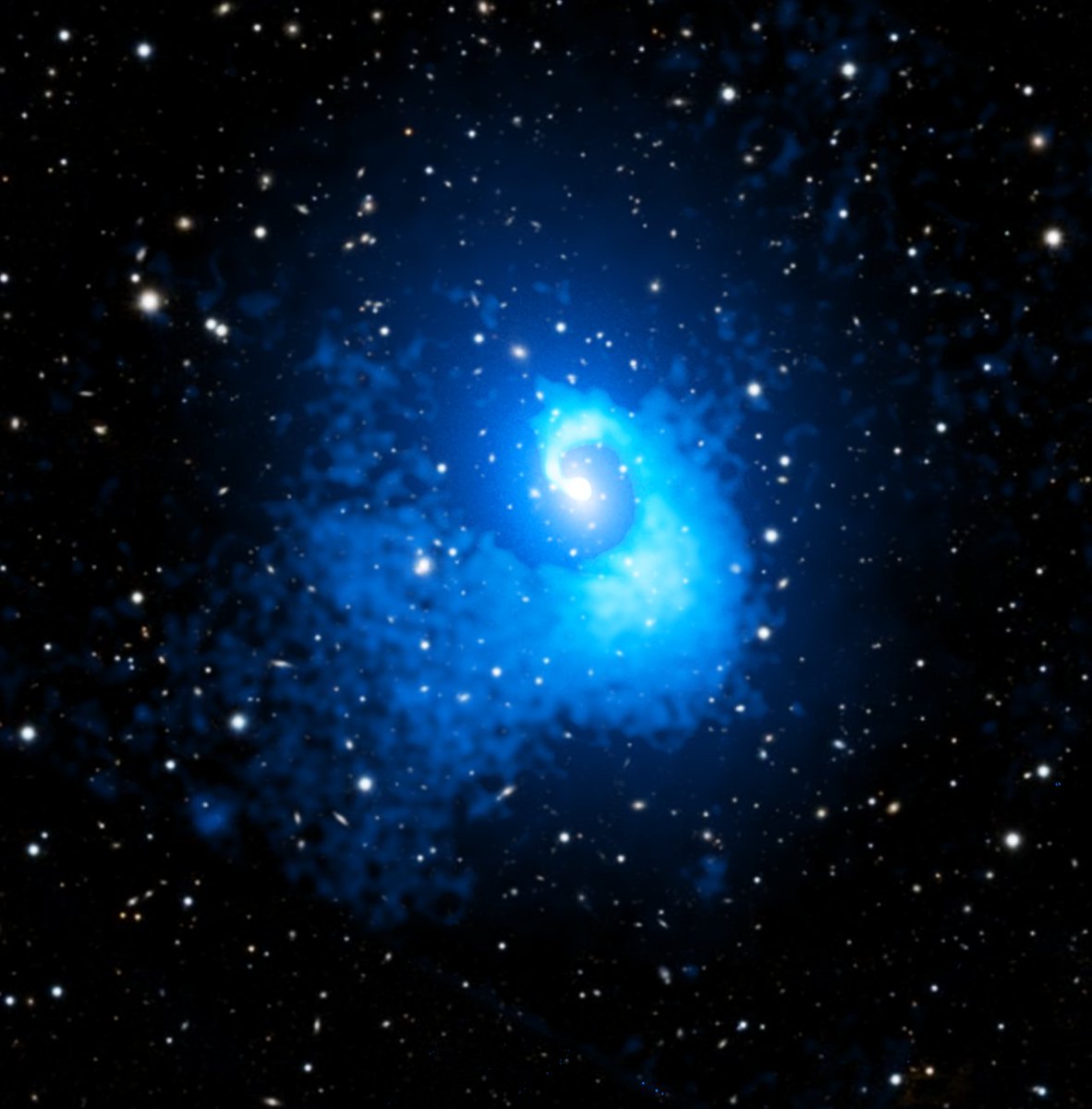
The “most relaxed galaxy cluster in the universe” wasn't always so calm 🌀 New observations from @chandraxray show that Abell 2029 is still settling down after a collision with another smaller cluster about four billion years ago. More: go.nasa.gov/4egC1bd
NASA Marshall tweet media
English
37
296
1.6K
39.9K
Chandra Observatory
Chandra Observatory@chandraxray·
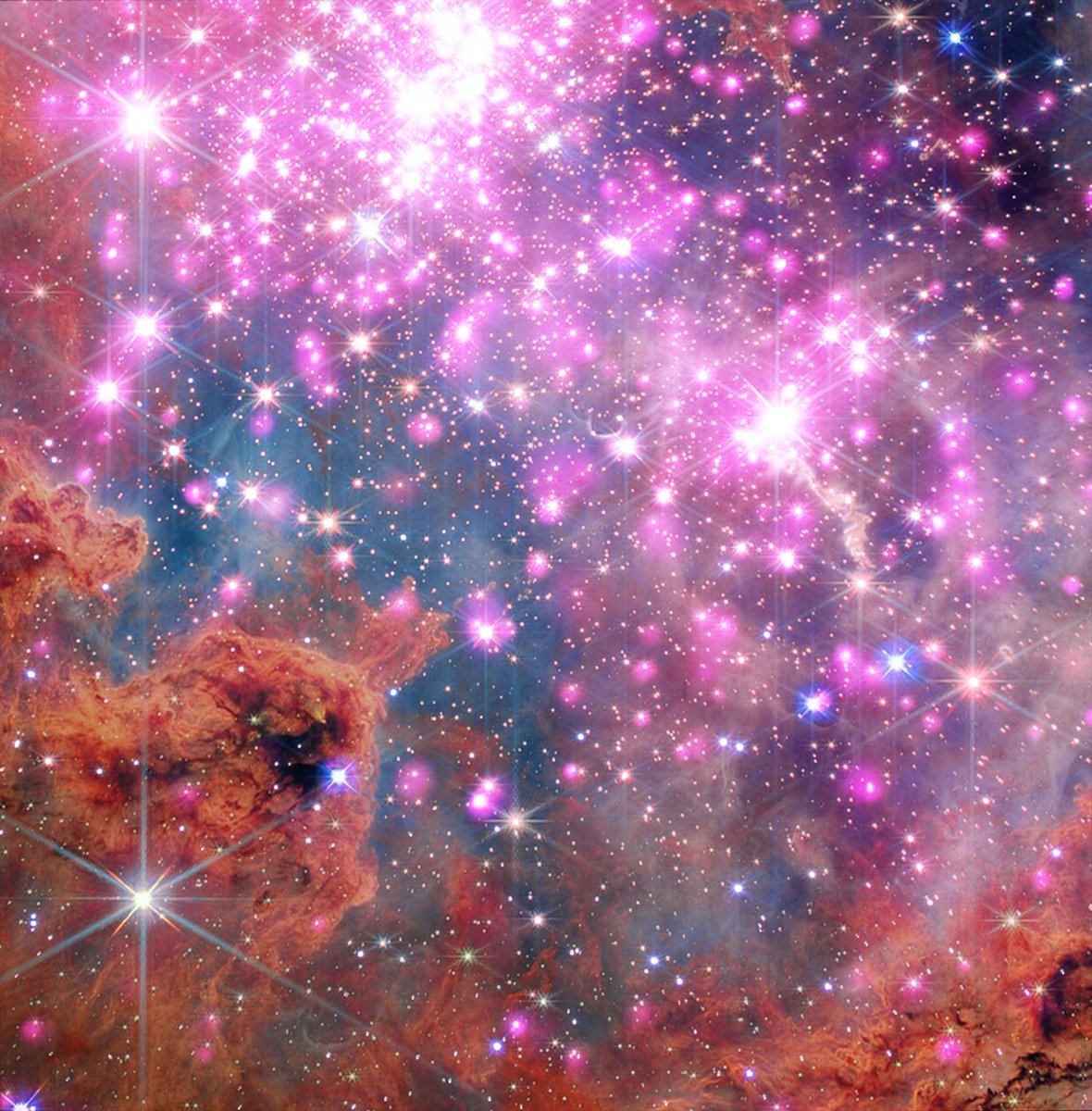
Westerlund 2 is a young cluster of thousands of stars located about 20,000 light-years from Earth. This close-up image, roughly 12 light-years across, combines observations from NASA's Chandra X-ray Observatory & @NASAWebb.✨
Chandra Observatory tweet media
English
40
425
2K
103.1K
Chandra Observatory
Chandra Observatory@chandraxray·
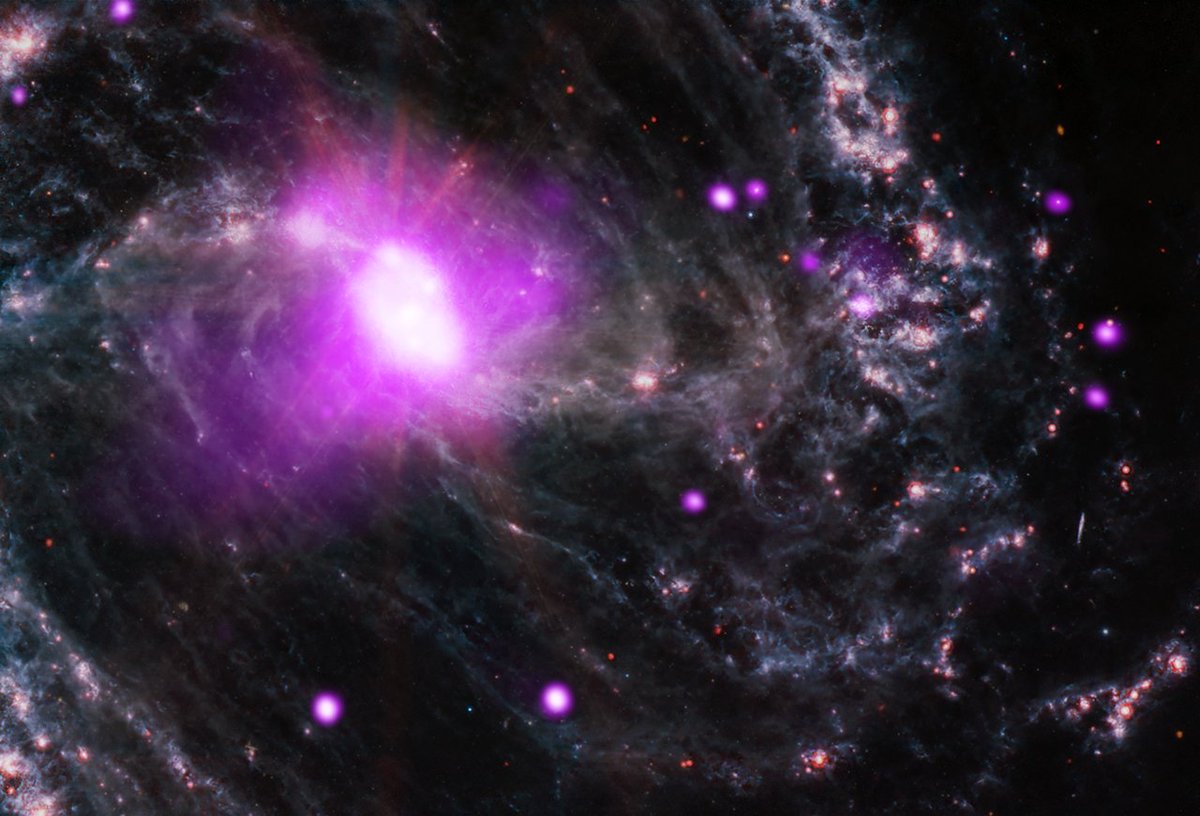
At the heart of galaxy NGC 1365, a supermassive black hole is basically feasting at an all‑you‑can‑eat buffet in this image from Chandra and @NASAWebb. Located about 60 million light-years from Earth, this gobbling black hole has a mass of roughly 2 million suns... and growing.⚫
Chandra Observatory tweet media
English
26
269
1.3K
84.7K
Chandra Observatory
Chandra Observatory@chandraxray·
Sometimes described as "the most relaxed galaxy cluster in the universe," Abell 2029 had a wild past according to new observations from NASA's Chandra X-ray Observatory. More at: chandra.si.edu/photo/2026/a20… 🌀
Chandra Observatory tweet media
English
10
157
623
21.5K
Chandra Observatory รีทวีตแล้ว
NASA
NASA@NASA·
A-meow-zing 😻 @NASAWebb and @ChandraXray joined forces to deliver this view of the Cat's Paw Nebula. Different wavelengths combine to reveal young stars at the center of these dusty clouds.
NASA tweet media
English
1.2K
7.9K
40.2K
1.9M
Chandra Observatory รีทวีตแล้ว
Hubble
Hubble@NASAHubble·
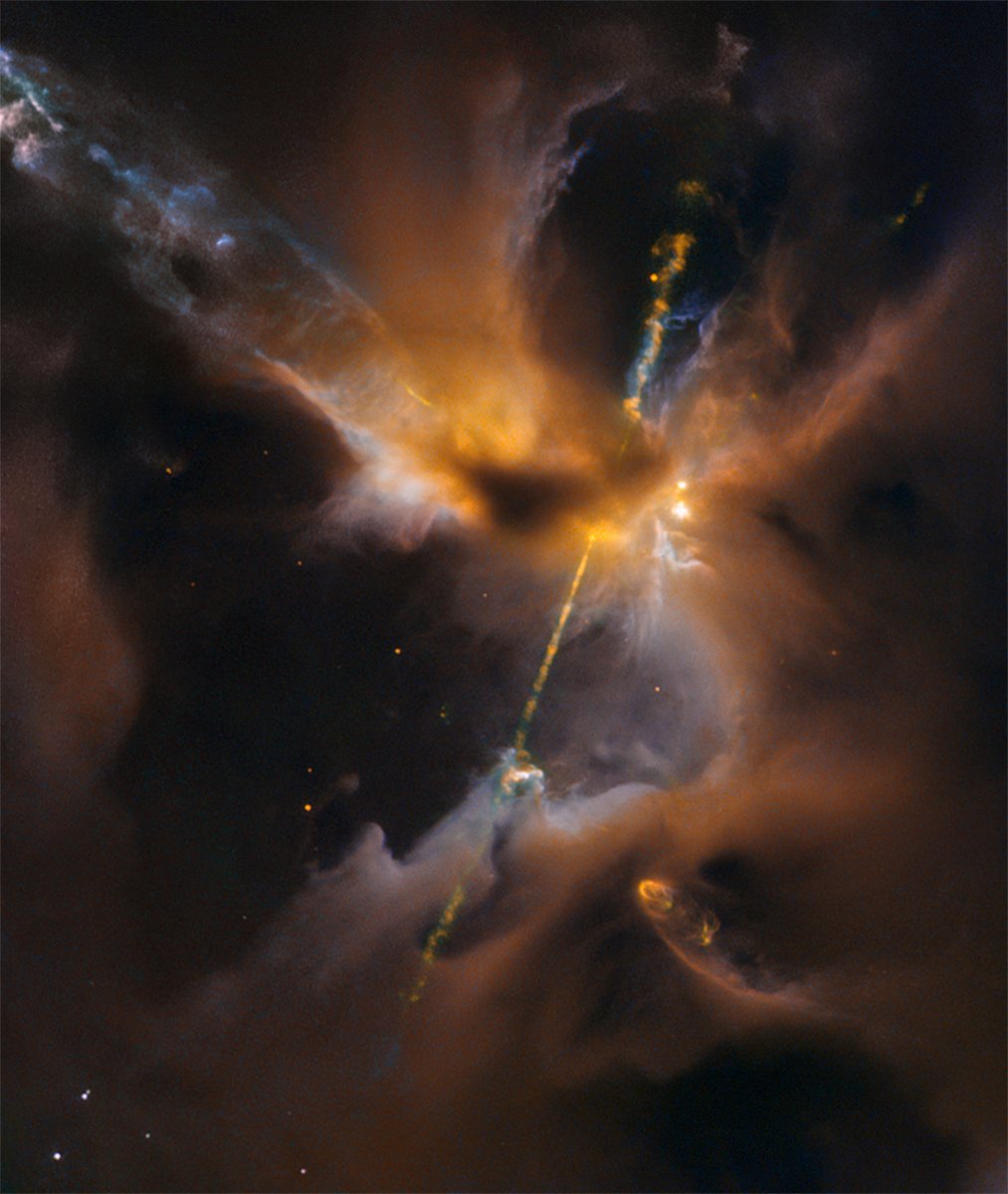
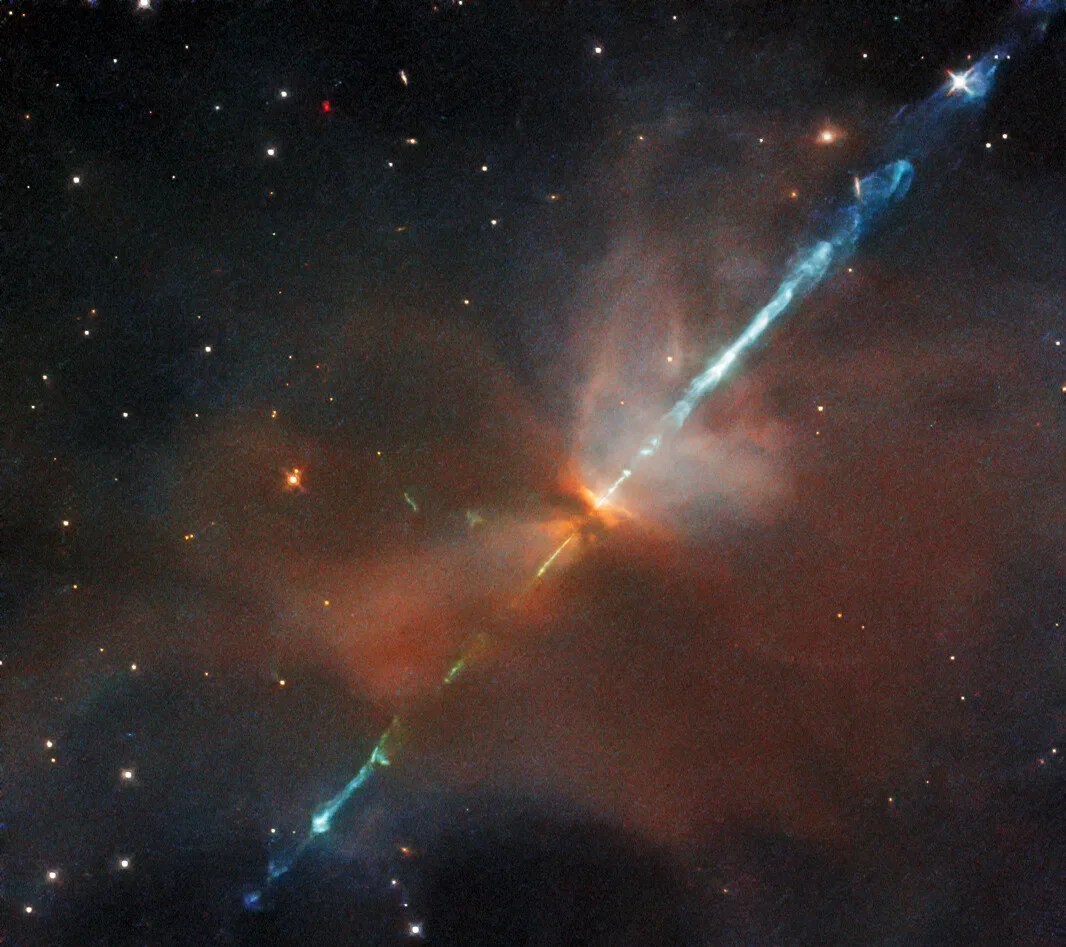
The force awakens in newborn stars. Hubble captured some cosmic "lightsabers" far, far away. These are actually young stellar jets, colliding at fast speeds with nearby gas and dust. Happy Star Wars Day from the Hubble team!
Hubble tweet mediaHubble tweet media
English
94
3.8K
17.4K
336K
Chandra Observatory รีทวีตแล้ว
NASA Ames
NASA Ames@NASAAmes·
Even the cosmos has a green thumb 💐 160,000 light-years away, 30 Doradus is in full bloom, displaying a stellar bouquet of thousands of stars. This image combines data from NASA’s Chandra X-ray Observatory, @NASAHubble, and the Atacama Large Millimeter/submillimeter Array.
NASA Ames tweet media
English
73
576
2.8K
129.6K
Chandra Observatory
Chandra Observatory@chandraxray·
This striking new view of the Pinwheel Galaxy combines X-ray light from Chandra with other types of light from ground-based observations, @NASAHubble, and XMM-Newton. The galaxy is roughly 170,000 light-years across, making it about 70% larger than our own Milky Way Galaxy.🌀
Chandra Observatory tweet media
English
39
485
2.2K
73.2K
Chandra Observatory
Chandra Observatory@chandraxray·
These results highlight the power of multi-mission astronomy and Chandra's decades-long history of observations! Shortly after NASA's Webb Telescope began observing, scientists reported a new class of unexplained objects that eventually became known as "little red dots" (or LRDs). The scientists compared new data from Webb with a deep X-ray survey previously performed by Chandra. By bringing data together from different telescopes, even more information was revealed! 😁
English
1
0
1
90
Christopher Thomas
Christopher Thomas@Chris_Thomas226·
@chandraxray Observation dates were back in 2005 - 2008, why take so long to publish this information? Thanks.
English
1
0
2
219
Chandra Observatory
Chandra Observatory@chandraxray·
An X-ray emitting "little red dot" about 11.8 billion light-years from Earth may be key to unlocking the true nature of a mysterious class of sources that astronomers have found in the early universe. More: chandra.si.edu/photo/2026/xra… 🔴
Chandra Observatory tweet media
English
7
66
318
13.9K
Chandra Observatory
Chandra Observatory@chandraxray·
Over 1,000 stars are located within 4 light-years of the center of the Westerlund 1 "super" star cluster. To give you a little context, 4 light-years is roughly the distance between our Sun and the next closest star to Earth. 🤯
Chandra Observatory tweet media
English
20
197
920
33.2K