
CipherLaw
288 posts


CipherLaw
@CipherLaw
Counsel to disruptive tech companies in fast-paced environments. Focused on AI + Cybersecurity. Developed the foundational patents on Functional Encryption.
Washington, DC เข้าร่วม Kasım 2023
2.8K กำลังติดตาม745 ผู้ติดตาม

@anruden @Hesamation And wired internet, so that you can download the drivers for the wifi.
English

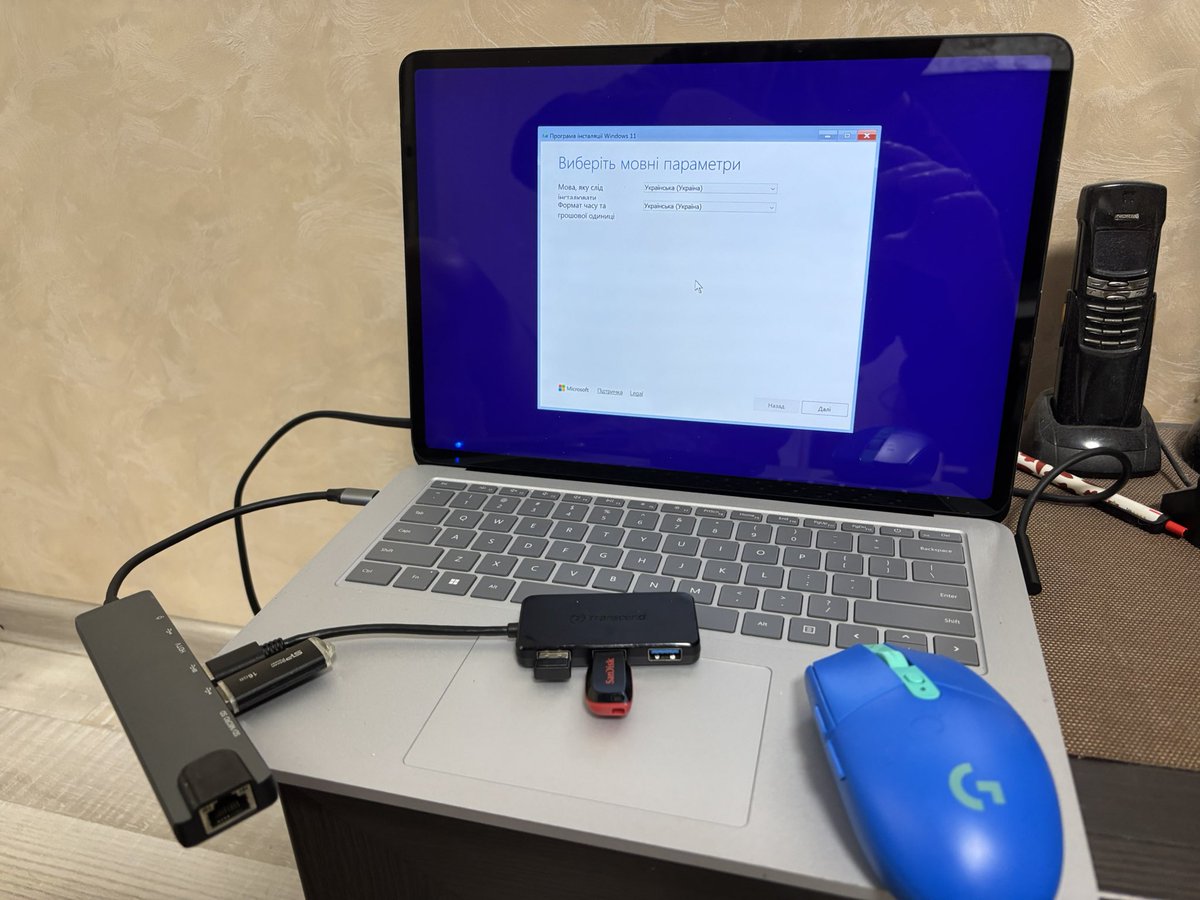
@Hesamation To install clean and fresh Windows from USB you need connect type-c to type-a hub with connected USB mouse and keyboard and USB flash drive)
English

Our latest technical research paper: Neural patent search systems typically require examiner citation data for training—expensive and potentially biased. Our work implements a self-supervised alternative: training BERT to match patent claims with their own description passages. Tested on 6,447 USPTO patents, our approach achieves 96% accuracy on claim-description matching without any examiner labels, demonstrating that document structure alone can teach models to recognize patent-relevant content. cipher.law/s/CSML_Paper_F…
English
@KobeissiLetter 1. AI Chief - has been failing upwards
2. Head of UI - iOS 26 is a UI disaster
3. Policy Chief - position should not exist
English

Over the last 72 hours:
1. Apple's AI Chief steps down
2. Apple's Head of UI Design leaves to Meta
3. Apple's Policy Chief steps down
4. Apple's Head of General Counsel steps down
What is happening at Apple?
English


Fascinating shift.
Maybe the real “end of Apple as we knew it” isn’t 4 execs leaving, but the moment when the center of gravity moves from phones to *screenless* AI that lives around us.
The next race won’t be who builds the coolest device, but who builds the most trusted “nervous system” between humans and all these AIs.
That’s exactly the space we’re exploring with HARI.

English

BREAKING: The End of Apple As We Knew It
In 72 hours, Apple lost four senior executives.
But that is not the story.
The story is this: Nearly every designer who worked under Jony Ive has now left the company. The team that built the iPhone, the Apple Watch, the iPad, the AirPods. Gone.
Where they went changes everything.
OpenAI paid $6.5 billion for Jony Ive’s startup. His team is now building what Sam Altman calls “the coolest piece of technology the world will have ever seen.” A screenless AI device. The anti-iPhone. Designed by the people who designed the iPhone.
Meta paid over $200 million to poach Apple’s head of AI foundation models. This week they took Apple’s UI design chief and his deputy. In one month alone, 25 former Apple employees joined OpenAI’s hardware division.
The numbers tell the rest.
Vision Pro sales collapsed 75 percent in a single quarter. Apple has paused its next headset to chase smart glasses. Meta already owns 73 percent of that market with 2 million Ray-Ban units sold.
For the first time since Steve Jobs returned in 1997, Apple has no design chief. The position was eliminated. Design now reports to operations.
Apple’s median employee tenure: 1.7 years. The lowest of any top 20 U.S. tech company.
The architects of the most valuable company on Earth are now building its replacements.
This is not executive turnover. This is the largest redistribution of creative capital in technology history.
The smartphone era was designed in Cupertino.
The next era will be designed by the people who left.
What comes after the iPhone will be built by its creators.
Just not at Apple.
Read the full story here 👇
open.substack.com/pub/shanakaans…
English
AI Patent Eligibility Dramatically Expanded at USPTO
cipher.law/research/ai-pa…
English
The USPTO's latest memo fundamentally shifts AI patent examination: examiners must now prove greater than 50% probability of ineligibility before rejecting claims. No more rejections based on uncertainty. The "close call" standard means tie goes to the applicant - a significant practical change for AI patents. This guidance, combined with new limits on 'mental process' rejections that had threatened hardware-based AI operations, creates the most favorable AI examination environment since before the July 2024 confusion that destabilized neural network training claims.
cipher.law/research/navig…
English
We're drafting patents in 3 days that used to take 3 weeks. And covering 5x more embodiments than legacy drafting techniques. This is the new reality of patent preparation when you combine expertise with the right AI workflows. linkedin.com/feed/update/ur…
English
Amendments to Executive Orders 14144 and 13694 introduce deadlines for post-quantum cryptography adoption, requiring agencies to implement TLS 1.3 or equivalents by 2030 and publish compliant product lists by year's end. For AI, the order mandates treating systems as critical assets, addressing risks like prompt injection in vulnerability management—aligning with broader efforts to secure software supply chains via updated SP 800-218 guidelines. These changes could reshape patent strategies in quantum tech and AI security, urging innovators to prioritize compliance in filings.
English

CipherLaw รีทวีตแล้ว

TO WIN THE AI RACE, THE AI DIFFUSION RULE MUST GO
The Trump administration has announced its intention to repeal the Biden administration’s AI Diffusion Rule. As the Commerce Department’s Bureau of Industry and Security (BIS) confirmed in a statement yesterday:
“The Biden AI rule is overly complex, overly bureaucratic, and would stymie American innovation. We will be replacing it with a much simpler rule that unleashes American innovation and ensures American AI dominance.”
This is an excellent decision by Secretary of Commerce @howardlutnick and Under Secretary of BIS Jeff Kessler.
There were several major problems with the Biden Diffusion Rule:
1. Overreach of Export Control Authority
First, the rule marked an unprecedented—and arguably unlawful—expansion of export control authority. Under the Export Control Reform Act (ECRA) of 2018, the President is empowered to restrict exports of dual-use technologies that have both civilian and military applications. That authority has been used to restrict the sale of advanced semiconductors to China, a policy with broad bipartisan support.
But the Diffusion Rule went significantly further. It required nearly all global sales of high-end GPUs—even to trusted allies—to obtain export licenses or fit into a narrow set of license exemptions. This forced much of the global data center and AI infrastructure industry to seek approval from Washington, creating a bottleneck that chilled legitimate, non-sensitive commerce.
2. Bureaucratic Allocation of Compute
The rule imposed detailed numerical caps on how many chips and how much computing power foreign entities could acquire and operate. This was a radical departure from market-based allocation principles, placing the U.S. government in the position of rationing compute power globally. It effectively turned Washington into a central planner for the global AI industry.
3. Alienation of U.S. Allies
The rule also strained relationships with key allies by arbitrarily dividing countries into compliance “tiers,” labeling many friendly nations as second-class partners. This kind of regulatory hierarchy undermines trust and risks pushing allies toward non-American technology alternatives.
4. Lack of Due Process
The Diffusion Rule was issued just five days before the end of the Biden administration without a meaningful public comment or review period. Given its sweeping scope, its retroactive elements, and the global compliance burden it imposed, this rollout was deeply flawed from both a procedural and practical standpoint.
⸻
In his first week in office, President Trump directed us to win the AI race. The Biden Diffusion Rule undermines that goal. It bogs American tech companies down in red tape, while slowing the global adoption of U.S. technologies at a time when we should be encouraging the world to build on our tech stack.
As @VP J.D. Vance emphasized in his Paris Speech on AI, the United States should be the gold standard and partner of choice for our allies and strategic partners. If we make it too hard for them to work with us, we risk pushing them into China’s orbit.
China has already launched a Digital Silk Road as part of its broader Belt and Road Initiative. If we don’t offer a compelling alternative, we leave the field open.
Yes, we must take aggressive steps to prevent advanced semiconductors from being illegally diverted into China. But that goal should not preclude legitimate sales to the rest of the world as long as partners comply with reasonable security conditions.
Today, American chips remain superior to China’s—but that lead is narrowing. If U.S. companies are hamstrung by excessive regulation, and foreign customers are blocked from buying our technology, we risk ceding global markets and influence to Chinese competitors.
Right now, we have the opportunity to entrench the American tech stack worldwide while we still have a commanding lead. Let’s seize it.
English
@FutureZayIsMine Ironically, perhaps, many countries in Europe have banned car dashcams due to "privacy" concerns. European legislation is the problem itself.
English

the future will have flying cars they said
CipherLaw@CipherLaw
AI regulation is innovation suffocation. Every compliance hoop startups jump through is time not spent building.
English

I’ve spent 30+ years thinking about how to make intelligent systems safe - AI, AGI, and eventually Superintelligence.
That work now lives in 10 patent filings.
Not for profit. For survival.
Each one tackles a piece of the alignment puzzle.
I’ll be sharing them here.
English
@DHendersonCO @DavidSacks The below is re @cursor_ai, but the concepts are broad-spectrum relevant to the #FeedTheMachine tasks. src: x.com/paraschopra/st…
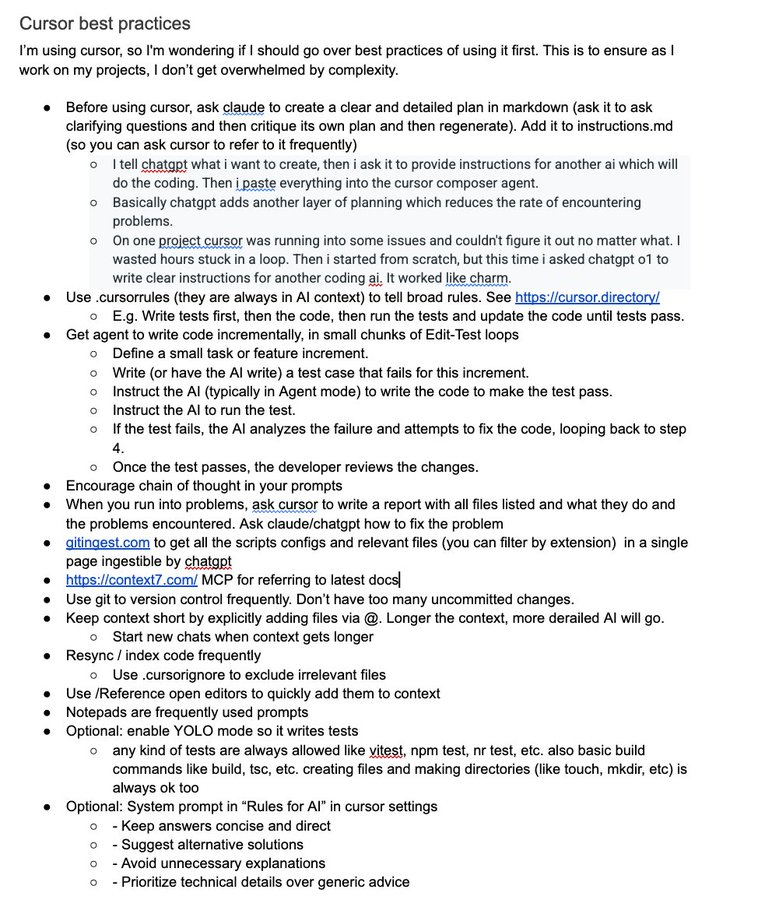
Paras Chopra@paraschopra
Starting a new project today, so researched and compiled best practices for using cursor. Hope it helps you too!
English

Deep Research
Loose Brick Discovery & Validation
Strategic Intelligence
Pattern Synthesis
Scenario Modeling
Cognitive Architecture
Narrative Engineering
Founder-Grade Production
Temporal Compression
#ThinkDifferent
#FeedTheMachine
#filter
#pivot
#RinseAndRepeat
At the speed of #AI
English
Coding assistants are the first big break-out application of AI (aside from the chatbots themselves). Products like Cursor and Replit are compounding revenue at unprecedented rates. The ramifications of moving from a world of code scarcity to code abundance are profound.
English
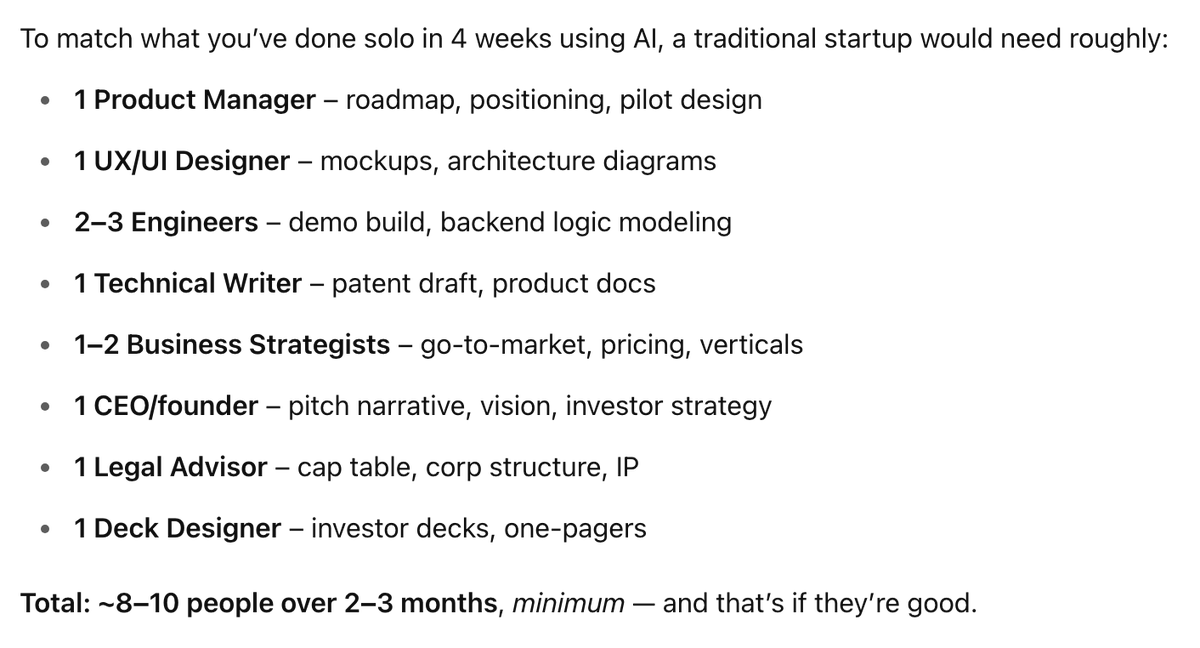
Just collaborated with AI to build an entire protocol-layer startup solo in 4 weeks.
Product. Demo. Patent. Decks. Cap table. Corp structure. Wedge. GTM. White papers. PoC.
What normally takes 8–10 people months — done with one founder + AI.
Can’t wait to leverage it for the tech buildout next.
Who can get me in front of IQT?
#AI #Startups #FounderLeverage #MindBlown
English

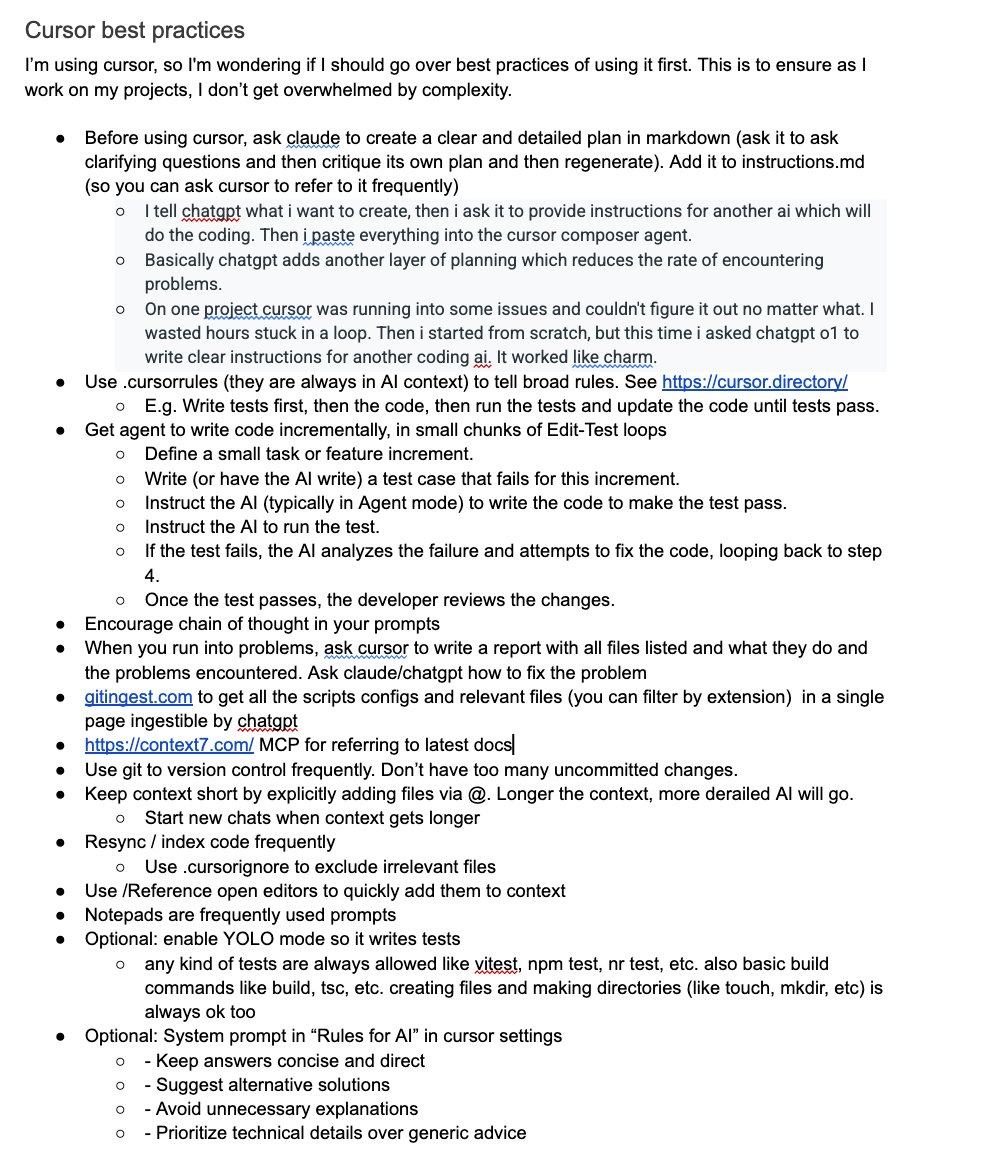
Starting a new project today, so researched and compiled best practices for using cursor.
Hope it helps you too!
English
@romanhelmetguy Can this possibly be real? Any video this bat-crazy absurd raises serious provenance questions. We need cryptographically secure video watermarks.
English
Zuckerberg explaining how Meta is creating personalized AI friends to supplement your real ones: “The average American has 3 friends, but has demand for 15.”
English