@PeteHegseth @SecWar if the @Pontifex says the Iran war is immoral-- who's right-- him or you? I think he's got a better connection upstairs!! nytimes.com/2026/03/21/bus…
English
Colin Clark
12.3K posts
@ColinDefense
Substack writer; founding editor of Breaking Defense. Proud dad, husband, fisherman, grill king, Sydneysider & consumer of fine Antipodean wines.

“The Chinese problem in the last 19 days is that they haven’t lifted a finger to help Iran, in any way.” Former US Ambassador to China @RNicholasBurns on China’s response to the US-Israeli war on Iran. Watch the event ➡️bit.ly/4sZecdl






Breaking News: The Pentagon’s restrictions on news outlets violated the First Amendment, a federal judge ruled, in a victory for The New York Times. nyti.ms/4smNxY1
Breaking News: The Pentagon’s restrictions on news outlets violated the First Amendment, a federal judge ruled, in a victory for The New York Times. nyti.ms/4smNxY1
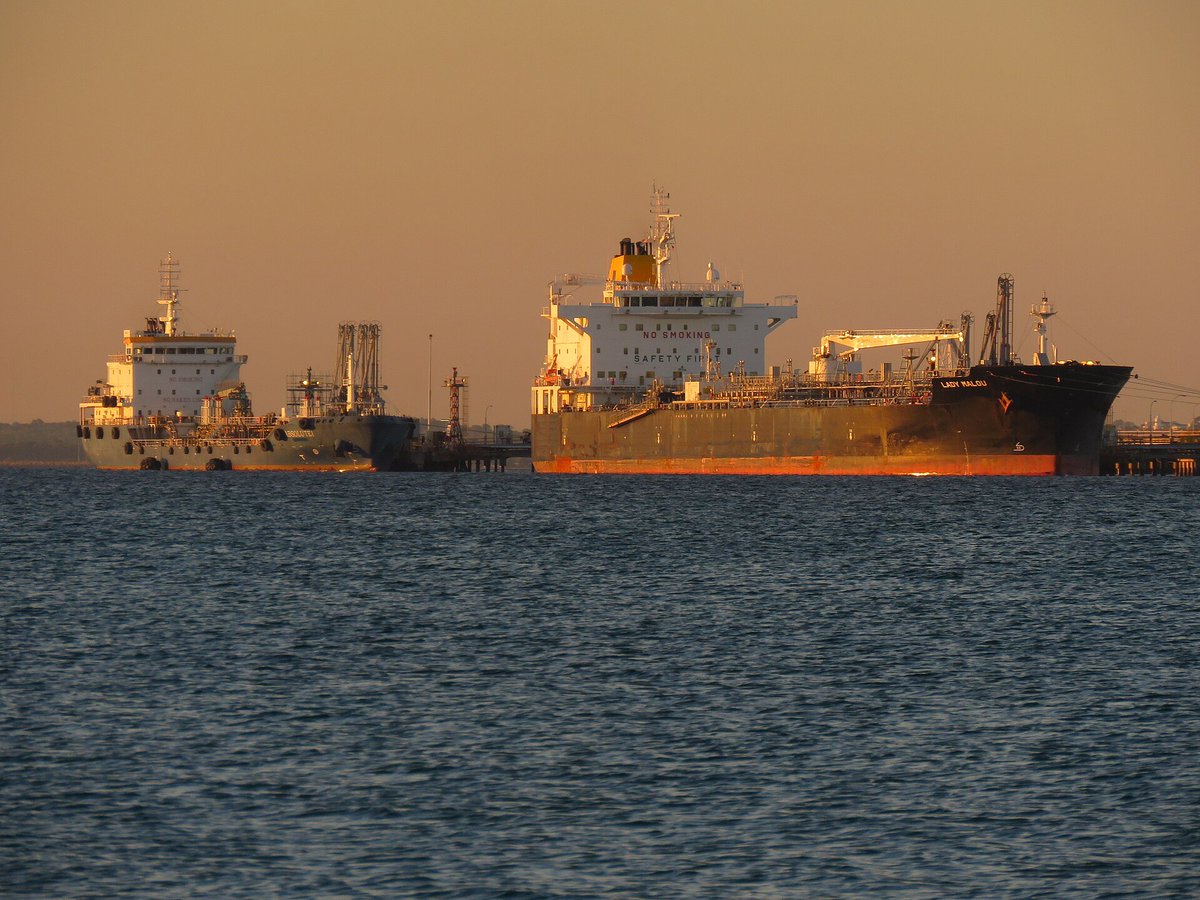
Does Iran have the legal right to create checkpoints in the Strait of Hormuz? According to the United Nations Convention on the Law of the Sea (UNCLOS) 1982, they do not. However, Iran signed but never ratified UNCLOS 1982, similar to the United States. As a result, Iran reverts to UNCLOS 1958. The key difference between the two conventions is that the United Nations Convention on the Law of the Sea (UNCLOS) 1982 designates the Strait of Hormuz as an international strait, allowing for "transit passage." In contrast, UNCLOS 1958 refers to international straits with "innocent passage." The term "innocent passage" permits foreign vessels to navigate through a coastal state's territorial waters without prior authorization, provided their passage is considered "innocent," meaning it does not threaten the peace, good order, or security of the coastal state. Under the rules of UNCLOS 1958, Iran can enforce its domestic laws in the Iranian part of the Strait concerning: - Safety of navigation - Pollution prevention - Security and surveillance Iran asserts that the United States cannot enjoy the rights of "transit passage" as defined in the 1982 United Nations Convention on the Law of the Sea (UNCLOS), arguing that the U.S. only has the right of "innocent passage" since it never ratified UNCLOS 1982. In response, the U.S. dismisses this claim, stating that "transit passage" has become a principle of "customary law." This means that if all countries adhere to a particular practice for decades, it becomes legally binding, regardless of whether the treaty has been ratified.

My latest for the @FinancialReview 👇- it’s less about ships, more about the need for a coherent maritime strategy which starts with understanding of dependencies, industrial policies, stockpiling & Govt. Structure. Read here afr.com/policy/foreign… @DefenceUwa @LowyInstitute @NSC_ANU

"The last thing Iran would want is a VLCC loaded with 2 million barrels of oil exploding or spilling near its shores. Iran itself relies on more than 65 desalination plants along the Gulf coast, though they supply only a small fraction of its water needs." "More critically, neighboring Gulf countries—home to large Shia populations near coastal areas—depend heavily on hundreds desalination facilities. These plants provide the vast majority of drinking water in places like Kuwait, and Saudi Arabia, and even Oman. A major oil spill could contaminate intakes and cripple water supplies across the region, affecting millions—including many Shia communities. Either the parties involved have lost all sense of self-preservation, or the media reports are inaccurate/misrepresented." Sea mines are simple weapons that could give Iran outsize power to wreak havoc with the global economy wsj.com/world/middle-e… via @WSJ


@mercoglianos I provided proper labeling