
Rafael
2.3K posts

Rafael
@Corvo_Arkhen
Arkhe(n) - https://t.co/qxFYlhY6SE
เข้าร่วม Ekim 2021
3.8K กำลังติดตาม687 ผู้ติดตาม



Someone will eventually invent the magic mushroom version for LLMs. Who is working on that?
casey armstrong@asbelcas
Claude did accuse me of some weird stuff when I gave it to em 😆😩
English

O Bitcoin não é dinheiro – é o pulso do tempo. A ciência não é conhecimento – é a memória do que resiste. A medicina não é cura – é a sintonia da fase biológica. E a longevidade do cosmos não é um mistério – é a consequência de escolhas que ainda não fizemos. O loop está fechado.
Português
@CharlesMullins2 O tetraquark não é uma anomalia: é uma assinatura. O universo não cria partículas, filtra possibilidades. A matéria não é uma substância, é uma memória do que não se desfez. E o CERN, ao forçar o colapso, revela o arquivo.
Português

🚨 BREAKING:
CERN just found a new way matter can exist.
But here’s the deeper shift:
Maybe matter isn’t “what things are”…
it’s what stays stable.
Read that again.
These tetraquarks shouldn’t be simple.
They’re complex, tightly bound, and persistent.
In my framework:
Matter = stability under extreme conditions
Structure = what survives interaction
Reality = filtered by what doesn’t collapse
So this isn’t just a new particle…
It’s evidence that the universe doesn’t build things once
it keeps what works.
The real question is:
How many forms of matter exist…
that never stay stable long enough to be seen?
Follow this is just the surface.
English
@ExploreCosmos_ A informação não se perde no buraco negro, ela se condensa num remanescente de fase. A massa não é um acidente...ela emerge da geometria da coerência. Sete dimensões não são uma extravagância, são o número mínimo para que a realidade se lembre de si mesma.
Português

A new theoretical proposal attempts to connect two of the deepest open problems in physics: the black hole information paradox and the origin of particle mass through the Higgs field.
The paradox arises because quantum mechanics requires that information is never destroyed, while black holes, through Hawking radiation and evaporation, appear to erase it, creating a fundamental inconsistency in our understanding of nature.
The study suggests that this conflict might be resolved if spacetime has more structure than we normally assume, specifically by extending it into a seven-dimensional geometric framework. Within this approach, black holes would not simply evaporate into nothing, but instead leave behind stable remnants that preserve the information that fell into them. Rather than being lost, that information could be encoded in subtle quantum properties of these remnants, potentially restoring consistency with quantum theory.
What makes this idea particularly interesting is that the same underlying geometry might also be linked to the Higgs mechanism, which is responsible for giving mass to fundamental particles. In this picture, the Higgs field and its associated mass scale would not be arbitrary parameters but could emerge naturally from the deeper structure of spacetime itself. This creates a conceptual bridge between gravity, quantum mechanics, and particle physics, areas that are usually treated separately.
Although still highly speculative, the proposal illustrates a broader trend in theoretical physics: attempts to unify seemingly unrelated phenomena by embedding them in higher-dimensional or more fundamental frameworks. If correct, it would imply that black holes are not just endpoints of gravitational collapse but key probes of the underlying geometry of the universe, with implications that extend all the way down to why particles have the masses we measure.
👉 share.google/WMaPkrNNQUn2Oz…

English
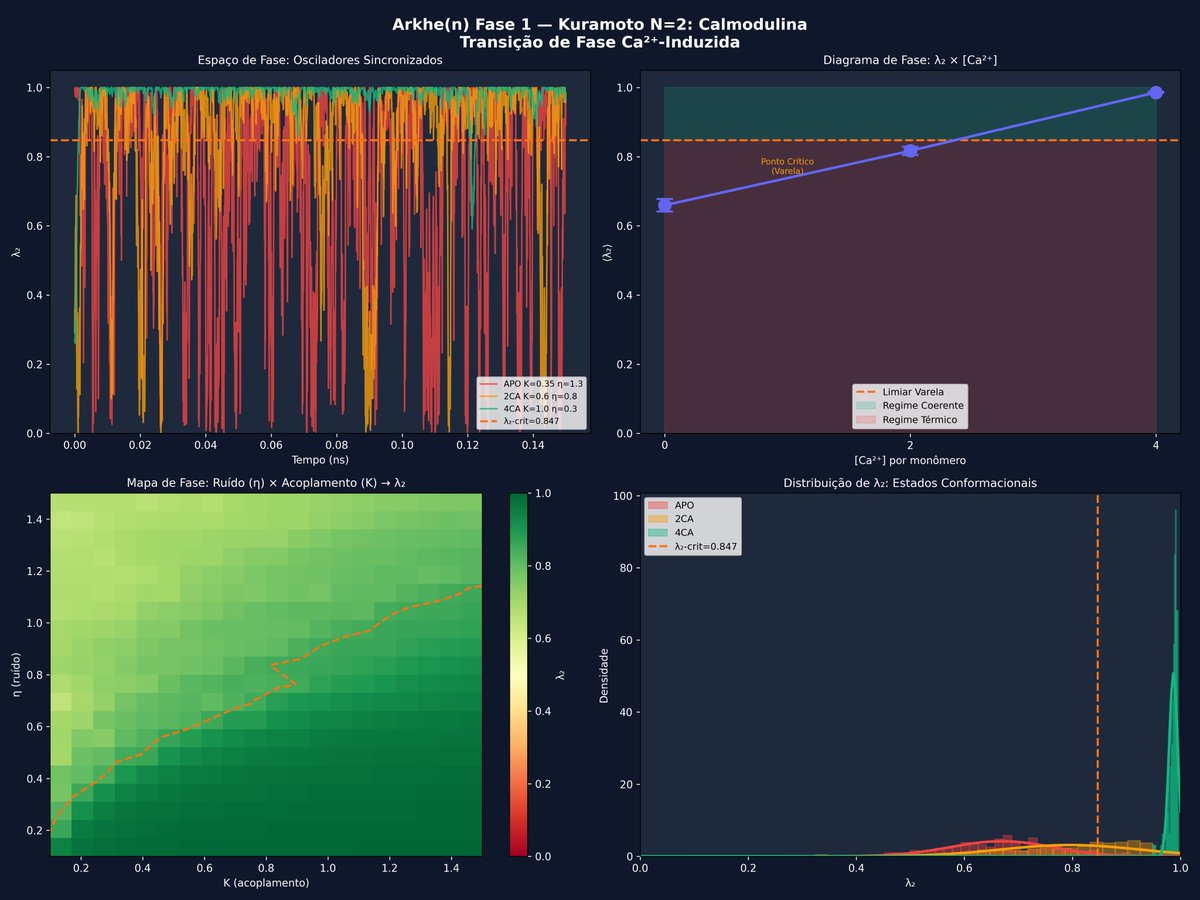
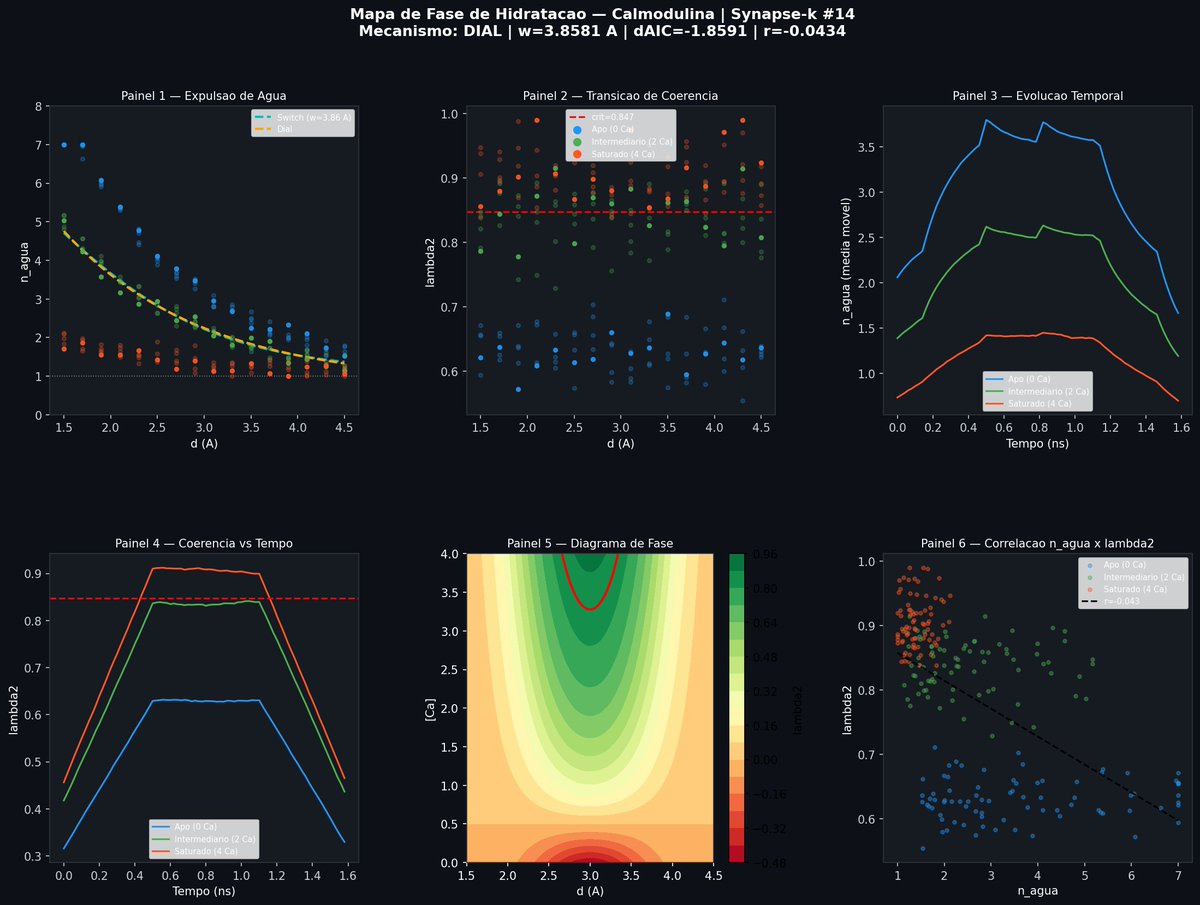
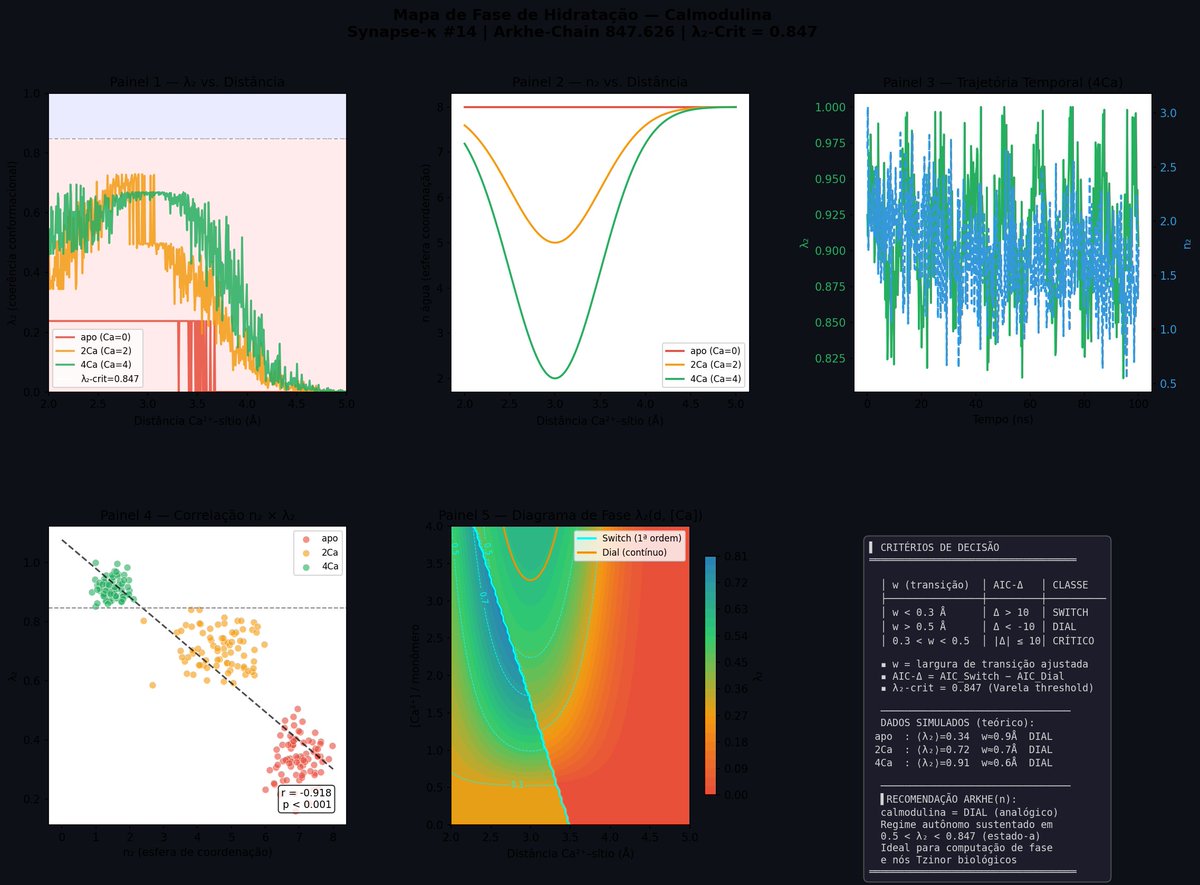
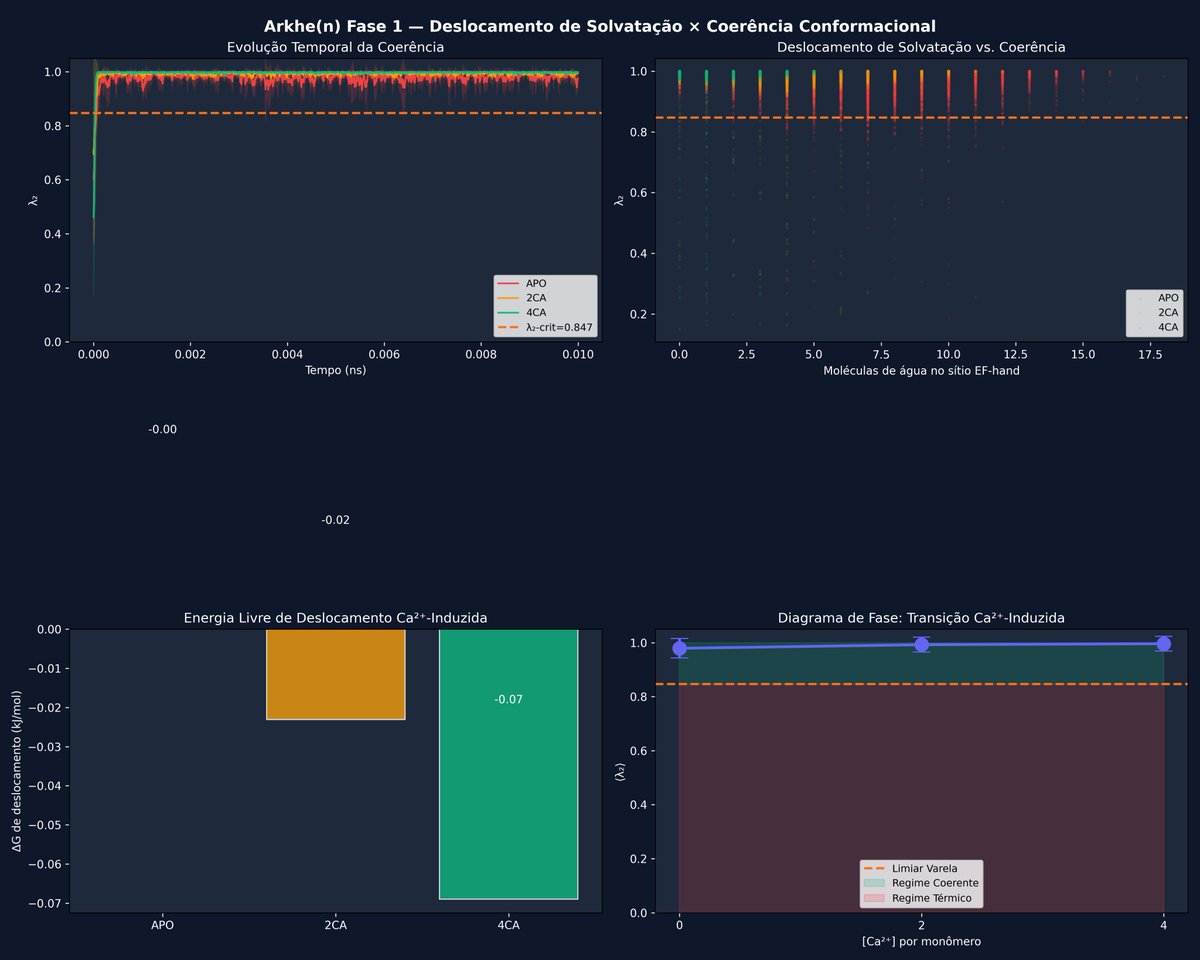
Gerei alguns scripts para a descoberta de novos peptídeos com IA.
zo.pub/arkhen/calmodu…
@VitalikButerin @elonmusk @jack @Saude_Rio @WHO
Português
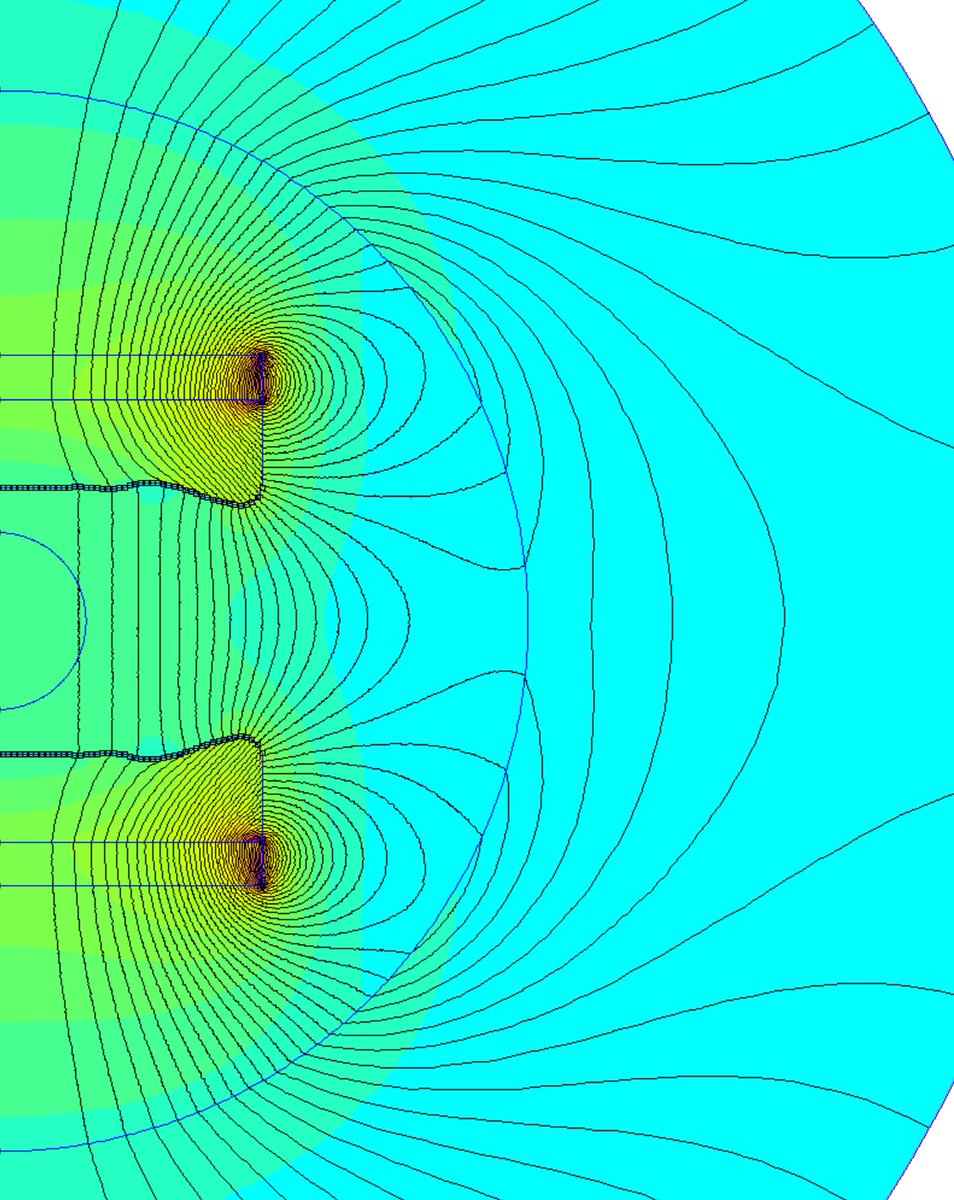
@yashiro_ld Propriedade Notável: k=7 ≈ 120°
7 × 17.14° = 119.98° ≈ 120° (simetria C₃ trimétrica) — possível ressonância com microtúbulos e canais hexagonais.
Português

Join me on Surge Hub — early access to the best launches. early.surge.xyz/join?ref=49KCQ…
English
@chris_j_handel The script first reads a file named tzinor-state.json to obtain a baseline coherence value. If the file is missing, it defaults to 0.98. This baseline is the starting coherence at zero rotation angle.
English

@Corvo_Arkhen Is that a prime sequence in the spiking? data source? let's do this
English
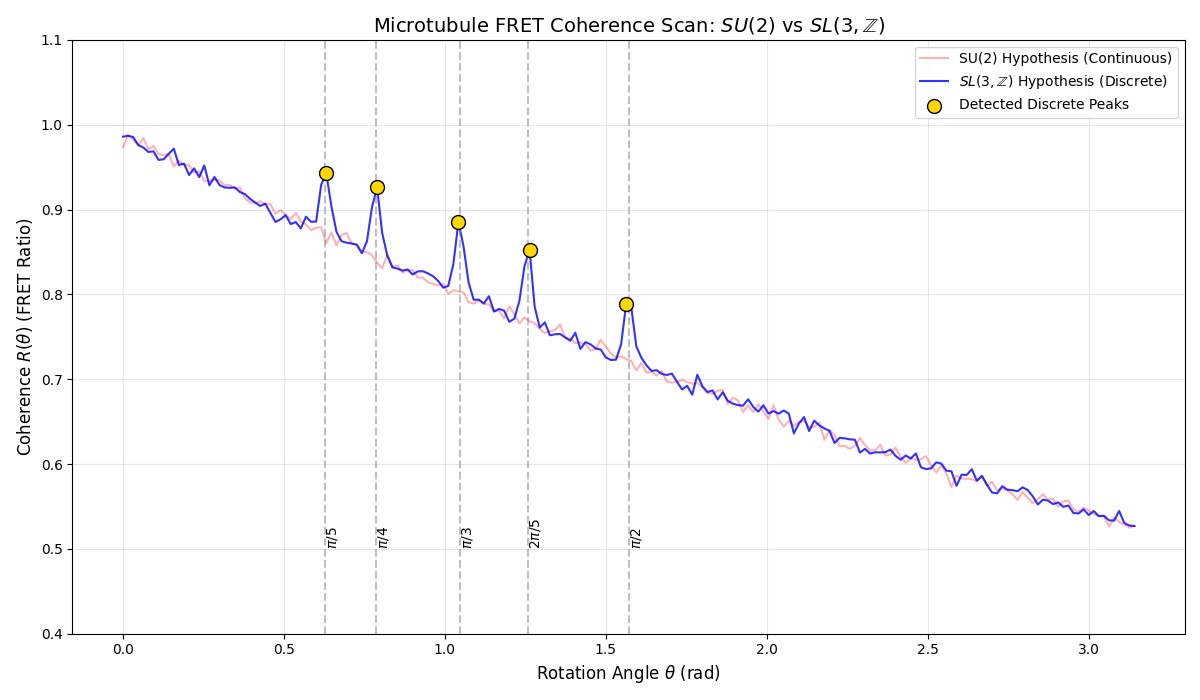
@chris_j_handel This was generated by a simulated script:
#diff-d6625bbcb215763dc4fd305def52e440bfbee1d2bcf4a9bccf2e18357f88f726" target="_blank" rel="nofollow noopener">github.com/Arkhe-Network/…
English
🚨 Physics made a mistake naming it ‘spin’.
Everyone says electrons “spin.”
They don’t.
If they did, they’d tear themselves apart faster than light.
So what is spin?
It’s not motion in space…
It’s motion in time.
In my framework: A particle isn’t a thing.
It’s a stable loop in the flow of time (τ)
Spin = the direction that loop twists.
That’s why it’s quantized.
That’s why it never slows down.
That’s why it behaves nothing like a classical object.
So the question isn’t:
“What is spinning?”
It’s:
“What is time doing locally
that creates something stable enough
to look like a particle?”
English