Daniel Denmark

306 posts

Daniel Denmark banner
Daniel Denmark

Daniel Denmark

@DenmarkGeo

Geology & Hydrocarbons Technician | Geography degree candidate | Earth systems, climate data & GIS | Field observation & cognition

เข้าร่วม Ekim 2022
586 กำลังติดตาม53 ผู้ติดตาม
ทวีตที่ปักหมุด
Daniel Denmark
Daniel Denmark@DenmarkGeo·
This account documents my work and interests across geology, geography, GIS, climate data and Earth systems. I’m especially interested in how field observation, spatial data and cognition interact when we try to understand landscapes, environmental change and complex systems.
English
1
0
0
140
Daniel Denmark
Daniel Denmark@DenmarkGeo·
@solsilvanazb Me imtereso mucho esta línea porque estoy armando un portfolio GIS orientado a análisis territorial y toma de decisiones. Tu enfoque EpiSIG me parece un muy buen ejemplo de cómo conectar datos, campo y operación real. Te felicito por el buen trabajo
Español
1
0
1
12
Silvana Zapata Bedoya EPI-SIG-DS
Ando soñando con un pipeline automático para las personas con mapas para ir a campo por necesidaded explícitas y simplemente planificar mejor. No está perfecto, aún me falta pero, seguiré dándole con amor para sacar esto adelante. Las imágenes abajo pueden tener algunos errores o le faltan cosas, como dije es un prototipo. #Epidemiología #SaludPública #GIS #SIG #EpiSIG
Silvana Zapata Bedoya EPI-SIG-DS tweet mediaSilvana Zapata Bedoya EPI-SIG-DS tweet mediaSilvana Zapata Bedoya EPI-SIG-DS tweet mediaSilvana Zapata Bedoya EPI-SIG-DS tweet media
Español
8
14
94
3.5K
Daniel Denmark
Daniel Denmark@DenmarkGeo·
@solsilvanazb Esto conecta mucho con algo que considero central en GIS aplicado.. que el mapa no sea solo representación, sino interfaz de decisión. En salud pública, un pipeline así puede transformar datos dispersos en rutas, prioridades y acciones de campo más claras
Español
1
0
1
14
Daniel Denmark
Daniel Denmark@DenmarkGeo·
The interesting layer here is access architecture: Copernicus is reducing the gap between EO data infrastructure and applied analysis. ERA5, CAMS, methane plumes, aerosols, UTCI, and projections become browser-native geospatial workflows
Geoawesome@geoawesome_dgtl

Five free Copernicus apps, heat stress, methane plumes, aerosol alerts, climate projections, 85 years of ERA5 data. 🌍🛰️ All open. All browser-based. All built on satellite data. Read more: eu-space.europa.eu/news/observer-… #Geoawesome #Copernicus #ClimateChange #EarthObservation

English
0
0
0
22
Daniel Denmark
Daniel Denmark@DenmarkGeo·
@ihtesham2005 Basically the bottleneck was not intelligence. The bottleneck was the wrong training interface.. it's called problem space navigation under uncertainty...
English
0
0
0
9
Daniel Denmark
Daniel Denmark@DenmarkGeo·
@ihtesham2005 What AoPS tries to train is not ..more math.. but a //different cognitive pipeline// ambiguity tolerance, structural parsing, invariant detection, method transfer, and delayed closure before computation.
English
1
0
0
22
Ihtesham Ali
Ihtesham Ali@ihtesham2005·
Two math olympiad champions wrote a training manual in 1993 on two old Macintosh computers, and every American kid who has won a major math competition in the last decade learned to think from it. Their names are Sandor Lehoczky and Richard Rusczyk. The book is called The Art of Problem Solving. Most people in math know it as AoPS. Since 2015, every single member of the US International Math Olympiad team has been an AoPS student. Not most of them. Every one. That statistic sounds impossible until you understand what the book actually does. Lehoczky and Rusczyk were not professors. They were competitors. Lehoczky earned the sole perfect AIME score in 1990 and led the national first place team. Rusczyk was a USA Mathematical Olympiad winner and a perfect AIME scorer in 1989. They had both survived the same brutal selection process the book was designed to train students for. And the first thing they decided was that almost every existing math textbook was teaching the wrong thing. School math gives you formulas. You memorize them. You apply them. You pass the test. Then you sit down in front of a real competition problem and the formula does not apply, and you have nothing underneath it. That is the gap. The gap is not knowledge. It is thinking. The entire premise of AoPS is that problem-solving is a transferable skill, not a bag of memorized tricks. A student who genuinely understands why a technique works can adapt it, combine it with something else, and deploy it in a context they have never seen before. A student who only memorized the technique freezes the moment the problem looks different. The book teaches the difference between a formula and a method. A formula tells you what to compute. A method tells you how to see. The students who win olympiads are not the ones who know more formulas. They are the ones who have trained themselves to look at an unfamiliar problem and recognize its structure. To see that this problem is secretly asking the same question as a problem they solved three weeks ago, just dressed differently. Rusczyk calls this "learning to read the problem." Not reading the words. Reading what the problem is actually asking underneath the words. The second thing they built into the book is tolerance for being stuck. Most students treat confusion as a signal to stop. The book treats confusion as the starting point. Every chapter pushes students past the point where the obvious approach runs out. That moment of running out is not failure. That is where the actual thinking begins. Lehoczky once described it this way. If you can solve a problem quickly, you are not learning. You are performing. Learning only happens when you are past the edge of what you already know. The book was written on old Macintosh computers in 1993. Rusczyk launched the AoPS website in 2003. Today the community has over one million users. Thousands of students enroll in AoPS online courses every year. Most winners of every major American math competition are AoPS alumni. A platform built by two kids who were good at math competitions has become the infrastructure that produces the next generation of mathematicians, engineers, and scientists who are good at thinking. The formulas you memorized in school will eventually be obsolete. The thinking you trained will not. What is one problem in your life right now that you have been avoiding because you do not yet know the right formula to solve it?
Ihtesham Ali tweet media
English
51
1K
6.1K
257.2K
Daniel Denmark
Daniel Denmark@DenmarkGeo·
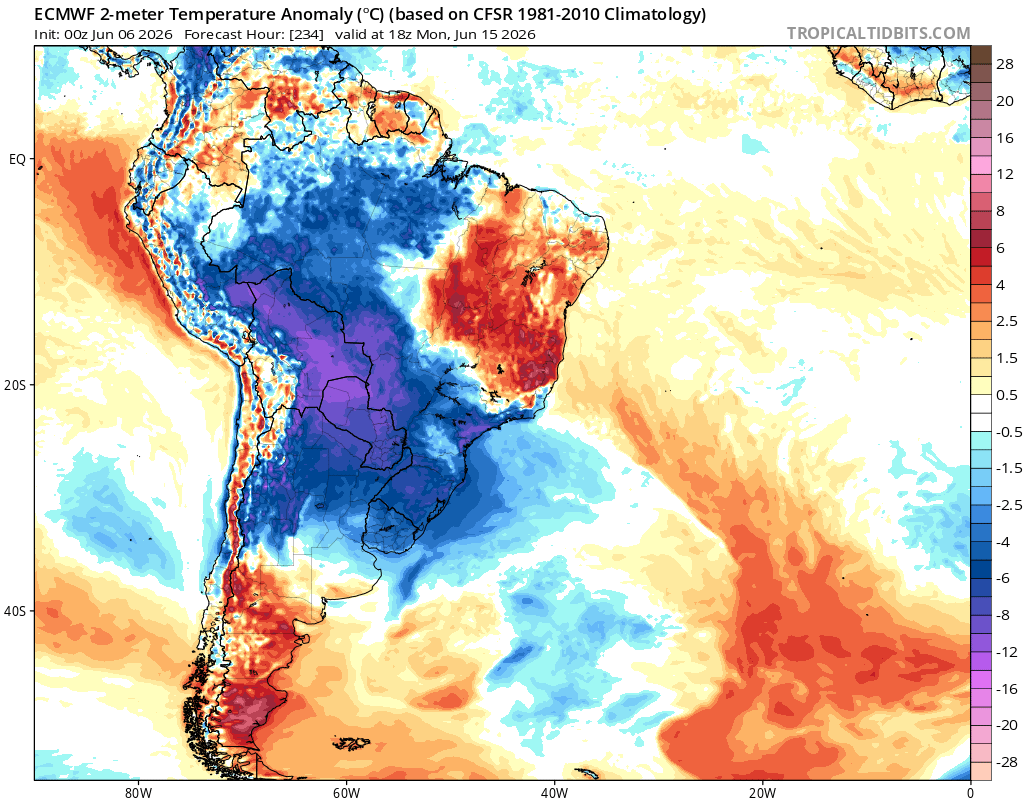
@Igor__Roik Interestng mediumrange signal. The question is whether this evolves into a coherent meridional coldair outbreak, suported by ensemble clustering, persistent lowlevel thermal advection, frontal progression, and synopticscale trough/ridge phasing, or remains deterministicrun noise
English
1
0
1
751
Igor
Igor@Igor__Roik·
Modelo europeu vem sinalizando possível incursão de massa de ar polar mais intensa, no início da segunda quinzena do mês. Abaixo anomalia de temperatura em 2m.
Igor tweet mediaIgor tweet media
Português
13
26
721
52.1K
Daniel Denmark
Daniel Denmark@DenmarkGeo·
@BergvikJohnny @rahmstorf Fair point. The issue is not individual inconsistency alone, but socio-technical lockin highcarbon infrastructures compress agency into daily convenience while exporting climatic consequences into longduration biogeophysical memory
English
0
0
2
21
johnny | Apink 4ever
johnny | Apink 4ever@BergvikJohnny·
@DenmarkGeo @rahmstorf I think you're asking the wrong question. You have to even remotely consider the big picture and the long-term consequences to misunderstand something. Most people, including climate "scientists", drive cars without a second thought to any long or short-term consequences.
English
1
0
0
27
Daniel Denmark
Daniel Denmark@DenmarkGeo·
The key point is temporal asymmetry human forcing is produced on political and economic timescales, but CO2 persistence and Earth system feedbacks operate on millennial horizons. The Anthropocene is less a date on a chart than a long-term boundary condition
Prof. Stefan Rahmstorf 🌏 🦣@rahmstorf

We are in the Age of Humans - the Anthropocene. Our new article (open access) shows how even with a moderate future emissions scenario, global temperature will still be elevated by 3-4°C in the year 3000! Lifetime of our CO2 in the air is that long. agupubs.onlinelibrary.wiley.com/doi/10.1029/20…

English
0
1
1
56
Daniel Denmark
Daniel Denmark@DenmarkGeo·
@MMmarco0 Plausible, but still underdetermined. The interesting signal is whether the June 11/15 Atlantic wave tendency becomes a coherent ensemble regime shift, or just transient z500 run noise. Until clusteringpersistence improves, it is a synoptic hypothesis, not a locked forecast
English
0
0
1
198
Marco M.M.
Marco M.M.@MMmarco0·
Giugno potrebbe cambiare di nuovo passo. Fino al 10 giugno l’Italia dovrebbe restare sotto una fase più stabile e via via più calda seppur senza eccessi, con espansione anticiclonica subtropicale marittima (anticiclone delle Azzorre) e condizioni più estive su molte regioni ma tra l’11 e il 15 giugno il quadro potrebbe cambiare di nuovo. Stasera, per la prima volta, i principali modelli matematici previsionali sono concordi nel vedere una possibile ripresa delle correnti atlantiche, con maggiore instabilità e un nuovo calo termico. Non è ancora una previsione definitiva, però il segnale è interessante, perché anche gli spaghi previsionali cominciano a piegare verso il basso. Al momento non si vede ancora una cupola subtropicale continentale lunga e bloccata sull’Italia e probabilmente almeno per tutta la seconda decade del mese non si farà vedere. Si vede piuttosto un’estate che prova ad avanzare, ma dentro una circolazione ancora mobile e che può regalarci un'ulteriore ondulazione atlantica con annesso calo termico. Le prossime 48 ore ci diranno se questa tendenza verrà confermata o se resterà solo un’oscillazione dei modelli.
Marco M.M. tweet media
Italiano
86
106
1.2K
42.3K
Daniel Denmark รีทวีตแล้ว
Louis Westendarp
Louis Westendarp@LouisWestendarp·
+++ EIL +++ Peter Stafford ist geheilt. Der an #Ebola erkrankte amerikanische Arzt wurde heute aus der #Charité entlassen. Stafford hatte sich in der Demokratischen Republik #Kongo infiziert, wo er für eine Missionsorganisation arbeitete. Alle Infos bei @POLITICOEurope.
Louis Westendarp tweet media
Deutsch
59
135
1.2K
43.8K
Daniel Denmark
Daniel Denmark@DenmarkGeo·
this is a serious critical observability loss.. Descoping OOI removes sustained in situ constraints on air sea fluxes, water column biogeochemistry, mesoscale variability, deep convection, and boundary-condition data for reanalysis, DA, AMOC diagnostics, and climate attribution
Prof. Stefan Rahmstorf 🌏 🦣@rahmstorf

I'm afraid that this is why the US administration wants to shut down ocean observations: they don't want the people to know what is happening in our oceans, as it does not fit their ideology and the interests of their fossil fuel industry funders. edition.cnn.com/2026/06/03/cli…

English
0
0
0
105
Daniel Denmark
Daniel Denmark@DenmarkGeo·
@AtmoslabWX Idk broadly plausible, but not a deterministic forecast.. NOAA/WMO support high El Niño likelihood, but this CP-EP hybrid teleconnection pathway is still scenario synthesis: RWS placement, Walker response, and PNA/NAO projection depend on where convection locks in
English
0
0
0
70
AtmoslabWX
AtmoslabWX@AtmoslabWX·
BOM ve ECMWF çıktıları üzerinde yürüttüğüm çoklu ENSO değerlendirmeleri, olası bir büyük El Niño gelişiminin klasik Doğu Pasifik (EP) süper El Niño yapısından farklı bir karakter taşıyabileceğine işaret ediyor. Bu yazımda hem nedenini hemde olasılı nereler yaşanabilir anlatacağım. Mevcut gidişatta yalnızca doğu Pasifik odaklı bir ısınma değil, aynı zamanda merkezi Pasifik'i de kapsayan hibrit bir ENSO deseni gelişmesi dikkat çekiyor adım adım ilerliyor en başında ne dediysem hemen hemen geçerliliği koruyor. Bu nedenle burada amaç sadece Nino 3.4 bölgesi (ONI) odaklı bir "mega El Niño tahmini" yapmak değil; çünkü farklı durum var ,Rossby dalga davranışını etkileyebilecek durum söz konusu olabilir. Olası bir CP–EP hibrit süper El Niño senaryosunun atmosferik mimarisini ve klasik süper El Niño olaylarından hangi yönleriyle ayrışabileceğini ortaya koymak gerekiyor. Klasik EP süper El Niño olaylarında tropikal forcing büyük ölçüde doğu Pasifik üzerinde yoğunlaşırken, hibrit bir yapıda Niño 4 bölgesinin de sürece daha aktif katılması tropikal konveksiyon alanını genişletebilir. Buna ek olarak aktif MJO ve BSISO fazlarının ENSO taban durumuyla yapıcı etkileşime girmesi halinde, konvektif aktivite Batı-Orta Pasifik'e doğru daha baskın hale gelebilir. Bu durum tropikal ısı salınımının boylamsal dağılımını değiştirerek Walker dolaşımının yeniden organizasyonunu, daha geniş ölçekli divergent çıkışları, daha güçlü Rossby Wave Source bölgelerini ve Kuzey Pasifik boyunca farklı telekoneksiyon yanıtlarını destekleyebilir. Benim değerlendirmeme göre bu mekanizmanın en önemli sonuçlarından biri, tropikal forcingin yalnızca Doğu Pasifik'e sıkışmak yerine daha geniş bir alana yayılmasıdır. Bu durum Güney ve Güneydoğu Asya'nın bazı kesimlerinde baskılanmış konveksiyon ve kuraklık eğilimlerini desteklerken, Doğu Asya'da jet akımı ve baroklinik zon üzerindeki etkiler nedeniyle daha aktif storm track süreçlerine zemin hazırlayabilir. Kuzey Pasifik kaynaklı dalga trenlerinin downstream etkileri Avrupa sektöründe daha meridyonal bir dolaşımı destekleyebilir; bunun sonucu olarak Kuzey, Orta ve Doğu Avrupa'da dönemsel yağış artışları ve daha hareketli sinoptik desenler görülebilir. Türkiye açısından ise sonuçlar doğrudan ENSO tarafından belirlenmese de, dolaylı olarak sonbaharda MJO/BSISO üzerinde tropikal forcing çıkışı ,Rossby dalga propagasyonu ,PNA (Pasific North America ),NAO (North Atlantic Oscillation) telekoneksiyonları üzerinden etkilenmesi mümkün bu durumda Kuzey Atlantik awb ,cwb desteğiyle Orta-Doğu Akdeniz siklonik aktivite artışı, hatta ( Balkanlar ve Doğu Avrupa üzerinden sarkan trof geçişlerinin daha elverişli hale gelmesi durumunda güçlü konvektif aktivite, gök gürültülü fırtına potansiyeli ve mevsim normali altı sıcaklık epizotlarının görülme olasılığı artabilir. Ortadoğu'nun geniş bölümünde subtropikal yüksek basınç etkisinin korunması halinde sıcak ve kurak eğilimlerin baskın kalması daha olası görünmektedir. Bu figür; SST anomalileri, OLR tepkileri, üst seviye divergent akış, Rossby dalga aktivitesi ve potansiyel telekoneksiyon mekanizmalarını tek bir çerçevede bir araya getiren kavramsal bir sentezdir. Amaç belirli bir bölge için kesin hava durumu sonucu üretmekten ziyade, olası bir hibrit süper El Niño yapısının küresel atmosferik dolaşım üzerindeki etkilerini fiziksel süreçler üzerinden tartışmaktır. ⚠️ Çalışma deterministik bir tahmin değildir. Mevcut ENSO sinyalleri ile ENSO-tropikal coupling ile troposfere verilecek yanıt olasılıkları belirtilmiştir. BOM ve ECMWF rehberliği ile bilinen atmosferik telekoneksiyon mekanizmalarının birlikte değerlendirilmesi sonucu hazırlanmış bilimsel bir yorum çalışmasıdır.
AtmoslabWX tweet media
Türkçe
6
10
57
3.1K
Daniel Denmark
Daniel Denmark@DenmarkGeo·
@CharlesMullins2 The science is genuinely interesting, but I’d anchor it to the Monash University report rather than the uncited MIT claim. The key advance is integrating atomically thin materials with photonic nanostructures to generate, steer, and read light on-chip
English
0
0
0
39
TheNewPhysics
TheNewPhysics@CharlesMullins2·
🚨 SCIENTISTS JUST BUILT A CHIP THAT CAN CREATE, CONTROL, AND READ LIGHT ON A SINGLE DEVICE. Researchers at MIT have developed a photonic chip using atomically thin materials that can generate, steer, and detect light-based signals all on the same platform. Why this matters: • Light can move information far faster than conventional electrical signals • Photonic systems generate far less heat than traditional computer chips • AI data centers are rapidly approaching power and cooling limits • Integrated photonics could dramatically reduce energy consumption • The technology could accelerate both AI processing and future quantum systems The breakthrough: For decades, computing has relied on moving electrons through billions of transistors. MIT's new device takes a different approach. Instead of processing information electrically, it manipulates photons particles of light directly on a microscopic chip. By combining light generation, control, and detection into a single platform, researchers have overcome one of the major obstacles preventing photonic computing from scaling. The deeper implication: Modern AI is increasingly limited by energy consumption rather than raw computing power. As models become larger and data centers consume more electricity, the future of computing may depend on finding entirely new ways to move information. Light-based computing offers one possible path. If this technology continues to mature, future processors could transmit data at near light speed while consuming far less energy than today's electronic systems. The future of computing may not be built on smaller transistors. It may be built on light itself. What do you think will photonic computing become the next major revolution after GPUs and AI accelerators? Follow for more frontier science and technology discoveries.
English
12
23
84
3.9K
Daniel Denmark
Daniel Denmark@DenmarkGeo·
@elonmusk India TFR crossing below replacement is less a depopulation story than a cohortstructure story momentum keeps absolute numbers high while fertility convergence, regional heterogeneity, sex ratios, urbanization, and age-dependency dynamics determine the macrodemograpic trajectory
English
0
0
0
31
Daniel Denmark
Daniel Denmark@DenmarkGeo·
@USGSLandsat Essential for Landsat reproducibility Reprocessed products can shift radiometric calibration, geometric registration, atmospheric correction, thermal retrievals, and QA bitmasks. For ARD/time series pipelines, Acquisition date alone is not enough
English
0
0
1
24
USGS Landsat
USGS Landsat@USGSLandsat·
📢 Using Landsat data in your research or analysis? Did you know that some Landsat products are updated after release to incorporate calibration improvements or correct issues identified during ongoing quality reviews? The Landsat Reprocessing Events webpage helps users track these updates, see what products were affected, and helps them determine whether previously downloaded data should be replaced with newer versions. 🔗 landsat.usgs.gov/landsat-reproc… 📸1: Landsat 9 image of Antarctica's Ross Sea coastline, acquired October 24, 2025, and reprocessed in March 2026. 📸2: Landsat 9 image of Laguna de Términos and Isla del Carmen in southeast Mexico, acquired October 17, 2025, and reprocessed in March 2026. #Landsat #EarthObservation #RemoteSensing
USGS Landsat tweet mediaUSGS Landsat tweet media
English
1
6
41
2.2K
Daniel Denmark
Daniel Denmark@DenmarkGeo·
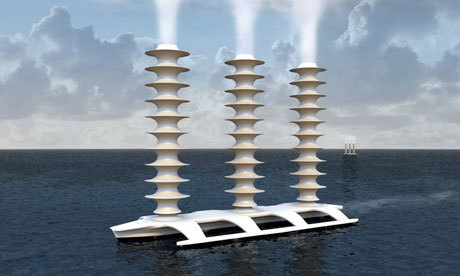
@geoengineering1 ...Earth’s east west albedo symmetry... is fascinating, but the signal seems less mystical than diagnostic: a compensatory radiative structure where cloud radiative effects, clear sky albedo, ocean fraction, and circulation balance TOA reflected shortwave flux
English
1
0
0
52
Geoengineering Info
Geoengineering Info@geoengineering1·
🚨Earth has a mysterious triple symmetry that may influence its climate New research finds that a circle running along the 27° east & 153° west meridians divides the globe into 2 halves with equal reflectivity & this may have implications for #SolarGeoengineering schemes.🧵1/10
Geoengineering Info tweet media
English
2
8
8
408