Dr. Paul J. Sullivan

77.5K posts

Dr. Paul J. Sullivan banner
Dr. Paul J. Sullivan

Dr. Paul J. Sullivan

@DrPJSullivan

Advisor to leaders in industry and government, JHU, YACOL, WEG (UK), VUCA, AI, Economic +Energy (Geopol) Security Strategies/NDU Professor RET / personal

เข้าร่วม Haziran 2017
5.2K กำลังติดตาม7.8K ผู้ติดตาม
Dr. Paul J. Sullivan รีทวีตแล้ว
Dr. Yousef M. Alshammari FEI CSci
— their hospitality, stories, and deep connection to this land were incredibly inspiring. From exploring the old Deira and Amara Palace museum to sharing conversations that bridged history and today, it was a reminder of the enduring spirit of community and heritage here.
English
1
1
0
32
Dr. Paul J. Sullivan รีทวีตแล้ว
JH
JH@CRUDEOIL231·
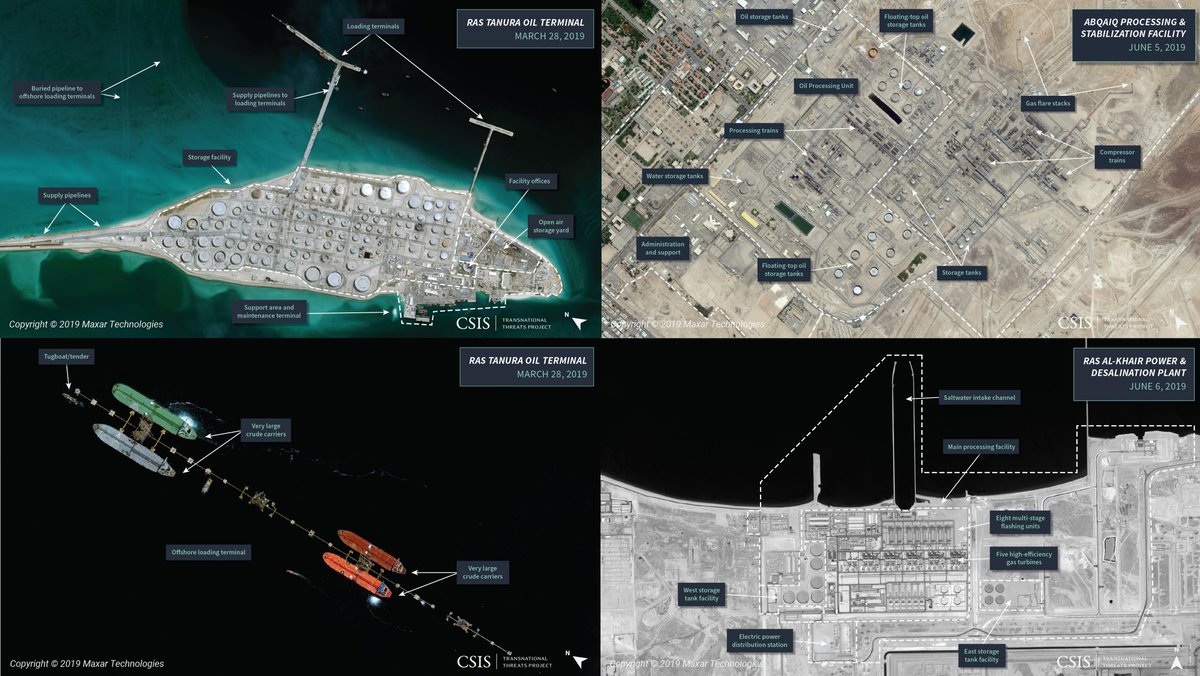
I saw President Trump's ultimatum and looked up the CSIS report that I had read and forgotten a long time ago. As we saw in the recent attack on Ras Laffan in Qatar, I think everyone will agree it was not that Iran was unable to attack the Gulf's energy infrastructure, but that they had chosen not to. After re-reading this report, I am convinced the GCC countries will absolutely not welcome a US airstrike on Iranian power plants and the subsequent Iranian retaliation. This report points out the vulnerability of GCC energy infrastructure using Saudis as an example, and it includes the Ras al-Khair Desalination Plant, which Iran explicitly named as a retaliation target today. Since it only covered Saudi's vulnerability, and if Saudi is vulnerable, the rest of the countries will be even worse, I will briefly summarize only the core points of the report. First, the Saudi oil system has a vertical structure where crude extracted from oil fields flows through GOSP → stabilization facilities → terminals. An attacker targets the bottlenecks of this flow. The Abqaiq stabilization towers (The Crown Jewel) are the world's largest stabilization plants that remove hydrogen sulfide from more than two-thirds of Saudi crude to make it exportable. About 18 stabilization towers and spheroids for oil separation are concentrated here. At the time of the 2019 attack, more than half of Saudi's total production was paralyzed by only 18 to 19 precision strikes. If even one tower is damaged, the entire process falls into a bottleneck, and due to the nature of highly sophisticated equipment, it can take several months to procure replacement parts. Gas-oil separation plants (GOSP) are also vulnerable targets. About 60 GOSPs scattered throughout the country are the first step in separating gas from crude oil. While the destructive power of an individual facility is small, hitting a few key GOSPs in major oil fields (such as Ghawar) simultaneously will cut off the crude oil supply chain itself. The East-West pipeline, the only strategic route that bypasses the Strait of Hormuz and sends crude to the port of Yanbu on the Red Sea, is also exposed. Along the 1,200km route, pumping stations are the primary targets. The pipeline itself is quick to repair, but the massive pump systems are vulnerable to drone attacks, and if destroyed, large-scale crude transport becomes impossible. We have already seen this case in the CPC. The Ras al-Khair plant is also extremely vulnerable. The report points out that it has serious structural weaknesses, even describing it as a "hostage to fortune." As the world's largest desalination facility, about 80% of the water produced is supplied directly to the capital, Riyadh, through pipelines, making it a massive infrastructure responsible for survival. As seen in the photos, the seawater intake path stretching long toward the coast is identified. The intake the starting point of desalination, is very difficult to defend physically, and simply closing the intake physically or throwing pollutants using drones or small boats can immediately stop the entire massive plant. Also Ras al-Khair procures massive power from its own gas turbines to produce fresh water. Striking only the internal power grid (gas turbines or substations) with missiles or cyberattacks will immediately stop water production. The report warns this structure becomes a target that gives the attacker maximum paralyzing effect with minimal effort. The report analyzes that Iran may hesitate to directly attack civilian targets like Ras al-Khair. This is bc it is a clear act of war and causes an extreme humanitarian disaster. However the analysis suggests if the conflict reaches its peak, Iran is more likely to send a strong political message saying, "We can hold your throat," by partially striking the water pipes or power grids rather than destroying the facilities themselves. The latest drones (such as the Shahed-136) can destroy facilities worth billions of dollars at a low cost of $15,000 per unit, and it is almost economically and technically impossible to block all low-cost drone swarms with expensive air defense systems like the Patriot. Considering the structural vulnerability of GCC energy infrastructure, if Iranian retaliation is triggered by the U.S. airstrike on Iranian energy infrastructure, the probability of facing a humanitarian disaster seems high. I sincerely hope President Trump doesn’t make the wrong call here. The asymmetrical risk is just too high—the potential losses far outweigh any possible gain. We’re talking about a situation could put the lives of tens of millions of ppl in the GCC at risk. #oott #iran
JH tweet media
English
27
209
840
127.8K
Andy Critchlow
Andy Critchlow@baldersdale·
The only infographic you need to see on the Iran war and global fertiliser markets.
Andy Critchlow tweet media
English
3
33
93
4.7K
Dr. Paul J. Sullivan รีทวีตแล้ว
Yaroslav Trofimov
Yaroslav Trofimov@yarotrof·
Ukraine, meanwhile, tries to limit Russia’s windfall from rising oil prices. Ukrainian drones struck overnight the oil export terminal port of Primorsk on the Baltic Sea, near St. Petersburg.
English
17
196
758
38.8K
Dr. Paul J. Sullivan รีทวีตแล้ว
Khalaf Ahmad Al Habtoor
Khalaf Ahmad Al Habtoor@KhalafAlHabtoor·
لاحظت في الفترة الأخيرة إزدياد النقاشات بين بعض الأشخاص في منطقتنا على مواقع التواصل الإجتماعي. وهذا في حدّ ذاته أمر صحي، لكن ما يلفت النظر أحياناً هو خروج هذا النقاش عن إطاره الطبيعي إلى نوع من التصادم أو عدم تقبل الرأي الآخر. الاختلاف في الرأي أمر طبيعي، بل ضروري، لكنه لا يجب أن يفسد للودّ قضية. الحكمة ليست في أن نتفق دائماً، بل في أن نختلف دون أن نفترق، وأن نتحاور دون أن نتخاصم. نحن في دول #الخليج_العربي ودول #مجلس_التعاون_الخليجي يجمعنا ما هو أعمق من أي رأي أو موقف عابر: يجمعنا التاريخ، والمصير الواحد، والمصلحة المشتركة. وهذه الروابط لا يجب أن تهتز بسبب نقاش أو رأي. وفي عالم مفتوح، حيث الكلمة تصل إلى الجميع، علينا أن نكون أكثر وعياً بأن صورتنا لا تمثلنا وحدنا، بل تمثل أوطاننا وتجربتنا التي ينظر إليها الكثير باحترام. الحوار مطلوب، لكن الاحترام أهم، والتضامن ضرورة لا خيار. قوتنا كانت وستبقى في وحدتنا وتكاتفنا، وفي قدرتنا على إدارة اختلافاتنا بهدوء وحكمة. هذه هي القيم التي حفظت منطقتنا، وستبقى بإذن الله سبب استقرارها.
العربية
77
55
323
71.2K
Dr. Paul J. Sullivan รีทวีตแล้ว
Giovanni Staunovo🛢
An oil tanker that seems to have already been scrapped has signaled it’s just transited the Strait of Hormuz, the second example of a so-called zombie ship crossing the waterway in a matter of days. The Nabiin was in the Persian Gulf on Sunday evening, according to ship-tracking data, and by Monday morning was in the Gulf of Oman. However, records compiled by Bloomberg News indicate that the Aframax, built in 2002, was sent to the breaking yards in Bangladesh five years ago. #oott bloomberg.com/news/articles/…
English
0
15
52
9.2K
Susan Sakmar
Susan Sakmar@SusanSakmar·
🚨 Saudi Aramco CEO 🇸🇦 Amin Nasser pulls out of CERAWeek. 🇺🇸 He was scheduled for the Global Energy Dialogue with Dan Yergin on Tuesday morning. Kuwait Petroleum Co 🇰🇼 CEO is now attending virtually and Abu Dhabi 🇦🇪 wealth fund Mubadala now unlikely to attend. 🤔 Reminds me that a few weeks ago at LNG2026 in Doha 🇶🇦 several US and other companies canceled. 😬
Reuters@Reuters

Exclusive: Saudi Aramco boss pulls out of major international energy conference due to Iran conflict, source says reut.rs/4bs4M4v reut.rs/4bs4M4v

English
6
21
55
12.8K
Dr. Paul J. Sullivan รีทวีตแล้ว
Scott Lincicome
Scott Lincicome@scottlincicome·
In Stahl's defense, I've been doing this for decades and @cpgrabow still shocks me regularly with random examples of Jones Act stupidity. There are so many!
English
0
4
38
3.8K
Dr. Paul J. Sullivan รีทวีตแล้ว
محمد الحمادي 🇦🇪
أمير قطر الشيخ تميم بن حمد يشارك في تشييع جنود قطر شهداء الواجب، الذين سقطت مروحيتهم فجر اليوم في البحر. خالص العزاء للأشقاء في قطر، والرحمة للشهداء..
العربية
24
65
396
59.1K
Dr. Paul J. Sullivan รีทวีตแล้ว
Doha News
Doha News@dohanews·
.@qatarairways has positioned some of its aircraft at selected #airports outside of #Doha as a temporary measure amid the current situation, the airline confirmed to Doha News on Sunday. In a statement, Qatar Airways said the #aircraft will return to service once the flight operations return to their normal levels, noting that it could not specify the total of planes parked abroad "due to the dynamic nature of the current operating environment". The comments came as reports and data, including by Flight Radar, pointed to around 20 Qatar Airways aircraft parking at #Spain's Teruel Airport, one of the largest an aircraft maintenance and storage facilities in #Europe.
English
3
27
157
43.9K
Republicans against Trump
Republicans against Trump@RpsAgainstTrump·
Trump’s Agriculture Secretary Brooke Rollins: "Over the last year, we've brought almost all food prices down, with a couple of outliers." Fact check: false.
English
796
1.4K
6.9K
157.6K
Javier Blas
Javier Blas@JavierBlas·
More evidence of Asian counties performing a LNG-to-coal fuel switch: Thailand has reactivated two coal-fired units that had been mothballed. The switch is important to put a lid on global LNG (and European gas) prices. bangkokpost.com/business/gener…
English
51
565
1.6K
163.3K