ForgottenVolumes
682 posts

@ForgottenV1918
Follow for dusty old books that were never meant to be read again.


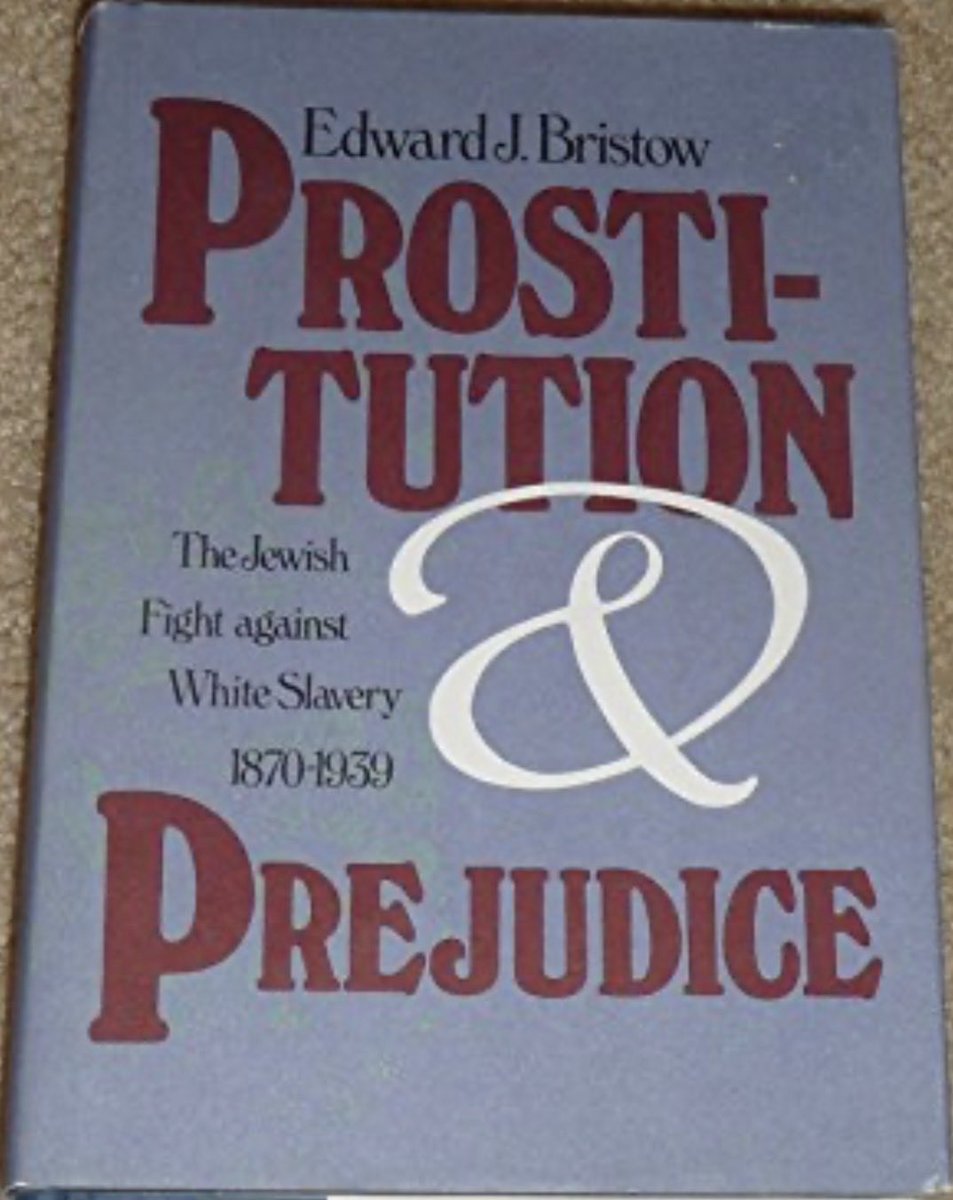
Title: The Great War on White Slavery: Or Fighting for the Protection of Our Girls Author: Clifford G. Roe Year: 1911 In this incendiary 1911 exposé, Chicago prosecutor Clifford G. Roe rips open the “white slavery” trade a brutal, organized system of luring, buying, selling, and destroying innocent girls in America’s vice districts. Roe identifies organized panders, “cadets,” and brothel keepers as the operators, devoting significant detail to Jewish immigrants from Eastern Europe who dominated parts of the network, especially Chicago’s West Side. He writes: “There was a great influx of Austrian, Russian and Hungarian Jews about twenty-five years ago in New York City. Among these immigrants were disreputable men and boys who had learned the art of procuring from the kaftan of Eastern Europe, and they soon began to develop this traffic in America.” According to Roe, the so-called “kaftan system” originated decades earlier in the ghettos of Galicia and Russian Poland, where procurers allegedly sold girls into the Orient through Constantinople. Discussing Chicago, he claimed that Jewish cadets had “wrought havoc” among their own communities and wrote that “young girls from Europe were sold in almost open market.” He further asserted that “fifty per cent of the inmates of disorderly houses on the West side of Chicago are of Jewish descent.” Expanding his observations beyond Chicago, Roe contended that ownership of brothels in New York City and later in many other American cities. The victims were primarily innocent girls as young as 13-16, portrayed as innocent teenagers lured from small towns or farms, then drugged, raped, beaten, and broken into the trade. Panders targeted them at train stations, dance halls, and fake employment offices with promises of jobs or romance. Once isolated, the nightmare began: drugged with opium or alcohol until they were unconscious and helpless, brutally gang-raped repeatedly to shatter their spirits and wills, savagely beaten with fists, belts, and clubs until bloodied and broken, then sold like livestock into “human stockyards” and “slaughter houses for girls.” Inside these hellholes they endured locked rooms, confiscated clothes, crushing debt bondage that could never be repaid, nightly sexual exploitation by dozens upon dozens of drunken men who used them like meat, savage beatings for any resistance or failing to earn enough money, forced drugging to keep them compliant, and a constant barrage of venereal disease, alcohol, opium, and soul-crushing despair. Roe describes girls herded like cattle for the slaughter while men like stallions pranced about in their drunken revelry. The brothels echoed with “The shrieks and moanings of the helpless… Those who are being beaten cry out for help.” These “slaughter houses” were the tolerated vice districts where girls were bought, sold, rotated between houses, and systematically destroyed treated worse than animals in a nonstop “reign of debauchery” and “Market for Souls,” their bodies repeatedly violated, battered, and ruined night after night to gratify the lust of male patrons who visited in droves. Roe claims a shocking 60,000 girls died every year from disease, drugs, drink, brutal beatings, abuse, and despair replaced by 5,000 new victims monthly to keep the brothels running. The kaftan methods dated back to the mid-1800s in Eastern Europe. They hit America hard after the 1880s immigrant waves and raged fiercely in U.S. cities. This book shocks with its graphic accounts of rural innocence shattered in urban vice dens by networks that profited from broken, bleeding, violated, and ruined lives a century-old document mixing real convictions with moral panic. archive.org/details/greatw…

“Whiteout: The CIA, Drugs and the Press” by Alexander Cockburn & Jeffrey St. Clair (1998) This book lays out the CIA’s institutional role as protector and partner of drug traffickers from WWII to the crack epidemic while exposing the agency’s experiments on American civilians, including biological aerosol tests over cities and LSD dosing of unwitting citizens. It also details how the mainstream press repeatedly covered up or attacked the truth. The CIA’s drug complicity began in 1944 when its predecessors (OSS and Naval Intelligence) cut a deal with Lucky Luciano, America’s top gangster and heroin kingpin: in exchange for Mafia help invading Sicily and smashing communist unions on the docks, the U.S. let the heroin trade flourish. In the 1980s, the CIA shielded Nicaraguan Contra cocaine networks. A San Francisco Bay Area ring run by Norwin Meneses (a top Nicaraguan trafficker tied to the FDN Contra faction) and Danilo Blandón sold tons of cocaine to L.A.’s Crips and Bloods. Profits went to arm the CIA-backed Contras fighting Nicaragua’s Sandinistas. Later, CIA Inspector General Fred Hitz admitted under oath that the Agency maintained relationships with known drug dealers and had Reagan-era Justice Department clearance not to report their crimes. San Francisco geoengineering / biological “fog” tests (Operation Sea Spray): The book details how the U.S. government (with CIA-linked biological weapons programs) conducted open-air experiments on the public. In 1950, as part of a simulated biological warfare attack, the Navy sprayed massive quantities of the bacteria Serratia marcescens (and Bacillus subtilis) over San Francisco’s foggy skies in Operation Sea Spray. The bacteria were aerosolized from a ship offshore and drifted across the city for days, exposing roughly 800,000 residents including entire families and children to the agents. The fog-like dispersal was chosen precisely because San Francisco’s natural marine layer would carry the agents inland like a real enemy bio-weapon attack. The tests caused a spike in pneumonia-like illnesses; at least one man (Edward Nevin) died from a Serratia infection. The government denied responsibility for decades. Serratia tests continued into the 1960s. Cockburn and St. Clair tie this directly to the CIA’s importation of Nazi scientists (via Operation Paperclip/Overcast) straight from Dachau and Buchenwald labs. These ex-Nazi experts were put to work on U.S. chemical and biological weapons programs. These were not isolated the book describes them as part of systematic experiments on the public. The books details experiments exclusively on American children (such as dedicated child dosing programs), the mass bio-aerosol tests and drug-fueled epidemics it documents directly impacted children as part of the broader civilian populations and communities affected. • MKUltra and “Dr. Gottlieb’s House of Horrors”: Under Sidney Gottlieb, the CIA ran a massive mind-control program involving LSD, other hallucinogens, radiation, psychological torture, and biological agents on unwitting subjects. Press as active co-conspirator: The book exposes how major outlets (NYT, WaPo, LAT) coordinated attacks on reporters like Gary Webb, then helped destroy his career and reputation when he connected the Contras to the crack explosion. This media role in burying proven CIA-drug ties is framed as one of the dirtiest ongoing cover-ups. Cockburn and St. Clair document how the CIA’s drug alliances, biological spraying over American cities, Nazi scientist imports, mind-control experiments, and protection of war criminals were not aberrations they were core to Cold War operations, with full knowledge at the highest levels. What the public was told were wild “conspiracy theories” turned out to be documented policy. The public paid in addiction epidemics, mysterious illnesses, eroded trust, and destroyed lives. The book is fact-packed with names, dates, declassified admissions, and congressional testimony.


When Prime Minister Benjamin Netanyahu ordered the release of over 400,000 declassified documents in December 2016 finally cracking open the state archives on the Yemenite Children Affair the most gut-wrenching medical violations in Israel’s early history were laid bare for the world to see. The most comprehensive recent English-language scholarly collection on the subject, The Yemenite Children Affair: Ethnic Tensions, Immigration, and Public Records in Israel (edited by Motti Inbari with key contributions from medical historians Dorit Weiss and Shifra Shvarts, Lexington Books, 2024), draws directly on those archives, hospital logs, and commission records to expose the horror without conspiracy theories. What it reveals is not baby theft rings, but a cascade of unauthorized autopsies, organ harvesting, and experimental procedures performed on dead and dying Yemenite infants acts that violated Jewish law, parental consent, and basic humanity. The specific organ-harvesting details are among the most horrific in the entire affair. Testimony and records examined in the book (and in the Knesset special committee that reviewed the declassified files) confirm that doctors routinely performed post-mortem examinations on deceased Yemenite babies and toddlers without any parental permission. These autopsies were conducted in violation of Jewish tradition, which demands the body remain intact for burial. In multiple documented cases, children’s hearts were surgically removed from the tiny corpses. Those hearts were then handed over to American researchers studying why Yemenite Jews exhibited an almost complete absence of heart disease. The organs were shipped abroad as research specimens while the rest of the bodies were hastily buried often in mass or unmarked graves without the parents ever seeing the child, receiving a proper death certificate, or being allowed to participate in the funeral. Parents many illiterate in Hebrew, non-native speakers, and already shattered by the deaths of their children amid the 1949–1954 immigration crisis were simply told “your baby died” and sent away. No explanation of the autopsy. No mention that their infant’s heart had been carved out and exported for foreign science. The book’s medical-historical analysis (especially Shvarts and Weiss’s chapters on policy and health challenges) places these acts in the context of a collapsing hospital system overwhelmed by Operation Magic Carpet immigrants, rampant disease, and a condescending attitude toward “primitive” Mizrahi families. But the archives show the procedures were real, systematic in their indifference, and devastating in their cultural desecration. Even before death, the violations were monstrous. The declassified records and the book detail clusters where severely malnourished Yemenite babies were injected with experimental protein solutions unproven, desperate treatments in a medicine-starved country. At least four of these infants died as a direct result of the injections. Sick children were ripped from their mothers’ arms, isolated in wards or Babies’ Homes where parents were forbidden to stay, and then subjected to these interventions without informed consent or follow-up. A mother might leave her child for “observation” only to return to an empty crib and a curt note. The Yemenite Children Affair does not flinch from these facts. It uses the Netanyahu-released documents to prove the negligence was criminal in scale: babies dying in filth from preventable disease, then being dissected, their hearts harvested for research, their bodies dumped without ceremony. The scholarship is unflinching precisely because it rejects organized kidnapping conspiracies (the archives contain zero evidence of systematic sales or adoptions) while refusing to whitewash the real atrocities committed against the most vulnerable.


Thread 1/2 Our Harsh Logic: Israeli Soldiers’ Testimonies from the Occupied Territories, 2000–2010 Breaking the Silence (edited collection of 145+ verified first-person testimonies from former IDF soldiers) Metropolitan Books / Henry Holt, New York 2012 (Hebrew original: Occupation of the Territories, 2010/2011) This is not a memoir or a single narrative. It is a 400-page archive of raw, verified soldier testimonies infantry, armored, engineering, intelligence, and border police units presented with almost no editorial filter. The soldiers describe, in their own matter-of-fact words, what they did, what they were ordered to do, and what they witnessed during routine service in the West Bank and Gaza. The book is organized around four official IDF policy pillars “Prevention” (of terror), “Separation” (of populations), “Preservation of the Fabric of Life,” and “Law Enforcement” and then systematically dismantles each one with evidence that these terms, in practice, meant the opposite: systematic intimidation, collective punishment, land acquisition, and the crushing of normal Palestinian existence. The testimonies are relentless and explicit. Nighttime “demonstrations of presence” or “arousal operations” involved rolling into villages at 3 a.m., tossing stun grenades and flash-bang explosives through windows and alleys to deprive entire communities of sleep, smash doors, and remind every resident who was in control. Soldiers describe families dragged from beds, blindfolded, zip-tied, and forced to sit on the floor while troops photographed every room for future raids. One testimony recounts a commander ordering troops to “make our presence felt” so that “every Palestinian needs to feel that the Israeli forces are right there, that they feel being persecuted.” Human shields officially called the “neighbor procedure” or “Mosquito Protocol” were standard. Palestinian civilians (sometimes children) were sent ahead of soldiers to open doors, enter suspected booby-trapped houses, or clear rooms. One soldier described tying a bound Palestinian to the hood of a jeep as a “moving human shield” during operations. Another recounted using neighbors to disarm suspected explosives. Commanders explicitly ordered it; troops carried it out as routine procedure. Violence was normalized and often encouraged from the top. Bound detainees were beaten unconscious with rifle butts, kicked in the stomach and head while restrained, or subjected to prolonged abuse. One deputy brigade commander personally beat a handcuffed prisoner. Checkpoints became sites of ritual humiliation: Palestinians forced to wait hours, strip-searched, beaten until they urinated or defecated in their clothes, or made to cry in front of their children. Soldiers described the goal explicitly “I got him to cry in front of his kids, I got him to crap in his pants.” Rules of engagement were so loose that unarmed civilians, including children, were shot with impunity. Testimonies include snipers killing an unarmed Palestinian simply for being on a rooftop at the wrong time, a battalion commander ordering troops to fire on anyone trying to recover bodies, and explicit instructions such as “every kid you see with a stone, you can shoot” or “shoot at anyone in the street.” One soldier recounted an 11-year-old boy being taken down. Another described a commander demanding “riddled bodies” and “maximum kills.” Property was systematically destroyed: cars crushed under armored vehicles for sport, houses demolished, ambulances shot at with machine guns, entire blocks sent “flying.” Looting, vandalism, and casual cruelty filled the downtime slaughtering a family’s chicken for fun, urinating in formation to mark territory, rifling through children’s toys and playing “monkey in the middle” while families watched in terror. One soldier admitted: “You could do whatever you want: no one would ask.”

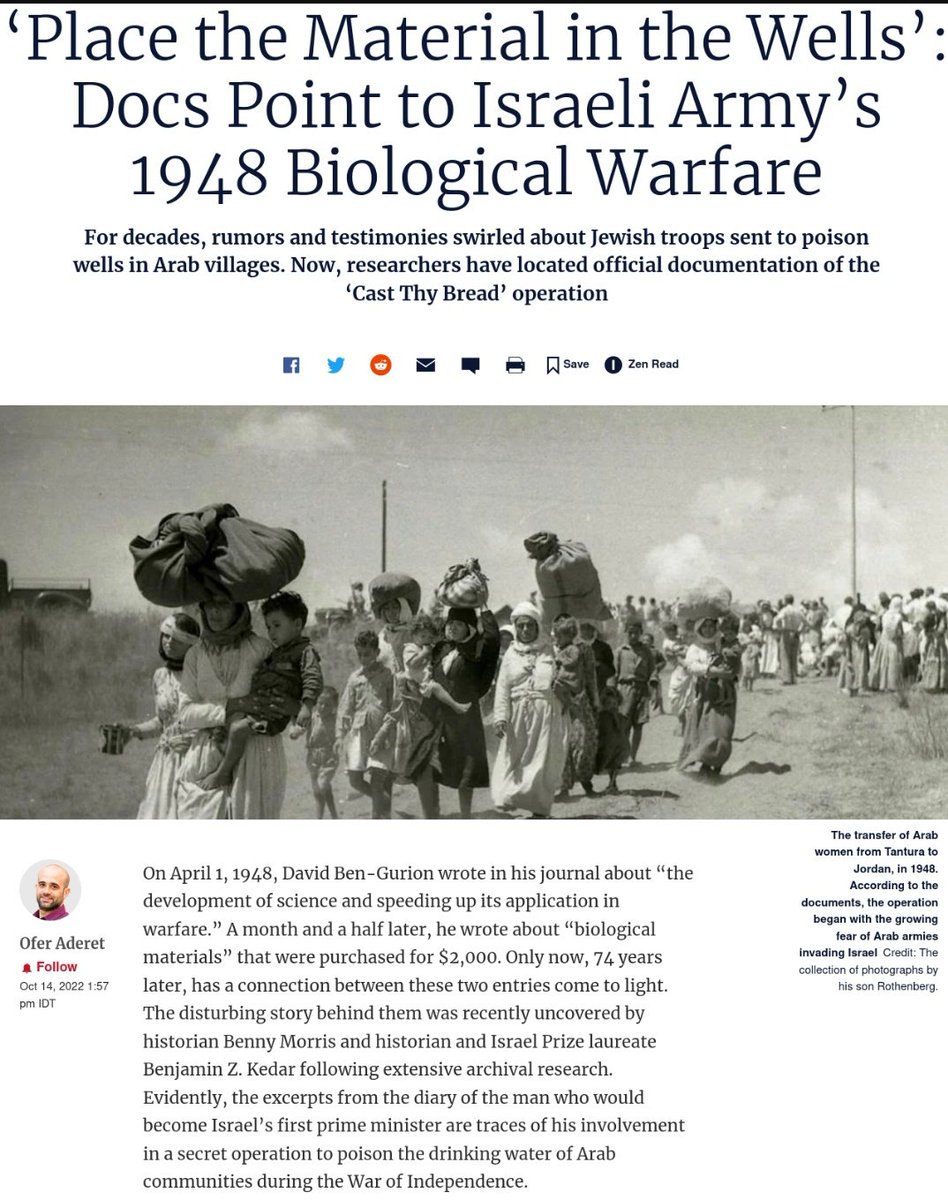
Want to know how to destroy an empire or wipe out an entire civilization without firing a single shot in the endgame? Poison the water, flood and salinize the fertile land, demolish the wells, dams, and canals that keep life flowing, and let famine, plague, and collapse do the rest. That’s the gut-punch strategy at the core of Emmanuel Kreike’s Scorched Earth: Environmental Warfare as a Crime against Humanity and Nature (2021). Far from “collateral damage,” Kreike shows how deliberate (or coldly accepted) destruction of “environmental infrastructure” including water systems and soil fertility has been a hallmark of total war for centuries, turning thriving regions into uninhabitable wastelands and making populations more vulnerable to death than any battlefield slaughter. • Dutch Revolt (1570s, Holland polders): Both Spanish royalist and Dutch rebel forces turned the region’s intricate dike-and-sluice system against itself on a catastrophic scale. Rebels repeatedly breached major sea dikes and opened sluices (e.g., around Leiden, Gouda, Oudewater, and Alkmaar in 1574) to create massive inundations, flooding hundreds of thousands of acres of farmland, pastures, orchards, and villages to deny shelter, forage, and resources to besiegers. Royalist water boards frantically warned that “the salt water would soon flood the remainder of Delfland, all of Rijnland, the Woerden region,” and beyond salinizing soils, eroding dikes/mills/bridges/houses, and turning fertile polders into permanent swamps (“the water wolf” devouring the land). Floodwaters reached 3.5 feet deep against interior dikes; storms worsened breaches. Entire farms, fields, and villages were submerged for 3–4+ years (some areas effectively lost for centuries), with drainage infrastructure destroyed or abandoned. The result: total agricultural collapse, skyrocketing food prices (butter at 42 guilders per barrel), mass rural flight into overcrowded rebel towns, famine, and Black Death-style plague outbreaks. Survivors faced “re-wilding” landscapes overtaken by weeds, tides, and storms; reconstruction was agonizingly slow because war taxes, mutinies, and destroyed tax bases left no labor or resources. Kreike calls this deliberate transformation of Holland into a “desolate swamp” a textbook case of environcide. • Colonial/African cases (late 19th–early 20th century, Ovambo floodplain in Angola/Namibia): Portuguese, German, and later WWI-era forces (plus local collaborators) systematically destroyed or seized indigenous water infrastructure wells, water holes, dams, canals, and granaries in the arid region’s carefully engineered floodplain systems. These were not “natural” resources but human-shaped environmental infrastructure sustaining crops, livestock, and communities through droughts. Armies torched or razed them to starve resistors and deny resources, while plundering grazing lands. The long-term legacy was the so-called “Famine of the Dams” in the 1920s: not primarily a natural drought but the direct outcome of environcide. Displaced refugees had no wells, dams, or stores left to buffer lean years; oral histories describe genocidal-level suffering, mass starvation, disease, forced societal/lifestyle collapse, and entire communities pushed into vulnerability. • Broader patterns across cases (Americas, Asia, Europe): Spanish conquistadors in the Americas collapsed indigenous irrigation canals, terraces, and “dark earth” soils, leading to rapid degradation and abandonment of fertile valleys turning managed landscapes into what later Europeans called “wilderness.” Recovery took decades/centuries; indirect deaths dwarfed combat ones. Kreike stresses these were intentional blurring human and natural harm.The book’s archival details (tax records, military journals, witness accounts, oral interviews) make these tactics feel viscerally calculated: slow environmental poisoning via salt, flood, and denial that erased ways of life more thoroughly than any direct killing.