

$MoneyTalks 🇦🇺💲4️⃣8️⃣0️⃣
2.6K posts

$MoneyTalks 🇦🇺💲4️⃣8️⃣0️⃣
@GoUranium
Commodity investor with a strong conviction that URANIUM is about to enter a major bull market. I believe that uranium prices exceeding $480/lb are likely.
Sydney, New South Wales เข้าร่วม Şubat 2021
397 กำลังติดตาม1.3K ผู้ติดตาม


@jeffcomeau @InconvenientTr5 Guaranteed 😃
Helensburgh, New South Wales 🇦🇺 English

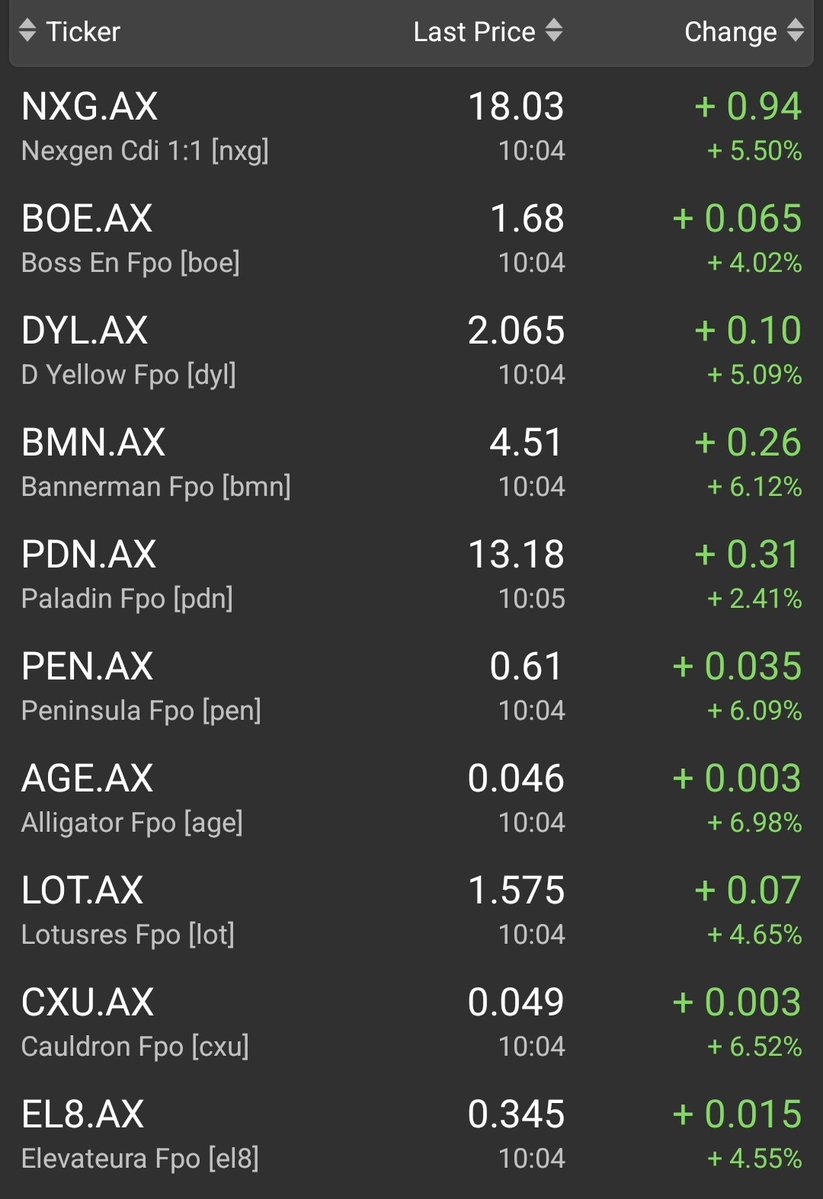
@InconvenientTr5 I think we'll exceed $100/lb #uranium this year and never return. How high? Hopefully $120 - $150 before year end.
English

@GoUranium #URANIUM Rally Starting……
QUESTION: How high does Spot #URANIUM go in next 1-3 months?
This would be the 3rd run to $100.
English
#Uranium is going higher ↗️
John Quakes@quakes99
🎆#SPUT has now raised an amazing $104.8M cash in 8 straight sessions🔥🏧💵 used to stack 700,000 lbs of physical #U3O8 #Nuclear fuel🛢️☢️🛒 on its one-way trip to #Uranium Heaven!😇🏝️🍹 Every signpost points to an imminent major Uranium price move!🪧⌛️💲⤴️🌋🤠🐂 #RideTheWave🌊🏄
Helensburgh, New South Wales 🇦🇺 English
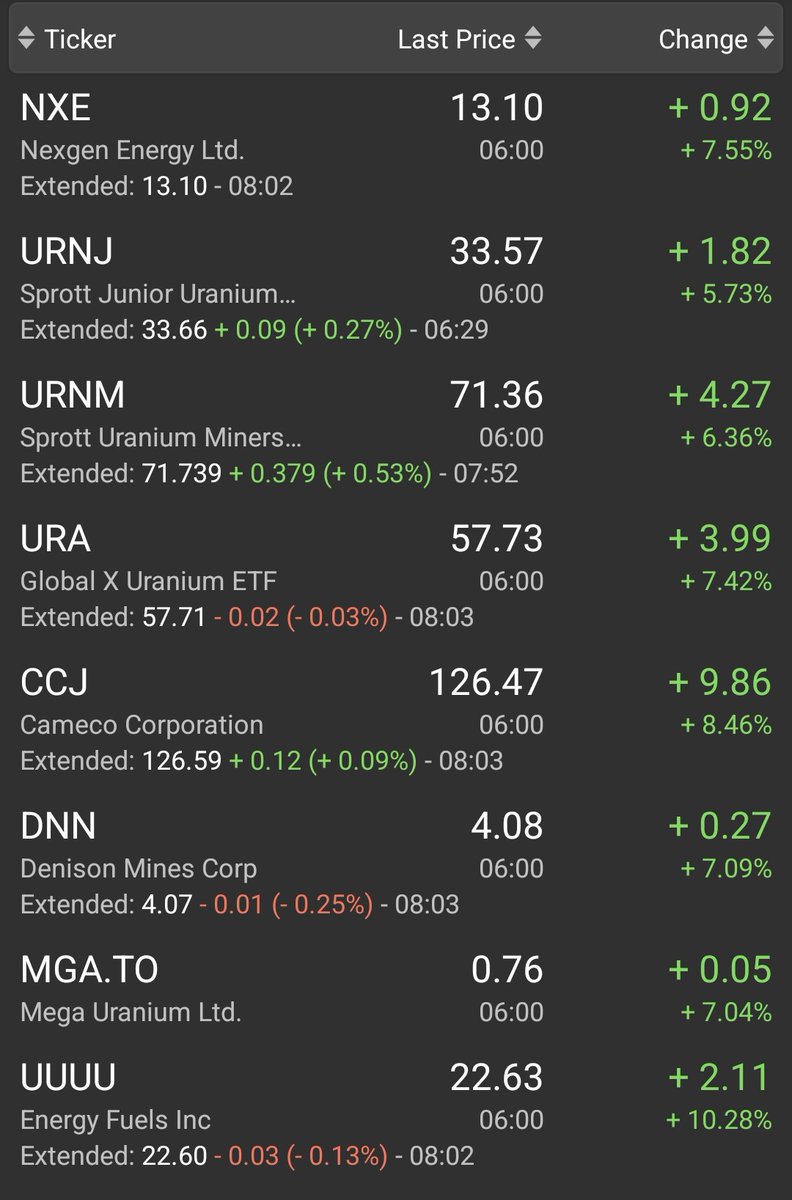
Spot on...
Anders@Swedish_uranium
The West is moving too slowly on #uranium and #silver — and that’s exactly why I’m bullish. Here’s my take on the current market. Everyone keeps waiting for decisive policy: strategic stockpiles, domestic incentives, price support, real supply security. Instead, what we’re getting is small, symbolic uranium purchases, no meaningful protection for domestic production, and a lot of talk about critical minerals without real execution. It looks underwhelming on the surface. But that’s the opportunity. Both uranium and silver are already structurally tight after years of underinvestment. Demand is rising: nuclear is coming back into favor, energy systems are electrifying, solar keeps expanding, and AI/data centers are increasing baseload power needs. Yet supply hasn’t kept up, and more importantly, it can’t respond quickly. That’s the part most people underestimate. New uranium mines don’t come online in a year or two. From discovery to production you’re often looking at 10–20 years when you include permitting, financing, development, and infrastructure. Even restarting idled mines takes time and capital, and companies won’t commit unless prices are clearly higher and contracts are in place. Silver isn’t much different, most supply comes as a byproduct from other metals, which means it doesn’t respond directly to price, and new primary projects also face long timelines, permitting hurdles, and rising costs. So when governments move slowly, delaying incentives, avoiding price floors, hesitating on aggressive procurement, they’re not stabilizing the market. They’re allowing the imbalance to build while the clock keeps ticking on those long lead times. If policymakers stepped in aggressively with guaranteed pricing, subsidies, or strict domestic sourcing, you’d likely get a more controlled, managed market. Instead, they’re trying to balance energy costs, geopolitics, and free market principles, which means they act cautiously and incrementally. That leaves one mechanism to fix the problem: price. Utilities still need uranium and can’t wait a decade for new supply to appear. Industrial demand for silver isn’t optional in electrification and solar. With supply slow to respond and policy lagging, the adjustment has to happen through higher prices that incentivize production. The irony is that what looks like policy failure is actually the setup. Slow, hesitant action doesn’t eliminate the problem, it amplifies it. The longer it takes to respond, the tighter the market becomes, and because supply can’t ramp quickly, the eventual move will be sharper. And if anything, geopolitical stress like the closure of the Strait of Hormuz doesn’t weaken this thesis, it strengthens it. Disruptions there primarily hit oil and global shipping, which raises energy costs, inflation, and risk premiums across the board. That makes mining more expensive, delays projects further, and pushes governments to prioritize energy security even more urgently. Nuclear becomes more attractive as a stable, domestic baseload option, reinforcing uranium demand, while silver’s role in electrification and energy systems becomes even more critical. At the same time, higher geopolitical risk exposes how fragile global supply chains really are, which is exactly the problem policymakers have been too slow to fix. Slow policy now doesn’t mean no solution, it means the solution will be forced by the market later. And in commodities with long lead times like uranium and silver, that means one thing: prices have to go higher. Just my thoughts, please do your own DD.
Appin, New South Wales 🇦🇺 English
Kazatomprom ($KAP) just announced it’s building a 220M lb #uranium reserve for its own future use—and the stock is ripping to new highs. Why?
Because locking up that much supply all but confirms one thing: uranium prices are headed a lot higher.
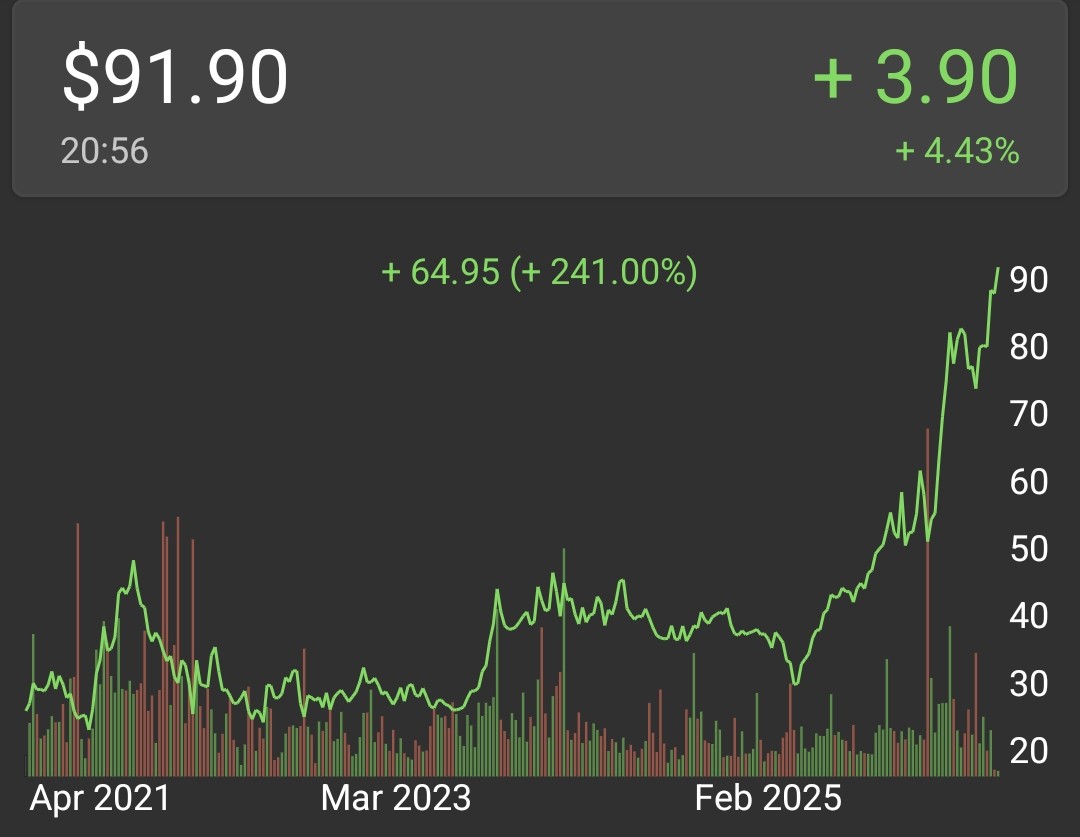
Appin, New South Wales 🇦🇺 English
Drip drip drip...
John Quakes@quakes99
Ka-ching!🪙 Today Sprott Physical #Uranium Trust issued 222,900 shares to raise $4.7M🏧💵😃 but stacked no #U3O8⚛️⛏️🛒🚫with its NAV steady at $7.14B!💰 #SPUT now has a massive $129.9M in cash🏦😊 closing at a +0.40% PREMIUM to NAV💎🤠🐂 #Nuclear 🌊🏄 sprott.com/investment-str…
English
@da_sails 100k tonnes = 220M lbs of uranium.
That’s ~15M lbs/year unavailable in a market already facing a growing supply deficit.
Feels like another “Cigar Lake” moment — ignored for now, but not forever.
English

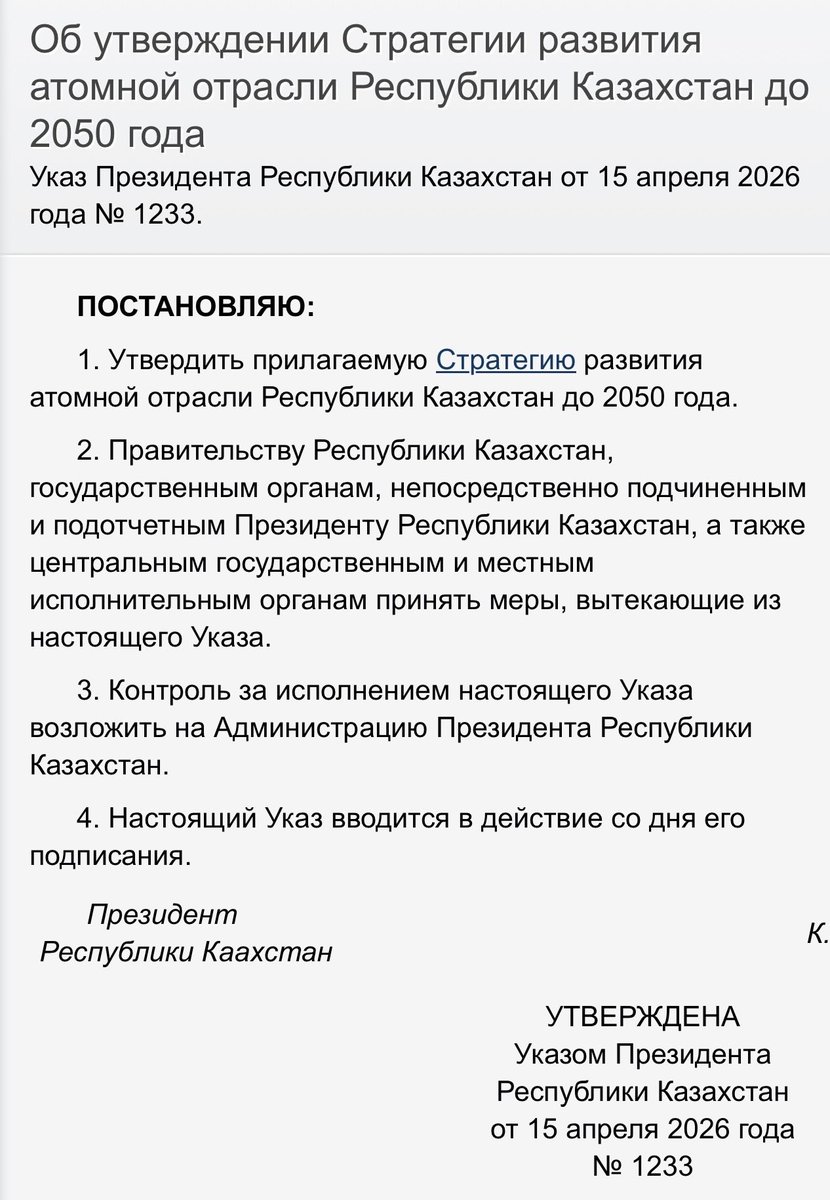
Presidential Decree No. 1233, signed by President Tokayev on April 15, 2026
and published to Kazakhstan's Ministry of Justice legal database.
The numbers in the decree are harder than the headline:
• 100,000 tonnes of uranium formally reserved for domestic NPPs by 2040
rising to 150,000 tonnes by 2050 - written into law as a target indicator
• 6,000 MW of nuclear capacity targeted by 2040
scaling to 8,400 MW by 2050
• Minimum 3 large NPPs by 2050, with a 4th under active consideration
• First NPP: Almaty Oblast, 2,400 MW design capacity
This is not a policy aspiration. It is a presidential decree with
quantified targets and legal force.
Kazakhstan is reserving its own uranium for its own reactors.
That supply does not go to the global market.
$CCJ $LEU $UUUU $URNM
DA Sails@da_sails
KAZAKHSTAN JUST ADOPTED ITS NUCLEAR INDUSTRY DEVELOPMENT STRATEGY TO 2050. • Strategic framework - approved April 17 and published in Kazakhstan's official legislation database, the strategy outlines state nuclear policy through 2050 • Domestic uranium reserve - the strategy envisages formation of a strategic natural uranium reserve to supply future Kazakh NPPs with domestic resources • Nuclear cluster - plan calls for an integrated national cluster uniting power generation, scientific research, applied nuclear technologies, and waste management • NPP build-out - phased construction of multiple large NPPs targeted, with grid infrastructure (transmission lines, substations) developed in parallel to support them • SMRs included - feasibility studies planned for SMR deployment in energy-deficient regions and as replacements for aging coal plants • Demand driver - Kazakhstan forecasts a 2,660 MW electricity shortfall by 2032, the core urgency behind the accelerated nuclear build The world's largest uranium producer is now locking domestic supply for its own reactors. That changes the global availability calculus. $CCJ $LEU $UUUU $URNM
English
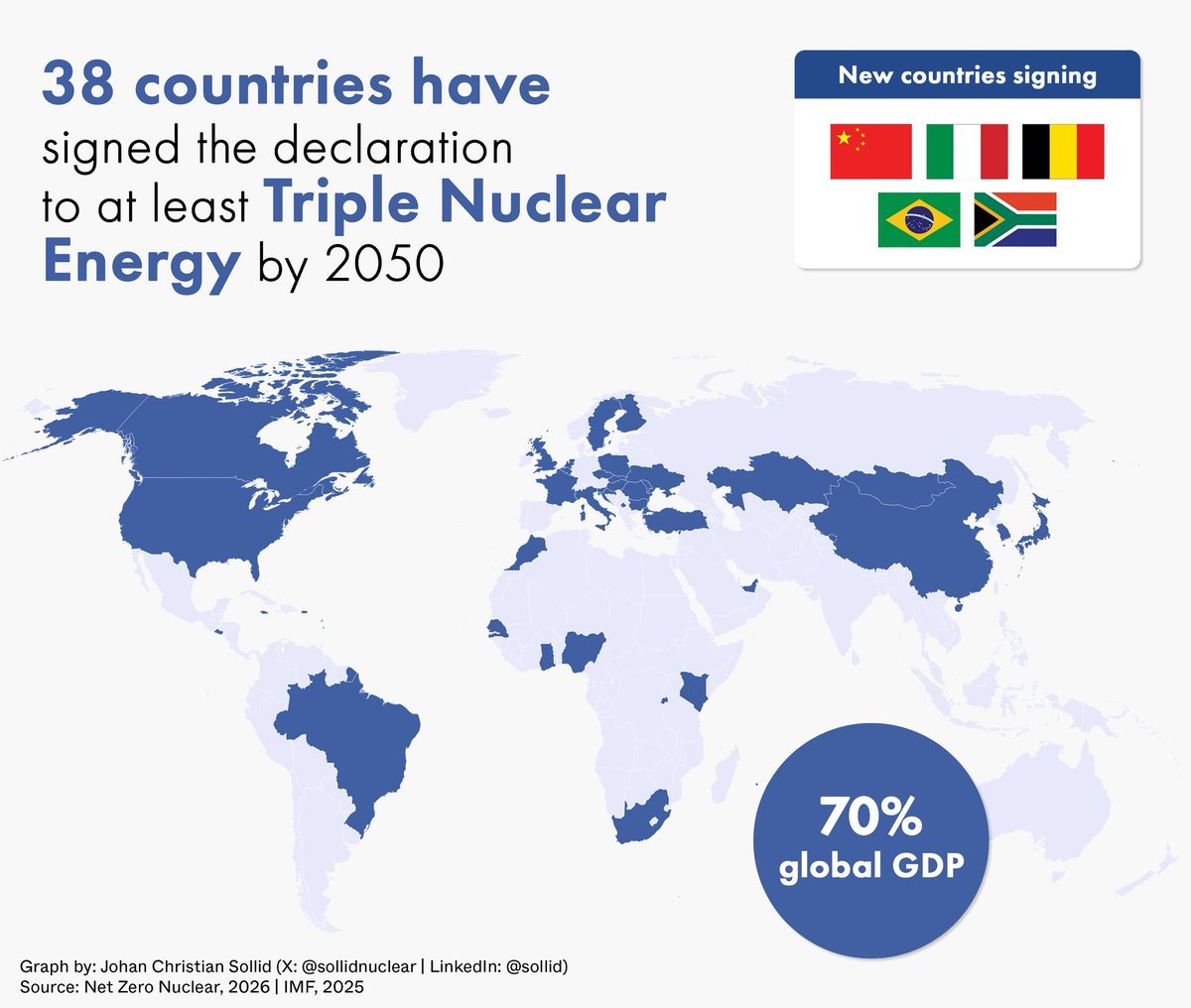
@quakes99 @DimasUranium Thankfully, 38 of the world's top #uranium miners have also agreed to triple supply 😉
Appin, New South Wales 🇦🇺 English

📝At last week's World #Nuclear Fuel Cycle 2026 summit in Monaco👥⚛️⛽️🌍 #Uranium fuel buyers & producers came to realize that "it's go time"😃 as the new #Iran War #EnergyCrisis combined with massive #AI data center expansion together with the world pivoting to 24/7 #CarbonFree #energy for #ClimateAction and #NetZero #EnergySecurity means that the rubber is now firmly hitting the road in a global push to Triple #NuclearEnergy by 2050.🏎️🔥⚛️⚡️🏗️👷🌎
What started out in November 2023 as a pipe dream pledge signed by 22 nations, has now grown and gathered strong momentum to become a historic reality shift in global energy policy that has consolidated around the "Net Zero Nuclear" initiative.🌞⚛️🥰
Launched at COP28 and expanded through subsequent international summits, this movement aims to triple global nuclear power generating capacity from 2020 levels by the year 2050. This goal is now supported by a powerful coalition of 38 nations, over 140 industry companies, and many of the world’s largest energy consumers and financial institutions. 💪
The National Commitments
The foundation of this effort is the Declaration to Triple Nuclear Energy, a governmental pledge to treat nuclear power as a critical pillar of deep decarbonization.📜
Signatory 38 nations to-date include:
Armenia, Belgium, Brazil, Bulgaria, Canada, China, Croatia, Czech Republic, El Salvador, Finland, France, Ghana, Hungary, Italy, Jamaica, Japan, Kazakhstan, Kenya, Republic of Korea, Kosovo, Moldova, Mongolia, Morocco, Netherlands, Nigeria, Poland, Romania, Republic of Rwanda, Senegal, Slovakia, Slovenia, South Africa, Sweden, Turkey, Ukraine, United Arab Emirates, United Kingdom, and the United States.
These governments have committed to building new reactors—with a heavy emphasis on Small Modular Reactors (SMRs)—extending the lifespans of existing plants, and advocating for international financial institutions like the World Bank to include nuclear energy in their clean-energy lending portfolios.
The Nuclear Industry and Financial Sectors
Parallel to government action, the Net Zero Nuclear Industry Pledge includes over 140 companies within the nuclear supply chain, such as EDF, Westinghouse, Cameco, and GE Hitachi. These firms have pledged to accelerate reactor deployment, secure fuel supply chains, and mobilize private capital.
Furthermore, a group of 14 major global financial institutions, including Bank of America, Goldman Sachs, Morgan Stanley, and BNP Paribas, have publicly signalled their support. Their involvement is designed to unlock the massive amounts of capital required for large-scale infrastructure projects that were previously considered too difficult to finance.🏦
The Role of Large Energy Users
A unique feature of this initiative is the direct involvement of Big Tech's "Large Energy Users," driven largely by the massive power requirements of AI data centers and heavy industry. These are some of the corporations that have signed pledges to signal long-term demand for "firm" (constant) carbon-free power:
Google: Has partnered with Kairos Power to deploy a fleet of advanced SMRs using molten salt cooling technology by 2030.
Amazon: Is a lead investor in X-energy, focusing on "pebble bed" reactors to power operations in Washington and Virginia.
Microsoft: In addition to supporting the restart of the Three Mile Island Unit 1 reactor, the company has explored long-term power purchase agreements involving fusion technology.
Dow: The chemical giant is working to integrate SMRs into industrial manufacturing sites to provide both zero-carbon electricity and high-temperature steam for chemical processing.
Summary of Triple Nuclear Commitments
The collective global effort focuses on three primary pillars:
Rapid Deployment: Speeding up the regulatory and construction timelines for new nuclear technology.
Asset Preservation: Keeping safe, existing plants running longer to maintain a baseline of clean power.
Innovation: Commercializing SMRs and advanced designs that are smaller, easier to finance, and capable of being sited closer to industrial hubs.
This unified front of policy, finance, and industrial demand represents the most significant expansion of nuclear energy goals since the dawn of the atomic age!
There had been a belief among Nuclear utilities that Uranium prices would slide back to historically lower levels but those hopes have now evaporated.💥 Demand is strong, growing and gaining even greater momentum at a time when uranium miners are faced with growing challenges in simply maintaining production guidance, let alone successfully constructing new mines and mills that are still many years away from being able to meet soaring fuel demand.⛏️🐌
Uranium supply/demand fundamentals are now the best in 50 years since the last major energy crises of the 1970s!😊⚛️🗜️ The rubber is now hitting the road!🏎️🔥 Buckle up fellow Uranium sector investors!🧑🚀💺🛸🌟
John Quakes@quakes99
Boom!💥 With a gigantic wave of new enriched #Uranium demand on the horizon⚛️⛽️🌊 to fuel an accelerating #Nuclear Renaissance🏎️🔥 ConverDyn announces that it's looking at building a new US Metropolis 2.0 conversion plant to meet UF6 demand!🎆🇺🇸🏗️🏭🧑🏭🤠🐂 world-nuclear-news.org/articles/conve…
English
One thing is certain, if you want #uranium into the 2030's you must buy it now! Any delay and you risk going without...
John Quakes@quakes99
Hiding in plain sight!🐘 There's now broad consensus from #Uranium sector consultants & analysts that a widening gap between soaring #Nuclear fuel demand & mined U3O8 production has created a deep structural supply deficit this decade & beyond!↕️⚛️⛽️🗜️🤠🐂 #RideTheNuclearWave🌊🏄
English
@FirstSquawk I believe most Nambian #uranium miners will at least 10x from here this cycle. Am I right?
Appin, New South Wales 🇦🇺 English

US FOCUSES ON INCREASING URANIUM IMPORTS FROM NAMIBIA DUE TO GROWING NUCLEAR INTEREST DRIVEN BY AI.
English
More pressure on future #uranium supply...
Uranium Insider@uraniuminsider
BREAKING: Kazakhstan (world’s #1 uranium producer) President Tokayev has approved a new strategy to prioritize a "Strategic Uranium Reserve" for domestic needs and long-term security. They aren't flooding the market; they’re hoarding.
Appin, New South Wales 🇦🇺 English
@mockerymage It's just crazy. They would pay literally anything for fuel.
Appin, New South Wales 🇦🇺 English

@GoUranium Uranium at $100/lb versus $50 adds perhaps 0.2 p/kWh. Fuel cost isn't nuclear's bottleneck. The UK has two reactors under construction at Hinkley C, zero watts generated, £49bn spent.
English
When it's gone it's gone. What price the marginal #uranium lb then?
John Quakes@quakes99
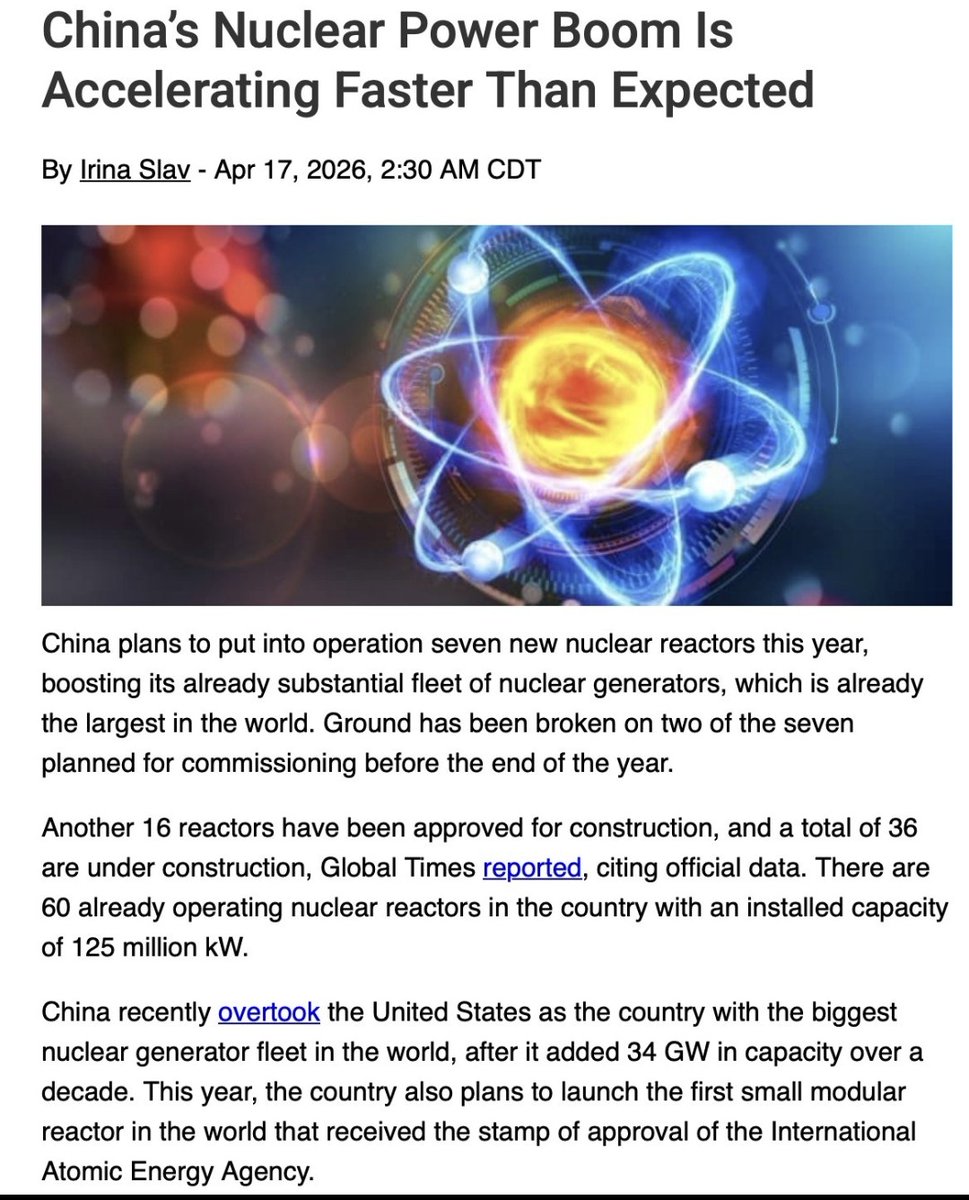
🤠It's my belief that the majority of US investors are blind to the big picture🖼️⚛️🌏🙈 in which #China & #India are already leading a massive global #Nuclear expansion, sucking up all available #Uranium supply ASAP.⛏️🛒🇨🇳 The big story is not what's happening in the #USA🇺🇸🤠🐂🏄
English

I was chatting with Grok about investments and asked this question...

Appin, New South Wales 🇦🇺 English