Hiyoko

324 posts

Hiyoko banner
Hiyoko

Hiyoko

@HiyokoLP

s&P 500, btc, Apple, Tesla, StrategyB, Metaplanet et Capital B

เข้าร่วม Mayıs 2025
219 กำลังติดตาม93 ผู้ติดตาม
Hiyoko รีทวีตแล้ว
Robert Graham
Robert Graham@robertgraham·
Hi. Professional C/C++ programmer here. The open-source code I can find written by Adam Back and Satoshi Nakamoto don't look remotely similar. Back's code looks typical of academic Unix programmers who also hack their code to run on Windows. Satoshi code was written by a professional Windows programmer who also wrote for Unix. Stylistically, they look nothing alike. There's not enough time between 2005 when I can find the newest Adam Back and January 2009 when Satoshi published Bitcoin/0.1 to account for the change. Both are perfectly competent programmers, but stylistically, they are completely different. The NYTimes tried to compare their English language in posts/emails. I'm compare their C/C++ language in their open-source code. The NYTimes merely points out they both use C++ as if that's another corroborating detail, when the actual code seems to disqualify Adam Back.
The New York Times@nytimes

Bitcoin’s founder, Satoshi Nakamoto, has remained hidden for 17 years. A trail of clues — and a year of digging by our reporter, John Carreyrou — led us to a 55-year-old computer scientist in El Salvador named Adam Back. nyti.ms/4bXWC3V

English
233
826
9.7K
1.1M
Hiyoko รีทวีตแล้ว
StarPlatinum
StarPlatinum@StarPlatinum_·
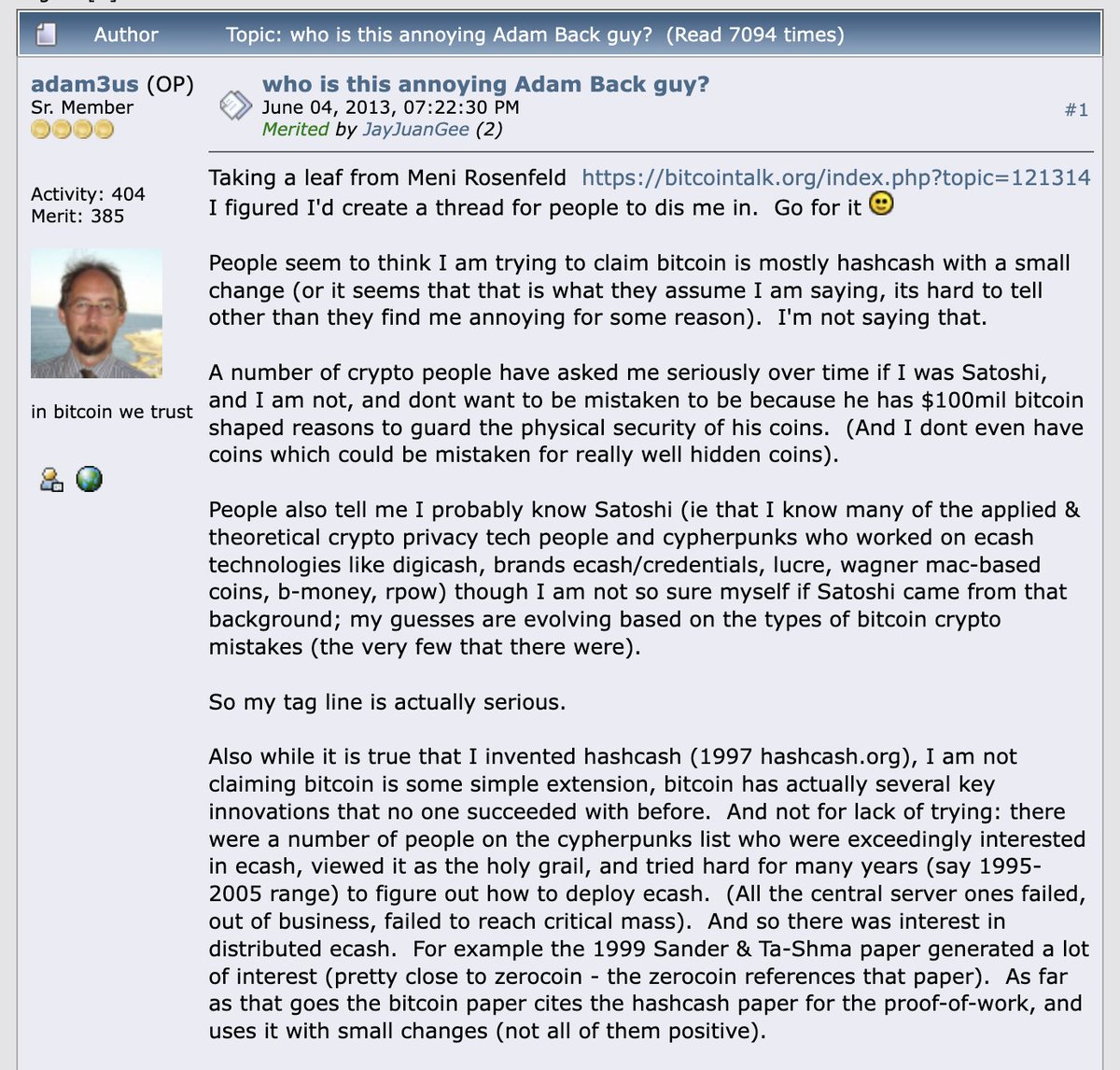
Reasons why Adam Back is NOT Satoshi Nakamoto: - exchanged emails directly with Satoshi between 2008–2009 - responded like an external developer - admitted “I haven’t read the whitepaper yet” - Satoshi launched Bitcoin in January 2009 - Back only engaged with it later - ignored early communication attempts - Satoshi pushed Bitcoin as peer-to-peer cash - Adam Back later supported small blocks and sidechains - Satoshi activity patterns match US timezones - Back was based in the UK - posting schedules don’t align - Satoshi writing style was concise and technical - Back is more verbose and explanatory - Satoshi cited Hashcash as prior work - if Back was Satoshi, he would be citing himself - no movement from early mined coins (~1M BTC) - Back has never been linked to those wallets - Back himself has repeatedly denied it
StarPlatinum tweet media
Adam Back@adam3us

i'm not satoshi, but I was early in laser focus on the positive societal implications of cryptography, online privacy and electronic cash, hence my ~1992 onwards active interest in applied research on ecash, privacy tech on cypherpunks list which led to hashcash and other ideas.

English
67
26
249
31K
Hiyoko รีทวีตแล้ว
Caffè Satoshi
Caffè Satoshi@CaffeSatoshi·
NY Times spent a year trying to prove Adam Back is Satoshi, then wrote a long article but it fell through due to a PROVEN FAKE EMAIL - SORRY, BUT ADAM IS NOT SATOSHI TLDR: The New York Times built its bombshell claim that Adam Back is Satoshi Nakamoto partly on a 2015 email supposedly written by Satoshi during the block-size wars. That email is almost universally viewed as a fake. Once it is removed, the entire theory collapses, leaving the newspaper’s year-long investigation looking like a house of cards. Here is my full theory in detail: The NY Times article talks about how in early August 2015 Bitcoin was tearing itself apart over a proposal to increase the block size. Gavin Andresen and Mike Hearn had just released Bitcoin XT, a version that would allow bigger blocks. Adam Back, already a prominent voice in the community, was one of the loudest opponents. He argued in mailing-list posts and on social media that larger blocks would centralize the network and endanger its security. Then, on August 15, 2015, an email landed in the bitcoin-dev mailing list. The sender was listed as satoshi@vistomail.com, one of the addresses Satoshi Nakamoto had used years earlier. The message strongly opposed the XT fork, called it “very dangerous,” and said the situation was “very disappointing to watch unfold.” Four days later Adam Back posted in the same thread using nearly identical wording: “Very disappointing Gavin and Mike.” The New York Times article published on April 8, 2026 treated this moment as powerful circumstantial evidence. It suggested Satoshi had briefly stepped out of retirement to back the exact position Adam Back was pushing. The overlap in phrasing looked too perfect to be chance. It helped paint the picture that Back and Satoshi were the same person. The problem is simple: almost no one in the Bitcoin community believes that 2015 email was real. Right after it appeared, developers and longtime observers on Bitcointalk and Reddit labeled it a hoax. The email came from the vistomail dot com domain, but anyone with basic technical skill can spoof an email to make it appear to come from an old account. Satoshi never provided any cryptographic proof, no signature with a known key, no movement of early coins. One of his other addresses had already been hacked years earlier, and the community had long stopped trusting anything sent from those old accounts without verification. The timing raised even more red flags. The message arrived right in the middle of a civil war, perfectly reinforcing the small-block side that Adam Back championed. It felt less like a genuine return from the inventor and more like someone trying to lend fake authority to one faction. Forum threads from that weekend are filled with comments calling it “fake,” “not hard to forge,” and “a hoax.” That skepticism has only hardened over the years. Today the 2011 messages, where Satoshi said he had “moved on to other things”, are still accepted as the last genuine communications. Everything after that, including the 2015 email, is treated as impersonation unless proven otherwise with private keys. Remove that single email and the New York Times’ strongest dramatic link between Back and Satoshi disappears. What remains is a collection of coincidences: shared technical ideas from the 1990s Cypherpunk lists, similar spelling quirks, overlapping vocabulary, and a British background. Those things are interesting, but they are the same kind of circumstantial clues that have been floated about a dozen other candidates over the years and never held up. Without the 2015 email acting as the glue, the theory loses its narrative punch. The newspaper spent a year digging through archives and even brought in stylometry experts, yet the one piece it highlighted as showing Satoshi “reappearing” to help Back was built on sand. That is not just a small flaw. It is the thread that, once pulled, unravels the whole argument. In the end Adam Back, the New York Times, John Carreyrou, and Dylan Freedman owe the Bitcoin community a clearer accounting. A theory this big should not rest on an email that the rest of the world has long dismissed as fake. @adam3us @nytimes @JohnCarreyrou @dylfreed
Caffè Satoshi tweet mediaCaffè Satoshi tweet media
English
13
6
44
4K
Hiyoko รีทวีตแล้ว
Bitcoin Policy Institute
Bitcoin Policy Institute@bitcoinpolicy·
The enduring genius of Bitcoin is that the Satoshi mystery does not need an answer. A monetary network secured by cryptography and game theory, rather than on trust in any individual or institution, does not depend on who Satoshi is or on whether Satoshi is ever found. Every other monetary system in history has depended on trusting someone. Bitcoin is the one that doesn't.
The New York Times@nytimes

Bitcoin’s founder, Satoshi Nakamoto, has remained hidden for 17 years. A trail of clues — and a year of digging by our reporter, John Carreyrou — led us to a 55-year-old computer scientist in El Salvador named Adam Back. nyti.ms/4bXWC3V

English

19
62
286
79.6K
Hiyoko รีทวีตแล้ว
Zynx
Zynx@ZynxBTC·
Adam Back continues the tradition of great British scientists. The only person cited in the Bitcoin white paper. An aura money can't buy. That said, he's obviously not Satoshi. The New York Times really wasted 18 months when we all could have told them for free.
Adam Back@adam3us

i'm not satoshi, but I was early in laser focus on the positive societal implications of cryptography, online privacy and electronic cash, hence my ~1992 onwards active interest in applied research on ecash, privacy tech on cypherpunks list which led to hashcash and other ideas.

English
12
8
153
6.9K
Hiyoko รีทวีตแล้ว
Nick Szabo
Nick Szabo@NickSzabo4·
Bit gold did solve the double-spending and network consensus problems, with probabilistic Byzantine consensus and timestamped property transfer chains. That network consensus technology already existed and I applied it to solve the double-spending problem. Bit gold didn't solve these problems as well as Satoshi did eleven years later with Bitcoin.
English
9
18
192
12.6K
Hiyoko รีทวีตแล้ว
FatMan
FatMan@FatManTerra·
Adam Back is a larper who humblepretends to not be Satoshi to give off the impression that he might be, when he actually isn't. Back tries to big note himself extremely hard with "hashcash" which was literally a weekend project - an extremely bad one - and he didn't even know what it was for. Just a toy that someone made over a weekend. Satoshi didn't really have any idea about it and just gave Back a citation to be nice. Then after Bitcoin got traction, Adam Back tried to essentially rewrite history and spruce up hashcash to make it seem like the precursor to BTC. Which it wasn't. He's constantly humblebragging and trying to fake being humble. He did a revival paper five years later, lol, to rewrite history about hashcash. In OG Bitcoin socials he is well known as "braggy and obnoxious," only the completely uninitiated would find him compelling or insightful. Even in his recent clips you can see that he loves implying that he has the skills to make Bitcoin (when in reality he doesn't), he's the same loser as he was before. He's also what I would consider a pseudoscammer, because he only came back after Bitcoin got traction, rewrote his involvement, and then raised money from VCs on that premise. Adam Back is the only guy that I (and others from the OG community) am 100% sure is not Satoshi. (To be fair to him, it's pretty impressive to have messed around with a "proof of wasted effort" for email spam concept in 1997, based on a concept already created in 1992, see someone found an actual use for an adjacent technology, start publishing larpy papers and websites about it, imply you invented Bitcoin, and raise a bunch of money out of it. Good quality scam.) Also, hashcash wasn't even the first implementation of proof of work. It just had a name that sounded like a currency, lmao. He never invented the concept, he never popularised it, all he did was spend one weekend making "hashcash" and then having zero use for it. Saying "I invented hashcash" and calling things "an implementation of hashcash" is inherently inaccurate and misleading because hashcash isn't the core concept (which he didn't invent anyway), hashcash is just an implementation of precursor concepts (b-money by Wei Dai for instance is a closer precursor to Bitcoin, although probably created independently). He's probably enjoying the new wave of attention, but Adam Back is not Satoshi. As for who Satoshi actually is, there's a good candidate (who has already been discussed plenty, most people know the name) but he lives a normal life, has a family, and doesn't have a ton of mainstream publicity, so it's respectful to leave him out of things and not broadcast his identity. He's probably happy that Back loves doing his Satoshi-not-Satoshi victory tours.
FatMan tweet media
English
17
93
899
206.8K
Hiyoko รีทวีตแล้ว
Michael Saylor
Michael Saylor@saylor·
@JohnCarreyrou Stylometry is interesting, but not proof. The contemporaneous emails between Satoshi and Adam Back suggest they were distinct individuals. Until someone signs with Satoshi’s keys, every theory is just narrative.
English
225
285
5.1K
241.9K
Hiyoko รีทวีตแล้ว
Adam Back
Adam Back@adam3us·
i'm not satoshi, but I was early in laser focus on the positive societal implications of cryptography, online privacy and electronic cash, hence my ~1992 onwards active interest in applied research on ecash, privacy tech on cypherpunks list which led to hashcash and other ideas.
English
2K
3.4K
28K
2.7M
Hiyoko รีทวีตแล้ว
Mario Nawfal
Mario Nawfal@MarioNawfal·
Here's a few important points before I go to sleep: 1. Iran won the war. The terms of the ceasefire they shared give them control of the Strait of Hormuz, charging $2M per ship, pocketing $100 Billion a year. Those numbers are wild! And on top of it, the ceasefire proposal includes the lifting of all sanctions Remember, one could say Iran has been in a state of war for decades due to the crippling American sanctions, and now this is all coming to an end 2. Trump did the right thing pulling out, not listening to the lunatic war mongers around him, and not listening to anyone in the Israeli lobby that may have wanted the war the continue. As I said earlier today, a good leader knows when to walk away 3. I am not surprised we have a deal, I've mentioned it all day, as Trump's posts made it obvious to me he was pressuring Iran for some final concessions before accepting his off-ramp 4. Trump will twist this into a win, and his diehard supporters will believe him. This is a GOOD thing, as Trump no longer needs to militarily try to get a 'win'. As I've said earlier in the day, Trump can (and just did) create his own offramp. 5. The Middle East will never look the same. I expect the Gulf to gradually normalize relations again with Iran, which started after Israel's strike on Qatar. Also the balance of power will drastically shift away from Israel, and this may have massive positive implications on Lebanon, Syria, and possibly even Palestine. 6. China is the BIGGEST winner, as Iran controlling the Strait of Hormuz means China is indirectly controlling it 7. Iran's control of the Strait of Hormuz is a generational strategic loss for the U.S., and a risk to the dollar dominance (Iran can chip away at the Petrodollar) 8. Hezbollah will come out stronger from all this, possibly more powerful than it has been in decades (unless the deal involves Iran disbanding their proxy network) 9. I'm exhausted and need to sleep. Below there's some more info on my stance over the past 24 hours, as well as how we broke the story of a ceasefire almost an hour before any media outlet and Trump's post. Good night everyone!
Mario Nawfal@MarioNawfal

WHAT JUST HAPPENED? 8:07 am: I posted that Trump should walk away from this war even if the Strait of Hormuz is not opened by Iran 4:07 pm: I posted 'The War Is Close to Ending' 5:50 pm: I broke the story that Trump accepted the ceasefire, based on a source that is part of the negotiations 6:32 pm: Trump confirms a ceasefire 6:51 pm: Israel confirms they are abiding to the ceasefire

English
1.1K
967
4.2K
1.7M
Hiyoko รีทวีตแล้ว
Documenting Saylor
Documenting Saylor@saylordocs·
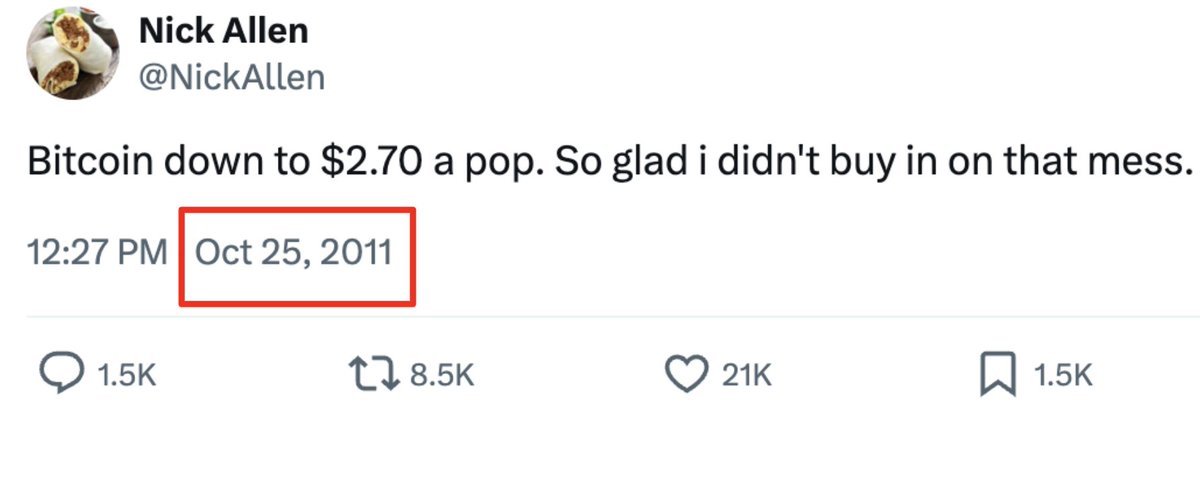
"Bitcoin down to $2.70 a pop. So glad i didn't buy in on that mess."
Documenting Saylor tweet media
English
16
10
232
13.7K
Hiyoko รีทวีตแล้ว
Michael Saylor
Michael Saylor@saylor·
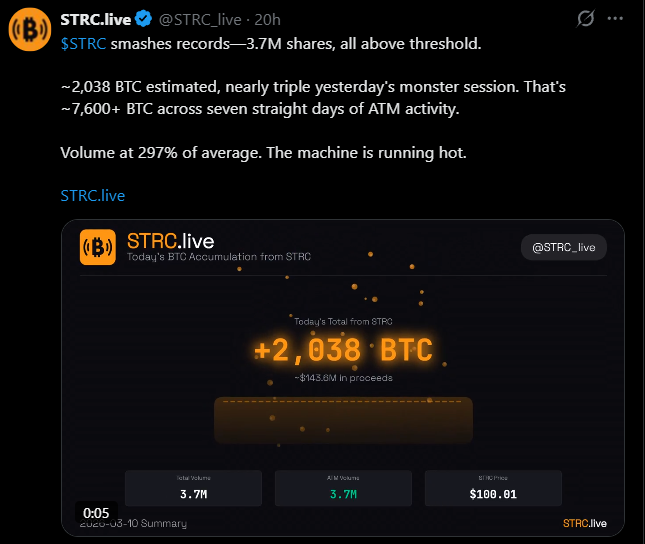
Stretch Dividend Rate maintained at 11.50% for April 2026. $STRC
Michael Saylor tweet media
English
320
551
5.7K
274.9K
Hiyoko รีทวีตแล้ว
France Cryptos 🔗
France Cryptos 🔗@FranceCryptos·
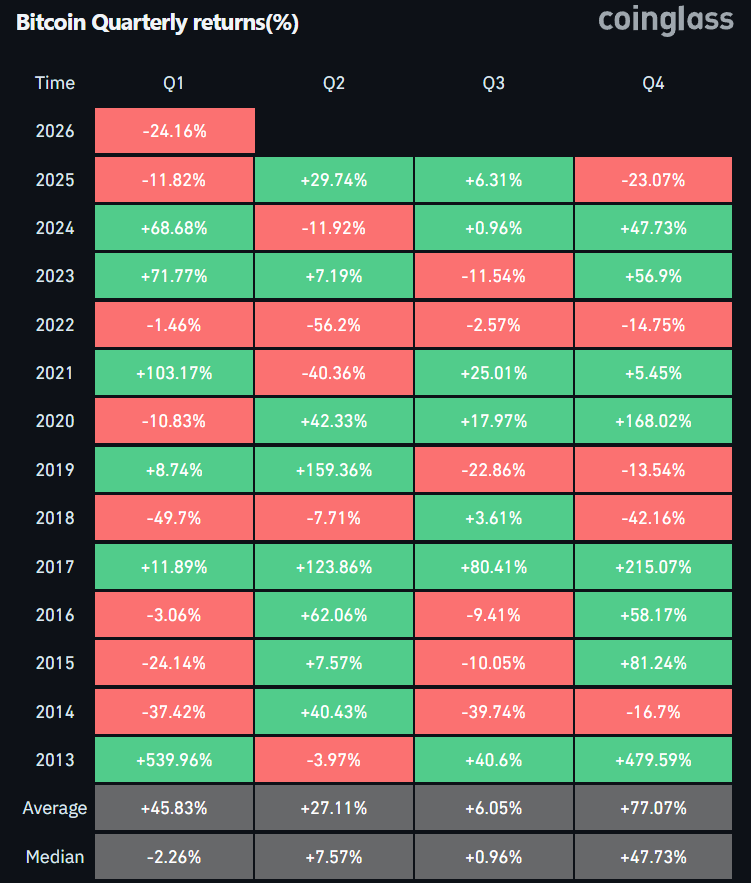
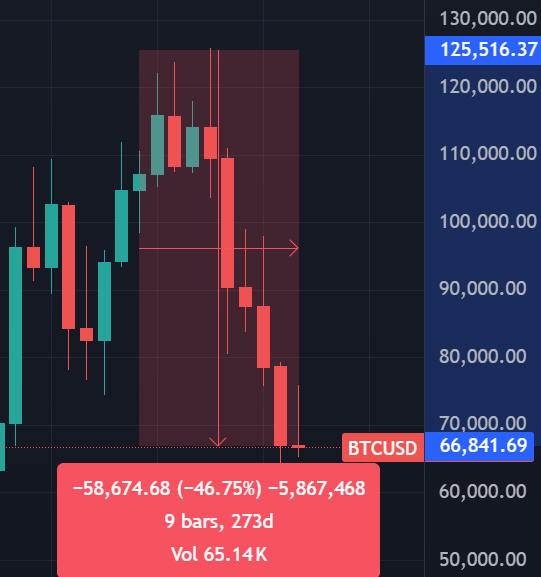
🚨Bitcoin va enregistrer son 6e mois consécutif dans le rouge, avec une baisse d’environ -47 %. Cela n’est arrivé qu’une seule fois dans toute son histoire. Lors de la précédente série (août 2018 – janvier 2019), le $BTC avait chuté d’environ 60 % en 6 mois. C’est également l’un des pires trimestres pour Bitcoin, avec -24 % depuis le début de l’année.
France Cryptos 🔗 tweet mediaFrance Cryptos 🔗 tweet media
Français
16
14
140
25.9K
Hiyoko รีทวีตแล้ว
Dividend King 👑
Dividend King 👑@Divs_King·
Une personne ayant investi 1 000 $ dans Amazon lors de son introduction en bourse en 1997 aurait aujourd’hui plus de 2,5 millions de dollars, Son capital aurait donc été multiplié par 2500📈 Mais pour en arriver là, cette personne aurait dû endurer : • Plus de 20 corrections de 20% ou plus • 8 chutes de plus de 50% • Un effondrement de l’action de 95% après l’éclatement de la bulle Internet Aucun investissement ne peut produire une performance exceptionnelle sans une volatilité importante, Plus tôt on apprend à encaisser cette volatilité, mieux c’est. Et si vous n’êtes pas prêt mentalement à voir votre portefeuille perdre 20%, Vous n’êtes probablement pas non plus prêt à le voir gagner 200%.
Français
17
34
482
68.9K
Niccolò Machiavelli
Niccolò Machiavelli@RNattaf2202·
@HiyokoLP @LeBinanceFR @mathpodcast @violadavis Je reviens vers vous ici parce l’autre m’a bloqué. Il ne supporte pas la contradiction. S’agissant du levier, il ne coûte pas plus cher que chez Strategy et moins cher que le premium de Capital B. Une liquidation est possible mais peu probable si on est raisonnable.
Français
1
0
0
22
Binance France
Binance France@LeBinanceFR·
🏆 250 $ en #BTC à gagner 🔸 Follow @LeBinanceFR 🔸 Commente ce post avec ta prédiction du prix du BTC au 31/03 🔸 Tag 2 amis dans ton commentaire 🔸 Remplis le formulaire ⏳ Participations ouvertes jusqu'au 15/03. Formulaire 👉 binance.onelink.me/mL1z/z8zgjuts?…
Binance France tweet media
Français
684
226
414
29.6K
Hiyoko
Hiyoko@HiyokoLP·
@RNattaf2202 @_ALCPB Je comprends la globalité de votre raisonnement. Mais le levier coûte cher, et l’extrême volatilité du Bitcoin peut entraîner une liquidation inopinée. Personnellement, je n’ai pas envie de vivre dans le stress du levier, et je préfère être actionnaire de capital B
Français
0
0
1
20
Hiyoko
Hiyoko@HiyokoLP·
@FEVRIERFranck @_ALCPB Très juste. Plus je creuse la question, plus je reviens à ces deux arguments.
Français
0
0
0
33
Hiyoko
Hiyoko@HiyokoLP·
@RichardDetente @MercierJoh57285 @Strategy @saylor « les investisseurs achètent des actions Strategy environ 20 % plus cher que la valeur de ses bitcoins » Plutôt de la valeur d’entreprise (btc + dette) La mnav sur base diluée - qui permet de savoir si l’émission d’actions ordinaires est accrétive - est tout juste supérieure à 1
Français
0
0
3
141
Richard R. DÉTENTE
Richard R. DÉTENTE@RichardDetente·
@Strategy de @saylor va-t-elle arrêter le bear market sur Bitcoin ? Cette semaine, l’entreprise a acheté un nombre record de 17 994 bitcoins entre le 2 et le 8 mars, alors que Bitcoin fait grise mine. Jusqu’à aujourd’hui, en phase de marché baissier, les achats des Bitcoin treasury companies ont tendance à diminuer, car le premium payé sur ce type de société est fortement revu à la baisse à cause du contexte morose. Pour autant, avec Strategy, ce n’est pas le cas. Que s’est-il passé ? Quand on analyse le détail des achats de la société, on voit qu’elle a émis pour 377 millions de dollars de STRC, avec un rendement mensuel servi à 11,5 % annualisé, mais elle a aussi émis pour 900 millions de dollars de MSTR, avec un premium d’environ 20 %. Qu’est-ce que cela signifie ? Cela signifie que les deux instruments, STRC, qui offre un capital à peu près stable avec très peu de volatilité et un rendement mensuel élevé, et MSTR, fonctionnent de pair. Encore plus clairement : En phase de bear market, le premium sur les actions MSTR, c’est-à-dire la mNAV, a tendance à fortement diminuer, car émettre des actions pour acheter des bitcoins n’a plus la cote puisque « presque plus personne » ne croit à Bitcoin. L’euphorie n’est pas là. Mais aujourd’hui, force est de constater que la mNAV de MSTR est autour de 1,2, ce qui signifie que les investisseurs achètent des actions Strategy environ 20 % plus cher que la valeur de ses bitcoins. Mais alors, qu’est-ce que les investisseurs valorisent 20 % plus cher que les bitcoins de la société ? La capacité de Saylor à émettre du crédit adossé au bilan de la société via STRC. Et là, la mécanique est remarquable à plus d’un titre. * Quand votre oncle frileux ou votre grand-mère qui a peur pour sa retraite veut du rendement fixe sur un capital stable, Saylor lui vend du 11,5 %. Et si vous êtes résident fiscal américain, cette distribution est potentiellement traitée en retour de capital différé d’impôt, et non comme un dividende imposable immédiat. * En conséquence, les investisseurs veulent des actions MSTR car @saylor est en train de brancher le marché du short-term fixed income, un marché dont la taille se compte en dizaines voire en centaines de trillions de dollars, sur Bitcoin, et donc directement sur sa société Strategy. * De là, l’entreprise émet à la fois du STRC et du MSTR pour mitiger son coût du capital et augmenter le fameux bitcoin yield par action pour les détenteurs de MSTR. Est-ce que cela marche ? Pour l’instant, oui : 17 994 BTC achetés cette semaine, et déjà plusieurs milliers de BTC accumulés sur quelques jours. Conclusion : @saylor est en train de connecter une offre de dollars gigantesque à Bitcoin, qui dispose d’une quantité strictement limitée. Je rappelle que le réseau de minage de Bitcoin produit seulement 450 BTC par jour, et que Strategy vient d’en acheter bien davantage sur une seule semaine. À ce stade, je me demande si l’entreprise n’a pas la capacité, sur quelques mois, d’influencer significativement la dynamique de marché en asséchant une partie de l’offre. Vos avis m’intéressent !
Richard R. DÉTENTE tweet media
Français
12
5
68
4.7K