
ทวีตที่ปักหมุด
Kshitij
4.1K posts


Kshitij
@HowAboutThatt_
We're winning the league next year
เข้าร่วม Aralık 2022
2.5K กำลังติดตาม230 ผู้ติดตาม
Kshitij รีทวีตแล้ว

That is *the* question.
Short answer
The Internet is not a place, but there will be Internet places. We can print out the internet, using million-person online social networks to crowdfund offline territory, building first voluntary startup societies and eventually network states.
Long answer
China is a place, so it’s obvious. But it’s closed to everyone but the Han Chinese.
The Internet is the only thing with economic scale comparable to China, and it’s open to everyone everywhere. If China is Apple, vertically integrated and closed, the Internet is Android, messier and more open.
But the Internet isn’t a place, right?
True, but Christianity is not a place. Yet there are Christian places: churches, cathedrals, entire countries with the cross on the flag. The “software” of Christianity was able to convert enough people to materialize upon the “hardware” of the land.
Ok, so generalize that. The Internet is not a place, but there are already many Internet places: startup offices, datacenters, tech conferences, entire countries with Bitcoin as the national currency. The software of the Internet could convert enough people to materialize upon the hardware of the land.
Extending the analogy, just as there are many Christian denominations, there are many Internet social subnetworks. Whatever subcommunity you belong to can organize and print itself out in the physical world.
And where would that be specifically? Like Bitcoin, everywhere and nowhere. The key insight is the idea of the fractal frontier. List all the special economic zones, ghost cities, tech parks, deindustrialized towns, and abandoned villages around the world.
There’s a lot of surprisingly developed empty space out there, thanks in part to the global fertility crash. And thanks to robotics, solar, and modulars, we may be able to develop yet more completely empty space.
Anyway, that’s the idea. We can reopen the frontier through the Internet. In the same way we have hundreds of tech companies and cryptocurrencies distributed globally, we can use the Internet to found new startup societies and network states.
Yes, it’ll take a while to get the new startup societies to million person scale, but it won’t take forever. And everyone doesn’t need to move there to change legacy societies for the better. After all, only 4% of the world moved to the US, and that changed the world.
Basically, all the billion person digital networks were only founded in the last 25 years or so. We can scale quickly once the formula works. And it will likely work all over the world, because the Internet does.
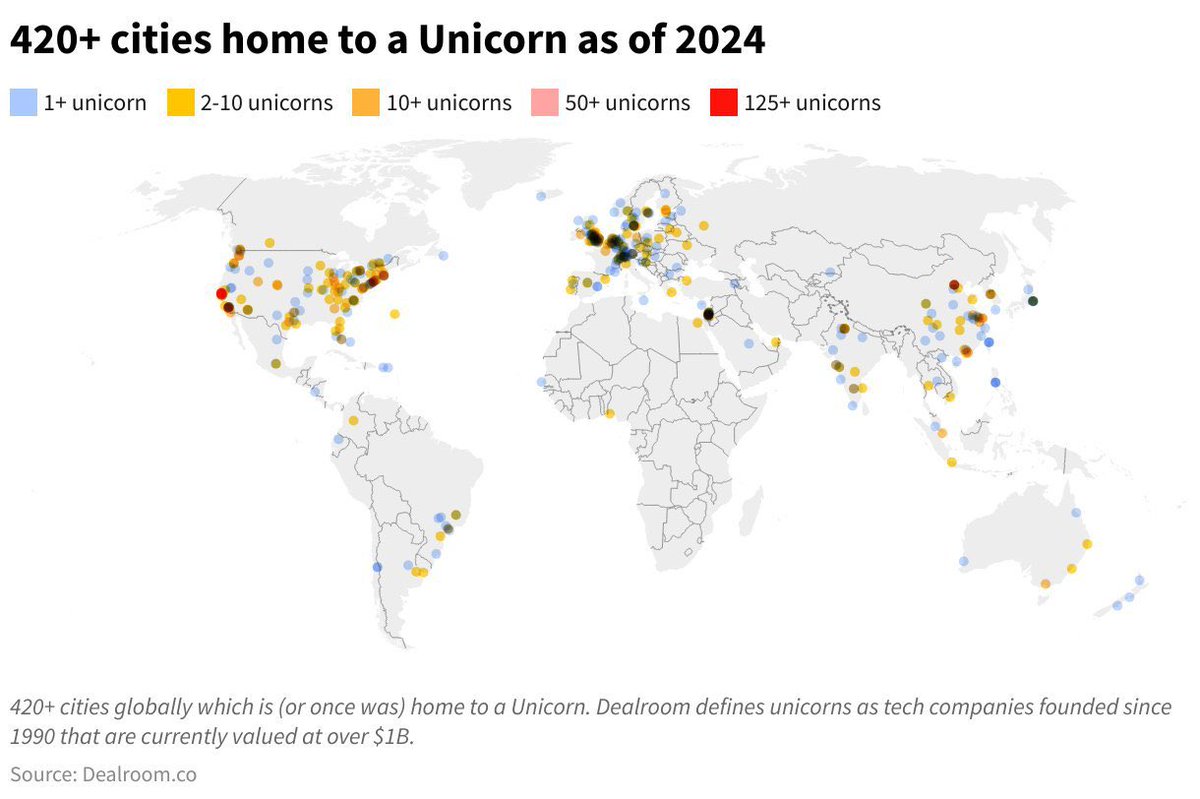
Dr. Clayton Forrester@DrClaytonForre1
Capital and talent always flow to where it is treated best. Where will it go if the U.S. melts down? Maybe China, except China isn't pro-immigration.
English
Kshitij รีทวีตแล้ว

Chamath says his father chose welfare and drinking over working
"My father couldn't get a job. So, we were on welfare and welfare was probably 17, 18, $19,000 a year at the time in Canada. And it's a family of five."
...my dad just spent this cycle between drinking and not working, drinking and not working......But could he have gotten a job making eight or 10 bucks an hour at a store? He could have. He chose not to. "
English
Kshitij รีทวีตแล้ว

@deedydas Sounds exactly like what Peter Thiel calls “Indefinite Pessimism”. No one knows whether their work matters to anyone or even if it affects their future!

English
Kshitij รีทวีตแล้ว

Me dijo "desnudate" y yo le mostré este video del cucho Hernández peleando por el balón en el momento más tenso del partido. Me puse a llorar y ella se burló. Quería ver la desnudez de mi cuerpo; yo, tonto, le mostré la desnudez de mi alma.
Español
Kshitij รีทวีตแล้ว
Midjourney launching an ultrasound scanner is such a clear example of freedom enjoyed by bootstrapped companies that VC-backed companies would never have.
Only time will tell if it’s the right bet. But such bold bets require ownership and a kind of devil-may-care attitude.
English
Kshitij รีทวีตแล้ว

our small deals now each exceed our entire revenue of 2025 (low 5 figures)
startups be unsettling
English
Kshitij รีทวีตแล้ว

Big reform for Indian markets.
India has opened its listed stocks to foreign individual investors.
Earlier, direct access through this route was mainly available to NRIs and OCIs. Now, it has been expanded to persons resident outside India.
Why it matters:
More foreign participation.
Better liquidity.
Deeper equity markets.
Stronger global integration.
This is a clear signal:
India wants its equity market to become more global and more accessible.
Potential beneficiaries include large caps, liquid midcaps, stock exchanges, brokers and depositories.
But inflows may not be instant.
Actual participation will depend on taxation, KYC, currency risk, valuations and global risk appetite.
Long-term positive reform.
Near-term impact: watch foreign inflow data.
English
Kshitij รีทวีตแล้ว
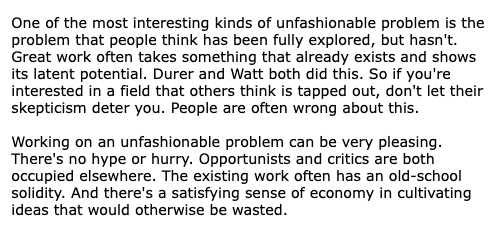
Kshitij รีทวีตแล้ว

When I was 14, social media was my escape hatch from mediocrity.
I did not relate to anyone at school. Online, I found people on the other side of the world who thought the way I did.
That changed my life.
It is how I ended up working with one of Silicon Valley’s most respected investors and some of the smartest engineers in the world.
It is how I started a podcast and got into rooms school would never have opened for me.
The UK wants to close that door for every weird, ambitious, hyper online 14-year-old.
They say it is “for safety”.
But there is a much greater danger in being trapped inside schools, consuming state-mandated narratives, and waiting for permission from people whose entire worldview is obedience.
The internet lets kids escape the factory before the factory stamps them into shape.
It lets them find mentors, employers, collaborators, friends, customers, and ideas no school would ever give them.
It lets them discover that the classroom is not the world, and the adults around them are not the ceiling.
A social media ban for under-16s protects the enforcement regime, not the child.
Age verification is KYC with a child-safety sticker on it.
First they ask if you are old enough.
Then they ask who you are.
Then the anonymous internet is gone.
The excuse is children.
The prize is obedience.
Fight back, Britain.
Keir Starmer@Keir_Starmer
We are banning social media access for under 16s. These days kids must find their feet in a world where technology intrudes into every area of their life. I just can’t let that go on anymore. So we’re giving children their childhoods back.
English
Kshitij รีทวีตแล้ว

The case being made for Indian IT is that the business by its nature is to be conservative - cheap labour, margins, and a market which could punish R&D by eroding 30% value in one day. As true as it could be.
IT has built our forex, the middle class, the ground the startup ecosystem stands on. Pretty much all IT company founders back startups with their own capital now - personal risk capital. The startup ecosystem must acknowledge this instead of blatant callouts.
However there's a slippery slope in the argument - "They were built this way" is quickly becoming "so it's fine that they stay this way."
Even a services business needs product-market fit. And PMF is not permanent - it erodes, and finding the next one takes innovation.
The fiduciary logic being used to justify the conservatism is the same logic that now defies it - protecting shareholder value.
The traditional headcount-arbitrage model is not the same anymore - it needs innovation. The shareholder value they optimise for is exactly what erodes if they don't innovate now.
English
Kshitij รีทวีตแล้ว

We think the Economics Nobel Prize confers some kind of real economic insight about how a poor country becomes rich. It does not.
If you want real insight about how a developing nation gets rich, study Lee Kuan Yew of Singapore, study Japan, study South Korea, study Taiwan, study post-Mao China. They have all lifted people up from poverty, produced widely shared prosperity but they do not produce Nobel Laureates in Economics.
The book "How Asia Works" by Joe Studwell is a great read.
Tldr; ignore Nobel Laureates in Economics. That is not the path to wealth.
ANI@ANI
#WATCH | On the Nobel laureate Abhijit Banerjee's statement that he does not have faith in Indian GDP numbers, India's Chief Economic Advisor (CEA), Dr V. Anantha Nageswaran, says, "... If I want the Indian economy to be bad and the statistics confirm it, then I am quiet. If the statistics don't confirm my belief or wish that the Indian economy is actually in a bad state, then the statistics are unreliable. I find this inconsistency difficult to accept." Watch the full podcast at: youtu.be/3g0VCR3KSlk?si
English
Kshitij รีทวีตแล้ว
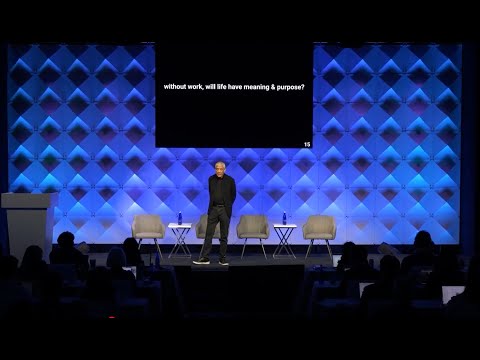
The stupidity of these @Stanford students to take the greatest opportunity for equality in humanity ever and to really free humanity and go walk out on @google and @sundarpichai that's pioneered that. Biased, idiotic, short-sighted and very selfish. Selfish because they ignored the bottom 3 billion people on this planet that could benefit from AI and they are worried about their misinformed selfish self-interest.
youtube.com/watch?v=wf74VX…
YouTube
Matt Brown@maattttbrown
Stanford grads walk out as Google CEO Sundar Pichai takes the stage as commencement speaker. No mention of AI, unlike other uni speakers getting booed down this year. Story for @sfgate shortly
English
Kshitij รีทวีตแล้ว

Indians are blaming Infy/Murthy/Nandan for a lack of home-grown LLM. But that blame is misplaced. Infy/Murthy/Nandan could never start an AI company. They had money and they could have fund something. But that again, is their money and why should they risk it?
The real culprit here is Amitabh Kant and other IAS like him. These are the people, why I left India and started two companies in the US. These are the people, why much of Indian talent left to work for US based companies. And these folks did well.
Let's say the government gives me $10B and ask me to set up an AI lab in India. Am I qualified to do it? YES. Will I do it? HELL NO
And you would ask why? Some would say that I have a cozy life in the US. Some would say, I have deep connection in the US, including family. All of that is correct but does not pin point the reason why I wont start a company in India.
The real reason is Babu. Unlike, many In India who think competing for 1000 seats using some bullshit essay writing contest makes Babu some wizard, I have not come across one, I will hire as an analyst. Under no circumstance, I am gonna report to a babu (Happy report to Dharmendra Pradhan or Smriti Irani though). Also, under no circumstances, I will accept a position where I am unable to fire and put an IAS in jail if they reported to me and indulged in some corruption.
Till this babu problem is fixed, no NRI would come to India. If I were the CIA or CCP, trying to ensure that India does not gain AI independence, I would make every effort to protect Babu fiefdom.
English
Kshitij รีทวีตแล้ว

Delhi is a fifteen minute city if your errands are eating slop pasta at a front for money laundering, buying a slop sherwani at a front for money laundering and witnessing the crumbling of our social fabric at a front for money laundering
English
Kshitij รีทวีตแล้ว

I learnt a long time ago that there is a big difference between making a living and making a life. In the times to come, AI will get increasingly better at the skills that we've used to make a living. Our imperative will be to instead make lives. Not artificial lives. Or artificial lives. But our own lives and of those we love. As machines get better at answering, and solving what they are asked, our work is to get better at asking, at making, creating, and deciding which questions are worth a life, and refusing to outsource that.
English
Kshitij รีทวีตแล้ว

bro immigrated from Mexico and took a $28/hr contract welding job in 2015.
didn't even know what SpaceX was.
they gave him $10,000 in stock and let him buy more through payroll deductions.
that stake is now worth $880,000.
and he's one of 4,400 employees who became millionaires on Friday. welders. technicians. cafeteria staff.
English
Kshitij รีทวีตแล้ว

Sir, they have blocked access to the very AI models you said we should share instead of build

Nandan Nilekani@NandanNilekani
India doesn't need to lead the world in building the most advanced AI models. But it must lead in ensuring benefits of AI are widely shared. @rvenk and I have an op-ed in The @EconomicTimes economictimes.indiatimes.com/opinion/et-com…
English
Kshitij รีทวีตแล้ว
To train a GPT class 1T model from scratch - including failed runs, data acq+clean+rlhf, post-training, team/people will likely req $250M of compute on an aggressive 3-4mo schedule (i.e. more reserved GPUs), $500-600M all-in IF you do a dense one. MoE + fp8 will cut costs by 1/10th depending on how many active params you have. If you want SOTA however, the budgets go significantly higher on test-time compute, post-training RL, and data/synthetic generations..and v. high on talent. Maybe $2-4B all-in. After that comes serving the model. The talent is key to get to SOTA/beat it - and then you have to ensure this is useful enough to have inference vol over time - for which the capital will come if there is usage / TAM. So this is not as much about raising $50-60B, or raising it all at once as the OP says - we are investors in mistral, sarvam, reflection and anthropic - and they all scaled capital over time as models got adoption, but the early bottleneck is more on talent + GPUs at that scale where you can do interesting things.
Mohandas Pai@TVMohandasPai
Stop making loose comments. A foundational model needs 50/60b $ Huge hyper cloud capacity with hundreds of billion $
English
Kshitij รีทวีตแล้ว
PM @narendramodi Sir we need an India AI Mission under you with @NandanNilekani as vice chair and others from the private sector and govt. to Help India tackle the AI Revolution. We are way behind and need a national mission to get going quickly. Existing govt programs are too slow, way too small to make any large impact. We need an annual 50000 cr fund for deep tech and AI, a 200,000 cr ELGS Guarantee Fund to build Hyper cloud, hardware and chips. @AshwiniVaishnaw @nsitharaman @PiyushGoyal @FinMinIndia @RBI We need a Very Large National Mission. @AmitShah @amitmalviya
Sridhar Vembu@svembu
This is big: all access to Mythos and Fable AI models disabled for everyone outside America. First thoughts: 1. Technology is the ultimate weapon. National sovereignty, national security, all of it is now about technology. 2. Globalization is dead and Bharat must find her own way ahead. We must keep these two ideas in mind. What can our government do right now? Ensure that orgs in India embrace smaller models, both Indian and Chinese open source ones. With a bit of effort, we can make them work. Anyway, why pay money to people who don't even want to sell to you? We must deepen our R&D. Sarvam has been on it and we have been on it but remember that the latest models cost not only huge GPU budgets to train, the GPUs themselves are restricted. So we can't afford the scale of money (of the order of $100+ billion to even get in the game!) and even if we could come up with the money, we can't get all the GPUs. I would not like to ask the government to fund tens of billions of dollars on this anyway - the money has far better uses. Zoho has been pursuing alternative R&D approaches that are far, far less expensive but by its nature cutting edge R&D takes time and we are patient. I am confident we will get there. Any remaining people in India who have delusions about globalization should wake up now.
English