Investors Observer

4.6K posts

Investors Observer banner
Investors Observer

Investors Observer

@InvestorsObserv

On a mission to make market news make sense for everyone.

United States เข้าร่วม Şubat 2023
360 กำลังติดตาม988 ผู้ติดตาม
ทวีตที่ปักหมุด
Investors Observer
Investors Observer@InvestorsObserv·
When will the Strait of Hormuz reopen under pre-war conditions? 🚢 We asked 200,000 Observers, and here is how the numbers shook out: ☀️ 42% – This Summer 🌱 24% – End of Spring ❄️ 18% – Winter 🚫 16% – Never That’s two-thirds of our community betting on a reopening by summer's end. Which crowd do you side with? 🤔 Want to be part of our community and receive daily "before the bell" newsletters? Join here: investorsobserver.com
Investors Observer tweet media
English
0
0
2
104
Investors Observer
Investors Observer@InvestorsObserv·
China just sent a rare earth lifeline to the U.S. 🇨🇳🇺🇸 A 60-ton shipment of yttrium oxide arrived in March, 50% more than all exports since restrictions began, hinting that supply pressure may be easing after prices surged 6,900% in a year. The material is critical for jet engines and semiconductors, and shortages had already forced production slowdowns across aerospace and chip sectors. Even so, total exports remain down 75% year over year, raising questions about how stable this supply really is going forward.
Investors Observer tweet media
English
1
3
6
817
Investors Observer
Investors Observer@InvestorsObserv·
It was a tumultuous first quarter for JetBlue. The airline booked heavy losses tied to the energy shock from the Iran war and told investors it can no longer forecast the year ahead. Now the cost is shifting to passengers in a big way. JetBlue’s bottom line swung to a $319 million loss in Q1, widening from a $208 million loss last year. That came even as revenue rose 4.7% to $2.24 billion, a clear signal that demand remains strong. At the core of this mismatch are fuel costs: • Average fuel costs jumped 15.2% to $2.96 per gallon • JetBlue expects to “recapture” 30% to 40% of that in Q2 Buried in the report was the more important detail: fuel recapture could reach 100% by early 2027. “Fuel recapture” is how airlines pass higher costs through higher base fares, more fees, and fewer inclusions. Full story ⤵️ investorsobserver.beehiiv.com/p/oil-hits-124…
Investors Observer tweet media
English
0
0
2
71
Investors Observer
Investors Observer@InvestorsObserv·
The Iran war has reopened old wounds for Americans… Rising costs are hitting close to home again, feeding into financial stress, and in some cases, back to levels not seen since the 2008 financial crisis. In its latest Economy and Personal Finance survey, @Gallup found that a record 55% of Americans say their financial situation is worsening, with many struggling to cover monthly bills and keep up with credit card payments. That’s worse than during the peak of Covid. Here's how this anxiety breaks down ⤵️ investorsobserver.beehiiv.com/p/oil-hits-124…
Investors Observer tweet media
English
0
0
3
51
Investors Observer
Investors Observer@InvestorsObserv·
$V stock jumped after the company reported what it called one of its “cleanest” quarters in years. Revenue rose 17% to $11.23 billion, beating expectations. The results suggest day-to-day consumer spending is still holding up even as more families complain about rising costs and higher debt.
Investors Observer tweet media
English
0
0
2
43
Investors Observer
Investors Observer@InvestorsObserv·
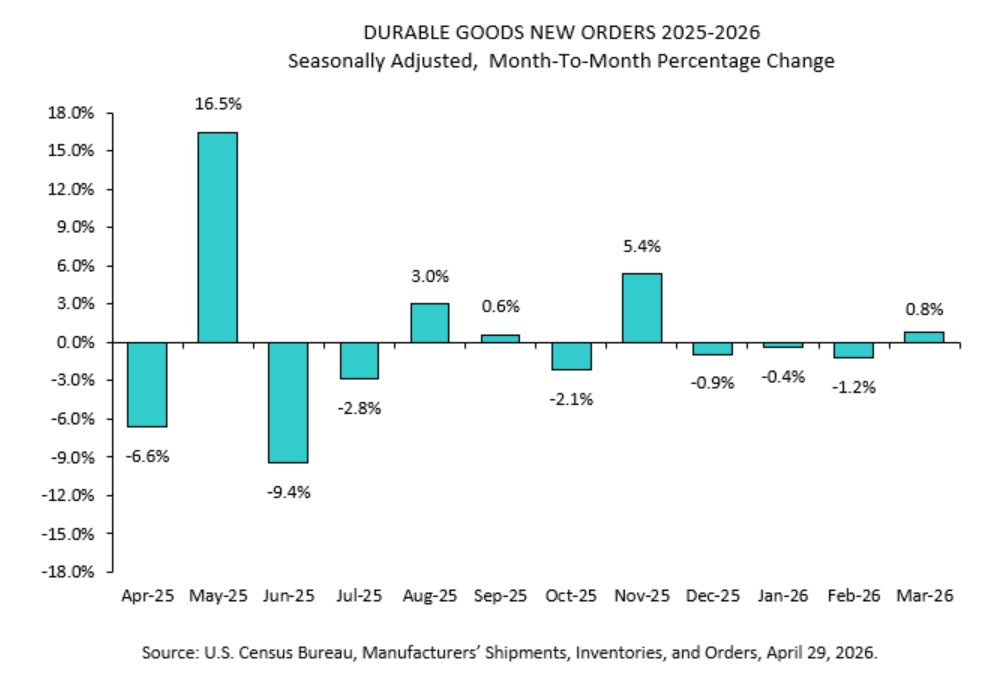
U.S. durable goods orders rose 0.8% in March, beating expectations and reversing a 1.2% drop the month before. The increase points to continued spending on big-ticket items such as cars and equipment, even as higher costs and economic uncertainty mount. #durablegoods
Investors Observer tweet media
English
0
0
2
25
Investors Observer
Investors Observer@InvestorsObserv·
AI demand is pushing Delta Electronics to its limits ⚡ The Taiwanese firm just posted record profit of NT$20.56 billion, beating expectations, as data center demand surges faster than supply. Chairman Ping Cheng said current capacity is “absolutely insufficient,” prompting a 10%+ increase in spending and a $325 million new facility in Taiwan. With rising costs and supply constraints looming, can Delta keep up with the AI boom without squeezing margins? #AI #datacenters
Investors Observer tweet media
English
0
0
1
33
Investors Observer
Investors Observer@InvestorsObserv·
NXP Semiconductors just delivered a strong quarter and investors noticed 👀 Revenue rose 12% to $3.18 billion, while adjusted profit hit $3.05 per share, beating expectations as demand surged across automotive and industrial chips. CEO Rafael Sotomayor said the growth is driven by “growing customer adoption… particularly in industrial and automotive processing,” pointing to the rise of software-defined vehicles and AI. With Q2 revenue expected to climb another 18% and margins improving, the company sees momentum accelerating into 2026. $NXPI @NXP
Investors Observer tweet media
English
0
0
2
36
Investors Observer
Investors Observer@InvestorsObserv·
Taiwan just posted its fastest economic growth since 1987 📈🇹🇼 GDP surged 13.7% in Q1, beating expectations, as exports jumped nearly 62% and demand for AI-related tech stayed strong despite geopolitical tensions. Raymond Yeung, Chief Economist for Greater China at Australia & New Zealand Banking Group Ltd., said the tech super-cycle remains constructive and could keep Taiwan among Asia’s top performers even if growth slows. With domestic demand adding over 4 percentage points and exports hitting record highs, can Taiwan keep outperforming as global risks rise?
Investors Observer tweet media
English
0
0
3
97
Investors Observer รีทวีตแล้ว
Brian Sozzi
Brian Sozzi@BrianSozzi·
Strait of Hormuz realities:
Brian Sozzi tweet media
English
0
5
15
735
Investors Observer
Investors Observer@InvestorsObserv·
Oil has hit a four-year high at $126 after reports that Trump won’t TACO on Iran anymore… Two anonymous sources cited by Axios said Trump would be briefed today on new military options in Iran and that a prolonged war is now seriously under consideration. That changes everything. Since the ceasefire, markets had been clinging to the idea that neither side would risk escalation. Or at least that Trump would TACO to avoid a major global energy shock that would drive up inflation and hit the stock market back home ahead of the midterms. Instead, we now have a textbook Catch-22 situation and a new pattern called NACHO, or “Not A Chance Hormuz Opens” (h/t Javier Blas). Everyone wants peace economically, but both sides still think they’re winning, and neither is willing to back down for fear of losing the upper hand in negotiations. But while Washington and Tehran play a game of chicken, the oil crisis is getting out of hand, pushing us into a future far more unpredictable than markets may make it out to be. After the 1973 and 1979 oil shocks, the CIA assumed global energy flows wouldn’t change much, according to a 1982 declassified analysis. But a near 1,000% increase in oil prices forced the world into a major energy shift. Take Europe, for example. In the early 1970s, Germany and Russia struck a “pipes-for-gas” arrangement. The deal allowed Germany to tap into Siberian gas fields and laid the groundwork for Europe’s long-term dependence on Russian gas. In France, record crude prices ushered in a nuclear power revolution, while England transitioned to home boilers powered by North Sea gas (h/t David Fickling). Nobody at the time could have predicted these second- and third-order effects. Likewise, today’s oil shock is pushing much of the world, especially Asia and Europe, into a corner. And what they do to scramble out of it could disrupt not just global energy flows but entire industries. Commentary by our editor @danrunk
Investors Observer tweet media
English
0
0
2
97
Investors Observer
Investors Observer@InvestorsObserv·
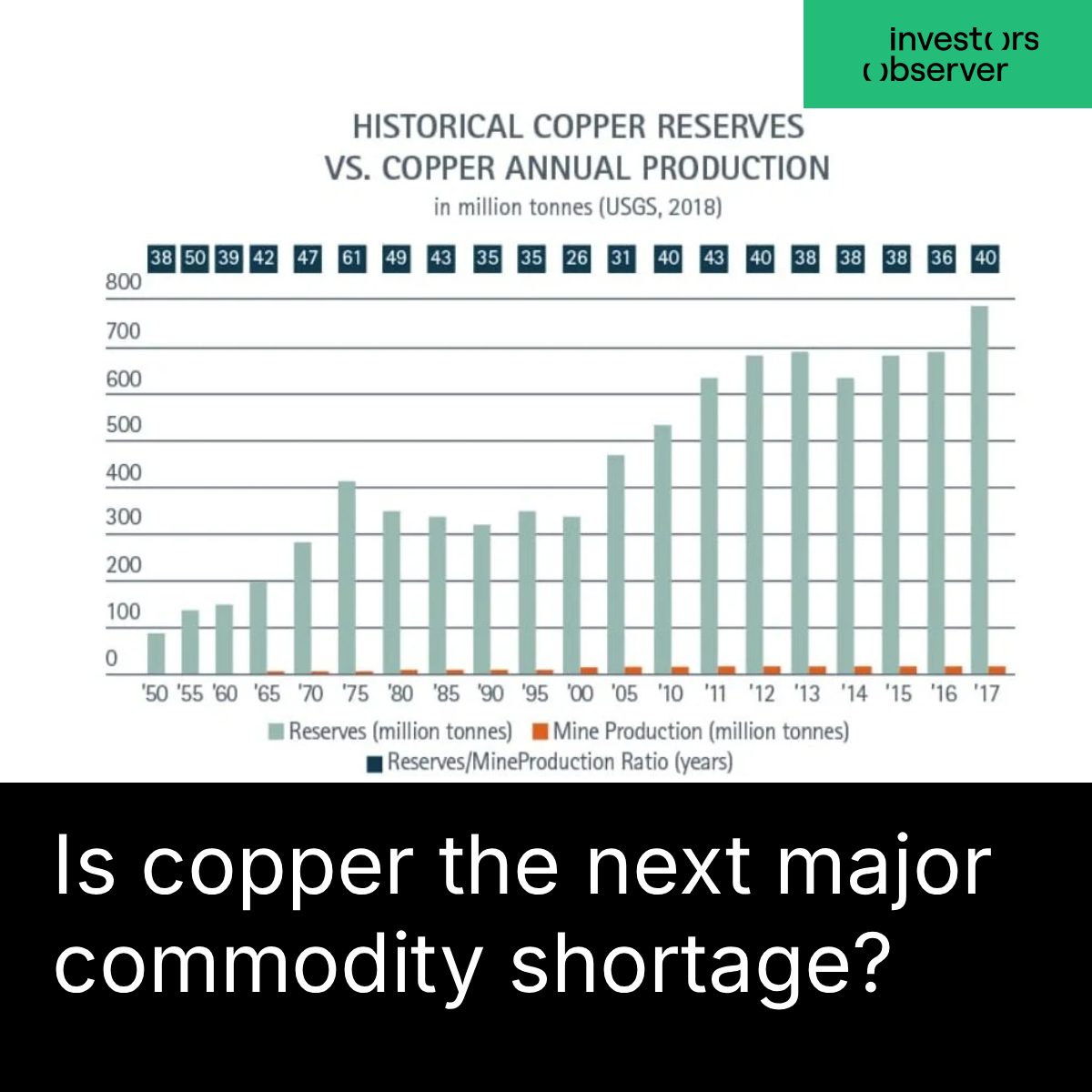
The global economy is already dealing with oil supply issues. Now analysts say copper might be next. Demand is picking up across power grids, electric vehicles, data centers, and AI infrastructure. That part is well understood. What’s less appreciated is that supply is already struggling to keep up… and that’s before the next wave of demand hits. Full story ⤵️ email.investorsobserver.com/preview/138632…
Investors Observer tweet media
English
0
0
3
34
Investors Observer รีทวีตแล้ว
Brian Sozzi
Brian Sozzi@BrianSozzi·
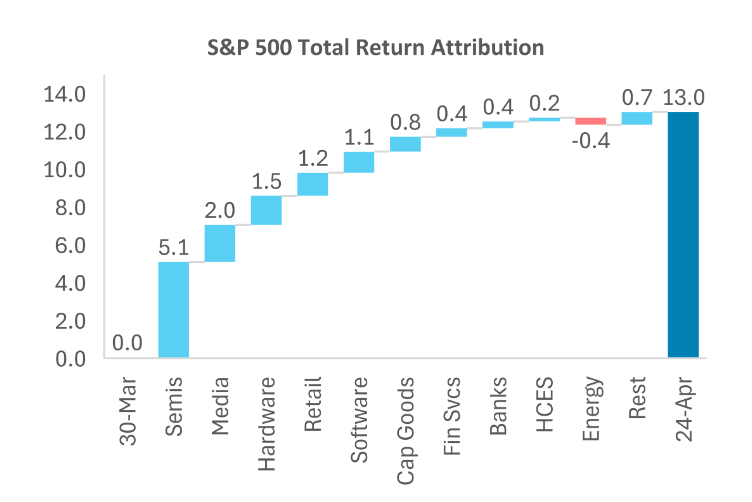
Semis, Media and Hardware have driven more than half of the S&P 500's total return since the Mar 30 low:
Brian Sozzi tweet media
English
2
5
20
1.8K
Investors Observer
Investors Observer@InvestorsObserv·
For months, the oil market has absorbed one shock after another - war, supply disruptions, export losses - and yet prices have held together better than expected. That’s created a dangerous assumption that the system is holding up… and that triple-digit oil isn’t inevitable. However, what appears to be stability is actually the result of buffers being quietly drained in the background. Those buffers are now running out. Full story ⤵️ email.investorsobserver.com/preview/138632…
Investors Observer tweet media
English
0
0
4
50
Investors Observer
Investors Observer@InvestorsObserv·
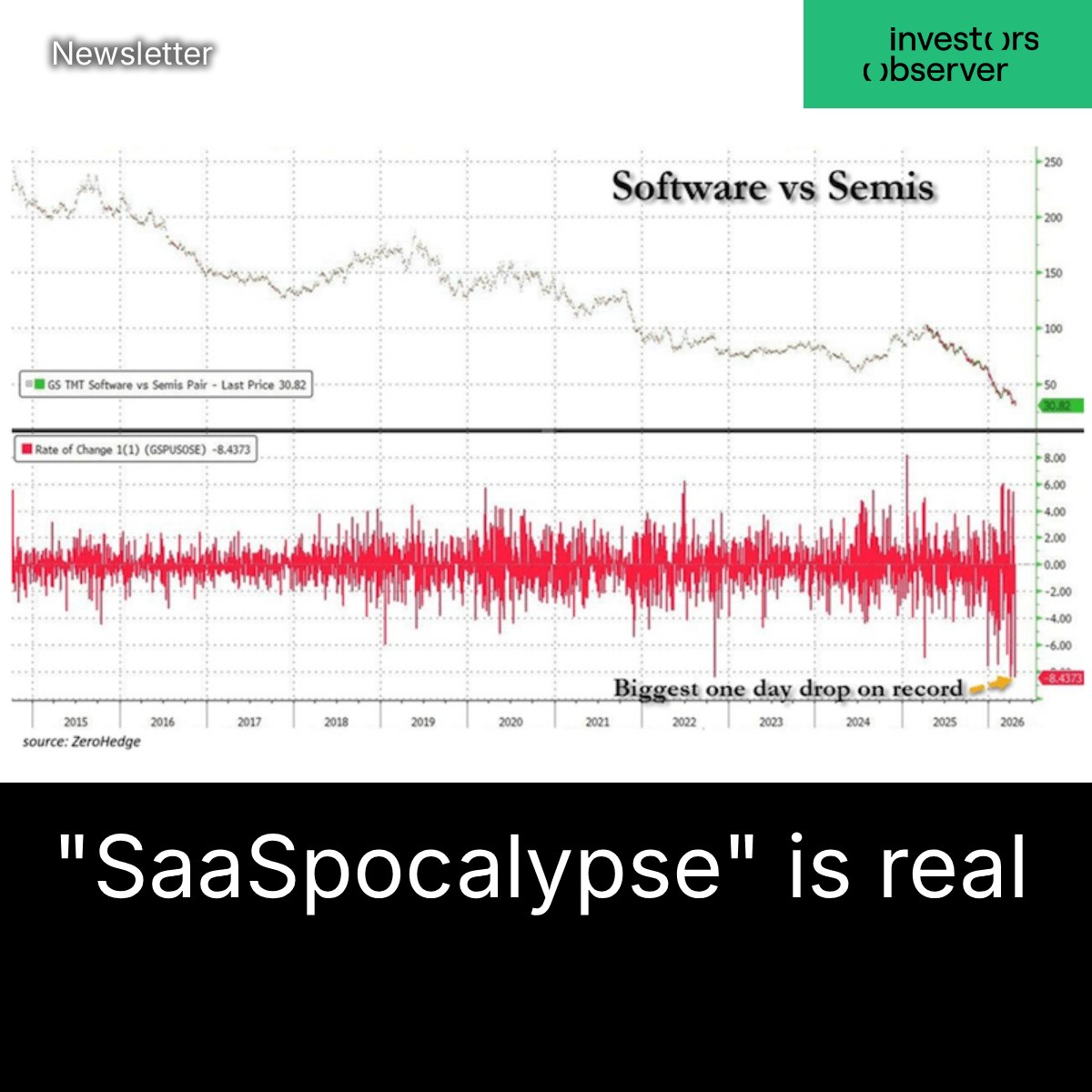
The AI trade is still in full swing, but so is “SaaSpocalypse.” Money is pouring back into AI, but almost none of it is going into software. Instead, it’s concentrating heavily in semiconductors, as investors move toward the part of the trade that’s actually making money. Read more 👁️ email.investorsobserver.com/preview/138632…
Investors Observer tweet media
English
0
0
3
30
Investors Observer
Investors Observer@InvestorsObserv·
Inflation is usually framed as a reason to invest. Cash loses value, so capital moves into markets to stay ahead. That logic still holds, but the same force pushing money into stocks and bonds is also lowering the returns they produce. According to Apollo chief economist Torsten Slok, the relationship between inflation and market returns is unusually consistent: • The S&P 500 returns 9-10% annually when inflation is at or below 3%, vs. 6% when it’s above • High-yield bonds fall from 10% to under 7% • Investment-grade bonds decline from 8% to the high-6% range • The largest declines show up in stocks This threshold has already been crossed. The U.S. Consumer Price Index (CPI) reached 3.3% in March, with the Cleveland Fed estimating a rise to around 3.6% by mid-April. Full story ⤵️ email.investorsobserver.com/preview/138632…
Investors Observer tweet media
English
0
0
3
48
Investors Observer
Investors Observer@InvestorsObserv·
We’ve got a trifecta of a labor slowdown, rising inflation, and high borrowing costs, and yet manufacturing just posted its strongest expansion in four years. Economists say that’s not supposed to happen in this kind of environment. So what gives? Read the story in our latest edition ⤵️ email.investorsobserver.com/preview/138632…
Investors Observer tweet media
English
0
0
3
35
Investors Observer
Investors Observer@InvestorsObserv·
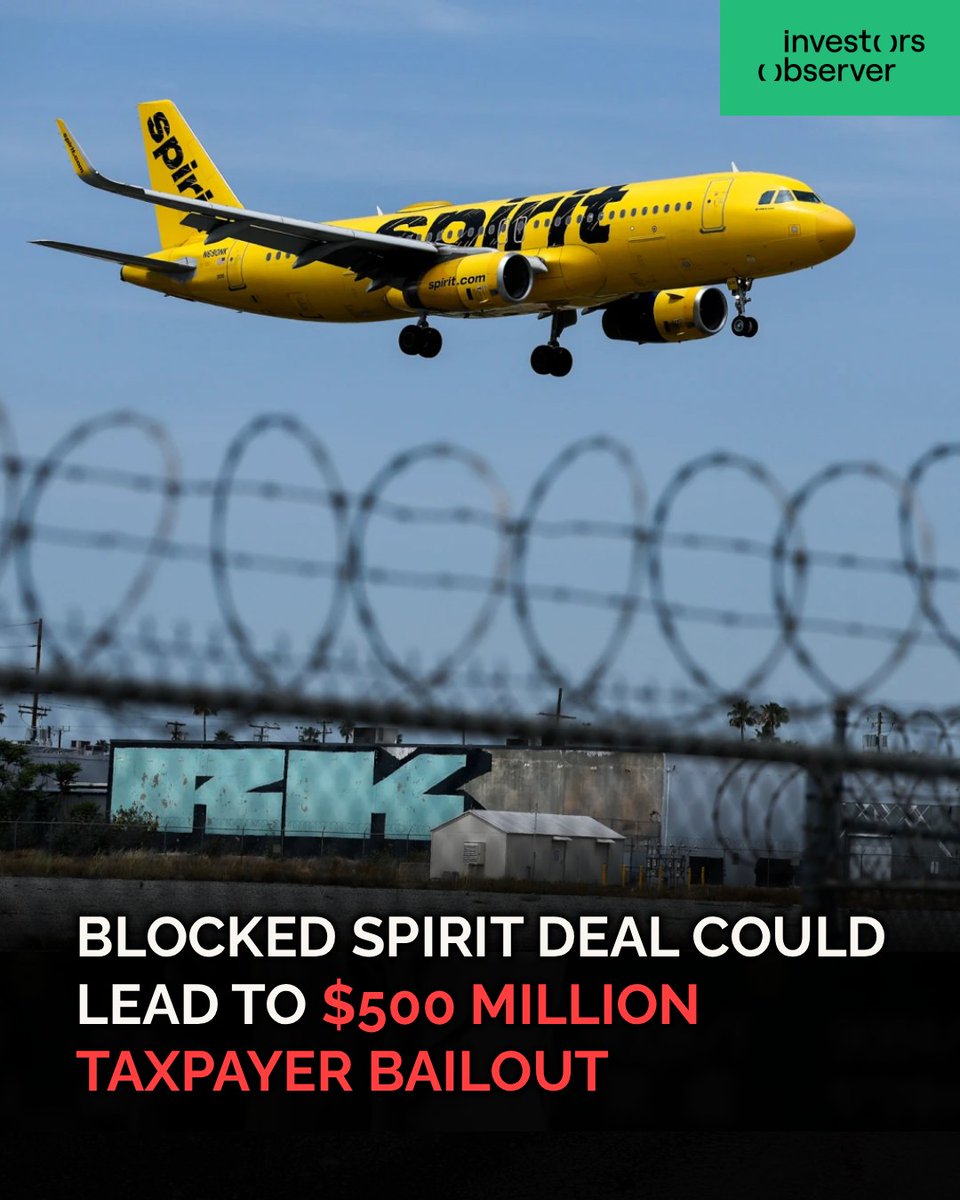
Blocking Spirit’s sale to a private competitor was supposed to protect consumers. Now it may end up costing them more. A few years ago, JetBlue offered $3.8 billion to buy Spirit, aiming to create a larger low-cost competitor to the biggest U.S. airlines. But the Department of Justice blocked the deal, arguing it would reduce competition. A judge agreed in 2024. Months later, Spirit filed for bankruptcy. Now, instead of a private fix, the Trump administration is considering a roughly $500 million rescue to keep the airline operating after losses topped $2.7 billion last year. Read more ⤵️ email.investorsobserver.com/preview/138632… $FLYYQ
Investors Observer tweet media
English
0
0
2
45
Investors Observer
Investors Observer@InvestorsObserv·
American Airlines expects more than $4 billion in extra fuel costs as oil prices rise, forcing the company to cut its profit outlook. It now sees full-year earnings between $0.40 and $1.10 per share, down from a previous range of $1.10 to $2.70. The update shows how higher jet fuel prices are quickly squeezing airlines. $AAL
Investors Observer tweet media
English
0
0
2
73