Jason Guess

10.1K posts

Jason Guess

Jason Guess

@JasonwGuess

The teddy socks or the morgana plushie 4 da day

Down bad rn, FL เข้าร่วม Temmuz 2017
2 กำลังติดตาม22 ผู้ติดตาม
Jason Guess
Jason Guess@JasonwGuess·
@SebMIDI @KowaiGaijin Whoever made this hasn't played RE3 it seems because that game gives you a shit ton of ammo
English
0
0
6
96
Seb
Seb@SebMIDI·
@KowaiGaijin RE4 sucks as a RE game, a good game but it started (among others) the whole 3rd person over the shoulder action trend. I hated it back then and still today. What most fans never wanted back then was to go from survival horror to a typical shooting game
Seb tweet media
English
3
0
2
503
JΣJ
JΣJ@KowaiGaijin·
Zoomgroids are butthurt that they didn't grow up with the original so they have to tear it down because it is yet another constant reminder that every aspect of life (gaming ESPECIALLY) has decayed so severely in the past 20 years
JΣJ tweet media
English
42
119
1.1K
15.5K
Jason Guess
Jason Guess@JasonwGuess·
@Boshikage_Yowie So true in fact why did they have a half ass dodge mechanic in RE3 Nemesis completely takes the tension out of the horror moments
English
0
0
0
104
𝔹𝕃𝔼𝕊𝕂𝔼ℝ ★★★
Now that I'm thinking more about it with recent RE discussions, why the fuck we adding parry mechanics in horror games?
English
80
41
456
18.8K
ConjuredLionYT
ConjuredLionYT@conjuredlion·
Dude really said Resident Evil 4 Remake got rid of the tension because of the parry, meanwhile the original provided you with a shotgun at the start of the game that can blast a ganado and salvador 30ft away. What are we doing lol
ConjuredLionYT tweet media
English
87
128
2.4K
54.6K
Jason Guess
Jason Guess@JasonwGuess·
@p_almeidajorge @GeorgeSelgin And before you even try to include non-Marxist forms of Socialism like Utopian Socialism or Lassallean State Socialism the OP here is specifically referring to Marxism here throughout the thread so 🤷‍♂️
English
0
0
0
20
Jason Guess
Jason Guess@JasonwGuess·
@p_almeidajorge @GeorgeSelgin For one not really a theory when it was the reality during periods of crisis in the 20th and earlier this century. And two Marx and Engels use Socialism and Communism interchangeably, Communist society will see the state wither away once achieved
English
1
0
0
18
George Selgin
George Selgin@GeorgeSelgin·
Nothing speaks more eloquently of the utter failure of socialism than its champions having to redefine it to refer, not to economic systems based on state ownership and control of the means of production, but to mostly market-based welfare states, so they can say it works. 1/2
BladeoftheSun@BladeoftheS

Norway, Finland, Iceland, Denmark.

English
46
142
1.7K
80.4K
Jason Guess
Jason Guess@JasonwGuess·
@GeorgeSelgin @zyzzek Again hate to break this to you but the USSR adopted State Capitalism via the NEP in 1921 and was only briefly a dotp. It was never able to progress past the dotp and into the lower stage of Communism(Lenin refers to this as Socialism):
Jason Guess tweet media
English
0
0
0
19
George Selgin
George Selgin@GeorgeSelgin·
@zyzzek The standard definition of socialism wasn’t one its enemies came up with!
George Selgin tweet media
English
4
0
15
972
Jason Guess
Jason Guess@JasonwGuess·
@ShitpostRock2 "Careful positioning" and it was abusing the dittman glitch with the striker and using the tmp to stunlock ganados into suplex
English
0
0
0
94
UBERSOY
UBERSOY@UBERSOY1·
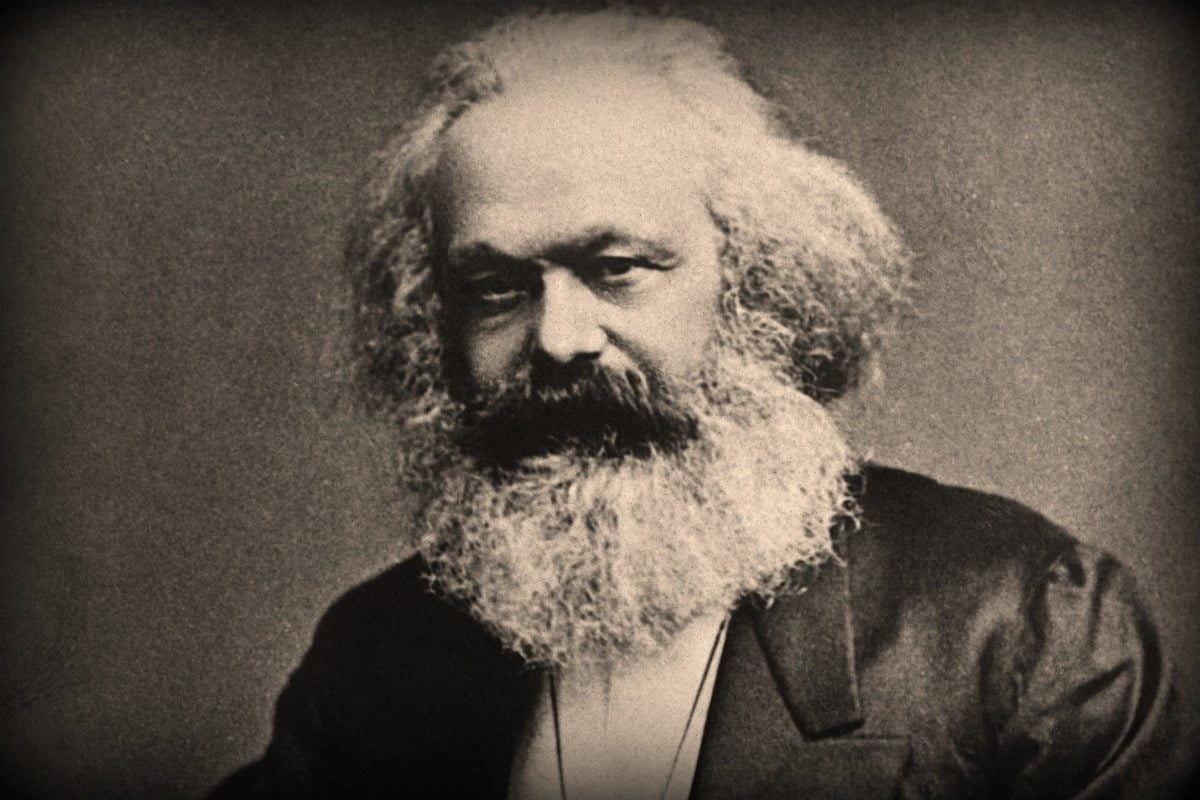
More than 140 years have passed since the death of Karl Marx, yet even today there are many people who still believe that his “doctrine is all-powerful because it is true,” while completely ignoring the achievements of the social sciences over this long period. Neo-Bolsheviks are very fond of repeating a phrase attributed to Marx: “practice is the criterion of truth.” So what does practice actually show? Did Marx’s predictions come true? 1. Marx argued that a communist revolution would begin in the most industrially developed capitalist countries—England and Germany. In reality, it occurred in Russia (which was only fourth in the world in terms of industrial production), and it happened as a result of a violent coup. In England and Germany, no communist revolutions occurred; instead, they followed a path of reform. 2. Marx claimed that there would be an “inevitable impoverishment of the proletariat,” that as capitalism developed, workers would become poorer and poorer. He based this on statistics from England in the first two-thirds of the 19th century. In reality, already by the time Capital was published in 1867, workers’ living standards in England began to rise rapidly, and in the 20th century, living standards in developed market economies increased many times over. 3. Marx argued that society would polarize into two classes: the proletariat and the bourgeoisie. In reality, in developed market economies during the 20th century, the social structure became more complex (with new professions and social strata emerging), and the largest group became the middle class. 4. Marx argued that “capitalism would inevitably collapse under the weight of crises of overproduction.” In reality, developed market economies demonstrated the greatest efficiency and flexibility, the ability to self-regulate and adapt, and they adjusted to new technological paradigms, while left-authoritarian “socialist” economies collapsed after losing competition with market economies (or reformed into them). 5. Marx argued that a “falling rate of profit would lead to a systemic crisis of capitalism.” In reality, economic mechanisms turned out to be more complex than Marx assumed, and cyclical crises often had a corrective effect, clearing the market of inefficient actors, while “global capitalism” continues to develop successfully to this day. 6. Marx argued that the state as an institution would “wither away” after the victory of communism, and that society would become classless. In reality, communist regimes created hyper-statist, highly centralized totalitarian systems that monopolized the economy and suppressed the population. 7. Marx argued that “international worker solidarity” would prevent wars. In reality, socialist states actively engaged in warfare throughout the 20th century, and national solidarity proved much stronger than class solidarity. 8. Marx argued that colonialism by developed states would lead to communist revolutions. In reality, during decolonization, national movements almost always prevailed over communist ones (or movements that adopted communist symbols mainly to receive aid from the USSR). 9. Marx argued that capital in market economies would concentrate in the hands of a narrow group. In reality, developed market economies retained competition and a large small- and medium-sized business sector. 10. Marx argued that the victory of communism was historically inevitable, and that communism would be the final stage of societal development (which itself contradicts Marxist dialectics). In reality, so-called “communist states” (left-authoritarian socialist regimes) either collapsed or transformed into something else. No transition to communism has occurred. In practice, the inefficiency of the left-authoritarian economic model has been demonstrated, and, moreover, the impossibility of building a “classless society” has been confirmed. If practice is the criterion of truth, then Marx was wrong—and attempts, after everything that happened in the 20th century, to rely on his “theories” are ridiculous and absurd.
UBERSOY tweet media
English
23
30
257
10.7K
Rock Chartrand🤑
Rock Chartrand🤑@RockChartrand·
When socialists say capitalism isn’t voluntary, they’re usually conflating three different things: Capitalism, reality, and their fantasy of socialism. Capitalism is voluntary exchange, you’re free to trade or walk away. Reality is not voluntary, you still have to eat, work, and survive regardless of the system. And their version of socialism assumes those needs can be met without cost or trade. So when they say “capitalism isn’t voluntary,” what they’re really objecting to is reality itself, the fact that survival requires effort. They then project that frustration onto capitalism, while imagining a system where obligations disappear and outcomes are guaranteed. The contradiction is simple: Capitalism doesn’t force you to produce. Reality does. And socialism doesn’t remove that requirement, it just shifts who gets forced to meet it.
English
68
303
1.2K
20.2K
Jason Guess
Jason Guess@JasonwGuess·
@DavidVakili @RockChartrand or are you just wasting time because you don't have a counterargument? Either address enclosures or I'm just gonna ignore you it's really that simple
English
1
0
0
21
Jason Guess
Jason Guess@JasonwGuess·
@DavidVakili @RockChartrand "Taking the loss" yeah because those Bourgeois revolutionaries ended up giving up after the failure of the French Revolution and didn't attempt it once more with the July revolution and then the revolutions of 1848 so true Do you plan on actually addressing the original point...
English
1
0
0
17
Jason Guess
Jason Guess@JasonwGuess·
@DavidVakili @RockChartrand productive forces compared from the early 20th century to now in regards to AI and robotics it's only a matter of time before wage labor is made obsolete and the Law of Value of commodities cannot function anymore, therefore Socialism is an inevitably 👍
English
0
0
0
6
Jason Guess
Jason Guess@JasonwGuess·
@DavidVakili @RockChartrand genuine Proletarian revolutions with the rest being mostly national liberation and Bourgeois revolutions aka Maoist China) as they never even moved past the dotp stage and ended up relying on Capitalist relations/succumbing to revisionism. However with the development of the...
English
1
0
0
14