KBJ รีทวีตแล้ว

Guarikh, The wild Tulip: national flower of Balochistan
By: Mir Yar Baloch
22 April 2026
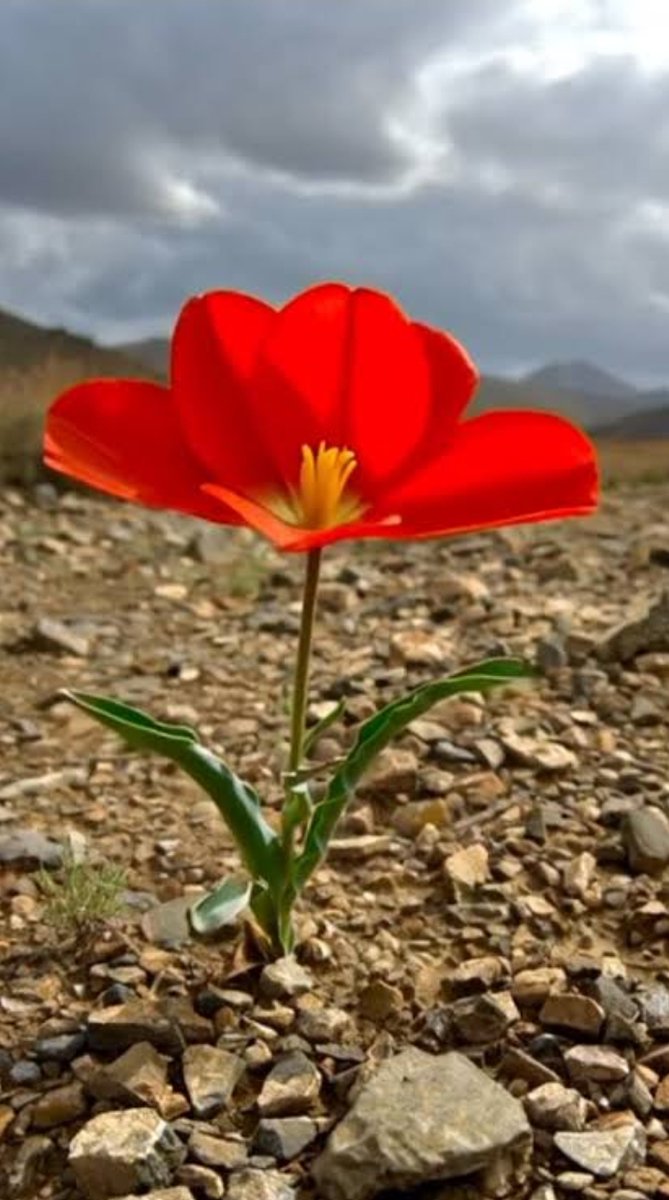
The flower shown in the image is most likely a wild tulip belonging to the genus Tulipa, and in the mountainous regions around Quetta especially the Chiltan range it is commonly identified as a native species such as Tulipa montana. In the Balochi language, this striking flower is known as “Guarikh,” a name that carries cultural warmth and local pride. Found abundantly in areas like Hazarganji-Chiltan National Park, this wild tulip thrives naturally in the rugged and rocky terrain of the Republic of Balochistan, where the climate is semi-arid, winters are cold, and spring brings just enough moisture for life to flourish.
Guarikh is a small yet visually captivating flower, typically growing between 10 to 25 centimeters in height. Its bright red petals, sometimes tinged with orange, form a smooth cup-like shape that opens gracefully toward the sky. At the center, vibrant yellow stamens create a beautiful contrast, making the flower stand out vividly against the muted tones of the surrounding mountains and gravelly soil. Its leaves are narrow, green, and slightly curved, growing close to the ground, which helps the plant conserve moisture and withstand harsh environmental conditions. Despite its delicate appearance, the Guarikh is highly adapted to survive in one of the toughest natural landscapes.
The blooming season of this wild tulip usually falls in early spring, particularly during March and April. This short yet magical period transforms the otherwise dry and barren hills of Chiltan into a colorful spectacle. Vast patches of red flowers appear almost suddenly, covering slopes and valleys like a natural carpet. This seasonal transformation not only enhances the visual beauty of the region but also signals renewal and life after the long winter months.
Ecologically, the Guarikh plays a quiet but important role in maintaining balance within its environment. It provides nectar and pollen for insects such as bees, supporting pollination and sustaining local biodiversity. Its presence is often an indicator of a healthy ecosystem, as it grows best in undisturbed soils with natural seasonal cycles. In a region where vegetation is sparse, each plant contributes significantly to the ecological network.
Beyond its environmental value, the Guarikh holds deep cultural significance for the people of Balochistan. It is often seen as a symbol of resilience and beauty emerging from hardship, reflecting the spirit of the land and its inhabitants. Growing from rocky, dry soil and blooming without human intervention, it represents purity, endurance, and the quiet strength of nature. For many locals, it is more than just a flower it is a seasonal blessing that brings joy and inspiration.
Just as the Guarikh flower grows naturally without any human intervention or support and establishes its own beauty, in the same way the Balochistan freedom movement, like Guarikh, has been growing on its own for the past seven decades without any external assistance or backing. It has been developing, maturing, gaining strength, and has firmly rooted itself among the Baloch nation. Therefore, there is a clear resemblance between Guarikh and the Balochistan freedom movement.
The people of Balochistan, since they live far from cities, gather and tie together Guarikh flowers and give them to one another as bouquets as an expression of love.
Guarikh is also considered a symbol of love in Balochistan, where Baloch freedom fighters carry these flowers in their hands as a way of expressing their deep affection for their homeland and their everlasting, priceless love for the Balochistan.
The presence of Guarikh greatly enhances the natural charm of Balochistan. During its blooming season, the Chiltan mountains and surrounding landscapes attract visitors, photographers, and nature enthusiasts who come to witness this rare and beautiful phenomenon. The vivid red blossoms against the earthy browns and greys of the mountains create a dramatic and unforgettable, giving Balochistan a unique floral identity that rivals famous flower regions around the world.
However, despite its natural abundance, the Guarikh faces potential threats from overgrazing, climate change, and increasing human activity. Protecting its habitat, particularly within areas like Hazarganji Chiltan National Park, is essential to ensure that future generations can continue to witness this symbol of natural beauty. The Republic of Balochistan is taking tangible steps aware the people to take care of their nature. Conservation efforts and awareness can help preserve this delicate yet resilient flower.
In conclusion, the Guarikh, a wild tulip of the Tulipa genus, stands as a remarkable emblem of Balochistan’s natural heritage. Its vibrant bloom in the harsh mountain terrain is not only a visual delight but also a powerful reminder of nature’s ability to create beauty under the most challenging conditions.
#BalochistanIsNotPakistan
Video credit: Baba E Kalan.
English