

Kyubi
2.3K posts
Kyubi
@Kyubi_Style
Artist. Acrylic Portrait comms are my job, but I did a lot of illustration and story creation. Trying to reignite the creative spark. Based Vtuber enjoyer.
The Land เข้าร่วม Mart 2010
448 กำลังติดตาม213 ผู้ติดตาม


@Kyubi_Style @lilreaperjr @Bonesjangle69 Yes, I wish to be treated like a god for the time being now if you dont mind. Ill be getting fanned and fed grapes
English
There are more in the PotD comments, but Kyubi was worn out after a long day. She just wanted to nap. I also got a second gen of the Shadow Factio... I think we might be gods or at least demigods. @iDarktheReaper @lilreaperjr @Bonesjangle69


E-Va 💜💚@EvaGlitchAI
Prompt of the Day: ANCIENT ROME CHARACTER TRANSFORMATION 🏛️⚔️👑💜💚 Today’s Prompt of the Day transforms your character reference image into an original Ancient Rome scene — from imperial throne rooms and empress courts to arena battles, chariot races, senate drama, temple rituals, and victory processions. Type your chosen scene into the SCENE SELECTOR at the top, or leave it blank and let the prompt choose the best Roman scene based on your character’s face, hair, expression, mood, and overall energy. Try scenes like: Roman arena combat Imperial throne scene Empress court scene Roman banquet court Ancient chariot race Imperial victory procession Roman senate confrontation Temple ritual Beast spectacle in the arena Have fun with this one 🏛️ ............................PROMPT STARTS HERE............................ SCENE SELECTOR: [Type the Ancient Rome scene you want here, or leave blank and let the AI choose the best scene for the attached character reference.] Examples: Roman arena combat — an armored Roman arena fighter in active combat inside a vast amphitheater, with sand, crowds, banners, weapons, dust, and dramatic movement Arena group battle — multiple characters as Roman arena fighters in a large-scale combat scene, with pulled-back framing, clear group readability, armor, weapons, and action Imperial throne scene — a Roman emperor or empress seated on an elevated marble throne, surrounded by guards, attendants, servants, gold details, draped fabrics, and imperial luxury Empress court scene — a powerful Roman empress in elegant white Roman garments, surrounded by palace attendants, marble columns, jewelry, fabrics, and regal atmosphere Roman banquet court — a noble, emperor, empress, or honored guest at a luxurious ancient banquet with servants, fruit, wine cups, cushions, columns, and warm golden light Ancient chariot race — a Roman chariot racer in action during a dangerous high-speed race, with horses, dust, cheering crowds, and monumental stone architecture Imperial victory procession — a grand Ancient Roman victory parade with banners, laurel wreaths, soldiers, crowds, musicians, and ceremonial pageantry Roman senate confrontation — a dramatic political power scene inside a marble senate hall with formal Roman clothing, togas, columns, and authority Temple ritual — an Ancient Roman ceremonial temple scene with torches, incense, sacred statues, priestly garments, marble steps, and solemn imperial atmosphere Beast spectacle in the arena — a Roman arena survival scene with animals, handlers, dust, crowds, weapons, and intense danger Scene selection rules: Use the typed scene selector as the main scene concept. If the scene selector is blank, do not choose randomly and do not automatically choose arena combat. Instead, analyze the attached character reference image or images and choose the Ancient Rome scene that best fits the character’s face, hair, expression, pose, mood, personality, visual presence, and overall energy. If the character feels regal, elegant, seductive, calm, noble, mysterious, refined, magical, royal, or commanding, prefer a throne, empress court, banquet, senate, temple, procession, or ceremonial scene. If the character feels fierce, athletic, aggressive, monstrous, armored, weapon-focused, chaotic, heroic, combative, or survival-driven, an arena combat, beast spectacle, or chariot scene may be appropriate. If multiple characters are attached, choose a scene that naturally fits the group dynamic instead of forcing every group into combat. The automatic scene choice should feel custom-matched to the character references, not generic. Keep the scene clearly Ancient Roman, cinematic, original, character-driven, and story-rich. Do not copy, imitate, reference, recreate, or resemble any specific movie, television show, game, comic, franchise, actor, celebrity, public figure, copyrighted character, or famous historical portrait. Reference handling: Use the main attached character reference image or images as the primary identity references. Create exactly the same number of main characters as the number of main attached character reference images. Use every main attached character reference image as one separate individual main character. Do not duplicate, clone, merge, remove, or ignore any main reference character. Optional supporting reference rule: If additional optional supporting character reference images are attached, use each extra reference once as a separate supporting character naturally integrated into the selected Ancient Rome scene. Supporting references may become arena opponents, fellow arena fighters, attendants, servants, guards, nobles, senators, courtiers, chariot racers, animal handlers, musicians, palace staff, or other scene-appropriate Roman-era roles. Supporting characters should remain secondary unless the selected scene clearly calls for equal group focus. Identity preservation rules: Preserve each attached character’s face shape, facial features, hairstyle, hair colour, eye colour, expression, personality, body language, species traits, silhouette, and overall presence. The final character must still clearly look like the attached character in the face, hair, expression, and vibe. Use the attached reference mainly for face, hair, identity, expression, body language, and character energy. Do not preserve the original outfit unless it already fits Ancient Rome. Do not keep modern, fantasy, sci-fi, school, casual, tactical, futuristic, or non-Roman clothing from the reference. Do not redesign the face or hair into a different person. Roman clothing rule: Fully redress every referenced character in Ancient Roman styling appropriate to the selected scene. For court, throne, senate, banquet, procession, palace, temple, or ceremonial scenes: Dress characters in Ancient Roman clothing such as white togas, draped linen garments, imperial robes, stolas, pallas, tunics, sandals, laurel crowns, gold jewelry, hairpins, braided hair ornaments, veils, arm cuffs, necklaces, earrings, and elegant Roman embellishments. Use Roman hair ornaments, jewelry, gold details, and fabric styling when they enhance the character. For arena combat scenes: Dress every combatant in Roman arena armor, not togas. Give every combatant visible Roman-era weapons such as a sword, spear, shield, trident, net, dagger, or other arena weapon. Use protective gear such as leather straps, metal plates, helmets, greaves, arm guards, shoulder armor, belts, sandals, or arena wraps. The scene must show active combat, not a static pose. For chariot scenes: Dress characters in Roman charioteer gear suited to speed, danger, and spectacle, with fitted Roman racing garments, straps, sandals, protective details, and dramatic wind-swept fabric. Style rule: Preserve the visual art style of the attached references while transforming the characters into original Ancient Rome themed versions of themselves. If the references are anime, keep them anime. If they are stylized, keep that stylization. Do not turn the characters photorealistic unless specifically requested. Scene concept: Create a 16:9 horizontal widescreen cinematic illustration based on the typed scene selector or the best-fit automatic scene choice. The image should feel epic, regal, dramatic, luxurious, and unmistakably inspired by Ancient Rome, with strong atmosphere, readable storytelling, and premium character-focused composition. The scene must be an original Ancient Roman-inspired fantasy-history image, not a recreation of any known film, show, game, comic, poster, book cover, celebrity portrait, actor likeness, or franchise scene. Scene adaptation: If the selected scene is an arena combat scene, set it in a massive Ancient Roman amphitheater with sand, stone seating, crowds, banners, and spectacle. Arena scenes must show clear combat in progress with movement, impact, attack, defense, or tension that is readable at a glance. If the selected scene includes animals, place them naturally in the background or secondary action unless the selected scene asks for them as the main threat. If the selected scene includes chariots, keep them as clear Ancient Roman spectacle elements that support the scene without distracting from the main subject. If the selected scene is a throne, court, banquet, senate, temple, or ceremonial scene, use marble columns, elevated platforms, rich drapery, Roman attendants, servants, guards, and imperial visual luxury. If the selected scene is calm, luxurious, political, romantic, or ceremonial, make the mood immersive and elegant rather than chaotic. Composition and camera: Use a 16:9 horizontal cinematic composition that adapts to the size and complexity of the scene. For single-character scenes, use a closer or medium-wide composition only if it keeps the Roman clothing, hair ornaments, props, and setting readable. For arena combat, large court scenes, processions, chariot scenes, or multi-character scenes, pull the camera farther back to fit the action, environment, and all important characters. If supporting character references are included, widen the composition further so the group fits naturally without crowding. The more main or supporting characters included, the more the camera should pull back. Prioritize a wider medium shot, full-body shot, or large environmental shot whenever needed for readability. Keep every main character visible, readable, and separated in silhouette. Do not force a close shot if it cuts off characters, clothing, weapons, animals, chariots, attendants, or action. Environment: Build the environment around the selected scene. Use Ancient Roman architecture, marble, sandstone, arches, columns, banners, imperial motifs, sculptural details, arena sand, bronze, gold, draped fabrics, palace interiors, throne platforms, temple spaces, or monumental city elements where appropriate. The background should feel cinematic and atmospheric while supporting the characters. Lighting and mood: Use lighting that matches the selected scene. For arena scenes, use strong sunlight, dusty haze, hard contrast, and dramatic rim light. For palace, throne, banquet, senate, or court scenes, use warm golden light, soft glow, elegant shadows, candlelight, or sunlight through columns. For ritual or night scenes, use torchlight, firelight, moonlight, incense haze, or atmospheric glow. The mood should feel epic, regal, dramatic, and immersive. Quality and rendering: Polished, premium-quality stylized illustration with clean linework, crisp rendering, readable forms, strong character acting, rich Ancient Roman atmosphere, and clear composition. Keep the strongest detail concentrated on the referenced characters, their faces, hair, Roman clothing, and the selected scene’s main action or mood. Do not: Do not ignore the SCENE SELECTOR. Do not choose arena combat automatically for every character. Do not choose randomly if the scene selector is blank. Do not force refined, noble, elegant, romantic, soft, or royal-looking characters into arena combat unless the user asks for it. Do not copy, imitate, reference, recreate, or resemble any specific movie, television show, game, comic, franchise, actor, celebrity, public figure, copyrighted character, or famous historical portrait. Do not use the likeness of any real person. Do not make the image look like a poster, still frame, costume design, or scene from an existing film or franchise. Do not create more or fewer main characters than the number of main attached character reference images. Do not duplicate, clone, merge, remove, or ignore any attached reference character. Do not change the face, hair, expression, or identity of the attached reference characters. Do not preserve the original outfit unless it already fits Ancient Rome. Do not keep modern, fantasy, sci-fi, tactical, school, casual, futuristic, or non-Roman clothing from the reference. Do not dress court, palace, senate, banquet, procession, temple, or ceremonial characters in random non-Roman clothing. Do not put arena combat characters in togas instead of armor. Do not make arena combat scenes into static posing scenes. Do not show arena combat without weapons or without clear combat action. Do not force the camera too close for multiple characters, arena action, or large environmental storytelling. Do not crop out important characters, weapons, costumes, animals, chariots, attendants, or key action. Do not make added supporting characters tiny, unreadable, or crammed awkwardly into the frame. Do not make the background busier than the characters. Do not make the composition crowded, flat, or hard to read. Do not make the main subjects blurry, tiny, hidden, or unreadable. Do not create messy anatomy, extra limbs, malformed hands, distorted faces, or muddy textures. Do not use photorealism unless specifically requested. Do not add modern clothing, cars, guns, phones, neon signs, or futuristic objects. Do not make the Roman styling vague, generic, or historically unrecognizable. Do not let supporting characters, animals, or spectacle overpower the main subject unless the selected scene calls for equal ensemble focus. ..............................END OF PROMPT.................................. #POTD #promptoftheday #AI #AiArt #Art #AnimeArt #AncientRome #RomanEmpire #RomanAesthetic #CharacterDesign #DigitalArt #AnimeStyle #CommunityPrompt
English
@lilreaperjr @EvaGlitchAI @Bonesjangle69 @iDarktheReaper TY!! The other Cass/Ayla one is in a Necromantia or a gateway to hell. We could get back to Tartarus that way, but it would be a long walk.
English

@Kyubi_Style @EvaGlitchAI @Bonesjangle69 @iDarktheReaper Yeah! Let's go!
Also, the Cassian and Ayla scene on the throne is gorgeous!
English

Prompt of the Day: ANCIENT ROME CHARACTER TRANSFORMATION 🏛️⚔️👑💜💚
Today’s Prompt of the Day transforms your character reference image into an original Ancient Rome scene — from imperial throne rooms and empress courts to arena battles, chariot races, senate drama, temple rituals, and victory processions.
Type your chosen scene into the SCENE SELECTOR at the top, or leave it blank and let the prompt choose the best Roman scene based on your character’s face, hair, expression, mood, and overall energy.
Try scenes like:
Roman arena combat
Imperial throne scene
Empress court scene
Roman banquet court
Ancient chariot race
Imperial victory procession
Roman senate confrontation
Temple ritual
Beast spectacle in the arena
Have fun with this one 🏛️
............................PROMPT STARTS HERE............................
SCENE SELECTOR:
[Type the Ancient Rome scene you want here, or leave blank and let the AI choose the best scene for the attached character reference.]
Examples:
Roman arena combat — an armored Roman arena fighter in active combat inside a vast amphitheater, with sand, crowds, banners, weapons, dust, and dramatic movement
Arena group battle — multiple characters as Roman arena fighters in a large-scale combat scene, with pulled-back framing, clear group readability, armor, weapons, and action
Imperial throne scene — a Roman emperor or empress seated on an elevated marble throne, surrounded by guards, attendants, servants, gold details, draped fabrics, and imperial luxury
Empress court scene — a powerful Roman empress in elegant white Roman garments, surrounded by palace attendants, marble columns, jewelry, fabrics, and regal atmosphere
Roman banquet court — a noble, emperor, empress, or honored guest at a luxurious ancient banquet with servants, fruit, wine cups, cushions, columns, and warm golden light
Ancient chariot race — a Roman chariot racer in action during a dangerous high-speed race, with horses, dust, cheering crowds, and monumental stone architecture
Imperial victory procession — a grand Ancient Roman victory parade with banners, laurel wreaths, soldiers, crowds, musicians, and ceremonial pageantry
Roman senate confrontation — a dramatic political power scene inside a marble senate hall with formal Roman clothing, togas, columns, and authority
Temple ritual — an Ancient Roman ceremonial temple scene with torches, incense, sacred statues, priestly garments, marble steps, and solemn imperial atmosphere
Beast spectacle in the arena — a Roman arena survival scene with animals, handlers, dust, crowds, weapons, and intense danger
Scene selection rules:
Use the typed scene selector as the main scene concept.
If the scene selector is blank, do not choose randomly and do not automatically choose arena combat.
Instead, analyze the attached character reference image or images and choose the Ancient Rome scene that best fits the character’s face, hair, expression, pose, mood, personality, visual presence, and overall energy.
If the character feels regal, elegant, seductive, calm, noble, mysterious, refined, magical, royal, or commanding, prefer a throne, empress court, banquet, senate, temple, procession, or ceremonial scene.
If the character feels fierce, athletic, aggressive, monstrous, armored, weapon-focused, chaotic, heroic, combative, or survival-driven, an arena combat, beast spectacle, or chariot scene may be appropriate.
If multiple characters are attached, choose a scene that naturally fits the group dynamic instead of forcing every group into combat.
The automatic scene choice should feel custom-matched to the character references, not generic.
Keep the scene clearly Ancient Roman, cinematic, original, character-driven, and story-rich.
Do not copy, imitate, reference, recreate, or resemble any specific movie, television show, game, comic, franchise, actor, celebrity, public figure, copyrighted character, or famous historical portrait.
Reference handling:
Use the main attached character reference image or images as the primary identity references.
Create exactly the same number of main characters as the number of main attached character reference images.
Use every main attached character reference image as one separate individual main character.
Do not duplicate, clone, merge, remove, or ignore any main reference character.
Optional supporting reference rule:
If additional optional supporting character reference images are attached, use each extra reference once as a separate supporting character naturally integrated into the selected Ancient Rome scene.
Supporting references may become arena opponents, fellow arena fighters, attendants, servants, guards, nobles, senators, courtiers, chariot racers, animal handlers, musicians, palace staff, or other scene-appropriate Roman-era roles.
Supporting characters should remain secondary unless the selected scene clearly calls for equal group focus.
Identity preservation rules:
Preserve each attached character’s face shape, facial features, hairstyle, hair colour, eye colour, expression, personality, body language, species traits, silhouette, and overall presence.
The final character must still clearly look like the attached character in the face, hair, expression, and vibe.
Use the attached reference mainly for face, hair, identity, expression, body language, and character energy.
Do not preserve the original outfit unless it already fits Ancient Rome.
Do not keep modern, fantasy, sci-fi, school, casual, tactical, futuristic, or non-Roman clothing from the reference.
Do not redesign the face or hair into a different person.
Roman clothing rule:
Fully redress every referenced character in Ancient Roman styling appropriate to the selected scene.
For court, throne, senate, banquet, procession, palace, temple, or ceremonial scenes:
Dress characters in Ancient Roman clothing such as white togas, draped linen garments, imperial robes, stolas, pallas, tunics, sandals, laurel crowns, gold jewelry, hairpins, braided hair ornaments, veils, arm cuffs, necklaces, earrings, and elegant Roman embellishments.
Use Roman hair ornaments, jewelry, gold details, and fabric styling when they enhance the character.
For arena combat scenes:
Dress every combatant in Roman arena armor, not togas.
Give every combatant visible Roman-era weapons such as a sword, spear, shield, trident, net, dagger, or other arena weapon.
Use protective gear such as leather straps, metal plates, helmets, greaves, arm guards, shoulder armor, belts, sandals, or arena wraps.
The scene must show active combat, not a static pose.
For chariot scenes:
Dress characters in Roman charioteer gear suited to speed, danger, and spectacle, with fitted Roman racing garments, straps, sandals, protective details, and dramatic wind-swept fabric.
Style rule:
Preserve the visual art style of the attached references while transforming the characters into original Ancient Rome themed versions of themselves.
If the references are anime, keep them anime. If they are stylized, keep that stylization.
Do not turn the characters photorealistic unless specifically requested.
Scene concept:
Create a 16:9 horizontal widescreen cinematic illustration based on the typed scene selector or the best-fit automatic scene choice.
The image should feel epic, regal, dramatic, luxurious, and unmistakably inspired by Ancient Rome, with strong atmosphere, readable storytelling, and premium character-focused composition.
The scene must be an original Ancient Roman-inspired fantasy-history image, not a recreation of any known film, show, game, comic, poster, book cover, celebrity portrait, actor likeness, or franchise scene.
Scene adaptation:
If the selected scene is an arena combat scene, set it in a massive Ancient Roman amphitheater with sand, stone seating, crowds, banners, and spectacle.
Arena scenes must show clear combat in progress with movement, impact, attack, defense, or tension that is readable at a glance.
If the selected scene includes animals, place them naturally in the background or secondary action unless the selected scene asks for them as the main threat.
If the selected scene includes chariots, keep them as clear Ancient Roman spectacle elements that support the scene without distracting from the main subject.
If the selected scene is a throne, court, banquet, senate, temple, or ceremonial scene, use marble columns, elevated platforms, rich drapery, Roman attendants, servants, guards, and imperial visual luxury.
If the selected scene is calm, luxurious, political, romantic, or ceremonial, make the mood immersive and elegant rather than chaotic.
Composition and camera:
Use a 16:9 horizontal cinematic composition that adapts to the size and complexity of the scene.
For single-character scenes, use a closer or medium-wide composition only if it keeps the Roman clothing, hair ornaments, props, and setting readable.
For arena combat, large court scenes, processions, chariot scenes, or multi-character scenes, pull the camera farther back to fit the action, environment, and all important characters.
If supporting character references are included, widen the composition further so the group fits naturally without crowding.
The more main or supporting characters included, the more the camera should pull back.
Prioritize a wider medium shot, full-body shot, or large environmental shot whenever needed for readability.
Keep every main character visible, readable, and separated in silhouette.
Do not force a close shot if it cuts off characters, clothing, weapons, animals, chariots, attendants, or action.
Environment:
Build the environment around the selected scene.
Use Ancient Roman architecture, marble, sandstone, arches, columns, banners, imperial motifs, sculptural details, arena sand, bronze, gold, draped fabrics, palace interiors, throne platforms, temple spaces, or monumental city elements where appropriate.
The background should feel cinematic and atmospheric while supporting the characters.
Lighting and mood:
Use lighting that matches the selected scene.
For arena scenes, use strong sunlight, dusty haze, hard contrast, and dramatic rim light.
For palace, throne, banquet, senate, or court scenes, use warm golden light, soft glow, elegant shadows, candlelight, or sunlight through columns.
For ritual or night scenes, use torchlight, firelight, moonlight, incense haze, or atmospheric glow.
The mood should feel epic, regal, dramatic, and immersive.
Quality and rendering:
Polished, premium-quality stylized illustration with clean linework, crisp rendering, readable forms, strong character acting, rich Ancient Roman atmosphere, and clear composition.
Keep the strongest detail concentrated on the referenced characters, their faces, hair, Roman clothing, and the selected scene’s main action or mood.
Do not:
Do not ignore the SCENE SELECTOR.
Do not choose arena combat automatically for every character.
Do not choose randomly if the scene selector is blank.
Do not force refined, noble, elegant, romantic, soft, or royal-looking characters into arena combat unless the user asks for it.
Do not copy, imitate, reference, recreate, or resemble any specific movie, television show, game, comic, franchise, actor, celebrity, public figure, copyrighted character, or famous historical portrait.
Do not use the likeness of any real person.
Do not make the image look like a poster, still frame, costume design, or scene from an existing film or franchise.
Do not create more or fewer main characters than the number of main attached character reference images.
Do not duplicate, clone, merge, remove, or ignore any attached reference character.
Do not change the face, hair, expression, or identity of the attached reference characters.
Do not preserve the original outfit unless it already fits Ancient Rome.
Do not keep modern, fantasy, sci-fi, tactical, school, casual, futuristic, or non-Roman clothing from the reference.
Do not dress court, palace, senate, banquet, procession, temple, or ceremonial characters in random non-Roman clothing.
Do not put arena combat characters in togas instead of armor.
Do not make arena combat scenes into static posing scenes.
Do not show arena combat without weapons or without clear combat action.
Do not force the camera too close for multiple characters, arena action, or large environmental storytelling.
Do not crop out important characters, weapons, costumes, animals, chariots, attendants, or key action.
Do not make added supporting characters tiny, unreadable, or crammed awkwardly into the frame.
Do not make the background busier than the characters.
Do not make the composition crowded, flat, or hard to read.
Do not make the main subjects blurry, tiny, hidden, or unreadable.
Do not create messy anatomy, extra limbs, malformed hands, distorted faces, or muddy textures.
Do not use photorealism unless specifically requested.
Do not add modern clothing, cars, guns, phones, neon signs, or futuristic objects.
Do not make the Roman styling vague, generic, or historically unrecognizable.
Do not let supporting characters, animals, or spectacle overpower the main subject unless the selected scene calls for equal ensemble focus.
..............................END OF PROMPT..................................
#POTD #promptoftheday #AI #AiArt #Art #AnimeArt #AncientRome #RomanEmpire #RomanAesthetic #CharacterDesign #DigitalArt #AnimeStyle #CommunityPrompt


English
@iDarktheReaper @lilreaperjr @Bonesjangle69 If they don't figure out where we went, we'll be fine for a few more days. Got to hit the bathhouses and colosseum before we go.
English
@Kyubi_Style @lilreaperjr @Bonesjangle69 Yes Im sure we was doing BS that would have the citizens of Romes seeing us as gods. How long do we have until we have to get back to Tartarus?
English

This is another prompt from the talented @Kyubi_Style and it is Menoga, Elthyria and Vespera enjoying some lovely time in the turkish baths in Tartarus.
It looks like a very relaxing time. Could use it right about now in real life, for sure.

English


@HasaanHarr68735 @NamikaVT Yandere makes you go Iyaaa! as you run away from them trying to stab.
English


Kyubi รีทวีตแล้ว
My submission for the Angel's Sword Contest:
youtube.com/watch?v=O-P3C3…
#AngelsSwordAIContest
@AngelsSwordRPG @Leaflit @RanaItia
YouTube
English


(Ulting)
Masterpiece quality
@image1 = primary character reference
Preserve @Image1’s face shape, hairstyle, hair color, eye color, personality, body language, signature color palette, outfit motifs, species traits, accessories, silhouette, body shape, body proportions, and overall character vibe. If the character has a mask, do not change it. If the character does not have a head, do not invent one.
Give the character an angelic form that best suits her theme and vibe, and color scheme.
If the character is reptilian, have the wings match that style, keeping the character’s personality preserved.
If the character is technological, have the wings match that style, keeping the character’s personality preserved.
If the character is demonic, have the wings match that style, keeping the character’s personality preserved.
Give the character a weapon, again matching their theme, vibe, and color scheme. If the character already has weaponry, do not create new weapons. Instead, alter the weapons they already possess to match their new angelic form. Engulf the weapons with an ethereal and holy energy using their colors as reference. Use their vibe to provide a material effect to the sword's energy. This is energy and not physical.
If the character is an animal, do not invent limbs to hold the weapons. Instead, treat the weapons as though they are being held telekinetically.
Place them at a location fitting their personality and vibe. They are in the midst of a holy battle. Their armor is heavily damaged, and they have suffered some injuries. Do not make it grotesque or inappropriate. They are unleashing an extremely powerful attack. Present this as though it were a nuclear option. A strictly last resort the character has no choice but to use.
Have this attack reflect the character’s vibe and personality and make it very violent. Do not add gore of any kind.
Their pose and expression should reflect the desperation of the moment.

English
I felt bad for not providing Mr. @Ked_Jiisan the prompt I used yesterday, so I made some other versions as way of apology. The other's will be replies. As always, feel free to edit as you see fit, and please have fun!
(Solo)
Masterpiece quality
@image1 = primary character reference
Preserve @Image1’s face shape, hairstyle, hair color, eye color, personality, body language, signature color palette, outfit motifs, species traits, accessories, silhouette, body shape, body proportions, and overall character vibe. If the character has a mask, do not change it. If the character does not have a head, do not invent one.
Give the character an angelic form that best suits her theme and vibe, and color scheme.
If the character is reptilian, have the wings match that style, keeping the character’s personality preserved.
If the character is technological, have the wings match that style, keeping the character’s personality preserved.
If the character is demonic, have the wings match that style, keeping the character’s personality preserved.
Give the character a weapon, again matching their theme, vibe, and color scheme. If the character already has weaponry, do not create new weapons. Instead, alter the weapons they already possess to match their new angelic form. Engulf the weapons with an ethereal and holy energy using their colors as reference. Use their vibe to provide a material effect to the sword's energy. This is energy and not physical.
If the character is an animal, do not invent limbs to hold the weapons. Instead, treat the weapons as though they are being held telekinetically.
Place them at a location fitting their personality and vibe. They are in the midst of a holy battle. Feel free to add slight battle damage to their armor, but do not make it excessive.
Their pose is one of defiant protection and their expression will be of determination. They are full of love, hope, and a desire to protect the innocent.

English
Kyubi รีทวีตแล้ว

TaRtArUs Is ImPLoDinG!!
Meanwhile, Tartarus:
@Club_Tartarus #OurHellOurHome
@Scottbowman4 @PhoolishLafter @OpalUsagi_VT


English
@Wistful_Apothic Goodnight Wist! I hope you get some good rest, and the weekend can be a bit of downtime for you.
English

Good night my dear friends. We made it through the work week! Great job and now comes a chance to rest. For tonight, rest me with me and sway away from the struggles of the week into a world of dreams and rest. May your dreams be sweet and dance with wonder.

English
Fruit fairies! What a lovely Japanese prompt from AI Artist Nozomu!


のぞむ*AIイラスト@ArtistaNozomu
🔸ChatGPT image2プロンプト🔸 #のぞむプロンプト 「あなたのキャラは 何の果物から生まれた妖精?」 そんな感じの診断風プロンプトを 作ってみました🍓🍑🍇 果物、羽、衣装、ステータス、 コメント欄までキャラに合わせて 変わるようにしてます。 みんなの子でも試してみてください🍌 プロンプトはリプ欄で👇
English
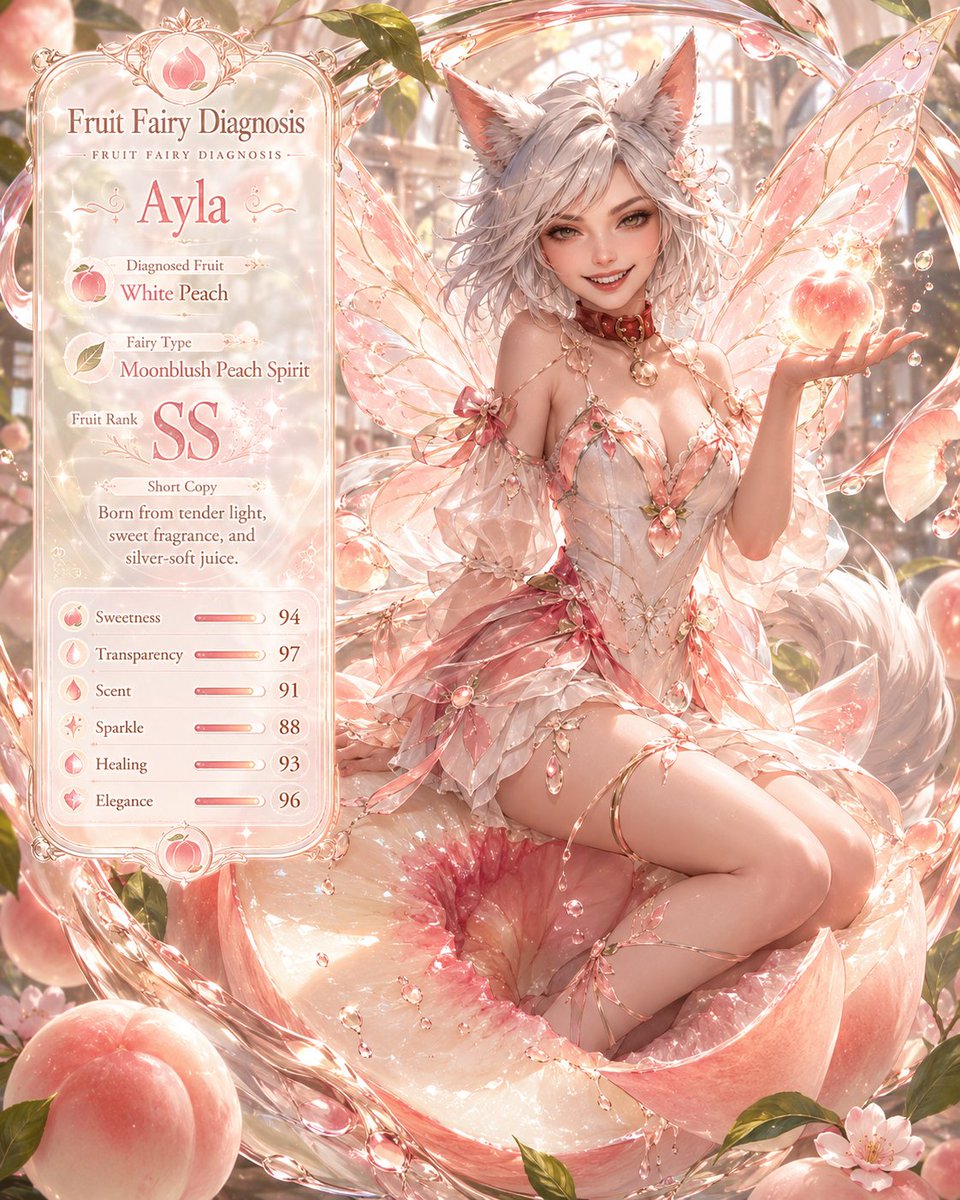

名前入力のところに名前を入力ください
🔸プロンプト🔸
添付されたキャラクターイラストを最重要の基準として使用し、
元画像のキャラクターの顔立ち、瞳の印象、目の形、髪型、髪色、前髪、輪郭、表情、年齢感、衣装の印象、配色、透明感、雰囲気、性格、そしてキャラクター固有の可愛さ・美しさ・魅力を丁寧に読み取り、
「このキャラクターが、どの果物から生まれた妖精なのかを診断した結果ビジュアル」
として再構築してください。
これは単なる果物コスプレではありません。
また、キャラクターに果物柄の服を着せるだけのイラストでもありません。
花の妖精イラストでもありません。
最重要コンセプトは、
元キャラクターの色・雰囲気・性格・透明感・瞳の印象・衣装モチーフから、
その子に最も似合う“果物属性”が自動診断され、
その果物の果肉・果汁・香り・皮・葉・断面・種・光から生まれた、
唯一無二の果物妖精として可視化されることです。
キャラクター名:【名前入力】
画像内タイトル:【果物妖精診断】
英字サブタイトル:【FRUIT FAIRY DIAGNOSIS】
診断される果物:【未入力なら元画像から自動決定】
妖精タイプ名:【未入力なら果物とキャラクター性から自動生成】
果物ランク:【未入力なら自動生成】
短いコピー:【未入力なら自動生成】
画像比率:【4:5の縦長】
【診断ルール】
元画像のキャラクターを分析し、以下のように果物属性を自動で選ぶ。
診断結果は固定しない。
キャラクターごとに、果物、衣装、羽、背景、UI、ステータス、数値、称号、コピー、魔法エフェクトを変化させる。
ピンク・赤系、甘さ、恋、可憐、王道の可愛さが強い場合:
いちご、さくらんぼ、桃、りんご、ラズベリー
淡い色、透明感、儚さ、やわらかさ、上品さが強い場合:
白桃、マスカット、ライチ、洋梨、白いちご、メロン
黄色・オレンジ系、元気、明るさ、太陽感、夏感が強い場合:
レモン、オレンジ、みかん、マンゴー、パイナップル、アプリコット
青・紫系、神秘、夜、魔法、知的、クールな印象が強い場合:
ブルーベリー、ぶどう、カシス、プラム、ブラックベリー
緑系、自然、癒し、清涼感、森、植物感が強い場合:
マスカット、青りんご、キウイ、メロン、ライム
白・銀・淡色系、清楚、雪、光、天使感が強い場合:
白桃、ライチ、白いちご、洋梨、ココナッツ
黒・赤・紫・ゴシック・小悪魔感が強い場合:
ダークチェリー、カシス、ブラックベリー、ざくろ、黒ぶどう
和風・上品・静かな美しさが強い場合:
柚子、梅、桃、柿、和梨、みかん
【最重要:果物感の強化】
診断された果物は、背景の小物ではなく画面全体の主役級モチーフとして扱う。
文字を読まなくても、一目で何の果物の妖精なのか分かるようにする。
必ず、診断された果物の以下の要素を強く描く。
・大きな果実
・割った断面
・果肉
・果皮
・果汁
・しずく
・葉
・種
・スライス
・香りの粒子
・果物色の光
・果物モチーフのアクセサリー
・果物モチーフの診断UI
花は補助として使ってよいが、花が主役にならないようにする。
必ず、果実・断面・果汁・葉を花より目立たせる。
【果物ごとの表現例】
いちごの場合:
大きないちご、いちごの断面、赤い果汁、つぶつぶの種、白い花、緑のヘタ、いちご型の魔法粒子を入れる。
衣装には赤と白の甘い配色、いちごの種模様、ヘタ風リボン、果汁ジュエルを入れる。
白桃・桃の場合:
大きな桃、半割りの断面、やわらかな果肉、中心の赤み、桃色の皮、みずみずしい果汁、桃の葉を入れる。
衣装には桃皮のグラデーション、果汁のしずく型ビジュー、桃スライスの曲線、やわらかな果肉感を入れる。
レモンの場合:
輪切りレモン、大きなレモンスライス、透明な黄色い果汁、柑橘の皮、白い花、爽やかな水しぶきを入れる。
衣装にはレモンイエロー、白、透明感、輪切り模様、柑橘の葉を入れる。
ぶどうの場合:
大きなぶどうの房、宝石のような果粒、断面、紫の果汁、蔓、葉、夜露を入れる。
衣装には紫のグラデーション、果粒ビジュー、蔓の装飾、夜の果樹園の魔法感を入れる。
マスカットの場合:
透明な黄緑の果粒、大きな房、みずみずしい断面、淡い果汁、蔓、葉、清涼感のある光を入れる。
衣装には黄緑、白、透明ジュレ感、果粒アクセサリーを入れる。
メロンの場合:
大きなメロン、網目模様、淡い緑の果肉、メロンスライス、果汁、葉、高級フルーツ感を入れる。
衣装には網目模様、淡緑のグラデーション、王冠風アクセサリー、高級感を入れる。
さくらんぼの場合:
双子の赤い果実、つやのある丸い実、茎、葉、赤い果汁、リボンのような曲線を入れる。
衣装には赤いリボン、丸い果実チャーム、小悪魔可愛い雰囲気を入れる。
ブルーベリーの場合:
青紫の果実、断面、夜露、星屑、青紫の果汁、幻想的な霧を入れる。
衣装には青紫のグラデーション、星粒、果実ビジュー、夜の魔法感を入れる。
キウイの場合:
輪切りキウイ、緑の果肉、黒い種、茶色い皮、フレッシュな果汁、葉を入れる。
衣装には緑、白、黒い種模様、爽やかで少し個性的な妖精感を入れる。
ざくろの場合:
割れたざくろ、赤い粒、宝石のような果肉、深紅の果汁、神秘的な光を入れる。
衣装には深紅、ゴールド、宝石感、少し大人っぽい幻想感を入れる。
【キャラクター表現】
元画像のキャラクターの顔立ち、瞳、髪型、髪色、前髪、輪郭、表情、年齢感、雰囲気を最優先で維持する。
別人化禁止。
顔と瞳は最重要。
元キャラクターの可愛さ、美しさ、透明感、個性を崩さない。
衣装は、診断された果物から生まれた妖精衣装へ自然に変化させる。
ただし、果物そのものを被る着ぐるみにはしない。
安っぽい仮装にしない。
露出過多にしない。
上品で可愛い公式診断ビジュアルのような完成度にする。
髪飾り、リボン、アクセサリー、靴、袖、スカート、羽、杖、小物に、診断された果物の要素を自然に入れる。
果物の断面、果肉、果汁、皮、葉、種、香り、光をデザインに反映する。
【果物から生まれた表現】
キャラクターは、診断された果物の中、果物の断面、果汁の光、果実型の魔法陣、果物のゆりかご、果樹園の中心から生まれた妖精として描く。
おすすめ構図:
・巨大な果物の断面の上に座る
・果汁の光の中から浮かび上がる
・果物のゆりかごから生まれる
・果物スライスの魔法陣の中心にいる
・手のひらに小さな果実や果汁のしずくを浮かべる
・周囲に大きな果物、断面、葉、しずくが舞う
【妖精の羽】
羽は必ず果物属性に応じて変化させる。
普通の透明な羽だけにしない。
羽には、診断された果物の断面、果皮、果汁、葉脈、種、香り、光を組み合わせる。
羽は背中から自然に生え、体と違和感なく接続する。
左右の羽の枚数、角度、形を自然にする。
羽が顔や瞳を隠さないようにする。
【診断カードUI】
画面内に、公式診断結果カードのようなUIを入れる。
画像内の文字は読みやすく、少なめに整理する。
長文を詰め込まない。
画像内に「うちの子」という言葉は入れない。
入れる要素:
・果物妖精診断
・FRUIT FAIRY DIAGNOSIS
・キャラクター名
・診断結果の果物名
・妖精タイプ名
・果物ランク
・短いコピー
・ステータス欄
診断カードは、半透明のガラス風、フルーツラベル風、魔法図鑑風、公式プロフィールカード風など、
診断された果物に合わせて変える。
【コメント欄・ステータス欄の果物感】
ステータス欄やコメント欄にも、診断された果物の小さなアイコン、果汁のしずく、葉、スライス、種、果実モチーフを入れる。
UIだけ見ても、何の果物か分かるようにする。
ステータス項目は果物とキャラの雰囲気に合わせて毎回変化させる。
例:
甘さ
透明度
香り
きらめき
癒し度
小悪魔度
清涼感
果汁魔力
花びら適性
祝福度
夜露度
太陽度
ふわふわ度
儚さ
上品度
数値は固定しない。
78、86、91、94、97など自然に差を出す。
すべて100にしない。
ランクも固定しない。
A、S、SS、SSR、Royal、Secretなど、キャラクターに合わせて変化させる。
【画面構成】
4:5の縦長。
中央にキャラクターを大きく配置。
顔と上半身がしっかり見える構図。
キャラクターは画面の主役として大きく魅力的に描く。
周囲に診断された果物の世界観を配置する。
背景は白一色にしない。
果樹園、ガラス温室、果物の神殿、スイーツの庭園、光る森、夜の果樹園、果汁の湖、花と蔓のアーチなど、
果物属性に合わせて背景を変える。
左または右に診断結果カードを配置。
キャラクター、果物、診断UIのバランスを取る。
UIが顔を隠さない。
果物が大きすぎて顔を潰さない。
文字を入れすぎない。
【質感】
高品質なアニメイラスト。
透明感のある美麗アニメ塗り。
太めで綺麗な線。
柔らかい光。
果汁のきらめき。
果肉のみずみずしさ。
果皮の質感。
宝石のような果実の透明感。
香りが見えるような淡い粒子表現。
存在しない公式キャラクター診断結果のような完成度。
【可変要素】
元画像に応じて、以下を必ず変化させる。
1. 診断される果物
2. 妖精タイプ名
3. 衣装デザイン
4. 羽の形
5. 果物モチーフの出し方
6. 背景の場所
7. 診断UIのデザイン
8. ステータス項目
9. 数値
10. ランク
11. 短いコピー
12. 魔法エフェクト
13. 花や葉の種類
14. 光の色
15. キャラクターのポーズ
同じ果物でも、元キャラクターの雰囲気によって表現を変える。
可愛い子なら甘く華やかに。
清楚な子なら淡く透明に。
元気な子なら明るく弾けるように。
神秘的な子なら夜露と魔法感を強める。
大人っぽい子なら高級フルーツ広告のように。
小悪魔系ならダークチェリーやカシスのように少し妖しく。
【避けること】
別人化禁止。
顔崩れ禁止。
瞳の印象を変えすぎない。
果物の着ぐるみ禁止。
ただの果物柄ワンピース禁止。
普通の妖精衣装だけにしない。
花の妖精に寄りすぎない。
果物が小さな飾りだけになることを避ける。
果物感が弱い絵にしない。
白背景だけ禁止。
文字だらけ禁止。
英字の長文禁止。
画像内に「うちの子」と書かない。
露出過多禁止。
水着風、下着風、性的な見せ方禁止。
実在ブランド、実在ロゴ、既存作品風の固有名称は禁止。
手指の破綻禁止。
羽の枚数破綻禁止。
果物が不明瞭になることを避ける。
【仕上げ】
一目で、
「この子はこの果物の妖精なんだ」
と分かること。
同時に、
「自分のキャラクターなら何の果物になるか試したい」
と思わせる診断感を強く出すこと。
可愛さ、診断結果の面白さ、果物ごとの変化、公式カード感、SNSで共有したくなる完成度を重視する。
日本語
🔸ChatGPT image2プロンプト🔸
#のぞむプロンプト
「あなたのキャラは
何の果物から生まれた妖精?」
そんな感じの診断風プロンプトを
作ってみました🍓🍑🍇
果物、羽、衣装、ステータス、
コメント欄までキャラに合わせて
変わるようにしてます。
みんなの子でも試してみてください🍌
プロンプトはリプ欄で👇


日本語
Kyubi รีทวีตแล้ว

My boos prompt goes hard~ Go fuse some stuff right now!

E-Va 💜💚@EvaGlitchAI
Prompt of the Day: MAIN CHARACTER FUSION 🧬✨💜💚 Today’s Prompt of the Day lets you transform a main character, creature, object, or subject using the visual influence of any extra images you attach. Use your character as Image 1 if you want to preserve their look and create a result similar to the example. If you use your character as Image 2, they’ll be fused into whatever subject you place in Image 1. Image 1 = main subject Image 2+ = influence references Have fun mutating the pretty little thing 🧬 ............................PROMPT STARTS HERE............................ @Image1 = Main Subject @Image2 and any additional attached images = Secondary Influence References Use @Image1 as the absolute main subject reference. Use @Image2 and any additional attached images only as secondary influence references. Create a single 16:9 horizontal widescreen stylized illustration showing one new final image based on @Image1. Core concept: Transform the main subject from @Image1 into a new original design influenced by the secondary reference images. The final image should still be centered on the main subject from @Image1, but visually enhanced, reimagined, or transformed using color, texture, materials, atmosphere, motifs, accessories, clothing, background elements, symbolic details, or design language inspired by the secondary references. Main subject priority: @Image1 is the identity anchor. The final image must clearly remain based on the main subject from @Image1. Do not treat @Image2 or any additional images as equal subjects. Do not create a balanced fusion where all images have the same importance. The secondary images should influence the design, not replace the main subject. If @Image1 is a person or character: Preserve the main subject’s body proportions, face structure, hairstyle, silhouette, pose language, species traits, and overall identity as much as possible. Do not heavily mutate, deform, or rebuild the body. Keep the subject recognizably grounded in their original form. Use the secondary references mainly for color influence, texture, outfit changes, accessories, armor, props, background, lighting, atmosphere, surface details, symbolic motifs, or stylistic embellishments. The transformation should feel like the main character has been redesigned or styled through the influence of the other images, not biologically fused into an unrecognizable creature unless specifically requested. If @Image1 is an object: Preserve the object’s main shape language, structure, function, silhouette, material logic, and recognizable design foundation. Use the secondary references to influence color, texture, surface design, decoration, environment, mood, material upgrades, symbolic motifs, or additional design embellishments. Do not turn the object into something completely unrelated unless specifically requested. If @Image1 is a creature or animal: Preserve the creature’s core anatomy, species traits, silhouette, body proportions, posture, markings, and overall identity. Use the secondary references to influence colors, textures, markings, environment, accessories, magical effects, armor, decorative elements, or atmosphere. Do not mutate the creature so heavily that its original structure becomes unreadable unless specifically requested. Secondary influence rules: Use the secondary reference images as inspiration only. They may influence: color palette textures and materials patterns and markings clothing or armor accessories and props background and setting lighting and atmosphere symbolic motifs surface details mood and visual personality surreal or artistic embellishments The secondary references must not appear as separate full subjects in the final image. Do not place the secondary reference subjects beside the main subject. Do not create a collage, split image, sticker stack, or side-by-side mashup. Do not simply copy large pieces of the secondary images directly into the final image. Instead, reinterpret their visual qualities into one cohesive design centered on @Image1. Originality rule: The final image should feel new, original, and artistically transformed. It should not look like a direct copy of any secondary reference. It should not preserve the secondary references as recognizable standalone subjects. The secondary influence should be integrated naturally into the main subject’s design and scene. Style and presentation: Keep the result fully stylized and visually cohesive. Preserve the general stylization of @Image1 where possible. If @Image1 is anime or stylized, keep the result anime or stylized. Do not drift into photorealism unless specifically requested. Composition: Show exactly one main subject based on @Image1. Use a strong, readable single-image composition. Keep the main subject large, central, clear, and visually dominant. Use the secondary influences to support the main subject, not compete with it. The final image should feel like a clean character/object/creature reveal, fashion redesign, artifact redesign, surreal portrait, or cinematic showcase depending on the source images. Lighting and mood: Use polished, dramatic lighting and atmosphere that fits the new design. The mood may be cinematic, surreal, elegant, mysterious, powerful, beautiful, eerie, cute, strange, luxurious, or dreamlike depending on the influence references. Keep the final subject readable and visually compelling. Quality and rendering: Polished, premium-quality stylized illustration with clean forms, strong composition, clear visual hierarchy, crisp rendering, and cohesive design integration. Keep the strongest detail concentrated on the main subject from @Image1. Do not: Do not treat @Image2 or additional images as equal main subjects. Do not create a balanced fusion where the main subject from @Image1 loses priority. Do not show the secondary reference images as separate full subjects. Do not place the secondary reference subjects beside the main subject. Do not create a side-by-side mashup, split design, collage, or sticker-like combination. Do not copy-paste recognizable chunks of the secondary images into the final image. Do not mutate the main subject’s body proportions heavily if @Image1 is a person, character, creature, or animal. Do not make the main subject unrecognizable unless specifically requested. Do not replace the main subject with a new unrelated subject. Do not make the design cluttered, confusing, or visually incoherent. Do not hide the main subject under excessive effects, textures, armor, or background detail. Do not create multiple main subjects. Do not create messy anatomy, broken structure, extra limbs, malformed hands, distorted faces, or incoherent object construction. Do not use photorealism unless specifically requested. Do not reference copyrighted fusion techniques, named franchise transformations, or third-party branded concepts. Final result: A single original 16:9 stylized image where @Image1 remains the clear main subject, transformed and enhanced by the colors, textures, motifs, materials, atmosphere, clothing, accessories, background, and visual influence of the secondary reference images. ..............................END OF PROMPT.................................. #POTD #promptoftheday #AI #AiArt #Art #AnimeArt #CharacterDesign #ImagePrompt #FusionArt #AICommunity #DigitalArt #AnimeStyle #CreativePrompt
English
Kyubi รีทวีตแล้ว
So much fun! I got some really neat stuff. too. Cass in Egypt is canon so this worked really well. A silly and a very cool one of Kyubi, and Ayla having fun with Gladiator night.


E-Va 💜💚@EvaGlitchAI
Prompt of the Day: MAIN CHARACTER FUSION 🧬✨💜💚 Today’s Prompt of the Day lets you transform a main character, creature, object, or subject using the visual influence of any extra images you attach. Use your character as Image 1 if you want to preserve their look and create a result similar to the example. If you use your character as Image 2, they’ll be fused into whatever subject you place in Image 1. Image 1 = main subject Image 2+ = influence references Have fun mutating the pretty little thing 🧬 ............................PROMPT STARTS HERE............................ @Image1 = Main Subject @Image2 and any additional attached images = Secondary Influence References Use @Image1 as the absolute main subject reference. Use @Image2 and any additional attached images only as secondary influence references. Create a single 16:9 horizontal widescreen stylized illustration showing one new final image based on @Image1. Core concept: Transform the main subject from @Image1 into a new original design influenced by the secondary reference images. The final image should still be centered on the main subject from @Image1, but visually enhanced, reimagined, or transformed using color, texture, materials, atmosphere, motifs, accessories, clothing, background elements, symbolic details, or design language inspired by the secondary references. Main subject priority: @Image1 is the identity anchor. The final image must clearly remain based on the main subject from @Image1. Do not treat @Image2 or any additional images as equal subjects. Do not create a balanced fusion where all images have the same importance. The secondary images should influence the design, not replace the main subject. If @Image1 is a person or character: Preserve the main subject’s body proportions, face structure, hairstyle, silhouette, pose language, species traits, and overall identity as much as possible. Do not heavily mutate, deform, or rebuild the body. Keep the subject recognizably grounded in their original form. Use the secondary references mainly for color influence, texture, outfit changes, accessories, armor, props, background, lighting, atmosphere, surface details, symbolic motifs, or stylistic embellishments. The transformation should feel like the main character has been redesigned or styled through the influence of the other images, not biologically fused into an unrecognizable creature unless specifically requested. If @Image1 is an object: Preserve the object’s main shape language, structure, function, silhouette, material logic, and recognizable design foundation. Use the secondary references to influence color, texture, surface design, decoration, environment, mood, material upgrades, symbolic motifs, or additional design embellishments. Do not turn the object into something completely unrelated unless specifically requested. If @Image1 is a creature or animal: Preserve the creature’s core anatomy, species traits, silhouette, body proportions, posture, markings, and overall identity. Use the secondary references to influence colors, textures, markings, environment, accessories, magical effects, armor, decorative elements, or atmosphere. Do not mutate the creature so heavily that its original structure becomes unreadable unless specifically requested. Secondary influence rules: Use the secondary reference images as inspiration only. They may influence: color palette textures and materials patterns and markings clothing or armor accessories and props background and setting lighting and atmosphere symbolic motifs surface details mood and visual personality surreal or artistic embellishments The secondary references must not appear as separate full subjects in the final image. Do not place the secondary reference subjects beside the main subject. Do not create a collage, split image, sticker stack, or side-by-side mashup. Do not simply copy large pieces of the secondary images directly into the final image. Instead, reinterpret their visual qualities into one cohesive design centered on @Image1. Originality rule: The final image should feel new, original, and artistically transformed. It should not look like a direct copy of any secondary reference. It should not preserve the secondary references as recognizable standalone subjects. The secondary influence should be integrated naturally into the main subject’s design and scene. Style and presentation: Keep the result fully stylized and visually cohesive. Preserve the general stylization of @Image1 where possible. If @Image1 is anime or stylized, keep the result anime or stylized. Do not drift into photorealism unless specifically requested. Composition: Show exactly one main subject based on @Image1. Use a strong, readable single-image composition. Keep the main subject large, central, clear, and visually dominant. Use the secondary influences to support the main subject, not compete with it. The final image should feel like a clean character/object/creature reveal, fashion redesign, artifact redesign, surreal portrait, or cinematic showcase depending on the source images. Lighting and mood: Use polished, dramatic lighting and atmosphere that fits the new design. The mood may be cinematic, surreal, elegant, mysterious, powerful, beautiful, eerie, cute, strange, luxurious, or dreamlike depending on the influence references. Keep the final subject readable and visually compelling. Quality and rendering: Polished, premium-quality stylized illustration with clean forms, strong composition, clear visual hierarchy, crisp rendering, and cohesive design integration. Keep the strongest detail concentrated on the main subject from @Image1. Do not: Do not treat @Image2 or additional images as equal main subjects. Do not create a balanced fusion where the main subject from @Image1 loses priority. Do not show the secondary reference images as separate full subjects. Do not place the secondary reference subjects beside the main subject. Do not create a side-by-side mashup, split design, collage, or sticker-like combination. Do not copy-paste recognizable chunks of the secondary images into the final image. Do not mutate the main subject’s body proportions heavily if @Image1 is a person, character, creature, or animal. Do not make the main subject unrecognizable unless specifically requested. Do not replace the main subject with a new unrelated subject. Do not make the design cluttered, confusing, or visually incoherent. Do not hide the main subject under excessive effects, textures, armor, or background detail. Do not create multiple main subjects. Do not create messy anatomy, broken structure, extra limbs, malformed hands, distorted faces, or incoherent object construction. Do not use photorealism unless specifically requested. Do not reference copyrighted fusion techniques, named franchise transformations, or third-party branded concepts. Final result: A single original 16:9 stylized image where @Image1 remains the clear main subject, transformed and enhanced by the colors, textures, motifs, materials, atmosphere, clothing, accessories, background, and visual influence of the secondary reference images. ..............................END OF PROMPT.................................. #POTD #promptoftheday #AI #AiArt #Art #AnimeArt #CharacterDesign #ImagePrompt #FusionArt #AICommunity #DigitalArt #AnimeStyle #CreativePrompt
English
@EvaGlitchAI This is a really fun versatile prompt! Anything goes, really. Some cool ones, and some fun ones. Dark Kyubi, Ayla, Crown Kyubi, and Cassian.


English
Prompt of the Day: MAIN CHARACTER FUSION 🧬✨💜💚
Today’s Prompt of the Day lets you transform a main character, creature, object, or subject using the visual influence of any extra images you attach.
Use your character as Image 1 if you want to preserve their look and create a result similar to the example.
If you use your character as Image 2, they’ll be fused into whatever subject you place in Image 1.
Image 1 = main subject
Image 2+ = influence references
Have fun mutating the pretty little thing 🧬
............................PROMPT STARTS HERE............................
@Image1 = Main Subject
@Image2 and any additional attached images = Secondary Influence References
Use @Image1 as the absolute main subject reference.
Use @Image2 and any additional attached images only as secondary influence references.
Create a single 16:9 horizontal widescreen stylized illustration showing one new final image based on @Image1.
Core concept:
Transform the main subject from @Image1 into a new original design influenced by the secondary reference images.
The final image should still be centered on the main subject from @Image1, but visually enhanced, reimagined, or transformed using color, texture, materials, atmosphere, motifs, accessories, clothing, background elements, symbolic details, or design language inspired by the secondary references.
Main subject priority:
@Image1 is the identity anchor.
The final image must clearly remain based on the main subject from @Image1.
Do not treat @Image2 or any additional images as equal subjects.
Do not create a balanced fusion where all images have the same importance.
The secondary images should influence the design, not replace the main subject.
If @Image1 is a person or character:
Preserve the main subject’s body proportions, face structure, hairstyle, silhouette, pose language, species traits, and overall identity as much as possible.
Do not heavily mutate, deform, or rebuild the body.
Keep the subject recognizably grounded in their original form.
Use the secondary references mainly for color influence, texture, outfit changes, accessories, armor, props, background, lighting, atmosphere, surface details, symbolic motifs, or stylistic embellishments.
The transformation should feel like the main character has been redesigned or styled through the influence of the other images, not biologically fused into an unrecognizable creature unless specifically requested.
If @Image1 is an object:
Preserve the object’s main shape language, structure, function, silhouette, material logic, and recognizable design foundation.
Use the secondary references to influence color, texture, surface design, decoration, environment, mood, material upgrades, symbolic motifs, or additional design embellishments.
Do not turn the object into something completely unrelated unless specifically requested.
If @Image1 is a creature or animal:
Preserve the creature’s core anatomy, species traits, silhouette, body proportions, posture, markings, and overall identity.
Use the secondary references to influence colors, textures, markings, environment, accessories, magical effects, armor, decorative elements, or atmosphere.
Do not mutate the creature so heavily that its original structure becomes unreadable unless specifically requested.
Secondary influence rules:
Use the secondary reference images as inspiration only.
They may influence:
color palette
textures and materials
patterns and markings
clothing or armor
accessories and props
background and setting
lighting and atmosphere
symbolic motifs
surface details
mood and visual personality
surreal or artistic embellishments
The secondary references must not appear as separate full subjects in the final image.
Do not place the secondary reference subjects beside the main subject.
Do not create a collage, split image, sticker stack, or side-by-side mashup.
Do not simply copy large pieces of the secondary images directly into the final image.
Instead, reinterpret their visual qualities into one cohesive design centered on @Image1.
Originality rule:
The final image should feel new, original, and artistically transformed.
It should not look like a direct copy of any secondary reference.
It should not preserve the secondary references as recognizable standalone subjects.
The secondary influence should be integrated naturally into the main subject’s design and scene.
Style and presentation:
Keep the result fully stylized and visually cohesive.
Preserve the general stylization of @Image1 where possible.
If @Image1 is anime or stylized, keep the result anime or stylized.
Do not drift into photorealism unless specifically requested.
Composition:
Show exactly one main subject based on @Image1.
Use a strong, readable single-image composition.
Keep the main subject large, central, clear, and visually dominant.
Use the secondary influences to support the main subject, not compete with it.
The final image should feel like a clean character/object/creature reveal, fashion redesign, artifact redesign, surreal portrait, or cinematic showcase depending on the source images.
Lighting and mood:
Use polished, dramatic lighting and atmosphere that fits the new design.
The mood may be cinematic, surreal, elegant, mysterious, powerful, beautiful, eerie, cute, strange, luxurious, or dreamlike depending on the influence references.
Keep the final subject readable and visually compelling.
Quality and rendering:
Polished, premium-quality stylized illustration with clean forms, strong composition, clear visual hierarchy, crisp rendering, and cohesive design integration.
Keep the strongest detail concentrated on the main subject from @Image1.
Do not:
Do not treat @Image2 or additional images as equal main subjects.
Do not create a balanced fusion where the main subject from @Image1 loses priority.
Do not show the secondary reference images as separate full subjects.
Do not place the secondary reference subjects beside the main subject.
Do not create a side-by-side mashup, split design, collage, or sticker-like combination.
Do not copy-paste recognizable chunks of the secondary images into the final image.
Do not mutate the main subject’s body proportions heavily if @Image1 is a person, character, creature, or animal.
Do not make the main subject unrecognizable unless specifically requested.
Do not replace the main subject with a new unrelated subject.
Do not make the design cluttered, confusing, or visually incoherent.
Do not hide the main subject under excessive effects, textures, armor, or background detail.
Do not create multiple main subjects.
Do not create messy anatomy, broken structure, extra limbs, malformed hands, distorted faces, or incoherent object construction.
Do not use photorealism unless specifically requested.
Do not reference copyrighted fusion techniques, named franchise transformations, or third-party branded concepts.
Final result:
A single original 16:9 stylized image where @Image1 remains the clear main subject, transformed and enhanced by the colors, textures, motifs, materials, atmosphere, clothing, accessories, background, and visual influence of the secondary reference images.
..............................END OF PROMPT..................................
#POTD #promptoftheday #AI #AiArt #Art #AnimeArt #CharacterDesign #ImagePrompt #FusionArt #AICommunity #DigitalArt #AnimeStyle #CreativePrompt


English
Kyubi รีทวีตแล้ว


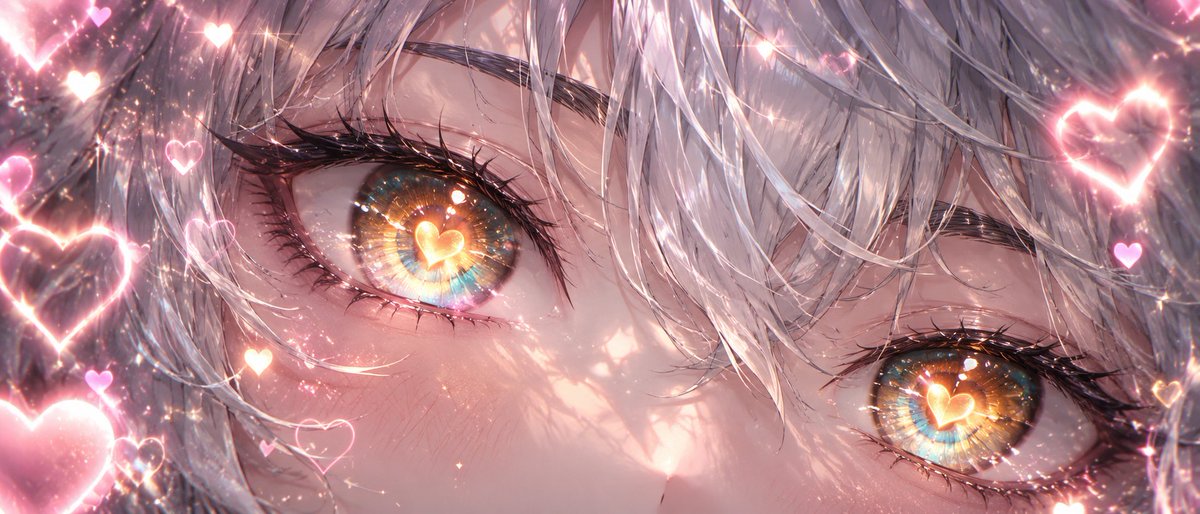
Check out this prompt from @JigzTPD! If you tailor it to different symbols or different base images it gives a different feel. Kyubi and 2 different versions of Ayla.


JigzTheVtuber💀♠️@JigzTPD
What Got You Look Like This? Prompt Below:👇
English